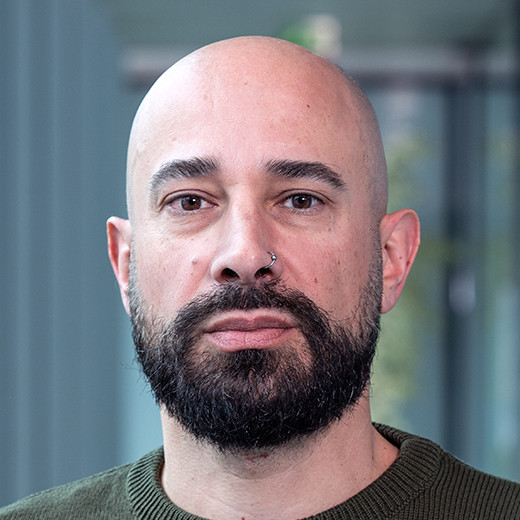
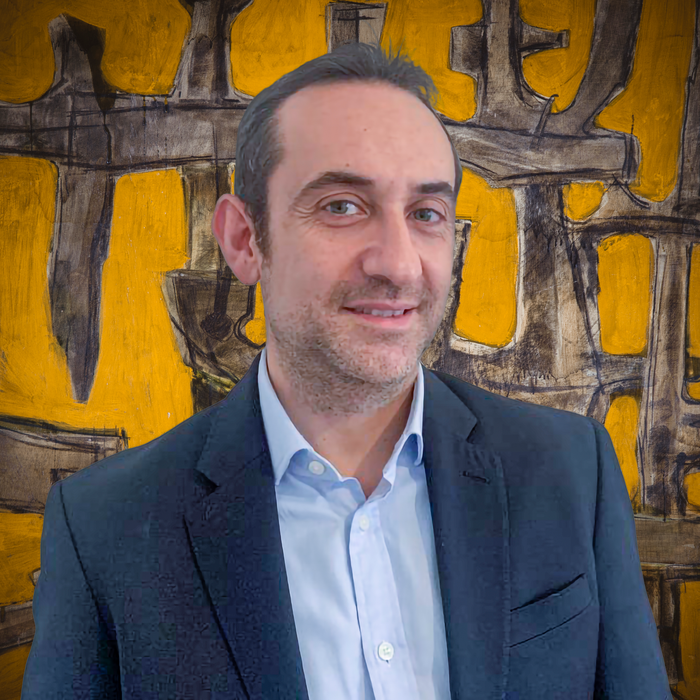
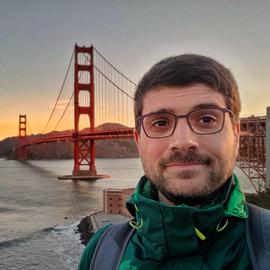
Michele Cagol is a Professor at the Free University of Bozen-Bolzano , Faculty of Educational Sciences. Their work bridges pedagogy, emotional education, and ecological sustainability, with a focus on relational learning frameworks and multisensory educational practices. Research Themes : Emotional education, educational ecology, sustainability pedagogy, media and communication education, teacher training. Projects : Lead participant in the EU Interreg Alpine Space project FRACTAL , promoting green space awareness in the Alpine region. Recent publications emphasize radical relational pedagogy, ecological ethics, and the role of wonder in learning. Notable methodologies include intra-actionist music composition and microteaching for multilingual competencies. Teaching responsibilities span General Pedagogy , Social Education , and teacher training for primary/middle school contexts.
Saverio Mascolo is a Full Professor at the Polytechnic University of Bari , Department of Electrical and Information Engineering. He leads the Control of Computing and Communication Systems Lab (C3Lab) and contributes to IEEE/ACM Transactions on Networking as an Associate Editor. His research focuses on Future Internet, network congestion control, and real-time communication systems. Laurea in Electronic Engineering, Politecnico di Bari (1991) PhD in Electronic and Automatic Control, Politecnico di Bari (1995) Visiting researcher roles at UCLA (1995, 1999), INRIA (2004), and FTW (2004) Research spans network congestion control , adaptive video streaming , and real-time communication . His lab develops protocols like TCP Westwood+ and contributes to WebRTC standards. Current projects include low-delay protocols for immersive video streaming and autonomous systems control. Recent publications emphasize adaptive threshold mechanisms in congestion control, millimeter-wave radar datasets , and immersive teleoperation systems . Projects integrate nonlinear control , time-delay analysis , and cloud-based multimedia delivery . Scientific recognition includes: Elevated to IEEE Fellow (2018) for congestion control contributions Google Faculty Award (2014) for WebRTC research Cisco Research Award (2013) for video streaming control Best paper awards at MMSYS (2025, 2024, 2016) Grants fund research in cloud-based video platforms (MISE, 2017-2020), WebRTC optimization (MIUR, 2012-2015), and network control algorithms. His lab collaborates with institutions like Uppsala University (since 2001) and industry partners.
Filippo Ubertini is Professor of Civil and Environmental Engineering at the University of Perugia, Italy, where he coordinates the International Doctoral Programme in Civil & Environmental Engineering and represents the University inside the FABRE national bridge-research consortium. He leads the Structural Health Monitoring Laboratory ( SHM-Lab ) and is the primary contact for assignments linked to smart-infrastructure research. Education: While explicit degrees are not listed in the supplied text, his role as programme coordinator and full professor implies completion of a PhD and habilitation in Civil Engineering. Research focus: Ubertini’s work sits at the intersection of smart materials and data-driven infrastructure management . He develops self-sensing cementitious composites doped with carbon micro-fibers or graphene nano-platelets that can measure strain, cracking and moisture in real time, turning whole bridges and buildings into distributed sensors. Complementary research threads include low-cost acquisition electronics, UAV & InSAR remote sensing, Bayesian & adversarial machine-learning algorithms for damage detection, digital twins and life-cycle cost analysis of bridge networks. Publication trends (2024-2025): Roughly 30 peer-reviewed items per year concentrate on (i) AI-enhanced operational modal analysis and transfer-learning damage classification across bridge populations, (ii) experimental characterisation of 3D-printed and cast self-sensing concrete, (iii) full-scale validation on curved box-girder, masonry and railway bridges, and (iv) integration of satellite radar data with numerical collapse simulations to predict residual service life of landslide-affected viaducts. Scientific awards & recognition: No specific prizes or fellowships are mentioned in the provided text. Doctoral supervision & grants: The text does not enumerate individual students or funded projects; however, his coordination of an international PhD programme and numerous experimental campaigns imply sizeable supervisory and funding responsibilities. Laboratory & team: Ubertini heads the SHM-Lab at UniPg, maintaining facilities for material mixing, 3D concrete printing, electrical impedance tomography, UAV photogrammetry, and large-scale structural testing, while collaborating with the European FABRE consortium and multiple EU projects.
Paolo Ruggeri is an Associate Professor at the Department of SIMAU, Università Politecnica delle Marche (UNIVPM), Ancona, Italy. His research focuses on Geotechnical Engineering , Slope Stability , Seismic Risk Assessment , and Soil-Structure Interaction , with particular emphasis on landslide dynamics, port infrastructure resilience, and tunnel construction impacts. Selected trends from his 15 most recent publications include: Analysis of coastal and harbor structures (quay walls, dykes) Investigations into seismic and rainfall-induced slope failures Advancements in soil-structure interaction modeling Environmental sustainability of geotechnical works Comparative studies on tunnel design approaches (Eurocodes)
Giovanni Camanni is an Associate Professor at the Department of Chemical and Geological Sciences, University of Modena and Reggio Emilia. His work focuses on structural geology, fault mechanics, and seismic hazard assessment, with extensive research in fault segmentation, reactivation processes, and 3D geological modeling. Research Interests: Structural geology, tectonic inheritance, fault kinematics, petrophysical reservoir characterization, and volcano-tectonic processes. Teaching: Courses on Seismic Sources and Microzonation , Structural Geology and Tectonics , and Geological Survey , covering advanced fault mapping, displacement analysis, and field methodologies. Techniques: Utilizes 3D seismic reflection data, photogrammetry, unsupervised learning algorithms (DBSCAN/OPTICS), and U-Pb dating for fault and reservoir studies. Applications: Findings contribute to seismic risk mitigation, fluid flow prediction in fractured reservoirs, and urban subsidence management, particularly in southern Italy and Taiwan. Recent Publications (2020-2025): Advanced understanding of fault zone architecture in dolostones, displacement transfer mechanisms in relay zones, Wilson cycle fault reactivation, and multidisciplinary approaches to ground deformation studies.
Salvatore Stuvard is an Associate Professor at the Department of Mathematics 'Federigo Enriques' of the University of Milan. He holds a Ph.D. from the University of Zurich (2017) and served as a Bing Instructor at the University of Texas at Austin (2017–2021). His research focuses on regularity theory for solutions in geometric analysis, particularly minimal surfaces, mean curvature flows, and geometric measure theory. He has organized seminars such as the Analysis Seminar at the University of Milan and co-organizes events like the 'Geometric Methods in Calculus of Variations.' His work bridges PDEs, geometric flows, and variational methods, addressing singularities and structural properties of geometric objects. Research interests include: Geometric Analysis and Geometric Flows Partial Differential Equations (PDEs) and Calculus of Variations Mean Curvature Flow (Brakke flows and multi-phase dynamics) Modulo p minimization and singular set structure Soap film/capillarity models and free-boundary problems Recent work emphasizes dynamical instability of minimal surfaces, end-time regularity of Brakke flows, and singular limits in capillarity problems. He co-organized the 2025 'Geometric Methods in Calculus of Variations' conference in Pisa.
Raffaella Baccolini is a Full Professor in the Department of Interpretation and Translation at the University of Bologna's School of Modern Languages for Interpreters and Translators. She holds the scientific-disciplinary sector ANGL-01/A (English Literature) and serves as Vice Coordinator of the European Studies Bachelor's program (BAES - UnaEuropa) since 2024. Her educational background includes a PhD (1989) and MA (1983) from the University of Wisconsin-Madison, and a Degree in Foreign Languages and Literatures from the University of Bologna. Key institutional roles include President of the WOMEN Association (2021-present), Delegata DIT for Third Mission (2021-2024), and coordinator of multiple doctoral programs and EU-funded projects. Twentieth-century and contemporary American/English literature Feminist criticism and gender studies Utopian/dystopian theory and science fiction Trauma and memory studies Young adult literature and cultural translation Ethics of care in post-apocalyptic narratives Her recent publications demonstrate a consistent focus on gender-positive education through the G-BOOK series (2021-2025), ecofeminist interpretations of dystopian fiction, and critical analyses of utopian impulses in contemporary media. The work increasingly examines transmedia storytelling and social-emotional learning applications for European youth. Selected honors include: Brittingham Fellowship (University of Wisconsin-Madison) Ministry of Public Education Cultural Exchange Grant Honorary Fellow, Institute for Research in Humanities (1997) Visiting Scholar at CUNY's Calandra Institute (2012-2013) Baccolini directs the MeTRa research center and coordinates multiple EU Creative Europe projects including G-BOOK 3. She supervises doctoral candidates through the DIT Doctoral School and serves as external examiner for international PhD committees. Her leadership extends to the European Women's University Network (WOMEN) and UnaEuropa's European Studies Steering Committee. She co-directs the "Ralahine Utopian Studies" series (Peter Lang) and the online journal mediAzioni, while maintaining active roles in the Society for Utopian Studies and Utopian Studies Society Europe.
Luca Carollo is an Associate Professor of Organizational Studies and Change Management at the Department of Management, University of Bergamo, Italy. He holds a Master's degree in Work, Organization and Information Systems from the University of Trento and a Ph.D. in Economic Sociology and Labor Studies from the University of Milan. Key Research Areas Organizational Culture & Change Industrial Relations & HRM Control & Resistance Dynamics Sustainability & Business Ethics Unconventional Research Materials His recent work explores the use of comics, poetry, and films as critical research tools for analyzing organizational phenomena. He has published in journals like Human Resource Management, Organization, Work, Employment and Society, and Journal of Business Ethics. Publications highlight trends in: Apocalyptic Reflexivity in Organizations Democracy in Organizational Structures Diversity & Inclusion Challenges Dirty Work Dynamics Visual Methods in Management Research Cross-Cultural Organizational Identity He teaches organizational theory, change management, and negotiation at undergraduate, graduate, and doctoral levels.
Valerio De Biagi is an Associate Professor in the Department of Structural, Geotechnical and Building Engineering (DISEG) at the Polytechnic University of Turin, Italy. He is a member of the Interdepartmental Center SISCON (Safety of Infrastructures and Constructions) and serves as Vice Coordinator of the PhD program in Civil and Environmental Engineering. He also acts as the Partnership Agreement Coordinator with STRADA DEI PARCHI, reflecting his strong engagement with industry and infrastructure safety. Research Interests: Structural robustness and progressive collapse Natural hazards (rockfalls, avalanches, debris flows) Structural health monitoring and damage modeling Reliability and risk assessment of civil infrastructure Mechanics of granular materials (snow) His recent research output shows a strong trend toward probabilistic risk assessment, experimental and numerical modeling of impact events, and the development of resilient structural systems. He frequently applies advanced computational methods, including finite element analysis and generative AI, to simulate extreme loading scenarios and infrastructure response. Scientific Roles: Effective Member, SISCO - Italian Society of Building Science (2019–present) Guest Editor, Applied Sciences (2020–present) Evaluator for Swiss National Science Foundation (MINT 2023, COST 2022) Advising and Grants: He actively supervises multiple PhD students across several cycles and leads numerous funded research projects, including competitive national grants (PRIN), PNRR initiatives, and commercial research contracts with public infrastructure agencies. His projects focus on structural safety assessment, development of monitoring protocols, and risk mitigation strategies for bridges, tunnels, and rockfall-prone areas. Labs and Teams: He leads research teams focused on structural complexity, natural hazard interaction, and granular material mechanics. His work involves experimental campaigns, field surveys, and back-analyses of real-world structural failures.
Sandro Sozzo is an Associate Professor of Logic and Philosophy of Science at the University of Udine, where he has been a faculty member since 2022. He previously served as a lecturer (2013) and associate professor (2015) at the University of Leicester, UK. He holds a PhD in Physics from the University of Salento (2006) and completed postdoctoral training at the Free University of Brussels (VUB). His academic affiliations include the Centre for Quantum Social and Cognitive Science (CQSCS), which he founded and directs, and leadership roles in the International Quantum Structures Association (IQSA) and the journal Foundations of Science. His research centers on the logical and epistemological foundations of natural and cognitive sciences, employing analytic philosophy to develop novel theoretical frameworks. He has pioneered a quantum-theoretic approach to modeling human cognition, explaining cognitive fallacies and probabilistic judgment under uncertainty. This work extends to applications in information retrieval and natural language processing, forming the basis of interdisciplinary projects like QUARTZ. The most recent articles reflect a consistent trajectory in quantum cognition, decision theory, and foundational physics. They demonstrate a deep integration of quantum structures into cognitive modeling, with recurring themes in Hilbert space representations, non-classical probability, and conceptual dynamics. His publications span high-impact journals in physics, cognitive science, and philosophy, indicating a strong interdisciplinary footprint. Awards for teaching quality (2016, 2018, 2020, 2022) Member of the Higher Education Academy (HEA) since 2015 Sandro Sozzo has supervised numerous research initiatives and students through the Centre for Quantum Social and Cognitive Science (CQSCS). He was the scientific leader of the Marie Curie Innovative Training Network 'QUARTZ', securing significant international funding. He has also held leadership roles as director for teaching, research, and internationalization. His editorial work as managing editor of Foundations of Science and organizational role in five international conferences further underscore his academic influence. He founded and currently directs the Centre for Quantum Social and Cognitive Science (CQSCS), an interdisciplinary research center focused on the epistemological foundations of natural and cognitive sciences. The center fosters collaborations across physics, philosophy, cognitive science, and computer science, supporting projects like QUARTZ and promoting quantum-inspired approaches to information systems and human reasoning.
Antonio Pio Sberna is a Research Fellow at the Department of Structural, Building and Geotechnical Engineering (DISEG) at the Polytechnic University of Turin, Italy. He also serves as an external lecturer and teaching assistant in the Master's Degree Course on Safety Assessment and Retrofitting of Existing Structures and Infrastructures. He completed his PhD in Civil and Environmental Engineering at the same institution in 2024 and was a visiting researcher at the University of California, San Diego from December 2022 to December 2023. Education: PhD in Civil and Environmental Engineering, Polytechnic University of Turin (2020–2024) Visiting Researcher, University of California, San Diego (2022–2023) M.Eng. in Civil Engineering (Structures), Polytechnic University of Turin (2017–2020) B.Sc. in Civil and Environmental Engineering, University of Catania (2013–2017) His research interests lie at the intersection of structural engineering and computational intelligence, with a strong focus on seismic retrofitting of existing structures , structural optimization , and artificial intelligence applications in civil engineering. His work emphasizes performance-based earthquake engineering, cost-effective retrofitting, and sustainability. He has contributed extensively to the development of genetic algorithm-based frameworks for optimizing retrofitting interventions in both reinforced concrete and masonry structures. The 15 most recent publications reflect a consistent trend toward AI-driven optimization in seismic design, particularly using genetic algorithms and Expected Annual Loss (EAL) as performance metrics. His research spans nonlinear structural analysis , frame-infill interactions , structural health monitoring , and soil-structure interaction , often implemented using the OpenSees platform. A significant portion of his work involves developing analytical models and data-driven approaches for masonry and RC structures. Scientific Service: Peer-reviewer for multiple international journals including Engineering Structures , Natural Hazards , Structures and Buildings , and Algorithms . He actively advises Master’s and PhD students and is involved in teaching and organizing international courses and conferences, particularly those related to OpenSees-based seismic analysis. He has served on the scientific and organizing committees of multiple international events, including the Eurasian Conference on OpenSees and the International Course on Seismic Analysis using OpenSees. His work demonstrates a strong commitment to advancing both the theoretical and practical aspects of sustainable and intelligent structural engineering solutions.
Sandra Dulla is a Full Professor at the Department of Energy (DENERG) of the Polytechnic of Turin . She has been actively involved in teaching at both PhD and Master's levels since at least 2019, with courses on Numerical Methods for Neutron Transport , Nuclear Fission Reactor Physics , Monte Carlo Methods , and Biomedical Applications of Radiation . Her research focuses on advanced nuclear reactor technologies, particularly Generation IV nuclear fission reactors Monte Carlo modeling and variance reduction techniques Neutron transport theory Thermonuclear fusion systems Multiphysics analysis of liquid metal-cooled reactors Recent publications highlight her work in Lead-Cooled Fast Reactors , Energy Grid Optimization , and Thermal-Hydraulic Module Development for reactor codes like FRENETIC. She has received the Best Paper/Presentation Award from the American Nuclear Society Mathematics & Computation Division (2012). Her projects include GREEN-ENERGY (2025-2027) ENDURANCE (2024-2028) GREaT-PIONEeR (2020-2023) Studi di core physics (2023-2026) for commercial research Professor Dulla supervises PhD students such as George Afful , Massimo Quarta , Christian Vita , and Alex Aimetta , with thesis topics spanning Multiphysics Modeling of Fusion Machines and Monte Carlo Decommissioning Applications . She leads the NEMO Research Group within DENERG.
Fabrizio Balsamo is an Associate Professor in the Department of Chemistry, Life Sciences and Environmental Sustainability at the University of Parma, Italy. His research focuses on structural geology and tectonics, with particular emphasis on brittle deformation analysis across multiple scales. He serves as the scientific coordinator of the 'Laboratory of petrophysics and microstructure' at Parma University. Balsamo earned his PhD in Geodynamics from the University of Roma Tre in 2006, following undergraduate studies completed there in 2002. His academic journey includes post-doctoral positions at both the University of Roma Tre (2006-2011) and the University of Parma (2011-2013), before becoming a Research Fellow (2014-2017), Assistant Professor (2017-2019), and ultimately Associate Professor at Parma. His primary research interests concern structural geology and tectonics, with focus on the quantitative analysis of brittle deformation at different scales (micro to regional) aimed to understand: (1) the structural architecture of fault systems, (2) petrophysical properties of fault rocks, (3) signature of seismic vs aseismic slip in shallow sediments, and (4) interplay between deformation and fluid flow to constrain fault-related mineralization, diagenetic alterations, karst development, and fault sealing analysis. He has conducted field research in NE Brazil, Northern Victoria Land in Antarctica, Central Apennines in Italy, Central Oman Mountains, and Western Italian Alps. Balsamo's recent publications demonstrate consistent focus on fault systems, deformation bands, and petrophysical properties across various geological settings. His work shows particular emphasis on understanding the relationship between structural features and fluid flow in sedimentary basins, with applications to both academic understanding and industrial applications in resource extraction. Honorable mention 'Ramsay Medal' (Tectonic Studies Group Meeting, Birmingham, UK) (2010) 'Royal Society' fellowship funded by the 'Accademia Nazionale dei Lincei, Italy' (2012) As an educator, Balsamo has supervised 5 BS theses, 15 MS theses, and 3 PhD students as primary supervisor, while co-supervising 7 PhD students and additional undergraduate theses. He has led numerous research projects funded by Italian and European institutions as well as energy industries including Petrobras, Shell, and ENI. His laboratory work focuses on petrophysics and microstructure analysis, with particular applications to fault zone characterization and fluid flow modeling.
Paolo Castaldo is a Full Professor in the Department of Structural, Building and Geotechnical Engineering (DISEG) at the Polytechnic University of Turin, where he also serves as Deputy Director of the Department and Scientific Director of several national research projects. He is actively involved in teaching at both the undergraduate and PhD levels and is a member of the University Open Access Commission. His research interests include: Earthquake Engineering Structural Safety and Reliability Seismic Isolation using Friction Pendulum Systems (FPS) Reinforced Concrete Structures Bridges and Viaducts Numerical Modelling and Simulation Castaldo's recent publications focus on seismic performance, safety assessment, and reliability of isolated and reinforced concrete structures, often involving nonlinear finite element analysis and probabilistic evaluation. His work frequently addresses practical applications in bridge engineering, structural robustness, and retrofitting of existing infrastructure. Among his scientific contributions are leadership roles in PRIN-funded research projects such as 'Life-long optimized structural assessment and proactive maintenance with pervasive sensing techniques' and 'Data Fusion Based Digital Twins for Structural Safety Assessment'. He also leads commercial and departmental agreements involving structural safety assessments for public infrastructure. He supervises several PhD students, including Gabriele Neri, Guglielmo Amendola, Gaspar Andres Auad Alvarez, and Elena Miceli, guiding research on seismic reliability, impact mitigation in isolated structures, and robustness of concrete frames. His research is applied in real-world contexts, including collaborations with the ReLUIS Interuniversity Consortium and the Department of Civil Protection, as well as with the Archaeological Park of Paestum and Velia for structural assessment of historical sites.
Prof. Beatrice Belletti is a Full Professor of Structural Engineering at the Department of Civil Engineering and Environmental Engineering and Architecture (DICATeA), Faculty of Engineering, University of Parma, Italy. She has been a permanent academic staff member since 2003, progressing from Assistant to Associate and then Full Professor. Her work is deeply integrated with national and international research initiatives, including collaborations with TU Delft and EPFL, and contributions to Dutch safety guidelines for concrete structures. Education: PhD in Structural Engineering, Technical University of Turin (2001) Graduate School in Concrete Structures, Technical University of Milan (1997) Master’s in Civil Engineering, University of Parma (1995) Her research focuses on nonlinear finite element modeling of reinforced and prestressed concrete structures, particularly using her developed PARC and PARC_CL constitutive models. Key areas include shear and punching resistance, seismic performance of precast and historical buildings, structural robustness, and safety assessment of nuclear power plant structures. She has led the PRIN 2015 national project on failure mechanisms in existing RC structures. Her recent publications show a strong trend in analyzing complex structural behaviors under extreme loading, especially using advanced simulation techniques. Themes include biaxial shear, catenary action, compressive membrane effects, and dynamic soil-structure interaction, primarily applied to slabs, walls, and precast systems. Scientific Contributions: Principal Investigator of PRIN 2015 national research project Contributor to Dutch Guidelines for NLFEA of Concrete Structures Member of fib Commission 3 (Existing Concrete Structures) and Working Group on Shear Reviewer for top journals including Journal of Structural Engineering and Engineering Structures She has supervised over 50 master’s theses and several PhD students. She has also led numerous industry-funded research contracts with companies like Area Prefabbricati S.P.A. and public authorities. Her teaching includes advanced courses in seismic design, dynamic analysis, and structural modeling at both undergraduate and graduate levels. Laboratories and Research Groups: Her work is associated with the structural engineering research group at the University of Parma, involved in experimental testing and numerical simulation of concrete and masonry structures. She has collaborated with the Joint Research Centre (JRC) and NCREE on nuclear containment vessel studies.