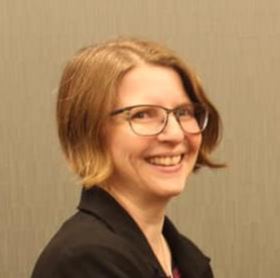
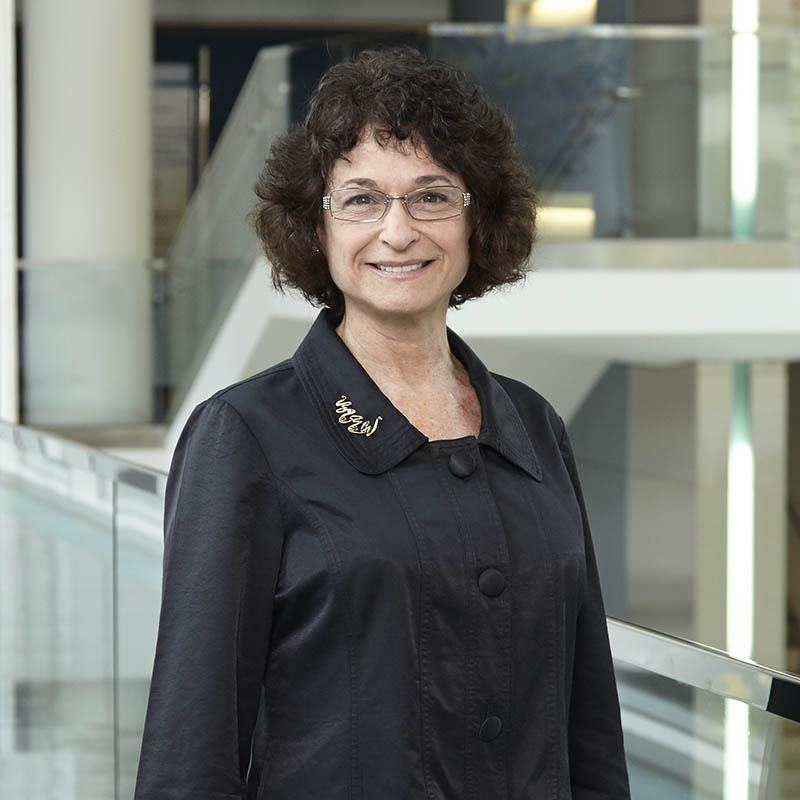
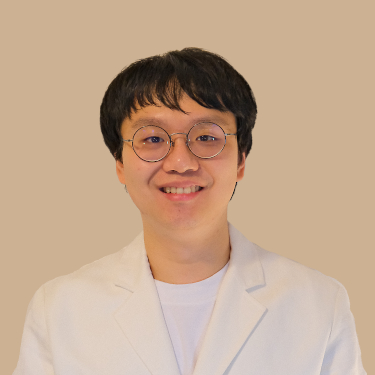
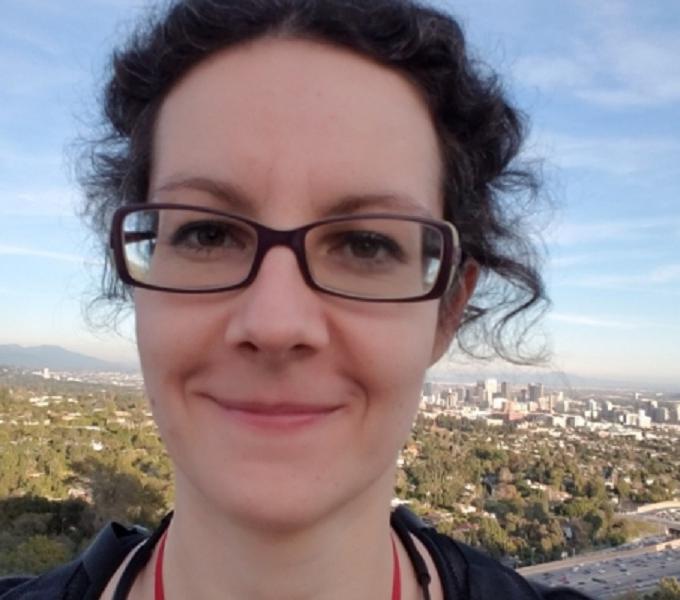
Colin Raffel , currently an Associate Professor at the University of Toronto and Associate Research Director at the Vector Institute , is a leading researcher in machine learning and natural language processing . His career spans roles at Hugging Face (Faculty Researcher), Google Brain (Senior Research Scientist), and UNC Chapel Hill (Assistant Professor). Education: PhD in Electrical Engineering (Columbia), MA in Music/Science (Stanford), BA in Mathematics (Oberlin) Key affiliations: Google Brain (2016-2020), Hugging Face (2021-present), Vector Institute (2023-present) His research focuses on language model development , attention mechanisms , efficient machine learning , and music information retrieval . Recent work explores model merging , parameter-efficient fine-tuning , and data-constrained language models . Teaching : Has instructed courses at University of Toronto and UNC Chapel Hill on Neural Networks , Deep Learning , and Information Theory . Academic service includes organizing ICLR workshops and serving as Senior Area Chair for NeurIPS and EMNLP . Notable awards : NSF CAREER (2022), Caspar Bowden Award (2023), NeurIPS Outstanding Paper (2023) Key contributions : Core developer of WT5 , Git-Theta , and mir_eval software
Elaine Francis is a Professor of English and Linguistics at Purdue University's College of Liberal Arts, where she serves as Associate Head of the Department of English and directs the Experimental Linguistics Lab. She holds additional affiliations as an Affiliate Faculty Member in the Department of Linguistics and a Courtesy Faculty Member in the Department of Speech, Language, and Hearing Sciences. Ph.D. in Linguistics, University of Chicago (1999) B.A. in Linguistics, College of William and Mary (1993) MA in Linguistics, University of Chicago (1995) Former Assistant Professor at the University of Hong Kong (1999-2002) Professor Francis's research focuses on syntax and its interfaces with semantics, discourse information structure, and language processing in production and comprehension. She employs experimental methods to investigate syntactic, semantic, discourse-pragmatic, and cognitive factors underlying complex sentence structures. Her primary research areas include word order alternations, filler-gap dependencies, resumptive pronouns, and grammatical acceptability. She examines how various factors contribute to grammatical alternations in language use and explores how processing pressures in production and comprehension contribute to grammatical conventions. Her recent publication record shows consistent output across multiple linguistic subfields, with a strong emphasis on experimental syntax and psycholinguistics. Her 2022 book, Gradient Acceptability and Linguistic Theory , represents a significant contribution to understanding acceptability judgment tasks in relation to syntactic theory. Her work spans theoretical syntax, experimental linguistics, second language acquisition, and cross-linguistic comparison, often bridging the gap between theoretical frameworks and empirical evidence. Regularly teaches short courses at Linguistic Society of America Linguistic Institutes Member of Linguistic Society of America Ethics Committee Editorial board member of Glossa Psycholinguistics Co-editor of Polymorphous Linguistics: Jim McCawley's Legacy (2005) Co-editor of Mismatch: Form-Function Incongruity and the Architecture of Grammar (2003) Professor Francis actively supervises graduate students in linguistics, though she has indicated she will be unable to take on new graduate students for the 2025-2026 academic year. She has received research support for her experimental work, particularly for investigating syntactic phenomena through controlled experiments and corpus analysis. Her collaborative work extends across multiple institutions and disciplines, including collaborations with researchers in computational linguistics, cognitive science, and clinical linguistics. She directs the Experimental Linguistics Lab at Purdue University, which conducts research on syntactic processing using various experimental methodologies. The lab investigates how speakers produce and comprehend complex sentence structures, with particular attention to how grammatical knowledge interacts with processing constraints. Current projects include research on relative clauses, syntactic islands, and acceptability gradient phenomena across multiple languages.
Cheryl Gaimon holds the Esther and Edward J. Brown Chair and serves as a Regents' Professor at the Scheller College of Business, Georgia Institute of Technology. She is Faculty Director of the Management of Technology (MoT) Certificate Program, which she helped establish, and teaches across all academic levels including executive education. Professor Gaimon initiated the Operations Management Program and served as its first Area Coordinator for seven years. Her academic credentials include: Ph.D. in Operations Research from Carnegie Mellon University M.S. in Industrial Administration (Operations Management) from Carnegie Mellon University B.S. in Mathematics and Economics (Magna Cum Laude) from Brooklyn College, City University of New York Professor Gaimon's research centers on managing knowledge-based resources in technology-driven environments. Her work spans Innovation and Management of Technology , Knowledge Management and Outsourcing , New Product/Process Development , Alliances for Innovation , and Sustainability Research . She examines how firms navigate technological change through strategic resource allocation, knowledge transfer, and sustainable operations, with increasing emphasis on environmental strategies in recent years. Her publication trajectory reveals consistent focus on operations management within technological evolution—from foundational work on technology acquisition and capacity planning to contemporary studies on environmental strategies and multidisciplinary technology management. Key journals featuring her research include Management Science , Operations Research , and Production and Operations Management . Major recognitions include: Regents' Professor designation (2005) by the Georgia Board of Regents The 1999 Georgia Tech Research Award for doctoral student development Brady Family Award for Faculty Research Excellence (2014) Best Department Editor Award for POM (2024) POMS Fellow status and Distinguished Service Award (2009/2014) As an educator, she has mentored doctoral students and shaped curriculum through the MoT program. Her professional leadership includes serving as POMS President (2008-2009), founding co-President of the POMS College on Product Innovation and Technology Management, and editorial roles at top journals including Management Science and Production and Operations Management . Professor Gaimon directs the interdisciplinary Management of Technology Certificate Program, fostering cross-departmental collaboration for technology management research and education while advancing sustainability integration in operations.
Huan Zhang serves as an Assistant Professor in the Department of Electrical and Computer Engineering at the University of Illinois Urbana-Champaign (UIUC), with affiliate appointments in the Department of Computer Science and the Coordinated Science Laboratory. His research focuses on building trustworthy AI systems with formal verification techniques to provide provable guarantees for safety-critical applications, particularly in machine learning and neural networks. Dr. Zhang received his Ph.D. in Computer Science from UCLA in 2020, advised by Professor Cho-Jui Hsieh. His academic journey includes an M.S. in Computer Engineering from UC Davis (2014) and a Bachelor of Engineering from Zhejiang University (2012). Prior to joining UIUC, he completed a postdoctoral fellowship at Carnegie Mellon University (2021-2023) with Professor Zico Kolter. Huan Zhang's research program centers on formal verification of machine learning systems, with particular emphasis on neural network verification, AI safety, robustness, and reliability. He pioneered the linear bound propagation-based verification framework that enables formal verification for networks with millions of neurons. His work spans five major research categories: formal verification of machine learning, training trustworthy ML models, machine learning safety and adversarial attacks, reinforcement learning safety, and optimization for scalable machine learning. His CROWN framework (NeurIPS 2018) established a foundational approach for neural network verification through efficient linear bound propagation. His recent publications demonstrate a strategic expansion from foundational verification techniques toward increasingly complex systems including large language models, vision-language models, and robotic control systems. The research trajectory shows a clear progression from theoretical frameworks to practical implementations with real-world applications, particularly in safety-critical domains. His work increasingly bridges formal methods with practical AI deployment requirements. Winner of International Verification of Neural Networks Competition (VNN-COMP) as team leader (2021-2024) Schmidt Futures AI2050 Early Career Fellowship ($300,000 research grant) Adversarial Machine Learning (AdvML) Rising Star Award (2021) IBM PhD Fellowship (2018) Dr. Zhang leads the development of α,β-CROWN, a neural network verifier that has won VNN-COMP 2021-2023, and auto_LiRPA, a PyTorch-based library for perturbation analysis on general computational graphs. He has mentored numerous graduate students from CMU, UCLA, UIUC, and Columbia University. His research is supported by significant funding including the Schmidt Futures fellowship and industry collaborations. He teaches courses including ECE 120, ECE 484, ECE 584, and ECE 598 HZ on topics ranging from computing fundamentals to safe autonomy and machine learning. Dr. Zhang maintains active research collaborations across multiple institutions and is affiliated with UIUC's Coordinated Science Laboratory. His work has significant implications for safety-critical AI applications in autonomous systems, healthcare, and other mission-critical domains where reliability guarantees are essential. He regularly gives guest lectures at institutions including Yale, Stony Brook, and the University of Nebraska Lincoln on formal verification techniques.
Kenneth S. Breuer is a Professor of Engineering at Brown University, serving as Director of the Center for Fluid Mechanics. He holds appointments in the School of Engineering and collaborates across disciplines, including Biology and Physics. His research focuses on fluid mechanics, animal flight mechanics (particularly bats), bacterial motility, renewable energy, and turbulence. Breuer earned his Sc.B. from Brown University and M.Sc./Ph.D. from MIT, returning to Brown in 1999 after faculty service at MIT. Education: Sc.B. (Brown), M.Sc./Ph.D. (MIT). Awards include Fellowships from the American Physical Society and American Society of Mechanical Engineers, and the Harold and Esther Edgerton Chair at MIT. He has authored over 100 publications and edited books such as *Microscale Diagnostic Techniques*. Research Interests: Fluid mechanics at micro/nanoscales, bio-inspired flight mechanisms, energy harvesting, and vortex dynamics. Collaborations include Professors Sharon Swartz (Biology) and Thomas Powers (Engineering). Current projects explore bat wing aerodynamics, membrane hydrofoils, and aerosol transmission in vehicles. Awards: APS Division of Fluid Dynamics Chair (2012), Midwest Mechanics Lecturer, and multiple fellowships. Teaching includes courses in Fluid Mechanics, Transport Phenomena, and Renewable Energy Systems. His lab develops bio-inspired robotic systems and studies flow interactions in animal and engineered systems.
Dimiter Angelov serves as the Dumbarton Oaks Professor of Byzantine History at Harvard University, holding a faculty position in the Department of History within the Faculty of Arts and Sciences. He chairs Harvard's Ph.D. Program in Byzantine Studies and teaches graduate and undergraduate courses spanning Byzantine, medieval eastern Mediterranean, and medieval Balkan history. His academic credentials include: Ph.D., Harvard University Professor Angelov specializes in the intellectual and political history of the Byzantine Empire after the tenth century, with focused interests in empire and imperialism, political thought and rhetoric, biography, geographical imagination, and the Fourth Crusade's impact. Current research encompasses a comprehensive history of Byzantine political thought examining virtue and tyranny from the fifth to fifteenth centuries, alongside collaborative analysis of Eustathios of Thessaloniki's twelfth-century geographical anthology. His scholarly output features three major monographs exploring Byzantine political ideology, court ceremonies, and imperial biography. These works demonstrate consistent engagement with thirteenth and fourteenth century institutional transformations, particularly how Byzantine elites navigated governance challenges through classical intellectual traditions in the post-Crusade era. No scientific awards are documented in the provided materials. He actively supervises graduate students pursuing research in Byzantine and medieval Balkan/eastern Mediterranean history. The source texts do not reference specific grants, funding sources, laboratory facilities, or research teams.
Alison Isenberg is a Professor of History at Princeton University and Faculty Associate at the School of Public and International Affairs. She is founding co-director of the Princeton-Mellon Initiative in Architecture, Urbanism, and the Humanities, and formerly directed Princeton’s Urban Studies Program (2012-2014). She serves on the Executive Committees of the Urban Studies Program, American Studies, and Gender and Sexuality Studies. Her research focuses on urban history, American society, and intersections with public policy, preservation, and cultural studies. Ph.D. in History, University of Pennsylvania (1995) B.A. in History, Yale University (1984) Her scholarship examines urban transformations, including award-winning books on urban renewal and historical preservation. She has received fellowships from the National Endowment for the Humanities, Princeton’s Humanities Council, and institutions like the Schlesinger Library and the Graham Foundation. Her collaborative projects with filmmakers, playwrights, and community partners explore public humanities and Trenton’s 1968 unrest. Ellis Hawley Prize (Organization of American Historians) PROSE Award for Architecture & Urban Planning Old Dominion Fellowship NEH Fellowship (2021) Isenberg teaches courses spanning urban history, documentary film, and public policy, including seminars on the 1960s and lectures on urban unrest. She previously taught at Rutgers, UNC Chapel Hill, and Florida International University, with visiting fellowships at Stanford, UNC, and the Bard Graduate Center. Her work bridges academic research and community engagement, supported by grants from the Princeton Histories Fund and 250th Anniversary Fund.
Paulina Łęska-Bayraktar is an Assistant Professor in the Department of English-Polish Comparative Linguistics at the Faculty of English, Adam Mickiewicz University in Poznań, where she conducts research and teaches in formal syntax and comparative linguistics. Her academic foundation is deeply rooted in the same institution, reflecting a sustained commitment to linguistic scholarship in Poland. Her educational background includes: B.A. in English Linguistics, Adam Mickiewicz University in Poznań (2012) M.A. in English Linguistics, Adam Mickiewicz University in Poznań (2014) Ph.D. in English Linguistics, Adam Mickiewicz University in Poznań (2019) Her research interests lie at the intersection of syntax, semantics, and cognitive grammar, with a strong focus on generative approaches to Slavic languages—particularly Polish. She investigates complex syntactic phenomena such as binding theory, pronoun distribution, quantifier scope, agreement, and the structure of relative and nominal clauses. Her work combines formal theoretical analysis with empirical data, often drawing on acceptability judgments and psycholinguistic methodologies. The trends in her recent publications reveal a sustained engagement with the syntax of Polish, especially in non-canonical constructions involving dative arguments, experiencers, and pronominal clusters. Her work contributes significantly to the understanding of how universal syntactic principles manifest in Slavic morphosyntax, and she frequently collaborates with leading scholars like Prof. Jacek Witkoś. She has received research funding from the Polish National Science Center through multiple grants, including OPUS, Beethoven, and Miniatura projects, which have supported her investigations into nominal expressions, pronouns, and anaphora in Polish. These grants underscore the national recognition of her research contributions. Paulina Łęska-Bayraktar actively participates in the international linguistics community, presenting her work at major conferences such as Formal Approaches to Slavic Linguistics (FASL), Formal Description of Slavic Languages (FDSL), and the Poznań Linguistic Meeting. She is also involved in collaborative research teams and has co-authored works with scholars from Humboldt-Universität zu Berlin and other institutions. Her academic presence is further strengthened by her profiles on ORCID and ResearchGate.
Adriana Kovashka is an Associate Professor at the University of Pittsburgh , affiliated with the School of Computing and Information and serving as Department Chair . Her academic journey began with BA degrees in Computer Science and Media Studies from Pomona College (2008) and a PhD in Computer Science from The University of Texas at Austin (2014). Joined Pitt’s faculty in January 2015 NSF CAREER awardee (2021) Google Faculty Research Award recipient Dr. Kovashka’s research spans Computer Vision , Machine Learning , and Natural Language Processing , focusing on visual rhetoric, weak multimodal supervision, and domain adaptation. She pioneered techniques for analyzing political imagery, developing robust object detection frameworks, and exploring the intersection of visual and textual persuasion through large-scale annotated datasets. Her recent work emphasizes geographic diversity in vision-language systems, audio-visual fusion for domain generalization, and shape-texture bias mitigation in CNNs. Key publications include groundbreaking studies on symbolic reasoning, multimodal dialogue systems, and ethical AI applications in education. Scientific honors include: NSF CRII Award (2016) NSF CAREER Award (2021) Pitt CRDF Award (2016, 2018) Best Paper at ECV Workshop (2021) Google Faculty Research Award (2016, 2018) Dr. Kovashka actively mentors students in multimodal learning projects and collaborates with interdisciplinary teams on NSF-funded initiatives. She co-organizes workshops like the first CVPR workshop on advertisement understanding and leads research groups exploring human-AI co-learning systems.
Dr. Hassan Qudrat-Ullah is a Professor at the School of Administrative Studies, York University, and Coordinator of the Certificate in Logistics Management. He holds a PhD in Decision Sciences from NUS Business School and completed a post-doctoral fellowship at Carnegie Mellon University. His research focuses on dynamic decision making, system dynamics modeling, energy planning, and interactive learning environments. He teaches courses on quantitative methods, logistics, and decision analysis, informed by global industry experience across 20+ countries. Research interests include sustainability, climate change, systems thinking, and educational applications of decision sciences. He serves as Editor-in-Chief of the International Journal of Complexity in Applied Science and Technology and is a member of IEEE, DSI, and the International System Dynamics Society. His work has been published in Energy , Decision Support Systems , and others. Key projects include studies on 'structured-debriefing in dynamic decision making' and renewable energy policies in Africa. His recent articles (2023–2025) address AI integration in energy governance, system dynamics for supply chain resilience, and education for sustainability. Hassan advocates for systems thinking in K-12 education and enjoys traveling (visited 129 countries) and bird-watching.
Geoffrey E. Hinton is a distinguished Professor in the Department of Computer Science at the University of Toronto. He is renowned for his foundational contributions to machine learning, particularly in the development of deep learning and neural networks. His research focuses on understanding learning processes in both artificial and biological systems, with key contributions including Boltzmann machines, backpropagation, and deep belief networks. He teaches advanced machine learning courses such as CSC2535, emphasizing topics like graphical models, variational inference, and deep learning architectures. His work has been published extensively in top journals and conferences, with recent papers exploring forward-forward algorithms, analog diffusion models, and scalable neural network training methods. Hinton has advised numerous PhD and master's students and collaborates with institutions like Vector Institute. He is a central figure in the global AI community, regularly presenting at conferences (e.g., 2023 talks on CBS 60 Minutes, BBC, and PBS). His lab focuses on advancing machine learning theory and applications, addressing challenges in vision, language, and generative models.
Liza Rebrova is an Assistant Professor in the Department of Operations Research and Financial Engineering (ORFE) at Princeton University's School of Engineering and Applied Science. She is also an associated faculty member of the Program in Applied and Computational Mathematics (PACM) and the Center for Statistics and Machine Learning (CSML). Her research focuses on randomized numerical linear algebra and the mathematics of data science, with connections to high-dimensional probability and stochastic optimization. She develops mathematically justified randomized algorithms for large-scale data, particularly interested in settings where data exhibits mathematical structure such as spectral decay, multi-modality, or non-negativity. Her work addresses challenges in data compression, recovery, and optimization under structured noise conditions. Dr. Rebrova's recent publications show a strong trend toward developing robust algorithms for linear systems, tensor data compression, and nonnegative matrix factorization. Her work bridges theoretical foundations with practical applications in machine learning and data science, with emphasis on memory efficiency and handling corrupted or incomplete data. NSF DMS-2309685 (Single PI, 2024-2026): "Outliers are not what they seem: data-aware, flexible, and robust randomized iterative methods" NSF DMS-2108479 (Collaborative, 2022-2024): "Fast, Low-Memory Embeddings for Tensor Data with Applications" (co-PIs Mark Iwen and Deanna Needell) She currently advises three PhD students (Jackie Lok, Shambhavi Suryanarayanan, and Sofiia Shvaiko) and has previously advised Abraar Chaudhry (PhD 2024) and Nicolo Grometto (Masters thesis 2023). At Princeton, she teaches graduate courses including ORF526 (Graduate Probability), ORF387 (Networks), and ORF523 (Convex and Conic Optimization).
Greg Durrett is an Associate Professor in the Department of Computer Science at University of Texas at Austin, leading the TAUR Lab (Text Analysis, Understanding, and Reasoning ). His research focuses on advancing Large Language Models (LLMs) for knowledge-intensive tasks in medical information processing scientific discovery legal reasoning . He received his B.S. in Computer Science and Mathematics from MIT (2010) and Ph.D. in Computer Science from UC Berkeley (2016). His work develops techniques to train LLMs with new capabilities augment models for reliability assess model outputs improve reasoning frameworks . His 15 most recent publications (2021-2025) span knowledge propagation in LLMs chain-of-thought reasoning code generation benchmarks multi-modal reasoning fact verification discourse analysis . Scientific honors include NSF CAREER Award (2024) NSF grants (2018, 2024) Bloomberg Data Science Grant (2017) Facebook Fellowship (2014) Best Paper Finalist (EMNLP 2013) . Teaching: CS388: Natural Language Processing (graduate) CS371N: NLP (undergraduate) High school NLP module .
Nima Fazeli is an Assistant Professor of Robotics at the University of Michigan (2020–Present), holding courtesy appointments in Computer Science & Engineering (CSE) and Mechanical Engineering. He directs the Manipulation and Machine Intelligence (MMint) Lab, focusing on enabling dexterous robotic manipulation through multimodal representation learning, tactile sensing, and model-based reasoning. His work integrates mechanics, perception, controls, and planning to achieve autonomous interaction with uncertain environments. Education: PhD, MIT (2019); MSc, University of Maryland (2014); BSc, Amirkabir University of Technology (2011) Research interests emphasize embodied intelligence , including visuo-tactile fusion, contact dynamics modeling, and cross-modal learning. Recent work explores tactile shadows, deformable object manipulation, and language-guided robot control. His research is supported by the NSF CAREER grant and National Robotics Initiative, with applications in manufacturing, assistive robotics, and space systems. Publications span topics like tactile sensing hardware (e.g., GelSlim 4.0), visuo-tactile implicit representations (ViTaSCOPE), and failure recovery policies (Racer). His team’s work has been featured in outlets like The New York Times and BBC. Key Awards: NSF CAREER Grant (2024) Teaching includes Introduction to Robotic Manipulation . Collaborations involve cross-disciplinary projects with mechanical, electrical, and biomedical engineering groups.
Hanjie Chen is an Assistant Professor in the Department of Computer Science at Rice University, affiliated with the Ken Kennedy Institute. She holds a Ph.D. from the University of Virginia and a Master's from the University of Science and Technology of China. Her research focuses on Natural Language Processing, Interpretable Machine Learning, and Trustworthy AI, emphasizing model explainability, alignment with human needs, and applications in healthcare, sports, and medicine. She has advised numerous students and led initiatives in AI ethics and education. Education: Ph.D. (Computer Science, UVA 2023), M.Sc. (USTC 2018), B.Sc. (Nanjing University of Aeronautics and Astronautics 2015). Awards include the Outstanding Doctoral Student Award (UVA 2023) and John A. Stankovic Research Award (UVA 2023). She has organized workshops like BlackboxNLP and served on program committees for ACL, NAACL, and EMNLP. Her recent work includes developing benchmarks like SPORTU for multimodal LLMs, evaluating medical question-answering systems, and advancing methods for robust rationale evaluation (RORA). She teaches courses on Natural Language Processing and Trustworthy NLP, emphasizing pedagogical innovation recognized by teaching awards at UVA. Research collaborations include internships at Microsoft Research, IBM, and the Allen Institute for AI. She mentors students in SURF programs and advocates for diversity in tech, serving as a mentor in UVA's CSGSG Council.