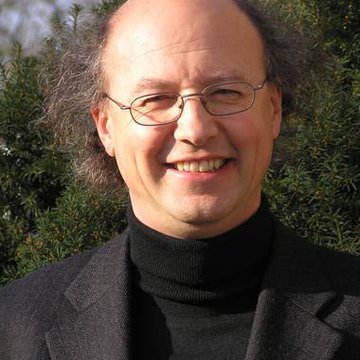
Frank Nack is a researcher at the University of Amsterdam's Informatics Institute, where he leads the INDE Lab. His work bridges digital narrative systems with human communication and creativity. Research Focus: Interactive digital narratives, computational applications of media theory, AI in film, semiotics-driven hypermedia systems, and context-aware storytelling environments. His projects explore how technology can represent complex social issues through narrative frameworks. Project Highlights: Current work on Interactive Digital Storytelling (IDN) and Interactive Discourse Environments (IDE) authoring systems Projects like UBUZZ connecting cultural heritage with public spaces Earlier research on ambient intelligence (ACCOMPANY robotic companion) and location-based storytelling (SmartInside, MOCATOUR) Technical Contributions: Developed emotion editors for VRML (TINKY), narrative architecture for virtual reality (VirtuOsi), and semiotic tagging systems for media metadata.
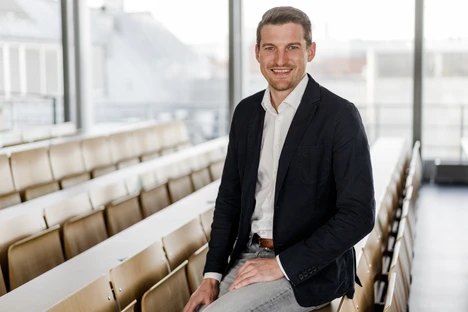
Dr. Matthias Kraus is a Researcher at the Chair of Human-Centered Artificial Intelligence , part of the Institute of Computer Science under the Faculty of Applied Computer Science at the University of Augsburg . His work bridges Conversational AI , Spoken Dialogue Systems , and Human-Computer Trust , with a focus on proactive interaction and multimodal user modeling. His research explores trust modeling in mixed-initiative systems, socially-aware reinforcement learning for dialogue agents, and responsible personalization in human-robot cooperation. He has published extensively on multi-user chatbots , proactive tutoring , and trust dynamics in collaborative environments. Key article trends include dialogue act annotation , household robotics , and ethics in conversational interfaces . His team develops user-centered AI for healthcare, education, and industry, as seen in projects like KodiLL and MindBot .
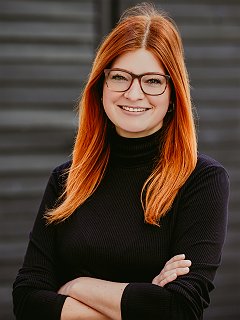
Johanna Kuch, M.Sc., is a Scientific Associate at the Chair of Human-Centered Artificial Intelligence within the Faculty of Applied Computer Science at the University of Augsburg. Her work focuses on sound design, gamification, and voice interaction systems in human-machine contexts. Research Areas Innovative sound design for human-machine interfaces Gamification strategies in human-robot interaction Personalized voice synthesis for humanoid robots Emotional AI integration in virtual agents She supervises bachelor's and master's theses on adaptive interaction systems and collaborates on projects involving 3D audio, emotional signal processing, and user-focused AI training tools. Contact: Universitätsstraße 6a, 86159 Augsburg | Phone: +49 821 598-2345 | Office hours by appointment
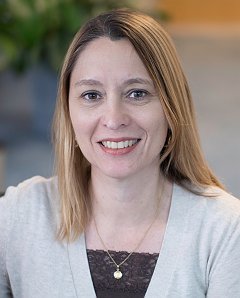
Stephan Altmann is a Professor at the Department of Engineering and Management, Technische Hochschule Mannheim , where he directs the International Relations in Engineering and Management and co-leads the Virtual Innovation Player (VIP) initiative. His work focuses on strategic ecosystem design , data-driven business models , and innovation management across sectors like construction, mobility, and industrial goods. He collaborates with global partners such as Chargehere GmbH , KSB , and Siemens AG , leveraging student teams to explore future market requirements and technology trends. Academic Roles: Professor (Technische Hochschule Mannheim), Honorary Professor (University of Ulm) Key Research Areas: Strategic Ecosystem Design, Corporate Incubation, Data-Driven Business Models, Sustainable Construction, E-Mobility Collaborative Networks: Partners with 10+ companies including BASF, STIHL, and Harmonic Drive AG
Prof. Dr. Klaus Strassmeier is a Professor at the Leibniz Institute for Astrophysics Potsdam (AIP), based in office HH/104 with contact details +49 331 7499 295 and kstrassmeier@aip.de. His work centers on the Stellar Physics and Exoplanets department, specifically the Stellar Activity research group, focusing on observational studies of stellar magnetic phenomena. His research spans: Stellar Activity and starspot dynamics through multi-decade photometric campaigns Doppler imaging for stellar surface mapping Stellar dynamos and magnetic braking mechanisms Exoplanet atmosphere characterization via high-resolution spectroscopy Instrumentation development for telescopes like PEPSI Analysis of his 2024-2025 publications reveals consistent emphasis on long-term stellar activity monitoring (e.g., 40-year XX Trianguli study), chaotic dynamo behavior, and exoplanet atmosphere investigations. His work leverages the PLATO mission framework and advanced spectroscopic techniques, often involving international collaborations through AIP's High-resolution Spectroscopy and Polarimetry group. No scientific awards are documented in available materials. Prof. Strassmeier actively contributes to telescope robotics projects and instrumentation development while mentoring students through the University of Potsdam Astrophysics Network. His grant-funded research includes PLATO mission participation and long-term stellar monitoring programs, with future work targeting dynamo theory refinement and exoplanet atmosphere modeling. He leads the Stellar Activity group within AIP's research ecosystem, utilizing facilities like the Einstein Tower and Great Refractor observatories.
Andreas Geiger is Professor and Head of the Department of Computer Science at the University of Tübingen, Germany, where he leads the Autonomous Vision Group (AVG) within CyberValley. He serves as core faculty at the Tübingen AI Center, Principal Investigator in the Excellence Cluster ML in Science and CRC Robust Vision, and ELLIS fellow coordinating the ELLIS PhD program. Prof. Geiger's research centers on machine learning for computer vision, natural language processing, and robotics, with emphasis on 2D/3D scene representations, geometry reconstruction, and robust model development. His group pioneers neural rendering techniques like Gaussian splatting while addressing real-world challenges in autonomous driving, VR/AR, and scientific document analysis through discriminative and generative approaches. Recent publications (2025) demonstrate strong focus on 3D scene understanding using Gaussian splatting, autonomous driving simulation with world models like ReSim and Vista, and generative methods for controllable 3D scenes. The group maintains Scholar Inbox for personalized academic recommendations while advancing reinforcement learning for self-driving (CaRL) and robust perception evaluation (EMPERROR). Major recognitions include: Best Paper Awards at CVPR 2024/2021, 3DV 2017/2015, GCPR 2015 Sage 10-Year Impact Award 2024 and Longuet-Higgins Prize 2022 ERC Starting Grant 2019 and IEEE PAMI Young Researcher Award 2018 nuPlan Challenge Winner 2023 and German Pattern Recognition Prize 2017 Prof. Geiger actively supervises PhD students including Reiser (3D view synthesis), Baur (Lidar scene flow), Jaeger (reinforcement learning), and Liao (urban scene transfer). His group secures substantial funding through the ERC Starting Grant, Vector Stiftung's MINT Innovation Program, ML in Science Cluster, and CRC Robust Vision, while collaborating with industry via Waymo and nuPlan challenges. The Autonomous Vision Group operates from CyberValley's new campus building with a diverse international team (12+ nationalities). They maintain Scholar Inbox for academic discovery and organize regular technical retreats and unique team-building activities like deep cave expeditions, fostering innovation in 3D vision and autonomous systems.
Andreas Gromer is a Researcher at the Chair of Technology Didactics within the School of Social Sciences and Technology at the Technical University of Munich (TUM). Seconded since 2019 (part-time until 2024, full-time from 2025), he concurrently taught metal and construction technology at Johann-Bierwirth-Schule in Memmingen until 2025 while contributing to TUM's teacher training professionalization and research initiatives. His educational foundation includes a vocational teaching degree from TUM (2006-2011) specializing in metal and construction technology, preceded by graduation from Vöhlin-Gymnasium Memmingen (2005) and practical training at Bavarian teacher colleges (2012-2014). Research centers on competency-oriented vocational education frameworks, knowledge-work-driven competence development strategies, Industry 4.0 didactic modeling, and hybrid-format digital pedagogy. His work systematically bridges theoretical vocational learning with practical industrial applications through technology integration. Publication analysis reveals a cohesive trajectory: recent works progressively detail Industry 4.0 implementation in vocational contexts, evolving from interdisciplinary competency frameworks (2023) to hybrid learning landscapes (2021), then to robotics (2020) and cyber-physical pneumatics (2018), demonstrating applied focus on industrial technologies within educational settings. No scientific awards were documented in source materials. As a TUM researcher, Gromer mentors teacher training students in technology didactics while contributing to institutional projects. His consultancy role in ALP Dillingen's Digital Transformation initiative extends his impact to robotics and sensor technology specialization groups. He operates within TUM's Technology Didactics ecosystem, collaborating on BBI@TUM and LPI projects while advancing vocational education through the TRIX platform and JOTED journal, with ongoing work targeting cyber-physical system integration in vocational curricula.
Max Planck Institute for Dynamics and Self-OrganizationGermany
Dr. Corinna Maass is a Research Group Leader leading the Active Soft Matter Group within the Department of Dynamics of Complex Fluids at the Max Planck Institute for Dynamics and Self-Organization in Göttingen, Germany. She has held this position since 2014, establishing herself as a leading researcher in active matter systems and self-propelled droplets. Institution: Max Planck Institute for Dynamics and Self-Organization Department: Dynamics of Complex Fluids Research Group: Active Soft Matter Location: Göttingen, Germany Dr. Maass completed her physics diploma at the University of Konstanz (1999-2004), followed by doctoral research on 'Dynamics of levitated granular media' at the same institution, which she completed in 2009. She then conducted postdoctoral research at New York University (2010-2013) in the Chaikin and Seeman group working on 'Self replicating DNA nanostructures,' supported by a German Academic Exchange Service fellowship. Her research focuses on active matter systems far from equilibrium, particularly active liquid crystal emulsions consisting of uniform droplets studied in complex microfluidic geometries. These systems exhibit surprising similarities to biological analogues such as bacteria or plankton, displaying self-propulsion, navigation, and collective effects like swarming. Her work bridges fundamental physics with potential applications in microfluidics and soft robotics. The research employs experimental approaches combined with theoretical modeling to understand the emergent behaviors in these non-equilibrium systems. Analysis of Dr. Maass's recent publications reveals a consistent focus on the dynamics of active droplets and microswimmers, with increasing sophistication in controlling and understanding their behavior. Her work spans fundamental investigations of self-propulsion mechanisms, collective dynamics, and interactions with complex environments. The research shows strong interdisciplinary connections between soft matter physics, fluid dynamics, and non-equilibrium statistical mechanics, with applications emerging in microfluidic technology and biomimetic systems. Dr. Maass has successfully advised students including Strehl, A.-M. who completed a bachelor thesis on 'Self-propelling nematic droplets: role of director field elasticity' (2017) and Bantje, D. who worked on 'Interferometrie an aktiven Emulsionen' (2018). Her research is supported by the infrastructure of the Max Planck Institute, providing access to advanced microfluidics facilities and collaborative opportunities within the broader dynamics of complex fluids department. The Active Soft Matter Group operates within state-of-the-art laboratories at the Max Planck Institute for Dynamics and Self-Organization, utilizing advanced microfluidic setups, high-speed imaging systems, and precision manipulation techniques to study active droplet systems. The group collaborates extensively with other research teams both within the institute and internationally, particularly with groups specializing in theoretical modeling of active matter systems.
Max Planck Institute for Security and PrivacyGermany
Isabella Graßl serves as Visiting Professor for Gender in Computer Science at Technical University of Darmstadt, Germany. She currently holds the Diversity & Inclusion Chair position for ASE 2025 and actively participates in program committees for ICSE, ESEC/FSE, and CSEE&T conferences across multiple tracks including Software Engineering Education and Training. Her research spans critical intersections of technology and society: Human and Social Aspects of Software Engineering Diversity and Inclusion frameworks in technical environments Innovative Programming Education methodologies Empirical Software Engineering validation techniques Machine Learning/NLP applications in developer tools Literary and Cultural Studies perspectives on computing Recent publications (2022-2025) demonstrate concentrated exploration of gender dynamics in programming education, with empirical studies on pair programming behaviors, music-based coding engagement, and specialized approaches for neurodiverse learners. Her work increasingly integrates queer theory into software engineering through investigations of LGBTQ+ student experiences and identity-inclusive pedagogy. No scientific awards were documented in the source materials. Conference contributions reveal extensive service in academic leadership, particularly through diversity initiatives and educational track committees, though specific grant funding or student advising details remain unreported in available texts.
Max Planck Institute for Security and PrivacyGermany
Grace Lewis is a Principal Researcher and lead of the Tactical and AI-Enabled Systems (TAS) initiative at the Software Engineering Institute (SEI) at Carnegie Mellon University. She serves as principal investigator for multiple research projects including 'Continuum: Establishing the Practice of Integrated T&E for ML Capabilities' and is President-Elect for the IEEE Computer Society in 2025. Her work bridges academic research with practical applications in defense and tactical environments. Her educational background includes: B.Sc. in Software Systems Engineering and Specialization in Administration from Icesi University in Colombia Master in Software Engineering from Carnegie Mellon University Ph.D. in Computer Science from Vrije Universiteit Amsterdam Dr. Lewis specializes in software engineering for AI/ML systems, with particular focus on architectural practices for systems integrating emerging technologies. Her research addresses critical challenges in deploying ML systems in operational environments, including test and evaluation of ML capabilities, mismatch detection between development and operational contexts, and edge computing for tactical applications. She has made significant contributions to understanding how software architecture principles must evolve to accommodate AI/ML components within larger systems. Analysis of her recent publications reveals a strong focus on the practical challenges of implementing ML systems in real-world contexts. Her work spans ML testing methodologies, architectural patterns for edge computing, green computing for ML systems, and addressing collaboration challenges in ML-enabled system development. A consistent theme is the need for better integration between data science, software engineering, and operational perspectives when building ML systems. Her notable recognitions include: BEST PAPER AWARD at WICSA 2016 DISTINGUISHED PAPER AWARD at ICSE 2022 Dr. Lewis leads the Tactical and AI-Enabled Systems initiative which develops tools like MLTE (ML Test and Evaluation), TEC (ML Mismatch Detection), and UnitML. Her projects address critical gaps in ML system deployment, particularly in defense contexts where testing failures can cause significant delays. She actively collaborates with the Army AI Integration Center and other defense organizations to transition research into practice.
Max Planck Institute for Security and PrivacyGermany
Thomas Vogel is a postdoctoral researcher in the Software Engineering Group at Humboldt-Universität zu Berlin, where he teaches courses including Adaptive Systems, Software Engineering, and Methods and Models of System Design. Previously, from October 2021 to September 2022, he served as stand-in professor for Empirical Software Engineering at Paderborn University. His academic journey includes a Ph.D. with summa cum laude from the Hasso Plattner Institute at University of Potsdam (2018) and undergraduate studies in Information Systems at University of Bamberg with distinction. Dr. Vogel's research focuses on the intersection of software engineering with self-adaptive and autonomous systems. His work bridges search-based and model-driven software engineering with control theory to create robust adaptive systems. He has made significant contributions to quality assurance of self-adaptive software, particularly in the areas of uncertainty reduction, runtime verification, and formal synthesis of controllers. His research has practical applications in mobile robot navigation, server infrastructure management, and scientific computing domains. His publications reveal a strong emphasis on formal methods for adaptive systems, with a notable trend toward integrating machine learning techniques with traditional control theory approaches. Recent work demonstrates increased focus on industrial applicability of self-adaptation research, uncertainty management, and evaluation methodologies for adaptive systems. His 2015 paper "Software Engineering meets Control Theory" received the SEAMS 10-Year Most Influential Paper Award in 2025, highlighting the lasting impact of his contributions to the field. Among his notable recognitions are the Facebook Testing and Verification Research Award, the Karsten Schwan Best Paper Award at ICAC 2017, and the Best Paper Award at SEAMS 2024 for "Formal Synthesis of Uncertainty Reduction Controllers." He has served on program committees for major conferences including ASE, ICSE, ICST, and SEAMS, and was Program Committee Co-Chair for the Research Track at SEAMS 2025. Dr. Vogel actively mentors PhD students, with recent successful defenses by Arut Prakash Kaleeswaran ("Explanation of the Model Checker Verification Results") and Sona Ghahremani ("Incremental Self-Adaptation of Dynamic Architectures Attaining Optimality and Scalability"). His research has been supported by the Deutsche Forschungsgemeinschaft (DFG), including the "Controlling Search-Based Test Generation and Program Repair" project. He is also involved in the collaborative research center "FONDA: Foundations of Workflows for Large-Scale Scientific Data Analysis."
Prof. Dr.-Ing. Frank Wallhoff is a Professor for Assistive Technologies at Jade University of Applied Sciences since 2010. He serves as Dean of the Department of Civil Engineering Geoinformation Health Technology and Head of the Institute for Technical Assistance Systems. His career spans over two decades with significant contributions to human-machine interaction, cognitive systems, and assistive technologies. Previously, he worked at Technische Universität München from 1997-2010 where he completed his doctorate and served as a postdoc and Akademischer Rat. His educational background includes: 1988-1991: School education with A-level/high school graduation 1991-1992: Certified Engineer's Assistant 1993-1999: Study of electrical engineering 2002-2006: Doctorate at Technische Universität München on face detection, identification, and emotion recognition Wallhoff's research focuses on the intersection of technology and human needs, particularly in assistive technologies for aging populations and human-robot interaction. His work spans cognitive systems with learning capabilities, social robotics, ambient assisted living, pattern recognition, machine learning, human-machine interaction, and facial expression recognition. He has developed significant databases like the FG-NET Database with Facial Expressions and Emotions, which has been widely used in emotion recognition research. His recent publications (2015-2018) reveal a strong trend toward practical applications of human-robot interaction in healthcare, rehabilitation, and daily living assistance. His work increasingly integrates multimodal sensing, machine learning, and context-aware systems to create adaptive assistance technologies. Key areas include motion exercise recognition for rehabilitation, 3D visualization for underwater vehicle control, and robust human-robot dialogue systems for production environments. His scientific recognition includes: Best Paper Award for 'Experimental Platform for Wizard-of-Oz Evaluations of Biomimetic Active Vision in Robots' at IEEE International Conference on Robotics and Biomimetics (Robio), 2009 Wallhoff has secured significant research funding including the EITAMS project (€1.5 million from Lower Saxony Volkswagen Advance Programme) focused on affordable underwater vehicle systems, and the INTERREG project 'Vital Regions' (2017-2020) developing technologies to support elderly in rural areas. He coordinates the ALIAS project (Adaptable Ambient Living Assistant) and has led multiple projects within the Cluster of Excellence CoTeSys, including JAHIR, ACIPE, EYETRACK, and RealEYE. His research bridges academic innovation with practical applications, particularly in healthcare technology and assistive systems. He leads the Institute for Technical Assistance Systems at Jade University, where his team develops innovative solutions at the intersection of cognitive systems, human-robot interaction, and assistive technologies. Current initiatives focus on underwater robotics for maritime applications, rehabilitation technologies using motion tracking, and ambient assisted living systems for elderly care.
Prof. Dr. Peter Nauth is a Professor for Computer Engineering and Robotics at the Department of Computer Science and Engineering, Frankfurt University of Applied Sciences, where he has served since 1998. He is a key member of the FUTURE AGING Research Center, focusing on autonomous mobile assistance robots to enhance independent living for the elderly and those requiring assistance. His research spans autonomous navigation in unstructured environments, robot manipulation, intelligent sensors and image processing, machine learning for decision systems, and human-robot interaction. These areas drive his development of systems that independently perform tasks set by users, enabling greater autonomy in daily life. Analysis of his publications from 2001 to 2009 reveals a strong emphasis on practical assistive robotics, particularly in sensor fusion (combining visual and auditory data), humanoid robot control for goal achievement, and embedded intelligent systems for real-time operation in assistive contexts. Prof. Nauth directs the Laboratory for Autonomous Systems and serves as the international representative for electrical engineering courses. His work integrates closely with the FUTURE AGING Research Center, fostering interdisciplinary collaboration on aging and technology solutions.
Bonn-Rhein-Sieg University of Applied SciencesGermany
Dr. Alexander Hagg is a Researcher at Hochschule Bonn-Rhein-Sieg (H-BRS) in the Department of Engineering and Communication, affiliated with the Institute of Technology, Resource Conservation and Energy Efficiency (TREE). With a PhD from Leiden University, he specializes in evolutionary computation, machine learning, and computer-aided ideation, focusing on applications in climate adaptation, energy efficiency, and resource conservation. His work bridges theoretical research with practical applications across multiple domains including urban planning, computational chemistry, and robotics. PhD in Computer Aided Ideation (2017-2020) - Leiden University Master's in Autonomous Systems (2013-2016) - Bonn-Rhein-Sieg University of Applied Sciences Bachelor's in Computer Science (2009-2013) - Bonn-Rhein-Sieg University of Applied Sciences Dr. Hagg's research centers on efficient computer-aided ideation algorithms that help understand early on what good solutions to complex problems might look like. His primary focus is on quality diversity algorithms, which efficiently create diverse sets of high-performing solutions to inform engineers' intuition. His work spans multiple application domains including urban climate resilience, structural chemistry, robotics, and digital twins for urban planning. He is particularly interested in how AI can serve as a co-designer, helping humans explore and understand complex optimization and data domains. His recent publications reveal a strong trend toward applying evolutionary computation and machine learning to real-world engineering problems. A significant portion of his work focuses on computational chemistry and force-field parameter optimization, where machine learning substitutes expensive molecular dynamics calculations. Another major theme involves quality diversity algorithms applied to urban planning and building design. His research consistently emphasizes practical applications in climate adaptation and resource efficiency, with growing interest in digital twins for urban sustainability. 2023: GECCO Best Paper Award (honourable mention) 2022: ACM SIGEVO Best Dissertation Award (honourable mention) 2017: AFCEA Studienpreis 2017: GECCO Best Student Paper Award (honourable mention) 2016: RoboCup Symposium Best Paper Award Dr. Hagg has led multiple research projects including OpenSKIZZE (open-source tools for climate-adaptive urban development), Digital Twin-4-Multiphysics Lab (DT4MP), and KISs-BiS (AI for elite sports). He teaches courses on evolutionary computation, AI, and machine learning, and has developed workshops on digital twins for urban sustainability. His research is supported by collaborations with institutions including University of Siegen, University College London, University of Leiden, and various Fraunhofer institutes. He leads the Digital Twin-4-Multiphysics Lab (DT4MP) which focuses on urban digital twins and multiphysics twins for industry. Dr. Hagg is also active in several research groups including the Computational Chemistry Working Group at H-BRS and serves as a representative for H-BRS in the GeoIT Round Table NRW. His work often involves interdisciplinary teams spanning computer science, engineering, urban planning, and environmental science.
Kevin Buchin is a Professor at the Department of Computer Science, Faculty of Computer Science at Technical University of Dortmund, where he leads Chair 11: Algorithm Engineering. His work focuses on bridging theoretical and experimental algorithm development, particularly in computational geometry and spatial data analysis. Professor Buchin's research spans several key areas in algorithm engineering, with particular expertise in computational geometry, spatial networks, algorithms for GIS (Geographic Information Systems), and motion planning algorithms. His work combines theoretical foundations with practical applications, developing algorithms that address real-world challenges in spatial data processing and analysis. He has made significant contributions to trajectory analysis, geometric spanners, Fréchet distance computations, and map construction algorithms. His research often involves interdisciplinary collaborations that connect computer science with geographic applications and movement data analysis. An analysis of Professor Buchin's recent publications reveals a strong focus on trajectory analysis and spatial network algorithms. His work consistently addresses fundamental problems in computational geometry while developing practical solutions for real-world applications. Key trends include advancements in Fréchet distance computations, trajectory clustering techniques, geometric spanner constructions, and map-matching algorithms. His research demonstrates a balanced approach between theoretical algorithm development and practical implementation, often resulting in benchmark suites and publicly available code to support reproducibility and further research. Professor Buchin actively supervises student research projects and theses. For Bachelor's theses, he requires successful completion of "Effiziente Algorithmen (EA)" and DAP2 courses, while Master's thesis students should have completed "Algorithmen und Datenstrukturen (AuD)" and ideally specialized courses and seminars in algorithms/algorithm engineering. His group offers final projects in algorithm engineering, geometric algorithms, geometric graphs, networks, GIS algorithms, and motion planning. He has supervised numerous Master's theses, with examples of completed projects available on his group's website. The Algorithm Engineering research group led by Professor Buchin includes Mart Hagedoorn (MSc), Antonia Kalb (MSc), Dr. Guangping Li, Aleksandr Popov (external, MSc), Dr. Carolin Rehs, and student assistants Jan Erik Swiadek and Torben Scheele. The group develops tools like the "Ruler of the Plane" game that illustrates geometric problems and algorithms, which is also available online. They maintain repositories containing game sources, art, and documentation for extending the games, including the "dots & polygons" game and new levels for the art gallery game. The group also produces educational videos illustrating research results, particularly in trajectory analysis, and offers a Coursera course on geometric algorithms.