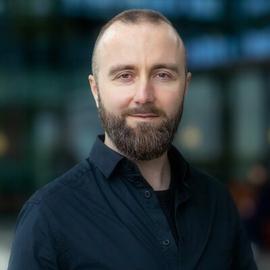
Matthew J. Dennis is an Assistant Professor in Ethics of Technology at Eindhoven University of Technology , where he co-directs the Eindhoven Center for Philosophy of Artificial Intelligence (ECPAI) and serves as a Senior Research Fellow with the ESDiT consortium . His research bridges digital ethics, virtue theory, and sociotechnical design. Education: Joint Monash-Warwick PhD (2019), MA (Warwick), BA (Sussex) Visiting Positions: Oxford's Institute for Ethics in AI (2023), University of Amsterdam (2022), Cambridge's Centre for the Future of Intelligence (2020) His work focuses on digital well-being , algorithmic fairness , and self-cultivation frameworks . Recent publications analyze human vulnerability in AI design, Buddhist-inspired attention ethics, and the moral obligations of online celebrities. As co-editor of Philosophy of Fame & Celebrity (Bloomsbury 2025) and Values for a Post-Pandemic Future (Springer 2023), he integrates feminist, disability, and intercultural perspectives into technology ethics. Scientific Awards: Eindhoven University Postdoctoral Award (2021), Next Nature Fellow (2024) He collaborates with institutions like the European Parliament's Science-Media Hub , Royal Bank of Scotland , and EIT Digital , addressing algorithmic credit-scoring, parasocial relationships, and gender stereotypes in digital tools.
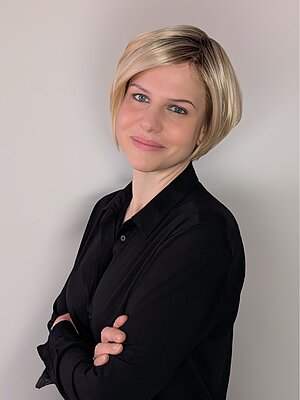
Apl. Prof. Dr. phil. Andrea Wolffram is a Senior Researcher at the Department of Sociology of Technology and Organization at RWTH Aachen University's Faculty of Arts and Humanities. She holds the academic rank of Associate Professor following her habilitation (Venia Legendi) in Sociology in 2021. Her research focuses on gender and diversity in technology research, sociology of gender, and science studies with particular emphasis on higher education. Her research interests center on gender dynamics in STEM fields, examining how gender relations shape scientific careers, organizational structures, and technological development. She investigates the intersection of gender with other diversity dimensions in academic settings, particularly focusing on how excellence discourses, evaluation practices, and informal networking patterns create gendered career trajectories. Her work critically analyzes gender equality plans in research performing organizations and explores sustainable approaches to gender equality in technical sciences. Analysis of her recent publications reveals consistent focus on gender bias in academic evaluation practices, the gendered nature of excellence concepts, and the role of informal networks in shaping scientific careers. Her research spans multiple contexts including engineering, information technology, and energy sectors, examining how sociotechnical transformations interact with gender relations. Venia Legendi (Habilitation) in Sociology from RWTH Aachen University (2021) Marianne-Schminder Guest Professorship for Gender Technology Studies (2018-2021) Her research advising has focused on interdisciplinary projects examining gender in STEM, including the Verbundprojekt Re-Imagining GenderFuture in MINT, Leading Towards Sustainable Gender Equality Plans (LeTSGEPs), and CHAllenging Gender (In)Equality in science and research (CHANGE). She has secured multiple research grants examining women's retention in engineering and ICT careers, gendered excellence perceptions, and sustainable approaches to gender equality in technical sciences. Her team emphasizes collaborative research with early integration of students through tandem solutions pairing junior and senior researchers. Dr. Wolffram leads research examining gender arrangements in sustainable energy practices and cross-national studies of women's retention in IT and engineering careers. Her team culture emphasizes exchange, mutual support, and inspiration, with structured team development activities.
Dr. Ke Li is a postdoctoral researcher at the University of Hamburg, working within the Human-Computer Interaction group at the Department of Informatics. She is currently leading the development of intelligent virtual human technologies as part of the European Union-funded project PRESENCE. Her work bridges computer science, human-computer interaction, and physics applications, focusing on creating immersive experiences for complex operational environments. Dr. Li received her Bachelor's of Science degree in Physics from Centre College (USA) in May 2018 and her Master's degree in Optics and Photonics from the Friedrich Schiller University Jena (Germany) in April 2021. She completed her PhD as a fellow of the Helmholtz Graduate School for the Structure of Matter (DASHH) in October 2024, successfully defending her dissertation entitled "Towards a Particle Accelerator Metaverse: Mixed Reality Interfaces for Operations of Complex Physics Facilities" under the supervision of Prof. Frank Steinicke, Dr. Reinhard Bacher, and Prof. Wim Leemans. Dr. Li has a strong technical background in mixed and augmented reality, with research interests spanning immersive head-mounted displays, computer graphics and vision (particularly Neural Radiance Fields and 3D Gaussian Splatting), intelligent virtual agents, and human-robot interaction. Her work often combines theoretical computer science with practical applications in scientific environments, particularly focusing on how immersive technologies can improve workflows in complex and hazardous conditions like particle accelerator facilities. Analysis of Dr. Li's publications reveals a clear progression from foundational work in mixed reality display technologies (2022-2023) toward increasingly sophisticated applications of neural rendering techniques and intelligent virtual agents (2024-2025). Her research consistently bridges the gap between theoretical computer graphics and practical applications in scientific environments, with particular emphasis on real-time performance, user experience, and seamless integration of virtual and physical elements. A notable trend is her growing focus on multimodal interaction frameworks that enable more natural communication between humans and intelligent virtual agents. Scientific Awards: Honorable Mention Award for the Best Design at the Student Competition at IEEE International Symposium on Mixed and Augmented Reality (ISMAR), 2023 Dr. Li serves as a reviewer for various international XR conferences and journals, including IEEE ISMAR, ACM VRST, IEEE TVCG Journal, IEEE VR, and ACM SIGCHI. She has received special recognition for outstanding review work for TVCG journal and paper reviews. Her research is supported by the European Union-funded PRESENCE project and previously by the Helmholtz Graduate School for the Structure of Matter (DASHH) with Grant-No. HIDSS-0002, and the German Federal Ministry of Education and Research (BMBF). Dr. Li is actively involved in the XR Lab at the University of Hamburg and has collaborated with researchers at the German Electron Synchrotron (DESY), the Cyber Interface Lab at the University of Tokyo, and the ARTANIM foundation. Her technical expertise spans Unity development, neural rendering implementation, sensor fusion techniques, and real-time system optimization for immersive applications.
Astrid Carolus serves as Senior Academic Councillor and Privatdozentin at the Human-Computer-Media Institute within the Faculty of Human Sciences at Julius-Maximilians-University of Würzburg. She leads three major research initiatives: AI MINDSET (examining psychological facets of teachers' AI competencies), AIL AT WORK (focusing on AI skills in workplace contexts), and CHAT (Comprehending Human-AI Interaction). Her office is located in Hubland Nord, Building 82, Room 2.016. Dr. Carolus completed her psychology studies at Saarland University with specializations in media and organizational psychology, psychological diagnostics, evaluation, clinical psychology, and social psychology (with business administration minor). She earned her doctorate with distinction in 2012 from Würzburg University, was appointed Academic Councillor in 2016, promoted to Senior Academic Councillor in 2022, and received her venia legendi (teaching authorization) in psychology in 2025. She maintains active consultancy work alongside her academic position and holds international certification in Facial Action Coding System (FACS) for facial expression analysis. Her research examines human thought, emotion, and behavior in media interactions through the fundamental questions: 'What do people do with media and technologies?' and 'What do technologies do to people?' She conceptualizes human-AI interactions as social encounters, emphasizing both technical competencies and psychological dimensions. Her work develops frameworks for competent, self-determined, and reflective technology use, with current focus on measuring AI literacy, understanding voice assistant interactions, and developing training interventions for teachers and professionals. Analysis of her 15 most recent publications reveals three dominant research trajectories: (1) development and validation of measurement tools for AI literacy (including the MAILS scale), (2) psychological effects of smartphone separation and digital detox interventions, and (3) training methods to improve functional understanding of AI systems. Her work spans educational contexts (particularly teacher training), workplace applications, and consumer technology use, with increasing emphasis on practical interventions to enhance human-AI collaboration. Gleichstellungspreis der Julius-Maximilians-Universität (2023) Forschungsförderpreis der Vogel-Stiftung Dr. Eckernkamp (2018) Dr. Carolus serves as External Student Advisor for MK Bachelor programs and has secured multiple research grants including projects funded by the Bavarian Research Institute for Digital Transformation (projects MOTIV, DIGITALKOMPETENZ ALS MINDSET), Dr.-Herbert-Brause Foundation (projects on Mixed Reality Technologies, mobile/stationary Smart Hubs), and the Human Dynamics Centre. Her research often involves interdisciplinary collaborations across psychology, computer science, and education fields. She works within the Media Psychology research group that maintains specialized laboratory facilities including mobile and stationary Smart Hubs for testing AI systems in simulated environments. Her team collaborates with educational institutions and workplace settings to translate research findings into practical applications, particularly through the development of modular teacher training programs that address both technical skills and psychological factors like technology acceptance, self-efficacy, and change readiness.
Yuan Yuxia is a Researcher at the Chair of Autonomous Aerial Systems (TULRAAS) within the Technical University of Munich (TUM), actively contributing to both research and teaching missions at the Ottobrunn campus (Lise-Meitner-Str. 9). Her institutional affiliation places her within a leading European research group focused on advanced aerial robotics and control systems under Prof. Ryll's leadership. Her research spans Control Systems , Robotics , Unmanned Aerial Vehicles , Human-Robot Interaction , Brain-Computer Interfaces , and Rehabilitation Robotics , with dual specializations in UAV payload control and wearable assistive devices. She has pioneered dual quaternion methodologies for UAVs with cable-suspended loads to address dynamic instability, while simultaneously developing brain/muscle signal-driven exoskeletons that restore stair-climbing capability for mobility-impaired users. Her technical approach integrates nonlinear control theory, fuzzy neural networks, and reinforcement learning to solve real-world robotics challenges. Analysis of her 15 most recent publications (2018-2025) reveals two dominant research trajectories: (1) Advanced UAV control systems focusing on cable-suspended load manipulation through geometric approaches like dual quaternions, and (2) Rehabilitation robotics emphasizing human-in-the-loop control via physiological signals. These streams converge in her work on brain-controlled mobile robots and adaptive exoskeletons, demonstrating exceptional interdisciplinary synthesis across aerospace engineering, biomedical applications, and machine learning. Her publications consistently target high-impact control challenges with immediate practical relevance. Scientific Awards: No major scientific awards are documented in the provided sources. Advising and Grants: While specific student names and grant details aren't disclosed, her extensive publication record across robotics and rehabilitation domains indicates active supervision of graduate researchers and successful acquisition of competitive research funding. Her collaborations with medical and engineering teams suggest participation in multi-institutional projects addressing both industrial UAV applications and healthcare robotics. Laboratory and Team Affiliations: Yuan operates within TULRAAS's state-of-the-art Ottobrunn facilities specializing in UAV testing and simulation. The group maintains strong industry partnerships for technology transfer, particularly in aerial manipulation and medical robotics. Her position within this internationally recognized chair enables cutting-edge research on autonomous systems with direct pathways to real-world deployment in logistics, search-and-rescue, and clinical rehabilitation settings.
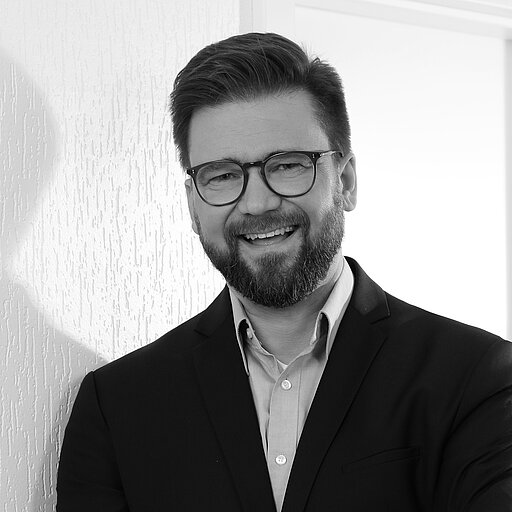
Guido Dietl is a Professor of Satellite Communication and Radar Systems at the Julius-Maximilians-University of Würzburg, Germany, where he leads the Professorship of Satellite Communication and Radar Systems within the Institute of Computer Science. He previously served as Professor of Communications Engineering and Head of the Communications Laboratory at the Landshut University of Applied Sciences from March 2012 to March 2022, and worked as a Senior Researcher at DOCOMO Communications Laboratories Europe GmbH from 2006 to 2017. Dr. Dietl received both his Dipl.-Ing. and Dr.-Ing. degrees summa cum laude in Electrical Engineering and Information Technology from the Technische Universität München (TUM) in 2001 and 2006, respectively. During his academic journey, he was a Guest Researcher at Purdue University (Winter 2000/2001 and Summer 2004) and visited the Australian National University in Fall 2005. He also served as an Adjunct Lecturer at TUM from April 2010 to July 2011 and was a Guest Professor at Shanghai Normal University in September 2014. Dr. Dietl's research spans multiple cutting-edge areas in communications technology. His current work focuses on satellite networks for 6G and beyond, quantum communications, free-space optical communications, joint communications and sensing, radar signal processing, and dynamic wireless meshed networks. His earlier research concentrated on MIMO communications systems, interference management in wireless networks, and energy-efficient communication protocols. His work bridges theoretical advancements with practical implementations, particularly in the areas of satellite communications and radar systems. His extensive publication record demonstrates a clear evolution from foundational work in MIMO systems and wireless communications toward emerging technologies like quantum communications and next-generation satellite networks. Recent publications show a strong focus on quantum key distribution, satellite payload development for educational projects like UWE, and innovative approaches to energy-efficient networking. His work increasingly integrates satellite communications with terrestrial networks, reflecting the industry's move toward holistic 3D communication architectures for 6G and beyond. Dr. Dietl has received several prestigious awards throughout his career: 2001: VDE Award for Diploma thesis 2007: Kurt Fischer Award of the TUM for dissertation 2007: Förderpreis der ITG (an award of the Informationstechnische Gesellschaft) 2010: DOCOMO Euro-Labs Company Award for technology transfer in the area of multicell MIMO communications As an Associate Editor of the IEEE Transactions On Vehicular Technology in the area of Wireless Communications, Dr. Dietl plays a significant role in shaping the discourse in his field. His professional affiliations include being a Senior member of the Institute of Electrical and Electronics Engineers (IEEE) and a member of the Verband der Elektrotechnik Elektronik Informationstechnik e.V. (VDE, German Association for Electrical, Electronic & Information Technologies). His research has been supported by various academic and industry collaborations, including his tenure at DOCOMO Euro-Labs where he managed the Advanced Radio Transmission Team. Dr. Dietl leads the Satellite Communication and Radar Systems group at Würzburg University, which focuses on developing innovative communication payloads for small satellites, quantum communication systems, and advanced radar technologies. The group is actively involved in the UWE (Universität Würzburg's Experimental satellite) program, developing communication systems for educational small satellites. Their current work bridges theoretical research with practical implementations in satellite communications, with a particular emphasis on next-generation networks that integrate terrestrial and non-terrestrial components.
Alain Pagani is a Principal Researcher and Deputy Director of the Augmented Vision department at the German Research Center for Artificial Intelligence (DFKI) . He leads a team of 10 PhD students and researchers, focusing on Augmented Reality, Computer Vision, and Machine Learning. Research Interests include 3D Computer Vision, Image-based Scene Reconstruction, Object Detection and Tracking, and Extended Reality (AR/VR) applications. His work spans both industrial and academic projects, such as the EU initiatives dAIEDGE , CORTEX² , and FLUENTLY . Scientific Awards include a Google Research Award, Best Paper Award (INI-GraphicsNet 2007 Honorable Mentions), and Best Paper Award (INI-GraphicsNet 2008 Honorable Mentions). Projects like dAIEDGE (AI at the Edge) and CORTEX² (Collaborative XR) highlight his leadership in distributed AI and real-time extended reality systems. He has also coordinated EU projects such as LARA (Outdoor AR using Galileo) and Eyes of Things (Low-power Computer Vision).
Frank Kirchner is a Professor at the Faculty of Mathematics and Computer Science of the University of Bremen and Executive Director of the Robotics Innovation Center at DFKI Bremen since 2008. He holds a chair for Robotics and leads a team of over 100 employees. Kirchner is also a Research Fellow at Tsinghua University and a member of the Berlin-Brandenburg Academy of Sciences and Humanities. Education: Diploma in Informatics and Neurobiology (1994), University of Bonn Doctorate (Dr. rer. nat) in Computer Science (1999), University of Bonn Research Interests: Kirchner specializes in biologically inspired behavior and motion sequences for highly redundant, multifunctional robot systems. His work spans soft robotics, space robotics, and human-centered robotic systems, with recent projects like AI-REEFSHIELD (AI for marine restoration monitoring) and FieldCoBots (collaborative field robotics for strawberry harvesting). He integrates generative AI (e.g., ActGPT) and quantum control methods into robotics, pushing the boundaries of autonomous systems. Scientific Contributions: With over 350 publications and leadership in initiatives like the German Softrobotics Priority Program and the Brazilian Institute of Robotics, Kirchner bridges robotics, AI, and interdisciplinary applications. His 15 most recent papers highlight trends in robotic design, quantum control algorithms, and planetary exploration. Awards & Memberships: Honorary Doctorate from SENAI CIMATEC, Brazil (2017) Research Fellow, Tsinghua University (2018) Member, Berlin-Brandenburg Academy of Sciences and Humanities (2015–) Committee member, Leopoldina (2021–) Academic Leadership: Kirchner has founded institutes like MarTech (maritime technologies) and Ground Truth Robotics, and co-founded journals like the International Journal of Advanced Robotic Systems. He oversees projects funded by the EU, DFG, and national agencies, with a focus on security-relevant research and hostile-to-life environments.
Daniel Kühn is a researcher at the Robotics Innovation Center within the German Research Center for Artificial Intelligence (DFKI). His work focuses on robotics and artificial intelligence, particularly in developing advanced robotic systems for diverse environments and applications. Current projects include: RoX : Digital ecosystem for AI-based robotics RIG : National robotics research consortium in Germany CALAHARI : Semi-autonomous timber harvesting innovation RIMA : Robotics for infrastructure inspection His research spans robotics, AI, and machine learning , with recent publications addressing: Walking robots for industrial and environmental tasks Series-parallel hybrid robotic systems AI technologies for underwater robotics Key trends in his work include biomimetic design , autonomous control systems , and cross-domain robotic applications . Daniel collaborates with institutions such as TU Munich, Fraunhofer IOSB, and Karlsruhe Institute of Technology (KIT).
Dr. Daryoush Daniel Vaziri is a Researcher at the Department of Economics, Bonn-Rhein-Sieg University of Applied Sciences, leading the development of AI-based systems with a focus on generative language models and interactive systems. Based in Saint Augustin, Germany, his work bridges Artificial Intelligence , Human-Computer Interaction , and Active Ageing research. His research explores Large Language Models , Conversational Agents , and Service Robotics , with particular attention to real-world applications in retail, education, and healthcare. Current projects include the Mittelstand 4.0 Competence Center Usability initiative supporting SMEs in digital transformation. Recent publications highlight advancements in Virtual Reality integration with LLMs , systematic reviews of conversational AI barriers , and NLP applications across customer journeys . His 2025 work on AI Competencies for Companies offers frameworks for ethical and regulatory alignment. Summa cum laude dissertation (2018) on technology integration for active aging As a key contributor to European research projects like iStoppFalls and PosiBot, Vaziri continues to shape discourse on accessible information systems and human-robot collaboration environments through extensive peer-reviewed publications and international conference presentations.
Prof. Dr.-Ing. Thomas Geike is a professor of engineering mechanics at the Berlin University of Applied Sciences. He teaches foundational courses in statics, strength of materials, dynamics, hydraulics, and pneumatics, with a specialized focus on "Kinematics, Kinetics, and Gear Technology" in the Humanoid Robotics program. His academic career spans research conducted since his studies at the University of Waterloo, resulting in over a dozen publications in peer-reviewed journals such as Physical Review E , Vehicle System Dynamics , and Mechanism and Machine Theory . Research interests include Maintenance Tribology (contact mechanics, rubber modeling) Dynamics of multibody systems Cavitation dynamics in lubricated contacts His work bridges theoretical mechanics with applied robotics and machine design, with contributions to rail vehicle dynamics and prototyping. Prof. Geike serves as academic advisor for the Bachelor’s program in Computational Engineering and Design (launched 2019). Notable collaborations include interdisciplinary projects under funding frameworks like DFG, BMBF, and BMWi. Current research focuses on maintenance optimization and cavitation dynamics in industrial systems.
Dr. Shiau-Chuen Chiou is a Scientific Researcher at Bielefeld University's Faculty of Psychology and Sport Science (Department of Sport Science, Research Area II - Neurocognition and Movement - Biomechanics) since 2015, and currently involved in the EU Project "Performance in robots' interaction via mental imagery" (PRIMI) since 2024. His research focuses on action observation, motor skill learning, and human-machine interaction dynamics. PhD in Psychology and Sports Science (2023, CITEC) M.Sc. in Cognitive Neuroscience (2015, National Central University, Taiwan) BBA in Finance (2006, National Taiwan University) Pursuing MA in Dance Pedagogy (expected 2026, Palucca University of Dance Dresden) Research interests span action observation mechanisms , visual working memory for movements , and perception-action-cognition coupling , with applications in dance, music, and cognitive robotics. Recent work examines spatiotemporal memory representations and augmented feedback modalities for motor learning. While no students or awards are listed, his involvement in EU-funded PRIMI project (since 2024) and previous Junior Fellowship at ZiF (2020-2021) highlight his interdisciplinary contributions. Key publication themes include: Spatial-temporal working memory for whole-body movements Information processing during action observation Situation model perspectives in human-machine interaction Neurocognitive implications of movement continuity His academic background bridges finance (2006-2009 industry experience) with cognitive neuroscience (2015 onwards), culminating in current roles at Bielefeld University's Center for Cognitive Interaction Technology (CITEC) and Faculty of Psychology and Sport Science.
Igor Potapov is a Professor at the University of Liverpool , leading the Algorithms, Complexity Theory and Optimisation (ACTO) Group within the Department of Computer Science. His career includes progressive academic roles from Lecturer (2002) to Professor (current), with a focus on theoretical computer science and formal verification. Research Themes : Reachability problems in matrix semigroups, robot scheduling, broadcasting automata, and computational complexity. Grants & Awards : EPSRC grant (£459K, 2014-2018) on reachability problems NATO Collaborative Linkage Grant (€15,000, 2008-2010) Royal Society International Joint Projects and Travel Grants Nuffield Foundation Grant (£5,000, 2003-2005) Royal Academy of Engineering Fellowship (£3,940, 2008-2009) Recent Work Trends : Focus on geometric coverage algorithms (2025) Collision-free scheduling for robotic systems (2024-2025) Advances in matrix semigroup decidability (2024) Applications to programmable matter and crystal structure prediction (2022-2023) Contact : potapov@liverpool.ac.uk
Ludger Schmidt is a Professor of Human-Machine Systems Engineering at the University of Kassel, leading the Human-Machine Systems Technology department. He holds a doctorate in Engineering from RWTH Aachen University (2004) and has held leadership roles at the Fraunhofer/FGAN Research Institute and RWTH Aachen. His academic contributions span multiple institutions and projects. University of Kassel (2008–present): Professor in Mechanical Engineering Fraunhofer/FGAN (2005–2008): Head of Ergonomics and Human-Machine Systems RWTH Aachen (2000–2005): Chief Engineer and Research Group Leader His research focuses on Human-Machine Interaction , Assistive Systems , and Digital Transformation , with specific emphasis on: User modeling and cognitive engineering Augmented/Virtual Reality applications Usability and ergonomic design Smart public transport systems Technology acceptance and trust Adaptive interfaces Recent publications highlight trends in immersive training systems (VR/AR), public transport innovation , and robotic assistance . His work integrates human factors with industrial engineering, particularly in: Work 5.0 and Industry 4.0 Physiological parameter analysis Interactive 3D-360° media Smart city infrastructure Context-sensitive notifications Autonomous mobile robotics Scientific awards include: Best Paper Award (2020) Best Paper Candidate (2024) Outstanding Research Award (2017) He directs the Scientific Center for Information Technology Design and the Institute for Industrial Engineering and Process Management at the University of Kassel, leading projects like U-hoch-3 and RadAR+ (2014–2020). His lab focuses on human-centered technology design for industrial and mobility contexts.
Prof. Dr. Silja Vöneky is Professor of Public International Law, Comparative Law and Ethics of Law at the University of Freiburg, serving as Director of the Institute of Public Law since 2010. She became a member of the Constitutional Court of Baden-Württemberg in July 2024. Her academic home is the Faculty of Law at the University of Freiburg, where she leads Department 2 of the Institute for German, European and International Public Law. Prof. Vöneky's educational background includes legal studies at Freiburg, Bonn, Edinburgh, and Heidelberg universities. She earned her doctorate in 2000 with a dissertation on environmental law in armed conflicts, followed by habilitation on Law, Morality and Ethics in 2009. Her early career included positions at the Max Planck Institute for Comparative Public Law and International Law from 2001-2011. Her research spans multiple interconnected fields at the intersection of law, ethics, and emerging technologies. Since 2015, she has focused extensively on AI and biotechnology regulation, examining how legal frameworks can enable innovation while protecting fundamental rights. Her work addresses critical questions about transparency in AI decision-making, fairness in algorithmic systems, and the regulation of AI in sensitive areas like the justice system. She also conducts significant research in international environmental law, human rights, and democratic legitimacy. Prof. Vöneky's recent publications reveal a strong focus on governance challenges posed by emerging technologies, with particular attention to AI ethics, neurotechnology regulation, and the intersection of human rights with scientific advancement. Her interdisciplinary approach bridges legal scholarship with ethical considerations and technical understanding. Member of the Constitutional Court of Baden-Württemberg (since July 2024) Chair of the Commission for Responsibility in Research at University of Freiburg Member of the Ethics Council of the Max Planck Society Member of the high level Advisory Council on International Law of the German Federal Foreign Office Prof. Vöneky supervises numerous doctoral students and leads major research initiatives including the ReScaLe project funded by the Carl Zeiss Foundation, which develops legal and ethical frameworks for AI-driven robots interacting with humans. She co-directs the Connecticut/Baden-Württemberg Human Rights Research Consortium (HRRC), a transatlantic network connecting human rights researchers. She has received significant third-party funding for interdisciplinary research on AI governance and biotechnology regulation. She leads the 'Responsible AI' research group at the Freiburg Institute for Advanced Studies (FRIAS) and heads the Adaptive Governance of Emerging Technologies (AdGovEm) initiative, examining how regulatory frameworks can adapt to rapidly evolving technological landscapes while maintaining legal certainty.