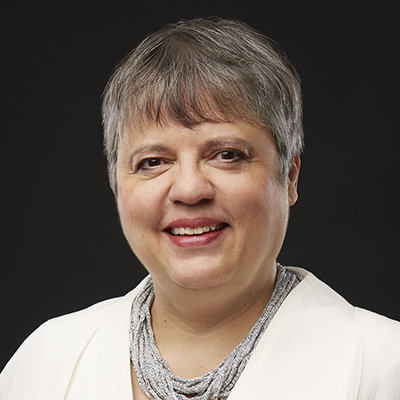
Prof. Maureen Taylor is a Visiting Professor at the University of Technology Sydney (UTS), School of Communication, specializing in strategic communication and public relations. She holds a PhD from Purdue University and previously served as Director of the University of Tennessee’s School of Advertising and Public Relations and as the Gayford Family Chair at the University of Oklahoma. Her research focuses on public relations theory, dialogue, disaster resilience, and digital media impact. Taylor chairs the Public Relations Review journal and has authored over 70 articles and multiple books. She is a Pathfinder Award recipient (2010) and an ICA Fellow (2018). Supervision is available for Masters and PhD students in strategic communication. Education: PhD in Communication, Purdue University (1996). Research Interests: Nation building, civil society engagement, crisis communication, and media’s role in divided societies. Recent work includes frameworks for community disaster resilience and digital media’s cultural impact in post-Soviet regions. Funded Projects: Includes WHO-funded studies on health communication evaluation and Bushfire and Natural Hazards CRC-funded community preparedness models. Grants focus on measurement of government communications and pandemic response strategies. Current projects explore dialogic engagement architectures in social media. Awards: Pathfinder Award (2010), ICA Fellowship (2018). Grants & Collaborations: Over 10 funded projects since 2018, including evaluations of NSW government advertising and WHO’s Western Pacific Region campaigns.
Professor Emma Moore is a leading sociolinguist at the School of English, University of Sheffield . Specializing in the social dimensions of language, her work integrates methodologies from anthropology and sociology to investigate how linguistic variation constructs identity and social affiliations. Research focus: Sociolinguistic style, dialect contact, youth language, identity negotiation, and community-based fieldwork Key projects: Adolescence and grammar (1999-), Isles of Scilly dialect (2008-), language and inequality (2014-), language perception software (2016-) Educational background : PhD in Sociolinguistics, University of Manchester Stanford University (USA) during PhD research Research trends across her 2021-2025 publications reveal interdisciplinary exploration of: Socio-syntactic variation Clinical linguistics (2025 MDS-UPDRS studies) Digital discourse post-pandemic Indexicality and cognitive representations Dialect contact in insular communities Educational policy implications Scientific recognition : British Academy Mid-Career Fellow (2019-2020) Elected Fellow, Royal Anthropological Institute (2014) AHRC/BA funded research projects (1999-2015) Research group leadership : Mentored 9 PhD students (2004-2024) and supervised 3 undergraduate SURE projects, including analyses of: Gender in rap performance Language style and workplace inequality Oral history digitization Professional contributions : Editorial Board: Language in Society (2015-), Gender and Language (2011-2017) External Examiner: Lancaster University MA in English Language (2013-2017) Collaborative software development for dialect perception testing
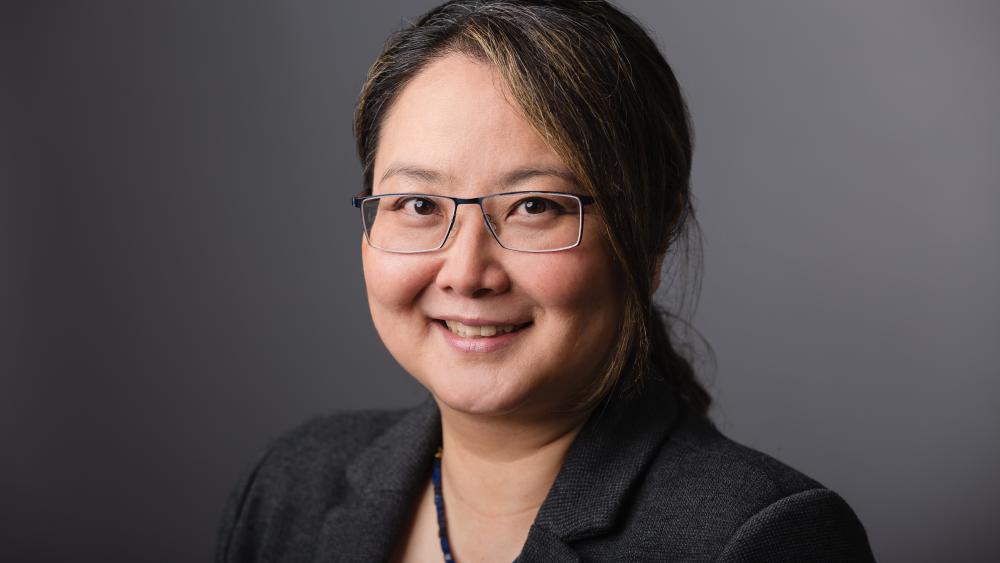
Vera Liao is a Principal Researcher at Microsoft Research, where she is part of the FATE (Fairness, Accountability, Transparency, and Ethics of AI) group. She will join the University of Michigan Computer Science and Engineering department as an Associate Professor in fall 2025. Her work focuses on human-AI interaction, explainable AI, and responsible computing. Liao has made significant contributions to IBM products such as AI Explainability 360 and Uncertainty Quantification 360 during her time at IBM T.J. Watson Research Center. Dr. Liao received her education from the University of Illinois at Urbana-Champaign and Tsinghua University. Her academic journey has positioned her at the intersection of human-computer interaction and artificial intelligence, with a strong emphasis on creating AI systems that are transparent, accountable, and user-centered. Vera Liao's research primarily centers around human-centered AI explainability and transparency. She investigates how to design AI systems that effectively communicate their capabilities, limitations, and decision-making processes to users. Her work examines the intersection of AI transparency with trust, control, and user experience. Liao has pioneered approaches to bridging the socio-technical gap in AI evaluation and has developed frameworks for contextualized evaluation of explainable AI systems. Her research spans multiple domains including conversational interfaces, data storytelling, and creative work with generative AI. Liao's publications reveal a clear trend toward addressing the challenges of large language models and their impact on human-AI interaction. Her recent work focuses on understanding how uncertainty communication affects user trust, how to design for appropriate reliance on AI systems, and how to create authentic co-creation experiences with generative models. She has been examining the risks in AI-infused information ecosystems and developing methods for human-centered evaluation of language technologies. Her scientific contributions have been recognized with multiple honors: Best Paper Award, Honorable Mention at CHI 2025 (two papers) Best Paper Award at CHI 2024 Best Paper Award, Honorable Mention at FAccT 2023 Best Paper Award, Honorable Mention at HCOMP 2022 Best Paper Award, Honorable Mention at CHI 2021 Best Paper Award, Honorable Mention at CHI 2014 Outstanding Paper Award at IUI 2019 Dr. Liao is an active mentor, having guided numerous research interns from top universities including Cornell, Princeton, CMU, Stanford, and MIT. She serves in editorial roles as Co-Editor-in-Chief of the Springer Human-Computer Interaction Book Series and as an Editor for ACM CSCW. Liao has secured research funding through her work at Microsoft Research and previously at IBM, focusing on projects related to AI explainability, transparency, and responsible AI development. As part of Microsoft Research's FATE group, Liao collaborates with a multidisciplinary team of researchers focused on the ethical implications of AI technologies. Her work bridges the gap between technical AI development and human-centered design principles, ensuring that AI systems are developed with user needs and societal impacts in mind.
Yasmin Kafai is a Professor at the University of Pennsylvania's Graduate School of Education (GSE), Department of Learning Sciences. Her research focuses on computational thinking, AI education, and equitable K-12 computing pedagogy. She has pioneered work on integrating electronic textiles (e-textiles) and participatory design into STEM education to engage youth in critical perspectives of technology. Kafai's recent work emphasizes algorithmic literacy, youth-led auditing of machine learning systems, and bridging technical and societal dimensions of computing. Key research areas include: computational empowerment, AI ethics in education, youth agency in technology design, and culturally responsive computing curricula. Her projects often involve hands-on making activities, such as constructing generative AI models or debugging e-textile systems, to foster both technical and critical understandings. Publications from 2024-2025 highlight trends in youth engagement with generative AI, algorithm auditing frameworks, and the intersection of physical computing with growth mindset practices. She has also explored the role of storytelling methodologies in reimagining computing narratives for marginalized groups. Kafai collaborates extensively with teachers to develop scalable professional development programs addressing equity in CS education. Her work frequently appears in learning sciences and computing education journals, with a focus on practical classroom implementations and systemic educational reforms. Ongoing efforts include designing 'Hour of Code' activities that integrate critical AI literacy and fostering youth as co-designers of ethical technology solutions.
Yuka Kobayashi is a Senior Lecturer (Associate Professor) in China and International Politics at SOAS University of London. Currently on leave as a British Academy Global Innovation Fellow at the German Council on Foreign Relations (DGAP), she specializes in China's global governance strategies, economic diplomacy, and international law. Her research integrates fieldwork-based analysis of trade (Belt and Road Initiative/WTO), climate change, human rights, and technology. Education: LLB (Kyoto University, Public International Law specialization), MPhil & DPhil (Oxford University, International Relations). Research focuses on China's economic activities in Central Asia, Europe, Southeast Asia, and Pacific Islands, alongside UK-Japan collaborative projects on geopolitical partnerships. Key advisory roles include specialist advisor to the UK government (2021) and advisory board member for Stiftung Asienhaus (2019-2021). Publications span over two decades, addressing China's compliance with international trade norms, climate diplomacy, and evolving global governance frameworks. Supervises PhD students examining China's Pacific Island strategies and EU-China tech competition dynamics.
Barbara Fuchs is a Professor in the Department of English at the University of California, Los Angeles, specializing in early modern European literature across Spanish, English, French, and Italian traditions from the 15th to 17th centuries. Her work emphasizes transnational contexts, theater and performance studies, and cultural production within imperial frameworks, with significant contributions to Mediterranean and transatlantic studies. Education Ph.D. in Comparative Literature, Stanford University (1997) B.A./M.A. in Comparative Literature (English, French, Spanish), summa cum laude, Yale University (1992) Research Interests Professor Fuchs' scholarship centers on transnationalism in early modern literature, examining how theater and performance negotiated imperial identities across Mediterranean and transatlantic contexts. Her work critically engages with race and religion in the early modern world, picaresque traditions, and Cervantes studies, revealing how cultural encounters shaped literary production. She bridges historical analysis with contemporary relevance through public humanities initiatives focused on classical Hispanic theater. Publication Trends Her recent publications demonstrate interdisciplinary innovation, merging literary analysis with performance studies and material culture. Recurring themes include transnational exchange mechanisms, racial formation processes, and textual materiality, while recent work addresses pandemic-era digital performance and modern adaptations of classical works. This trajectory highlights her commitment to connecting historical scholarship with current social and artistic practices. Scientific Awards Premio Ñ from the Instituto Cervantes (inaugural award) for promotion of Spanish language and culture Advising and Leadership Professor Fuchs mentors undergraduate and graduate students in early modern studies, translation, and performance. She leads the UCLA "Diversifying the Classics" initiative and LA Escena festival, securing institutional support for these collaborative projects. Her editorial leadership includes serving as articles editor for Renaissance Quarterly and co-editing the Norton Anthology of World Literature , demonstrating field-wide influence. Projects and Teams She directs the "Diversifying the Classics" initiative, which collaborates with theater professionals to adapt Hispanic classical works for contemporary Los Angeles audiences, and founded LA Escena—the biennial festival of Hispanic classical theater. These projects unite scholars, artists, and communities to explore historical texts through modern performance lenses, emphasizing accessibility and cultural relevance.
Professor Kurt Iveson is a Professor of Urban Geography in the School of Geosciences at the University of Sydney. He is affiliated with the Sydney Environment Institute and Sydney Southeast Asia Centre. His research focuses on urban equity, public space governance, and the democratization of urban processes. Notable projects include studies on multicultural urban planning, pandemic-era mutual aid networks, and climate adaptation strategies. He has authored influential books such as Publics and the City (2007) and Everyday Equalities (2019). Iveson’s work often bridges theory and practice, addressing issues like affordable housing activism, graffiti policies, and the spatial implications of digital media. His recent research emphasizes community-led disaster resilience, people power strategies, and the geopolitics of urban infrastructure. Grants include studies on informal accommodation in Sydney and international comparisons of urban alliances. Media engagements include ABC discussions on outdoor advertising, vertical transport, and post-pandemic urban recovery. His work advocates for inclusive urban policies that balance equity, sustainability, and civic participation.
Lena Wahlberg is an Associate Professor and Senior Lecturer at the Department of Law, Lund University, serving as Assistant Head of Department. Her roles include interdisciplinary research and teaching in medical law, evidence law, and jurisprudence. She leads the Law, Evidence and Cognition (LEVIC) research group and participates in the Science and Proven Experience (VBE) program funded by the Swedish Foundation for Humanities and Social Sciences. Her research focuses on legal causation, expert evidence evaluation, and the intersection of law with natural sciences/medicine. Notable projects include analyzing expert testimony reliability, legal implications of scientific evidence gaps, and defining 'science and proven experience' in healthcare decision-making. Recent publications (2024-2025) emphasize healthcare policy, data governance, and legislative reform in abortion laws and research ethics. She collaborates internationally with institutions like Harvard Medical School and Carnegie Mellon University. Teaching responsibilities include coordinating the doctoral course Theoretical Foundations for Doctoral Studies in Law . Supervised doctoral students include Amanda Bills (Public International Law) and Yana Litins’ka (Medical Law). Research funding includes projects from the Swedish Research Council and Riksbankens Jubilieumsfond. Key affiliations: Member of the VBE research consortium (2015-2020+), LEVIC group, and contributor to national policy consultations on health data and medical ethics.
**Danilo Dantas** is a **Professor** in the **Department of Marketing** at **HEC Montréal**, a leading business school in Canada. He holds additional roles as the **Pedagogical Coordinator of the Specialized Graduate Diploma (D.E.S.S.) in Arts Management** (in French) and a **Regular Member** of the **Observatoire Interdisciplinaire de Création et de Recherche en Musique (OICRM)**. His expertise spans **Music Marketing**, **Database Marketing**, and **Electronic Commerce**, with a focus on cultural branding, consumer engagement, and digital strategies in creative industries. **Education**: He earned his **Doctorat ès sciences de gestion (marketing)** from Université de Grenoble II, along with advanced degrees including a **D.E.A. in Sciences de Gestion (marketing)**, **D.E.S.S. in Commerce International**, and a **B.A.A. in Administration** from UFRGS, Brazil. **Research & Teaching**: Professor Dantas teaches courses such as *Marketing des arts et de la culture* and *Analyse des bases de données en marketing*. His research investigates topics like cultural branding (e.g., leveraging live music for city brands), music industry strategies, and consumer behavior in digital ecosystems. Recent work explores the interplay between brand fit and new product performance, social media impact on online communities, and e-Government service quality metrics. **Advising**: He has supervised **2 PhD dissertations**, **7 Master’s theses**, and **21+ supervised projects**, covering areas such as VR consumer experiences, vinyl store dynamics, and festival attendee motivations. His projects often address practical challenges in arts management, digital transformation, and cultural policy. **Labs/Teams**: His affiliation with OICRM integrates music creation and research, while his work with the Chaire de gestion des arts Carmelle et Rémi-Marcoux emphasizes arts management education and data-driven decision-making.
Lukas Hiendlmeier is a Researcher at the Technical University of Munich, affiliated with the Munich Institute of Biomedical Engineering (MIBE) and the Associate Professorship of Neuroelectronics led by Prof. Bernhard Wolfrum. He holds a Master of Science in Mechanical Engineering from TUM. His research focuses on advanced fabrication technologies such as 3D printing, laser micromachining, and polymer material science, with applications in neuroelectronics and biomedical devices. Hiendlmeier’s work emphasizes developing self-folding bioelectronic interfaces, flexible electrodes, and implantable neural devices for peripheral nerve interfacing. His contributions include innovations in 4D printing techniques, thermoformed materials, and origami-inspired electrode designs. He collaborates on projects involving cell manipulation, microfluidic lab-on-a-chip systems, and closed-loop neural stimulation systems. Publications span topics like self-folding bioelectronics, flexible sensor arrays, and nanorobotics, showcasing expertise in materials science and biomedical engineering. His research bridges fundamental science and translational applications, addressing challenges in neural prosthetics, wearable diagnostics, and tissue engineering. Hiendlmeier is actively involved in the neuroTUM initiative and contributes to interdisciplinary teams at TUM, focusing on advancing neurotechnology through innovative fabrication methods and biomaterials.
Dr. Barbara Barbosa Neves is a sociologist of technology and ageing at the University of Sydney’s Sydney Centre for Healthy Societies, holding a prestigious Sydney Horizon Fellowship in AI Social Science. She specializes in loneliness, social isolation, and digital inequalities in later life, with over $6 million in competitive funding from global bodies. Her research bridges sociology and computer science, focusing on inclusive technology design for older adults. Education: PhD in Sociology. Formerly an Associate Director at the Technologies for Aging Gracefully Lab, University of Toronto, Canada. Visiting positions at Oxford, Oslo, Louvain, and Toronto. Research Interests: Sociology of Technology , Aging Anxieties , Healthcare AI , and Ageism . Her work examines how AI, VR, and robotics can benefit older adults while addressing ethical and social challenges. Key themes include combating age-based digital divides and designing technologies that align with care ethics. Grants & Projects: Lead Investigator for the $1M+ evaluation of Australia’s Aged Care Volunteer Visitors Scheme, ARC Discovery Project on loneliness and technology, and MRFF-funded dementia studies. Collaborates with multidisciplinary teams, including computer scientists and policy experts. Awards: 28+ international awards, including Mather Awards (US), George Story Distinguished Lecturer, and Fellowships from the Royal Society of Arts (FRSA) and Higher Education Academy (FHEA). Public Engagement: Over 200 media contributions, including ABC op-eds and SBS documentaries. Her research informs policy and public discourse on aging, technology, and social equity.
Dr. Susana Castro-Kemp is an Associate Professor in Psychology and Human Development at University College London's Institute of Education (IOE), where she serves as Director of the Centre for Inclusive Education (CIE) since September 2023. Previously, she was a Reader in Education at the University of Roehampton for eight years. Her work focuses on inclusive education policy and practice globally, with particular expertise in special educational needs and disabilities (SEND), early childhood intervention, and mental health in schools. The IOE has been ranked number one in the world for Education for several consecutive years, providing an ideal environment for her impactful research. Dr. Castro-Kemp holds a PhD in Psychology jointly awarded in 2012 by the University of Porto (Portugal) and the University of North Carolina at Chapel Hill (USA). Her doctoral research was fully funded by the Foundation for Science and Technology/European Commission and the Global Education and Development Studies scholarships. She is a Chartered Psychologist with the British Psychological Society, a Senior Fellow of Advance HE, and a Recognised Research Supervisor by the UK Council for Graduate Education. Dr. Castro-Kemp's research centers on policy regulating education, health, and welfare services for children, particularly those with support needs. She examines inclusive education practices from users' perspectives, policy models leading to effective inclusive pedagogy, and country-level policy impacts on outcomes for children with special educational needs. Her work moves away from diagnostic labels toward engagement and civic participation as educational outcomes. She also investigates inclusion and early intervention in low- and middle-income countries, mental health in schools, and quality of early childhood education. Her recent publications reveal several key trends in inclusive education research. There's growing emphasis on understanding educational experiences through the voices of children and families rather than diagnostic labels. Much of her work examines the implementation gap between inclusive education policy and classroom practice. She has conducted significant research on how children with special educational needs experienced the pandemic, revealing both challenges and unexpected "silver linings" for some groups. Her corpus analysis of Ofsted reports shows narrow focus in early childhood education inspections, while her work on SEND policy increasingly takes an international comparative approach. Dr. Castro-Kemp has received recognition for her impactful work, including: Best Digital Humanities Project for Community Engagement Prize (2023) from the National Institute of Humanities and Social Sciences of South Africa for her project "Optimising collaborations and reducing inequalities of Early Childhood Intervention in post-Covid-19 South Africa" Dr. Castro-Kemp has secured approximately £1.3 million in research funding from various sources including ESRC, British Academy/Leverhulme Trust, European Commission, and private sponsors. Her current major project is 'ScopeSEND' (2024-2026), funded by the Nuffield Foundation (£250,000), examining international SEND policies. She has led numerous projects including "Transdisciplinary provision for children with disabilities in the Global South" (£3,500), "Optimising collaborations in South Africa" (£47,200), and "Froebel meets Ofsted" (£19,185). As a supervisor, she mentors MA/MSc and PhD students in education policy, early childhood, and inclusive education, having been nominated for student choice awards for excellent feedback and outstanding research supervision. As Director of the UCL Centre for Inclusive Education since 2023, Dr. Castro-Kemp leads a team focused on advancing knowledge exchange and research in inclusion and special needs. The Centre works with schools, educators, parents, and early years settings to translate research into practice. Her international collaborations include work with the World Health Organization as a technical advisor on the use of the International Classification of Functioning, Disability and Health (ICF) system in educational contexts. She also serves on the SEN Policy Research Forum and has provided oral evidence to the House of Commons Education Select Committee.
Professor Michael Milford is a robotics and computer vision expert at Queensland University of Technology (QUT), serving as Joint Director of QUT's Centre for Robotics. His research bridges robotics, neuroscience, and computer vision, focusing on biologically inspired navigation systems for autonomous vehicles and drones. He has pioneered projects like SeqSLAM and RatSLAM, emphasizing the synergy between biological intelligence and robotic systems. Research Interests: Milford explores navigation algorithms inspired by animal behavior, energy-efficient neural networks, and autonomous systems. His work aims to create robots capable of operating in dynamic environments through interdisciplinary collaboration with institutions like MIT, Harvard, and NASA's Jet Propulsion Laboratory. Awards & Recognition: Awarded the 2019 Batterham Medal and a $2.7M Australian Laureate Fellowship for his project on GPS-independent positioning systems. His work has produced highly cited papers in robotics and computer vision, including breakthroughs in visual SLAM and place recognition under varying conditions. Teaching & Collaboration: Milford mentors students in robotics and AI, launching initiatives like the STEM Storybook to inspire youth. He collaborates globally, emphasizing cross-disciplinary research to bridge gaps between fundamental and applied sciences. Labs & Projects: Leads QUT's Centre for Robotics, advancing technologies for autonomous systems. His projects explore neuromorphic computing, SLAM systems, and bio-inspired navigation, with applications in defense, transport, and environmental monitoring.
Prof. Dr. Andreas Hirsch is a Professor in the Department of Chemistry and Pharmacy at Friedrich-Alexander University Erlangen-Nürnberg (FAU) . His research focuses on organic chemistry , graphene functionalization , carbon nanomaterials , and molecular solar thermal systems , with significant contributions to 2D material engineering and supramolecular chemistry . Chair of Organic Chemistry II (FAU Erlangen-Nürnberg) ResearchGate: Profile Google Scholar: Profile His work spans graphene patterning via laser writing , black phosphorus stabilization using perylenediimides , and covalent functionalization of 2D materials like MoS 2 and carbon nanotubes . Recent studies include non-covalent passivation of BP nanosheets and electroswitchable catalysis for solar thermal energy storage . His scientific awards include the Second Place Poster Award (2023) and Robert C. Haddon Research Award (2021) . Collaborative projects highlight smart nanoparticle systems for radiation therapy and environmental remediation applications.
Ada M. Fenick, MD, is a Professor of Pediatrics (General Pediatrics) at Yale School of Medicine. She holds multiple leadership roles including Associate Director for Pediatrics in the Biopsychosocial Approach to Health clerkship, Medical Director of School-Based Health Centers, and Medical Director of the Medical-Legal Partnership Project. Her clinical practice focuses on economically disadvantaged pediatric populations, emphasizing developmental aspects of child health and addressing toxic stress impacts. Education: BS in Biomedical Sciences (University of Michigan, 1990), MD (University of Michigan, 1993), Pediatric Residency (Weill-Cornell/NY Medical Center, 1996) Research: Centers on pediatric primary care innovations such as group well-child care models, medical-legal partnerships, and obesity prevention. Key themes include health equity, social determinants of health, and curriculum development. Her recent work emphasizes leveraging medical student experiences to improve curricula addressing social drivers of health. Over 20 peer-reviewed publications since 2020 focus on topics like electronic phenotyping algorithms for obesity screening and frameworks for group pediatric care implementation. Awards: Includes Howard A Pearson MD Teaching Award (2013) and multiple institutional recognitions for clinical excellence and innovation. She leads initiatives like the Yale Primary Care Pediatrics Curriculum and collaborates with community organizations to enhance access to early intervention services for vulnerable children. Her work integrates clinical care, education, and policy advocacy to promote holistic child health outcomes.