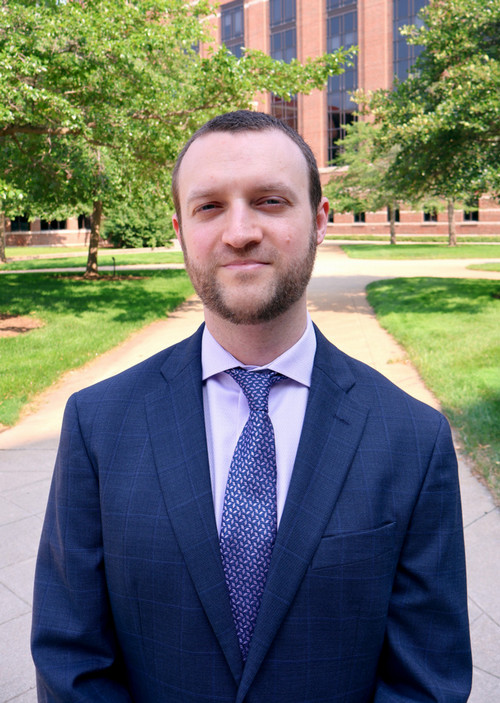
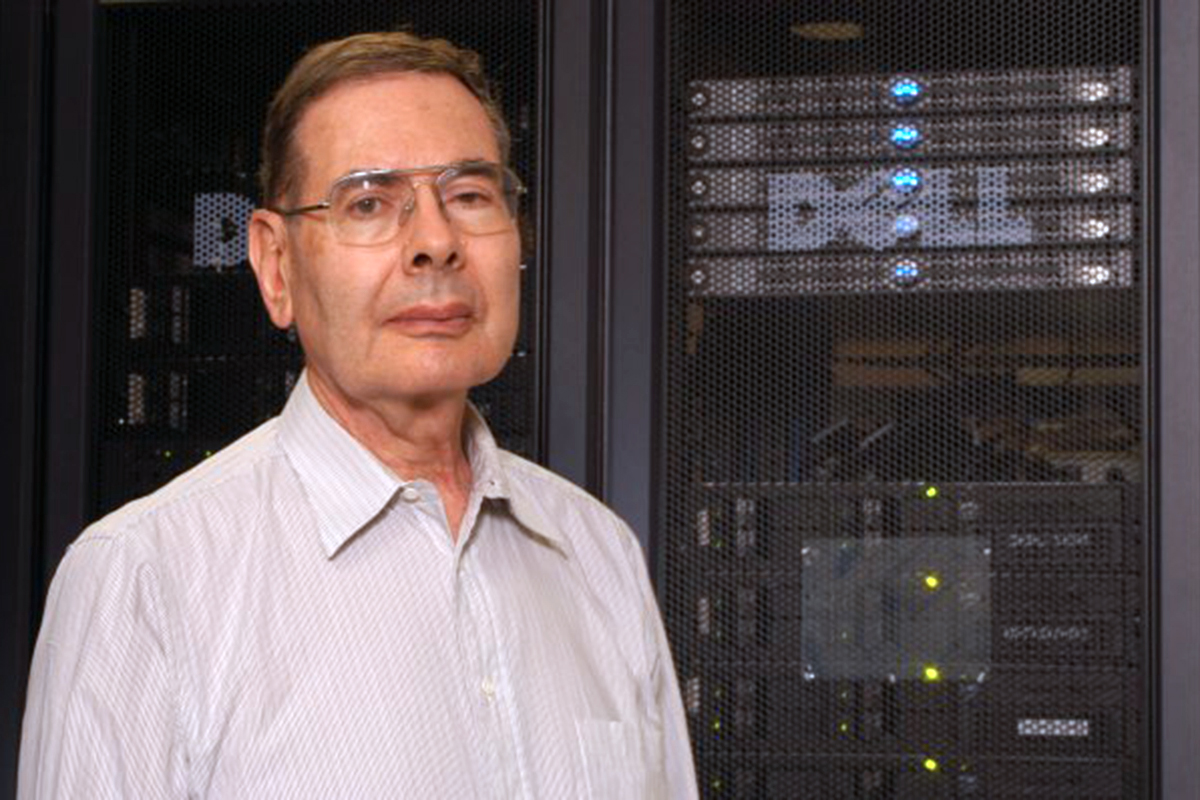
Dr. Farshid Rahmani is a Lecturer at the School of Property, Construction and Project Management (PCPM), RMIT University, Australia. His research and teaching focus on Construction Procurement , Relational Contracting , and Agile Project Management . He supervises Masters and PhD students in areas including Early Contractor Involvement (ECI) Alliances Public-Private Partnerships (PPP) Collaborative Delivery Systems . His recent publications explore agile frameworks for building adaptation, sustainable materials like recycled concrete, and team dynamics in large infrastructure projects. Key themes include modular construction , project lifecycle management , and innovative material usage . He actively applies Grounded Theory and Abductive Reasoning in construction management research.
Plavini Punyatoya is an Assistant Professor at the MT School of Management, New Jersey Institute of Technology (NJIT). Her research focuses on online consumer behavior, trust in digital retail environments, brand community management, and supply chain technologies. She has published extensively in marketing and business journals, with a strong citation record in areas related to consumer trust and e-commerce. Her research interests center on understanding how cognitive and affective trust influence online customer behavior, particularly in the Indian market. She investigates factors affecting loyalty towards e-tailers, including privacy and security policies, retailer reputation, and perceived risk. Additionally, her work explores the impact of online brand communities and supply chain technology internalization on firm performance. These themes reflect a strong interdisciplinary approach combining marketing, information systems, and operations management. The trend in her recent publications shows a consistent focus on digital consumer behavior and trust mechanisms, with increasing emphasis on integrated models and technological adoption in supply chains. Her work spans both theoretical frameworks like signaling theory and empirical studies in emerging markets. While no formal scientific awards are listed in the provided text, her research has garnered significant attention, as evidenced by high PlumX captures and Scopus citations, particularly for her 2019 article on cognitive and affective trust. She has collaborated with researchers such as A. Saini, D. Pattanayak, A. Satpathy, and A. Agrawal. Although specific details about student advisement or grant funding are not mentioned, her publication record suggests active research engagement. She is involved in academic communities such as the Academy of Marketing Science, as indicated by her conference proceedings.
George Nacouzi is a Senior Engineer at RAND Corporation and a Professor of Policy Analysis at the RAND School of Public Policy. He specializes in strategic defense research, focusing on space systems resilience, missile defense, hypersonic technologies, and nuclear command systems. His work bridges technical analysis with policy implications, particularly in integrating commercial space services into U.S. military operations. Education: Ph.D. in Mechanical and Aerospace Engineering from the University of California, Irvine. Prior to RAND, he held senior engineering roles at TRW and Northrop Grumman, analyzing space and missile defense systems. He also taught space-related courses at UC San Diego and Northrop Grumman. Research Interests: Space domain awareness, commercial space contributions to national security, orbital operations, small satellite applications, and the impact of emerging technologies on strategic stability. His work emphasizes non-materiel resilience strategies and policy frameworks for space systems. Key Article Trends: Recent publications focus on AI/ML applications for space domain awareness, commercial space integration challenges, and hypersonic missile nonproliferation. He explores how evolving technologies disrupt traditional military domains and influence global stability. Scientific Awards: None explicitly mentioned in provided texts. Advising & Grants: No formal advisees listed, but leads research projects at RAND’s Project AIR FORCE and National Security Research Division. His work is funded by U.S. Department of Defense and Congressional mandates. Labs/Teams: Affiliated with RAND’s Project AIR FORCE and National Security Research Division, collaborating with U.S. Space Force and Department of the Air Force on strategic initiatives.
Henrik Haller is an Associate Professor at Mid Sweden University, affiliated with the Department of Natural Sciences, Design and Sustainable Development (NDH). His work integrates environmental science with practical applications in tropical regions, particularly focusing on land use, soil remediation, and sustainable food systems. Academic Title: Doctor of Philosophy Location: Östersund, Sweden Key Research Areas: Multifunctional land use, bioremediation, agroforestry, and sustainable development in the Global South Haller's research emphasizes transforming environmental challenges into opportunities. His work includes: Bioremediation of heavy-metal-contaminated soils using amaranth plants Urban agriculture potential in Swedish cities Life cycle assessments of cold-weather aquaponic systems Waste valorization strategies for contaminated lignocellulose sediments Universal design approaches to zero-waste communities Industrial symbiosis for local food systems He has ongoing projects in urban farming, wastewater resource recovery, and sustainable behavior transformation. His publications span topics from fungal metal tolerance to policy challenges in environmental governance.
Tim Baarslag is a Senior Researcher and leader of the Intelligent and Autonomous Systems group at CWI (Centrum Wiskunde & Informatica), a Part-Time Professor of Mathematics of Cooperative AI at Eindhoven University of Technology (TU/e), and an Associate Professor at Utrecht University. Additionally, he holds visiting roles as a Scholar at MIT, Associate Professor at Nagoya University of Technology, and Fellow at the University of Southampton. His research focuses on enabling autonomous systems to collaborate through joint decision-making, with applications in smart energy trading, the Internet of Things, and autonomous vehicles. Education: MSc in Mathematics (cum laude), Utrecht University BSc in Computer Science (cum laude), Utrecht University PhD in Automated Negotiation, Delft University of Technology (2014, cum laude) Tim Baarslag investigates foundational theories for cooperative artificial intelligence, particularly in automated negotiation. His work includes developing algorithms for multi-deal coordination, optimizing bidding strategies with reservation values, and creating frameworks like Genius and NegoLog to evaluate automated negotiators. He explores how AI can balance efficiency and fairness in complex, real-world scenarios such as procurement and energy trading. Recent research trends highlight his development of NegoLog, a Python-based negotiation framework with advanced analytics, and his work on multi-deal negotiation protocols. He also investigates preference uncertainty in user-agent interactions and designs optimal concession strategies for risk-seeking agents with high reservation values. Scientific Awards: Cor Baayen Young Researcher Award Academic Pioneer by Elsevier Young Talent by The Financial Daily Science Talent by New Scientist Tim Baarslag leads the Intelligent and Autonomous Systems group at CWI and organizes the International Automated Negotiating Agent Competition. He is involved in the ACM Future of Computing Academy, The Young Academy, and the Netherlands Academy of Engineering. His work is supported by the NWO Vidi grant COMBINE, focusing on coordinating multi-deal bilateral negotiations. Labs & Teams: Intelligent and Autonomous Systems group, CWI EAISI and Combinatorial Optimization groups, TU/e ACM Future of Computing Academy The Young Academy Netherlands Academy of Engineering
Dr. Daniel Schiff is an Assistant Professor of Technology Policy at Purdue University’s Department of Political Science and Co-Director of the Governance and Responsible AI Lab (GRAIL) . He holds a PhD in Public Policy from Georgia Tech and has extensive experience in AI governance, ethics, and policy. His research bridges philosophy, public policy, and technology, focusing on AI’s societal impacts in domains like education, finance, and criminal justice. He previously served as Responsible AI Lead at JP Morgan Chase and Secretary of the IEEE 7010-2020 AI ethics standard. Education: PhD in Public Policy, Georgia Institute of Technology (2022) MS in Social Policy, University of Pennsylvania (2013) BA in Philosophy, Princeton University (2012) Research Interests: Dr. Schiff examines AI governance through mixed-methods approaches, including industry standards, public opinion dynamics, and ethical education for STEM students. His work emphasizes interdisciplinary collaboration to address challenges like AI bias, public accountability, and ethical AI adoption. Recent projects include studying police reform via AI, AI literacy among students, and the role of synthetic data in healthcare. Articles Overview: His publications span AI policy, ethics, and governance, with notable contributions to Policy Studies Journal , Science and Public Policy , and IEEE Transactions on Technology & Society . Recent work includes analyzing misinformation dynamics and AI’s role in policing oversight. Awards & Grants: National Institute of Justice Award ($972,000) Google Research Gift ($5,000) Purdue Seed Funding for AI Ethics Education ($10,000) Labs & Initiatives: Co-leads GRAIL, which fosters interdisciplinary AI research. Engages with global AI policy efforts, including the Academic Alliance for AI Policy (AAAIP) and NIST AI Safety Institute.
Chen Zhi is an Assistant Professor in the Department of Analytics and Operations at the NUS Business School, National University of Singapore, where he has been employed since July 2020. His academic work focuses on operational challenges in innovation-driven value chains, with particular expertise in new product development, innovation sourcing, AI economics, and wisdom of crowds methodologies. Dr. Chen received his Ph.D. in Management (Decision Sciences) from INSEAD (2014-2020) and his B.E. with First Class Honors in Industrial and Systems Engineering from the National University of Singapore (2009-2013). During his academic journey, he completed an overseas exchange at the Georgia Institute of Technology and a research internship at École Polytechnique in France. Chen's research spans two primary streams. The first addresses R&D phase challenges in new products, examining how firms can optimally design supplier bases and informational policies to procure innovation from suppliers, with recent focus on policy impacts on AI-based product development such as autonomous vehicles. The second stream investigates demand forecasting for new products, exploring how to aggregate diverse expert insights into consensus forecasts and quantify underlying uncertainty through obtained forecasts. His publication record demonstrates a strong trajectory in top-tier operations and management journals, with recent work appearing in Management Science, Manufacturing & Service Operations Management, and International Journal of Forecasting. Chen's research shows increasing focus on AI development challenges, uncertainty quantification in forecasting, and strategic approaches to innovation sourcing in complex technological environments. At NUS Business School, Chen teaches Managerial Operations and Analytics for the MBA program and Decision Analytics Using Spreadsheets for undergraduate students. Previously at INSEAD, he taught tutorials for Uncertainty, Data and Judgment, and Production and Operations Management courses.
Gordon Kingsley is a Professor and Director of Graduate Studies in the School of Public Policy at Georgia Institute of Technology (Georgia Tech). He specializes in public management, policy implementation, STEM education policy, and transportation policy. His research focuses on inter-sector partnerships and their impact on organizational structure and human capital development, with a focus on STEM education and transportation privatization. He has consulted for numerous U.S. government agencies and authored over 100 peer-reviewed articles and reports. Education includes a Ph.D. in Public Administration from Syracuse University, an M.S. in International Affairs from Columbia University, and a B.A. in International Affairs and Economics from American University. Research interests span policy processes, public management innovation, and the evaluation of partnerships in STEM education and infrastructure. Notable works include studies on renewable energy policy in Europe, adaptive management in environmental regulation, and contracting practices in transportation agencies. Teaching responsibilities include courses such as PUBP-3230 (STEM Education Policy), PUBP-6012 (Fundamentals of Policy Processes), and PUBP-8520 (Scope & Theory of Public Policy). He has advised multiple state and federal agencies on policy implementation and contracting strategies. Key projects include evaluations of the Georgia Department of Transportation’s consultant management systems and the development of frameworks for public-private partnerships. His work emphasizes practical solutions for improving governance efficiency and stakeholder collaboration.
Thayer Morrill is a Professor of Economics at North Carolina State University, holding a position in the Department of Economics. He earned his Ph.D. from the University of Maryland in 2008 and specializes in Market Design, School Assignment, and Auction Theory. He actively contributes to the Economics Graduate Program and teaches EC 468, a Game Theory course with comprehensive self-developed materials. Education: Ph.D. in Economics, University of Maryland, 2008 Professor Morrill's research centers on Market Design applications in school choice and auction theory, developing novel mechanisms for efficient and fair resource allocation. His work bridges theoretical game theory with empirical analysis, examining strategic behavior in school assignment systems, kidney exchange programs, and procurement auctions. Key methodological contributions include characterizations of matching algorithms like Top Trading Cycles and Deferred Acceptance. His publication history (2010-2022) reveals consistent focus on matching theory and market design across leading journals including Journal of Economic Theory and American Economic Journal. Recent work analyzes ranking mechanisms in competitive processes (2022), while earlier research established foundational characterizations of matching algorithms. His interdisciplinary approach connects theoretical rigor with real-world applications in education and healthcare markets. Scientific Awards: No awards listed Advising and Grants: The provided documentation contains no details regarding student advising activities or grant funding. His research collaborations include prominent economists such as Umut Dur, Pete Troyan, and Robert Hammond across multiple publications.
Andrew B. Whinston is the Hugh Roy Cullen Centennial Chair in Business Administration and Professor at the Red McCombs School of Business, The University of Texas at Austin, with additional appointments in Computer Science and Economics. He directs the Center for Research in Electronic Commerce and holds the John Newton Centennial IC2 Fellowship, while serving as editor for Decision Support Systems and Organizational Computing, and Electronic Commerce journals. His research centers on Artificial Intelligence applications in E-Commerce and Information Systems, with current focus on electronic commerce dynamics. Key interests include identity management, reputation systems, sentiment analysis in social media, location-based networks, and the economic implications of the New Economy. His interdisciplinary work bridges business administration, computer science, and economics to address digital marketplace challenges. Recent publications reveal strong emphasis on empirical analysis of digital platforms, exploring auction mechanisms for network resources, tradable reputation systems, social influence in location-based networks, and manipulation of sentiment in online environments. These works demonstrate methodological diversity spanning computational modeling, behavioral experiments, and big data analytics applied to real-world e-commerce scenarios. Major recognitions include: Career Research Excellence Award from University Co-op (2015) Career Award for Outstanding Research Contribution at UT Austin (2009) LEO Award for Lifetime Exceptional Achievement in Information Systems (2005) Ford Foundation Faculty Research Fellowship (1966) No information regarding student advising or specific grant funding was provided in source materials. As Director of the Center for Research in Electronic Commerce, Whinston leads interdisciplinary initiatives advancing theoretical frameworks and practical applications for digital marketplaces, fostering collaboration between academia and industry stakeholders in e-commerce innovation.
Marzyeh Ghassemi is an Associate Professor at MIT in the Department of Electrical Engineering and Computer Science (EECS) and the Institute for Medical Engineering & Science (IMES). She also holds a Canadian CIFAR AI Chair and is a faculty member at the Vector Institute. Her affiliations include the Jameel Clinic and CSAIL. Dr. Ghassemi's work focuses on ethical AI, algorithmic fairness in healthcare, and mitigating bias in medical datasets. She has pioneered projects analyzing racial disparities in end-of-life care, vocal disorder diagnosis using accelerometers, and improving subgroup robustness in machine learning. Education: PhD in Computer Science, MIT MSc in Biomedical Engineering, University of Oxford (Marshall Scholar) B.S. in Computer Science and Electrical Engineering, New Mexico State University (Goldwater Scholar) Research Interests: Her work bridges AI and healthcare, emphasizing fairness, reproducibility, and ethical deployment. Key areas include: - Algorithmic Fairness: Addressing biases in medical imaging and clinical decision systems. - Bias Mitigation: Developing methods to decorrelate sensitive information from predictions. - Health Equity: Studying disparities in end-of-life care and organ procurement. - Generative AI: Applications in mental health and medical imaging. Publications: Her recent work highlights challenges in vision-language models (e.g., handling negation), regulatory gaps in health AI, and bias reduction techniques. These efforts aim to ensure AI systems are both accurate and equitable in clinical settings. Awards: Herman L. F. von Helmholtz Career Development Professorship CIFAR Azrieli Global Scholar MIT Tech Review’s 35 Innovators Under 35 Canada Research Chair Leadership & Impact: She co-chaired the NeurIPS Workshop and founded the Association for Health Learning and Inference. Her projects like Quantifying Racial Disparities in End-of-Life Care reveal systemic biases in ICU treatments. She advocates for transparent AI deployment through frameworks like FUTURE-AI and TRIPOD+. Labs & Teams: Leads MIT’s HealthyML group, collaborating on projects such as voice misuse detection, federated learning for medical imaging, and AI-driven mental health prediction.
Dr. Albert Aidoo-Anderson is a Lecturer in Management at the Salford Business School, University of Salford. He holds a PhD in Operations Management (Supply Chain, Logistics, and Project Management), an MSc in Procurement, Logistics, and Supply Chain Management, and an MSc in Finance. He is a Chartered Member of the Institute of Procurement and Supply (MCIPS) and a Fellow of the Higher Education Academy (FHEA). His research focuses on Operations Management, Supply Chains, and Industry 4.0/5.0 applications in sectors like Pharmaceutical, Mining, Healthcare, and Oil & Gas. Education: PhD in Operations Management, University of Salford MSc in Procurement, Logistics, and Supply Chain Management, University of Salford MSc in Finance, University of Dundee Postgraduate Certificate in Academic Practice (PGCAP) Research interests include demand forecasting for SMEs, Industry 4.0 integration in supply chains, and smart logistics. He led the OPEN SME project, a £1M initiative funded by the Greater Manchester Combined Authority and ERDF, collaborating with Manchester University, Manchester Metropolitan University, and Bolton University to develop an Online Leadership Programme for SMEs post-COVID. His teaching spans undergraduate and postgraduate modules such as Operations Management, Supply Chain Management, Project Management, and Research Methods. Scientific Awards and Recognition: Fellow of the Higher Education Academy (FHEA) Chartered Member of the Institute of Procurement and Supply (MCIPS) Grants and Advising: Supervised MSc/PhD dissertations and contributed to the OPEN SME project. His professional experience spans Mining, Logistics, Banking, Finance, and NHS Health sectors. Labs/Teams: Led a multidisciplinary team in the OPEN SME initiative, emphasizing SME resilience and digital transformation in Greater Manchester.
Dr. Zahirul Hoque is a Professor of Accounting at RMIT University's School of Accounting, Information Systems and Supply Chain. Previously, he held professorial roles at Prince Sultan University (Saudi Arabia) and La Trobe University (Australia). He obtained his PhD from the University of Manchester (UK) in 1993 and is a Fellow of CPA Australia and the Institute of Cost and Management Accountants of Bangladesh. His research focuses on management accounting systems, public sector accounting, organizational change, and accounting practices in emerging economies. He has supervised 21 doctoral students and authored/co-authored over 100 journal articles and book chapters. His work spans journals like Accounting, Organizations and Society and British Accounting Review . He serves as Founding Editor of the Journal of Accounting & Organizational Change and Deputy Editor of Accounting and Finance . His editorial roles also include the Emerald Studies in Public Service Accounting and Accountability . Key research themes include performance measurement, balanced scorecard applications, and accountability in public and nonprofit sectors. His recent work explores post-pandemic public sector accounting challenges and outcome-based budgeting. Scientific Awards: CPA Australia Fellowship, Bangladesh Institute Fellowship Collaboration: Active in international editorial boards and research networks UN SDGs: Contributing to Quality Education (SDG 4), Decent Work (SDG 8), Sustainable Cities (SDG 11), and Industry Innovation (SDG 9)
Seongkyoon Jeong is an Assistant Professor of Supply Chain Management at the Haslam College of Business , University of Tennessee, Knoxville. His research addresses contemporary challenges in digital supply chains, cybersecurity risks, and sustainable operations. PhD (2022) - Supply Chain Management, Arizona State University MSc (2016) - Management, Georgia Institute of Technology MSc (2009) - Technology Management, Economics and Policy, Seoul National University BSc (2007) - Naval Architecture and Ocean Engineering, Seoul National University Jeong's work bridges supply chain security and sustainability , with recent publications examining cyberattack dynamics , epidemic-driven demand , and technology convergence . His 2018-2025 publications reveal a trajectory from R&D collaboration to digital transformation in supply chains. Scientific Awards Jack Meredith Best Paper Honorable Mention (JOM 2023) Arizona State University Outstanding Research Award (2022) Korea Management Association Consulting Excellence Award (2018) KIPO Director's Research Award (2016) Korea Institute for Industrial Economics and Trade Best Project (2013) Korea Inno-Skill Grand Prize (2010) Previously at Korea Institute of Machinery and Materials, Jeong contributed to interorganizational R&D before focusing on supply chain dynamics. His media contributions to Supply Chain Management Review and Supply Chain Dive highlight global cybersecurity risks and semiconductor production challenges .
Lori Sisk is an Associate Professor of Teaching in Global Supply Chain Management at the Mike Ilitch School of Business, Wayne State University. She brings over 28 years of industry and consulting experience in supply management to her academic role, where she teaches strategic procurement, operations, and supply chain courses. She also serves as Program Coordinator for the WSU/AIAG Supply Chain Certificate Program, Advisor to student organizations, and member of multiple academic and industry committees. Education: MBA, Bowling Green State University BSBA, Bowling Green State University (Major: Procurement) CPSM, Institute of Supply Management Six Sigma Green Belt Certified, Delphi Corporation Lori's teaching and research focus on applied, experiential learning in supply chain and procurement. Her courses emphasize solving real-world business problems, and she integrates industry challenges into classroom learning. Her research interests include applied decision-making tools for supply chain executives, strategic sourcing, risk management, and lean operations. She is passionate about preparing students for careers in supply chain through hands-on education and mentorship. Her publications reflect a practitioner-oriented approach, covering topics such as crisis recovery, strategic sourcing, and total cost of ownership. The articles show a consistent focus on operational resilience, cost optimization, and strategic procurement across manufacturing and global supply chains. Scientific Awards: Inspirational Teacher of the Year Award, Wayne State University (2019) Service Award, Wayne State University Mike Ilitch School of Business (2020) Teacher of the Year Award, Denver Transportation Club (2018) Leadership District Person of the Year, ISM Public Relations District Person of the Year, ISM Troy Volunteer of the Year Award (nominated, 2020) Lori is deeply involved in academic and industry service. She advises student organizations including the Global Supply Chain Management Association (GSCMA) and Warrior Consulting Group (WCG). She co-leads the Supply Chain Advisory Council and is a member of the AIAG SC Steering Committee. She has delivered over 200 training sessions for professionals at global automotive OEMs and aerospace firms and has presented at international conferences including ISM, APICS, and PMAC. She has also developed and delivered curriculum for the AIAG/WSU Automotive Supply Chain Certificate Program since 2013. Lori leads initiatives that bridge academia and industry, particularly through the WSU/AIAG partnership. She has designed and facilitated workshops for suppliers and corporate teams on JIT, cost reduction, and risk management. Her work enhances workforce development and strengthens industry-academic collaboration in supply chain education.