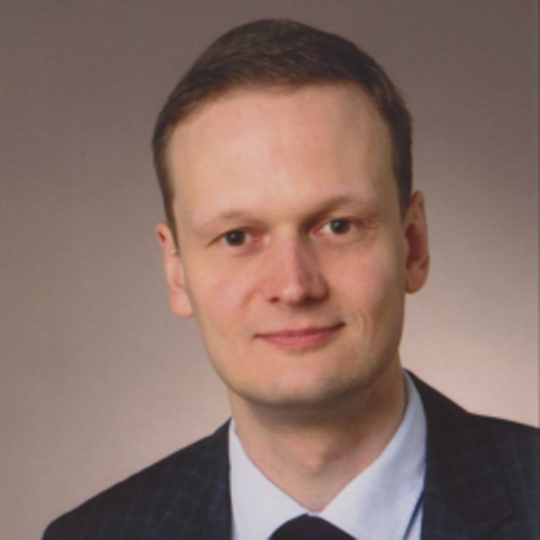
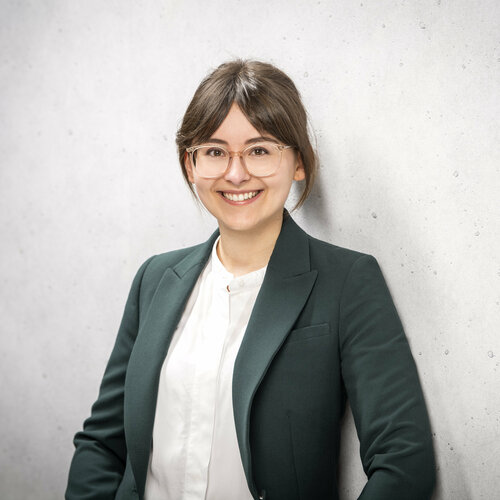
Prof. Dr.-Ing. Andreas Dietzel is a faculty member at the Faculty of Mechanical Engineering, Ilmenau University of Technology. His work focuses on CAD, mechanical design, and optical metrology for manufacturing processes. Educational background includes a dissertation on modeling forming limits of beech veneer at TU Ilmenau (2017). Research interests center on natural fiber composites, finite element modeling (FEM), and optical strain measurement techniques. He has developed simulation methods for 3D veneer deformation and climate-adapted material testing. Recent publications emphasize orthotropic material models for veneer, automated deformation analysis, and multi-layer composite characterization. Collaborations span projects like InnoFur and ViPrüf. He leads research initiatives integrating experimental material characterization with FEM simulations for composite durability and process optimization.
Moataz Abdelaal is a Researcher at the Visualization Institute of the University of Stuttgart (VISUS), affiliated with the Weiskopf Working Group and the Cluster of Excellence IntCDC. His work bridges visualization techniques with architecture, engineering, and computational design. Research Interests: He focuses on scalable visualization systems, network visualization, empirical user evaluation, and computational design frameworks for fibre composite building systems. His projects include dynamic graph visualization, redundancy matrix optimization in structural engineering, and visualization literacy assessment. Teaching: He contributes to courses on Theoretical and Methodological Foundations of Visual Computing, Information Visualization, Image Synthesis, and Scientific Visualization. Labs & Teams: Moataz collaborates with the Weiskopf Working Group at VISUS, working on interdisciplinary visualization challenges in architecture and engineering.
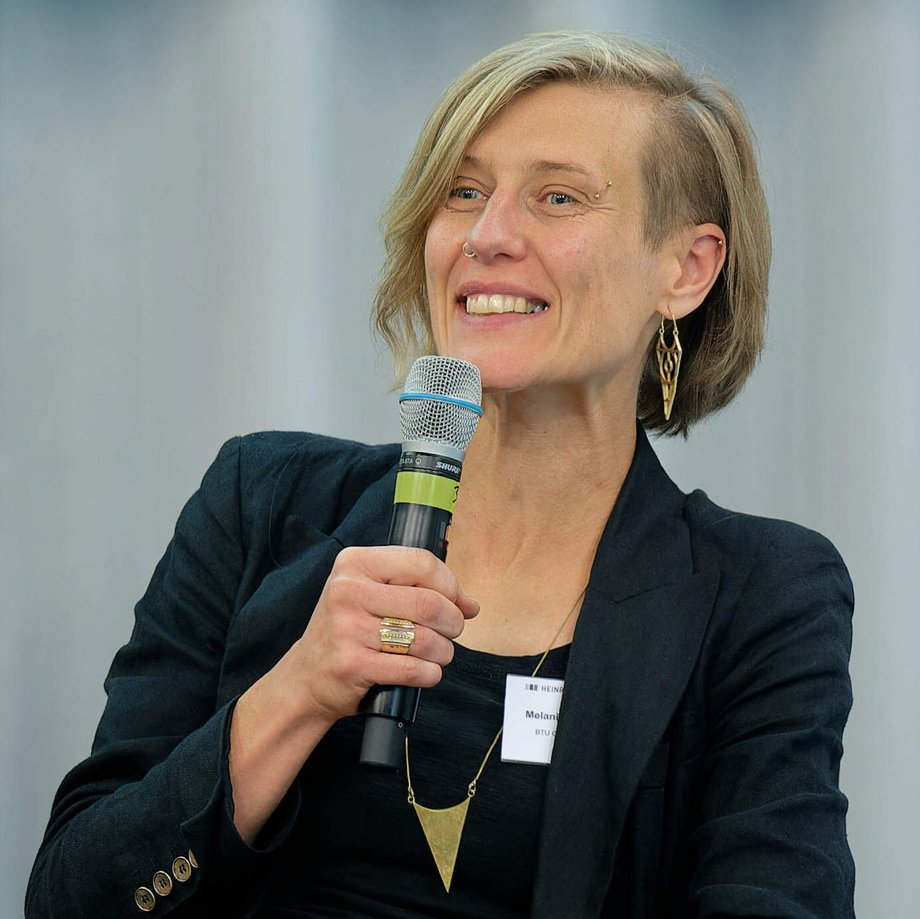
Prof. Dr. Melanie Jaeger-Erben is a Professor of Sociology of Technology and Environmental Engineering at BTU Cottbus-Senftenberg since 2021. Previously, she led the Transdisciplinary Sustainability Research in Electronics group at TU Berlin. Her work focuses on socio-ecological transformations, circular economy, and sustainable consumption practices. She holds affiliations with institutions such as the German Advisory Council on Global Change (WBGU) and the German Federal Environment Agency's Resources Commission. Education: Bachelor/Master in Psychology and Sociology (Universities of Göttingen and Uppsala) Postgraduate in Qualitative Social and Educational Research (Magdeburg, 2009) Doctorate in Sociology (TU Berlin, 2010) Research Interests: Her research explores how societal practices and technological systems can support sustainability transitions. Key areas include circular economy implementation, consumer behavior influencing product longevity, and transdisciplinary methodologies to address socio-ecological challenges. She emphasizes the interplay between material flows, cultural norms, and policy frameworks. Key Roles: Member of the Expert Commission for Germany's Fourth Gender Equality Report Co-leader of the ESYS working group on Energy Transition in Built Environments Board Member at the Institute for Social Innovation (ISInova) Associate Editor of Sociology and Sustainability and GAIA Grants & Labs: Engaged in projects like the Bauwelt 4 Future initiative promoting participatory climate action. Active in citizen science projects analyzing emissions and repair practices. Collaborates with the Circular Economy Initiative Germany (CEID) on business model innovations. Labs/Teams: Leads research groups in transdisciplinary sustainability at BTU and co-designs circular society frameworks through multi-stakeholder collaborations.
Dr. Lukas Meub is a Researcher at the University of Göttingen's Faculty of Economics and Business Administration. His work bridges behavioral economics with digital transformation, focusing on how algorithmic systems and big data influence economic decision-making in small and medium enterprises (SMEs), crafts, and regional economies. He contributes to research on sustainability, energy efficiency, and AI integration in traditional industries. Research Focus: Digitalization & Artificial Intelligence in crafts and SMEs Human behavior in algorithmic decision-making environments Sustainability strategies and environmental economics Tradable development rights and policy analysis Regional innovation systems and digital tools Key Publication Trends: Recent work explores energy efficiency tools (E-Tool), AI applications in SMEs, and behavioral responses to algorithmic systems. His research combines experimental economics with practical implementations, particularly in environmental policy and digital transformation. Contact: lukas.meub@wiwi.uni-goettingen.de
Dr. Marco Schmitt is a Researcher at the Chair of Sociology with a Focus on Technical and Organizational Sociology at RWTH Aachen University. His work bridges sociology with network analysis in the context of climate protection and scientific innovations. Methodological expertise: quantitative/qualitative network analysis, expert interviews, social simulation Current project: Biobasierte Textilien aus nachwachsenden Rohstoffen (BioTexFuture) Collaborates with engineers and computer scientists in interdisciplinary teams Research Focus: Examines multi-layer networks and communication structures within socio-technical systems, particularly in climate-related innovations. Integrates sociological insights into early phases of technological development to enable socially sustainable transformations. Team Culture: Promotes collaborative approaches through student assistantships, tandem research models, and interdisciplinary exchange within the Institute's dynamic research environment.
Snežana Knežević serves as a Lecturer at the Department of Medical Sciences, Academy of Applied Studies Polytechnic in Belgrade, Serbia, where she integrates medical expertise with technology applications in healthcare and service industries. Her academic foundation includes medical training from the University of Kragujevac and advanced studies in health management. Her educational background features: Basic Medical Studies, University of Kragujevac Medical Faculty (1994) Specialization in General Medicine, University of Kragujevac Medical Faculty (2010) Master's Degree in Health Care Management, University Singidunum Faculty of Health and Law Studies Dr. Knežević's research program critically examines artificial intelligence implementation in hospitality and healthcare systems, with particular emphasis on practical service transformation, food waste reduction, and work-life balance policies. Her public health investigations span cardiovascular care utilization patterns in Serbia and standardized approaches to Long COVID management across 34 European nations, demonstrating exceptional interdisciplinary reach between medical science, technology, and social policy. Analysis of her 2025 publications reveals a strategic focus on translating AI capabilities into operational improvements within service industries while addressing systemic healthcare challenges through multinational collaboration. Her work consistently targets measurable outcomes in efficiency, sustainability, and patient care quality. No scientific awards are documented in available sources. As an active researcher, Dr. Knežević participates in substantial international collaborations that likely involve grant funding, though specific projects aren't detailed. Her editorial contributions to 15 publications indicate engagement with scholarly discourse. While teaching remains central to her lecturer role, her research profile suggests significant involvement in national health surveys and European policy development initiatives. Though no dedicated laboratory is mentioned, her research operates through institutional partnerships including the Belgrade Geographical Institute 'Jovan Cvijić' SASA, facilitating data-driven studies across Serbia's healthcare and hospitality sectors through multi-institutional teams.
Prof. Dr. Silke Schicktanz is Professor for Culture and Ethics of Biomedicine and Head of the Institute for Ethics and History of Medicine at the University Medical Center Göttingen, Georg-August-University. She has held this position since April 1, 2010, following her Junior Professorship for the History, Theory, and Ethics of Medicine (2006-2010). She has also held adjunct positions at San Francisco State University and conducted research at UC Berkeley with a Feodor Lynen Fellowship. Dr. Schicktanz earned her doctorate in "Ethics in the Life Sciences" from the University of Tübingen in 2002, focusing on medical and animal ethical aspects of xenotransplantation. Her academic journey includes research positions at the University of Tübingen, Max Delbrück Center for Molecular Medicine, Research Center Jülich, and the University of Münster. She led Germany's first nationwide citizens' conference on genetic diagnostics at the German Hygiene Museum Foundation in Dresden. Her research focuses on the intersection of bioethics, digital health technologies, and dementia care. She explores cultural differences in bioethics, the relationship between ethics and empiricism, and public engagement in healthcare decision-making. Her work particularly examines how co-intelligent monitoring and assistance systems impact privacy, empowerment, and quality of care for people with dementia. She investigates how cultural contexts shape ethical perspectives on technology in healthcare, with comparative studies between Germany and Israel. Her recent publications reveal a strong emphasis on the ethical implications of AI and digital technologies in dementia care. She examines cross-cultural perspectives, value-sensitive design approaches, and the integration of ethical considerations into technology development. Her work consistently addresses the tension between technological innovation and fundamental ethical values like privacy, autonomy, and human dignity in healthcare contexts. Feodor Lynen Fellowship from the Alexander von Humboldt Foundation President of the Academy for Ethics in Medicine (elected 2022) Appointed Member of European Research Council Grant Evaluation Panels (2009-2017) Member of Committee on Freedom and Research in Science of ICSU (2012-2019) Member of IAG Gene Technology Report (since 2019) Appointed Member of Central Ethics Committee for Stem Cell Research (2020-2023) As Principal Investigator, Schicktanz leads multiple significant research projects including EIDEC (Ethical and social aspects of co-intelligent monitoring and assistance systems in dementia care), PANDORA (Patient-Oriented Digitalization), and "Our Healthcare of Tomorrow." She has supervised numerous doctoral students and researchers, fostering interdisciplinary collaboration between ethicists, technologists, and healthcare professionals. Her team approach emphasizes stakeholder engagement, bringing together patients, caregivers, and healthcare providers in the research process. She directs the Schicktanz Working Group which focuses on Digitalization & AI in healthcare ethics, conducting both theoretical and empirical research on emerging technologies.
Reinhard Schinke is a Research Associate and Project Manager in the Research Area 'Built Environment - Resources and Environmental Risks' at the Leibniz Institute of Ecological Urban and Regional Development (IOER) in Dresden, Germany, a position he has held since 2011. He holds a Doctorate from Brandenburg University of Technology Cottbus and a Diplom-Ingenieur in Civil Engineering from TU Dresden, specializing in structural engineering. His research focuses on flood and groundwater risk analysis, climate change adaptation strategies, vulnerability assessment of built environments, and development of damage simulation models. Key areas include: Flood resilience technologies for buildings and infrastructure GIS-based flood damage estimation for urban and agricultural systems Monetary valuation of flood prevention measures Groundwater inundation impacts and mitigation Schinke has contributed significantly to interdisciplinary projects like INCREASE (social resilience in climate change) and KlimaKonform (municipal climate adaptation). His publication trends show consistent focus on refining flood damage models, developing geospatial risk assessment tools, and evaluating structural adaptation measures across European case studies. Awards: DAAD Research Fellowship (2011) at University of Western Ontario, Faculty of Engineering He actively participates in expert networks including the BWK (German Association for Water, Waste Management and Cultural Building) working group on high groundwater levels, contributing to technical guidelines and flood risk management frameworks.
Dr. Viktoria Brendler serves as a Scientific Associate at FGZ Hannover, a research institute specializing in system analysis and complexity management. Her work centers on political science dimensions of infrastructure planning and socio-ecological transformation, with particular emphasis on public participation mechanisms in energy transition conflicts across Europe. She actively contributes to FGZ's research topics including Provision of Public Goods and Infrastructure, Cohesion in Socio-ecological Transformation, and the Europe-wide energy transition initiative. Her research program investigates how participatory governance can resolve infrastructure conflicts sustainably, examining the interplay between formal institutional frameworks and informal community practices. Key interests include conflict resolution in energy infrastructure planning, national regulatory styles in renewable policy, dialogic knowledge transfer between experts and citizens, and the perceived costs/benefits of participation from stakeholder perspectives. Her methodological approach combines qualitative case studies, quantitative analysis, and game-theoretical modeling to address complex socio-technical challenges. Dr. Brendler's recent publications (2023-2024) reveal a cohesive research trajectory focused on participation-conflict dynamics in energy transitions. Her work demonstrates that effective resolution requires complementary formal procedures and informal dialogue, while critically assessing participation's practical burdens versus democratic benefits. This scholarship advances theoretical understanding of socio-ecological transformation while providing actionable insights for infrastructure planners. No specific scientific awards or fellowships are documented in the available information. Her current research is supported through two major FGZ Hannover projects: the Europe-wide Cohesion in Energy Transition initiative (C_07) and the Germany-focused Social Cohesion through Participation study (HAN_F_03). These projects fund multi-sited empirical research across European energy transition cases, though direct student supervision isn't part of her institutional role. Collaborative opportunities exist through FGZ's interdisciplinary research structure and external academic partnerships. Dr. Brendler operates within FGZ's research framework on Provision of Public Goods and Infrastructure and Socio-ecological Transformation, contributing political science expertise to interdisciplinary teams examining infrastructure planning challenges. Her work connects theoretical political science with practical governance challenges in climate action contexts, emphasizing the critical role of participatory processes in building social cohesion during large-scale transformations.
Dr. Lisa Hehenberger is an Associate Professor in the Department of Strategy and General Management at ESADE Business School, where she also directs the Esade Center for Social Impact (ECSI) and researches with the Grupo de Investigación en Iniciativa Emprendedora (GRIE) . She holds a PhD in Management from IESE Business School and a Master's in Economics/Business from Stockholm School of Economics and HEC CEMS. Her research examines social entrepreneurship , impact investing , and venture philanthropy , particularly focused on market-building mechanisms and the Sustainable Development Goals (SDG 8: Economic Growth; SDG 16: Peace/Justice). She develops frameworks for impact measurement and hybrid organization governance. Dr. Hehenberger maintains extensive global affiliations including: Chief Impact Advisor for African impact fund Oryx Impact Board Member of GSMA Foundation OECD Scientific Board for Social/Solidarity Economy CNBC Disruptor 50 Advisory Council Former European Commission Expert (GECES) and OECD Impact Investment Advisor She established ESADE's Social Impact Lab to connect MBA students with impact sector projects and co-developed the UNDP's SDG Impact Standards online course. Her career includes prior investment banking experience at UBS and GB Investment Banking.
Dr. Stephan Dreyer serves as a Senior Researcher for Media Law and Media Governance at the Leibniz Institute for Media Research │ Hans Bredow Institute (HBI) in Hamburg, Germany. With over two decades of experience since joining the institute in 2002, he has established himself as a leading expert in digital media regulation, particularly at the intersection of child protection and data protection. His research focuses on the regulatory challenges posed by emerging technologies in media-mediated communication, with specific attention to: Algorithm-driven information and communication flows Automated decision-making systems Communicative (social) bots Transparency and information obligations as regulatory tools Legal governance in datafied societies Dr. Dreyer's recent work has examined critical contemporary issues including social media restrictions for minors, labeling requirements for edited influencer photos, and safety frameworks for children in digital spaces. His research demonstrates a consistent focus on balancing regulatory effectiveness with fundamental rights in rapidly evolving digital environments. He holds significant external appointments including: Legal spokesperson for the Complaints Committee and Expert Commission of FSM (Freiwillige Selbstkontrolle Multimedia-Diensteanbieter) Youth protection expert at USK GmbH (USK.online) Member of the USK Appeals Committee Board of Trustees member of FSF (Freiwillige Selbstkontrolle Fernsehen) Advisory Board member of klicksafe.de Previously, he chaired the European CEO Coalition's Technical Task Force on Interoperability and Machine-Readability (2011-2014) and led the EU-funded MIRACLE project on machine-readable age classification labels (2014-2016), which demonstrated the feasibility of interoperable youth protection systems for the EU Digital Single Market.