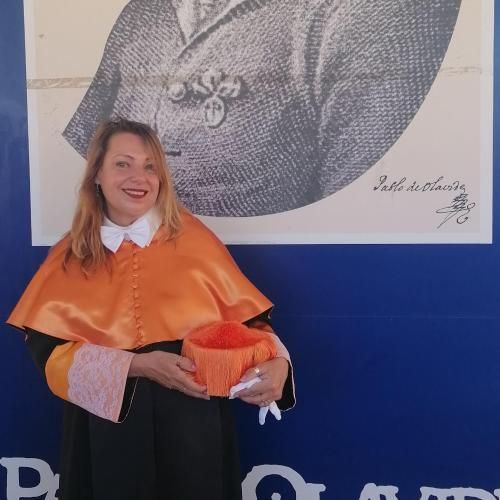
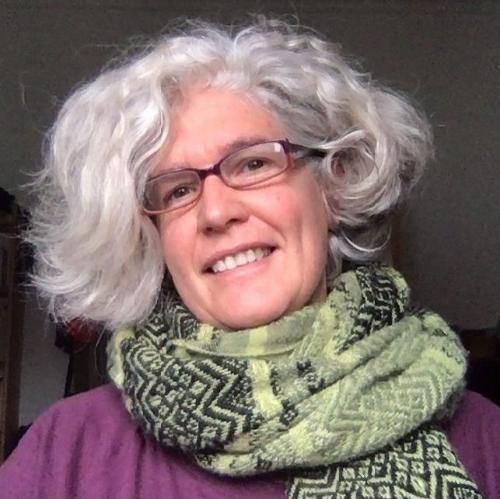
María Araceli Casasola Balsells is a Professor at the Universidad Pablo de Olavide in the Department of Financial Economics and Accounting. She is affiliated with the Social and Environmental Accounting Research Center (CICSMA) and leads the research group INFORMACIÓN, ENTORNO Y CAMBIO ORGANIZATIVO. Her academic work focuses on financial communication, corporate legitimacy, and readability analysis of corporate disclosures. Research Themes: Historical evolution of corporate narratives Environmental and social accounting Educational technology in financial education Web accessibility standards Legitimacy theory in petroleum/telecommunications sectors Academic Contributions: Her 2007 doctoral thesis on chairman's letters as legitimacy tools in CEPSA and REPSOL-YPF remains foundational. She has published extensively on GRI sustainability reporting, gamification pedagogy, and digital accessibility policies.
Virginia María Martínez Lozano is a Full Professor at the Universidad Pablo de Olavide, affiliated with the Department of Social Anthropology, Basic Psychology and Public Health. Her work focuses on educational innovation and social justice through service-learning methodologies, particularly in contexts of social exclusion and multicultural education. Research Group: GECYC (Group for the Study of Culture and Cognition) Doctoral Programs: Culture, Development, Gender and Social Intervention PAIDI Area: Humanities Her research explores identity formation in service-learning frameworks, cross-cultural studies of preschool conflict, and the role of universities in promoting social justice. She has emphasized hybrid educational contexts involving Roma communities and pandemic resilience in schools. Recent publications highlight trends in service-learning as a tool for critical ethical co-construction, social participation, and addressing access barriers in early childhood education. She integrates ethnographic methods and reflective practices in her pedagogical strategies. She has supervised academic activities like the 2003 PhD thesis on peer interactions in Andalusian and Dutch preschoolers, guided by Dr. José A. Sánchez Medina and Dr. Paul P. Goudena. Her initiatives include the Bitácora Project (2015), Flora Tristán Residence collaborations (2012), and the Clase Mágica-Sevilla program (2014), which focus on humanistic education and sustainable social commitments.
Raquel Florez López is a Professor at the Department of Financial Economics and Accounting, University of Pablo de Olavide, with a career focused on financial risk analysis, machine learning applications, and organizational change. Her research group, Information, Environment and Organizational Change, aligns with her interdisciplinary expertise in Social and Legal Sciences. PhD in Management Control and Finance (2007), University of León Her research spans financial economics, operational risk, and computational methods. Key areas include credit risk modeling in low-default portfolios, statistical learning for financial systems, and governance mechanisms in SMEs. zbMATH-indexed work highlights her integration of wavelet analysis and Monte Carlo methods in finance. Recent articles focus on digital freelancing profiles, export agency performance, and supply chain resilience, demonstrating her evolving interest in strategic management and international trade. Despite extensive publications, no scientific awards are documented in the provided texts.
Juan García-Álvarez de Perea is a Lecturer in Accounting and faculty member at the Department of Financial Economics and Accounting of Pablo de Olavide University. His research focuses on sustainability , management control systems , interorganizational relationships , non-financial reporting , internationalization , teaching innovation , SMEs , and happiness . Research Interests: Sustainability, Management Control Systems, Interorganizational Relationships, Non-Financial Reporting, Internationalization, Teaching Innovation, SMEs, Happiness Key Collaborations: Co-authorships with scholars such as Jun Lei, Marcelo Kremer, and Emma Dafouz Research Contexts: Focus on the Spanish water supply sector, educational methodologies in accounting, and evidence-based management practices Scientific Contributions: His recent work examines the impact of English as a medium of instruction on accounting students' performance, risk management in franchisor-franchisee relationships, and GRI reporting in public water entities. Earlier studies include innovative teaching methods like project-based learning and digital flashcards. Academic Affiliations: Member of the Center for Research in Social and Environmental Accounting (CICSMA) and the research group Information, Environment and Organizational Change .
María Luisa Hidalgo Hidalgo serves as Full Professor in the Department of Economics, Quantitative Methods and Economic History at Pablo de Olavide University, Spain. Her research integrates health, education, labor markets, and environmental factors within economic frameworks, focusing on human capital development and policy impacts. She earned her Doctorate from the University of Alicante in 2006 with the thesis "Essays on human capital accumulation and its public provision" under Dr. Iñigo Iturbe-Ormaetxe Cortajarena. Her educational background established foundations for her current work in public provision of human capital. Dr. Hidalgo Hidalgo's research spans: Economics of Education : Remedial interventions, tracking systems, and gender-specific educational outcomes Health Economics : Causal relationships between education and adult health Gender Economics : Women's education impacts on political representation Poverty Studies : Long-term effects of public expenditure on poverty reduction Her methodological approach emphasizes rigorous econometric identification to establish causal mechanisms. Analysis of her 2014-2025 publications reveals consistent focus on educational equity, gender gaps in political participation, and effectiveness of school interventions. Recent work increasingly examines intersectional impacts of policy across health, education, and labor domains using European and Spanish datasets, with growing emphasis on gender-differentiated outcomes. No scientific awards were documented in available sources. She supervises academic theses as indicated in her institutional profile, though specific student names and grant details remain unreported in the source material. Her advising focuses on human capital formation and policy evaluation. As leader of the "WELL-BEING ECONOMY" research group, she directs collaborative investigations into health, education, labor market, and environmental economics, fostering interdisciplinary policy-relevant scholarship through regular team workshops and data-sharing initiatives.
Vicente Antonio Pérez Chamorro is an Associate Professor at Pablo de Olavide University, Department of Financial Economics and Accounting. He actively contributes to research through the Center for Research in Social and Environmental Accounting (CICSMA) and leads the Information, Environment and Organizational Change research group. His work focuses on sustainability accounting, environmental financial disclosures, and pedagogical innovation in accounting education. PhD Supervision : Advised research on environmental financial reporting in Spain Key Research Areas : GRI reporting in public water entities, corporate environmental accountability, decolonial accounting, and digital educational tools His 15 most recent publications (2024-2000) span accounting history, sustainability reporting, and educational technology. Articles explore topics like: US accounting practices in Spanish telephone monopolies Evolving patterns in Spanish accounting history research Gamification in financial accounting education Web accessibility in public services Environmental disclosures under European regulations Legitimacy strategies in historical state-owned enterprises While no explicit awards are mentioned in the provided texts, his collaborative projects with institutions like Zaragoza University and Nottingham Trent University demonstrate academic partnerships. He has supervised multiple research theses and implemented project-based learning methodologies using tools like ANKI and Contaplus software.
Antonio Coronado Hijon is a researcher affiliated with the Universidad de Sevilla in the Department of Educación y Psicología Social. His academic work focuses on educational psychology, particularly addressing learning difficulties in arithmetic calculations and promoting academic resilience through evidence-based interventions. Ph.D. in Basic Psychology from Universidad de Sevilla (2012) Supervised by Dr. Jesús García Vidal His research explores the development and validation of observational instruments like EVADAC for diagnosing arithmetic learning difficulties, alongside designing programs to foster psychosocial resilience in educational contexts. Coronado Hijon integrates methodologies such as blended learning, flipped classroom, and learning analytics to enhance student performance and inclusivity. Recent publications highlight his work on methodological triangulation for mathematics reinforcement, checklist development for identifying arithmetic difficulties, and cross-cultural studies on academic anxiety. He also investigates formative assessment strategies, digital portfolios, and intercultural transitions in education. Collaboration with Dr. Jesús García Vidal underscores his commitment to advancing educational diagnostics and tutorial action frameworks that bridge learning styles with academic support systems.
María Margarita Zango Pascual serves as a Collaborating Professor at Pablo de Olavide University in Seville, Spain, within the Department of Physical, Chemical and Natural Systems specializing in Environmental Technologies. Her academic profile centers on the critical intersection of natural hazards, disaster risk reduction frameworks, and human rights protections, with particular expertise in seismic risk assessment and environmental governance mechanisms applicable to vulnerable regions globally. She earned her PhD from Pablo de Olavide University in 2011 with doctoral research titled "The integrated management of natural risks within the framework of third-generation human rights. The case of the effects induced by seismic activity in El Salvador (Central America)", supervised by Dr. Guillermina Garzón Heydt, Dr. José Jesús Martínez Díaz, and Dr. Eva Martínez-Sampere. This foundational work established her trajectory in examining how geological expertise interfaces with legal frameworks and human rights obligations. Professor Zango Pascual's research program demonstrates exceptional breadth across Natural Hazards, Disaster Risk Reduction, Environmental Geology, Seismic Risk, Environmental Law, and Ethics in Geosciences. Her scholarship consistently investigates the integration of scientific knowledge with ethical considerations in disaster management systems, emphasizing community resilience building and the protection of human rights in geologically vulnerable contexts like Central America. She critically examines governance structures, policy implementation gaps, and the role of geoscientists in translating technical knowledge into actionable risk reduction strategies. Analysis of her 15 most recent publications reveals an evolving research trajectory from technical hazard assessment toward increasingly sophisticated examinations of legal-ethical dimensions in disaster contexts. Early works focused on geological case studies including the Biescas camping disaster and El Salvador landslide events following Tropical Storm Stan. Recent scholarship explores macrocriminality in environmental disasters, forensic geosciences applications, and the critical role of ethics in geological practice. A unifying thread throughout her career examines how environmental governance frameworks can better incorporate geological expertise while upholding human rights standards, particularly evident in her 2024 analysis of asbestos exposure disasters and 2023 work on natural risk management as a human rights imperative. While specific details of her current advising load and grant funding remain undocumented in available sources, her extensive publication record spanning two decades and her role as doctoral supervisor indicate sustained engagement in research mentorship. Her work consistently bridges theoretical frameworks with practical applications in disaster risk reduction, suggesting active participation in interdisciplinary research initiatives and policy development processes focused on improving governance through science-technology integration.
Gabriele Vestri is a Lecturer at the Department of Derecho Público (Public Law) at Universidad Pablo de Olavide. His academic profile focuses on legal frameworks in public administration, digital transformation, and migration law. Current faculty member Specializes in Administrative Law and Artificial Intelligence applications in governance PhD thesis: Legal protection of unaccompanied minor immigrants Research Interests: His work explores the intersection of public law with digital innovation, including algorithmic transparency (2024), AI ethics in government (2024), and digital rights. He also investigates migration law (2012), with a focus on minors' constitutional protections and comparative legal analyses between Spain and Latin America. Publication Trends: Recent articles (2023-2025) address AI in public contracting (2025), algorithmic justice (2024), and digital transformation challenges (2024). His research combines legal theory with practical implementations in municipal governance and citizen services.
Dr. Christmas Canga Armayor is a Full Professor at the Faculty of Nursing , University of Navarra, specializing in Community and Maternal and Child Nursing . She leads the Innova-PSPC research group focused on family and community health innovation. Her research spans: Family nursing interventions in oncology and chronic disease Smoking cessation programs for healthcare professionals and diabetic patients Alcohol consumption reduction strategies for university students Psychometric validation of nursing assessment tools Nursing education for advanced practice roles Article trends show expertise in health promotion , behavioral interventions , and clinical competence across nursing contexts. She has contributed extensively to systematic reviews , qualitative research , and meta-analyses in these domains. Her email is ncang@unav.es . She earned her PhD in 2000 from the University of Navarra with a thesis on Intervention study for smoking cessation in diabetic patients .
Elisa Torre Ramos is a Full Professor in the Department of Physical Education and Sports at the Faculty of Sports Sciences, University of Granada, Spain. Her office is located at Carretera de Alfacar, S/N 18071 Granada, with contact phone 958246647. Her research focuses on Physical Education, Sports Sciences, Exercise Physiology, Motor Learning, Sports Psychology, and Health Promotion—core disciplines aligned with her departmental role. These areas emphasize both theoretical and applied aspects of human movement and athletic performance. No scientific awards were documented in the provided text. Professor Torre Ramos maintains a structured advising schedule for students across both semesters: Tuesdays: 3:30 PM - 6:30 PM Wednesdays: 10:00 AM - 11:00 AM Thursdays: 4:00 PM - 6:00 PM held in Office 4.6 of Building D. No research grants or graduate student mentoring details were specified. Information regarding laboratories, research teams, or collaborative projects was not included in the source material.
Antonio Baena Extremera is a Professor at the University of Granada, affiliated with the Faculty of Educational Sciences and the Department of Didactics of Musical, Plastic and Corporal Expression. His research focuses on physical education pedagogy, adventure education, motivational climates, bilingual teaching (CLIL), and the cognitive/psychological impacts of outdoor activities. He has published extensively on how empowering/disempowering educational environments affect pre-service teachers and students, with recent work analyzing GPS-based orienteering, musculoskeletal pain in dancers, and formative assessment strategies across educational stages. His recent publications (2023-2025) emphasize interdisciplinary approaches, linking physical education to neuroscience (e.g., frontal brain thickness), psychology (e.g., self-concept, disruptive behaviors), and environmental education. Key themes include green exercise, adventure-based learning, and psychometric validation of assessment tools for pain and teaching competence. As a faculty member, he engages in cross-cultural motivational climate studies (e.g., Costa Rica, Mexico, Spain) and explores how mindfulness, technology, and unconventional materials enhance educational practices. His work bridges educational theory with practical applications in natural environments and bilingual contexts.
Dunia López Pintado serves as a Full Professor in the Department of Economics, Quantitative Methods and Economic History at Pablo de Olavide University. Her academic career bridges theoretical economic modeling with experimental validation, focusing on how network structures shape economic behavior and social outcomes. Her educational foundation includes a PhD from the University of Alicante (2004), where she completed her thesis Networks, diffusion and games: theory and experiments under Dr. Fernando Vega-Redondo. This early work established her trajectory in network-based economic analysis. Professor López Pintado's research centers on network formation , diffusion dynamics , and social influence mechanisms , with significant contributions to understanding contagion processes, peer effects, and public goods provision in structured populations. Her work frequently employs experimental economics to validate theoretical models, particularly in labor market contexts like volunteering's impact on employment and peer effects in collaborative tasks. The WELL-BEING ECONOMY research group she contributes to extends this to health, education, and environmental policy applications. Analysis of her publication trends reveals consistent methodological evolution: from foundational network theory (2008-2013) toward sophisticated uncertainty modeling in contagion processes (2022-2023) and nuanced examinations of heterogeneous agent behavior. Recent work increasingly integrates real-world complexity through functional analysis approaches and examines structural inequalities in diffusion outcomes. She actively contributes to doctoral education through Pablo de Olavide University's Economic Analysis and Business Management programs. While specific grant details aren't provided, her research group's focus on well-being economy suggests engagement with policy-relevant projects addressing labor market integration and social cohesion. Professor López Pintado leads within the WELL-BEING ECONOMY: Health, Education, Labor Market and Environment research group, which operates under the PAIDI Areas of Social and Legal Sciences. This interdisciplinary team develops network-based frameworks for analyzing socio-economic well-being, with particular emphasis on how structural constraints affect opportunity distribution.
Óscar Aguado Tevar serves as Professor of Finance and Managing Director (CFO-COO-CHRO) at Nebrija University, affiliated with the School of Economics and Business and Department of Applied Economics. He leads the EDGE Nebrija Research Group on Entrepreneurship, Digitalization, Growth, and Business Excellence while teaching finance courses in undergraduate and graduate programs including Nebrija's MBA and UPM's Oil & Gas Engineering Master's. Education PhD in Mining Engineering, Universidad Politécnica de Madrid (2016) Licenciatura in Business Administration, HEC-Paris Business School Master in Petroleum Economics, IFP School (France) Master in Managerial Energy Economics, University of Oklahoma Research Focus His scholarly work bridges digital transformation and sustainable business practices , with recent emphasis on generative AI applications in strategic sectors, electric vehicle adoption dynamics in Spain, and NFC payment system evolution. Through systematic literature reviews and quantitative methodologies, he examines interdisciplinary intersections between technology adoption, cybersecurity compliance, and corporate sustainability measurement—particularly within Spanish universities and energy sectors. Current projects analyze how 5G infrastructure and data science reshape digital marketing landscapes while exploring behavioral factors in public transport usage among Madrid university students. Publication Trends Analysis of his 2024-2025 publications reveals three dominant research streams: (1) AI-driven business transformation (7 articles on generative AI applications and data visualization), (2) sustainable mobility solutions (5 articles on EV adoption and public transport), and (3) digital payment ecosystems (4 articles on NFC/contactless systems). His methodological preference for systematic reviews (60% of recent work) complements quantitative analyses of consumer behavior and policy compliance, often contextualized within Spanish institutional frameworks. Scientific Awards No scientific awards, fellowships, or medals were documented in the provided materials. Advising and Governance Thesis Supervision : Directed approximately fifteen Master's theses (TFMs) at Nebrija University University Leadership : Serves on Nebrija's Management, Government, and Direction Councils Accreditation Panels : Participated in ABET and EFMD/ENQHEEI evaluation committees Strategic Projects : Led business planning for multinational asset management operations across 10 countries Research Infrastructure As head of the EDGE Research Group, he coordinates interdisciplinary collaborations focused on digitalization metrics and business excellence frameworks. The group employs Power BI for data visualization in Spanish university transformation projects while developing synthetic indicators for corporate sustainability measurement—a methodology currently being piloted with partner institutions.
María García de Blanes Sebastián is a researcher at the Faculty of Economics and Business, Universidad Nebrija, specializing in Audiovisual Communication and Advertising. She earned her PhD in 2023 from Universidad Rey Juan Carlos with a thesis on technology acceptance models applied to mobile payment platforms and virtual assistants. Research Focus: Technology Acceptance (UTAUT2), Digital Transformation, Augmented Reality, Metaverse, and Neuromarketing. Key Projects: Electric vehicle adoption factors, Hybrid AI banking applications, SaaS service quality, and AR/VR impacts on education and marketing. Her recent publications (2020-2025) demonstrate expertise in integrating AI, sustainability, and behavioral analysis across finance, education, and digital marketing. She collaborates with SEDGE research group and can be contacted at mgarcise@nebrija.es.