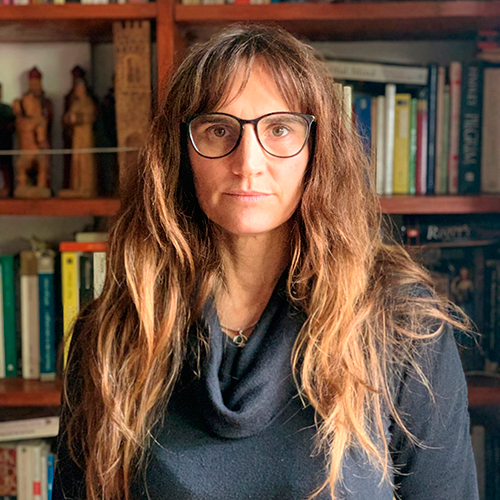
Francisco Gallego is a Full Professor at the Institute of Economics, Pontificia Universidad Católica de Chile. He holds a Ph.D. in Economics from the Massachusetts Institute of Technology (MIT) and serves as Scientific Director of J-PAL Latin America and the Caribbean (LAC) and Director of the Institute for Sustainable Development at PUC. His research spans Development Economics , Political Economy , and Economics of Education , focusing on how information provision affects parental decisions, educational outcomes, and labor dynamics. Recent work explores EdTech interventions during the pandemic, school choice , and environmental policies like vehicle restrictions. 2024 : Television-based education during the pandemic, voter responses to educational accountability. 2023 : Historical mining impacts, commodity price effects on fertility. 2021 : Pedagogy changes in preschools, regional development policies. Gallego collaborates with institutions such as J-PAL and IE-PUC , and his work informs policy in Chile and Latin America. He has contributed to evaluations on tutoring programs, digital content delivery, and public space recovery.
Dr. Juan Carlos Jeldes is a Professor at the School of Architecture and Design at Pontifical Catholic University of Valparaíso (PUCV), Chile. He holds a PhD in Design from PUC Rio de Janeiro, Brazil, and serves as Director of MADLAB & AconcaguaFabLab. With academic activity dating back to 1990, he has developed an extensive career in design education, research, and community engagement. His educational background includes: Doctorate in Design from Pontifical Catholic University of Rio de Janeiro, Brazil Juan Carlos Jeldes' research focuses on the intersection of design, digital fabrication, and community engagement. His work explores rhizomatic immersion approaches, GeoHumanities, and STEAM education methodologies. He investigates how design can foster conviviality, sustainability, and cultural preservation through spatial interventions and educational practices. His research often bridges theoretical frameworks with practical applications in urban contexts, particularly in Valparaíso, Chile. His recent publications demonstrate a strong emphasis on digital fabrication technologies, community-based design, and innovative educational approaches. The articles reveal trends toward integrating STEAM education with gender perspectives, developing regional FabLab networks, and exploring rhizomatic approaches to design education and spatial understanding. His work connects architectural theory with practical community applications, showing a consistent focus on how design can address social and environmental challenges. Juan Carlos Jeldes has supervised numerous undergraduate and graduate students through thesis projects focusing on design, digital fabrication, and community engagement. His work includes significant grant-funded research projects exploring rhizomatic immersion, GeoHumanities, and STEAM education approaches. As Director of MADLAB & AconcaguaFabLab, he leads initiatives that connect design education with digital fabrication technologies and community development. His lab work emphasizes hands-on learning, technological accessibility, and collaborative design processes that engage with local communities and cultural contexts.
Iván Ivelic Yanes is a Full Professor at the School of Architecture and Design , Pontificia Universidad Católica de Valparaíso, where he has worked continuously since 1995. His career spans undergraduate and graduate teaching, research, community outreach, and institutional management, including serving as Director from 2014–2020. A lifelong member of the Amereida Open City , he contributes to architecture through collective creation and artistic exploration. Research Focus : Cultural infrastructure, urban habitability, and the role of architecture in protected natural areas. Key Projects : Over 25 works across the Americas, including cultural facilities and collective housing. International Engagement : Visiting professor in Argentina, Belgium, Switzerland, Spain, Germany, Greece, and New Zealand. Academic Contributions : Supervised numerous theses and directed experimental 1:1 scale architectural practices. His publications analyze architecture’s role in natural/cultural heritage, urban revitalization, and creative processes. He has participated in major exhibitions like Documenta 14 (2017) and Bienal de Venecia (2012).
David Silva Bernales is an Assistant Professor and Master's Student at the School of Architecture and Design, Pontificia Universidad Católica de Valparaíso (PUCV) in Valparaíso, Chile. Born on July 5, 1999, he began his academic journey at PUCV in 2018 and has developed a specialized focus in Object Design. His research interests span multiple design domains including Object Design, Digital Design and Manufacturing, Service Design, Interaction Design, and Design Epistemology. His work demonstrates particular strength in inclusive design applications, cultural design projects, and the integration of digital fabrication techniques in educational settings. His projects often explore the intersection of traditional design practices with contemporary digital methodologies. Analysis of his recent scholarly outputs reveals a strong trend toward human-centered design applications, particularly in inclusive design, dementia-friendly interfaces, and cultural design projects focused on regional Chilean contexts. His work frequently employs participatory design methods and emphasizes the social dimensions of design practice. As an educator, Silva Bernales has taught across multiple design domains including Digital Design and Manufacturing, Epistemology in Architecture and Design, and various specialized workshops. His teaching approach emphasizes experimentation, conviviality, and the integration of digital tools as learning and connecting mechanisms for students. His design practice extends to environmental contexts through projects related to the La Campana Peñuelas Biosphere Reserve, cultural explorations like the Quatu Islands project, and numerous design interventions focused on everyday habits and living practices.
Elisa del Carmen Loncon Antileo is a Professor at the Department of Education, College of Humanities, University of Santiago de Chile (USACH). Her academic work focuses on Intercultural Education, Indigenous Language Linguistics, Bilingual Education, and Linguistic Policy, with a particular emphasis on the Mapuche language (Mapuzugun) and its role in education and decolonization. PhD in Literature (2019, Pontifical Catholic University of Chile) and PhD in Humanities (2017, Leiden University) Master of Humanities in Linguistics (2006, Iztapalapa Metropolitan Autonomous University, Mexico) Her research explores the intersection of Indigenous knowledge systems, educational policy, and cultural preservation. She has led multiple projects on Mapuche language revitalization, intercultural curriculum design, and the sociolinguistic implications of education policies in Chile. Loncon's work emphasizes the importance of decolonial epistemologies in educational settings. She has published extensively on topics such as neologism in Mapuche language education, intercultural curriculum development, and the sociopolitical dimensions of Indigenous language rights. Her recent publications highlight the role of linguistic diversity in educational equity, with a focus on Mapuche communities. 2023: Homenaje por su aporte académico y apoyo a derechos de las mujeres (Organización Nacional de Empleados Fiscales) 2021: Elegida entre las 100 mujeres más influyentes (BBC, Time, Financial Times) 2021: Premio René Cassin de Derechos Humanos (Gobierno Vasco) Loncon has advised numerous theses on intercultural education, including studies on emotional socialization in Indigenous contexts, curriculum design for immigrant students, and the role of cultural diversity in early childhood education. She has also been a visiting scholar at institutions including Harvard University, University of Michigan, and Universidad de Costa Rica.
Manuel Florencio Sanfuentes is a poet and professor at the Pontificia Universidad Católica de Valparaíso (PUCV) School of Architecture and Design , where he directs the e{ad} Publishing Workshop. Since joining the institution in 1988, he has taught design, typography, and poetics courses while leading interdisciplinary research at the intersection of poetry, graphic design, and architectural pedagogy. Educational Background: Graduate in Architecture and Design (PUCV, 1988) Research Focus: Amereida literary theory, typographic innovation, cultural preservation through poetic journeys, and digital academic knowledge networks His poetic scholarship explores spatial narratives in literature, counterpoint in American poetry, and mythological symbolism. Key typographic work examines letterform evolution in Ciudad Abierta and the development of graphical interfaces for academic platforms. Publications emphasize cultural studies through projects like documenting Chinese dance traditions in Valparaíso and analyzing emotional landscapes in poetry. Sanfuentes plays a central role in the Con§tel Open Academic Knowledge Network , contributing to interaction design and graphical interface implementation. His Amereida Workshop has operated continuously since 1998, shaping design pedagogy through physical and conceptual traversals across Latin America and beyond. As a graduate faculty member , he advises master's students through EGG research projects focused on collective knowledge creation.
Herbert G. Spencer González is an Adjunct Professor and Designer at the School of Architecture and Design, Pontificia Universidad Católica de Valparaíso (PUCV) in Chile. With a Master's degree in Interaction Design from CMU, he has been actively involved in design education since 1992. Currently, he is pursuing his PhD at Auckland University of Technology with the research project 'PictoNet: A Practice-Based Inquiry into a Generative Pictographic System for Cognitive Accessibility.' Spencer's academic journey began at the School of Architecture and Design at PUCV, where he trained as a graphic designer during the dawn of the digital age. His career has spanned over three decades, witnessing and contributing to the digital revolution of the 1990s and now the emergence of artificial intelligence in design practice. Research Interests Herbert Spencer's research focuses on the intersection of design, technology, and human experience, with particular emphasis on cognitive accessibility . His current work explores the relationship between word and image, investigating how pictograms and visual communication can enhance accessibility for people with intellectual disabilities, autism, dementia, and other communication challenges. His primary research areas include: Universal Design from the perspective of cognitive accessibility Intelligent Systems Design, particularly incorporating AI as a design material Design for Democracy and citizen communication platforms Physical or Tangible Interaction in exhibition spaces Service Design, especially for public services Spencer works at the Accessibility and Inclusion Center, where he conducts research with diverse populations facing communication difficulties. His academic interests intersect with philosophy of language, graphics, and advanced generative modeling techniques. Research Trends Spencer's recent publications demonstrate a strong focus on accessibility, particularly cognitive accessibility for people with intellectual disabilities. His work bridges design practice with social impact, exploring how visual communication systems like pictograms can empower individuals with communication challenges. A significant portion of his research examines self-determination skills among aging populations with intellectual disabilities, addressing healthcare barriers and quality of life issues. His innovative PICTOS project represents a practical application of his research, creating tools for navigation and evaluation of cognitive accessibility in services. Academic Contributions As an educator, Spencer has guided numerous undergraduate and graduate students through their thesis projects, with a focus on design for accessibility and inclusion. His teaching portfolio includes courses such as Interaction Design Workshop, Design Degree Workshop, and Written Image, reflecting his commitment to both theoretical and practical aspects of design education. Professional Activities Spencer is actively involved in the academic community through conference presentations, workshops, and collaborations. His 'Travesías' (journeys) program, both as a student and professor, demonstrates his commitment to experiential learning in design education. Recent professional activities include organizing seminars on accessible technology and participating in workshops on cognitive accessibility.
Rodrigo Daine serves as an Assistant Professor at the School of Architecture and Design, Pontificia Universidad Católica de Valparaíso (PUCV), where he teaches architectural theory and design studios. Born on October 8, 1998 in Limache, Chile, he joined PUCV in 2017 initially as a student before transitioning to faculty status. Dr. Daine earned his Master's Degree in Architecture and Design from PUCV. His educational background is reflected in his teaching of foundational courses including Workshop on Act and Void: Habitability and Risks on the Coastal Edge Workshop on Program and Building Form Collective Housing Workshop Properties of Materials His research methodology centers on architectural field expeditions known as "Travesías" (Crossings), which include the Pilico Crossing (2017), Huilloc Crossing (2018), Jetarkte Crossing (2020), KO Panqui-Curarrehue Crossing (2022), and Ribeirão Do Carmo Crossing in Brazil (2024). These expeditions form the backbone of his architectural investigation into how built environments respond to geographical and social contexts. As an educator in the Master's program (MAD), Dr. Daine teaches advanced courses including Systematic Structuring of Project Research and Communicability of the Creative Project. His teaching philosophy emphasizes the integration of theoretical knowledge with practical design challenges through workshop-based learning. Dr. Daine is an active member of "La Troupe," a collaborative design collective that has worked on projects including the Daniela Cuevas House in Lo Gamboa and City Theater consulting. The collective engages with urban infrastructure, theatrical spaces, and heritage rehabilitation projects, demonstrating his interdisciplinary approach to architectural practice.
Jose A. Soto is an Associate Professor and Academic Chair of the Mathematical Engineering Department at the University of Chile. He is also an associated researcher at the Center for Mathematical Modeling. His research focuses on Combinatorics, Algorithms, and Combinatorial Optimization. Previously, he was a postdoc at TU-Berlin's Combinatorial Optimization & Graph Algorithms Group. He holds a PhD in Mathematics from MIT (2011) and an undergraduate degree in Mathematical Engineering from the University of Chile (2006). He has led multiple grants, including Fondecyt Project 1181180 on approximation algorithms and Fondef IDeA ID18I10250 for VRP optimization. He has collaborated internationally, including with the Max Planck Institute on fast approximation algorithms for massive datasets. His research spans topics like prophet inequalities, matroid secretary problems, and geometric optimization, with notable contributions in Mathematics of Operations Research, Journal of Machine Learning Research, and Algorithmica. He has advised numerous students and postdocs, including Krzysztof Fleszar and Kevin Schewior during the MPII-UChile collaboration. Teaching includes courses on Approximation Algorithms, Combinatorial Optimization, and Calculability/Computational Complexity. He has organized conferences like IPCO 2013 and participated in program committees for WADS 2021 and LATIN 2018.
Paulo Cesar Barraza Rodriguez is an Associate Professor at the University of Chile , affiliated with the Institute of Advanced Studies in Education . He holds a Doctorate from the Pontifical Catholic University of Chile (2011) and a Psychologist degree from the University of La Serena (2005). Education: Doctor (2011), Psychologist (2005) Teaching: Faculty of Social Sciences (Development and Learning Bases, 2015–2025), Faculty of Philosophy and Humanities (Cognitive Sciences, 2015–2025) Research Interests His work bridges educational neuroscience , cognitive psychology , and neurodegenerative diseases , with a focus on neuromyths , attentional networks , and creativity development . He has extensively studied Alzheimer's disease , semantic networks , and self-awareness in patients . Publications His 15 most recent articles (2015–2025) span EEG hyperscanning , gamma-band synchronization , and neuroscience in education , with applications in Alzheimer's diagnostics and creative ideation . Student Advising Natural semantic networks in OCD patients (2023) Cooperative skills in teaching (2022) Emotion recognition in autism (2022) Self-awareness in Alzheimer's (2021) Labs & Collaborations He leads research at the Institute of Advanced Studies in Education , focusing on neuroscience applied to education , with collaborations in Alzheimer's research and educational technology .
Óscar Andrade Castro is a Professor at the School of Architecture and Design (e[ad]) at the Pontifical Catholic University of Valparaíso (PUCV), where he has been teaching since 2013. He holds a Doctorate in Architecture from the Technische Universiteit Delft (2021), a Master's degree in Architecture and Design with specialization in Nautical and Maritime Studies from PUCV (2011), and a Diploma in Art History from PUCV (2014). As Head of Research, he leads the study area 'Education, Space and Learning' and directs the Fondecyt project (11231173) 'Tacit Dimension of Natural Light in Architectural Practice and Training: Cases of Modern Religious Architecture in Chile'. His research focuses on two primary areas: Natural Light Studies and Architectural Knowledge Communities. The Natural Light Studies line examines architectural projects where light is a central design element, particularly from the Open City School of Architecture and Design historical collection. His Architectural Knowledge Communities research investigates how tacit knowledge is generated and transmitted within architectural practice communities. His methodologies include bibliographic review, archival analysis, architectural drawing, model-making, and participatory observation. Andrade's publication record demonstrates consistent scholarly output with significant recent contributions in 2023-2024 focusing on natural light in architecture, poetic architectural practices, and Pan-American educational networks. His work shows a clear trajectory from examining collective design processes to increasingly specialized investigations of light as tacit knowledge in architectural practice. His international collaborations are evident through presentations across Europe and the Americas, reflecting the global relevance of his research on architectural pedagogy and spatial practice. As an educator, Andrade teaches in both the initial cycle of architecture and in degree/master's workshops. He has participated in 12 international Travesías (journeys) of the e[ad] PUCV, including exhibitions and workshops in Valparaíso, São Paulo, Lausanne, Brussels, Athens, and Kassel. He serves on the editorial committee of the magazine Acto & Forma and the curatorial team of the Sala América, demonstrating his commitment to both scholarly and creative aspects of architectural education. His architectural practice includes significant projects such as the reconstruction of the Santiago Severín Public Library, the Matriz Church in Valparaíso, and various artistic creations including the 'Atelier Rosa de los Vientos' in Ciudad Abierta. His work bridges academic research with practical architectural applications, particularly in religious architecture and light studies.
Antonia Larraín Sutil is a Professor of Psychology at the Universidad Alberto Hurtado , Chile, where she has held leadership roles including Director of the Doctorate in Psychology (since 2018) and former Director of Postgraduate Studies and Research in the Faculty of Psychology (2014-2018). She holds a PhD in Psychology from the Pontificia Universidad Católica (PUC) and completed a postdoctoral fellowship at the University of Cambridge, UK, focusing on argumentation and science teaching. Her research integrates discourse analysis , socio-cultural theories (Vygotsky), and argumentation studies , exploring how dialogic processes enhance learning and teaching in science education. Notable grants include a FONDECYT Regular (2021-2025) on deliberative teaching for citizenship and a FONDEF project (2021-2023) evaluating curriculum-supported argumentation tools. She has supervised over 20 doctoral and master’s theses, mentoring scholars in education, psychology, and science pedagogy. Larraín Sutil serves on editorial boards of journals like Journal of Theoretical and Philosophical Psychology and Psyche , and has contributed to global academic networks such as the International Society for Theoretical Psychology. Her work bridges theoretical psychology with practical educational interventions, emphasizing the role of argumentation in fostering critical thinking and scientific literacy.
Natalia Yáñez Guzmán serves as an Industrial Designer and academic at the Faculty of Design, University of Development (UDD), Chile, leveraging expertise from a Master in Direct and Digital Marketing Management (Diego Portales University) and specialized internships at Harvard University ("Academic innovation for deep learning") and Naba-Domus Academy, Italy ("Textiles fashion design"). Her career bridges academia and industry through sustainability-driven design projects. Her educational foundation includes: Industrial Design degree from Diego Portales University Master in Direct and Digital Marketing Management from Diego Portales University with studies at Pompeu Fabra University, Barcelona Her research integrates sustainability and social innovation with hands-on material exploration in product and fashion design, prioritizing ecological responsibility and societal impact. She pioneers methodologies that transform Chilean design practices through circular economy principles and community-centered solutions. Her international acclaim spans: Nomination for the 2013 Seal of Excellence for Innovation ED Magazine's Designer of the Year (2018) El Mercurio Sábado's Young Leader recognition Exhibitions at London Design Festival (Tent Design), Milano Design Week, and Budapest's Museum of Applied Arts Finalist status at the Ibero-American Design Biennial (Madrid) "Black Sheep" nomination by Not Just a Label As a Fondart project evaluator for Chile's Ministry of Culture and member of the Chilean Design Internationalization Committee, she shapes national design policy. Though no formal student advising is documented, her ventures NY Slow Design Company (www.natyanez.com) and Importa (www.importa.cl) function as living labs for sustainable design education. Her entrepreneurial ecosystem—NY Slow Design Company, Importa project, and Upa!studio—operates as an integrated platform for slow fashion innovation, emphasizing ethical material sourcing and cross-cultural collaboration without dedicated academic laboratory structures.
Andrés Jonathan Abeliuk Kimelman is an Assistant Professor at the University of Chile's Faculty of Physical Sciences and Mathematics , affiliated with the Department of Computer Science . He holds a PhD in Computer Science (University of Melbourne, 2017) and a Civil Engineering degree in Computing (University of Chile, 2012). Research Focus : AI ethics, network analysis, natural language processing, and machine learning applications in social systems. Teaching : Leads undergraduate and postgraduate courses in Discrete Mathematics, Data Mining, and Computational Theory. Students : Advises multiple thesis and research projects, including works on AI-assisted urban planning, misinformation analysis, and algorithmic bias. Collaborations : Participates in the National Center for Artificial Intelligence (CENIA) as a co-investigator (2022-2027). Key Publications explore polarization detection, networked public spheres, and computational models for social systems. Current projects include unsupervised topic quantification and extreme multi-label classification in multilingual contexts.
Roberto Araya Schulz is a Full Professor at the University of Chile's Institute of Advanced Studies in Education, with a 44-hour working week. He holds a PhD from the University of California (1986) and an MSc from University of Chile (1979). Specializes in STEM education and educational technology Primary research areas: Machine learning in education, cognitive development, gamification His recent publications focus on: Integrating digital platforms in primary education Embodied cognition through hand puppets in math classes Large language models for spatial reasoning development Teacher discourse analysis using neural networks Key research grants include: FONDECYT Postdoctorate (2024-2027) on educational technology integration FONDECYT Exploration Projects (2024-2028) for dialogical teaching strategies IDRC funding (2017-2019) for digital tools in education