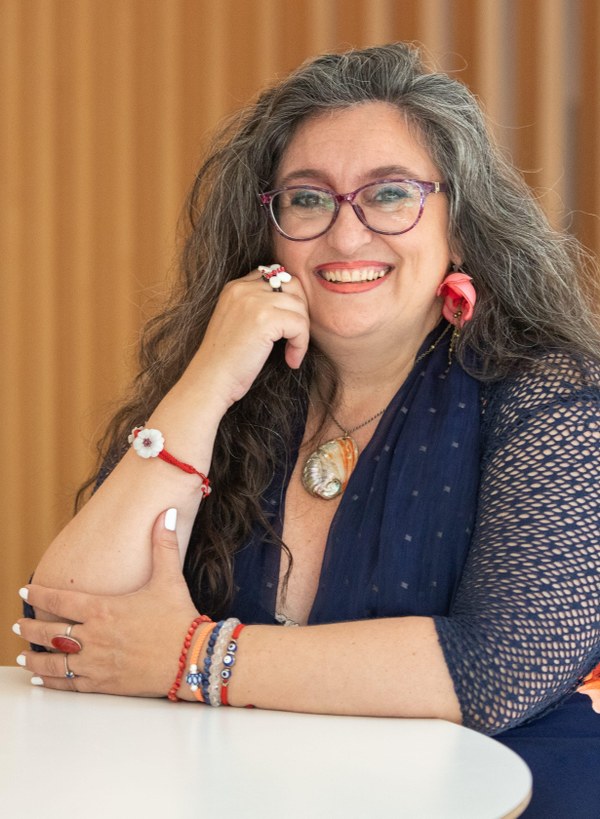
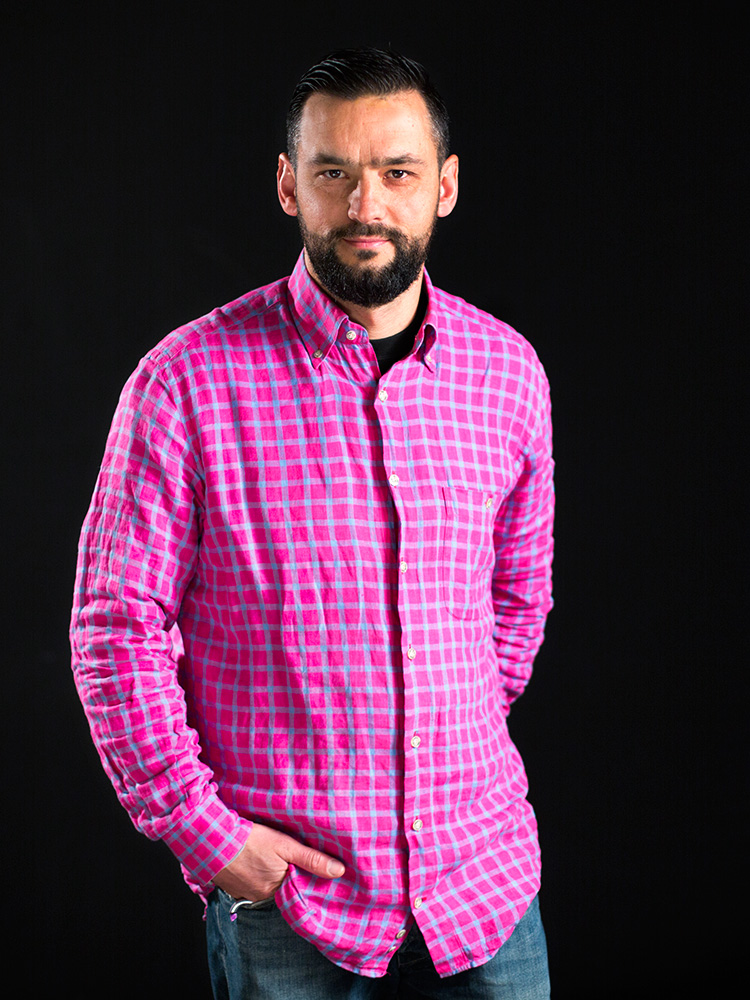
Dr. Juan Manuel Berbel Pineda is a full Professor at the Department of Business Organization and Marketing at Universidad Pablo de Olavide, Spain. His academic work focuses on tourism economics, sustainable tourism practices, and international business strategies, particularly within the hotel industry and textile sector. Key research areas: Tourism Economics, Sustainable Tourism, International Business Strategy Affiliated with IMEGS (Innovation and Marketing for a Sustainable Global Environment) research group Doctoral Programs: Innovation, Entrepreneurship and Family Business His research explores tourism competitiveness and internationalization patterns through empirical studies on hotel chains in Latin America, fair trade impacts in emerging economies, and post-COVID-19 rural tourism development. Analysis of 15 recent publications reveals strong emphasis on structural equation modeling, cross-cultural comparisons, and market segmentation strategies. Current academic activity includes international collaborations with institutions like Massey University, Varna University of Management, and University of Mauritius. His 2020 work on Ecuadorian chia seed exports demonstrates methodology for EU market selection using 7-dimensional indicators, while his sustainable tourism studies provide frameworks for pandemic-era tourism revival through non-overcrowding strategies.
Professor Valeska Ferrer Usó is a canon lawyer and theologian at Comillas Pontifical University, specializing in abuse prevention in ecclesiastical environments. She coordinates the UNIJES-funded Jordán research project (since 2021) and teaches subjects including 'Christianity and Social Ethics' and 'State Ecclesiastical Law' since 2022/23. Education: Doctorate in Canon Law (2022), Law Degree (2002), Ecclesiastical Studies (2012), Expert in Neuropsychology (2017), Specialist in Spiritual Exercises (2008). Her research focuses on canonical criminal law, restorative justice, and structural analysis of abuse mechanisms in religious institutions. Recent publications address procedural reforms, memory spaces for reconciliation, and interdisciplinary abuse prevention frameworks. She practices law at Madrid's Ecclesiastical Tribunal in marriage annulment cases and contributes to the Society of Jesus' Safe Environment System team (since 2024). Her work integrates theological, legal, and neuropsychological perspectives.
Sergio Moreno Gil is a Professor in the Department of Economics and Business Management at Universidad de Las Palmas de Gran Canaria (ULPGC), Spain. He is affiliated with the GIR TIDES research group (Economy, Environment, Sustainability and Tourism) and the Institute of Tourism and Sustainable Economic Development. His academic work focuses on tourism economics, marketing, and sustainability within the Social and Legal Sciences branch. Dr. Moreno Gil's research interests span across multiple dimensions of contemporary tourism. His primary focus areas include sustainable tourism development, destination marketing, sharing economy platforms in tourism, and consumer behavior analysis. He has made significant contributions to understanding tourism in the Canary Islands, particularly through his work with the Canary Islands Tourism Observatory. His research integrates traditional tourism studies with emerging fields like neurotourism and biometric analysis of tourist experiences. His publication record shows a clear trend toward addressing contemporary challenges in tourism. Recent works focus on sustainability in mass tourism destinations, the impact of sharing economy platforms, gastronomic tourism marketing, and collaborative tourism networks. His research demonstrates a strong methodological diversity, employing bibliometric analysis, social network analysis, and empirical studies of tourist behavior. Dr. Moreno Gil has been actively involved in the Canary Islands Tourism Observatory, contributing to annual reports on tourism sustainability in the region. His collaborative work spans across the Ibero-American region, with numerous co-authorships reflecting international research networks in tourism studies.
Pablo Fajardo Peña is a Full Professor in the Department of Aerospace Engineering at Universidad Carlos III de Madrid (UC3M). He leads the Plasmas and Space Propulsion Team (EP2) and co-directs the Aerospace Engineering Research Group. His research focuses on advanced propulsion technologies for space applications, including plasma thrusters, electric propulsion, and fluid-thermal systems. Professor Peña's work spans computational modeling of plasma dynamics, experimental characterization of propulsion systems, and development of novel thrusters like Hall effect thrusters and electrospray systems. His recent publications analyze plasma discharge mechanisms, thruster plume behavior, magnetic nozzle effects, and propellant interactions. He leads multiple EU and Spanish-funded projects including HIPATIA (Helicon Plasma Thruster), CHEOPS (Hall Effect Orbital Propulsion), and ADAPT (Advanced Plasma Propulsion). These initiatives focus on developing efficient propulsion systems for spacecraft and addressing challenges in space debris removal. Professor Peña supervises doctoral research on plasma diagnostics and thruster simulation, and has developed simulation tools like HYPHEN (Hybrid Plasma Thruster Holistic Environment). His team collaborates with ESA, Airbus, and SENER Aeroespacial on propulsion technology validation.
Miguel Ángel Bernal Merino serves as a Part-Time Lecturer in the Department of Modern Philology, Translation and Interpretation at the University of Las Palmas de Gran Canaria. Concurrently, he acts as convener of the MA in Translation at the University of Roehampton in London, managing its Specialised Translation, Audiovisual Translation, and Intercultural Communication pathways since 2005. His academic profile bridges theoretical research and industry application in localization disciplines. PhD in The Localisation of Video Games, Imperial College London MSc in The Localisation of Multimedia Interactive Entertainment Software, Imperial College London Certificate in Software Localisation, University of Limerick CELTA, University of Cambridge MPhil in Lip-Synched Dubbing, Universidad de Alicante MA in Hispanic Literature, University of Rhode Island BA in English & Spanish Linguistics, Universidad de Alicante Bernal Merino's research pioneers the expansion of Translation Studies into interactive media domains. His work on video game localization examines interactivity, cultural adaptation, glocalisation, and playability, while his audiovisual translation research investigates creativity in lip-synched dubbing, subtitling, and audiodescription. He extends these frameworks into gaming-based language learning through haptic environments and multisensory reinforcement, exploring physiological aspects of multilingual cognition and polysemiotic neural networks. This multidisciplinary approach fundamentally challenges traditional boundaries in translation theory. His publication trajectory reveals evolving industry-academia integration, shifting from foundational game localization frameworks (2008-2015) toward user-centered research and educational applications (2018-2024). Recent work emphasizes measurable business impacts through quality localization, regional market adaptations, and crowd-sourced methodologies, demonstrating consistent influence on professional standards across gaming and translation sectors. Fellow of the Higher Education Academy Bernal Merino supervises doctoral research on mobile game localization, transmedia fan experiences, and historical game content translation while developing industry-academia pipelines through projects like AHRC's Media Across Borders. His funded initiatives—including Maximising ROI through Quality Game Localisation and Video Games for Language Learning—bridge theoretical innovation with commercial implementation, focusing on glocalisation strategies, interactivity metrics, and playability optimization. These collaborations connect European universities, gaming studios, and localization service providers. As chair of the IGDA Localization SIG and member of GIR Discourse, Communication and Society, he directs international forums for game localization discourse. His work with Routes into Languages promotes audiovisual media in language education, while REF-readiness collaborations enhance research excellence across European institutions through his professional network spanning industry conferences like GDC Summit and Game Global.
Carlos Alvarez Martinez is a faculty member at the Universitat Politècnica de Catalunya (UPC), affiliated with the Department of Computer Architecture at the Barcelona School of Informatics (FIB). He is a key member of the Programming Models (PM) research group and collaborates closely with the Barcelona Supercomputing Center (BSC). His research focuses on high-performance computing, FPGA acceleration, task-based programming models like OmpSs, and hardware-software co-design for heterogeneous systems. His research interests center on advancing parallel computing through innovative programming models and hardware acceleration. He investigates efficient task scheduling, resource management in multicore and FPGA-based systems, and runtime support for dataflow models. His work enables high-performance execution of complex applications in domains such as scientific computing and cyber-physical systems. He actively contributes to European initiatives like TEXTAROSSA and AXIOM, aiming to develop next-generation exascale supercomputing technologies. The trend in his recent publications shows a strong focus on leveraging FPGAs for HPC, optimizing SpMV operations, improving task scheduling with hardware support, and developing frameworks for multi-FPGA clusters. His work consistently bridges theoretical models with practical implementations, emphasizing performance, scalability, and energy efficiency in heterogeneous computing environments. Scientific Awards: Premi UPC al Compromís Social 2019 Premi Disseny per al Reciclatge 2013 Alvarez Martinez has advised or collaborated with several doctoral students, including Jaume Bosch, Xubin Tan, and Fahimeh Yazdanpanah. He has been involved in numerous competitive R&D projects, often related to high-performance computing and parallel programming models. His work includes significant contributions to educational innovation, particularly in active learning methodologies and formative assessment using interactive systems. He leads and participates in research labs and teams focused on programming models and computer architecture, notably the PM group at UPC/BSC. These teams develop runtime systems, compilers, and hardware accelerators to push the boundaries of parallel computing efficiency and programmability.
Prof. Maciej Lewenstein is a Group Leader and ICREA Professor at the Institute of Photonic Sciences (ICFO), Spain. He leads the Quantum Optics Theory group, focusing on theoretical and computational studies of quantum many-body systems, topological phases, and nonlinear optics. He holds a Dr.rer.nat. in Physics from the University of Essen, Germany. His research interests include quantum simulations, high-harmonic generation, Bose-Einstein condensation, and quantum information processing. He has pioneered work on topological quantum thermometry and ultrafast phase transitions in materials like vanadium dioxide. His group actively explores the intersection of quantum optics with condensed matter physics and quantum computing. Recent articles highlight advancements in tensor network approaches for topological phases, quantum algorithms for many-body systems, and the application of sonification to quantum entanglement dynamics. He has received a prestigious ERC Advanced Grant and the ICREA Professorship, recognizing his contributions to quantum science. Prof. Lewenstein advises over a dozen PhD students and postdoctoral researchers, fostering a dynamic research environment at ICFO. His grants include ERC and ICREA funding, supporting projects on quantum simulations and nonlinear optical phenomena. The Quantum Optics Theory group collaborates internationally, with expertise in light-matter interactions, quantum resource theory, and quantum many-body localization. Their lab develops novel methods for probing quantum systems using high-harmonic spectroscopy and quantum trajectory simulations.
Francesc Miralles Torner is an Associate Professor affiliated with the Department of Enterprise and Technology, specializing in digital innovation, artificial intelligence, and entrepreneurial ecosystems. He leads the BOCETO: Boosting Comfort in Educational Environments project and participates in initiatives like Digital Innovation and AI as an agent for Digital Transformation . His work focuses on sustainability frameworks, innovation intermediaries, and technology's role in addressing global challenges. Academic Rank: Associate Professor Department: Enterprise and Technology Key Research Areas: Digital Innovation, Entrepreneurial Ecosystems, Sustainability, AI Recent research explores configurational approaches to startup innovativeness, orchestration of innovation networks, and digital transformation through global and sustainable lenses. His collaborations span institutions like AGAUR and international researchers.
Montse Castelló Badia is a Full Professor at the Blanquerna School of Psychology, Education and Sports Sciences (Universitat Ramon Llull), leading the Psychology and Speech Therapy Department. She serves as Principal Investigator (PI) of the SINTE research group (Seminari Interuniversitari sobre Identitat i Noves Trajectòries Educatives) and collaborates in multiple interdisciplinary projects focusing on academic and non-academic career pathways. Her research interests center on academic writing practices, professional trajectories of researchers, and educational policy analysis. Key themes include PhD holders' transition to non-academic careers, workplace wellbeing, and legislative frameworks impacting higher education systems, particularly in Spain and Latin America. Recent work explores burnout and engagement dynamics among PhD professionals in non-academic sectors, leveraging mixed-methods approaches. Her publications analyze disciplinary variations in career outcomes and propose pedagogical interventions for ethical AI use in academic writing. Castelló Badia has secured 24+ research grants since 2003, including national (Ministerio de Ciencia) and institutional projects. She co-leads initiatives investigating employers' perceptions of PhD candidates and publishes extensively in indexed journals like Higher Education and Studies in Higher Education . Her work is anchored in the SINTE research group, fostering collaborations across universities to address evolving educational trajectories and identity formation in academic contexts.
Albert Atserias is a Professor in the Department of Computer Science at the Universitat Politècnica de Catalunya (UPC), affiliated with the Faculty of Informatics of Barcelona (FIB) and the ALBCOM research group (Algorithms, Bioinformatics, Complexity, and Formal Methods). He is also associated with the Institut de Matemàtiques de la UPC-BarcelonaTech. His research is central to theoretical computer science, with a strong emphasis on logic and complexity. Atserias's research interests span Computational Complexity, Logic in Computer Science, Finite Model Theory, Proof Complexity, and Constraint Satisfaction Problems . His work explores the fundamental limits of computation, the expressive power of logical languages over finite structures, and the complexity of proving mathematical statements. He investigates the algebraic and combinatorial properties of proof systems, the limits of efficient algorithms for constraint solving, and the theoretical foundations of databases. His research often bridges logic, algebra, and combinatorics to provide deep insights into computational phenomena. The trends in his recent publications show a sustained focus on the logical and algebraic underpinnings of computational problems. Key themes include the consistency and complexity of database queries , the power and limitations of proof systems (like resolution and sum-of-squares), and the expressive power of homomorphism counts in graph theory. His work on the hardness of automating resolution and the development of circular proof systems are particularly significant contributions to proof complexity. The 2024 PODS Best Paper Award for work on relational consistency underscores the impact and timeliness of his research. Among his notable scientific awards are the prestigious ICREA Acadèmia , the PODS 2024 Best Paper Award , the Premi Extraordinari de Doctorat (Extraordinary Doctoral Prize), and the Kleene Award for Best Student Paper . These accolades reflect both the excellence of his early work and his continued leadership in the field. Atserias has been a principal investigator on numerous competitive research projects, including funding from the European Research Council (ERC) and the Spanish Ministry of Science. He has advised doctoral students, such as Toni Hakoniemi, whose thesis on proof complexity he supervised. His extensive collaborative network includes leading researchers like Phokion Kolaitis, Anuj Dawar, and Victor Dalmau. He has also served on the scientific committees of major conferences, contributing to the academic community. He is a core member of the ALBCOM research group , a leading team at UPC focused on theoretical aspects of computer science, which provides a vibrant environment for research in algorithms, complexity, and formal methods. His work is also connected to the broader Institut de Matemàtiques de la UPC, fostering interdisciplinary collaboration between computer science and mathematics.
Gil Serrancoli Masferrer is an Associate Professor in the Department of Mechanical Engineering at the School of Engineering of East Barcelona (EEBE), part of the Polytechnic University of Catalonia (UPC). He is affiliated with the InSup - Research Group in Surface Interaction in Bioengineering and Materials Science and the LAM - Multimedia Applications and ICT Laboratory. His work focuses on biomechanics, computational modeling, and telerehabilitation systems development for clinical applications. Dr. Serrancoli's research spans multisolid dynamics, dynamic optimization, movement simulation, and telerehabilitation systems. His expertise lies in applying computational techniques to solve complex problems in orthopedics, gait analysis, and rehabilitation engineering. His work bridges mechanical engineering with biomedical applications, particularly in musculoskeletal modeling and simulation of orthopedic procedures. He has developed novel computational frameworks for estimating internal musculoskeletal loading and muscle adaptation in various conditions, including hypogravity environments. His recent publications demonstrate a strong focus on in-silico modeling of orthopedic procedures, particularly knee osteotomies (proximal fibular osteotomy versus high tibial osteotomy), with detailed analysis of joint pressure redistribution. He has also pioneered the application of machine learning techniques, particularly recurrent neural networks, to biomechanical problems including cycling biomechanics and running dynamics prediction. His work consistently integrates computational efficiency with clinical relevance. Technical Award - OpenSim+ Advanced Workshop March 2024 Accésit del XLV Congreso de la Sociedad Ibérica de Biomecánica y Biomateriales European Society of Biomechanics Travel Award OpenSim Virtual Workshop - Technical Award OpenSim Visiting Scholar 2017 Enginyers BCN 2018 Dr. Serrancoli leads several competitive R&D projects including 'Muvity: a novel physical telerehabilitation system' for vulnerable populations and 'Simulaciones predictivas in silico para cirugías ortopédicas' (Predictive in-silico simulations for orthopedic surgeries). He collaborates extensively with researchers across Europe, particularly with Jordi Torner, Josep Maria Font Llagunes, and Joan Carles Monllau, and has secured funding from national and regional programs including Plan Estatal de Investigación Científica y Técnica y de Innovación. He is actively involved in the BIOMEC - Biomechanical Engineering Lab and the TecSalut - Research Group in Health Technologies, where he contributes to the development of innovative solutions for healthcare challenges, particularly in the areas of telerehabilitation and computational biomechanics for orthopedic applications.
Maria Rosa Rifà Ros is a Lecturer in the Department of Nursing and Physiotherapy at the Blanquerna School of Health Sciences, Universitat Ramon Llull. She is an active researcher with 52 publications spanning from 1993 to 2025 and maintains an h-index of 5 with 46 citations. Her research expertise centers on nursing education, primary health care, nursing diagnosis, and immigrant health. Dr. Rifà Ros employs diverse methodologies including cross-sectional studies, qualitative approaches, and systematic reviews to investigate nursing student experiences, pandemic impacts on healthcare education, and health disparities among vulnerable populations. Her fingerprint analysis shows strong focus areas in Nursing Diagnosis (100%), Immigrant Health (94%), and Nursing Student experiences (68%). Recent publications reveal a consistent trajectory examining healthcare inequalities, clinical education environments, and pandemic-related transformations in healthcare delivery. Her work spans both Spanish and international contexts with particular attention to vulnerable populations and healthcare system responses to emerging challenges. Dr. Rifà Ros has been actively involved in the Global Research on Wellbeing (GRoW) project as a researcher from 2017-2021 and continues in this role from 2022-2025, funded by the Agència de Gestió d'Ajuts Universitaris i de Recerca (AGAUR). This sustained research commitment demonstrates her dedication to advancing knowledge in health and wellbeing. She has mentored numerous nursing students and collaborated extensively with colleagues including Carrillo Alvarez, Rodríguez Monforte, Salinas Roca, and Costa Tutusaus on research examining healthcare systems, student experiences, and health inequalities. As a key member of the Global Research on Wellbeing group, Dr. Rifà Ros collaborates with an interdisciplinary team across various health science disciplines, contributing her nursing expertise to address complex health challenges through research that directly impacts clinical practice and healthcare education.
Virginia Ferreiro Basurto is an Assistant Professor in the Department of Psychology at the University of the Balearic Islands (UIB), where she teaches undergraduate and postgraduate courses in psychology, with a strong focus on gender equality and gender-based violence. She is actively involved in postgraduate coordination, including the Chair of Gender Violence Studies and the Summer University of Gender Studies at UIB. Assistant Professor, Department of Psychology, University of the Balearic Islands Coordinator, Chair of Gender Violence Studies, UIB Coordinator, Summer University of Gender Studies, UIB Member, Gender Studies Research Group (ESTUDEGE), UIB Education: Degree in Pedagogy, University of the Balearic Islands Master’s in Inclusive Education, University of the Balearic Islands Doctoral Candidate in Interdisciplinary Gender Studies, University of the Balearic Islands Dr. Ferreiro Basurto’s research centers on gender perspectives in the Information Society, with emphasis on ICT-related social-digital exclusion of women and sexist cyberviolence. Her work explores implicit and explicit attitudes toward gender-based violence, bystander intervention, street harassment, and the myth of romantic love as a justification for abuse. She has contributed extensively to academic discourse through publications and participation in national and international conferences. The trend in her recent scholarly output reveals a consistent focus on gender-based violence in both physical and digital environments. Her articles analyze youth perceptions of cyberaggression, the role of bystanders in intimate partner violence, and methodological advancements in measuring supportive attitudes toward violence. The interdisciplinary nature of her work spans psychology, sociology, gender studies, and digital humanities, often informed by empirical data from Spanish populations. Scientific Awards: No specific awards listed in the provided text. She has been involved in multiple research projects funded by national and international institutions, including the Ministry of Science, Innovation and Universities, FECYT, Ministerio de Economía y Competitividad, Fundación BBVA, and Instituto de la Mujer. These projects cover themes such as critical thinking development in education, citizen involvement in violence prevention, and intervention programs for abusers. She also advises and supervises master’s theses and final degree projects, particularly in gender-focused postgraduate programs. Dr. Ferreiro Basurto is a member of the Gender Studies Research Group (ESTUDEGE) at UIB, a consolidated R&D&I group dedicated to advancing interdisciplinary research on gender, violence, and digital society. Her collaborative work involves designing and evaluating gender-sensitive educational and intervention programs.
Karina Gibert is a Full Professor at Universitat Politècnica de Catalunya (UPC), specifically at the Faculty of Computer Science of Barcelona (FIB) in the Department of Statistics and Operations Research. With a permanent teaching position since 1990, she contributes to research and education with a focus on Data Science, Artificial Intelligence, Explainable AI, and Ethics in AI. Full Professor, UPC (since 1990) PhD in Informatics Engineering Postgraduate in Higher Education Teaching Director and co-founder of IDEAI research center Dean of the Official Professional College on Informatics Engineering of Catalonia Active in bridging the gender gap in STEAM through multiple initiatives Her research focuses on extracting strategic knowledge from data and intelligent systems with ethical and explainable perspectives. She has led various projects including Diet4You for personalized diets, INSESS-COVID19 for social vulnerability analysis, Top Rosies Talent for female AI development, and ciutadanIA for AI culture promotion. Her work spans health, environment, sustainability, tourism, and social technology applications. As an editor of Environmental Modeling and Software journal and active academic, she contributes to international conferences, working groups, and research collaborations. Her service includes membership on various ethics and AI strategy committees and advisory boards. Women Tech Award 2023 National Informatics Engineering Award in Digital Dissemination 2022 Ada Byron Award 2022 Honorific Mention of Creu Casas award 2021 donaTIC 2018 Award Finalist at AMETIC Awards 2021 Finalist of European Social Services Awards 2021
Jose Antonio Hinojos Morales is a contemporary artist and researcher affiliated with Miguel Hernández University of Elche, where he completed his PhD in 2020. His academic work focuses on contemporary painting practices within the broader context of visual arts research. His research interests center around pictorial languages and procedures in contemporary contexts , with particular emphasis on the relationship between landscape, nature, and culture. He investigates how landscapes function as cultural constructs and explores innovative methodologies in the representation of the human face through art. His work also engages with decolonial thought and aesthetics, media archaeology, and expanded painting techniques. Hinojos Morales' artistic output demonstrates significant trends in contemporary Spanish art, particularly in the exploration of spiritual, philosophical, and scientific concepts through visual media. His work often challenges conventional perceptions and hegemonic epistemological positions, creating dialogues between traditional and contemporary artistic approaches. Second place, VIII International Painting Competition 'Miradas 2018', Chicago (USA), 2018 Second Prize, XIX Pastor Calpena Painting Prize, Aspe (Alicante), 2015 First Prize, XLVI National Painting Contest Vila de Sant Joan d'Alacant, 2013 First Prize, III National Painting Competition No to Fear, La Nucía (Alicante), 2013 Third Prize, XVII National Painting Competition City of Antequera, Antequera (Málaga), 2013 As an educator and researcher, Hinojos Morales has coordinated the Altea Artistic Residency program, directing multiple landscape-focused scholarship-residencies that support emerging artists. His work bridges academic research with professional artistic practice, contributing to both scholarly discourse and the contemporary art scene in Spain.