Mark Garner is a researcher affiliated with the School of Arts, Humanities, and Social Sciences at the University of Roehampton. His work spans theology, pedagogy, nursing education, and linguistic ecology. Education: Not explicitly detailed. Research Interests focus on: Theological pedagogy for non-traditional religious communities Evaluation of English language requirements for healthcare professionals Intersection of faith and critical scholarship in higher education Language ecology and sociolinguistic frameworks Recent Publications highlight: Qualitative studies on language barriers in UK nursing Challenges in teaching theology to diaspora congregations Language policy analysis through ecological models Collaborations include researchers like Dr. Christine Sedgwick (nursing studies) and Dr. Robert Burgess (theology pedagogy). No awards or student mentorship details are explicitly listed.
Dr. Kay Galpin is an Associate Lecturer at the Faculty of Business and Law , University of the West of England (UWE Bristol), with a focus on applied research in organizational dynamics and leadership. She holds qualifications including a BA, BSc, MSc, and PhD in fields related to organizational behavior and change management. Her research explores storytelling interventions in organizational change, qualitative methods , and creative approaches to leadership and employee well-being. She is a member of the research and practice community The Unleadership Movement , which investigates unconventional leaderly practices that promote human flourishing in organizations and communities. Galpin's recent work, including publications in Leadership and conference contributions, examines responsible leadership narratives at COP26, subjective well-being in clinical academia, and well-being challenges in health professions. Her teaching includes modules on organizational change and work-based inquiry. She has collaborated with researchers such as H. Gaggiotti, S. Kars-Unluoglu, and C. Jarvis, integrating interdisciplinary perspectives from business, psychology, and healthcare. Her applied approach stems from industry experience in HR and Learning and Development.
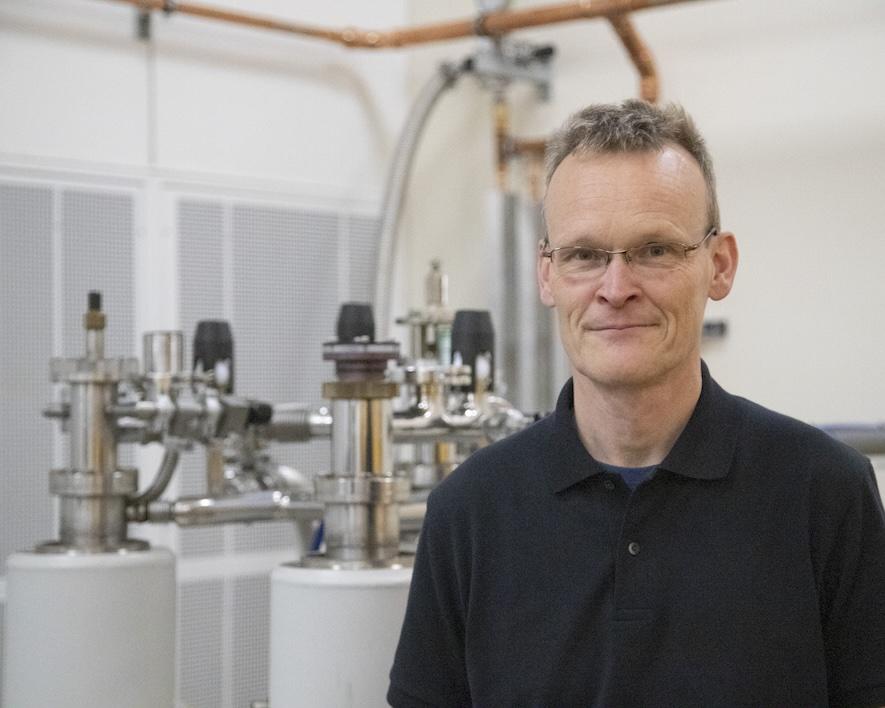
Daniel Nietlispach is Professor and NMR Facility Manager in the Department of Biochemistry , University of Cambridge. He leads the Nietlispach Group , whose research centres on the structural biology and conformational dynamics of integral membrane proteins, with particular emphasis on G-protein-coupled receptors (GPCRs) and microbial rhodopsins. Research Interests Conformational plasticity and dynamics of seven-helical membrane proteins GPCR signal transduction mechanisms investigated by solution- and solid-state NMR Role of lipid environment in modulating membrane protein function Methodological advances in NMR for membrane protein studies The group employs a wide range of isotope-labelling strategies, membrane-mimetic systems, and cutting-edge NMR techniques to dissect the agonist-dependent conformational landscapes of receptors such as the β 1 -adrenergic receptor. Publications & Scientific Impact Over the past decade, Prof. Nietlispach has published extensively on GPCR conformational dynamics, membrane protein structure determination, and NMR methodology. Key contributions include the first solution NMR structure of the seven-helix transmembrane receptor sensory rhodopsin II and seminal studies on partial agonism and ligand efficacy at β-adrenergic receptors. Awards & Funding No specific prizes or medals are listed in the provided material; however, continuous funding and publication output indicate sustained research support. Group & Facilities As NMR Facility Manager, Daniel oversees a multi-instrument NMR suite that supports the entire Department of Biochemistry and collaborators across Cambridge. The Nietlispach Group actively welcomes enquiries from prospective interns, undergraduate researchers, PhD students and post-doctoral researchers.
Carsten Ellwein , Dr.-Ing., is a Postdoctoral Researcher at the Institute for Control Engineering of Machine Tools and Manufacturing Units (ISW) within the Cluster of Excellence IntCDC at the University of Stuttgart. His work focuses on cloud manufacturing, software-defined manufacturing, and digital twin integration, emphasizing distributed systems, data modeling, and requirements engineering. University: University of Stuttgart Role: Postdoctoral Researcher and Group Leader in 'Software and Engineering Methods' Research Interests: Ellwein investigates cloud manufacturing paradigms, self-adaptive digital twins, and integrative data processing across architecture, engineering, and construction (AEC) domains. He explores ambiguity-tolerant ontologies, reference architectures, and cross-platform device control mechanisms. Publication Trends: Recent articles address Asset Administration Shells for digital twin engineering, software-defined manufacturing frameworks, and data lakes bridging AEC silos. Earlier work includes cloud-service platforms for SMEs and microservice-oriented control for automotive factories. Teaching: Supervises bachelor's, study, and master's theses, integrating practical research into academic advising.
Benjamin Dunn serves as a Lecturer in Creative Practice & Performance at the School of Performance and Cultural Industries, Faculty of Arts, Humanities and Cultures, University of Leeds, where he contributes to teaching, research, and academic administration. His research expertise spans: Contemporary performance Theatre Socially engaged performance Participatory performance Cultural policy Dr. Dunn holds leadership roles as Programme Manager for the English Literature and Theatre Studies BA and English, Theatre and Performance BA programmes, while directing the Pedagogic Research Group. He actively supervises postgraduate research and welcomes PhD enquiries in his specialized fields. No scientific awards were documented in the source material. Though involved in doctoral supervision, the provided text does not specify research grants, funding sources, or collaborative projects.
Sofia Cedervall is a Senior Lecturer at Stockholm University in the Department of Teaching and Learning . She serves as coordinator for Kulturskoleklivet , a national initiative focusing on arts education collaboration. Her academic background includes a PhD in drama from the University of Chester (2020) and a Master of Philosophy in Educational Science. Research Focus: Drama education, collaborative practices between schools and theatres, role-playing methodologies, and arts-based research approaches Teaching Areas: Preschool teacher education, Arts Education bachelor's program (drama/theatre specialization) Networks: Co-leader of Sweden's leading drama research group Drama for Learning and member of the Drama in Higher Education network Key Research Contributions: Investigates interprofessional collaboration (teachers, actors, drama pedagogues) in long-term school-theatre partnerships. Pioneered the use of drama as both educational tool and research methodology, focusing on creative processes involving children and youth. Academic Leadership: Through Kulturskoleklivet , she develops strategic frameworks for drama/theatre in Swedish school curriculum. Her work challenges traditional boundaries between art and education while maintaining focus on democratic participation and experiential learning.
Professor Elizabeth Mossop is Dean of the University of Technology Sydney (UTS) School of Design, Architecture and Building , a Landscape Architect , and Urbanist with a 25-year academic career. She co-founded Spackman Mossop Michaels , a firm specializing in urban infrastructure and open space projects like Bowen Place Crossing (Canberra) and Press Street Gardens (New Orleans). Education : BLA (Hons) from UNSW Australia, MUP in Urban Planning from Macquarie University. Affiliations : UTS School of Design, Architecture and Building; previously at Louisiana State University (Professor of Landscape Architecture, 2004-2016) and Harvard Graduate School of Design (Director of MLA program, 1999-2004). Her research explores Landscape and Urbanism at urban and site scales, focusing on Coastal Resilience in the Anthropocene. Key projects include post-hurricane reconstruction in New Orleans, Gulf Coast revitalization, and Detroit's ongoing regeneration. She edited the Sustainable Coastal Design and Planning (2019), which synthesizes global strategies for climate adaptation through Multidisciplinary Design Thinking . Publications span 2001-2025, emphasizing Coastal Cities , Water Management , and Public Space . Notable awards include the ASLA National Honor Award (2017) and AIA Walter Burley Griffin Award (2016), reflecting her impact on Urban Resilience and Interdisciplinary Collaboration . Professional Memberships : Australian Institute of Landscape Architects (2007-present), American Society of Landscape Architects (2006-present). Grants : Co-designing Materials Reuse (2024-2025), 2050 Master Plan Sydney Olympic Park (2021-2022), and Camperdown - Ultimo Collaboration Precinct Innovation Study (2019).
Shilpi Rajpal is a Postdoctoral Research Fellow at the Department of English, Germanic and Romance Studies within the Faculty of Humanities at the University of Copenhagen. Her research focuses on the decolonization of psychiatry in India through transnational knowledge exchanges between Western and Indian mental health professionals during colonial and post-colonial periods. Education: PhD in Modern Indian History Dr. Rajpal investigates how Indian psychiatrists engaged with American, Soviet, and West European psychiatric models while Western researchers used India as a disciplinary site for mental health studies. Her work examines the role of international movements like psychoanalysis and mental hygiene in shaping transcultural psychiatry, positioning India as a critical node in global mental health knowledge production. She critically analyzes the formation of the Indian Psychiatric Society and its influence on psychiatric discourse. Her publication record (2015-2023) reveals consistent thematic focus on colonial psychiatric institutions, with evolving emphasis from 19th-century asylum management to contemporary global mental health frameworks. The research demonstrates how colonial structures persist in modern mental healthcare while highlighting Indian practitioners' agency in reshaping psychiatric paradigms. No scientific awards were documented in the provided profile. Dr. Rajpal's research is conducted through the Centre for Culture and the Mind, where she contributes to interdisciplinary projects examining cultural dimensions of mental phenomena. Her work bridges historical scholarship with contemporary mental health policy debates without documented formal advisees or grant funding in the available materials. She operates within Copenhagen's research ecosystem at Emil Holms Kanal 6, collaborating through the Department of English, Germanic and Romance Studies' frameworks for cultural and historical analysis of mental health systems.
Dr. Jennifer Clarke is an Associate Professor at Gray's School of Art, Robert Gordon University, where she serves as Stage 3 Co-ordinator for Critical & Contextual Studies. She leads two compulsory modules for all Fine Art and Design students: 'Critical Themes' (AA3313) and 'Research and Enquiry' (AA3311). Her academic work bridges contemporary art and anthropology through a feminist lens, focusing on urgent social and ecological issues, particularly forest-related concerns in the UK. She also maintains a significant connection with Japan, where she held a Visiting Professorial Research Fellowship at the University of Tohoku in 2022. MA in English Literature, University of Glasgow (1997-2003) MA in Visual Anthropology, Goldsmiths College, University of London (2005-2007) MRes in Anthropology, University of Aberdeen (2008) PhD in Social Anthropology, University of Aberdeen (2008-2014), supervised by Prof. Tim Ingold and Dr. Jo Vergunst Advanced Masters in Artistic Research, Sint Lucas School of Art and Design, Antwerp (2020-2021) Dr. Clarke's research sits at the dynamic intersection of contemporary art and anthropology, with a strong feminist perspective. Her work addresses pressing ecological and social issues, particularly focusing on forests and forestry in the UK context. She explores how artistic practice can engage with environmental politics, landscape planning, and sustainability. Her research often takes collaborative forms, working across disciplinary boundaries to create projects that challenge conventional approaches to ecological and social challenges. She has developed innovative methodologies that draw on concepts like 'parasites' and 'hospitalities' to rethink relationships between humans, non-humans, and environments. Dr. Clarke's research output demonstrates a consistent engagement with interdisciplinary approaches to environmental issues through artistic and anthropological lenses. Her recent work shows increasing focus on collaborative projects that bring together natural sciences, social sciences, and arts to address landscape research, uncertainty, and ecological concerns. The 'Feminist Hospitalities' project (2020-present) represents a significant strand of her recent research, exploring how parasitic relationships can generate new forms of knowledge and connection. Visiting Professorial Research Fellowship at the University of Tohoku (2022) Fellow of the Higher Education Academy (FHEA) Dr. Clarke actively supervises multiple PhD and MRes students working on diverse projects at the intersection of art, environment, and social practice. Current supervisees include Joan Macleod (The Articulate Forest), Alison Scott (Treescapes), Manda Brookman (Giving Ground?), Pauline Elizabeth Maria Burmann, Fi Loveday (Augmented Fashion), and Aaron McCarthy. She is currently leading the 'Agroforestry Futures' research project (2022-2026), which investigates barriers to and facilitators of farmer adoption of rural agro-forestry practices in the UK. This project aligns with UK schemes that make agroforestry implementation relevant for various eligibility criteria. Dr. Clarke has also contributed to 'The Future of Treescapes' research, funded by UKRI, which focuses on afforestation and its role in climate action. Dr. Clarke is affiliated with the Energy, Environment & Sustainability in Architecture Research Group at Robert Gordon University. She has curated the Field/Works Talks series, which features conversations with artists and researchers exploring the intersections of art and anthropology. She serves as Chair of the Board of Directors for the Scottish Sculpture Workshop since 2018 and was co-Chair of ANTART, EASA's 'Anthropology and the Arts' Network, from 2020-2022. Her collaborative approach to research is evident in her numerous joint publications and exhibitions, including the recent 'Field/works II: generating ecologies of trust' (2024).
Dr. Cathal Doyle serves as a Senior Lecturer and Undergraduate Programme Director at the School of Information Management within the Wellington School of Business and Government at Victoria University of Wellington. His academic contact information includes phone number +6444635015 and email cathal.doyle@vuw.ac.nz, with his office located at RH 917, Rutherford House, 23 Lambton Quay, Wellington. His educational qualifications consist of: BSc from University College Cork, Ireland MBS from University College Cork, Ireland PhD from University College Cork, Ireland Dr. Doyle's research centers on the Knowledge Sculptor concept - a novel professional archetype for Human-GenAI collaboration in knowledge work. His work investigates how professionals transform raw AI output into trustworthy, actionable knowledge, providing critical directions for the future of work, research, and education in the Generative Age. His primary research domain is Information Systems, with specific focus on human-AI interaction, knowledge management, and the transformation of professional work environments through generative artificial intelligence. Dr. Doyle's recent scholarly contributions demonstrate an evolving research trajectory focused on the Knowledge Sculptor concept, with iterative development visible through multiple paper versions (v1-v11) and presentation at major academic conferences including AMCIS 2025. His research shows a clear progression from initial framing through rejected submissions to refined conceptual development. Dr. Doyle is actively engaged in academic service and is available for: Masters Research or PhD student supervision Collaborative research projects Web conferences as a panellist or speaker Media enquiries Long-term and short-term mentoring opportunities
Prof. Scott Thurston is a Professor at the University of Salford's School of Arts, Media and Creative Technologies, where he founded the English and Creative Writing degree programs and established the English Research Centre. His interdisciplinary work bridges poetry, dance, and mental health therapies, notably through his development of kinepoetics and co-founding of the Arts for the Blues psychotherapy model. His research explores: Contemporary innovative poetry/poetics Embodied movement practices Arts-based therapeutic interventions for depression Digital adaptations of creative therapies Thurston has secured research grants for projects scaling creative mental health initiatives across Northwest England, including collaborations with NHS services. Honors include being named a Fellow of the English Association . He contributes clinically as a volunteer person-centered counselor at Salford's Counselling Centre. He leads the English Research Centre and co-edits the Journal of British and Irish Innovative Poetry . His lab focuses on interdisciplinary intersections between literary arts, performance, and health humanities.
Dr. Sari Pennings is a Reader (equivalent to Associate Professor) at the University of Edinburgh's Centre for Cardiovascular Science within the College of Medicine and Veterinary Medicine. She holds the Senior Fellow of the Higher Education Academy (SFHEA) designation (2021) and serves as Postgraduate Research Director for the Centre, Course Organiser for 'Genes and Disease' in the MScR Biomedical Sciences program, and member of the Centre's Postgraduate Committee. Her research centers on epigenetic mechanisms including DNA methylation and histone modifications that govern early development, cardiovascular differentiation, and environmental responses. Using molecular biology, advanced microscopy, and bioinformatics, her group investigates chromatin dynamics in stem cells, embryos, and disease models. Key interests span heterochromatin maturation, epigenetic adaptation to cell culture, and the impact of metabolism/pollution on gene regulation landscapes. Dr. Pennings' scientific recognition includes: Senior Fellow of the Higher Education Academy (SFHEA, 2021) Lead Guest Editor for 'Stem Cells International' Special Issue on stem cell niches Guest Editor for 'International Journal of Molecular Sciences' Special Issue on chromatin epigenetics BBSRC Committee C Core Member (2023–present) and former Grant Awarding Panel member (2009–2016) She actively supervises four students across PhD, MSc, and undergraduate levels while hosting international collaborators from Université Grenoble Alpes. Her lab maintains strong public engagement through Edinburgh Science Festival events and College-wide initiatives she has led since 2010. Dr. Pennings is open to new PhD supervision enquiries and continues to expand her work on epigenetic-environmental interactions in cardiovascular contexts. The Sari Pennings Research Group has made seminal discoveries about heterochromatin maturation timelines and epigenetic plasticity. They maintain active collaborations through networks like the Edinburgh Chromatin, Epigenetics & Transcriptional Regulation Network (which she co-organizes) and apply interdisciplinary approaches to decode how environmental factors rewrite epigenetic programming in development and disease.
Louise Younie is Professor of Medical Education at Queen Mary University of London's Faculty of Medicine and Dentistry, where she leads faculty development and innovation initiatives. As a practicing General Practitioner, she integrates clinical experience with academic work, co-chairing the Royal College of GPs Creative Health Special Interest Group. Her research focuses on humanising medicine through creative enquiry methodologies to foster human flourishing in healthcare education. Her scholarly work centers on Medical Education , Creative Enquiry , and Human Flourishing , pioneering frameworks like the award-winning 'Flourishing Spaces' programme. She investigates vulnerability, resilience, and arts-based approaches to transform practitioner ways of knowing, advocating for person-centred care through aesthetic engagement and co-creative pedagogies that address wellbeing and equity in medical training. Recent publications reveal a growing emphasis on co-creation in medical education, particularly regarding student recognition and creative methodologies. The research trajectory shows increasing focus on wellbeing, flourishing, and health equity, reflecting her commitment to nurturing compassionate healthcare professionals through innovative educational practices that bridge clinical and creative domains. Key recognitions include: National Teaching Fellow (2022) Principal Fellow of the Higher Education Academy Silver QS Global Education Award for 'Flourishing Spaces' programme (2024) Professor Younie actively mentors students and leads faculty development programmes, though specific advisee names aren't detailed in source materials. Her work attracts international collaboration, evidenced by keynotes at institutions including Trinity College Dublin and University of Warwick, focusing on human flourishing and creative health integration. She co-leads the Royal College of GPs Creative Health SIG and collaborates globally through networks like PRIME Global and Arts & Health South West. Current initiatives include the 'Deep End virtual community for health equity in London,' demonstrating her commitment to transforming medical education through creative, person-centered approaches that address systemic challenges in healthcare.