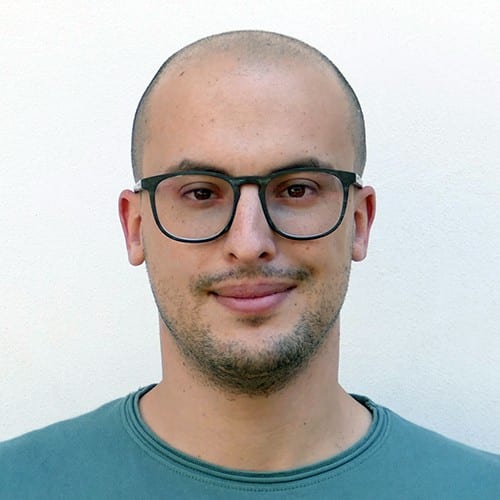
Simon Mosbjerg Jensen is an Assistant Professor at the Department of Materials and Production, Faculty of Engineering and Science, Aalborg University, Denmark. His research focuses on composite materials, delamination mechanics, and fatigue-driven damage in wind turbine blade structures. Current projects include CIRCWIND (Circular material solutions for wind turbines, 2024–2028) and MADE4WIND (Floating wind components, 2023–2027). He specializes in Fatigue Fracture , Delamination Behavior , and Multiscale Modeling of composite structures. His recent articles (2023–2025) emphasize GFRP laminates , crack growth rate modeling , and fatigue damage simulations . Collaborative datasets and experimental validations are central to his work. He contributes to the UPWARDS and AIOLOS projects, advancing wind turbine material solutions. Media mentions highlight his role in AAU's 2018 research group launch.
Pietro Saggese is an Assistant Professor at the IMT School for Advanced Studies Lucca, Italy, where he is affiliated with the Department of Economics and Data Science within the School of Economics, Management, and Data Science. He is also associated with the Complexity Science Hub (CSH) in Vienna, contributing to the Digital Currency Ecosystems research group. Prior to his current role, he was a postdoctoral researcher at CSH and the AIT Austrian Institute of Technology from 2021 to 2023. Bachelor’s and Master’s in Physics, University of Turin PhD in Economics and Data Science, IMT School for Advanced Studies Lucca (2021) Pietro Saggese's research centers on cryptofinance and cryptoasset analytics, with a particular focus on decentralized finance (DeFi) ecosystems. He investigates the interplay between DeFi protocols on Ethereum to assess risks and opportunities, analyzes arbitrage behavior in Bitcoin, detects financial bots on blockchains, and evaluates the governance structures of Decentralized Autonomous Organizations (DAOs). His work combines data science, complex systems theory, and economic modeling to provide empirical insights into digital currency markets. His recent publications reveal a strong trend toward understanding systemic structures in DeFi, including composability, governance centralization, and solvency risks. The works span technical blockchain analysis, economic modeling, and regulatory implications, highlighting an interdisciplinary approach to cryptoeconomic systems. Scientific Awards and Recognition: No specific awards listed in the text, though his collaborator Stefan Kitzler won a research prize for a DeFi-related paper. Pietro actively collaborates with researchers at CSH, AIT, and IMT Lucca on grants and projects related to digital currency ecosystems. His advising roles are not explicitly mentioned, but his publications suggest mentorship and collaboration with early-career researchers. He is involved in high-impact research projects on blockchain transparency, DAO governance, and financial stability in crypto markets. He is a key contributor to the Digital Currency Ecosystems research initiative at the Complexity Science Hub, where he continues to publish and present on pressing issues in decentralized finance, including power concentration in DAOs and the solvency of crypto exchanges.
Ole Richter is an Assistant Professor in the Department of Applied Mathematics and Computer Science at the Technical University of Denmark (DTU). His research focuses on advanced device integration and neuromorphic processors, particularly leveraging beyond-CMOS technologies for embedded systems engineering. His recent work involves developing electronic circuits with silicon-based components and exploring neuromorphic architecture for adaptive memory materials. A 2025 publication in Nature Communications highlights his contributions to on-chip learning systems. Richter’s research has attracted attention from 3 news outlets and is accessible via his ORCID profile (0000-0001-5399-8992). Collaborations and publications reflect his expertise in neuromorphic electronics and device integration.
Simon Shaw is a Researcher at the Novo Nordisk Foundation Center for Biosustainability , Technical University of Denmark. His work focuses on genome mining and bioinformatics tool development for microbial genetics. Research Interests : Computational analysis of gene clusters , antiSMASH database expansion, phylogenetic tree generation , and robotic automation in Streptomyces conjugation. Key Contributions : Co-author on 11 peer-reviewed publications including major updates to the antiSMASH database (versions 6.0–7.0), ActinoMation automation framework, and getphylo phylogenetic tool. Collaborative Activities : Organized the 2018 antiSMASH Hackathon and participated in the 4th antiSMASH Hackathon (2017) .
Roman Slipets is a Postdoc Researcher at the Drug Delivery and Sensing section of the Department of Health Technology at the Technical University of Denmark (DTU) . His work focuses on advanced spectroscopic techniques for biomedical and chemical threat detection applications. Research Interests : Surface-enhanced Raman Spectroscopy (SERS) for drug monitoring Centrifugal microfluidic platforms for chemical detection Chemometric analysis of complex biological samples Supercritical CO2-based drug delivery systems Nanoscale sensor development Key Trends in Publications : Roman's research spans analytical chemistry , pharmaceutical science , and microsystem technology , with recent work emphasizing automated SERS systems for methotrexate monitoring , chemical warfare agents , and multicomponent drug mixtures . Collaborations with experts in atomic force microscopy and computational modeling are evident. Project Involvement : Principal supervisor for the SERSing project (2021–2024) developing SERS algorithms for chemical threat response PhD researcher in a Samfinansieret project (2017–2021) on drug monitoring systems
Josefine Vilsbøll Sundgaard is a Postdoctoral Researcher in the Visual Computing section of the Department of Applied Mathematics and Computer Science (DTU Compute) at the Technical University of Denmark (DTU), Faculty of Engineering. Her work centers on medical image analysis using deep learning techniques for disease diagnosis and biomarker discovery in clinical settings. She earned her PhD from DTU in 2022 through research on deep learning methods for pediatric middle ear diagnostics, supervised by R. R. Paulsen and A. N. Christensen. Her educational background includes specialized training in computational methods for medical applications. Her research spans medical image analysis with emphasis on deep learning, reinforcement learning, and anomaly detection. Key applications include otitis media diagnosis using tympanometry and normative data, cardiovascular imaging for coronary artery segmentation and left ventricular remodeling analysis, and liver disease diagnosis through MRI biomarker identification for nonalcoholic fatty liver disease and fibrosis. She integrates computer vision with clinical diagnostics to address pediatric and adult conditions. Analysis of her 2024-2025 publications reveals a strong trend toward deep learning applications in cardiovascular and hepatic imaging. Her work demonstrates expertise in active learning frameworks, segmentation optimization, and anomaly detection systems using clinical CT and MRI data, with significant contributions to coronary artery analysis, cardiac adipose tissue quantification, and liver fibrosis identification in large-scale biobanks. Scientific awards: No awards or fellowships were documented in the provided materials. She actively supervises three PhD candidates: Radutoiu, A.-T. (focusing on HFpEF disease manifestations), Aspe, A. W. (analyzing cardiometabolic image biomarkers in CT), and Belmpeisi, R. A. (identifying abdominal MRI biomarkers). Her research is supported by five major projects including Deep learning for identifying biomarkers in medical images and AI driven analysis of cardiometabolic image biomarkers, with funding extending through 2028. As a core member of DTU Compute's Visual Computing research group, she collaborates extensively with medical institutions including Rigshospitalet, contributing to interdisciplinary teams that develop AI solutions for clinical diagnostics across otolaryngology, cardiology, and hepatology.
Henrik Nielsen is an Associate Professor at the Department of Bioinformatics, Technical University of Denmark, specializing in protein sorting prediction and signal peptide analysis. His research leverages deep learning and protein language models to advance subcellular localization and secretion pathway studies. Department of Bioinformatics, DTU Focus on signal peptides, protein targeting, and computational methods His recent work includes SignalP 6.0 , DeepLoc 2.1 , and SpanSeq , highlighting the integration of protein language models for multi-label localization prediction and sequence data splitting. Collaborations span projects in pathogenic eukaryotes, vaccine development, and structural bioinformatics. Notable contributions include: Development of SignalP: a cornerstone tool for signal peptide cleavage prediction Creation of DeepLoc for membrane protein type classification Advancing SpanSeq to optimize deep learning model assessment He has supervised PhD candidates in protein sorting, bioinformatics, and sequence analysis, with a focus on improving vaccine design and pathogen characterization through computational approaches.
Julie Hagstrøm is an Lecturer at the Department of Psychology , University of Copenhagen. Her research focuses on obsessive-compulsive disorder (OCD) in children and adolescents, including emotion regulation, neurodevelopmental disorders, and behavioral therapy. Key collaborations include institutions in Denmark and international partners. Research outputs (11) span clinical psychology, psychiatry, and neuroscience. Recent work explores computational analysis of parent-child interactions, oxytocin's role in OCD, and vocal features as potential biomarkers.
Michael Pedersen is a full-time Professor at the Department of Applied Mathematics and Computer Science (DTU Compute), Technical University of Denmark. His research focuses on interdisciplinary applications of mathematics in climate modeling, disease dynamics, and population systems. Expertise: Partial differential equations, control theory, stochastic processes, and numerical simulation Key Collaborations: Active projects since 1996 with PhD supervision in PDE-constrained optimization and stochastic control Research Trends : Recent work examines climate change impacts on dengue transmission (65% focus), noise pollution effects on population dynamics (50%), and activator-inhibitor pattern formation (100%). Supervision : Mentored PhD candidates including Lars H. Christiansen and Martin Hagdrup, with expertise in predictive control models and artificial pancreas systems.
Muhammad Rajabinasab is a PhD student at the University of Southern Denmark , affiliated with the Faculty of Science and the Department of Mathematics and Computer Science . His research focuses on data science and machine learning, with a particular emphasis on feature selection, synthetic data analysis, and approximate neighbor search algorithms. Current affiliation: PhD student, Department of Mathematics and Computer Science Research areas: Data Science, Machine Learning, Feature Selection, Synthetic Data, k-Nearest Neighbor Algorithms Muhammad’s research explores dynamic evaluation metrics for feature selection, inter-dataset similarity in synthetic data, and randomized PCA forests for efficient neighbor search. His work addresses both theoretical foundations and practical applications in data mining and machine learning. Recent publications demonstrate expertise in feature extraction , dimensionality reduction , and computational efficiency . Collaborations span institutions like IMADA (SDU) and researchers in Denmark and Finland.
Nicholas Bailey is an Associate Professor in the Department of Mathematics and Physics (IMFUFA) within Roskilde University's Department of Science and Environment, Denmark. His research focuses on computational statistical mechanics of glass-forming systems, with particular expertise in isomorph theory and molecular dynamics simulations of metallic glasses and ionic liquids. His primary research interests center on hidden scale invariance in liquids, density scaling phenomena, and the thermodynamic-structural relationships in glassy materials. Bailey employs advanced molecular dynamics techniques to investigate melting curves, phase transitions in binary alloys like Cu-Zr systems, and the rheological behavior of amorphous materials under shear deformation. His work bridges fundamental statistical mechanics with practical materials science applications. Recent publications demonstrate strong focus on Isomorph invariance in sheared glassy systems (2023) Density scaling exponents from pair potentials (2014-2021) Melting curve predictions for metals (2024) Dynamic mechanical analysis of glass formers (2022) His research shows consistent methodology using GPU-accelerated molecular dynamics (RUMD software) across diverse material systems from metallic glasses to ionic liquids. As a project participant in the "Matter" research initiative (2017-2023), Bailey collaborated with leading physicists including J.C. Dyre and Kristine Niss. His speaking engagements include significant presentations on isomorph theory at international conferences in 2017 and 2009. Bailey maintains active research output with 46 publications including 42 journal articles, 3 working papers, and datasets archived on Zenodo. His work appears primarily in high-impact physics journals including Physical Review B, Physical Review E, and Journal of Chemical Physics.
Magnus Kjærgaard is an Associate Professor at the Department of Molecular Biology and Genetics and affiliated with DANDRITE and the Interdisciplinary Nanoscience Center (INANO-MBG) at Aarhus University . His work bridges neurobiology, structural biology, and protein biophysics. Research Focus: Intrinsically disordered proteins, biomolecular condensates, enzyme mechanisms, and neurodegenerative diseases. Recent Work: Investigating phase separation in metabolic pathways, designing disordered proteins for controlled assembly, and characterizing kinase regulation via linker domains. Techniques: NMR spectroscopy, single-molecule FRET, X-ray crystallography, and computational modeling of protein interactions. Publications: His 2025 ChemBioChem paper quantified small molecule partitioning in condensates, while 2024 studies explored antibody-oligomer interactions in Parkinson's disease and kinase docking principles. Earlier work (2015-2021) established frameworks for understanding tau aggregation and ATPase function. Collaborations: Regularly works with teams across Denmark and internationally, particularly in molecular neuroscience and structural enzymology projects.
Lars Rune Christensen is a Lecturer at the IT-University of Copenhagen specializing in Digitalisation, Democracy, and Governance within the REFLECT Technologies in Practice Center for Climate IT. He leads research on digital transformation for crisis-affected populations and marginalized communities in the Global South, with extensive fieldwork in Bangladesh and Jordan. Christensen also serves as Education Manager for the Master in IT Management program and previously headed the Technologies in Practice Research Group (2015-2018). Christensen earned his PhD in Human-centered computing from IT-University of Copenhagen (2010), following an MSc IT in Software Development from the same institution (2003) and a Baccalaureate in Social Anthropology and Ethnography from Aarhus University (1999). His formal pedagogical training includes the Higher Education Teaching and Teaching Practice Program for assistant professors and post docs. His research bridges digital technologies, anthropology, and ethnography, primarily published within Computer Supported Cooperative Work (CSCW). Christensen has developed systematic frameworks for understanding how practitioners interact with digital artifacts in healthcare and public administration contexts. His work consistently addresses the challenges of implementing digital solutions in complex, resource-constrained environments with attention to cultural sensitivity, ethical considerations, and sustainable development. Christensen's recent publications reveal a strong trajectory in mental health interventions in humanitarian contexts, digital transformation of public administration with focus on AI and discretion, and participatory design approaches with marginalized communities. His work demonstrates how digital infrastructure can address inequality while navigating complex socio-technical challenges. Novo Nordisk Fonden: Syrian mHealth project (DKK 2,000,000) Novo Nordisk Fonden: Multiple Rohingya mHealth projects (DKK 1,750,000) Danish Innovation Fund: ECOKNOW e-government project (DKK 16,000,000) Inger Berthelsen Foundation: TRACE epilepsy treatment study (DKK 750,000) Christensen actively supervises PhD students, with five completed dissertations exploring topics including discretion in digital governance, digital healthcare in Sudan, and anthropological studies of artificial life. He serves on the advisory board for the CSCW Journal and has held numerous program committee roles for major international conferences. His academic service includes leadership in the Technologies in Practice research group and organizational roles in multiple international workshops focused on healthcare infrastructure and cooperative work. His research is organized around understanding how digital transformation can support innovation and sustainable development to end poverty and inequality for vulnerable populations, with particular emphasis on citizen-centered approaches to public service delivery.
Rodrigo Moreno Garcia is an Assistant Professor at the IT University of Copenhagen, specializing in Robotics, Evolutionary Computation, and Systems Engineering. He actively contributes to research in modular robots, human-robot interaction, and automated chemical processes, with affiliations to the Robotics, Evolution, and Art Lab and Robotics, Evolution and Artificial Life Lab. Academic Rank: Assistant Professor Institution: IT University of Copenhagen (ITU) Research Focus: His work spans evolutionary robotics, sensor design for liquid-liquid extraction, AI-driven morphological optimization, and materials acceleration platforms for battery research. Key areas include modular robotics , human-machine interfaces , and self-reconfigurable systems . Recent Publications explore neural cellular automata for classification, constraints in hardware evolution, and sensor innovations for industrial processes. Trends highlight interdisciplinary integration of AI, robotics, and chemical engineering. Awards: Recipient of the Honorable Mention for Technical Achievement at GECCO 2017 for virtual creatures research.
Christian Hendriksen serves as Assistant Professor in the Department of Operations Management at Copenhagen Business School, focusing on artificial intelligence applications in education and public sector sustainability transitions. His research intersects with UN Sustainable Development Goals 4 (Quality Education) and 9 (Industry, Innovation, and Infrastructure). Research expertise spans Artificial Intelligence in Education , where he develops frameworks for generative AI integration in higher education while addressing academic integrity concerns; Public Sector Sustainability Transitions , analyzing organizational transformation capacity; and Technology Policy , examining AI's economic and regulatory implications. His work emphasizes practical implementation strategies amid rapid technological change. Hendriksen maintains significant public engagement through 46 media appearances (2024-2025) discussing AI's societal impacts, including trade policy analysis, maritime industry sustainability challenges, and consumer technology applications. His research outputs include book chapters, peer-reviewed reviews, and policy commentaries addressing real-world AI implementation barriers. As active supervisor (3 supervised works documented), he mentors students on AI-related topics while contributing to organizational transformation research through the Department of Operations Management. Current projects examine AI's role in educational adaptation and public sector innovation capacity.