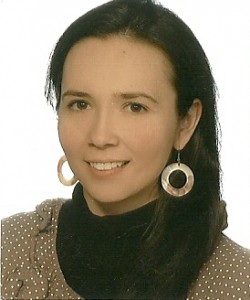
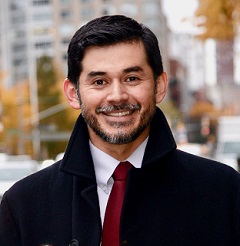
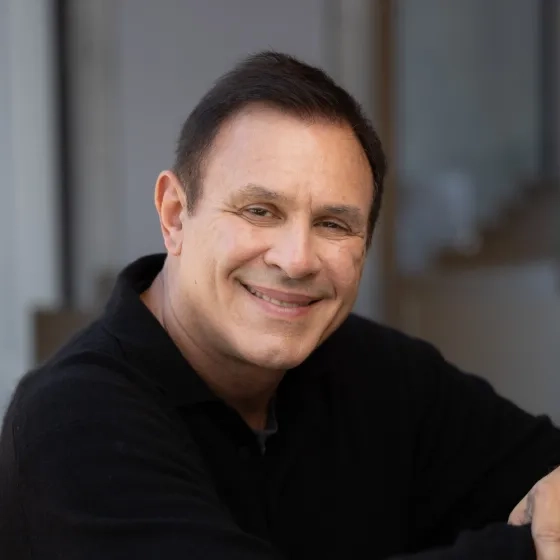
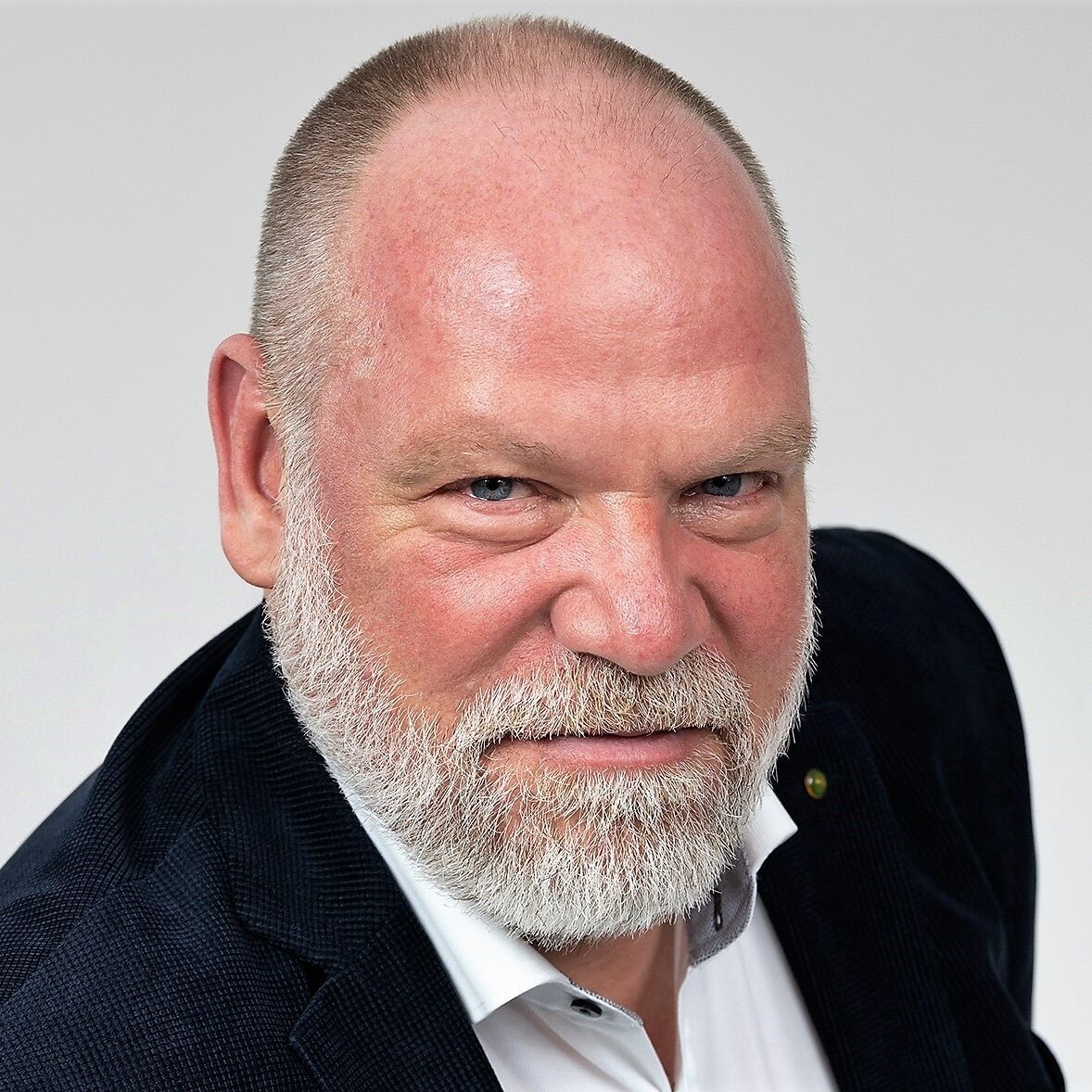
Anna Starzec-Makandasis is an Assistant Professor at the I.J. Paderewski Academy of Music in Poznan, Poland, affiliated with the Institute of String Instruments . She teaches piano accompaniment and holds a qualified doctor degree in music art (2019). Her career spans solo and chamber music performance across Poland, Italy, Norway, Germany, Israel, and the USA. Educated at I.J. Paderewski Academy of Music (MA 2005), Oklahoma City University (MM 2010), Southern Methodist University (Artist Certificate 2012), and Stony Brook University (Doctor of Arts 2012) Her research focuses on piano performance, chamber music interpretation, and Polish music. She has released four critically acclaimed CDs, including works by Scarlatti, Lutosławski, and Gawroński, and contributed to the publication Viola: Spectrum of Artistic Imperative (2018). Her performances include collaborations with violinist Anna Maria Staśkiewicz, violist Mariusz Murawski, and orchestras in Oklahoma and Tel Aviv. Recipient of multiple awards: Third Prize in Rome (2003), First Prize at OMTA (2006), Grand Prize Virtuoso in London (2016) Notable achievements: Lecture-recitals on Domenico Scarlatti’s sonatas (2018), performances at Felicia Blumenthal Festival (Tel Aviv), Polish Chamber Music Conference (2020)
Martin Robertson is a renowned saxophone professor at the Royal College of Music (RCM) and the Guildhall School of Music and Drama. He graduated from the RCM in 1984 with studies in saxophone and clarinet under Stephen Trier and John McCaw, winning the Boosey and Hawkes Music Prize. His career spans international solo performances with orchestras like the Berlin, Los Angeles, and London Philharmonics, collaborating with conductors such as Simon Rattle and Vladimir Jurowski. Robertson is celebrated for his fusion of classical, jazz, and world music, particularly through collaborations with composers Mark-Anthony Turnage and George Fenton. His work includes Turnage’s Blood on the Floor and Fenton’s orchestral scores for films like Earth and Planet Earth . Robertson’s academic roles include leading the Woodwind department at RCM since 1994 and teaching at Guildhall since 2012. His research interests emphasize cross-genre exploration, using instruments like the duduk and taragato to bridge cultural musical traditions. He has premiered works such as Turnage’s About Water (2007) and Anna Nicole (2011), an opera exploring tragic biography through modern musical language. His performances include high-profile events like the BBC Proms and collaborations with ensembles such as the Delta Saxophone Quartet, which he joined in 2009. Robertson’s film credits span major projects, including Shakespeare in Love , Billy Elliott , and King Arthur . Beyond the concert stage, he advocates for contemporary saxophone repertoire through academic and ensemble work, fostering innovation in woodwind performance. Robertson’s awards include the Boosey and Hawkes Prize (1984), and his recordings, such as Poirot Variants (2010) and Tony Banks’ Six (2012), highlight his versatility across genres. His teaching integrates jazz improvisation, classical technique, and contemporary experimentation, shaping a new generation of woodwind musicians.
Marco Uvietta is an Associate Professor of Musicology and History of Music at the Department of Literature and Philosophy, University of Trento. He holds a Laurea in Music Disciplines from the DAMS of Bologna (1991) and a PhD in History and Analysis of Musical Cultures from Sapienza University of Rome (1999). His academic career includes roles as a Researcher (2005–2016) and Associate Professor (2016–present) at the University of Trento. He teaches courses on Music History and Ethnomusicology and contributes to the PhD program in European Cultures. His research focuses on two main areas: 1) Musical Philology, particularly in 19th-century Italian opera (e.g., critical editions of Verdi’s Requiem and Bellini’s La straniera), and 2) Analysis of 20th-century musical language, with significant contributions on Luciano Berio’s style and compositional processes. He has authored numerous scholarly works, including books and articles on composers like Berio, Debussy, Stravinsky, and Martucci. Uvietta is actively involved in editorial projects, such as directing critical editions for Ricordi and contributing to the Rossini Critical Edition. He holds leadership roles in academic committees, including the editorial board of Il Saggiatore Musicale . His compositional works, influenced by his analytical research, have been performed by prestigious ensembles worldwide, including the Arditti Quartet and Monteverdi Cello Octet. Notable awards include recognition in composition competitions (e.g., Guido d’Arezzo International Competition), and his works span orchestral, choral, and chamber music. Uvietta’s interdisciplinary approach bridges historical musicology with contemporary compositional practice, reflecting his dual expertise as a scholar and composer.
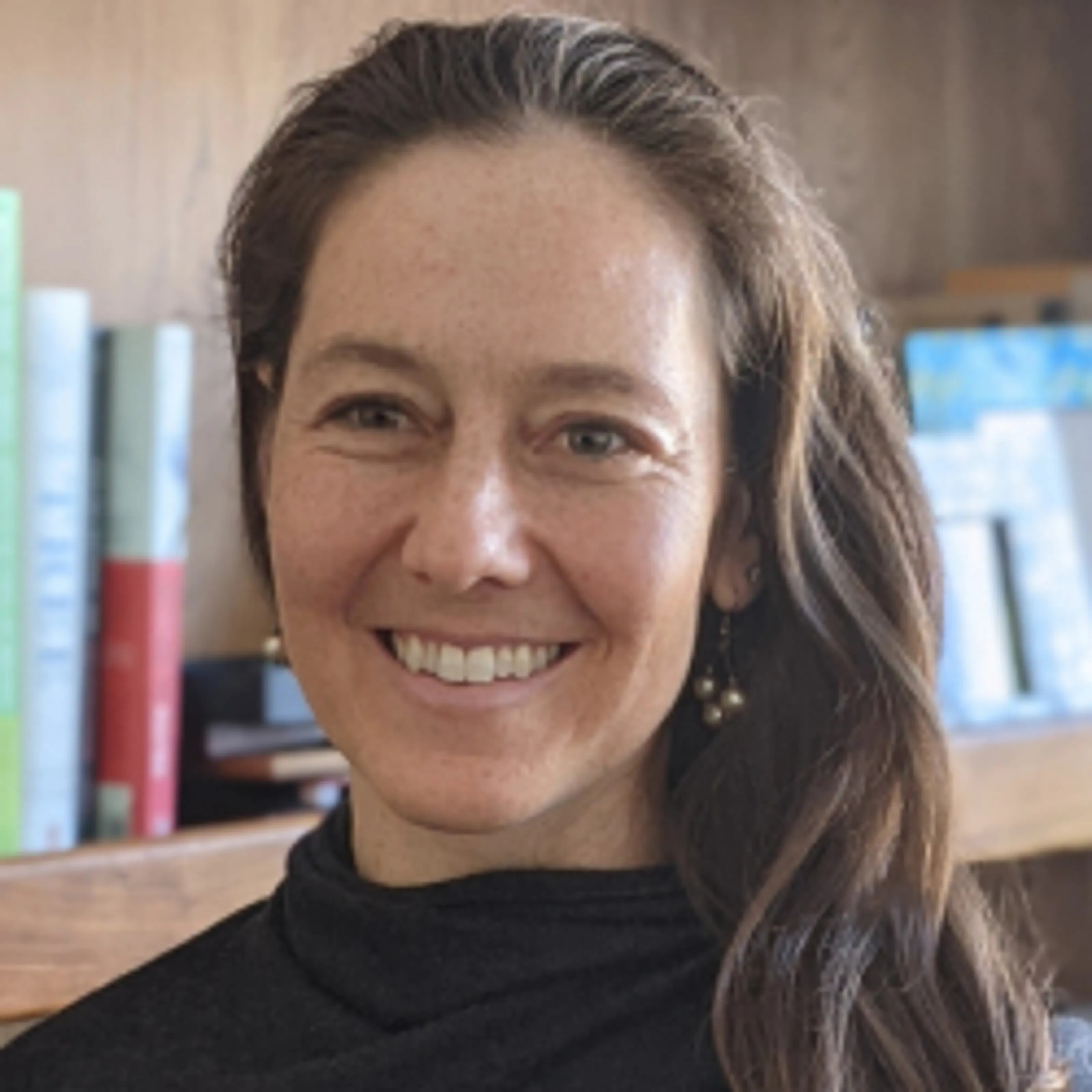
Christine Gibb is an Associate Professor at the University of Ottawa’s School of International Development and Global Studies. She joined the university in 2020 after completing a SSHRC Postdoctoral Fellowship in the Department of Geography and Planning and the Asian Institute at the University of Toronto. Her expertise spans migration, disasters, and research methods. She holds a Ph.D. in Geography from the University of Montreal, an M.Sc. in Capacity Development and Extension from the University of Guelph, and a B.Sc.H. in Biology from Queen’s University. Her research focuses on gendered religious practices and norms influencing disaster aid access in Southeast Asia, particularly post-typhoon trajectories in the Philippines. She also examines political ecology, feminist geography, and governance related to global environmental challenges. Recent work includes analyzing pandemic impacts on hazard researchers and teenagers’ social connectedness during lockdowns. SSHRC Postdoctoral Fellowship In advising and grants, she supervises Lina Aburas Awadalla and collaborates with NSF-funded SSEER network and CONVERGE facility at the Natural Hazards Center. She has consulted for UN agencies and NGOs on environment, development, and youth education. Her research encompasses diverse regions including Kenya, Ghana, and North America, addressing issues like humanitarian interventions, vulnerability, and sustainable development. Christine’s work integrates qualitative and participatory methodologies, emphasizing accompanied research approaches. She has contributed to understanding evacuation camp paradoxes and the politics of care in disaster contexts.
Börge Göbel is a postdoctoral researcher at the Institute of Physics, Martin Luther University Halle-Wittenberg, within the Quantum Theory of the Solid State group led by Prof. Ingrid Mertig. He is affiliated with the Faculty of Natural Sciences II - Chemistry, Physics and Mathematics and conducts theoretical research in condensed matter physics, focusing on topological spin textures and their applications in spintronics and orbitronics. PhD in Physics (summa cum laude, 2020), Max Planck Institute Halle MSc in Physics (1.1, 2016), Martin Luther University Halle-Wittenberg BSc in Physics (1.2, 2014), Martin Luther University Halle-Wittenberg Abitur (1.0, 2011) His research centers on the interplay between topology and transport in magnetic systems, particularly skyrmions, antiskyrmions, bimerons, and hopfions. He investigates their stability, emergent electrodynamics (e.g., topological Hall effect), and dynamics under current drive, with applications in racetrack memory, neuromorphic computing, and quantum devices. A major focus is on two-dimensional materials and electron gases, where he studies spin- and orbital-to-charge interconversion. He has pioneered work in orbitronics, demonstrating the orbital Hall effect accompanying the quantum Hall effect and topological orbital Hall effects in skyrmion systems. The most recent publications show a strong trend toward the exploration of orbital angular momentum in quantum transport, the stabilization of skyrmions in van der Waals materials, and the development of neuromorphic computing concepts using biskyrmions. His work bridges fundamental theoretical insights with potential technological applications in next-generation electronics. Börge Göbel is funded by the EIC Pathfinder OPEN Grant "Orbital engineering for innovative electronics" and is a co-supervisor in the EU Horizon 2020 project "SPEAR". He has co-supervised 2 PhD, 2 master's, and 4 bachelor's students and teaches quantum mechanics, including online courses with over 30,000 participants. Co-PI, EIC Pathfinder OPEN Grant: "Orbital engineering for innovative electronics" Co-Supervisor, EU Horizon 2020 project "SPEAR" Network Postdoc, EU project "OBELIX" He collaborates extensively with experimental groups worldwide, including those of Prof. Stuart Parkin, Prof. Claudia Felser, Dr. Manuel Bibes, and Prof. Albert Fert, and has presented at major conferences such as MMM, JEMS, Gordon, DPG, and SPICE.
Chris Bergson is an Associate Professor of Guitar at Berklee College of Music in Boston, where he teaches private guitar lessons, slide guitar, and songwriting. He is affiliated with the Guitar Department under the College of Performing Arts. A graduate of the Manhattan School of Music with a Bachelor of Music in Jazz Performance, Bergson is internationally recognized as a guitarist, singer, and songwriter rooted in blues, jazz, and American roots music. Bachelor of Music (BM), Jazz Performance, Manhattan School of Music, 1999 Bergson's research and artistic interests center on blues and jazz guitar performance, songwriting, and the cultural dimensions of American roots music. His work blends traditional forms with modern expression, emphasizing authenticity, emotional depth, and technical mastery. He explores the intersections of Delta blues, soul, funk, and jazz, often integrating horn arrangements and collaborative improvisation. His recent recordings reflect a consistent evolution in style and thematic depth, moving from early jazz-blues fusion to mature, soul-infused compositions. Albums like Comforts of Home (2024), All I Got Left (2021), and Bitter Midnight (2017) showcase sophisticated guitar work, live-in-studio energy, and lyrical sincerity. These works emphasize live performance, collaboration with guest artists like Ellis Hooks and Bernard Purdie, and a deep connection to New York’s musical identity. Inducted into the New York Blues Hall of Fame as a Master Blues Artist, 2015 MOJO Magazine's No. 1 Blues Album of the Year 2008 for Fall Changes Five consecutive albums named among MOJO Magazine's Top 10 Blues Albums of the Year Multiple MOJO, Gitarist, and Soul Bag Magazine accolades across 2011–2024 Appointed Jazz Ambassador of the USA by the Kennedy Center and U.S. State Department Bergson has developed a significant career as an educator and performer, drawing from over 25 years of global touring and recording. He mentors students in developing their unique voice and practical performance skills, informed by his extensive experience as both bandleader and sideman. He has not received public grants, but his work is supported through album releases, performance tours, and institutional affiliation with Berklee. His performances span major festivals in the U.S., Europe, Russia, and West Africa, reflecting a broad international reach. Bergson leads the Chris Bergson Band and frequently collaborates with vocalist Ellis Hooks, forming a dynamic duo often compared to Sam & Dave. His recording projects often involve tight-knit ensembles, including horn sections arranged by Jay Collins and European touring bands featuring French and Dutch musicians.
Maria Vidal de Haymes is a Professor at the School of Social Work , Loyola University Chicago. She directs the Center for Immigrant & Refugee Accompaniment (CIRA) and the Migration Studies Sub-Specialization , while coordinating international social service exchanges across institutions in the US, Mexico, and global networks. Educational Background: Master of Social Work (MSW) from the University of Chicago (1987) PhD from Ohio State University (1991) Research Interests span migration, poverty and inequality, child welfare, and social work education. Her work emphasizes cross-border collaboration and policy analysis. Scientific Awards & Recognitions: 2016 PIE Award (Commission on Global Social Work Education) 2017 Loyola Faculty Member of the Year Catholic Charities 2017 Centennial Distinguished Board Member She has served as co-editor of the Journal of Poverty and held advisory roles on boards including the Council on Social Work Education Minority Doctoral Fellowship Program.
Cheng Zhi Huang is the Robert N. Noyce Career Development Professor and Assistant Professor at MIT, holding a shared appointment between the departments of Music and Theater Arts and Electrical Engineering and Computer Science (EECS). His work bridges artificial intelligence, music technology, and computer science to advance human-AI collaboration in musical creativity. Huang leads research in generative models for music composition, real-time interactive systems, and expressive performance synthesis. His contributions include tools like ReaLJam for AI-assisted jamming and the MAESTRO dataset for piano performance modeling. His research interests span AI-driven music generation, human-AI interaction frameworks, and culturally-aware music technologies. Notable projects include The Bach Doodle—an accessible web-based composition tool—and MIDI-DDSP for detailed performance control. Huang’s work emphasizes ethical and creative applications of AI in arts, fostering collaborations between musicians, engineers, and computer scientists. His publications highlight advancements in hierarchical generative modeling, source separation techniques, and co-creation interfaces for novices. Huang’s research has been showcased in venues like TISMIR and IEEE conferences, reflecting his interdisciplinary impact on music technology and machine learning.
Leo Guardado is an Associate Professor of Theology at Fordham University's Lincoln Center Campus. His work bridges theology, peace studies, and social justice, focusing on forced displacement, migrant healing practices, and nonviolence. Guardado holds a PhD from the University of Notre Dame in Systematic Theology and Peace Studies, with a master’s in patristics from the same institution. He previously collaborated in borderlands ministry and monastic life. **Education**: B.A. in Religious Studies, St. Mary's College of California M.T.S. in History of Christianity, University of Notre Dame PhD in Systematic Theology and Peace Studies, University of Notre Dame **Research Interests**: Church as Sanctuary : Theological foundations of sanctuary ministries, especially in light of global displacement. Healing**: Ethnographic study of curanderismo practices among Latinx migrants and their integration into Catholic liturgy. Nonviolence**: Linking Gandhian principles to Latin American liberation theology and Pope Francis' vision. Gutiérrez Legacy**: Editor of posthumous works of Gustavo Gutiérrez, including Vivir y pensar el Dios de los pobres . His publications include Church as Sanctuary: Reconstructing Refuge in an Age of Forced Displacement (2023) and edited volumes on Gutiérrez. His work emphasizes practical theology and institutional change through transdisciplinary collaboration. Awards**: None explicitly listed, though his scholarly contributions highlight recognition in theological circles. Advising & Grants**: Teaches doctoral seminars on Gutiérrez and collaborates on initiatives like the transdisciplinary project bridging Fordham, NYC, and the US-Mexico border. No specific grants listed, but his work implies institutional and grassroots support. **Labs/Teams**: Engages with border communities, NGOs, and theological networks, though specific lab affiliations are not mentioned.
David Conte is Professor of Composition and Chair of the Composition Department at the San Francisco Conservatory of Music (SFCM), where he has taught since 1985. He is also affiliated with the European American Musical Alliance in Paris, where he served on the composition faculty from 2011-2022. In 2014, he was named Composer in Residence for Cappella SF, a professional chamber choir in San Francisco. His educational background includes: Doctor of Musical Arts (DMA) from Cornell University Master of Fine Arts (MFA) from Cornell University Bachelor of Music (BM) from Bowling Green State University David Conte's research and creative interests focus on contemporary classical composition, particularly in the areas of opera, choral music, and chamber music. His work demonstrates a deep engagement with American musical traditions while incorporating diverse influences from European classical music. He has developed a distinctive compositional voice that bridges traditional techniques with contemporary expression, particularly evident in his vocal and choral works. Conte's approach to composition pedagogy emphasizes the importance of musical memory, keyboard skills, and deep engagement with the music one loves. Analysis of Conte's compositional output reveals a consistent focus on vocal and choral music, with significant contributions to American opera through works like 'The Gift of the Magi.' His chamber music demonstrates sophisticated understanding of instrumental capabilities across various ensembles. More recently, his orchestral works like the 'Sinfonietta for Classical Orchestra' show a refined neoclassical approach. Conte's compositions often explore literary and historical themes, reflecting his broader interests in film, history, politics, and religion. His notable awards and distinctions include: Fulbright Scholarship (1976) Ralph Vaughan Williams Fellowship (1989) Aspen Music Festival Conducting Fellowship (1984) National Association of Teachers of Singing Composition Award (2016) American Guild of Organists Distinguished Composer (2024) Raymond Brock commission from the American Choral Directors Association First Prize in the NATS Composition Competition for 'American Death Ballads' (2016) As an educator, Conte has mentored over 100 composition students since 1985 at SFCM. His teaching philosophy, heavily influenced by his studies with Nadia Boulanger, emphasizes the importance of musical memory, keyboard proficiency for composers, and gradual skill development. He has secured numerous commissions from prestigious organizations including the San Francisco, Oakland, Stockton, and Dayton Symphonies, Chanticleer, and the American Guild of Organists. Conte's work has been supported by institutions like the Fulbright Program and the National Endowment for the Arts. Conte maintains active collaborations with various musical organizations, including Cappella SF where he serves as Composer in Residence. His work with librettists like Nicholas Giardini and collaborators like Todd Boekelheide demonstrates his commitment to interdisciplinary artistic projects. He continues to be an influential figure in American contemporary music through his compositions, teaching, and advocacy for new music.
David Riley is a Professor and Director of Piano Accompanying and Chamber Music at the University of Oregon School of Music and Dance since 2004. He specializes in Keyboard Performance , Piano Accompanying , and Chamber Music collaboration. Education: Doctorate (DMA) from Eastman School of Music Master's from Cleveland Institute of Music Bachelor's from Ithaca College His research and performance focus includes: Contemporary Collaborative Techniques Historical Chamber Repertoire Keyboard-Pedagogy Innovation Performance highlights: Merkin Hall with New York Philharmonic Chamber Players Carnegie Hall recitals Oregon Bach Festival collaborations International tours in Germany, Canada, and France Award recognitions: 2008 Canadian Independent Music Awards 'Favorite Classical CD' 2007 Silver Wave Film Festival 'Best Music' 2004 East Coast Music Award 'Best Classical Recording' He actively mentors graduate students in Collaborative Piano and provides graduate assistantships in studio accompanying and opera. The Eugene location offers unique access to coastal environments, hiking, and skiing alongside academic pursuits.
Sergio M. González serves as Associate Professor of History at Marquette University, specializing in twentieth-century U.S. migration, labor, and religious history with emphasis on Latino communities in the Midwest. His scholarship examines faith-based social movements and Latino community formation through historical analysis of religious institutions and civil rights activism. Education Ph.D. in History, University of Wisconsin-Madison Research Focus González investigates intersections of Latino religious identity, immigration, and social justice movements, particularly within Midwestern urban contexts. His work bridges historical scholarship with contemporary debates on sanctuary policies, belonging, and the role of faith communities in immigrant rights advocacy. Key themes include the development of Latino civil society, religious-political mobilization, and the historical roots of current immigration debates. Publication Trends His 15 most recent publications (2016-2024) demonstrate sustained focus on sanctuary movements, Midwest Latino history, and religious dimensions of immigration. The corpus reveals methodological emphasis on urban history and religious studies, with geographic concentration on Wisconsin, Chicago, and Philadelphia. Recent works increasingly analyze transnational religious networks and the historical continuity between 20th-century civil rights struggles and contemporary immigrant justice movements. Academic Engagement González teaches cross-disciplinary courses in History, Latino Studies, and the Honors Program covering Latino belonging, civil rights movements, urban settlement, and citizenship development. His public humanities work includes co-hosting Wisconsin PBS's educational series The Look Back and the podcast Sanctuary: On the Border Between Church and State , extending scholarly insights to broader audiences through media partnerships. Community Leadership As founding member of the Wisconsin Latinx History Collective, González leads initiatives documenting Midwest Latino heritage. His collaborative projects with Axis Mundi Media and Wisconsin PBS exemplify commitment to translating academic research into accessible public history resources that address contemporary social issues through historical perspective.
Julian Smiles is a Senior Lecturer in Cello at the Sydney Conservatorium of Music, part of the University of Sydney. He holds prestigious roles in Australian classical music, including former Principal Cello of the Australian Chamber Orchestra and frequent guest principal with the Sydney Symphony Orchestra. He is a core member of the Australia Ensemble (UNSW) and co-founder of the internationally acclaimed Goldner String Quartet. His performances span soloist engagements with major orchestras, chamber music festivals, and premieres of Australian contemporary works. Ensembles: Goldner String Quartet, Australia Ensemble UNSW Performance Venues: Sydney Opera House, Melbourne Recital Centre, Townsville Civic Theatre Repertoire Focus: Classical chamber works, Australian compositions, and international contemporary pieces Research interests include chamber music interpretation, performance practice, and pedagogy rooted in his studies with Nelson Cooke and Janos Starker. He regularly collaborates with composers like Mark Isaacs and Carl Vine, premiering new works. Teaching emphasizes linking technical mastery with artistic expression through historical and contemporary repertoire. Recent performances include the 30th anniversary season of the Goldner Quartet at Sydney Conservatorium, Hyperion Records releases, and international tours to New Zealand and India. His 2024 recording Bird Spirit Dreaming explores Australian musical identity through contemporary compositions. Grants and collaborations involve Musica Viva Australia, Huntington Estate Music Festival, and the Australian World Orchestra. His pedagogical work includes masterclasses at Four Winds Festival and mentoring emerging chamber musicians. Labs/Teams: Goldner String Quartet (30-year partnership), Australia Ensemble UNSW (since 1991), Sydney Conservatorium Cello Studio.
Wolfgang Kluge is a Lecturer at the University of Music and Theatre Rostock, specializing in vocal accompaniment, operatic role studies, and conducting. He holds a Diplom in Music Teaching (piano) from the Leipzig Academy of Music and Theatre (1991). Currently, he serves as Kapellmeister and Head of Opera Studies at Anhaltisches Theater Dessau since 1996/97, directing acclaimed productions of operas like *Andrea Chenier*, *La Bohème*, and *West Side Story*. His expertise spans Lied accompaniment, chamber music, and composer roles. Education: Leipzig Academy of Music and Theatre: Diplom in Music Teaching (Piano, 1991) Postgraduate studies in conducting (Prof. G. Blumhagen, Prof. V. Rohde) and accompaniment (Prof. H.-G. Kluge) Professional Roles: Solo répétiteur at Leipzig and Halle opera houses (1994–1996), lecturer at Young Artists Festival Bayreuth (2011–2015). His work extends to children’s/youth concerts and chamber music collaborations. Awards: 2025: Honorary Title of Chamber Musician (Anhaltisches Theater Dessau)
Katarzyna Myćka is a Professor at the Stanisław Moniuszko Academy of Music in Gdańsk, where she has served since the 2018/19 academic year. A marimba virtuoso and one of the leading pioneers of concert marimba performance, she represents a unique specialization within the Faculty II – Instrumental department, specifically in percussion studies. Her academic journey began as a piano student at the same institution under Grażyna Fiedoruk-Sienkiewicz, and since 2001 she has worked at her alma mater, initially as an accompanying pianist for various instrumental classes before focusing on marimba performance and education. Myćka's research interests center on marimba performance practice, contemporary percussion repertoire development, and the scholarly investigation of women composers. Her doctoral dissertation on women composers, defended in 2023, represents a significant contribution to musicology and gender studies in music. She actively promotes Polish musical heritage through editing sheet music collections of forgotten Polish composers and has developed a comprehensive discography that showcases both traditional repertoire adaptations and contemporary works. Her seven commercially released CDs demonstrate remarkable versatility, spanning from Bach transcriptions to modern compositions by artists like Emmanuel Séjourné and Anna Ignatowicz. Meritorious for Polish Culture distinction from the Minister of Culture and National Heritage (2016) Medal of the National Education Commission (2023) As an educator, Professor Myćka founded the International Katarzyna Myćka Marimba Academy (IKMMA), an intensive masterclass program that has become a significant training ground for emerging marimba specialists. Her teaching extends beyond technical mastery to encompass artistic interpretation and professional development for percussionists. She actively promotes the work of women composers both through her scholarly research and performance practice, contributing to greater representation in concert programming. Myćka maintains an active performance career, having collaborated with prestigious ensembles including the Beijing Symphony Orchestra, Camerata Israeli, Wiener KammerOrchester, and Stuttgart Philharmonic Orchestra, demonstrating her international stature in the percussion world.