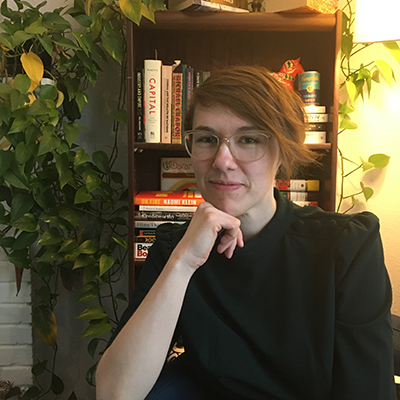
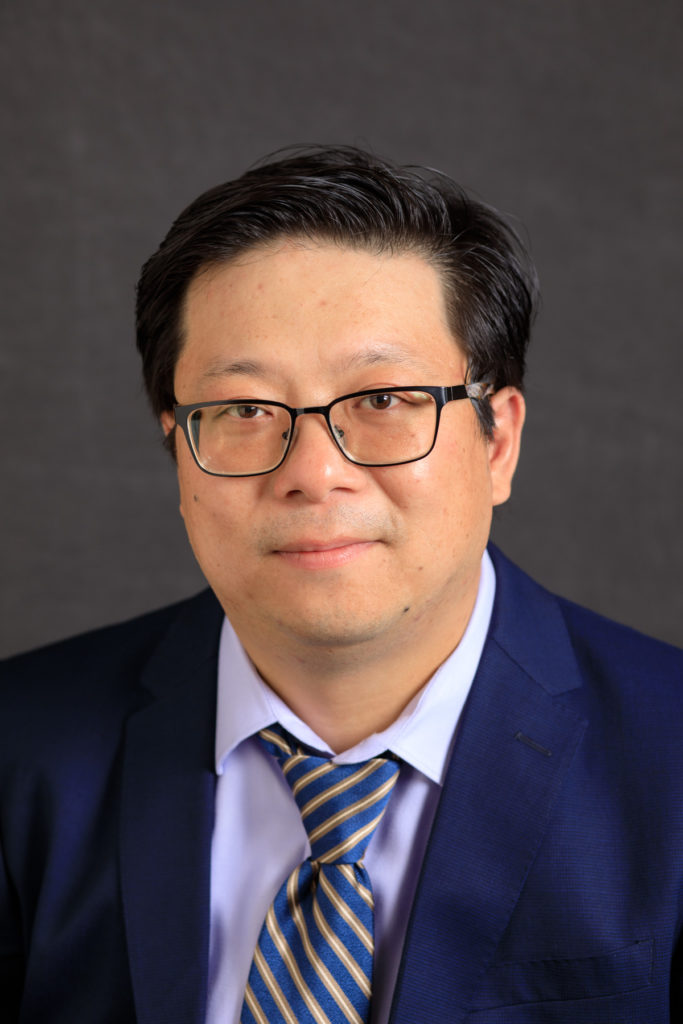
Xinfeng Xie is an Associate Professor of Forest Biomaterials at Michigan Technological University's Department of Forest Biomaterials. His research focuses on sustainable bioproducts, including carbon materials derived from wood, lignin, and cellulose, and integrated thermochemical conversion of lignocellulosic biomass. He specializes in carbon-polymer composites, wood preservation, and improving material properties through innovative processes like humination modification. Key research areas include: Development of bio-based composites with enhanced mechanical/thermal/electrical properties Recycling industrial sludges into functional materials for environmental remediation Optimization of cross-laminated timber (CLT) performance Green chemical processes for lignin recovery and utilization His work bridges material science and environmental engineering, with over 30 publications since 2008. Notable contributions include breakthroughs in biochar-reinforced polymers, erdite-based wastewater treatment systems, and novel methods for metal recovery from industrial wastes. His research emphasizes sustainability and circular economy principles.
Islam Mantawy is an Assistant Professor in the Department of Civil and Environmental Engineering at Rowan University's Henry M. Rowan College of Engineering. His research focuses on advancing structural and bridge engineering through innovative technologies, including additive construction, machine learning for structural health monitoring, and sustainable materials. Education: Ph.D., University of Nevada, Reno (2016) M.S. and B.S., Ain Shams University (2013, 2010) Research Interests: Structural and Bridge Engineering Additive Construction and Repair Technologies Machine Learning Applications in Structural Health Monitoring Sustainable Materials and Processes Hazard Protective Systems Resilience-Based Design Publications Trends: Recent work emphasizes additive manufacturing for seismic protection, low-carbon concrete innovations, and AI-driven predictive modeling in infrastructure resilience. Key themes include sustainable construction, material recycling, and disaster-resistant design. Awards: 2020 IStructE Best Research Paper Award Advising & Grants: Active in mentoring graduate students and securing grants for projects involving UHPC, 3D printing, and seismic-resistant systems. Collaborations include TRB committees and industry partnerships. Labs/Teams: Leads a research group developing technologies for resilient and sustainable infrastructure, with a focus on bridging academic and practical applications.
Dr. Hasan Er is a Lecturer at Bingöl University's Faculty of Agriculture, Department of Biosystems Engineering. He holds academic titles including Research Assistant since 2017 and has been affiliated with multiple universities including Atatürk University and Gebze Technical University through collaborative research centers. His expertise spans water quality management, soil science, irrigation systems, phytoremediation, and agricultural infrastructure design. Education: BSc (2013), MSc (2018), and PhD (2022) in Agricultural Structures and Irrigation from Atatürk University's Faculty of Agriculture. Fluent in English (ÖSYM score 71.250). Research interests focus on sustainable agriculture solutions, including: Water quality assessment for irrigation systems Phytoremediation of saline soils using halophytes Data mining applications for crop yield prediction Optimization of irrigation practices in semi-arid regions Design of prefabricated agricultural structures Climate-resilient infrastructure for livestock farming Recent article trends emphasize interdisciplinary approaches combining environmental science with engineering solutions for agricultural challenges, particularly in semi-arid regions and water resource management. Contributions include 24 peer-reviewed journal articles, 30+ conference presentations, and 10+ book chapters. Key publications address: Greenhouse gas emissions from hybrid crops Machine learning models for agricultural data analysis Rainwater harvesting systems design Soil water retention improvement methods Collaborative work with Prof. Yusuf Kuşlu focuses on sustainable agricultural technologies. Current research explores recycled wastewater use in crop cultivation and meteorological impacts on beekeeping. Laboratory affiliation: Chromatography I Lab (PİKOM facility). Active in international collaborations through joint research centers involving multiple Turkish universities.
Anders Malmendal is an Associate Professor at Roskilde University's Department of Science and Environment, affiliated with the Centre for Frustrated Molecular Interactions and the Centre for Mathematical Modeling - Human Health and Disease . His research focuses on unraveling complex biological systems using NMR spectroscopy and multivariate analysis. Key areas include biophysical chemistry, structural biology of proteins, protein aggregation in neurodegenerative diseases, and metabolomics applications in Drosophila models and biotechnology. His recent work explores urinary biomarkers for prostate cancer, enzymatic degradation of plastics, and cold hardening mechanisms in insects. Research Interests: Protein aggregation and neurodegenerative disorders Metabolomics for disease biomarker discovery Environmental nanotoxicology (e.g., nanoparticle effects on aquatic organisms) Structural biology of proteins using advanced NMR techniques Publications Trends: Recent articles highlight advancements in prostate cancer diagnostics via metabolomics, enzymatic PET degradation mechanisms, and protein-membrane interactions. Collaborative projects bridge fundamental biophysics with applied environmental and clinical research. Labs/Teams: Active within interdisciplinary teams at Roskilde University, emphasizing cross-cutting approaches between chemistry, biology, and mathematical modeling.
Dr. Ciaran McNally is an Associate Professor in the School of Civil Engineering at University College Dublin (UCD). He holds a PhD in Civil Engineering from UCD (2001) and a Professional Diploma in Teaching & Learning (2015). His research focuses on advanced materials, including concrete durability, asphalt technology, fiber-reinforced polymers (FRP), and digital design methods like 3D printing and BIM. He has secured over €2 million in research funding, leading EU projects such as the Marie Curie Initial Training Network TEAM (€3.2M). Education: BE, PhD (Civil Engineering, UCD); Prof Dip University Teaching & Learning (UCD) Affiliations: Irish Concrete Society (Treasurer), Engineering Graduates Association Committees: College Executive Board, Safety Committee (School/College), UCD Covid-19 Consultative Committee His research interests span low-carbon concrete, eco-engineering for marine structures, and infrastructure asset management. Notable contributions include studies on reclaimed asphalt in pavements, bio-inspired optimization, and durability of GGBS blends. He coordinates modules like Advanced Materials and Group Design Projects, emphasizing practical engineering and sustainability. Recent articles highlight innovations in 3D-printed concrete, low-carbon materials, and steel stud behavior. McNally’s work bridges academic research with industry applications, promoting sustainable construction practices and lifecycle thinking.
Zwicky Daia is an Ordentlicher Professor (Full Professor) at the Haute école d'ingénierie et d'architecture de Fribourg (HEIA-FR), part of the HES-SO University of Applied Sciences and Arts Western Switzerland. He leads the iTEC Institute (Institut des technologies de l'environnement construit), focusing on civil engineering and sustainable construction. His research emphasizes ecological construction, multifunctional materials, timber-concrete composites, and structural analysis. Key projects include exploring the use of hardwood in construction, optimizing recycled concrete mix designs using machine learning, and developing demountable structural systems. He has secured over CHF 2.2 million in funding for projects like the 'Potentiel d'utilisation des bois feuillus' and 'Optimized Recycled Concrete mix design.' Daia’s research bridges structural innovation and environmental sustainability, with a focus on reducing carbon footprints through material optimization and recycling. His work spans experimental testing, numerical modeling, and practical applications in building design and urban densification. Publications highlight contributions to textile-reinforced concrete, lightweight aggregates, and structural performance of existing buildings. His interdisciplinary approach involves collaborations across engineering, material science, and environmental studies.
Dr. Ozan Cagatay Ozdemir is an Assistant Professor in the Department of Mechanical and Industrial Engineering at Northeastern University. He specializes in advanced metal additive manufacturing, particularly Cold Spray Additive Manufacturing (CSAM), with expertise in multiphase flows, thermodynamics, and failure analysis. His research is funded by the Department of Defense, Energy, Commerce, and industrial partners, yielding over 700 citations and co-authoring the textbook Practical Cold Spray (2021). Education: PhD in Mechanical Engineering from South Dakota School of Mines and Technology (2017) Research focuses on improving CSAM deposition efficiency, manufacturing rates, and product quality. Key interests include nozzle design, process monitoring, and cybersecurity in additive manufacturing. He holds the 2022 Faculty Research Team Award and leads the Özdemir Research Group at Northeastern’s Innovation Campus in Burlington, MA. Teaching includes Additive Manufacturing, Heat Transfer, and Capstone Design courses. Leadership roles include Chair of ASM International Boston Chapter (2024-2025) and member of the Thermal Spray Society Training Committee. Recent grants include a $4.8M ARL award for wire-arc DED and a $1.5M ARL grant for cybersecurity enhancements in CSAM. Notable innovations include the Internally Cooled Aerodynamically Centralizing Nozzle (ICCN) patent (2024) and contributions to power electronics via copper-AlN coatings. His work bridges fundamental research and industrial applications, emphasizing sustainable manufacturing and high-value asset repair.
Dr. Kuniaki Dohda is a Research Professor in the Department of Mechanical Engineering at Northwestern University. His research focuses on metal forming, process tribology, surface engineering, and micro/meso manufacturing. Supported by industry collaborators like Toyota and Nippon Steel, he has published over 150 articles and advised numerous students. He holds prestigious fellowships from ASME and JSME, and leads international professional organizations. Education: Dr. Eng. Mechanical Engineering, Nagoya University, Japan MS Mechanical Production Engineering, Toyama University, Japan BS Mechanical Production Engineering, Toyama University, Japan Research interests integrate advanced manufacturing techniques with materials science, emphasizing sustainable processes and tribological solutions. His work addresses challenges in aluminum alloy processing, tool design, and microscale forming. Recent publications explore recycling methods, friction reduction in titanium processing, and die coating effects. Awards include the JSTP Medal (2011) and NAMRC Outstanding Paper Award (2012). He serves as President of the International Research Group on Tribology in Manufacturing and holds advisory roles at Tsinghua University and Shanghai Jiao Tong University. Professional service includes editorial roles for Friction journal and leadership in global manufacturing societies. His career bridges academia and industry through collaborative research and technical leadership.
Peter Boelen is a Researcher at the University of Groningen's Faculty of Science and Engineering, affiliated with the Biomimetics department. His work focuses on environmental biotechnology, particularly leveraging microalgae and diatoms for sustainable applications such as biofuel production, bioremediation of palm oil mill effluent, and nutrient recycling. Boelen has contributed to UN Sustainable Development Goals through research addressing environmental challenges. His research interests include microbial cultivation systems, photodegradation processes, and the synthesis of bioactive compounds like phycocyanin and fucoxanthin. He has presented at academic conferences including the Annual Meeting TBSC and ESRIG symposium, and contributed to science communication via regular posts on the Ocean Ecosystems Facebook page from 2014–2018. Key awards include the Poster Award 2014 Valorisation 1st Prize. His studies often involve collaborations on topics such as UV radiation effects on marine and terrestrial organisms, Antarctic diatom physiology, and paleoenvironmental reconstructions using fossil plant materials. Boelen’s work spans diverse ecosystems—from Arctic tundra to tropical coastal waters—exploring how organisms adapt to environmental stressors like UV radiation and changing climatic conditions.
Maude JIMENEZ is a Professor at the University of Lille, affiliated with the National School of Chemistry of Lille and the Materials and Transformations Unit (UMET, CNRS UMR 8207). She leads the C7-microprobe room and is a team leader within the 'Processes at Interfaces and Materials Hygiene' and 'Recycling and Functionalization Processes (PReF)' research groups. Her work bridges materials science, polymer engineering, and industrial applications in fire safety and hygiene. Her research focuses on advanced functional materials, particularly fire-retardant coatings , anti-fouling surfaces , and biomimetic designs . She specializes in plasma-based surface treatments, self-stratifying coatings, and nanocomposite development for applications in construction, food processing, and medical devices. Her interdisciplinary approach integrates polymer chemistry, materials engineering, and process optimization. The trends in her recent publications highlight a strong emphasis on sustainable and eco-efficient materials , including fluorine-free hydrophobic coatings, self-healing systems, and bio-based intumescent paints. She frequently investigates industrial fouling and cleaning mechanisms, particularly in the food sector, and develops innovative solutions to enhance fire resistance in polymers and composites. She has supervised numerous PhD theses, many co-directed with colleagues such as Serge Bourbigot, Mathilde Casetta, and Yannick Coffinier. Her research has been supported through ANR, ERC, and Interreg projects, and has led to several patents, particularly in plasma-treated fireproof materials. She also contributes to national and international scientific seminars and conferences, especially in fire science and surface engineering. She leads a dynamic research team and collaborates extensively within UMET and with external partners in industry and academia. Her lab is equipped with advanced facilities including electron microscopy, plasma platforms, and fire testing systems.
Nikolaos G. Stoforos is a Professor of Food Engineering - Food Preservation at the Department of Food Science and Human Nutrition, School of Food and Nutritional Sciences, Agricultural University of Athens (AUA), Greece (2016-present). He holds a PhD in Engineering (1988) and an MSc in Food Science (1984) from the University of California, Davis, USA. His research focuses on mathematical modeling of food safety and quality during processing/storage, particularly thermal processing, high-pressure techniques, predictive microbiology, and kinetic modeling under dynamic conditions. He has authored/co-authored over 45 peer-reviewed papers, 9 book chapters, and edited 5 books, with an H-index of 16. Courses taught include Principles of Food Engineering, Food Preservation, and Computer Applications in Food Processing. Education: BSc in Chemical Engineering (NTUA, 1978), MSc in Food Science (UC Davis, 1984), PhD in Engineering (UC Davis, 1988). Previous roles include Assistant Professor (Aristotle University, 2000–2009) and Associate Professor (AUA, 2009–2015). Research emphasizes thermal process calculations, aseptic processing, and CFD simulations for food systems. He has contributed to industry collaborations, including work at the National Food Processors Association and Katholieke Universiteit Leuven. Research interests span food safety, quality preservation, and sustainable processing technologies. His work bridges theoretical modeling with practical applications in food engineering, addressing challenges in thermal inactivation, high-pressure sterilization, and microbial kinetics. He advocates for eco-friendly innovations in food packaging and waste valorization through biotechnological methods. Grants and collaborations include studies on olive mill wastewater valorization with Pleurotus pulmonarius and lipid production using non-conventional yeasts. His lab focuses on advancing predictive models to optimize food processes and extend shelf-life while maintaining nutritional integrity. No formal awards listed, but significant contributions to peer-reviewed literature and industry standards are noted.
Kit Hughes is an Associate Professor of Communication Studies at Colorado State University (CSU) within the College of Liberal Arts. She holds a Ph.D. from the University of Wisconsin, Madison. Her research focuses on media history, labor economics, and industrial media, with notable work on workplace television and financial education films. Hughes co-directs the NEH-funded Center for Engaged Humanities' Infrastructure Challenge Grant and leads digital humanities projects like Project Arclight and the Media History Digital Library. She has received awards for archival innovation and media scholarship. Her research spans media's role in shaping economic ideologies, corporate communication strategies, and labor practices. Recent work examines data-driven managerialism in professional sports and the historical intersections of media with financial institutions. Hughes’ publications appear in journals like American Quarterly and Television & New Media , with her 2014 American Archivist article winning the Ernst Posner Award. Before CSU, she taught at Miami University and worked at the Wisconsin Center for Film and Theater Research. Her grants include a $500,000 NEH initiative promoting humanities infrastructure. Courses taught include 'Media and the Economy' and 'Theories of Archival Research.'
Professor Greg Leslie is a distinguished academic at the University of New South Wales, where he serves in the School of Chemical Engineering. His research focuses on water and nutrient recycling using experimental and numerical modeling techniques to improve membrane processes for recycling water and nutrients from municipal and industrial waste. He has made significant contributions to understanding the performance of polymeric and ceramic membranes in desalination, water recycling, biofuels, and meat abattoir applications. Professor Leslie's research interests center on sustainable water management, with particular emphasis on membrane technologies for water recycling and treatment. His work spans fundamental research on membrane processes, including fouling mechanisms, membrane aging, and performance optimization, as well as practical applications in water recycling systems. His research team actively investigates innovative approaches to reduce the environmental footprint of water, food, and biofuel sectors through advanced membrane technologies and sustainable engineering practices. Recent work has expanded into areas such as green hydrogen production, climate resilience, and food-water security, demonstrating the breadth and relevance of his research portfolio. Analysis of Professor Leslie's recent publications reveals a strong focus on membrane technology applications for water treatment, with increasing attention to sustainability challenges including climate change impacts, resource recovery, and the water-energy nexus. His work spans fundamental membrane science, practical water treatment applications, and broader sustainability issues related to water security. The integration of computational methods, particularly machine learning applications for water treatment optimization, represents a growing trend in his research portfolio. His publications demonstrate consistent high-impact contributions across multiple disciplines including chemical engineering, environmental science, and sustainable development. Finalist, New Inventors, ABC TV program for 'RO sub surface drip irrigation system' (2011) Co-recipient, Australian Museum Eureka Prize for Water Innovation (2010) Most Outstanding Technical Paper, American Desalting Association (1996) Elected to the College of Fellows, Institute for the Advancement of Engineering (1995) Exemplary Service Award from the Orange County Engineering Council (1995) Postdoctoral Fellowship, National Water Research Institute (1994) Professor Leslie has supervised numerous students throughout his career, currently mentoring 2 postdocs and 5 PhD students, with previous supervision of 3 Masters and 4 PhD students to completion. His current students include Keng Han Tng (Mechanical Reliability of Water Recycling Systems), Amos Branch (MBR validation guidelines), David Grant (ceramic membranes for water reuse in broiler abattoirs), Xuefei Liu (CFD modeling of MBR Systems), and Zenah Bradford-Hartke (Phosphorus recovery from wastewater plants). He has secured significant research funding including Australian Research Council Discovery Projects and Australia-India Strategic Research Fund grants, demonstrating strong grant acquisition capabilities in water research. Professor Leslie leads a vibrant research team focused on membrane processes for water recycling and treatment. His team collaborates extensively with industry and international partners on projects addressing critical water challenges. Current work includes developing innovative solutions for water security in Aboriginal communities, optimizing green hydrogen production with reduced water demands, and advancing membrane technologies for sustainable water management. The team maintains strong connections with professional organizations and government bodies, contributing to national and international water policy development through committee memberships and expert panels.
Konstantinos Poutos serves as Head of the Department of Civil Engineering, Construction Management, and Surveying at Kingston University's Faculty of Engineering, Computing and the Environment. He additionally holds the strategic role of Faculty Coordinator for the National Student Survey (NSS) and Student Experience, driving initiatives that enhance academic quality and student satisfaction across engineering programs. His educational foundation includes: PhD in Civil Engineering Masters in Business Administration (MBA) MSc in Civil Engineering with Earthquake Engineering Dipl.-Ing. Civil Engineering (University of Patras, Distinction) BEng (Hons) Civil Engineering PgCe in Learning and Teaching in Higher Education Dr. Poutos' research spans sustainable construction materials and seismic engineering, with particular emphasis on recycled glass aggregates in concrete systems and structural dynamics under earthquake loads. His innovative work employs Finite Element Analysis to optimize mechanical properties and structural resilience, directly addressing industry challenges in eco-friendly construction and disaster-resistant infrastructure. This research portfolio bridges theoretical modeling with practical applications in water infrastructure and building systems. His publication trajectory reveals a clear evolution from foundational materials research (2007-2013) on recycled glass concrete to current seismic engineering innovations (2023-2025), complemented by educational scholarship on STEM student engagement. Recent work focuses on hybrid shear walls and slit-configuration water tanks, demonstrating sustained relevance in structural resilience. Professional recognition includes: Senior Fellow of the Higher Education Academy Through leadership roles as School Director of Learning and Teaching and Associate Dean (Faculty Director L&T), he implements evidence-based improvements in curriculum design and quality assurance. His strategic integration of NSS data drives targeted enhancements in student retention and academic success, while his teaching portfolio spans MSc Structural Design and BEng Civil Engineering programs. Dr. Poutos cultivates a research-active departmental culture that prioritizes interdisciplinary collaboration between structural engineers, materials scientists, and construction management specialists, fostering innovation in sustainable infrastructure solutions.
Hongyu 'Nick' Zhou is an Associate Professor in the Department of Civil and Environmental Engineering at the University of Tennessee, Knoxville, within the Tickle College of Engineering. He joined the university in August 2019 after serving on the faculty at the University of Alabama in Huntsville. He leads the Sustainable and Adaptive Built Environment (SABE) Group, focusing on transformative research in sustainable, energy-efficient, and resilient infrastructure systems. PhD in Civil Engineering, Arizona State University, 2013 MSE in Civil Engineering, Arizona State University, 2012 BS in Civil Engineering, Tongji University, China, 2010 Dr. Zhou's research spans smart and energy-efficient buildings, bio-inspired materials, additive construction, and cyber-physical systems in infrastructure. His work integrates materials innovation, structural design, and advanced manufacturing to enhance building performance and sustainability. He emphasizes multi-scale, multi-physics analysis and the development of carbon-negative and adaptive construction technologies. The 15 most recent publications highlight a consistent focus on sustainable cementitious composites, 3D printing of concrete, thermal and mechanical performance of lightweight materials, and bio-inspired design. The research trends emphasize energy efficiency, resilience, and the integration of functional materials into structural systems, supported by advanced modeling and experimental techniques. Scientific Awards: New Faculty Research Award, UAH, 2015 Individual Investigator Distinguished Research Award, UAH, 2014 Higher Education Research Experience (HERE) Fellow, ORAU, 2012 Dr. Zhou actively advises graduate and undergraduate research assistants, including Adam Brooks, Yawen He, and Zhenglai Shen. His research is supported by prestigious grants from the National Science Foundation (NSF), U.S. Department of Energy (DOE), Alabama Department of Transportation (ALDOT), and DOE REMADE Institute. He serves as an Associate Editor for the Journal of Sustainable Cement-based Materials , contributing to the advancement of sustainable construction science. The SABE Group conducts interdisciplinary research in biomimicry, robotic construction, building weatherization for vulnerable communities, and multi-sensory inspection. The group collaborates with Oak Ridge National Laboratory (ORNL) and other institutions, leveraging neutron imaging and large-scale 3D printing to push the boundaries of material science and construction technology.