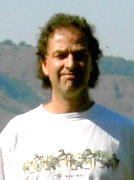
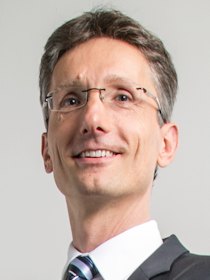
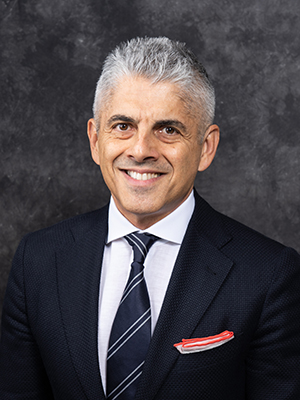
Carla Robbins is a Clinical Professor at the Marxe School of Public and International Affairs, Baruch College, with expertise in National Security, U.S. Politics, Foreign Policy, and Journalism. She holds a PhD in Political Science from UC Berkeley, an MA from the same institution, and a BA from Wellesley College. As a Senior Fellow at the Council on Foreign Relations (CFR), she leads the 'National Security in an Age of Disruption' roundtable series and contributes to major media outlets. Her research spans geopolitical strategy, cybersecurity, media influence on policy, and nuclear security. Articles highlight her focus on AI in foreign policy, U.S.-NATO dynamics, and post-conflict diplomacy. She has moderated panels at institutions like NATO's Academic Conference and the International Studies Association. Scientific Awards: Faculty Service Award (2017) Edwards Media Fellow (2005, 2003) Elizabeth Neuffer Prize (2004) Peter R. Weitz Prize (2004) Edward Weintal Prize (2003) Pulitzer Prize (2000, 1999) Nieman Fellow (1989) Morton Frank Award (1984) She frequently appears in media discussions and moderates CFR events, emphasizing transparency, civil-military relations, and global power shifts.
Prof. Dr. Stefan Voß is a Professor at the Institute of Information Systems within the Hamburg Business School (HBS) at the University of Hamburg. He serves on the HBS Dean's Office and focuses on logistics optimization, metaheuristics, and sustainable port operations. His work integrates AI, machine learning, and operations research to address challenges in transportation, supply chain management, and public infrastructure. Research Interests: Dr. Voß specializes in: Metaheuristic algorithms (e.g., fixed set search, GRASP, VNS) Optimization of port and maritime logistics (berth allocation, quay crane scheduling) AI applications in transportation (predictive analytics, emotion recognition) Sustainable operations (green port infrastructure, EV charging networks) Public transport efficiency (bus scheduling, delay prediction) Publications: Recent work emphasizes AI-driven logistics, robust optimization under uncertainty, and digital twin applications in ports. His 2025 studies explore domain-generalized emotion recognition and dynamic seaport automation. 2024 articles highlight multi-objective scheduling, EV fleet optimization, and sustainable container storage. Labs/Teams: Leads research at the Institute of Information Systems, collaborating on port sustainability projects (e.g., Port of Hamburg) and digital innovation in logistics systems.
Ananth V. Iyer is the Dean Professor of Operations Management and Strategy at the School of Management, University at Buffalo. He holds a PhD and MBA from the University of Florida, along with a BFA from the North Carolina School of the Arts. His research focuses on emergency response logistics, sustainable supply chain systems, and digital education distribution. He has pioneered models for contingency management, supply chain vulnerability analysis, and innovative educational technologies. Key professional contributions include developing frameworks for emergency resource allocation, evaluating recycled content claims in manufacturing, and optimizing winter operations logistics. His work frequently intersects with public policy, as seen in studies on freight infrastructure planning and INDOT project impacts. Education: PhD & MBA (University of Florida), BFA (North Carolina School of the Arts) Affiliations: Decision Sciences Institute, American Production and Inventory Control Society Labs/Teams: Academic Director of Digital Access Education Program, member of Extreme Events Research Area & Geohazards Studies Center His publications span prestigious journals like Journal of Operations Management and European Journal of Operational Research , with a focus on practical applications in public safety and industry. Awards include SUNY’s Chancellor’s Award and multiple Decision Sciences Institute recognitions.
Dr Michael Wang is Senior Lecturer in Sustainable Operations & Supply Chain Management and Course Director for MSc Logistics & Supply Chain Management at Kingston University. His research explores human-centered operations, supply chain digitalization, and sustainability, with recent work addressing Industry 5.0, logistics resilience, and low-carbon transitions. Research Trends: Recent publications emphasize the intersection of human factors and technology in supply chains, with consistent focus on sustainability metrics and risk mitigation. Articles frequently analyze how workforce engagement, digital tools, and agile methodologies enhance operational resilience amid disruptions like extreme weather and geopolitical shifts. Professional Credentials: Chartered Member (CILT) in UK/AU/NZ/UAE Fellow of Higher Education Academy Member of Royal Society NZ
Carlos Cardonha is an Assistant Professor in the Department of Operations and Information Management at the University of Connecticut School of Business since 2019. He holds a Ph.D. in Mathematics from Technische Universität Berlin (2011) and degrees in Computer Science from the University of São Paulo (B.Sc. 2004, M.Sc. 2006). Previously, he worked as a Research Staff Member at IBM Research – Brazil (2012–2019). His research focuses on discrete optimization, approximation algorithms, and applications of machine learning and mathematical programming to operations research problems. He teaches courses such as OPIM 5641 (Business Decision Modeling) and OPIM 3511 (Business Data Analytics II), supported by DataCamp. Education: Ph.D. in Mathematics, Technische Universität Berlin, Germany (2011) M.Sc. in Computer Science, University of São Paulo, Brazil (2006) Bachelor in Computer Science, University of São Paulo, Brazil (2004) Research Interests: His work spans analytics, optimization, and theoretical computer science, with a focus on mixed-integer linear programming, combinatorial optimization, and algorithm design. He applies these techniques to real-world problems in scheduling, resource allocation, and machine learning model optimization. Grants & Advising: No specific grants or advisees are listed in the provided materials. Labs/Teams: Not explicitly mentioned in the text.
Prof. dr. Kees Jan Roodbergen is a Professor of Quantitative Logistics at the University of Groningen and Director of the Center for Operational Excellence. He holds a MSc in Econometrics & Operations Research from the University of Groningen and a PhD from Erasmus University Rotterdam. His research focuses on E-commerce Logistics, Warehouse Optimization, Vehicle Routing, and Inventory Management, applying Operations Research techniques to practical challenges. He has led projects like PIONEER (2019), e-global (2017), and 'Towards Virtual Ports' (2015), securing external funding from TKI Dinalog, NWO, and Interreg IVB. He serves on the Scientific Advisory Council of the Global Cold Chain Foundation and has been involved in jury roles for e-commerce awards. His teaching spans courses on Value Chain Management, Facility Design, and Discrete Operations Research. Education: MSc from University of Groningen (Econometrics & OR), PhD from Erasmus University Rotterdam. Ancillary roles include editorial advisory boards for professional magazines and program boards for TRAIL Research School and Graduate Program Operations Management & Logistics. Research contributions emphasize practical applications, such as warehouse optimization methods integrated into management systems. Grants and Projects: Highlighted projects include PIONEER (TKI Dinalog), e-global (NWO), and collaborations with industry. His work addresses sustainable logistics, digital transformation, and operational efficiency. He has published in journals like Operations Research and Transportation Science.
Eleftherios Iakovou is a Professor in the Department of Engineering Technology and Industrial Distribution at Texas A&M University, holding the Harvey Hubbell Professorship in Industrial Distribution. He serves as Associate Director of Supply Chain Resilience & Sustainability at the Texas A&M Energy Institute and Co-Director of the Global Value Chains Program at the Bush School of Government. His roles also include leadership positions in the Mosbacher Institute and the Texas A&M Center for Applied Technology. Education: Ph.D. in Operations Research and Industrial Engineering, Cornell University (1992) M.Sc. in Operations Research and Industrial Engineering, Cornell University (1990) B.S. in Mechanical Engineering, Aristotle University of Thessaloniki (1987) Research Focus: Dr. Iakovou specializes in resilient and sustainable supply chains, particularly in energy, manufacturing, and maritime logistics. His work addresses challenges such as supply chain visibility, data-driven decision-making, and integration of emerging technologies like blockchain. Key themes include: Resilience in energy and manufacturing systems Disruption management and risk mitigation Global logistics optimization Policy implications for supply chain security Publications Trends: Recent work emphasizes multi-objective frameworks for sustainable supply chains, blockchain applications in trade facilitation, and data-sharing mechanisms for resilience. He explores cutting-edge topics like misinformation in modern warfare and cross-border supply chain vulnerabilities. Awards/Grants: While no specific awards are listed, his leadership roles indicate recognition in supply chain policy and resilience research. Active grants likely support his work on energy systems and global value chains. Advising & Labs: Leads interdisciplinary teams at the Texas A&M Energy Institute and Bush School, focusing on applied research in supply chain strategy and public policy. His research group collaborates with industry partners on real-world supply chain challenges.
Kuntal Bhattacharyya is an Associate Professor in the Department of Marketing and Operations at the Scott College of Business, Indiana State University. He has held significant administrative roles including Department Chairperson (2018–2021) and currently serves as Executive Director (2021–present). He also directs the Center for Supply Management Research (CSMR), fostering industry-academia collaboration. Education: Ph.D., Operations Management (Information Systems Minor), Kent State University, 2011 M.B.A., Management (Minor in Applied Statistics), The University of Akron, 2005 M.S., Electrical Engineering (Semiconductor Fabrication), The University of Texas at Arlington, 2003 B.S., Electrical & Electronics Engineering, BIET, 2000 His research spans Supply Chain Management , Sustainable Supply Chains , Supply Chain Risk Management , and Global Sourcing . He integrates quantitative modeling, blockchain, and Six Sigma methodologies to solve real-world operational challenges. His expertise is reflected in courses such as Global Sourcing (OSCM 455/555), Strategic Supply Chain Decisions (PMBA 612), and the capstone Global Supply Chain Management (OSCM 490). The 15 most recent publications reveal a strong focus on supplier performance modeling , blockchain in supply chains , conflict mineral tracking , and resilience through technology . These works span disciplines including operations research, sustainability, service quality, and humanitarian logistics, demonstrating interdisciplinary depth and practical relevance. Scientific Awards and Honors: Career Readiness Advocate (2020) Dean's Achievement Award (2018) Best Paper Award, Academy of Business Review (2016) Teaching Excellence Award (2015) Outstanding Academic Advisor Award (2017) Summer Research Grants and multiple internal funding awards Dr. Bhattacharyya has secured numerous grants from Indiana State University and external foundations like the Wabash Valley Community Foundation, supporting student research and center development. He actively mentors students through research projects and capstone courses. He has served on key university committees related to strategic planning, diversity, faculty governance, and community engagement. His consulting experience with firms like Toyota Material Handling and Masterbrand Cabinets further strengthens his applied perspective. He leads the Center for Supply Management Research (CSMR) , which serves as a hub for supply chain innovation, student experiential learning, and industry partnerships. The center has received continuous internal funding, reflecting its institutional importance.
Leo Lukasse is a researcher at Wageningen University & Research , specializing in Post Harvest Technology . With over 108 research outputs and 7 activities documented, his work focuses on optimizing refrigerated transport systems for perishable goods.
Batin Latif AYLAK serves as Associate Professor in the Department of Industrial Engineering at the Faculty of Engineering, Turkish-German University, Turkey. Previously, he held an Assistant Professor position at Hitit University starting in 2015. His academic career spans over a decade of research at the intersection of industrial engineering, logistics, and artificial intelligence. His educational foundation includes: Doctorate in Mechanical Engineering from University of Duisburg-Essen (2010-2015) Master's degree in Mechanical Engineering from University of Duisburg-Essen (2008-2010) Bachelor's degree in Industrial Engineering from Istanbul Kültür University (2001-2006) with full scholarship Dr. AYLAK's research pioneers the integration of artificial intelligence in supply chain optimization, with particular emphasis on sustainable logistics systems. His work bridges theoretical advancements with practical applications in blockchain implementation for supply chain transparency, machine learning-driven energy forecasting, and intelligent warehouse management. He has developed novel frameworks like SustAI-SCM for agentic AI in sustainable supply chains and contributed significantly to understanding digital transformation in Turkey's logistics sector. His publication trajectory (2021-2025) reveals a strategic evolution from foundational logistics research toward cutting-edge AI applications. Early work focused on optimization algorithms and blockchain integration, while recent publications demonstrate leadership in agentic AI systems for sustainability, advanced predictive modeling for renewable energy, and pandemic-responsive supply chain solutions. This progression highlights his adaptation to emerging technological paradigms while maintaining core focus on supply chain resilience. No scientific awards or fellowships were documented in the provided materials. Dr. AYLAK has secured competitive research funding including project BAP TAÜ - 2018BM0028 for digital trend analysis in Turkey's logistics sector. While his publications indicate collaborative research with multiple co-authors across institutions, no formal graduate student advisement relationships were specified in the available documentation.
Niels Bjørn-Andersen is an External Professor at Copenhagen Business School's Department of Digitalization within the CBS School of Business. His academic career spans five decades with significant contributions to Information Systems research, particularly in socio-technical systems and digital transformation. Recent work focuses on societal impact measurement and maritime informatics. His research interests center on Information Systems with specialization in digital ecosystems, value co-creation, and societal impact assessment. Key areas include: Maritime informatics and container supply chain optimization Open government data sustainability frameworks ERP systems evolution and implementation challenges Socio-technical traditions in Scandinavian IS research Academic impact beyond bibliometric metrics Recent publications show a strategic shift from technical ERP studies toward societal value measurement and maritime digitalization. With 150+ publications including 41 journal articles and 28 conference proceedings, his work demonstrates consistent engagement with real-world digital transformation challenges. Notable contributions include frameworks for PortCDM implementation and societal value measurement methodologies. Media engagement is substantial with 160 press appearances addressing IT failures in Danish public sector systems and e-commerce impacts on retail. Professional activities include AIS Grand Vision Project participation and lectures on Scandinavian socio-technical research origins. His supervised work encompasses 5 academic projects, though specific student names aren't disclosed in available materials. Current research trajectories emphasize sustainable value creation through digital infrastructure and redefining academic impact metrics.
Olena Oleksandrivna Ostrohlyad serves as an Associate Professor at the Department of Transport Technologies, Zaporizhia National Technical University (also known as Zaporizhia Polytechnic University). She has been contributing to the university since 2020, specializing in transport logistics systems with a focus on metallurgical enterprises and international road transportation operations. Her academic background includes: Graduated with honors from Zaporizhia National Technical University, Faculty of Transport (2011) Specialty: "Organization of transportation and management in transport (automobile)" Qualification: "Master in organization of transportation and management in transport (automobile), transport engineer" Defended her Candidate's thesis (equivalent to Ph.D.) in 2019 at Dnipro National University of Railway Transport Dr. Ostrohlyad's research focuses on optimizing transport and warehouse logistics systems in industrial settings, particularly metallurgical enterprises. Her work addresses challenges such as cargo freezing in winter conditions, temperature control in rail transportation, and improving operational efficiency through simulation modeling. She has developed specialized approaches for handling bulk materials and analyzing freight flow patterns under variable external conditions. Analysis of her publication record reveals a consistent focus on practical applications of logistics principles in the metallurgical industry, with particular emphasis on integrated solutions that consider environmental factors. Her research spans multiple transportation modes including road and rail, demonstrating progression from theoretical models to practical implementations that enhance transport system resilience. Dr. Ostrohlyad teaches several key courses including Road transport companies, Organization and management of road freight transportation, Organization and management of railway transportation, and Teaching practice. Her practical experience complements her academic work, providing students with real-world insights into transportation management challenges in industrial contexts.
Anicia Jaegler is a Professor at Kedge Business School, specializing in sustainable supply chain management across urban logistics, agri-food, and humanitarian aid sectors. She holds an engineering degree, PhD, and HDR (Habilitation à Diriger des Recherches) from École des Mines de Saint-Étienne and Aix-Marseille University. Her leadership roles include Director of the Operations and Information Systems Management Department (2018-2021) and Associate Dean for Inclusivity and Sustainability (2021-2024). As a member of the Sustainable Development Center of Excellence, her work bridges academic research with practical applications in sustainability. Education: Engineering degree, École des Mines de Saint-Étienne PhD, École des Mines de Saint-Étienne HDR (Habilitation), CRETLOG, Aix-Marseille University Jaegler’s research focuses on sustainable supply chains, integrating Industry 4.0 technologies, blockchain, and social inclusion practices. Her recent articles analyze carbon footprint modeling, food waste reduction via apps, and waterway transport viability. The 2025 Delphi study with Srhir et al. highlights Industry 4.0’s role in SDGs, while 2024 works explore blockchain in luxury goods and social inclusion in upstream logistics. Her 2023 publications span agri-food network design, maritime inclusion, and urban river delivery models. Scientific Contributions: Co-authored systematic reviews on food waste, social inclusion, and blockchain integration Authored books on sustainable supply chain practices and decision support
Dr. Lin Zheng is a Research Fellow at University College London's Bartlett School of Environment, Energy & Resources, affiliated with the Energy Institute and Smart Energy Research Group (SERL). Her work focuses on applying data science and machine learning to address energy and sustainability challenges in buildings. She holds expertise in smart meter data analysis, life cycle assessment, and energy poverty research. Research interests include: Data-driven approaches for building energy conservation Thermal performance of renewable energy systems Phase change materials in energy storage solutions Machine learning applications in carbon footprint prediction Her recent work highlights trends in: Quantitative analysis of building lifecycle emissions Regional variations in energy consumption patterns Integration of renewable energy systems with smart materials Dr. Zheng is available for consultancy and journal reviewing, and communicates in English and Mandarin. Current affiliations include: Smart Energy Research Group (SERL) University College London Energy Institute
Dr Samuel Tammas-Williams is a Lecturer in Digital Manufacture at The University of Edinburgh's School of Engineering, with expertise in additive manufacturing and materials science. His academic credentials include an MEng and PhD in Aerospace Engineering and Advanced Metallic Systems from The University of Manchester (2010-2015), and a PGCert in Academic Practice from LJMU (2021). Mechanical Engineering Materials Science 3D Printing Titanium Alloys X-ray Computed Tomography Electron Beam Melting His research focuses on optimizing additive manufacturing processes for aerospace and space applications through advanced characterization techniques like X-ray tomography. Recent work explores lunar manufacturing, hot isostatic pressing, and defect analysis in metallic components. He supervises BEng, MEng, and MSc projects while teaching courses in digital design, additive manufacturing, and computer-aided manufacturing. Scientific contributions include 24 research outputs across metallurgy, process optimization, and novel manufacturing applications. Current projects target titanium structure damping and material performance correlations in additive manufacturing. Fellow of Advance HE (FHEA) Member of The Institute of Materials, Minerals & Mining (MIMMM)