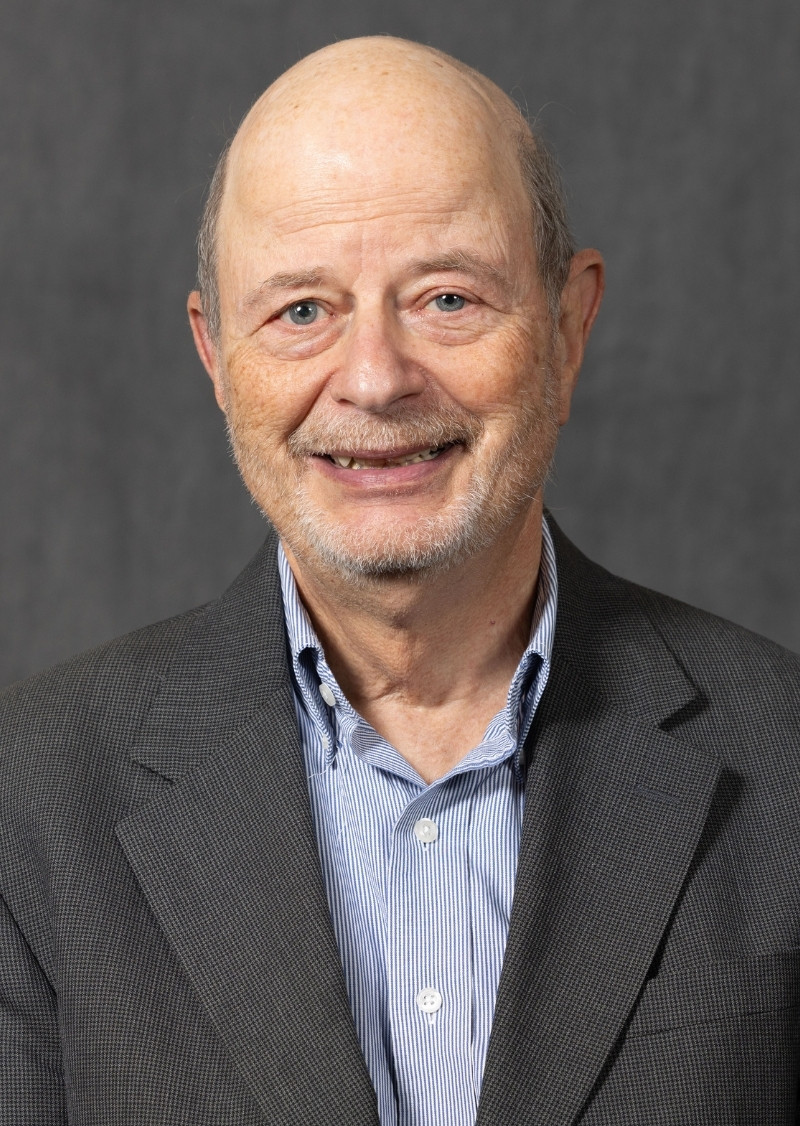
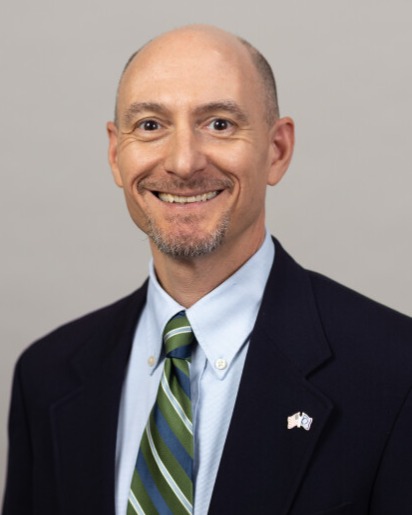
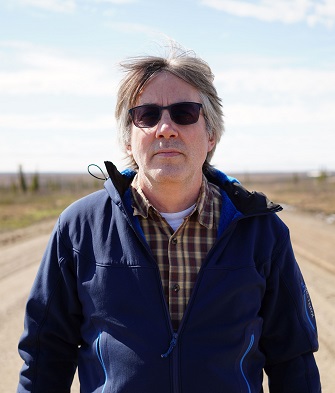
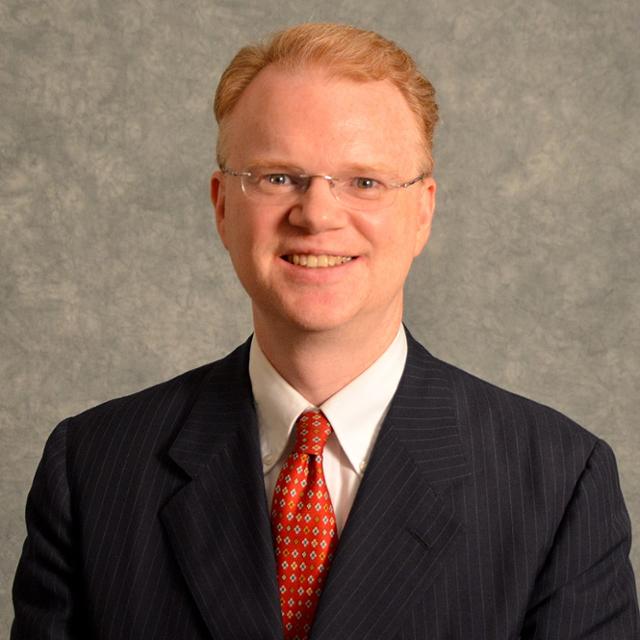
Prof. Dr. Ulvi Keser is a full Professor at the Faculty of Economics and Administrative Sciences, Final International University , North Cyprus. His research and teaching focus on the modern history of Cyprus, strategic security studies, intelligence operations, and communication history, with special emphasis on the 1955-1974 Turkish Cypriot struggle and the wider Eastern-Mediterranean geopolitics. Education & Academic Titles: Prof. Dr. – current academic rank (exact degrees and alma mater not disclosed in the text). Research Interests: Prof. Keser’s scholarship revolves around the intersection of history, security, and communication . He meticulously investigates clandestine radio networks, propaganda techniques, intelligence gathering, and the legal-diplomatic aspects of the Cyprus question. His work also delves into humanitarian crises during World War II, Turkish-Greek bilateral relations, and maritime strategic affairs in the Eastern Mediterranean. Key themes include: History of the Turkish Cypriot resistance (1955-1974) Intelligence & counter-intelligence activities on the island Impact of radio broadcasting and underground media on national movements International law and diplomatic legitimacy regarding Cyprus Energy security and maritime boundaries in the Eastern Mediterranean Publication Profile: Since 2008 Prof. Keser has authored more than seventy scholarly articles. His output is heavily concentrated on Cyprus-centric case studies, employing archival documents, intelligence reports and media analyses. Recurring methodological strands combine historical narrative with security analysis, yielding insights into propaganda, psychological warfare, and the legal-geopolitical dimensions of conflict. Scientific Awards & Grants: No awards or funded projects explicitly listed in the provided text. Advising & Research Teams: No specific PhD/Master advisees or laboratory teams are mentioned in the source material.
Katja Tikka is a Researcher in Legal History at the Faculty of Law, University of Helsinki, with a focus on migration, minority histories (particularly Karelians), and early modern legal-commercial systems. She holds a Doctor of Law (2020) and Master's in Nordic History (2014). Her work spans genealogy research, organizational histories, and popular non-fiction, editing two peer-reviewed genealogy journals. Key research areas include Karelian identity, post-WWII land disputes, and early modern European mobility/empires. Active in 5 research projects (e.g., COST Action EU-PoTaRCh as coordinator), she has over 70 publications across legal history, migration studies, and environmental history. Awards include Academy of Finland grants. Teaching emphasizes student-centered methods at multiple Finnish universities. Editorial roles and board memberships include Geneettisen sukututkimuksen seura. Recent activities include keynote presentations at Nordiska rättshistorikermöte (2024) and theology conferences.
Bart Kerremans is a full professor at KU Leuven's Faculty of Social Sciences, affiliated with Leuven International and European Studies (LINES). His research focuses on international trade politics, American government, interest groups, and the WTO. He has held leadership roles in major research projects, including studying Belgium's economic sovereignty during the Cold War and analyzing the European Commission's trade negotiations with Japan. Education: Doctorate in Political Science (implied by academic rank) Research Interests: Explores geopolitical economic dynamics, transatlantic relations, and historical trade policies. Recent work includes Cold War-era economic strategies and contemporary U.S.-EU trade conflicts. His 2024 study on Belgium's CoCom participation underlines the intersection of political economy and international institutions. Publications span academic journals (e.g., Politics And Governance ), newspapers ( De Morgen ), and edited volumes on geo-economics and EU trade policy. Notable works analyze Trump's political messaging and Biden's foreign policy continuity. Grants: Active in projects funded from 2019-2032 Teaching includes courses on EU trade policy, American government, and global diplomacy. He advises doctoral research on international trade negotiations and co-leads the 'Global Climate Governance and Contestatory Democracy' initiative.
Frederic Pearson is a Professor of Political Science at Wayne State University's College of Liberal Arts and Sciences, and former director of the Center for Peace and Conflict Studies. A native Detroit resident, he holds a Ph.D. from the University of Michigan and a B.A. from Oakland University. His research focuses on international military intervention, arms trade dynamics, and conflict resolution strategies in civil and international disputes. Pearson has authored/co-authored six books, including Arab Approaches to Conflict Resolution (2014) and Civil Wars: Internal Struggles, Global Consequences (2009). His work emphasizes the role of international organizations and networks in peacemaking, as well as the economic and cultural dimensions of conflict. Notable contributions include studies on mediator effectiveness in civil wars, arms trade economics, and reconciliation processes in ethnopolitical disputes. Pearson has held prestigious roles such as Senior Fulbright Research Professor in the UK and Netherlands, and has advised U.S. national security commissions. He has also engaged in global outreach, including workshops for Palestinian-Israeli professionals and educational programs for Middle Eastern students. Awarded the Gershenson Distinguished Research Professor title and Graduate Mentor of the Year at Wayne State, Pearson's teaching spans courses on world politics, globalization, and civil conflict processes. He has directed community initiatives addressing ethnic and immigrant relations and led international educational delegations to Japan and the former Soviet Union. Education: Ph.D. and M.A., University of Michigan B.A., Oakland University Scientific Achievements: Twice Senior Fulbright Scholar (UK and Netherlands) Recipient of Wayne State's Gershenson Scholar and Graduate Mentor Awards Co-published over 30 articles in journals like Journal of Peace Research and Terrorism and Political Violence Grants & Outreach: Federal grants for hosting Middle East Partnership Initiative students Directed Detroit Council for World Affairs Past President, Rotary Club of Detroit
Michael Mosser is a Associate Professor of Instruction at the University of Texas at Austin , with joint appointments in the Department of Government , Center for European Studies (CES), and International Relations and Global Studies (IRG) program. He serves as Executive Director of the Global Disinformation Lab and Assistant Director of the Center for European Studies , while also holding the title of Distinguished Scholar at the Strauss Center for International Security and Law . Education: PhD and MA in Political Science from University of Wisconsin-Madison; BA in Political Science and History from University of Pittsburgh Teaching Areas: European Security, European Environmental Politics, International Affairs, Comparative Politics, Disinformation Studies His research focuses on European security institutions , disinformation dynamics , and the intersection of military sociology with political processes . He has led initiatives like the Peace Corps Prep program and serves on experiential learning advisory boards. Recent publications explore the Organization for Security and Cooperation in Europe (OSCE) , military power diffusion , and post-conflict reconciliation . He has received prestigious teaching awards including the 2021 Texas Ten and 2016 Raymond Dickson Centennial Fellowship . Scientific Awards 2021 Texas Ten Teaching Award 2016 Raymond Dickson Centennial Endowed Teaching Fellowship Dr. Mosser regularly contributes to KUT Radio's Texas Standard and publishes op-eds on security and disinformation topics in major Texas newspapers.
Sverrir Steinsson is Assistant Professor at the University of Toronto's Munk School of Global Affairs & Public Policy. He holds a PhD in Political Science from George Washington University, an MA in International Affairs, and a BA in Political Science from the University of Iceland. His research focuses on digital technology's impact on institutional structures, the transformative effects of war on political systems, and small-state behavior in international relations, particularly Iceland's geopolitical strategies. Steinsson's work examines how digital platforms reshape power dynamics among users, businesses, and states, as well as how conflict and war influence state formation and empires. He has pioneered 'Shelter Theory' to analyze small states' reliance on alliances and international frameworks for survival. His research spans topics like Nordic cooperation, transatlantic relations, and historical conflicts such as the Cod Wars. Key publications include analyses in the American Political Science Review , International Organization , and Cooperation and Conflict . His articles explore themes like institutional evolution in digital spaces, Iceland's security dependencies, and theoretical frameworks for understanding small-state diplomacy. Steinsson’s academic contributions emphasize interdisciplinary approaches blending institutional theory with contemporary geopolitical challenges. His current projects continue investigating digital governance, small-state resilience, and historical patterns of state formation under conflict conditions.
Dr. Magda Long is a Visiting Research Fellow at King’s College London’s King’s Centre for the Study of Intelligence and the War Studies Department, alongside roles at the University of Nottingham and University of Exeter. Her work bridges academic research with practical policy analysis, focusing on covert action, intelligence strategy, and irregular warfare. She holds a PhD in Intelligence and International Security from King’s College London and has extensive experience in defense analysis (RAND Corporation), risk management (Deloitte), and post-conflict security roles. Her research examines how states employ covert means for foreign policy, counterterrorism, and unconventional warfare. Her educational background includes an MA in Intelligence and International Security from King’s College London and prior professional training in business intelligence. Research interests center on covert operations’ utility, ethical dilemmas in intelligence, and the evolving role of covert action in modern geopolitical conflicts. Publications span edited volumes on national approaches to covert action, articles analyzing post-9/11 U.S. strategy, and case studies on Ukraine’s civilian resistance. Her work often explores the intersection of technology (e.g., cyber operations) and traditional covert methods, emphasizing adaptability in intelligence tradecraft.
Professor T. Max Friesen is a leading Arctic archaeologist at the University of Toronto's Department of Anthropology , specializing in prehistoric hunter-gatherer societies, zooarchaeology, and climate change impacts on cultural heritage. His research spans 5,000 years of Arctic history, focusing on the Canadian Arctic regions of Nunavut and the Northwest Territories through collaborations with northern communities. Education: PhD in Archaeology from McGill University (1995) Research Interests include: Prehistoric Arctic migrations (Paleo-Inuit, Thule) and their technological adaptations Zooarchaeological analysis of animal bones from sites like Bell and Pembroke Climate change effects on archaeological preservation in permafrost regions Thule-Inuit cultural evolution and subsistence economies Community-based archaeology and heritage conservation His 15 most recent publications (2000-2018) demonstrate expertise in Arctic colonization dynamics, 3D documentation of endangered sites, and interdisciplinary studies of host-pathogen relationships through HBV subgenotype B5 research. Key projects include the Arctic CHAR initiative for climate change mitigation and comparative studies of Dorset vs. Thule hunting technologies. Scientific Contributions: Coined terminology standardization for Arctic archaeological traditions Developed frameworks for understanding Inuvialuit interregional interaction Advanced 3D recording methods for rapidly deteriorating Arctic sites Reconstructed millennial-scale caribou drive system evolution Advising: Actively mentors graduate students in Arctic archaeology with fieldwork opportunities in Nunavut and the Mackenzie Delta. Collaborates with Kitikmeot Heritage Society and international researchers on heritage preservation.
Prof. Dr.-Ing. Stefan Lechner has been full Professor of Energy Economics and Energy Systems at the Technical University of Central Hesse (THM) , Giessen, since March 2015. He is affiliated with the Department of Mechanical Engineering and Energy Technology and the Institute THESA – Institute of Thermodynamics, Energy Process Engineering and Systems Analysis . Additionally, he leads the Laboratory for Energy Economics and is a core member of the Competence Center for Energy Technology and Energy Management (etem.THM) . Education & Career Dr.-Ing., Brandenburg University of Technology (BTU) Cottbus, 2012 – Dissertation on steam-fluidized-bed drying of lignite. Dipl.-Ing. (FH) Mechanical Engineering, Georg Agricola University of Applied Sciences Bochum, 2002 – specialising in Future Energies. Supplementary doctoral studies & economics coursework at BTU Cottbus and FernUniversität Hagen. Professional experience at Vattenfall (plant management, power-plant planning & R&D) and Kreisel Umwelttechnik (Head of Development) before entering academia. Research Interests Prof. Lechner’s work centres on the techno-economic analysis and optimisation of energy systems in transition . Core themes include renewable energy integration , thermal energy storage (particularly Carnot batteries using ceramic high-temperature stores), sector coupling between electricity, heat and mobility, and 5th-generation cold district-heating networks (5GDHC). Methodologically, he combines experimental thermal engineering with open-source simulation frameworks , agent-based demand modelling , and electricity-market modelling . Recent activities expand into waste-heat recovery from data centres and transcritical CO₂ heat-pump systems for low-temperature district heating, always targeting cost-effective, grid-friendly and sustainable solutions . Publication Trends Between 2017 and 2024 his output highlights a clear evolution from fundamental studies on pressurized steam fluidized-bed drying and lignite heat-transfer toward system-level analyses of storage-based sector coupling . A dominant cluster addresses Carnot batteries , covering high-temperature storage materials, gas-turbine re-conversion concepts, and demonstration results. Parallel streams examine GIS-based rooftop PV potential , agent-based settlement energy-demand modelling , and regulatory frameworks for cross-sector energy markets. Scientific Awards & Honours No specific awards are mentioned in the provided material. Research Funding & Teams Prof. Lechner has secured and coordinates projects worth > €10 million (THM share ≈ €6.5 million) funded by BMBF, BMWK/BMWi, Hessian ministries (HMWK, HMWEVW), WI-Bank and ERDF : LOEWE 3 DUWä (2025-2027) – transcritical CO₂ dual-use heat pumps for cold district heating. EnEff:Stadt FlexQuartier2 (2023-2027) – hybrid storage optimisation in Giessen’s Philosophenhöhe district. KNW-Plus (2022-2023) – design & online tool for cold local heating networks. Innovative waste-heat use from data centres (2022-2023). FlexQuartier Gießen (2018-2023) – integrated hybrid storage & sector coupling in a new-build district. Kommun:E (2018-2022) – municipal energy-supply transformation under Germany’s Energiewende. High-T-Stor (2017-2019) – cross-sector high-temperature storage for renewable balancing. FES (2019-2021) – Research Center for Energy Storage and Sector Coupling. These projects involve interdisciplinary consortia including municipalities, grid operators, SMEs, and research partners across Germany. Teaching & Academic Leadership He lectures in Energy Economics and Sector Coupling, Energy Markets, Heat Transfer, Renewable Energy Technology and Energy System Analysis . He also serves as Programme Manager for the part-time continuing-education M.Sc. Energy Efficiency Management (StudiumPlus, Wetzlar) and contributes to advanced master’s courses on energy law and thermodynamics.
Mark L. Haas is a Professor of Political Science at Duquesne University, affiliated with the McAnulty College and Graduate School of Liberal Arts. His research focuses on international relations, political ideologies, and the impact of demographic changes on global security. Haas has held prestigious fellowships at Harvard University's Olin Institute and Belfer Center. He earned his Ph.D. from the University of Virginia and B.A. from Duke University. Haas's work examines ideological influences on U.S. foreign policy, Middle Eastern politics, and the consequences of population aging. Notable publications include The Geriatric Peace (2025) and Frenemies: When Ideological Enemies Ally (2022). His peer-reviewed articles address topics like demographic transition theory and ideological polarity in international relations. Awards: McAnulty Faculty Excellence Awards (2021, 2015), Raymond J. Kelley Chair (2017-2022), APSA Best Paper (2006). Teaching: Courses on international relations, ethics, and U.S. foreign policy. He has presented globally on aging populations and security, including at the U.S. Army War College and Johns Hopkins University. His interdisciplinary approach bridges political theory, history, and demographic analysis.
John Fousek is a Clinical Professor in NYU’s MA Program in International Relations since 2013. He holds affiliations with the Faculty of Arts and Science and teaches courses on global history, U.S. foreign policy, and international relations. His research focuses on Cold War cultural roots, U.S. foreign policy dynamics, and ethical dimensions of global governance. Fousek has held administrative roles at Rutgers University and Yeshiva University, and directed non-profit initiatives like the World Order Models Project. Education: Cornell University: Ph.D. & M.A. in History Columbia College, Columbia University: B.A. in History-Sociology Research Interests: Re-examining 'American Century' narratives via African-American cultural influence U.S. nationalism in the 1984 Los Angeles Olympics context Debates on 'American exceptionalism' in foreign policy Awards: Senior Fellow, Center for Global Change and Governance (2002-2006) Allan Nevins Prize Nominee (1994) Daughters of the American Revolution Fellowship (1993-1994) Advising & Grants: Advises master's theses and has secured grants for projects linking culture and foreign policy. Current projects explore Louis Armstrong's global impact and post-Soviet world order dynamics. Labs/Teams: Collaborates with NYU's International Studies Working Group and Rutgers' Center for Global Change and Governance on interdisciplinary research initiatives.
Roxanna Sjöstedt is an Associate Professor at the Department of Political Science, Lund University , Sweden. Her academic career spans roles as a Senior Lecturer and Director of Peace and Conflict Studies (2017–2022) . She contributes to UN Sustainable Development Goals including Peace, Justice, and Strong Institutions. Current projects: All Aboard!? Societal Security in Sweden/Norway (Swedish Research Council, 2024–2028), The Consequences of Securitization (Formas, 2021–2024) Completed projects: Intervention by Invitation (Swedish Research Council, 2018–2021), Demagogues of Hate or Shepherds of Peace (Wallenberg Foundation, 2016–2018), Warlord Democrats (Swedish Research Council, 2014–2017) Her research focuses on securitization theory , international interventions , norm diffusion , and military threat constructions in both traditional security and pandemic contexts (A(H1N1), COVID-19). She bridges foreign policy analysis with peace and conflict research , examining small-state behavior (Sweden/Norway) in global security. Recent publications (2024–2025) emphasize threat diffusion , post-conflict discourse , and security pedagogy . Earlier work (2004–2020) explores non-military threats (HIV/AIDS, swine flu), warlord democrats , and identity politics in post-Soviet states. Key journals: European Journal of International Security , Security Studies , Journal of Peace Research Book contributions: Oxford University Press, Routledge, e-IR
Dr. Yelena Biberman-Ocakli is an Associate Professor of Political Science at Skidmore College and a Wilson China Fellow at the Woodrow Wilson International Center for Scholars. She is also a Nonresident Senior Fellow at the Atlantic Council’s South Asia Center and an Associate at Harvard University’s Davis Center. Her expertise lies in unconventional warfare, proxy conflicts, and South Asian security dynamics. Education: Ph.D., Brown University (2014, Political Science) M.A., Brown University (2010, Political Science) M.A., Harvard University (2006, Regional Studies) B.A., Wellesley College (2004, International Relations) Visiting Student, Oxford University (2002-03, Philosophy and International Relations) Research Interests encompass the intersection of technology and unconventional conflict , with a focus on proxy wars and South Asian security . Her work examines how states outsource violence, the role of nonstate actors in conflict, and the ethical implications of emerging technologies like CRISPR in warfare. She also investigates Kashmiri peacebuilding and great power competition in the Indo-Pacific. Scientific Awards and Grants include the Wilson China Fellowship, Andrew W. Marshall Foundation Paper Prizes, and multiple grants from Skidmore College, the Atlantic Council, and the United States Institute of Peace. She has been recognized for her contributions to security studies and conflict resolution . Advisory and Policy Engagement spans collaborations with institutions such as the Modern War Institute at West Point and the Peace Research Institute Oslo . Her policy work has been featured in outlets like Foreign Policy , Washington Post , and Georgetown Journal of International Affairs .
Sonia Lasher-Trapp is a Professor in the Department of Atmospheric Sciences at the University of Illinois at Urbana-Champaign. She previously held faculty positions at Purdue University from 2003 to 2014. Her research focuses on cloud and precipitation processes, numerical modeling, and the impacts of climate change on severe weather events. She leads a research group investigating entrainment effects in thunderstorms, hail dynamics, and microphysical parameterization. Education: Ph.D. in Meteorology, The University of Oklahoma, 1998 M.S. in Meteorology, The University of Oklahoma, 1993 B.S. in Meteorology (summa cum laude), Saint Louis University, 1990 Research Interests: Climate change impacts on precipitation, thunderstorm dynamics, cloud microphysics, aerosol-cloud interactions, and numerical weather modeling. Recent work emphasizes the role of entrainment, ice nucleation, and CCN/INP variability in storm systems. Recent Research Trends: Publications from 2020–2025 highlight investigations into hailfall changes under future climates, supercell entrainment mechanisms, and pseudo-global-warming climate attribution studies. Collaborations focus on Southern Ocean cloud processes and interdisciplinary field campaigns. Awards: American Meteorological Society Fellow (2023), Edward N. Lorenz Teaching Excellence Award (2021) Teaching: Teaches graduate courses in precipitation physics, microphysical parameterization, aerosol-cloud-climate interactions, and undergraduate courses in atmospheric thermodynamics and cloud physics. Labs/Teams: Leverages the Blue Waters supercomputer for high-resolution climate modeling projects. Collaborates with international teams on initiatives like CAPRICORN, MARCUS, and SOCRATES to study Southern Ocean cloud systems.
Mark Bell is an Associate Professor in the Department of Political Science at the University of Minnesota’s College of Liberal Arts, with an affiliate faculty position at the Hubert H. Humphrey School of Public Affairs. His research focuses on nuclear weapons, international relations theory, and U.S./British foreign policy and grand strategy. He holds a Ph.D. from MIT, an M.P.P. from Harvard Kennedy School, and a B.A. in Politics, Philosophy, and Economics from Oxford University. His book Nuclear Reactions: How Nuclear-Armed States Behave (2021) won the ISA Foreign Policy Analysis Section’s best book award. His work examines how states adapt foreign policies after acquiring nuclear weapons, with publications in International Organization , International Security , and policy outlets like Foreign Affairs . His research has been funded by the Stanton Foundation, U.S. Air Force Academy, and others. Recent articles analyze nuclear strategy in the Russia-Ukraine war, U.S. nonproliferation policy efficacy, and historical case studies of nuclear diplomacy. Bell frequently comments on contemporary nuclear issues, including the Iran nuclear deal, New START Treaty, and North Korea’s missile program. Awards: ISA Foreign Policy Analysis Section Best Book Award (2021) Grants: Stanton Foundation, U.S. Air Force Academy, Smith Richardson Foundation, Charles Koch Foundation Education: PhD MIT (2016), MPP Harvard (2010), BA Oxford (2006) His interdisciplinary work bridges academic research and policy analysis, contributing to both scholarly debates and real-world nuclear security challenges.