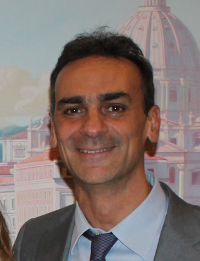
Oswald Lanz is a tenured full professor at the Faculty of Engineering of the Free University of Bozen-Bolzano , leading the Visual Computing Lab . He holds a Ph.D. in Computer Science and a Mathematics degree from the University of Trento. Prior to his current role, he was a researcher and head of research at FBK Trento. He is an endowed professor collaborating with Covision Lab , an AI hub in Bressanone, and coordinates the board of professors for the PhD in Computer Science program since 2025. His research focuses on Computer Vision, Deep Learning, and Video Analytics , with applications in sports technology, medical imaging, and industrial automation. Key achievements include the Amazon AWS Machine Learning Research Award (2020) , ACM Multimedia Best Paper (2015) , and Best Student Paper at ICIAP (2007) . He co-organized the ELLIS-VISMAC Winter School (2025) and chaired ICIAP 2019 . His work spans novel view synthesis, action recognition, and anomaly detection, supported by patents in video tracking and detection. He teaches courses like Deep Learning and Artificial Intelligence in undergraduate and graduate programs. Recent projects such as 5VREAL integrate 5G, edge computing, and AI for sports analysis. His collaborations bridge academia and industry, exemplified by his role in Covision Lab and multidisciplinary initiatives like DSS4LCO for food supply chains. Lanz’s publications emphasize spatiotemporal modeling, neural architecture search, and hybrid machine vision systems.
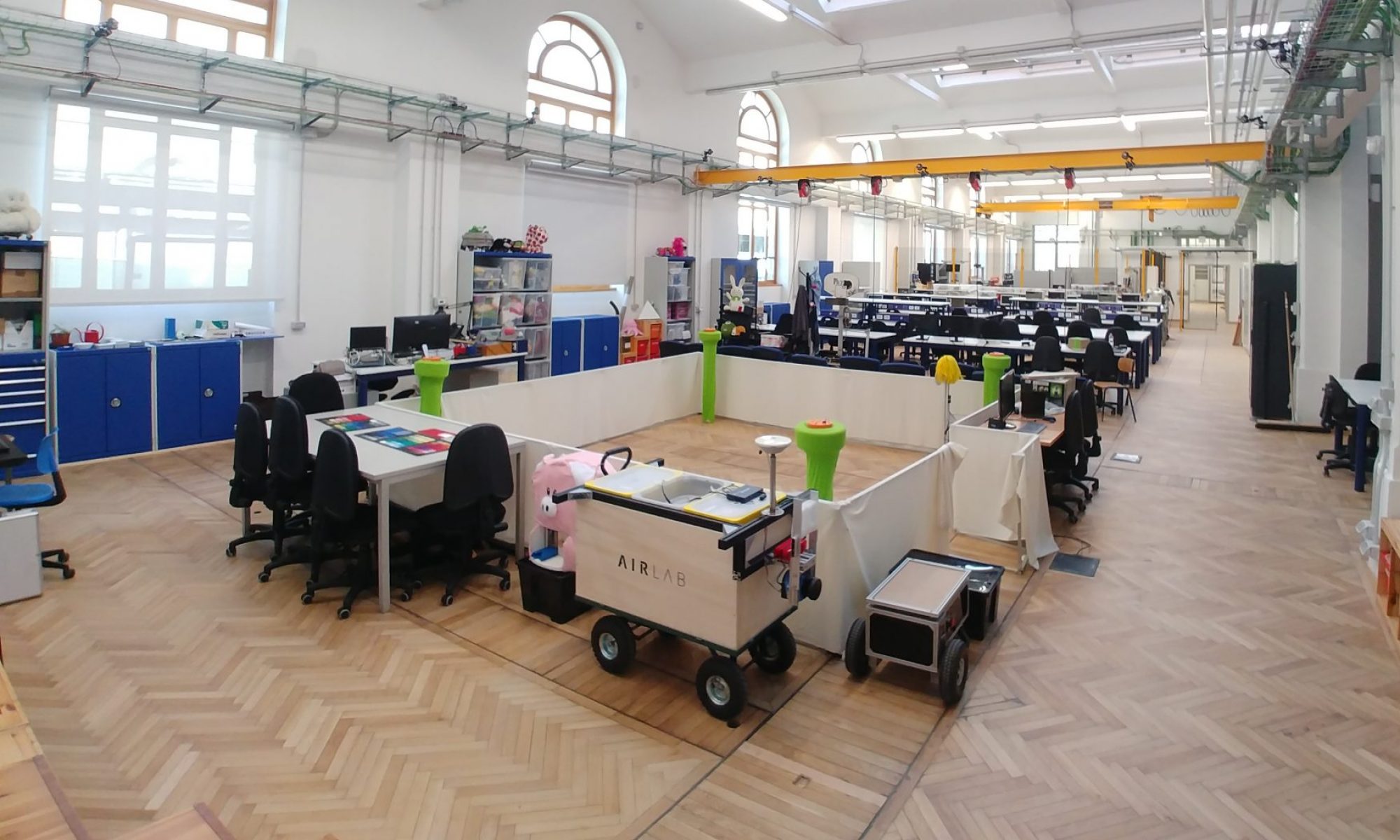
Luca Iocchi is a Full Professor at Sapienza University of Rome, where he teaches in the Master in Artificial Intelligence and Robotics program. He is affiliated with the Department of Computer, Control, and Management Engineering and the Faculty of Engineering of Information, Computer Science and Statistics. Iocchi serves as an Associate Editor for Artificial Intelligence Journal and has been the scientific coordinator of Spoke of PNRR project FAIR (Future AI Research). His educational background includes: Master in Engineering in Computer Science (Laurea in Ingegneria Informatica) cum Laude, Sapienza Università di Roma, 1995 PhD in Engineering in Computer Science (Dottorato in Ingegneria Informatica), Sapienza Università di Roma, 1999 Professor Iocchi's research focuses on cognitive robotics, task planning, multi-robot coordination, robot perception, robot learning, human-robot interaction, and social robotics. His work has significant applications in security, surveillance, and environmental monitoring. He has published over 200 referred papers with an h-index of 46 (Google Scholar). His research bridges theoretical AI with practical robotic systems operating in real-world environments, with a particular emphasis on developing intelligent systems that can interact effectively with humans. His recent publications show a strong trend toward multi-agent reinforcement learning, trust modeling in human-AI teams, UAV coordination, and planning systems. There's a clear focus on making robotic systems more reliable, efficient, and capable of operating in complex real-world scenarios like healthcare facilities and smart cities. His work increasingly integrates formal planning approaches with machine learning techniques. Professor Iocchi has received numerous scientific awards: 1999 Top Paper Award WebNet'99 2006 Best Paper Award RoboCup 2006 2008 Best Robotics Demo Award AAMAS 2008 2014 Best Paper Award For Engineering Contribution RoboCup 2014 2017 RoboCup@Home SSPL 2017 - 3rd place 2018 Canada-Italy Innovation Award 2019 Best Paper Award For Engineering Contribution RoboCup 2019 As an academic advisor, Iocchi has directed the PhD Program in Engineering in Computer Science from 2020 to 2023. He has been Principal Investigator for numerous research projects including SciRoc (European Robotics League), AI4EU (European AI project), BUBBLES, AIPlan4EU, ROSITA, Trust Your Agents, and FAIR. His research has been supported by EU H2020 programs, national grants, and industry collaborations, demonstrating strong connections between academia and practical applications. Professor Iocchi is actively involved with the Cognitive Cooperating Robots Lab (LabRoCoCo) and is a key member of the RoboCup Federation, having served as Vice-President from 2019 to 2024. He has played a significant role in benchmarking domestic service robots through RoboCup@Home and the European Robotics League Service Robots (ERL-SR), which he helped establish. His leadership in organizing international scientific robot competitions has been instrumental in advancing the field of service robotics.
Aldo Gangemi is a Full Professor in the Department of Philosophy at the University of Bologna, specializing in Informatics (INFO-01/A). His research integrates Semantic Technologies, Natural Language Processing, Data Science, and Cognitive Science to address challenges in knowledge representation, ontology engineering, and cultural heritage informatics. He co-founded the STLab at ISTC-CNR and DHARC at the University of Bologna, and is on leave from Sorbonne Paris Nord University (Computer Science Lab - LIPN). Scientific roles include serving as area chair for Web Semantics , editorial board member for Semantic Web and Applied Ontology , and conference chairs for major events like WWW2015 and ESWC2018. He has led European projects such as GALEN, WonderWeb, NeOn, and MARIO, and developed software tools like FRED, Aemoo, and Framester. Research interests focus on semantic technologies, knowledge patterns, and applications in humanities, medicine, law, and fisheries. Over 250 peer-reviewed publications span these areas, with emphasis on ontology-based knowledge integration, multimodal reasoning, and ethical AI. His work bridges cognitive science and technological innovation, particularly in virtual reality's societal applications and cultural heritage preservation. Notable contributions include the PRIVAFRAME knowledge graph for sensitive data, the ImageSchemaNet ontology for embodied cognition, and the Sandra neuro-symbolic reasoner. His interdisciplinary approach addresses challenges in AI ethics, creative systems, and citizen-driven data curation.
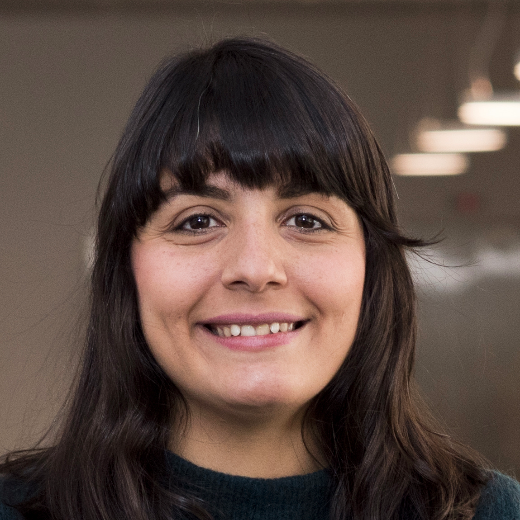
Secil Ugur Yavuz is a Professor at the Faculty of Design and Arts, Department of Design, at Free University of Bozen-Bolzano. Her academic work spans eco-social design, research through design, and tangible human-technology interactions, with a particular focus on sustainable materials and collective making practices. She teaches courses including Design 3 for the Master in Eco-social Design and doctoral programs in Experimental Research through Design, Art and Technologies. Professor Yavuz's research explores the intersection of analog and digital through tangible human-technology interactions, with significant contributions to sustainable material systems. Her FERAL WOOL project investigates ecological and cultural dimensions of wool, while her work with biomaterials like microbial cellulose and open-source bioreactors addresses circular production systems. She employs embodied and speculative approaches to examine microplastic emissions, children's nature engagement through tools like TREESENSE, and social play with interactive toys. Her recent publications reveal a strong thematic focus on material culture, sustainability, and human-centered design across multiple scales. The research demonstrates consistent exploration of how digital and physical realms interact to create meaningful user experiences while addressing ecological challenges. Key trends include the use of embodied interaction methods, speculative design for cultural critique, and co-creative processes that bridge technological innovation with social and environmental responsibility. Yavuz leads the Design Friction Lab, which investigates the philosophical foundations of design through customizable interfaces and DIY approaches. Her work with doctoral students in Experimental Research through Design emphasizes reshaping technologies through collective making processes. The FERAL WOOL research project represents a significant current initiative exploring sustainable textile futures through both ecological and cultural lenses.
Michela Maschietto is a Full Professor at the Department of Education and Human Sciences, University of Modena and Reggio Emilia, with a focus on mathematics education methodology and historical mathematical artifacts. She previously held positions at the Mathematics campus and leads the Laboratory of Mathematical Machines. Research Interests: Her work bridges physical and digital tools in mathematics education, emphasizing semiotic mediation, argumentation development, and historical instrument reconstruction for pedagogical purposes. She explores geometric-mechanical artifacts for calculus concepts and investigates connections between spatial/geometrical knowledge. 2025 study on geometry education trends using didactic tetrahedron model 2024 research on physical-digital tool integration for argumentative skill development 2023 projects involving tactile calculus devices and conic section machines Teaching Activities: She designs mandatory laboratory components for primary education students, covering national guidelines, semiotic mediation theory, and historical artifacts like abacuses and programmable robots. Her courses emphasize problem-solving, geometric visualization, and standardized assessment analysis. Laboratory Involvement: As head of the Mathematical Machines Laboratory, she organizes exhibitions and workshops using reconstructed historical instruments for mathematics popularization. This includes collaborations with international researchers on topics like the Pythagorean theorem and conic sections.
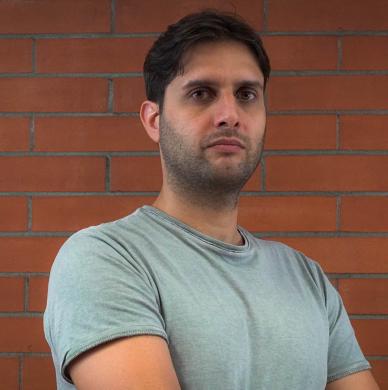
Federico Becattini is a Tenure-Track Assistant Professor at the Department of Information Engineering and Mathematics (DIISM), University of Siena, Italy. He is an active member of the Siena Artificial Intelligence Lab (SAILab), where he contributes to cutting-edge research in computer vision, deep learning, and artificial intelligence. His work spans multiple interdisciplinary domains, including autonomous driving, human behavior understanding, cultural heritage, neuromorphic vision, and fashion recommendation. His research interests center on memory-based neural networks , which he has applied in numerous publications at top-tier venues such as CVPR, ECCV, IEEE TPAMI, and ACM TOMM. He has also delivered tutorials on this topic at international conferences including ICIAP 2022 and ACM MM 2022, and taught a Ph.D. course at the University of Florence. His recent work is aligned with the Collectionless AI paradigm, which emphasizes continual learning and interaction with dynamic environments. The recent publications highlight a strong trend in human-centric AI , focusing on understanding people through multimodal analysis of face, body, and clothing, as well as generating 3D virtual avatars. There is also a clear emphasis on memory-augmented architectures for temporal reasoning, explainability, and adaptive learning. His editorial role as Associate Editor of the International Journal of Multimedia Information Retrieval further underscores his standing in the research community. Associate Editor, International Journal of Multimedia Information Retrieval (IJMIR) Organizer, Workshop on Facial and Body Expressions (ICPR2020) Co-organizer, T-CAP Workshop (ICIAP2021, ICPR2022) Co-organizer, MCFR Workshop (ACM MM 2022) Co-organizer, WCPA Workshop and Challenge (ECCV 2022) Federico Becattini actively advises students and researchers within SAILab, particularly in the context of Ph.D. theses and research projects related to Collectionless AI and memory-based models. While specific grants are not mentioned, his extensive publication record and leadership in workshops and editorial roles suggest involvement in funded research initiatives. He collaborates with both academic and international research communities, serving as a reviewer for top-tier conferences and journals. He is a core member of the SAILab research group, which is pioneering the Collectionless AI initiative—a framework for continual learning over time, interacting with humans and agents without relying on pre-built static datasets. This lab serves as a hub for innovation in adaptive and sustainable AI systems.
Marco Ghislieri is an Assistant Professor at the Department of Electronics and Telecommunications (DET) of Politecnico di Torino, Italy. He is a member of the Interdepartmental Center PolitoBIOMed Lab and teaches in the Biomedical Engineering program, including courses like Neuroengineering and Design of Programmable Biomedical Devices . His research spans Artificial Intelligence, Biomedical Signal Processing, Neuroscience, and Rehabilitation Engineering . PhD in Bioengineering and Medical-Surgical Sciences (2017-2021) at Politecnico di Torino Thesis: Muscle Synergy Assessment during Cyclic and Non-Cyclic Movements His research focuses on muscle synergy analysis in Parkinson’s Disease (PD) patients post- Deep Brain Stimulation (DBS) , AI-driven gait analysis for fall prevention, and wearable sensor applications for stress-cognitive decline monitoring. He leads the S-CoDe and OMNIA-PARK projects, and contributes to PRIN as a team member. Recent publications highlight advancements in machine learning for intraoperative DBS targeting , statistical gait analysis , and neurorehabilitation tools . He serves as Associate Editor for Scientific Reports and Applied Bionics and Biomechanics , and Guest Editor for Frontiers in Neural Circuits . Awards include the Carlo J. De Luca Award (2022) , GNB Doctoral Award (2022) , and the Best Poster Award at M. Grattarola Summer School (2022) . He supervises Fabrizio Sciscenti (PhD candidate) and collaborates on neuroengineering and biomedical device design courses. His work addresses Goal 3 (Good Health) and Goal 4 (Quality Education) of the UN SDGs.
Maria Luce Lupetti is a Fixed-term Assistant Professor at the Department of Architecture and Design (DAD) at Politecnico di Torino . She actively contributes to the College of Architecture and Design and is a member of the College of Mechanical, Aerospace and Automotive Engineering . Her academic role involves teaching Cognitive Ergonomics and HMI in the Automotive Engineering master's program and collaborating on Design and Communication courses. Editorial Roles: Associate Editor for the journal INTERACTIONS since 2024 Conference Leadership: Participating in organizing committee for CHI 2026 Research Projects: Scientific Director of PARJAI (2025-2028) on Participatory Design Justice for Ethical AI Transitions Research Focus : Maria's work bridges Design with Human-Robot Interaction , focusing on Ethical AI , Speculative Design , and Urban Robotics . Her recent publications explore: Speculative design for sustainable digital futures Contextual adaptability challenges in urban robotics Design taxonomies for demystifying AI Trustworthy embodied agents in healthcare Creative applications of AI in HRI Ethical frameworks for energy futures Design Philosophy : She emphasizes participatory approaches, critical design thinking, and transdisciplinary collaboration to address societal challenges at the intersection of technology, ethics, and human factors. Her work appears in leading venues including CHI , HRI , and Frontiers in Neurorobotics , while also contributing to edited volumes and journal special issues.
Andrea Bonarini is a Professor at the Department of Electronics, Information, and Bioengineering (DEIB) within the School of Industrial and Information Engineering at Politecnico di Milano. His research focuses on Artificial Intelligence , Robotics , and Human-Robot Interaction , particularly in assistive technologies for children with disabilities and autism therapy. Key Research Areas: Reinforcement Learning, Social Robotics, Affective Computing, Accessibility in Robot Design Notable Projects: Development of frameworks like Mushroomrl and datasets like POLIMI-ITW-S for robotics research His recent publications highlight advancements in playful robotics for neurodevelopmental disorders, emotion projection in non-bio-inspired robots, and safety experiments for small social robots interacting with children. He also contributes to ethical, social, and psychological challenges in robotics applications.
Patrick Dallasega is an Associate Professor in the Department of Industrial Plants at the Faculty of Science and Technology of the Free University of Bolzano (Italy). He holds a PhD from the University of Stuttgart and has been a Visiting Scholar at Chiang Mai University (Thailand) and Worcester Polytechnic Institute (USA). His expertise spans supply chain management, Industry 4.0 integration in SMEs, lean construction methodologies, and sustainable production planning in ETO/MTO environments. He teaches Project Management and Industrial Plants courses in Industrial Mechanical Engineering programs. His research focuses on digital transformation in manufacturing, including smart mobile factories, augmented reality applications for training, and synchronization of production and on-site assembly processes. Collaborative projects like the AR-enhanced industrial training initiative with Memc aim to reduce errors and costs in complex industrial setups. His work emphasizes human-centered technology integration, sustainability, and real-time data utilization for adaptive production strategies. Education Bachelor/Master: Free University of Bolzano (Italy) MSc: Polytechnic University of Turin (Italy) PhD: University of Stuttgart (Germany) Research Interests Professor Dallasega’s research explores the intersection of Industry 4.0 technologies with lean manufacturing principles, particularly in complex Engineer-to-Order (ETO) and Make-to-Order (MTO) sectors. He investigates how digital twin frameworks, augmented reality (AR), and real-time data analytics can enhance supply chain resilience, reduce operational losses, and improve workforce training efficiency. His work also addresses sustainability challenges in mobile and distributed manufacturing systems, emphasizing eco-friendly logistics and smart factory design. Key Projects Recent collaborations include: Development of an AR-based training module to boost procedural knowledge retention in machinery setups Comparative studies on Industry 4.0 adoption in SMEs across Europe and Asia Framework for digital twin-driven quality control in precast manufacturing Grants & Advising No specific grants or student advisees are listed in the provided data. His focus remains on collaborative industry projects and institutional teaching responsibilities. Labs & Teams Involved in cross-disciplinary teams at the Free University of Bolzano, particularly in the NOI Techpark innovation hub. Leads initiatives on smart mobile factories and human-centered robotics applications in manufacturing environments.
Donato Romano serves as Associate Professor at The BioRobotics Institute of Scuola Superiore Sant'Anna, Italy, where he coordinates the Bio-Robotic Ecosystems Lab and co-founded the spin-off company HUBILIFE srl. His interdisciplinary work bridges robotics, biology, and AI to develop biohybrid systems for biodiversity preservation, sustainable environmental management, and life support in extreme scenarios including space exploration. With over 90 publications and an H-index of 27 (Scopus, March 2025), he has established significant academic leadership through editorial roles across 12+ international journals. Romano's educational foundation includes advanced degrees with honors: an M.Sc. in Agriculture Science and Technologies (2014) and a PhD in BioRobotics (2018), both from Scuola Superiore Sant'Anna. His academic journey includes visiting scholar positions at Khalifa University and substantial industry-academia collaboration through HUBILIFE srl, which commercializes bioinspired devices for human daily life improvement. His research program focuses on bioinspired and biomimetic robotics with particular emphasis on animal-robot interaction, biohybrid systems, and natural intelligence. Key projects address critical global challenges: SENSORBEES develops biohybrid environmental surveillance for ecological monitoring; REGOLIFE investigates lunar soil-terrestrial organism interactions for space agriculture; and OCEAN ROBOCTO explores marine ecosystem solutions. This work demonstrates a strategic progression from fundamental behavioral studies toward applied ecological and extraterrestrial systems. Analysis of his recent publications reveals strong trends in AI-driven behavioral analysis, with deep learning increasingly applied to entomological studies and pest management. The research spans agricultural applications (precision monitoring traps, larval detection systems), ecological conservation (biodiversity surveillance), and extreme-environment adaptation (lunar regolith studies). A distinctive feature is the consistent integration of biohybrid approaches where living organisms and robotic systems create synergistic capabilities exceeding either component alone. Romano's scientific recognition includes election as Junior Fellow of the Italian Academy of Engineering and Technology (2025), the Lucani fuori dal Comune award (2024), and multiple best-thesis prizes. His editorial leadership spans high-impact journals including IEEE Transactions on Medical Robotics and Bionics and Pest Management Science, where he serves as Associate Editor. As principal investigator, Romano coordinates major international projects totaling over €15M in funding: HORIZON-EIC's SENSORBEES (2024-2029), ASI's REGOLIFE (2024-2027), National Geographic's OCEAN ROBOCTO (2024-2026), and PRIN's COSMIC (2023-2025). His teaching portfolio includes PhD courses in Biosystems for Biorobotics and M.Sc. instruction in Bionics Engineering at Scuola Superiore Sant'Anna and University of Pisa. The Bio-Robotic Ecosystems Lab under Romano's direction pioneers biohybrid technologies where living organisms and robotic systems create integrated solutions. Current initiatives include SENSORBEES' environmental monitoring swarms, REGOLIFE's moonworm colonization systems, and HUBILIFE's commercial vector-control devices. The lab maintains active collaborations with space agencies, agricultural institutes, and conservation organizations, positioning biohybrid systems as next-generation tools for planetary-scale challenges.
Federico Fraboni is a Senior Assistant Professor (fixed-term) at the Department of Psychology 'Renzo Canestrari' of the University of Bologna. His research focuses on human factors, cognitive ergonomics, and the integration of advanced technologies such as collaborative robotics, AI systems, and exoskeletons into industrial and healthcare contexts. He leads projects like the STEPbySTEP initiative for exoskeleton benchmarking and the H-WORK platform for workplace mental health. Key research areas include: human-robot interaction safety, AI explainability in aerospace manufacturing, strategic foresight for home care innovation, and ergonomic design of collaborative robotics systems. He has collaborated with industries like Calzedonia for automation studies and contributed to EU-funded safety initiatives in energy sectors. His recent work emphasizes workplace well-being through digital tools, occupational safety training for homecare organizations, and the psychological impacts of emerging technologies. He has co-authored over 30 peer-reviewed articles and participates in interdisciplinary teams addressing human-centered design challenges across healthcare, manufacturing, and transportation domains.
Maurizio Mancini is an Associate Professor in the Department of Computer Science at Sapienza University of Rome. His research focuses on Human-Computer Interaction, Affective Computing, and Multimodal Interaction, with applications in Virtual Reality, Embodied Conversational Agents, and Digital Commensality. He has contributed to understanding expressive movement analysis, social robotics, and adaptive systems in gaming and mindfulness contexts. 2024 : 8 publications on VR mindfulness, reinforcement learning, digital commensality, and multimodal interaction 2023 : 4 studies on human-food interaction, gait recognition, and AI human-likeness 2022 : 5 papers on social robots, collaborative dining, and anomaly detection His work spans topics like nonverbal leadership in full-body improvisation, transactive memory systems in group interactions, and computational models for human-food interaction. Teaching includes courses on Human-Machine Interaction and Programming.
Marco Porta is a Full Professor at the University of Pavia, Department of Electrical, Computer and Biomedical Engineering. He teaches Web and Multimedia Technologies in the Computer Engineering Master's program and Web Design and Technologies in the interdepartmental CIM Bachelor's program. His research focuses on Eye Tracking, Vision-Based Perceptive Interfaces, and Human-Computer Interaction, with recent emphasis on AI applications for human-centered systems. He leads the Computer Vision & Multimedia Lab and chairs teaching councils for CIM and CoD programs. Education: Master's in Electronic Engineering (Polytechnic of Milan) and Ph.D. in Electronic & Computer Engineering (University of Pavia). Professional roles include vice-chair of IEEE's Technical Committee on Factory Automation. Over 118 publications in journals/conferences, with contributions to biometrics, e-learning interfaces, and industrial automation. Research highlights include gaze-based authentication systems, interactive museum interfaces, and ergonomic in-vehicle infotainment evaluations. Current projects explore gaze-driven intelligent tutoring systems and public space interaction frameworks.
Cinzia Di Dio is an Associate Professor at the Catholic University of the Sacred Heart in Milan, Department of Psychology, affiliated with the Research Center on Theory of Mind and Social Competence in the LifeSpan (CeRiToM). She holds academic roles in the Faculty of Education and contributes to interdisciplinary studies on human-robot interaction and developmental psychology. Education : PhD in Neuroscience, University of Parma (2012) MSc in Research Methods and Data Analysis in Psychology, University of Hertfordshire (2003) BSc (Hons) in Psychological Sciences, University of Hertfordshire (2002) Training in fMRI at Santa Lucia Foundation, Rome (2006) Research Focus : Investigates social cognition, moral judgment, and decision-making in human-human and human-robot interactions across the lifespan. Key topics include Theory of Mind, trust dynamics, embodiment effects, and ethical implications of AI. Collaborates with institutions like Harvard University, Kyoto University, and the Italian Institute of Technology. Key Awards : National Scientific Entitlement for Developmental Psychology (2018–2027) Elected ISSBD Executive Committee Member (2024) Teaching & Grants : Lectures courses on developmental neuroscience, psychology of education, and robotics ethics. Oversees doctoral training in Psychology and chairs ethics committees. Active in securing research grants for interdisciplinary projects. Labs & Teams : Leads CeRiToM, focusing on lifespan social competence and directs studies on robotics in education and healthcare.