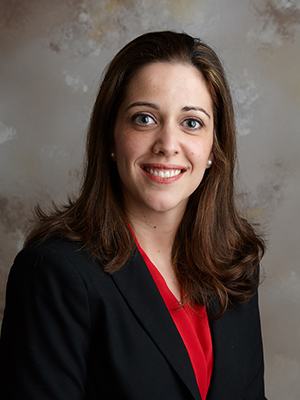
Dr. Ana Diaz Artiles is an Associate Professor in the Department of Aerospace Engineering at Texas A&M University, serving as the Williams Brothers Construction Company Faculty Fellow. Her research focuses on human performance in aerospace environments, artificial gravity systems, and space countermeasures. She leads the Bioastronautics and Human Performance (BHP) Lab, which integrates aerospace engineering, biomedical sciences, and human factors. Education: Ph.D., Aeronautics & Astronautics, MIT (2015) M.Sc., Aeronautical Engineering, ETSIA Universidad Politécnica de Madrid (2006) Research Interests: Human performance in altered-gravity environments Artificial gravity and space countermeasures Exercise physiology and metabolic modeling Extravehicular activity systems (e.g., SmartSuit spacesuit) Virtual/augmented reality applications for behavioral health and training Awards: Amelia Earhart Fellowship (2014) Man Vehicle Lab ‘Sherry’ Award (2014) MIT-France Fellowship (2014) AIAA Best Paper Award (2012) Fulbright Fellowship (2011) Lab Activities & Projects: Development of the Portable Offloading for Walking, Exercise, and Running (POWER) device SMARTSUIT: Hybrid planetary spacesuit design Virtual Assistant for Anomaly Treatment (VA-AT) systems Gravitational dose-response studies using tilt tables and parabolic flights Her work emphasizes translational research for long-duration space missions, including Mars habitat design (JEANNE Habitat) and human-robot collaboration strategies.
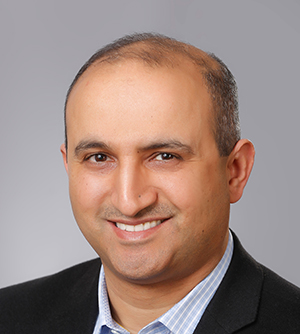
Moussa Ayyash is a Professor in the Department of Computer Science at Chicago State University (CSU), within the College of Arts & Sciences. He serves as the Director of the Center for Integrated Networked Systems and Emerging Research (CINSER), leading cutting-edge research in wireless and networked systems. His research focuses on wireless communications , particularly visible light communications (VLC) , Internet of Things (IoT) , network security , and the integration of artificial intelligence in networking. His work explores coexistence strategies for heterogeneous networks, edge computing for cyber-physical systems, and next-generation 6G indoor flying networks. He has published extensively in top-tier IEEE journals, with a recent emphasis on AI-driven network optimization, hybrid RF-VLC systems, and secure, jamming-resilient IoT communications. Analysis of his recent publications reveals a strong trend toward intelligent, secure, and energy-efficient network architectures. His work bridges theoretical innovation with practical applications in education, healthcare, and transportation, often leveraging machine learning and deep reinforcement learning to solve complex networking challenges in dynamic environments. Fulbright Scholar Program Application (2023) Fulbright Specialist Award (Jordan, 2022) Fulbright Specialist Award (Iceland, 2018) Dr. Ayyash is a principal or co-principal investigator on multiple major federally funded grants, including projects sponsored by the National Science Foundation (NSF) , U.S. Department of Transportation , National Security Agency (NSA) , and the Department of Defense . His grants support initiatives in semiconductor education (Mic2ExL), broadband equity (ABELINC), navigation security (CARNATIONS), and cybersecurity education (GenCyber, SFS). These projects highlight his leadership in both research and educational outreach, often involving student training and community engagement. He leads the Center for Integrated Networked Systems and Emerging Research (CINSER), a research hub focused on advancing technologies in networked systems, cybersecurity, and emerging communication paradigms. His team collaborates on interdisciplinary projects involving AI, IoT, and resilient network design.
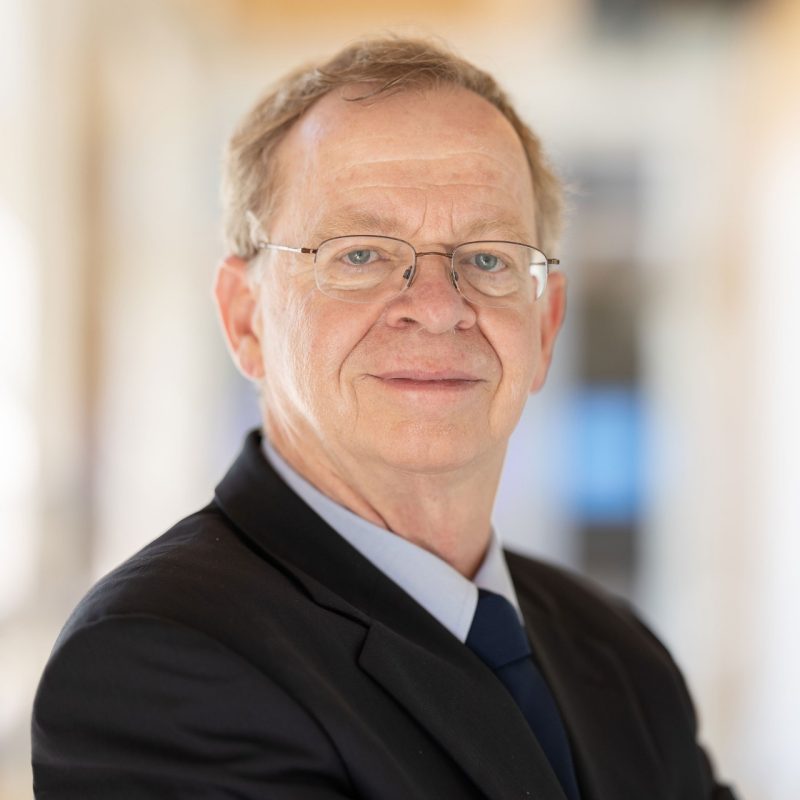
Younghyun Kim is an Associate Professor in the Department of Electrical and Computer Engineering at Purdue University. His research spans interdisciplinary domains including machine learning, edge computing, IoT security, and wearable medical devices, with a notable emphasis on agricultural technology via dairy cattle monitoring systems. Institution: Purdue University Department: Electrical and Computer Engineering Academic Rank: Associate Professor Kim's work focuses on energy-efficient systems, hardware-software co-design, and security mechanisms for IoT and medical devices. His recent publications highlight applications in dairy cattle health monitoring, virtual reality authentication, and distributed edge AI architectures. His 15 most recent articles reflect trends in agricultural IoT (e.g., MooBot, MmCows), secure device pairing (e.g., VoltKey, AeroKey), edge computing (e.g., Content-aware input scaling), and energy-efficient hardware (e.g., AxFTL, SAADI). Notable subfields include precision livestock farming, federated learning, sensor fusion, homomorphic encryption, hardware reverse engineering, and low-power design. Email: younghyun@purdue.edu
Jeffrey H. Reed is the Willis G. Worcester Professor in the Bradley Department of Electrical and Computer Engineering at Virginia Tech. His work focuses on advanced wireless communication systems, including cognitive radio, software-defined radio, and 5G/6G network architectures. He leads research in signal processing, spectrum sharing, and wireless security, with a strong emphasis on practical implementations and standards compliance. Education: Ph.D. in Electrical Engineering, University of California, 1987. His research interests span: Cognitive Radio and Dynamic Spectrum Access AI-Driven Network Management (e.g., O-RAN xApps) Secure Wireless Systems and Anomaly Detection Positioning & Geolocation Technologies Non-Terrestrial Networks (NTN) Integration Recent publications highlight advancements in 5G/6G positioning systems, interference mitigation, and reconfigurable intelligent surfaces (RIS). His work bridges theoretical foundations with real-world validation, e.g., experimental testing of 3GPP-compliant 5G positioning systems. Dr. Reed collaborates with industry and policymakers through initiatives like ASCENT (spectrum coexistence toolset) and the Open AI Cellular (OAIC) testbed. His contributions address challenges in spectrum policy, emergency communication networks, and military-civilian communication integration.
Hassan Malik is an Associate Professor at the University of East Anglia's School of Computing Sciences. Previously, he held roles as Senior Lecturer at Edge Hill University and Lecturer at the University of Essex. His academic background includes a PhD in Electronic Engineering (University of Surrey, 2017), MSc in Wireless Communication Engineering (University of Oulu, 2012), and BE in Information and Communication Systems (NUST, 2009). He is a Fellow of the Higher Education Academy and holds a 'Researcher to Innovator' diploma from SETsquared Partnership. His research focuses on wireless networking, energy-efficient systems, IoT, AI-driven communication networks, vehicular networks, and smart city applications. He has contributed to projects like the Innovate UK-funded 'Secure Platform for Authenticated and Reliable data exchange in Connected vehicles (SPARC)'. Key areas include NB-IoT, URLLC, fog computing, and privacy-preserving models in healthcare and smart grids. Research trends in his articles emphasize IoT/IoMT security, 5G/6G innovations, and AI integration in networks. His work addresses challenges in resource management, interference mitigation, and energy efficiency for emerging technologies. Awards: Fellow of the Higher Education Academy (HEA) He advises on PhD students and has led projects involving industry collaborations. His expertise aligns with UN SDGs related to sustainable cities, health, and innovation.
Sergio Moreschini is a Postdoctoral Researcher in Computing Sciences, focusing on Artificial Intelligence, Edge Computing, and MLOps. His research explores the integration of AI techniques in microservices, cloud-edge continuum systems, and distributed home automation frameworks. He has contributed to foundational studies such as a Systematic Mapping Study on AI in Microservices Life-Cycle and developed frameworks like Flexconnect for mobile computational offloading. Education: He holds a Bachelor of Science in Technology (2012) and a Higher-Degree in Computing from Università Degli Studi Roma Tre (2016). His work aligns with UN Sustainable Development Goal 4 (Quality Education) through contributions to educational tools and methodologies. Research Interests : Moreschini investigates AI lifecycle management, edge-cloud system orchestration, vulnerability analysis in open-source components, and generative AI applications in software architecture. Key areas include fault-tolerant distributed systems, cognitive cloud continuum frameworks, and MLOps tool ecosystems. Recent Trends in Publications : Recent work emphasizes MLOps adoption challenges, self-organizing edge computing for visual SLAM, and best practices in resource provisioning for cognitive systems. He has explored trade-offs between continuous training and transfer learning in edge environments, and evaluated vulnerability severity metrics in open-source software. Awards : Won the Best Paper Award in 2022 for contributions to industrial edge service scheduling. Data Contributions : Co-created datasets like RARE (cloud-native memory anomalies) and CIVIT (integral microscopy recordings). His collaborative projects include the 6GSoft initiative for edge-cloud continuum systems and the OSSARA tool for open-source component risk assessment. Active in international conferences like IoT and SEAA, he bridges academic research with industrial applications in edge computing and AI infrastructure.
Sze Chai Kwok is an Associate Professor of Cognitive Neuroscience at Duke Kunshan University and a Faculty Network Member of the Duke Institute for Brain Sciences. He holds a Ph.D. from the University of Oxford (2008) and maintains an active research program in cognitive neuroscience with a focus on memory mechanisms, metacognition, and neuropsychiatric applications. His research explores neural basis of temporal memory, metacognitive introspection, and episodic recall using multimodal approaches including primate neurophysiology, human neuroimaging (fMRI/EEG), and computational modeling. Key interests include: Neural replay mechanisms in memory consolidation Prefrontal and parietal contributions to metacognition Schizophrenia-related memory deficits Cross-species cognitive architectures Publication analysis reveals consistent focus on: 1) neural correlates of memory confidence/vividness, 2) primate-to-human translational models, 3) clinical applications in schizophrenia, and 4) innovative neuroimaging methodologies across 50+ publications. Awards and honors include: Jiangsu 333 Talent Program (2024) Kunshan Shortage Talent Program (2023) Jiangsu Qinglan Award (2021) Elected member of Memory Disorders Research Society (2021) Young IBRO Regions Connecting Award (2020) Shanghai Pujiang Talent Award (2016) Collaborates globally on primate neuroimaging initiatives including PRIMatE Data Exchange (PRIME-DE) consortium. Contributes to open neuroscience resources through Neurovault and international databases.
Karl-Erik Årzén serves as Professor and Head of the Department of Automatic Control at Lund University's Faculty of Engineering. He concurrently holds the position of Co-director for the Wallenberg AI, Autonomous Systems and Software Program (WASP) and maintains Fellow status with the Royal Swedish Academy of Engineering Science (IVA), alongside advisory roles at SMaRC and Aalto University. His research operates at the convergence of control theory and computer engineering, specializing in dynamic feedback-based resource management (feedback computing) for embedded systems and cloud infrastructures. Additional expertise spans embedded control, real-time systems, cyber-physical systems, and domain-specific programming languages for control applications, demonstrating consistent bridging of theoretical control frameworks with computational implementation challenges. Recent publication trends reveal intensive focus on applying control methodologies to distributed resource allocation, evidenced by works on real-time application offloading, auction-based storage allocation, and reinforcement learning-driven cloud auto-scaling. These contributions critically address scalability and performance challenges across computer science, telecommunications, and next-generation 6G network architectures. Scientific recognition includes: Best Paper Award (2018) for Predictability and Cloud Application research Best paper award (2018) Best Paper Award at RTNS 2016 Best Paper Award at RTCSA 2004 With 35 supervised students to date, Årzén currently serves as primary supervisor for PhD candidate Ahmed Al Bayati. His research portfolio includes active leadership in the Vinnova-funded AORTA project (2023-2025), Robust and Secure Control over the Cloud initiative (2021-2026), and the long-term WASP program (2015-2029), alongside completed projects like AutoDC and Testing Autonomous Control-Based Software Systems. He actively contributes to the ELLIIT research environment and shapes Lund University's AI and Digitalization profile area alongside LU's Natural and Artificial Cognition initiative.
Yulia Razmetaeva serves as a Researcher at Uppsala University's Department of Theology within the Centre for Multidisciplinary Research on Religion and Society (CRS), while concurrently holding an Associate Professor position at Yaroslav Mudryi National Law University in Kharkiv. Her dual affiliation bridges Scandinavian and Eastern European academic traditions in law and digital ethics. Her educational background features a 2009 PhD in Law with dissertation on Human Rights as Fundamental Value of Civil Society , followed by promotion to Associate Professor in Theory and Philosophy of Law in 2020. Her research examines the intersection of artificial intelligence, human rights, and legal philosophy through multiple international projects including Wallenberg AI initiatives and an EU Jean Monnet Centre of Excellence. Razmetaeva's scholarly output reveals a systematic investigation of algorithmic justice across legal systems. Her publications consistently address privacy erosion in predictive systems, rule of law challenges in automated decision-making, and the philosophical foundations of digital rights. The research demonstrates strong interdisciplinary orientation connecting legal theory with computer science ethics and political philosophy. Fellow, Information Society Law Center (University of Milan), 2023-2025 Royal Swedish Academy of Sciences (KVA) Scholarship Researcher, 2022 CEU Democracy Institute Fellowship Researcher, Budapest, 2022 Visiting Fellow, Uppsala Forum on Democracy Peace and Justice, 2022 As Project Leader for the European Fundamental Values in Digital Era initiative and participant in Wallenberg AI programs, Razmetaeva directs significant research funding while maintaining active involvement in Ukrainian legal education despite the ongoing conflict. Her work with the Center for Law, Ethics and Digital Technologies in Kharkiv continues through international partnerships. Razmetaeva contributes to several working groups including Artificial Intelligence, Democracy, and Human Dignity at Uppsala, while maintaining leadership roles in Ukrainian digital law initiatives. Her current research focuses on algorithmic addiction frameworks and phenomenological approaches to digital experience within the WASP-HS program.
Dr. Bertalan Forstner is an Associate Professor and Deputy Head at the Department of Automation and Applied Informatics , Budapest University of Technology and Economics (BME). He co-leads the Applied Mobile Research Group (AMORG) within the Applied Computer Science Group, where his work bridges robotics, IoT, and cognitive infocommunication. Research Interests: Swarm Robotics & Aerial Systems: uniform dispersal algorithms for large fleets of low-cost flying robots, obstacle avoidance, and area-filling with minimal sensing. Internet of Things & Model-Driven Engineering: multi-domain IoT architectures, model-based unification of heterogeneous mobile platforms, and energy-efficient offloading. Cognitive Infocommunication & Educational Technology: adaptive learning environments, biofeedback-driven serious games, and AI-enhanced assessment tools using item-response theory. Distributed & Peer-to-Peer Systems: semantic overlays, mobile P2P protocols, and performance evaluation simulators. Research Impact & Trends: Across more than 50 peer-reviewed works (2005-2025), a clear evolution is visible: early efforts focused on P2P and mobile networking transitioned into swarm-robotics algorithms, which in turn informed IoT and cognitive-systems research. Recent 2025 papers emphasize quantitative service-level analytics, user-behavior classification, and synthetic data generation for cognitive modeling, underscoring a trajectory toward data-driven, AI-enhanced, human-centric systems. Scientific Awards & Recognitions: No specific awards are listed in the provided text. Advising & Funding: While individual PhD students are not named in the source, Dr. Forstner’s long-running research projects in AMORG and sustained publication output imply active supervision and grant support. Details on specific grants or doctoral candidates are not disclosed. Laboratory & Teams: He leads the Applied Mobile Research Group (AMORG) and collaborates closely with the Applied Computer Science Group at BME, maintaining facilities in building Q, room B227 on the Magyar tudósok körút campus.
Giovanni Iacca is an Associate Professor at the Department of Information Engineering and Computer Science (DISI) of the University of Trento, Italy, where he leads the Distributed Intelligence and Optimization Lab (DIOL). He serves as Coordinator of the Master's Degree in Computer Science and Deputy Director of the Information Engineering and Computer Science Doctoral School. Dr. Iacca has over 15 years of industrial experience in mechatronics and optimization applied to engineering, logistics, and scheduling. Dr. Iacca received his PhD in 2011 from the University of Jyväskylä, Finland, and his MSc in 2006 from the Technical University of Bari, Italy. His academic career includes: 2021-present: Associate Professor, University of Trento 2018-2021: Tenure-track Assistant Professor, University of Trento 2017-2018: Postdoc, RWTH Aachen University, Germany 2013-2016: Postdoc, EPFL and University of Lausanne, Switzerland 2012-2016: Postdoc, INCAS³, The Netherlands Dr. Iacca's research bridges fundamental and applied aspects of artificial intelligence with particular emphasis on evolutionary computation and explainable AI. His work spans machine learning, optimization techniques, distributed systems, and their practical implementations. Recent research directions include federated learning, interpretable reinforcement learning, neural architecture search, and optimization for resource-constrained environments. He teaches courses on Computer Architectures, Introduction to Machine Learning, Bio-Inspired Artificial Intelligence, Optimization Techniques, and AI in Medicine. His publication record demonstrates a strong trend toward developing transparent and efficient AI systems. Recent papers focus on making complex AI models more interpretable while maintaining performance across diverse domains from healthcare to supply chain management. His work on evolutionary approaches to explainable AI has gained significant recognition in the computational intelligence community. Scientific Awards and Editorial Roles EvoApplications Best Paper Award (2017) UKCI AWARENESS Best Paper Award (2012) IEEE CIS Outstanding Student-Paper Award (2011) IEEE Senior Member (2023) Associate Editor, Evolutionary Intelligence (2024) Editorial Board Member, Memetic Computing (2024) Associate Editor, IEEE Transactions on Evolutionary Computation (2023) Dr. Iacca has successfully supervised multiple PhD students including Andrea Ferigo, Hyunho Mo, and Leonardo Lucio Custode. His research is supported by various grants and collaborations with industry partners like MyAv. He serves as chair for PPSN 2026 and has organized workshops including the Workshop on Awareness and Consciousness in Artificial Intelligence (ACAI). As leader of the Distributed Intelligence and Optimization Lab (DIOL), Dr. Iacca oversees a research team working at the intersection of evolutionary computation, machine learning, and distributed systems. The lab focuses on developing novel algorithms that balance computational efficiency with interpretability, with applications spanning from embedded systems to large-scale distributed computing environments. Current projects include interpretable reinforcement learning, federated neuroevolution, and optimization for edge computing.
Richard Yu is a Professor at the Carleton School of Information Technology, Carleton University. His research focuses on cross-layer design in wireless systems, security in wireless networks, green information technologies, and multimedia over wireless networks. He holds a Ph.D. from the University of British Columbia and is a Professional Engineer (P.Eng). His work integrates machine learning, edge computing, and reinforcement learning to address challenges in vehicular networks, autonomous systems, and IoT. Education Ph.D., University of British Columbia Research Interests Professor Yu’s research spans wireless communication systems , edge computing , and AI-driven optimization . He explores novel paradigms such as federated learning for industrial IoT, secure UAV-assisted satellite networks, and generative AI for video understanding. His work emphasizes practical applications in autonomous vehicles, smart infrastructure, and industry 4.0 systems. Recent Trends in Publications His recent articles highlight advancements in reinforcement learning frameworks for resource allocation, safety-critical AI in video generation, and cross-modal fusion for embodied agents. He also investigates hybrid NOMA/OMA systems and quantum-inspired algorithms for next-generation networks. Advising & Grants No specific advisees are listed, but his research is supported by grants focusing on edge intelligence, vehicular networks, and secure computing. Labs & Teams Associated with Carleton’s School of Information Technology research groups, focusing on wireless systems and AI for industrial applications.
Dr. D. Brian Larkins is an Associate Professor and Chair of the Computer Science department at Rhodes College in Memphis, Tennessee. He specializes in parallel computing, high-performance computing (HPC), and distributed systems. His research focuses on optimizing runtime systems, work stealing algorithms, and leveraging network offload hardware to enhance parallel application performance. He has been recognized with the Clarence Day Award for Outstanding Teaching in 2021, reflecting his dedication to pedagogical innovation in computer science education. Before joining Rhodes College in 2015, Larkins worked at Bell Laboratories and several startups, focusing on network security, machine learning, and video streaming technologies. He holds a B.S., M.S., and Ph.D. in Computer Science and Engineering from The Ohio State University, with a focus on Parallel and Distributed Computing. As the NSF-funded XSEDE Campus Champion at Rhodes, Larkins supports faculty and students in accessing large-scale HPC resources nationwide. He also leads the installation of a 2,112-node HPC cluster in Briggs Hall for institutional research use. His teaching philosophy emphasizes blending theory with practical problem-solving to cultivate analytical thinkers. Key research contributions include frameworks for distributed data structures (e.g., Global Trees), scalable work stealing mechanisms, and GPU acceleration of scientific systems like the Advanced Regional Prediction System (ARPS). His work has been published at top venues such as the International Conference on Parallel Processing (ICPP) and the ACM/IEEE Supercomputing Conference (SC). Larkins has pioneered FPGA integration into computer science curricula and explored cognitive apprenticeship frameworks in robotics education. His current projects aim to repurpose network hardware for efficient distributed computing and dynamic load balancing.
Dr. Shuo Li is a Lecturer in the School of Engineering at RMIT University, Australia. She holds a B.Eng. (2009) and Ph.D. (2014) from City University of Hong Kong. Her research focuses on telecommunications, underwater optical networks, network design, and edge computing. She has held academic roles at RMIT since 2011 and Tianjin University (2014–2017). Education: Ph.D. and B.Eng. in Engineering from City University of Hong Kong. Research Interests: 6G cellular networks, underwater optical communication, network security, and edge computing architectures. Dr. Li leads projects on 6G mobile cellular design, underwater optical networks, and edge computing resource management. She has received awards including the Research Tuition Scholarship (2013) and CityU Mainland Scholarship (2005–2009). Her work emphasizes practical applications, such as developing web-based network design tools and security frameworks for edge computing. Recent Projects: 6G architecture development, underwater optical wireless systems, and zero-trust security in multi-access edge computing. Supervision: Active in guiding PhD/MEng students on topics like optical interconnects for data centers and edge computing security. She collaborates on industry-focused research and is available for consulting in Australia and internationally. Her work bridges theoretical advancements with real-world network challenges.
Fabio Del Missier is an Associate Professor in General Psychology at the University of Trieste within the Department of Life Sciences . He coordinates the Memory & Decision Laboratory and holds teaching roles in Memory and Cognitive Control , Cognitive Enhancement , and Environmental Psychology programs. His affiliations span multiple doctoral boards including Neuroscience and Cognitive Sciences and Psychological Sciences . Education : PhD in Psychology from University of Trieste, postdoctoral experience at University of Trento and ICT-IRST (Bruno Kessler Foundation) Research Focus : Judgment and decision-making under memory constraints, executive control in complex tasks, environmental psychology, and cognitive aging His research program investigates two primary domains: Cognitive Bases of Decision-Making – examining attentional processes, memory structuring, and individual differences in decision competence Memory & Executive Control – studying retrieval interference, cognitive strategies, and environmental influences on memory tasks Recent trends in his 15 most recent publications reveal integration of environmental psychology with decision science , including restorative effects of nature on cognition and pro-environmental behavior mechanisms. He explores prospective memory in aging contexts and cognitive offloading strategies. Applied work extends to disaster psychology and economic decision-making frameworks. Grant Participation includes active roles in: WASTEREDUCE – integrated waste reduction in protected areas PRO-BENE-COMUNE – university community well-being promotion Donations for Scientific Instruments – technical resource development His lab includes Marta Stragà (post-doc) and Irene Florean (PhD student). Collaborations span Timo Mäntylä (Stockholm University), Wändi Bruine de Bruin (University of South California), and Carlo Fantoni 's active perception laboratory at the same department.