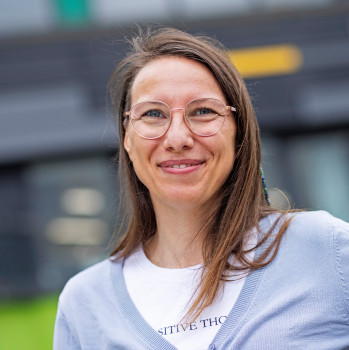
Dr. Elisabetta Versace is a Senior Lecturer (Associate Professor) at Queen Mary University of London, affiliated with the School of Biological and Behavioural Sciences. She is part of the Centre for Brain and Behaviour and the Centre for Biodiversity and Sustainability. Her research focuses on animal cognition, predispositions, experimental evolution, and early development. Key interests include crossmodality, dance science, and positive psychology. Her work examines innate and learned behaviors in animals, particularly in chicks, tortoises, and insects, exploring topics like social preferences, nociception, and tactile perception. Dr. Versace has secured significant funding from institutions such as the Leverhulme Trust, Royal Society, and BBSRC. Notable grants include a £269,334 Leverhulme Trust grant (2021–2026) on generalization using sparse data and a Royal Society fellowship (2021–2024) for studying induction problems in animals and artificial systems. Her research outputs span robotics applications in agriculture, crossmodal perception in tortoises, and foundational questions in cognitive development. She leads the Prepared Minds Lab (preparedmindslab.org), advancing interdisciplinary studies in animal behavior and artificial intelligence.
Dr. Dan Jazby is a Senior Lecturer in the School of Education at RMIT University, specializing in Mathematics Education with a focus on teacher noticing and decision-making processes. His research integrates ecological psychology and Multimodal Learning Analytics to analyze how primary school teachers adapt lessons mid-instruction. He explores human-centered design methods for educational resource development and has industry experience as a teacher and curriculum developer in both Australia and Japan. Research interests include curriculum design, education systems, and specialist studies in education, with an emphasis on ecological psychology, teacher cognition, and classroom environment interactions. His work examines how educators perceive and respond to dynamic classroom cues to enhance in-the-moment decision-making skills. Recent articles highlight investigations into tactical noticing of student mathematical thinking, mid-lesson adaptations, and the role of video data in educational research. While no specific awards are listed, his contributions to understanding teacher improvisation and adaptive pedagogy demonstrate significant scholarly impact. Dr. Jazby is open to supervising Masters Research and PhD students, focusing on mathematics education and teacher development. He emphasizes practical applications of research through collaborations with educational institutions and policymakers, aiming to bridge theory and classroom practice.
Mirta Galesic is a Professor at the Santa Fe Institute and Resident Faculty at the Complexity Science Hub (CSH) in Vienna, where she co-leads the Collective Minds research group. She is also External Faculty at the Vermont Complex Systems Center, University of Vermont, and an Associate Researcher at the Harding Center for Risk Literacy, University of Potsdam. Her work bridges cognitive science, social psychology, and complexity science to understand how individuals and groups adapt to complex societal challenges. Her research focuses on collective adaptation , belief dynamics , social learning , and opinion formation . She develops empirically grounded computational models to study how cognitive mechanisms interact with social environments to generate complex social phenomena. Her interests include how people perceive and respond to uncertainty, how collectives solve problems, and how network structures evolve in response to changing problems. The 15 most recent publications reveal a strong trend toward integrative, interdisciplinary frameworks. They combine cognitive models with network science and data-driven analysis to explore belief change, social sampling, hate speech dynamics, and collective intelligence. A central theme is the wisdom of the crowd and its limitations, especially in polarized or complex information environments. Her work increasingly applies formal modeling to real-world issues such as election forecasting, science communication, and algorithmic fairness. ERC Advanced Grant (2024), €3 million over 5 years Mirta Galesic has received major research funding, most notably the prestigious ERC Advanced Grant in 2024, which supports her project on collective adaptation. She collaborates extensively across institutions, including the Santa Fe Institute, Max Planck Institute, and University of Potsdam. While no formal students are listed, she leads and mentors researchers within the Collective Minds group at CSH. She has been involved in organizing major events such as NetSci 2023 and CSH Winter Schools, contributing to training and community building in network and complexity sciences. She is a key figure in the Collective Minds research group at the Complexity Science Hub, which investigates how cognitive and social mechanisms give rise to collective behavior. The group uses experimental, survey, and computational methods to study belief dynamics, social influence, and adaptive problem-solving in teams and societies. Her work is highly collaborative, involving interdisciplinary teams from physics, computer science, psychology, and sociology.
Ionut Anghel is an Associate Professor at the Department of Computer Science within the Faculty of Automation and Computer Science at Technical University of Cluj-Napoca, Romania. His research spans smart energy systems, blockchain applications, healthcare technologies, and artificial intelligence, with numerous publications in high-impact journals and conferences from 2008 to 2025. He maintains strong collaborative relationships with researchers across Europe, particularly with Tudor Cioara, Ioan Salomie, and Marcel Antal. Dr. Anghel's research interests focus on the intersection of computer science and energy systems, with particular emphasis on smart grid optimization, peer-to-peer energy trading mechanisms, blockchain applications for energy management, and AI-driven solutions for healthcare. His work demonstrates a consistent trajectory from foundational research in data center optimization to current cutting-edge work on federated learning for renewable energy prediction and AI-assisted healthcare solutions. His recent publications show increasing focus on integrating large language models with digital twin technologies for energy applications. His scholarly contributions demonstrate significant impact in both theoretical frameworks and practical implementations, with publications in IEEE Access, Sensors, Future Internet, and other reputable venues. The breadth of his work spans from theoretical game theory applications to concrete healthcare platform implementations, reflecting a versatile research portfolio that bridges multiple domains. Dr. Anghel has been actively involved in European research initiatives, particularly those focused on energy systems and healthcare technologies, with recent work examining transitional care pathways and cognitive decline management through innovative technological approaches.
Wei Liang is a researcher affiliated with Northwestern Polytechnical University , Lancaster University , and University of Southampton . His work spans wireless communication systems, with a focus on integrated sensing and communication (ISAC) , NOMA (Non-Orthogonal Multiple Access) , and UAV-assisted mobile networks . Research Interests : Designing intelligent resource allocation algorithms, secure transmission mechanisms, and cooperative communication frameworks for next-generation networks. Collaborative Focus : Frequent collaborations with Zhu Han , Soon Xin Ng , and Ang Gao on 5G/6G-enabled systems. Recent publications (2024-2025) emphasize predictive beamforming in ISAC systems, multi-UAV optimization , and deep reinforcement learning for spectrum sharing. Trends include OTFS modulation for Doppler mitigation, heterogeneous multi-agent learning , and optimal transport theory for UAV networks.
Emily Walshe is an Associate Professor at the B. Davis Schwartz Memorial Library and an Adjunct Professor in the College of Information and Computer Science at Long Island University. She serves as a Reference Librarian and is actively involved in academic discourse on digital culture and information technologies. Research Interests: Her work centers on digital ethnography, informatics, and the societal impact of digital technologies. She critically examines the role of libraries in the digital age, cognitive effects of technology reliance, digital literacy, and the ethics of digitization. Her scholarship often bridges library science with broader philosophical and educational concerns. Publication Trends: Her publications, appearing in journals like portal: Libraries and the Academy and The Christian Science Monitor , reflect a consistent theme: a critical interrogation of how digital tools reshape knowledge, memory, and academic practice. She emphasizes caution against uncritical adoption of technology in education and research. Scientific Awards: Member, Beta Phi Mu International Library and Information Studies Honor Society Phi Eta Sigma, National Honor Society for Freshman Scholarship Advising and Grants: While no formal advisees or grant funding are mentioned in the text, her active participation in honors education conferences suggests engagement with mentored learning and academic development. She is affiliated with the National Collegiate Honors Council and the National Coalition Against Censorship, indicating a commitment to academic freedom and intellectual inquiry. Labs and Teams: No specific labs or research teams are mentioned. However, her work in digital library interoperability and academic self-documentation implies collaboration within library and information systems communities, particularly around initiatives like RePEc.
Hanna Kiri Gunn is an Associate Professor of Applied Ethics in the Philosophy Department at the University of California, Merced, within the School of Social Sciences, Humanities and Arts. Previously, she served as a Mellon Assistant Professor of Philosophy at Vanderbilt University during the 2018-2019 academic year. Gunn completed both her PhD and MA in Philosophy at the University of Connecticut between 2013 and 2018. Her scholarly work spans two primary research domains: applied ethics focused on technology, new media, and the broader internet; and social epistemology examining normative epistemology, public discourse, epistemic agency, and the health of epistemic communities. Gunn teaches courses in ethics and technology, bioethics, and epistemology, bringing theoretical frameworks to bear on contemporary issues in digital culture. Gunn's publications reveal a consistent focus on the ethical and epistemological challenges posed by digital technologies, with special attention to how online environments shape our cognitive and social practices. Her work demonstrates how algorithmic curation, personalization, and digital communication practices affect individual epistemic agency and collective knowledge formation. Among her notable contributions are collaborative projects including the edited volume 'Gaslighting: Philosophical Approaches' (2025), and the paper 'Near-Term Artificial Intelligence and the Ethical Matrix' (2020) co-authored with data scientist Cathy O'Neil. She has also contributed to the 'TEQ Deck' project with the UCSC Center for Public Philosophy, creating educational card games about technology ethics, and co-organizes PhilMod, a research group examining philosophical implications of content moderation. Gunn maintains active engagement beyond academia, having become a UCCE Master Gardener of Mariposa County in May 2024, demonstrating her commitment to practical community engagement alongside her theoretical work.
Ciara Greene serves as an Associate Professor in the School of Psychology at University College Dublin, where she leads the Attention and Memory Laboratory. Her academic work bridges theoretical cognitive psychology with practical applications in legal settings, education, and mental health. Her research focuses on the adaptive nature of human memory systems. Greene investigates how memory's flexibility and fallibility actually serve evolutionary purposes, challenging the common misconception that memory should function as a perfect recording device. Her work examines memory reconstruction processes, the relationship between memory and imagination, and the implications of memory fallibility in eyewitness testimony and legal contexts. She explores concepts like cognitive offloading through technology, the benefits of forgetting for mental efficiency, and how selective memory contributes to psychological wellbeing. Greene co-authored the popular science book Memory Lane: The Perfectly Imperfect Ways We Remember , which introduces readers to cutting-edge memory science while explaining why our 'flawed' memories help us survive and thrive. The book addresses common memory misconceptions and presents research showing how memory distortion occurs through the reconstructive process, using the metaphor of building and rebuilding a Lego tower to explain how memories are actively constructed rather than retrieved.
Emilian Mihailov is an Associate Professor at the Faculty of Philosophy, University of Bucharest, and Director of the Research Centre in Applied Ethics since 2018, with significant international collaborations including the Oxford Uehiro Centre for Practical Ethics and University of Basel's Institute of Biomedical Ethics. His educational background includes: Doctoral degree in Philosophy (SUMMA CUM LAUDE), University of Bucharest (2009-2012) Visiting PhD researcher, Oxford Uehiro Centre for Practical Ethics, University of Oxford (2012) Master Degree in Philosophy, University of Bucharest (2008-2009) Bachelor Degree in Philosophy, University of Bucharest (2004-2008) Mihailov's research integrates moral philosophy, applied ethics, neuroethics, and moral psychology to address contemporary challenges including moral judgment frameworks, neuroenhancement ethics, and the impact of technologies on human identity, with strong emphasis on bridging theoretical philosophy with empirical bioethics. His 2020-2022 publications reveal concentrated neuroethics expertise examining neurotechnologies' effects on narrative identity, cognitive enhancement ethics across domains like chess, and methodological innovations in empirical bioethics through digital tools, while maintaining Kantian foundations in moral theory. Mihailov has secured major research funding including Swiss National Foundation grants for bioethics capacity building and Society of Applied Philosophy support for international workshops. He currently leads the exploratory project 'Ethics of Future Humans: Developing a Pluralist Framework for Evaluating Bioenhancement Technologies' and provided ethics consultancy to Romania's Health Commission on assisted reproductive technologies legislation. As Director of the Research Centre in Applied Ethics, he manages international collaborations with Oxford and Basel institutions, organizes high-impact workshops with leading philosophers like Peter Singer and Christine Korsgaard, and fosters interdisciplinary dialogue between philosophers, scientists, and policymakers on emerging ethical dilemmas.
Professor Yue Chen is a distinguished academic at the School of Electronic Engineering and Computer Science , Queen Mary University of London , holding the title of Professor of Telecommunications Engineering and serving as Director of Education . With expertise in wireless networking and smart energy systems, his research bridges theoretical innovation with practical applications in telecommunications infrastructure. BEng, MEng, PhD Member of Institution of Engineering and Technology (MIET) Senior Member of IEEE (SMIEEE) His research interests focus on Intelligent Radio Resource Management for wireless networks, cognitive and cooperative networking, heterogeneous networks (HetNet), smart energy systems, and Internet of Things (IoT) integration. His work emphasizes machine learning-driven optimization for next-generation communication systems and energy-efficient networks. Recent publications highlight trends in reinforcement learning for UAV-NOMA networks , energy-efficient IoT systems , and data-driven educational methodologies . These demonstrate cross-disciplinary innovation, merging telecommunications research with pedagogical experimentation and smart grid optimization.
Rik Smit is a Researcher at the Faculty of Arts , affiliated with the Research Centre for Media and Journalism Studies (CMJS) . His work bridges Digital Humanities , Media Studies , and Discourse Analysis , focusing on how Artificial Intelligence and algorithmic memory technologies shape societal narratives and individual memory practices. Key research themes : Interdisciplinary analysis of AI in journalistic discourse Memory as a digital and sociotechnical practice Platformization of cultural and entrepreneurial activities His publications address cross-cultural discourses on AI, algorithmic memory , and early web entrepreneurship , reflecting collaborations across institutions in the Netherlands, Brazil, and the US. Activities include academic presentations at international conferences and contributions to datasets like the Devising DigiD project.
Ella Peltonen is an Assistant Professor at the M3S research unit, University of Oulu, Finland. She joined the Ubicomp Oulu research centre and 6Genesis research programme in November 2018. Prior to this position, she was a postdoctoral researcher at the Insight Centre for Data Analytics in Cork, Ireland. She completed her PhD in the Nodes group at the University of Helsinki, Finland, working on the Carat project of collaborative energy diagnostics for mobile devices. Her educational background includes: PhD in Computer Science, University of Helsinki, Finland (Carat project on collaborative energy diagnostics) Ella Peltonen's research focuses on ubiquitous computing, large-scale data analysis, and applied machine learning. Her work particularly emphasizes everyday sensing and mobile and wearable devices. She aims to apply machine learning algorithms to large, complex data in real-time systems, with a focus on distributed machine learning and data analysis of smart devices. Her research spans various applications including energy consumption monitoring of mobile devices, wearable technology for measuring physiological signals, and exploring future sensing technologies. Peltonen has expressed interest in how future devices might sense human states, become smarter, and provide greater benefits, potentially through innovations like augmented reality glasses or subcutaneous chips. Analysis of her recent publications shows a strong focus on edge computing, vehicular networks, and sustainable computing systems. Her work bridges the gap between theoretical machine learning approaches and practical applications in transportation, healthcare, and environmental monitoring. Many of her papers address challenges in distributed systems, real-time data processing, and privacy-preserving techniques for edge intelligence. Her notable scientific awards include: Nominated to the list of 10 Rising Stars in Networking and Communications by N2 Women 2017 Selected as one of 50 Finnish Researchers by the Finnish Union of University Researchers and Teachers Nokia Scholarship 2015 and 2016 Jorma Ollila Grant 2018 Young Teacher of the Year 2012 Young Researcher of the Year 2015 Peltonen is actively involved in teaching and mentoring, with a teaching philosophy focused on supporting students' independent learning rather than lecturing from above. She enjoys guiding small groups where she can discuss topics together with students and get to know them personally. As a researcher, she describes herself as precise, detail-oriented, and committed to verifying the correctness of her work carefully. She values the combination of mathematical work with experimental work and creativity in technology, noting that research tasks are diverse and can apply different types of methodology. She is part of international research collaborations with several major universities worldwide, as required by Finnish Academy funding. Peltonen is also an advocate for diversity in technology fields, noting that technology is used by all kinds of people from various backgrounds, yet the producers of technology lack diversity. She has highlighted the importance of encouraging more women to pursue technology careers from an early age.
Dr Michelle Tornquist is a Lecturer in the Department of Psychology at the University of Liverpool, where she coordinates Research Methods for Clinical and Health Psychology and teaches across undergraduate and postgraduate programs including Social Psychology, Clinical Psychology, and Research Methods and Statistics. Her academic foundation includes a PhD in Social Psychology from the University of Sussex and a BSc (Hons) in Psychology from California State University Long Beach. Her educational background includes: PhD in Social Psychology, University of Sussex BSc (Hons) in Psychology, California State University Long Beach Dr Tornquist's research centers on self-regulation mechanisms and emotion regulation strategies , investigating how individuals manage thoughts, feelings, and actions to achieve goals. Her work examines the translation of emotion management into improved goal attainment and physical/mental wellbeing through multi-method approaches. She specifically explores beliefs about emotions in self-control performance, brief intervention impacts on health outcomes, and protective factors like nature exposure across diverse populations. This research bridges experimental psychology with real-world applications in health and clinical contexts. Analysis of her 2023-2025 publications reveals consistent focus on emotion regulation's role in self-control and wellbeing. Key trends include experimental studies on emotional reappraisal, mood-state effects on cognitive tasks, and pandemic-era interventions for affect regulation. Her work spans social psychology, health psychology, and cognitive science, with increasing emphasis on practical applications for mental health and professional development. No scientific awards or honors were documented in the provided information. While specific student advisees and grant details aren't listed, her active publication record and module coordination responsibilities indicate ongoing research supervision and potential external funding. Her teaching leadership in specialized modules like Research Methods for Clinical and Health Psychology suggests advanced research mentorship capacity. The available information does not reference any dedicated laboratories or formal research teams associated with Dr Tornquist's work.
Océane Fiant is a Research Fellow at COSTECH (Centre de recherche sur les domaines innovants de la connaissance), affiliated with the University of Technology of Compiègne. Her work bridges philosophy of technology, epistemology, and history of medicine with a specific focus on medical decision support systems and artificial intelligence integration in clinical practice. Her research interests center on the philosophical and historical dimensions of algorithmic decision-making in medicine. She investigates how technologies like AI transform medical reasoning, knowledge production, and clinical workflows, particularly through historical case studies such as pulmonary embolism diagnostics and depression rating scales. Her methodology uniquely combines historical analysis, empirical fieldwork, and conceptual philosophy to examine both contemporary AI systems and pre-digital medical algorithms. Her publication record demonstrates consistent scholarly output since 2017, with recent work focusing on explainable AI in pathology, contextual implementation challenges, and historical continuities in algorithmic bias. Her research has been presented at major international conferences including the Society for Philosophy and Technology biennial meetings. Fiant holds a doctorate in Epistemology and History of Science and Technology from Nantes University (2021), where her thesis examined medical decision automation through historical case studies. She has taught Epistemology and History of Science at both Nantes University and UTC, and was qualified for lecturer positions in Philosophy and Epistemology in 2022.