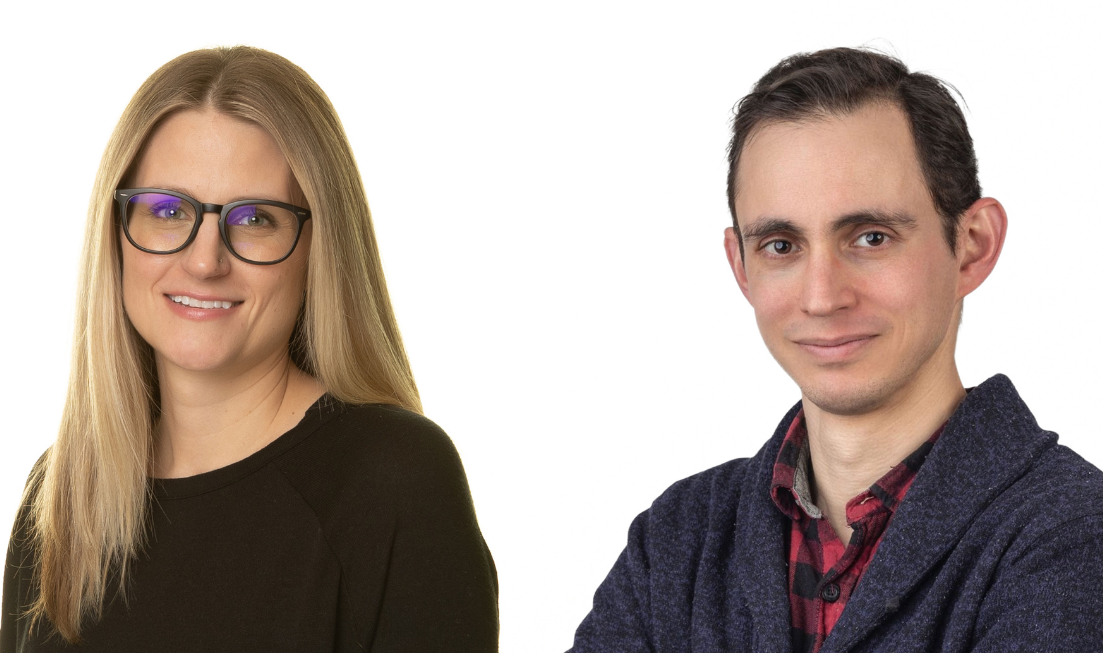
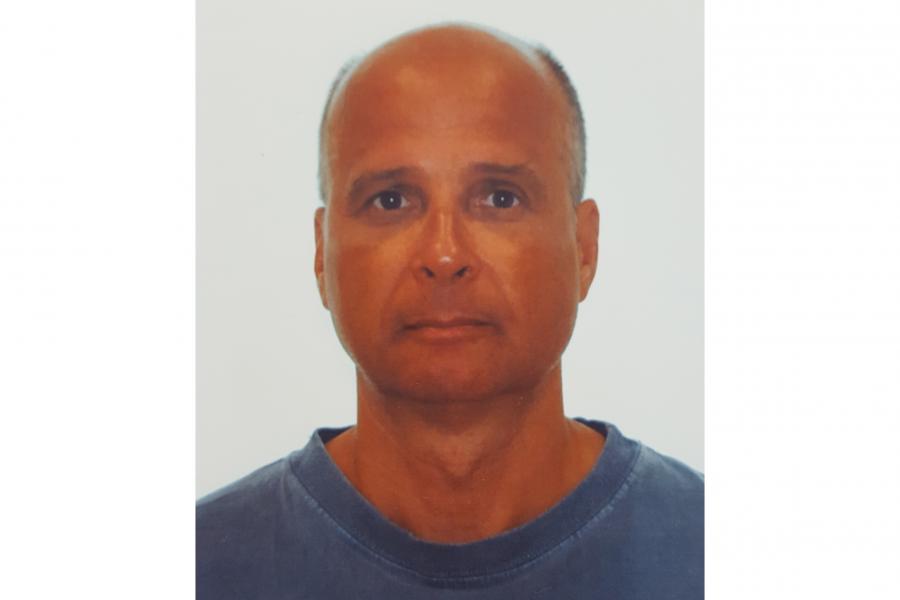
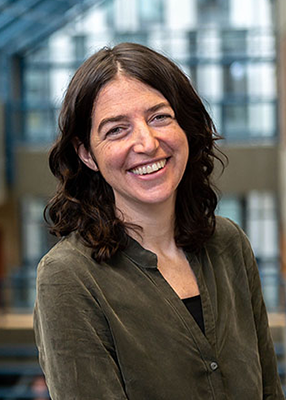
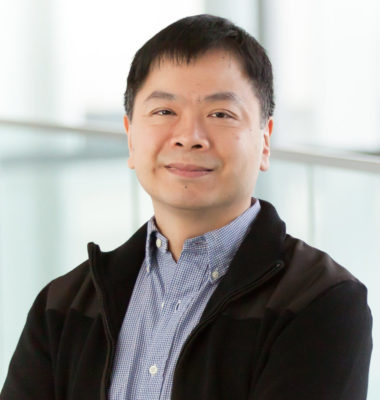
David Chalmers is a University Professor of Philosophy and Neural Science at New York University and co-director of the Center for Mind, Brain, and Consciousness. He is also an Honorary Professor of Philosophy at the Australian National University and co-director of the PhilPapers Foundation. His work bridges philosophy, cognitive science, and emerging technologies. Research Interests: Chalmers is best known for his work on the 'hard problem of consciousness'—the challenge of explaining subjective experience. His research spans philosophy of mind, metaphysics, epistemology, philosophy of language, and the foundations of physics and AI. He actively explores the implications of virtual reality, simulation theory, and large language models for philosophy and consciousness studies. Recent Research Trends: His recent publications focus on AI consciousness, the ethical treatment of AI systems, the simulation hypothesis, and the nature of thought in language models. These works reflect a growing engagement with artificial intelligence and digital metaphysics, positioning philosophy at the forefront of technological inquiry. Scientific Awards: While no specific awards are listed in the provided text, Chalmers is widely recognized as one of the most influential contemporary philosophers, particularly in philosophy of mind. Advising and Grants: He mentors students and postdocs, though specific names are not listed. His leadership in the Center for Mind, Brain, and Consciousness and the PhilPapers Foundation suggests active grant-funded research and academic collaboration. Labs and Teams: He co-directs the Center for Mind, Brain, and Consciousness at NYU and the PhilPapers Foundation , both of which support research, publications, and global philosophical discourse in philosophy of mind and related fields.
Yoshua Bengio is a Full Professor at the Université de Montréal, affiliated with the Department of Computer Science and Operations Research at the Faculty of Arts and Sciences. He is a pioneer of deep learning and a leading figure in AI safety. He co-founded Mila – Quebec Institute of Artificial Intelligence and serves as its scientific director. His work focuses on advancing AI technology while addressing ethical and safety challenges, including AI governance and catastrophic risk mitigation. Education: Ph.D. in Computer Science from McGill University (1991), postdoctoral studies at MIT. Research interests include deep learning, causal inference, AI ethics, and responsible AI development. He contributed to the Montreal Declaration for Responsible AI and leads the International Scientific Report on AI Safety. Recent articles emphasize AI safety frameworks, governance, and technical advancements in machine learning. Awards include the Turing Award (2018), Killam Prize (2019), and recognition as TIME's Most Influential Person (2024). He holds prestigious fellowships and is a member of the UN Scientific Advisory Board for Breakthrough Science and Technology. Affiliations include Mila, IVADO (as founding scientific director), and CIFAR programs. His work bridges academia, industry, and policy to ensure AI benefits humanity while minimizing existential risks.
Jonathan Cannon is an Assistant Professor in the Department of Psychology, Neuroscience & Behaviour at McMaster University's Faculty of Science. His research focuses on timing and rhythm in perception and action, with particular interest in timing-related neural dynamics in the basal ganglia, cerebellum, and supplementary motor area. His work combines mathematical modeling with experimental approaches to understand the neural basis of rhythm perception and production. Dr. Cannon's research interests span timing and rhythm perception , neural dynamics , dynamical systems theory , Bayesian cognition , neural oscillations , and autism research . His approach centers on formulating and simulating neurophysiological and cognitive models, drawing on dynamical systems theory and Bayesian cognitive frameworks. His work incorporates psychophysics, EEG experiments, and collaborations with experimentalists to investigate how the brain processes rhythmic information. Analysis of his recent publications reveals a strong focus on the intersection of rhythm perception, motor control, and autism spectrum disorder. His work demonstrates how beat perception co-opts motor neurophysiology, with particular attention to predictive processes in rhythmic cognition. His research shows reduced precision of motor and perceptual rhythmic timing in autistic adults, while also finding intact sequence learning abilities in certain contexts. Dr. Cannon teaches advanced courses including Machine Learning Methods for Brain Modelling and Neural Data Analysis (PSYCH 734), Computational Models in Neuroscience (NEUROSCI 3MN3), and Neuroscience Seminars. His teaching reflects his interdisciplinary approach that bridges mathematics, neuroscience, and cognitive science. Beyond his academic work, Dr. Cannon is an active musician who performs on violin and guitar, particularly in klezmer and folk music contexts. He has also demonstrated entrepreneurial spirit through founding Flying Leap Games and developing the storytelling game 'Wing It,' which successfully crowdfunded and reached numerous retailers.
Dr. Tristan A.F. Long is an Associate Professor in the Department of Biology at Wilfrid Laurier University's Faculty of Science in Waterloo, Ontario. A behavioral ecologist and evolutionary geneticist, he focuses on sexual selection and the role of female mate preference variation in evolutionary change. With teaching responsibilities for large introductory biology courses like BI111 and BI393, he has developed innovative active learning techniques using playing cards, iClickers, and role-playing games to teach population genetics and ecological principles. University of Western Ontario - BSc in Honours Ecology and Evolution (1999) University of Guelph - MSc in Zoology (2001) Queen’s University - PhD in Biology (2005) University of California Santa Barbara - Postdoctoral Fellow (2005-2009) University of Toronto - Postdoctoral Fellow (2009-2010) His research examines how female Drosophila melanogaster vary in their mating preferences and how these differences shape evolutionary trajectories. He has published extensively on reproductive plasticity, sexual conflict, and environmental interaction effects. His laboratory combines experimental evolution with computational modeling to explore genetic trade-offs and behavioral adaptations. Scientific awards include the Laurier Teaching Award for Sustained Excellence (2017). He has developed innovative classroom techniques like the Battle of the Beaks exercise for teaching adaptive evolution and an iClicker-based population genetics simulation using playing cards. His 2024 BI393 biostatistics course policy strongly discourages generative AI use due to concerns about educational integrity and environmental impact.
Irina Rish is a Full Professor at the Université de Montréal and a core academic member of Mila – Quebec Artificial Intelligence Institute, where she leads the Autonomous AI Lab. She holds a Canada Excellence Research Chair (CERC) and a CIFAR AI Chair, reflecting her leadership in foundational AI research. Her work is supported by major initiatives, including the U.S. Department of Energy’s INCITE project on Summit and Frontier supercomputers. PhD in AI, University of California, Irvine MSc in AI, University of California, Irvine MSc in Applied Mathematics, Moscow Gubkin Institute Her research focuses on machine learning, neural scaling laws, emergent behaviors in foundation models, continual learning, robustness, and neuroscience-inspired AI . She explores how AI systems can become more general, flexible, and aligned with human cognition. Her recent work investigates training dynamics in large language models, efficient pruning techniques, and the development of time-series foundation models. The analysis of her recent publications reveals a strong focus on scaling behaviors, continual adaptation, and robustness in AI systems . Her work spans theoretical understanding of training dynamics (e.g., zero-sum learning), practical optimization methods, and applications in climate modeling and mental health. She emphasizes open science, leading open-source projects and co-founding Nolano.ai to build efficient, compressed foundation models. Canada Excellence Research Chair (CERC) CIFAR AI Chair IBM Eminence & Excellence Award (2018) IBM Outstanding Innovation Award (2018) IBM Outstanding Technical Achievement Award (2017) IBM Research Accomplishment Award (2009) Irina Rish advises a large group of PhD and Master’s students across Université de Montréal, McGill, and Concordia. She leads major research grants and collaborates internationally on HPC-based AI research. She is also the co-founder and CSO of Nolano.ai, driving innovation in efficient AI systems. She leads the Autonomous AI Lab, which focuses on building large-scale foundation models, understanding neural scaling laws, and developing bio-inspired learning systems. She actively organizes reading groups on scaling, continual learning, and out-of-distribution generalization, fostering a collaborative research environment.
Dr. Ken Ferens is an Assistant Professor in the Department of Electrical and Computer Engineering at the Price Faculty of Engineering, University of Manitoba. He serves as the Computer Engineering Champion in the Centre for Engineering Professional Practice and Engineering Education and directs the Applied Cognitive Intelligence (ACI) Research Group. Dr. Ferens is a senior member of the Institute of Electrical & Electronics Engineers (IEEE), Chair of the EduManCom Chapter of the IEEE, Vice-Chair of the Computer and Computational Intelligence Chapter of the IEEE, and Chair of the Industry, Teaching Assistants, and Student Forums for Engineering Curriculum Review and Improvement. Ph.D. (Computer Engineering), University of Manitoba, 1996 M.Sc. (Computer Engineering), University of Manitoba, 1991 B.Sc. (Electrical Engineering), University of Manitoba, 1989 Dr. Ferens has over 33 years of research experience in computational intelligence, focusing on cognitive machine learning, artificial intelligence, cognitive computational intelligence, chaos theory applications, agent-based models, and various optimization algorithms including simulated annealing, genetic algorithms, artificial neural networks, and particle swarm optimization. His research applies these techniques to develop software and hardware intrusion detection systems for cybersecurity applications. He teaches graduate-level courses on Computer Network Security and Applied Computational Intelligence, providing students with theoretical background and hands-on experience in state-of-the-art security methods. Analysis of Dr. Ferens' recent publications reveals a strong focus on applying cognitive and chaotic computational techniques to cybersecurity challenges, particularly malware detection and network intrusion detection. His work increasingly integrates complexity theory, fractal analysis, and hybrid optimization approaches to enhance security systems' effectiveness. There's a clear progression toward more sophisticated machine learning architectures applied to increasingly complex security scenarios, with growing emphasis on real-world IoT and network security applications. Best Paper Award at IEEE International Conference on Cognitive Informatics and Cognitive Computing (ICCI*CC 2022) Best Paper Award at IEEE International Conference on Cognitive Informatics and Cognitive Computing (ICCI*CC 2015) Best Journal Paper Award for 2013 (Journal of ICT Research and Applications) Best Poster Award at 12th International Conference on e-Health Networking, Application & Services (2010) Best Paper Award at IASTED International Conference on Computer, Electronics, Control, and Communication (1991) Dr. Ferens collaborates with national and international industry partners including the Department of Advanced Information Management, Content Technology Canadian Tire Corporation (CTC), and Magellan Aerospace. His research group has received funding supporting the Cyber-security Research Program, developing practical applications of computational intelligence for security systems. He has supervised numerous graduate students in the Electrical and Computer Engineering department, focusing on research at the intersection of machine learning and cybersecurity. Dr. Ferens leads the Applied Cognitive Intelligence (ACI) Research Group within the Department of Electrical and Computer Engineering, which focuses on applying cognitive, chaotic, and computationally intelligent algorithms to build intrusion detection systems. The group collaborates with industry partners to develop practical security solutions while providing students with hands-on research experience in cutting-edge security technologies. Their work spans both theoretical algorithm development and practical hardware implementation for real-world security applications.
Dr. Lauren Emberson (she/her/hers) is an Associate Professor in the Department of Psychology at the University of British Columbia, Faculty of Arts. She directs the Baby Learning Lab, which is part of UBC's Early Development Research Group, a consortium focused on infant and child development. Prior to her position at UBC, Dr. Emberson was an Assistant Professor at Princeton University where she co-founded and co-directed the Princeton Baby and Princeton Kid Labs. Education: Postdoctoral Associate, University of Rochester (PI Aslin) Ph.D, Cornell University (PIs Amso, Goldstein, Spivey) B.Sc, University of British Columbia Dr. Emberson's research focuses on learning, perception (audition, vision, crossmodal or multisensory), language development, face/object perception, and attention in infants. She investigates these capacities using behavioral and neuroimaging techniques, particularly fNIRS (functional near infrared spectroscopy), working primarily with very young infants (birth through 1 year) and preterm/premature infants. Her work examines how infants' learning capacities contribute to rapid development of perception in ecological contexts, with implications for understanding how early life experiences affect later outcomes. Analysis of Dr. Emberson's recent publications reveals a consistent focus on infant perception, learning mechanisms, and neuroimaging methodology. Her work increasingly incorporates advanced fNIRS techniques while maintaining focus on fundamental questions about how infants learn from their environment. There's a growing emphasis on individual differences, cross-cultural comparisons, and applications to infants facing developmental challenges. Dr. Emberson serves on the editorial board of Infancy (journal of the International Congress of Infancy Studies) and is a consulting editor for the Journal of Cognitive Neuroscience . Her research has been published in top journals including PNAS, Current Biology, Psychological Science, Cognition, Developmental Science, and the Journal of Neuroscience. Dr. Emberson has secured significant research funding from prestigious organizations including the Bill and Melinda Gates Foundation, James S. McDonnell Foundation, Natural Sciences and Engineering Research Council (NSERC), Canadian Institutes of Health Research (CIHR), and the National Institutes of Health (NIH). She collaborates with clinicians at BC Women's and Children's Hospitals to understand how different early life experiences impact learning and brain development. Dr. Emberson is currently accepting graduate students into her research program. The Baby Learning Lab, under Dr. Emberson's direction, is part of UBC's Early Developmental Research Group and collaborates with multiple institutions. The lab strives to provide interactive research experiences for infants and families while advancing scientific understanding of early cognitive development. The lab acknowledges that it operates on the traditional, ancestral, and unceded territory of the xʷməθkʷəy̓əm (Musqueam) people.
Geoffrey Hinton is a Professor in the Department of Computer Science at the University of Toronto , where he has been a pivotal figure in advancing artificial intelligence research. His work focuses on neural networks, deep learning, and machine learning, revolutionizing how machines process information and learn from data. With collaborations spanning institutions like NYU and IIT Mumbai, Hinton’s influence extends beyond academia into public discourse through lectures like the Romanes Lecture (2024) . His research explores Deep Belief Networks , Gradient Methods , Neural Network Architectures , and Probabilistic Models , with recent publications addressing novel algorithms like the Forward-Forward Algorithm and frameworks for Panoptic Segmentation . Though he no longer accepts students, current advisees include Jimmy Lei Ba and Cem Anil. Hinton’s contributions to AI are complemented by media engagements, including CBS 60 Minutes (2023) and CNN Amanpour (2023) , reflecting his role as a thought leader. His technical outputs, such as Nature Deep Learning Review (2015) with Y. LeCun and Y. Bengio, remain foundational texts in the field.
Reza Farivar-Mohseni is an Associate Professor at McGill University , affiliated with the Faculty of Medicine and Health Sciences and the Department of Ophthalmology and Visual Sciences . He serves as a Scientist at the RI-MUHC (Montreal General Hospital site), contributing to the Brain Repair and Integrative Neuroscience (BRaIN) Program and the Centre for Translational Biology . Research Interests: Dr. Farivar-Mohseni’s work focuses on cortico-cortical communication, information processing in the brain, and disruptions in neurological disorders like traumatic brain injury. He specializes in advancing non-invasive brain imaging (MRI) for both fundamental and clinical applications, particularly improving concussion detection and diagnosis. Publications: His research spans high-resolution MRI, visual perception, and functional imaging. Key themes include depth-cue invariance in object recognition, gamma-band neural representations, and cortical deficits in amblyopia. Recent studies (2025–2022) address computational neuroscience, vision screening tools, and neural imaging techniques. Labs & Collaborations: He collaborates with the MGH-MRI Research Platform and works within the Centre for Translational Biology , focusing on translating imaging advancements into clinical tools.
Robert S. Allison is a Professor in the Department of Electrical Engineering & Computer Science at York University's Lassonde School of Engineering. His research focuses on human perceptual responses in virtual environments, stereoscopic vision, and eye movement analysis. He is affiliated with the York Centre for Vision Research, Sensorium (Digital Arts & Technology), and the Centre for Innovation in Computing at Lassonde. His research interests include depth perception in natural and virtual environments, human-computer interface design for VR, machine vision applications, and the measurement of human motion. He has supervised multiple graduate students and contributed to over 260 publications. His work spans topics like cybersickness mitigation, display lag effects, and perceptual adaptation in VR. Key grants include NSERC-funded projects on perception in virtual environments and collaborations with institutions like the Australian Research Council. His teaching includes courses on human perception in human-computer interaction and digital logic design. Recent articles highlight advancements in understanding motion perception, VR-induced sickness, and multisensory integration. He collaborates widely, with affiliations including the VISTA program and York's Connected Minds initiative.
Mai Ha Vu is an Assistant Professor at the University of Toronto Mississauga , split between the Department of Language Studies and the Department of Mathematics, Computer Science, and Statistics . Her work bridges theoretical linguistics, computational methods, and biological data modeling. Ph.D. in Linguistics, University of Delaware (2020) M.A. in Linguistics, University of Delaware (2014) B.A. in Psychology and Linguistics, Grinnell College (2013) Research focuses on applying formal language theory to understand human language patterns and train biologically reliable language models . Recent work includes antibody language modeling (Nature Computational Sciences 2022) and syntax-prosody mapping via logical transductions (SIGMORPHON 2022). Key research trends in publications: interdisciplinary applications of computational linguistics to immunology, psycholinguistic modeling of neural language models, and formal syntactic analysis of negation and wh-questions across languages.
Dr. Eunice Eunhee Jang is a Professor in the Department of Applied Psychology and Human Development at the Ontario Institute for Studies in Education (OISE), University of Toronto. Her research focuses on synergistic learner modeling, dynamic assessment systems, and the intersection of language testing with educational measurement. PhD with specializations in language testing, educational measurement, and program evaluation Develops interactive digital assessment interfaces for struggling readers Author of "Focus on Assessment" (2014) and co-author of OECD Reviews on Evaluation and Assessment in Education Research Interests Dr. Jang's work explores prismatic assessment analytics to understand learner potential and predict learning pathways. She integrates natural language processing and machine learning to create diagnostic feedback systems that support cognitive, metacognitive, and affective growth in technology-rich classrooms. Scientific Awards Jacqueline Ross TOEFL Dissertation Award Caroline Clapham IELTS Master’s Award Tatsuoka Measurement Award Professional Contributions She has served on major advisory boards including EQAO provincial assessments and TOEFL Committees of Examiners. Currently, she is an elected board member for the International Language Testing Association and contributes to the Broader Measures of Success Advisory Committee for People for Education.
Sageev Oore is an Associate Professor in the Faculty of Computer Science at Dalhousie University, a Research Faculty Member at the Vector Institute for Artificial Intelligence, and a Canada CIFAR AI Chair. He previously served as Associate Professor and Chairperson in the Department of Mathematics & Computer Science at Saint Mary’s University and spent 2016–2018 as a Visiting Research Scientist at Google Brain, working on the Magenta team. Faculty of Computer Science, Dalhousie University Vector Institute for Artificial Intelligence Google Brain (2016–2018) Saint Mary’s University (former) Sageev Oore's research centers on machine learning and deep learning, with a strong focus on creative applications in music, audio processing, and computational creativity. His work bridges the gap between technical innovation and artistic expression, developing systems that generate and interact with music using neural networks. He has made significant contributions to generative models for music, including the development of PerformanceRNN and other interactive systems. His recent publications highlight advancements in out-of-distribution detection (Gram-OOD), interactive music generation, and deep learning tools for creative domains. These works reflect a consistent trend toward building intelligent, user-centered systems that enhance human creativity through AI. Canada CIFAR AI Chair (2018) Best Paper Award, CVPR ISIC Workshop (2020) Outstanding Demonstration Award (Runner-up), NeurIPS (2020) Best Demonstration Award, AAAI (2017) Best Demonstration Award, NeurIPS (2016) Sageev Oore actively mentors graduate and undergraduate students, with well-funded research positions available for motivated candidates. His collaborations span academia and industry, including major projects with Google Brain and interdisciplinary work with artists. He leads research initiatives in AI-driven creativity and is deeply involved in the Canadian AI ecosystem through the Vector Institute and CIFAR. His work is supported by significant grants and affiliations, including the Canada CIFAR AI Chair program, which funds his research in foundational AI and its applications. He is also part of the Magenta project at Google, contributing to open-source tools for art and music generation. Sageev Oore leads a research group focused on deep learning for creative applications, with projects in music generation, audio synthesis, and human-AI interaction. His lab collaborates with musicians, artists, and healthcare researchers, fostering a transdisciplinary approach to AI innovation.
Pouya Bashivan is an Assistant Professor in the Department of Physiology at McGill University's Faculty of Medicine. His research focuses on developing computational models to explain and regulate neural responses during visual tasks requiring memory, combining machine learning, neuroscience, and cognitive science. Education : Ph.D. in Computer Engineering (2016), Postdocs in Machine Learning (2020) and Computational Neuroscience (2016-2020) His lab investigates: Topographical neural networks for visual cortex simulation Massively-multitask models for prefrontal cortex Saccade-driven visual exploration models Predictive hippocampus models for episodic memory Recent publications explore adversarial robustness, memory-augmented networks, and brain-state decoding. Current projects emphasize causal models, brain-AI alignment, and translating computational neuroscience into therapeutic applications. The lab is located in the McIntyre Medical Sciences Building, Room 1117, Montreal, Quebec.
Roger Tam is an Associate Professor in the School of Biomedical Engineering (SBME) at the University of British Columbia (UBC), with a joint appointment in the Department of Radiology. He is also the Associate Director of Graduate Studies. His research focuses on machine learning and computer vision applied to medical imaging, particularly in personalized medicine and quantitative image analysis. Tam earned his PhD in computer science from UBC in 2004, specializing in computational geometry and visualization. Education: PhD in Computer Science, UBC (2004) MSc in Computer Science BSc (Honors) Research Interests: Medical imaging biomarkers Machine learning applications in healthcare Quantitative image analysis Personalized medicine His work bridges computer science and clinical medicine, emphasizing translational approaches to improve diagnostic accuracy and patient outcomes. Recent Research Trends: Focus on myelin content analysis in neurological disorders (e.g., multiple sclerosis) Development of efficient machine learning models for medical image classification Impact of physical activity on white matter health Labs & Programs: Directs the Engineers in Scrubs program, which integrates engineering principles into biomedical education. Active in collaborative research initiatives like the Centre for Brain Health and the Canadian Prospective Cohort Study (CanProCo).