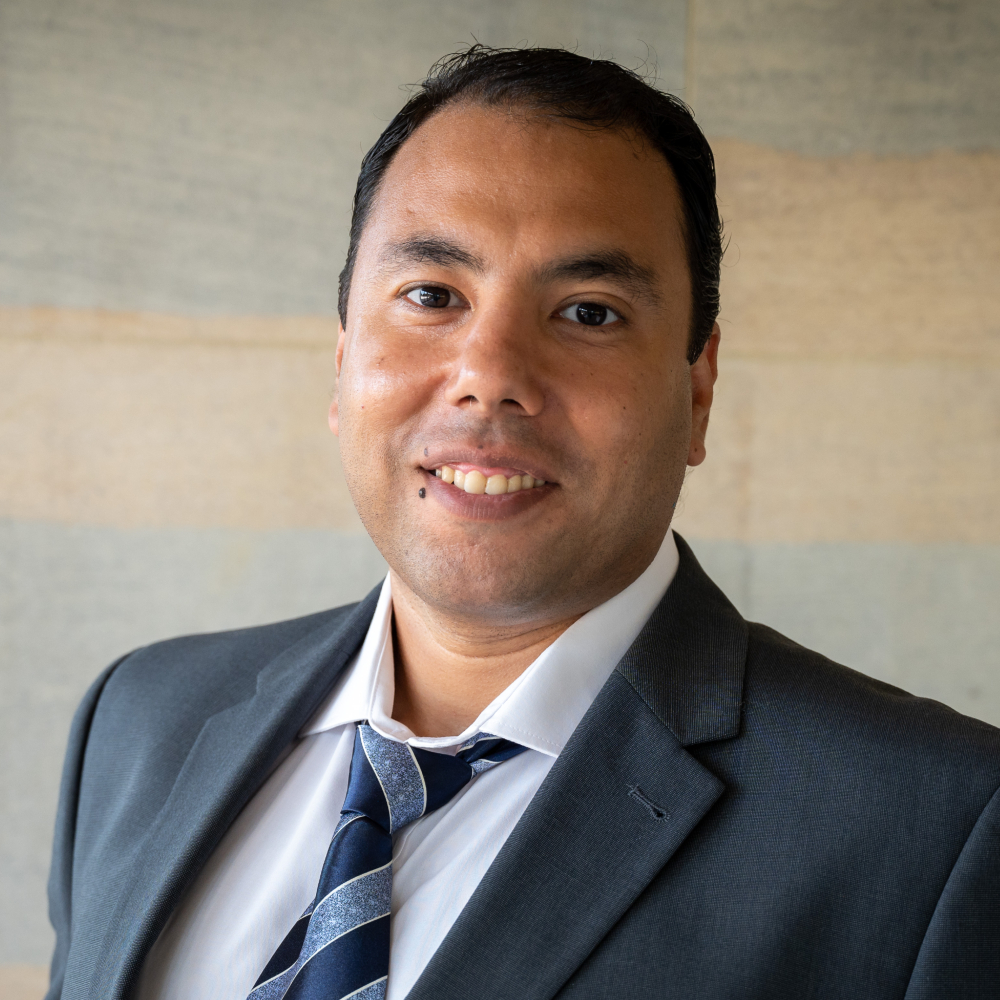
David Peebles is Professor and Director of the Centre for Cognition and Neuroscience at the University of Huddersfield's School of Human and Health Sciences. His research develops computational cognitive models to understand human interaction with external information representations, using the ACT-R cognitive architecture to investigate diagrammatic reasoning and problem-solving. Peebles' work examines how people interpret complex visualizations like graphs, maps, and interfaces, with applications in healthcare training, legal decision-making, and autonomous systems. His recent research explores dementia assessment methodologies, lie detection paradigms, and immersive technologies for medical education. The work integrates experimental psychology with computational modeling to understand high-level cognitive processes.
Daniel Burkey is an Associate Professor and Associate Dean for Undergraduate Education and Diversity at the University of Connecticut (UConn) College of Engineering. He holds the Castleman Term Professorship in Engineering Innovation. His academic background includes a Ph.D. in Chemical Engineering from MIT (2003), an M.S. from MIT (2000), a B.S.E. from Lehigh University (1998), and an M.A.Ed. in Educational Psychology from UConn (2023). His research focuses on engineering education ethics, game-based learning, and process safety. Notable projects include developing immersive training environments for process safety decision-making and creating card games to enhance ethical awareness among engineering students. He also investigates chemical vapor deposition techniques for membrane distillation applications. Burkey has served as Director of the AIChE Education Division (2017-2023) and on the Chemical Engineering Education publication board (2018-2021). His awards include the David Himmelblau Award (2023) and multiple recognitions for teaching excellence. Current research group members include Ph.D. students Arpita Kurdekar and Tori Wagner. Former advisees hold academic and industrial roles, such as Courtney Pfluger (Northeastern University) and Landon Bassett (UConn STEM Coach). His work blends educational innovation with technical research, emphasizing student engagement and ethical development through novel pedagogical approaches.
Dr. Osama Mahmoud is a Lecturer (Assistant Professor) in Data Science and Statistics at the University of Essex, affiliated with the School of Mathematics, Statistics and Actuarial Science (SMSAS) and the Department of Mathematical Sciences. He holds dual roles as the Director of the BSc Data Science and Analytics programme and Deputy Director of Research at SMSAS. His academic journey includes a PhD in Statistics from the University of Essex and an Honorary Senior Researcher position at the University of Bristol Medical School (2020–2024). Dr. Mahmoud's research focuses on Predictive Modelling, Health Data Science, Machine Learning, Bio and Medical Statistics, and Explainable AI. He pioneered the Slope-Hunter method (Nature Communications, 2022) for bias correction in genome-wide studies and developed tools like the Proportion Overlapping Score (POS) and open-source packages on CRAN/GitHub. His work bridges statistical methodology with applications in healthcare, environmental epidemiology, and industrial collaboration. Key contributions include studies on sleep-breast cancer mortality linkages (2025), lung function-cardiovascular risk relationships (2024), and smoking's role in depression recovery (2022). He has secured grants supporting collaborations with UNDP, Rolls Royce, and Recruitment Smart. Teaching innovations include pioneering programming and text analytics modules. Education: PhD in Statistics, University of Essex Affiliations: UK Reproducibility Network (UKRN) Institutional Lead, British Data Science Society Member Grants: Projects in Data Science, theoretical/applied Statistics, and industrial partnerships Tools: ESKNN, OTE, propOverlap packages on CRAN His work emphasizes reproducibility, with over 50 peer-reviewed publications and international teaching engagements at ICTP (Italy), EuADS (Luxembourg), and UK institutions.
Dr. Shruti Deshpande serves as an Associate Professor and Vincentian Research Fellow in the Department of Communication Sciences and Disorders at St. John's College of Liberal Arts and Sciences, St. John's University. She also holds the leadership position of Director of the Doctor of Audiology Program and was named an ASHA Innovator in 2024. Dr. Deshpande is actively involved in the American Speech-Language-Hearing Association as a board member of the Multicultural Issues Board (2023-2025) and serves as a subject matter expert for the ASHA Practice Portal in Audiology. Her research focuses at the intersection of audiology and social justice, particularly on accessible and affordable hearing health services for diverse and vulnerable populations. Dr. Deshpande has pioneered community-based research approaches, developing innovative service-learning models that address hearing health disparities. Her work emphasizes cultural competence and aims to increase awareness of audiology as a profession among ethnically diverse adolescents through educational interventions. Analysis of Dr. Deshpande's publication record reveals consistent focus on health equity in audiology, with significant attention to representation in clinical research, social media's role in health information dissemination, and innovative approaches to hearing healthcare delivery. Her work spans multiple subfields including tinnitus research, central auditory processing disorders, electrophysiology, pediatric audiology, and cross-cultural assessment tools. ASHA Innovator (2024) Vincentian Research Fellow Faculty Excellence Award in Community-Based Outcomes and Poverty Research (2022) Multiple Faculty Recognition Awards for Excellence in Research & Scholarship (2017, 2019, 2020, 2021) Values and Inclusion Program Honoree (2020-21) Excellence in Teaching Award from National Society of Leadership and Success (2018) Dr. Deshpande has successfully mentored numerous undergraduate and graduate students, with many serving as co-authors on peer-reviewed publications and presenting at conferences. Her grant portfolio demonstrates significant external funding support, including awards from the Faculty Research Consortium, ASHA's Advancing Academic-Research Careers Award, HearX Group, and multiple internal university grants totaling over $25,000. Her current projects focus on hearing health access for diverse communities, community-based hearing assessment approaches, and innovative teaching methods that integrate technology with service learning. As Director of the Doctor of Audiology Program, Dr. Deshpande oversees a robust curriculum that includes specialized courses in Central Auditory Processing Disorder, Electrophysiology, Pediatric Audiology, and Hearing Science. Her community engagement extends beyond the classroom through partnerships with Liberty Partnership Program and other initiatives aimed at increasing awareness of hearing health and audiology careers among underserved populations.
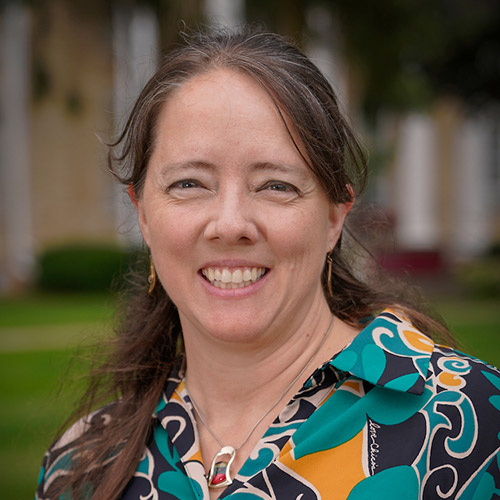
Dr. Julia Manor is an Associate Professor of Psychology and Director of Assessment at Ripon College. She specializes in animal cognition and neuroscience, leading a lab that studies species such as rats and dogs. Her courses include Learning and Behavior, Behavioral Neuroscience, and Sensation and Perception. Dr. Manor earned her Ph.D. from the University of Minnesota and a B.A. from Macalester College. Her research focuses on understanding animal thought processes, empathy, and behavioral responses. Notable areas include canine empathy, pain perception in fish, and memory in birds. She emphasizes interdisciplinary approaches, using comparative psychology to enhance educational curricula. Dr. Manor’s work bridges laboratory research with real-world applications, advocating for deeper connections between humans and animals. She has published widely on topics ranging from heart rate variability in dogs to the biological constraints of learning. Outside academia, she enjoys community theater and reading works by Fredrik Backman. She notably discarded her Apple Watch to prioritize human connections over technology.
Chao Li is a Principal Research Fellow at the University of Cambridge's Faculty of Mathematics, specializing in AI-driven healthcare solutions. His research focuses on precision medicine through image-based AI and multi-omics integration, with applications in neurological disease modeling, surgical oncology, and clinical AI safety. He leads the Centre for Mathematical Imaging in Healthcare , advancing translational AI for personalized medicine. Research Themes: Image-based AI for precision mental health AI in surgical and interventional oncology Multi-omics approaches for disease characterization Evaluation of AI innovations for clinical translation Publications highlight advancements in multimodal fusion for diagnostics, histology-molecular marker integration, and neuroimaging analytics for mental health. His work bridges computational mathematics with clinical challenges, emphasizing real-world healthcare impact. Labs/Teams: Active member of the Centre for Mathematical Imaging in Healthcare , collaborating across departments to develop AI tools for clinical deployment.
Michael Petrides is a Professor in the Department of Psychology at McGill University. His research focuses on neuropsychology and cognitive neuroscience, investigating the functions of the frontal, temporal, and parietal cortices through studies involving patients with brain lesions, animal models, and neuroimaging techniques like PET and fMRI. His work bridges human and non-human primate studies to understand cognitive mechanisms. Research Interests: Cognitive Neuroscience: Examines neural underpinnings of higher cognitive functions. Behavioral Neuroscience: Analyzes brain-behavior relationships via lesion studies and animal models. Neuroimaging: Utilizes PET and fMRI to map brain regions involved in memory, language, and decision-making. Publications Trends: His work emphasizes cross-species comparisons (human-macaque), functional connectivity analysis, and clinical applications of neuroimaging in neurosurgical planning. Advising & Grants: No student advisees listed. Grants and funding details not explicitly mentioned in provided materials. Labs/Teams: Affiliated with McGill's Psychology Department research groups studying cognitive neuroscience and brain architecture.
Stephen Hinshaw is Distinguished Professor of Psychology at the University of California, Berkeley, and Professor of Psychiatry and Behavioral Sciences at UC San Francisco. His research focuses on developmental psychopathology, ADHD mechanisms, and stigma reduction in mental health. With over $20 million in NIH grants and equivalent foundation funding, he has led longitudinal studies on ADHD in girls and women since 1992 as Principal Investigator for the MTA Study's Berkeley site. Degree: Ph.D. (UCLA), A.B. summa cum laude (Harvard) Leadership: Former Psychology Department Chair (2004-2011), Co-director of Schwab Dyslexia Center and Child Teen Family Center Research priorities include: Longitudinal ADHD studies in females Stigma reduction through youth programs Mechanisms of therapeutic change Comorbidity patterns in psychopathology Neuropsychological risk factors Preventive mental health interventions Recent publications demonstrate interests in: ADHD underrepresentation in girls (2022) Self-harm risk in ADHD females (2021) Anti-stigma high school clubs (2020) Developmental pathways of ADHD (2018) Scientific recognition includes: APA Distinguished Scientific Contributions Award (2020) Sarnat Prize (2019) SRCD Distinguished Contributions (2017) APS James McKeen Cattell Lifetime Award (2016) SSCP Distinguished Scientist (2015) As mentor and lab director, he has trained numerous researchers while maintaining active media presence in major outlets like New York Times and Wall Street Journal . His 2022 book Straight Talk about ADHD in Girls addresses critical gaps in female-specific ADHD understanding.
Hangfeng He is an Assistant Professor of Computer Science and Data Science at the University of Rochester , affiliated with the Hajim School of Engineering & Applied Sciences. He holds a PhD from the University of Pennsylvania and focuses on machine learning and natural language processing. His research emphasizes incidental supervision for natural language understanding, interpretability of deep neural networks, and reasoning in natural language. Education : PhD in Computer Science from University of Pennsylvania Research Interests : Machine Learning (especially deep learning theory, generalization, and optimization) Natural Language Processing (incidental supervision, language understanding, and multimodal reasoning) Reasoning (inductive biases, temporal data analysis, and model interpretability) Research Trends : His work spans foundational AI research and applied NLP, with recent focus on large language models, multimodal systems, and constraint-aware methods. He explores how models generalize from limited supervision and mitigate biases in real-world data. Key themes include improving model robustness, understanding inductive mechanisms, and applying AI to financial and social text analysis. Labs/Teams : While specific lab affiliations aren’t listed, his work aligns with the Department of Computer Science’s research clusters in AI, machine learning, and data science.
Kimberly Saudino is a Professor of Psychological & Brain Sciences at Boston University where she directs both the Boston University Twin Project and Developmental Behavioral Genetics Laboratory. Her research examines genetic and environmental influences on temperament development, with particular focus on activity level and behavioral regulation in infants and children. Using longitudinal twin studies, Dr. Saudino investigates how genetic factors interact with parenting practices to influence developmental trajectories of irritability, callous-unemotional traits, and externalizing behaviors. Her work spans from infancy through middle childhood, utilizing behavioral observations and computer-based assessments of executive function. Recent publications explore etiological factors in preschool irritability development, genetic architecture of temperament traits, and precursors to callous-unemotional behaviors. She maintains large-scale collaborations through the CODATwins consortium investigating genetic influences on physical development across cultures.
Dr. Timothy A. Brown is Professor Emeritus in Psychological & Brain Sciences at Boston University, where he directs research at the Center for Anxiety & Related Disorders. His expertise spans anxiety/mood disorders classification, temperament-psychopathology relationships, and advanced statistical methodologies. His research focuses on dimensional models of emotional disorders, psychometric evaluation of diagnostic instruments, and structural equation modeling applications. He developed influential frameworks for understanding comorbidity patterns through latent variable modeling. Publications demonstrate consistent themes in psychometric validation, transdiagnostic approaches, and longitudinal modeling of psychopathology. Recent work emphasizes COVID-19 mental health impacts and clinical assessment optimization. Dr. Brown teaches graduate courses in multivariate statistics, including confirmatory factor analysis and structural equation modeling. He authored the authoritative textbook Confirmatory Factor Analysis for Applied Research . He serves as Associate Editor of the Journal of Abnormal Psychology and collaborates internationally on classification systems for emotional disorders.
Suzan Uysal is an Associate Professor at the Icahn School of Medicine at Mount Sinai and Adjunct Associate Professor at New York University. She co-directs the Neuropsychology Fellowship program in Neurology and teaches functional neuroanatomy and clinical neuroscience across multiple departments. Her clinical practice focuses on neuropsychological evaluations for neurologic and age-related disorders. Education: PhD in Psychology from NYU, with fellowships at NYU School of Medicine and Mount Sinai Hospital. She has authored a major textbook integrating functional neuroanatomy with clinical neuroscience. Research interests include neuroprotection in cardiac surgery, neurocognitive outcomes of surgical procedures, and perioperative neurology. Key publications include seminal work on cerebral oxygenation optimization and postoperative cognitive decline assessment. Her work bridges clinical practice and education, with contributions to diagnostic coding standards (ICD-10-CM) and perioperative safety principles. She collaborates across disciplines in neurology, anesthesiology, and rehabilitation medicine. Professional roles include leadership in neuropsychology training programs and editorial contributions to clinical handbooks on neuroprotection and critical care.
Deanna Greene is an Associate Professor in the Department of Cognitive Science at UC San Diego. She holds a PhD in Cognitive Neuroscience from UCLA and completed postdoctoral training at Washington University in St. Louis. Her research integrates neuroimaging and cognitive neuroscience approaches to study brain development in neurodevelopmental disorders. Her lab investigates network organization in cortico-subcortical systems, focusing on Tourette syndrome and comorbid conditions. Research employs multimodal neuroimaging to map developmental trajectories and mechanistic disruptions. Recent publications emphasize clinical neuroscience, with themes spanning diagnostic reappraisal of tic disorders, neuroanatomical correlates of symptoms, and individual variability in brain organization. Articles frequently utilize advanced MRI techniques and computational modeling.
Philippe Tobler is a Professor of Neuroeconomics and Social Neuroscience at the University of Zurich's Department of Economics. He leads the Zurich Center for Neuroeconomics and focuses on neural mechanisms underlying decision-making, reward learning, and social behavior. His research employs fMRI, pharmacological interventions, and behavioral methods to investigate how the brain processes economic and social parameters like risk, delay, and probability. Teaching roles include courses such as 'Decision Neuroscience,' 'Introduction to Neuroeconomics,' and 'Neuroeconomics Seminar.' He collaborates extensively with researchers like Ernst Fehr and Christian Ruff, contributing to interdisciplinary studies on social neuroscience and neuroeconomics. Tobler's work examines dopamine's role in value processing, individual vs. social learning systems, and the neural basis of fairness and efficiency trade-offs. His research has implications for understanding psychiatric disorders, aging, and economic decision-making processes.
Celine Bencker is an External Lecturer and Academic researcher in the Department of Clinical and Health Psychology at the University of Vienna. Her research focuses on psycho-biological interactions in premenstrual symptomatology and stress responses during daily life. Her primary research interests include Premenstrual Dysphoric Disorder, stress neuroscience, and psychobiological interactions across the menstrual cycle. She employs ecological momentary assessment to investigate real-time psychological and biological stress responses in clinical populations. She has received prestigious awards including the Early Career Award (2025) SBSM Scholar Award (2025) She leads the research project: Investigating psycho-biological interactions in premenstrual symptomatology and stress during daily life , funded through the ÖAW-DOC Fellowship.