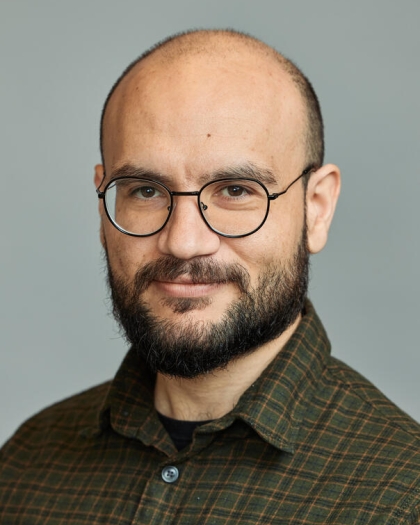
Peter Arndt is a Research Group Leader at the Max Planck Institute for Molecular Genetics in Berlin, Germany, where he has led the Evolutionary Genomics Group since 2003. His work integrates computational biology , genomics , and evolutionary modeling to study nucleotide substitution patterns, isochore evolution, and the role of phenotypic mutations in molecular evolution. His research spans topics such as CpG-effect , biased gene conversion , segmental duplications , and horizontal gene transfer . He collaborates with institutions like the BIH/Charité , Broad Institute , and Max Planck Institute for Infection Biology to explore cancer genomics and immune repertoire dynamics. Recent publications focus on genomic landscape analysis in multiple myeloma , modeling bacterial genome mosaicism , and gene expression dynamics during cell state transitions. These studies highlight his interdisciplinary approach combining mathematical models , phylogenetic analysis , and high-throughput sequencing .
Elissa Hallem is a Professor at the University of California, Los Angeles (UCLA) School of Medicine, affiliated with the Department of Microbiology, Immunology, and Molecular Genetics. Her research integrates neurobiology and parasitology to investigate sensory-driven behaviors in parasitic nematodes and the free-living model Caenorhabditis elegans . Williams College, BA in Biology and Chemistry (1999) Yale University, PhD in Neuroscience (2005) Caltech, Postdoc in Biology (2010) Hallem's work focuses on sensory neural circuits , host-seeking behaviors , and chemosensory valence in parasitic nematodes like Strongyloides stercoralis . She explores how sensory circuits evolve to enable parasitism and generate flexible behavioral outputs. Her publications highlight advancements in genetic tools for parasitic nematodes, thermosensation in host invasion, and olfactory mechanisms shaping host-parasite interactions. Key journals include Proc Natl Acad Sci USA , Curr Biol , and Mol Biochem Parasitol . 2023 UCLA Life Sciences Excellence in Research Award 2020 UCLA Faculty Mentor Award 2016 HHMI Faculty Scholar Award 2015 Burroughs-Wellcome Fund Investigators in the Pathogenesis of Disease Award 2014 NIH Director's New Innovator Award 2012 MacArthur Fellowship 2011 Alfred P. Sloan Research Fellowship The Hallem Lab develops tools like the Strongyloides RNA-seq Browser and Wild Worm Codon Adapter to advance functional genomics in parasitic nematodes. They emphasize diversity and inclusion in scientific training.
Professor Kelly Hughes is affiliated with the Department of Biological Sciences at the University of Utah. His research focuses on microbial genetics and genetic approaches to complex biological processes, particularly the assembly and function of bacterial flagella and type-III secretion systems in Salmonella enterica. B.S. University of California, Irvine Ph.D. University of Utah His work investigates the molecular mechanisms of bacterial motility, including the role of structural scaffolds, molecular rulers, and the coupling of gene expression to organelle assembly stages. He also explores regulatory interactions between flagellar assembly and virulence gene expression in Salmonella. Recent publications highlight studies on flagellar basal body structure (2021), genetic code optimization (2017), Salmonella virulence dynamics (2020), and type-III secretion system mechanics (2018, 2017). Research spans microbiology, structural biology, and molecular genetics. Professor Hughes collaborates extensively with researchers like Martin Erhardt, Florence Chevance, and Susan Le Guyon. His laboratory maintains a strong focus on bacterial motility and pathogenesis through genetic and biochemical approaches. Contact: kelly.hughes@utah.edu
Ken Westover, M.D., Ph.D., is a Professor of Radiation Oncology at the University of Texas Southwestern Medical Center, where he serves as Chief of the Lung Radiation Oncology Service, Director of Clinical Innovation and Information Systems in the Department of Radiation Oncology, and co-director of the Simmons Comprehensive Cancer Center thoracic disease-oriented team. His roles integrate clinical leadership, software development for healthcare systems, and translational research in cancer biology. Ph.D. and M.D. from Stanford University Bachelor’s in Biochemistry from Brigham Young University Radiation Oncology residency at Harvard Radiation Oncology Program Dr. Westover’s research focuses on RAS and kinase protein inhibition in cancer therapy , with pioneering work on allele-specific targeting of KRAS G12C mutants that led to FDA-approved drugs like sotorasib and adagrasib. His lab explores: Structural biology of RAS proteins (G12C, G13D, A146T, codon 61 mutants) Enzymology and informatics for drug discovery Mechanisms of tumor response to adaptive radiation technologies Clinical applications of MRI-guided and SAbR radiotherapy for lung cancer Integration of biochemistry, structural modeling, and clinical data His clinical innovation initiatives include: Development of RO-PAD exam room management system Implementation of EPIC EMR interfaces for radiation oncology Clinical tools for wait time optimization and chart rounds automation Publications reveal a 2025-2023 focus on: Lung cancer adaptive radiotherapy technologies Next-generation RAS inhibitors and resistance mechanisms Ultrasound-based molecular imaging applications Translational research bridging structural biology with clinical outcomes He leads the Westover Lab at UTSW, which applies protein chemistry and cell biology methods to develop targeted cancer therapies while maintaining active clinical practice in thoracic radiation oncology.
Ida Helene Steen is a Professor in the Department of Biosciences at the University of Bergen (UiB), where she conducts pioneering research on deep-sea hydrothermal vent systems. Her work integrates culturing techniques, molecular biology, biochemistry, and geochemistry to understand microbial physiology in extreme environments. She teaches courses BIO318, BIO299, BIO219, and BIO104, contributing significantly to marine biology education at UiB. Dr. Steen's research focuses on the physiology of microorganisms in deep-sea hydrothermal vent systems, with specific interests in energy metabolism diversity, biogeochemical cycling of carbon, nitrogen and sulfur, and biotechnological applications of extremophile enzymes. Her work bridges fundamental microbial ecology with practical applications in enzyme discovery and bioprospecting. Analysis of her recent publications reveals a strong emphasis on Arctic hydrothermal vent systems, particularly the Arctic Mid-Ocean Ridge. Her research spans microbial community structure, enzyme discovery from extreme environments, biogeochemical processes, and the potential applications of marine microbial enzymes in biotechnology. The work often involves metagenomic approaches, enzyme characterization, and ecological studies of microbial communities in extreme environments. As a dedicated educator and mentor, Dr. Steen supervises numerous PhD and master's students, fostering the next generation of marine microbiologists and biotechnologists. Her research group has produced significant findings in microbial adaptation to extreme conditions and the discovery of novel enzymes with industrial potential. Dr. Steen is actively involved in multiple research projects focused on deep-sea exploration and bioprospecting, with particular emphasis on the unique microbial communities inhabiting Arctic hydrothermal vent systems. Her work contributes to our understanding of life in extreme environments while exploring practical applications for society.
Dr. Yaramah Zalucki is a Research Fellow at Griffith University's Institute for Biomedicine and Glycomics. Their primary research focuses on bacterial protein secretion mechanisms and antibiotic resistance in Gram-negative pathogens, particularly Neisseria gonorrhoeae . Zalucki leads projects funded by NHMRC and Griffith University, exploring signal peptidase inhibitors and efflux pump inhibitors as novel antibiotics. Education: PhD in Microbiology from the University of Queensland (2003–2007). Research Interests: 1) Sec secretion system's role in protein export, codon usage effects on folding and secretion efficiency, signal peptide cleavage by LepB, and designing inhibitors for signal peptidase. 2) Antibiotic resistance in pathogens like N. gonorrhoeae , targeting efflux pumps ( MtrA ) and beta-lactamases ( NDM ). Funded Research: NHMRC Biomedical Overseas Fellowship (2009–2015) and Griffith University Internal Grant (2022–2024). Awards: NHMRC Biomedical Overseas Fellowship. Teaching & Supervision: Associate supervisor for Joanna Musik's PhD thesis on LepB substrate specificity. Labs/Teams: Active member of the Institute for Biomedicine and Glycomics Research Group.
Prof. Dr. Maria Anisimova is a Professor at the Institute of Computational Life Sciences within the ZHAW School of Life Sciences and Facility Management. Her research focuses on computational methods in evolutionary genomics, bioinformatics, and molecular evolution. Key areas include tandem repeat analysis, ancestral sequence reconstruction, and cancer genomics. She leads multiple projects on colorectal cancer mechanisms, computational drug discovery, and evolutionary biology. Her work integrates statistical models and algorithms to address challenges in genome analysis, including indel evolution, phylogenetics, and natural language-based database querying. Notable contributions include tools like ARPIP, ProPIP, and TRAL, advancing sequence alignment and tandem repeat detection. She also explores the role of protein intrinsic disorder and tandem repeats in cancer biology. Prof. Anisimova’s interdisciplinary approach spans bioinformatics, computational biology, and clinical applications, with publications in journals like *Nature*, *Genome Biology*, and *Molecular Biology and Evolution*. She has authored a textbook on evolutionary genomics and contributed to major conferences and workshops in the field.
Dr. Erome Hankore serves as a Pathway to Faculty Fellow in the Department of Chemistry at Wayne State University's College of Liberal Arts and Sciences. Her academic journey includes a Ph.D. in Chemistry from the University of Nebraska-Lincoln and postdoctoral research at the University of Kentucky's College of Pharmacy. Education: Ph.D. in Chemistry, University of Nebraska-Lincoln (2019) Dr. Hankore's research integrates chemical biology, protein engineering, and biocatalysis to develop innovative solutions for biotechnology and drug discovery. Her work focuses on kinase dynamics using proteomics approaches, genetic code expansion through unnatural amino acid incorporation, and engineering biocatalysts for sustainable pharmaceutical synthesis. She specializes in creating ATP analogs to study kinase-substrate interactions relevant to cancer metastasis, while advancing green chemistry applications for industrial compound production. Her interdisciplinary approach bridges molecular biology, biochemistry, and natural product chemistry to address challenges in drug discovery and biofuel development. Her leadership extends beyond research as former President of the Society of Postdoctoral Scholars (SOPS) at the University of Kentucky (2021-2022) and Office of Technology Commercialization Fellow, where she facilitated researcher-to-industry technology transfers. Dr. Hankore has extensive teaching experience in introductory and organic chemistry laboratories, mentoring undergraduate and graduate research students while developing curriculum for recitation sections. Her scholarly contributions demonstrate consistent focus on enzymatic mechanisms, with publications spanning enediyne biosynthesis, carboxylic acid reductase engineering, and kinase activity assays. Current work in her independent lab explores sustainable biocatalytic pathways for pharmaceutical synthesis and kinase-targeted cancer therapeutics through proteomics-driven approaches.
Dr Darren Gowers is a Senior Lecturer in Biological Sciences at the University of Portsmouth, affiliated with the School of the Environment and Life Sciences. He holds a PhD in Biochemistry & Pharmacology from the University of Southampton (1995-98), funded by CRUK, and conducted postdoctoral research at Bristol University (1998-2004), supported by the Wellcome Trust. His research focuses on molecular mechanisms of DNA/RNA interactions, enzyme function, and antibacterial strategies. Education: BSc (Hons) Biochemistry & Pharmacology, University of Southampton (1992-95) PhD in Biochemistry, University of Southampton (1995-98) Research Interests: Triple helix DNA structures and their stability Enzymology of restriction enzymes, ligases, and helicases RNA regulation via Hfq proteins and non-coding RNAs Antibacterial targeting of bacterial enzymes Parasitic helicases in Plasmodium falciparum Publications reflect expertise in DNA/RNA biochemistry, enzyme inhibition, and bacterial pathogenesis. His work bridges fundamental molecular biology with translational applications in medicine and biotechnology. Lab and Team: His lab investigates nucleic acid interactions and enzymatic mechanisms, with a focus on developing novel antibacterial strategies and understanding microbial pathogen biology.
Dr. Phillip Tai is an Assistant Professor at UMass Chan Medical School, with appointments in the T.H. Chan School of Medicine's Department of Genetic and Cellular Medicine and Department of Microbiology, as well as the Morningside Graduate School of Biomedical Sciences' Interdisciplinary Graduate Program. His laboratory focuses on virology and vectorology of adeno-associated viruses, with research that bridges basic science and therapeutic applications. Dr. Tai received his BA in Molecular Cellular Biology from the University of California, Berkeley, and his PhD in Biochemistry from the University of Washington. His educational background provided the foundation for his current research in gene therapy vectors and viral delivery systems. His research interests center on adeno-associated virus (AAV) vector development, with particular emphasis on capsid engineering, vector production optimization, and tissue-specific targeting. His work spans fundamental virology, molecular biology, and translational applications for treating genetic disorders. Current projects include developing novel AAV capsids with improved tissue targeting capabilities, optimizing vector production systems for clinical applications, and investigating safety profiles of viral vectors for gene therapy. Analysis of Dr. Tai's recent publications reveals a strong focus on AAV vector engineering and production methodologies. His research demonstrates consistent advancement in understanding viral vector heterogeneity, capsid modifications for improved delivery, and tissue-specific targeting strategies. The publications show increasing sophistication in analytical techniques, with growing use of next-generation sequencing methods to characterize viral vectors at the molecular level. Dr. Tai actively collaborates with prominent researchers in the field, including Guangping Gao (his primary collaborator), Jun Xie, and Dan Wang. His work has significant implications for gene therapy applications across multiple disease areas including liver diseases, neurological disorders, and ocular conditions. His laboratory maintains an active research program with multiple ongoing projects related to AAV vector development. The lab focuses on both fundamental virology questions and translational applications, with particular attention to vector safety, production efficiency, and tissue-specific delivery mechanisms.
Joel Richter, Ph.D., is a Professor of Molecular Medicine and Arthur F. Koskinas Professor of Neuroscience at UMass Chan Medical School, with affiliations at T.H. Chan School of Medicine and the RNA Therapeutics Institute. He leads the Center for Collaborative Research in Fragile X. His work focuses on mRNA translational control via cytoplasmic polyadenylation, particularly its role in synaptic plasticity, learning/memory, and neurologic diseases like Fragile X and autism spectrum disorders. Education: B.A. Biology (Indiana University), M.S. Zoology/Physiology (Arizona State University), Ph.D. Zoology (Arizona State University). Research interests include molecular mechanisms of CPEB proteins in translational control, FMRP's role in Fragile X syndrome, and ribosome profiling to study mRNA translation dynamics. Key projects involve understanding how polyadenylation regulates synaptic function and developing therapies targeting translational dysregulation. His articles highlight advancements in understanding RNA regulation, FMRP interactions, and novel therapeutic approaches for neurodevelopmental disorders. Research spans molecular biology, neuroscience, and translational medicine.
Luigi Maria Larocca is a Full Professor of Anatomic Pathology at the Department of Anatomic Pathology, School of Medicine, Campus Bio-Medico University of Rome. His research focuses on cancer biology, molecular pathology, and personalized medicine, with significant contributions to understanding HIV-related lymphomas, myeloproliferative neoplasms, and cancer stem-like cells in glioblastoma. He has pioneered studies on the MPLSer505Asn mutation in familial thrombocytosis and the role of endothelial progenitor cells in disease progression. Research Interests: Antiproliferative activity of bioflavonoids in cancers EBV-driven lymphoma pathogenesis and diagnosis Genetic and molecular mechanisms of myeloproliferative neoplasms Cancer stem-like cells in glioblastoma and chordoma Integration of molecular diagnostics in lymphoma and thyroid cancer Recent Research Trends: Recent work emphasizes genetic profiling of Hodgkin lymphoma via circulating tumor DNA (ctDNA), flow cytometry-based diagnostic innovations, and targeted therapies for recurrent glioblastoma. His studies bridge molecular insights with clinical outcomes, particularly in personalized therapy design. Awards & Recognition: Not explicitly listed, but his contributions have significantly impacted lymphoma and myeloproliferative neoplasm research. Grants & Collaborations: Leads institutional research initiatives at UniCamillus, focusing on molecular pathology and translational oncology.
Max Ward is a Lecturer at The University of Western Australia (UWA), affiliated with the School of Physics, Maths and Computing and the Australian Centre for RNA Therapeutics in Cancer. His roles include teaching in Computer Science and Software Engineering while conducting interdisciplinary research in algorithms, computational biology, and AI/ML. He holds a PhD from UWA (2019) and has held postdoctoral positions at the University of Adelaide and Harvard University. Education: PhD in Computer Science, UWA (2019) Postdoctoral Researcher at Harvard University (until Dec 2022) Research interests focus on algorithms, graph theory, RNA structure prediction, and machine learning applications in healthcare and cybersecurity. Key projects include developing RNA folding algorithms (e.g., JAX-RNAfold) and cybersecurity frameworks for network hardening. Grants: "Computational Creativity to Cross Cultural Frontiers" funded by Australia's Department of Foreign Affairs and Trade (2022–2024) Labs/Teams: Collaborates with the Australian Centre for RNA Therapeutics in Cancer and contributes to UWA's interdisciplinary research initiatives.
Hasan Arsın is a Research Fellow at the University of Bergen's Department of Biological Sciences (BIO). His primary affiliations include the Deep-sea biology research group, focused on exploring extremophile microorganisms and their biotechnological potential. His work integrates metagenomics, enzymology, and synthetic biology to discover novel enzymes from marine environments. Research interests revolve around understanding microbial adaptations in extreme environments, particularly Arctic hydrothermal vents. Key projects involve chitin degradation mechanisms in deep-sea sediments and the characterization of thermostable proteases for industrial applications. He has contributed to breakthroughs in codon optimization strategies for recombinant protein production and developed methods for functional screening of marine microbial genes. Recent presentations include a 2023 lecture at the FEMS Congress on Arctic hydrothermal microbiomes and a 2020 poster at the NBS meeting on enzyme discovery from underexplored sequence space. His current work is supported by the Research Council of Norway through the DeepSeaQuence project. No scientific awards are explicitly listed, though his contributions align with potential future recognitions in marine biotechnology. He collaborates closely with institutions like the Marine Biotechnology Institute (MBI) and maintains an active role in enzyme engineering initiatives.
Eva-Kathrin Ehmoser is a full Professor and leads the Institute for Synthetic Bioarchitectures at the Department of Biotechnology and Food Science, University of Natural Resources and Life Sciences, Vienna (BOKU). She is actively engaged in research, teaching, and scientific leadership, with a strong international profile in nanobiotechnology and synthetic biology. Her research interests span complex bio(nano)materials, membrane biochemistry, cell-free protein synthesis, nanomaterials for diagnostics and therapeutics, and the environmental risk assessment of nanomaterials . She integrates biophysical, biochemical, and synthetic approaches to develop functional biomimetic systems and novel nanocarrier platforms. Her work bridges fundamental science with applications in medicine, agriculture, and environmental sustainability. The recent publications highlight a strong trend toward bottom-up synthetic biology, using hydrogel-assisted giant vesicles and S-layer proteins , and advanced materials for sustainable technologies , including perovskite solar cells and ceramic implants. There is also a consistent focus on quantum dots for both medical and environmental applications, as well as the systematic classification and safety-by-design of nanocarriers . Her scientific awards include: Traudl-Engelhorn Prize (2006) Habilitationsförderpreis des Bayerischen Staates (2003) Ehmoser has advised numerous Master’s and PhD students, and her research is supported by grants from national (FWF, FFG) and European (EU) funding agencies. She has led and participated in multiple projects on nanocarriers, nanotoxicology, and advanced materials. She also holds significant community service roles, including as President of the Austrian Erwin Schrödinger Society for Nanosciences and Vice-President of the Austrian Nanoinformation Commission (NIK), and has served on editorial boards and as a reviewer for major journals. She leads a dynamic research group focused on synthetic bioarchitectures, with active collaborations across Austria and internationally, particularly in Singapore. The lab specializes in membrane protein expression, nanomaterial characterization, and the development of bio-inspired platforms for sensing and delivery.