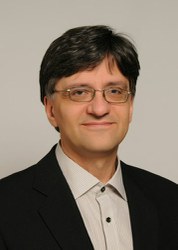
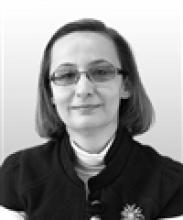
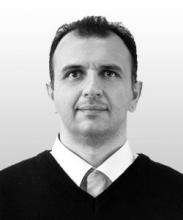
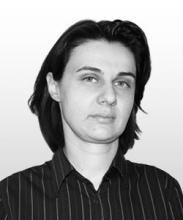
Muazam Halili is an Associate Professor at the Faculty of Law of Southeast European University , working on a part-time basis. His research focuses on economic crime , corruption , and criminalistics , with expertise in document forgery detection , public administration reforms , and interinstitutional cooperation . Contact: m.halili@seeu.edu.mk . Research Interests : Economic crime dynamics, corruption analysis, forensic investigation, environmental criminality, human trafficking, and public sector legal frameworks. Publications Trends : Recent works emphasize regional crime patterns in Tetovo (2024), EU accession challenges due to corruption (2024), and the role of financial intelligence agencies (2023). Earlier studies include polygraph use (2020), economic crime identification (2019), and administrative corruption in Kosovo (2015). Scientific Awards : No awards explicitly mentioned. Advising & Grants : No students or funding details provided.
Assoc. Prof. Dr. Nikola Tuntevski serves as Associate Professor at the Faculty of Law, St. Clement of Ohrid University of Bitola, where he teaches Criminal Law, Criminal Procedural Law, International Terrorism, and International Judiciary across all three study cycles. Employed since 2013, he holds a doctorate in Law with expertise in transitional justice and Balkan legal systems. His academic journey includes: Bachelor of Laws (First Cycle) Master's degree on "Socially organized state - relation between social state, welfare state and social-legal state, with special reference to social state in Republic of Macedonia" (Second Cycle) Doctorate on "Parallel tendencies in transitional societies - totalitarianism as an obstacle for true democratization of society" (Third Cycle) Prof. Tuntevski's research spans Criminal Law, Rule of Law, Mediation in Criminal Justice, Anti-corruption, and Migration Law, with strong regional focus on Balkan societies. His work integrates comparative analysis with EU and US frameworks, addressing transitional justice challenges in post-socialist contexts. He examines institutional trust, social responsibility, and legal culture through empirical studies of judicial practices and legislative reforms. His 15 most recent publications (2018-2020) demonstrate concentrated exploration of mediation in criminal procedure (particularly for juveniles), hate speech legislation, whistleblower protection in academia, and Balkan responses to migration crises. These works reveal methodological diversity through case studies of Bitola's judicial region, comparative legal analysis across eight countries, and policy-oriented research engaging OSCE and EU frameworks. Scientific recognition includes: Ambassador's Award for the Rule of Law from the U.S. Embassy in Macedonia (2012) As accredited doctoral mentor in International Law and International Politics, he guides third-cycle students while serving on university senate and faculty councils. His grant portfolio features TEMPUS projects against organized crime, specialized training for Macedonia's new Criminal Procedure Code (2011-2014), and the award-winning "Days of Simulated Trials" project (2015-2019) where his student team secured first place nationally in 2016. He maintains active collaboration with U.S. Embassy, OSCE, and EU mission training initiatives. Prof. Tuntevski leads the Legal Sciences Department at Bitola's Macedonian Scientific Society while contributing to national working groups including the Ministry of Justice's Criminal Procedure Code amendment team. His international engagement spans 15+ conferences annually across Southeast Europe, addressing rule of law, democratization, and judicial independence through platforms like the Institute for Strategic Research and Education.
Laze Jaqimoski serves as an Associate Professor at the Faculty of Law - Kichevo, maintaining office hours in Kichevo (Tuesdays), Bitola (Fridays), and Struga (Wednesdays) from 12:00 to 13:00. He earned his Doctor of Law and Master of Laws in Civil Law from Southwestern University "Neofit Rilski" in Blagoevgrad, Bulgaria, and has been with the Faculty since 2010, progressing from Junior Assistant to Associate Professor by 2017. His educational qualifications are: Doctor of Law in Civil Law, Southwestern University "Neofit Rilski", Bulgaria Master of Laws in Civil Law, Southwestern University "Neofit Rilski", Bulgaria Professor Jaqimoski's research interests center on Civil Law, with significant contributions to Property Law, Inheritance Law, and Corporate Law. His work also addresses European Union Law, particularly the free movement of labor, and Tax Law, including inheritance taxation. He has examined corporate governance challenges in Macedonia and the role of NGOs in shaping social policy, reflecting a commitment to both theoretical and applied legal scholarship in the Macedonian context. Analysis of his publications reveals a strong focus on Macedonian legal frameworks, especially in civil and commercial law. Key themes include property rights protection, corporate criminal liability, and EU integration impacts. His 2015-2016 works highlight evolving interests in labor mobility within the EU and the taxation of legacies and gifts, demonstrating responsiveness to contemporary legal and economic challenges in the region. No scientific awards, fellowships, or medals are mentioned in the available information. Details regarding graduate student supervision, research grants, or funded projects are not provided in the source material. There is no mention of specific research laboratories, centers, or collaborative teams led by Professor Jaqimoski in the given text.
Dr. Venceslav Kafedzhiski is a Professor at the Department of Telecommunications, Faculty of Electrical Engineering and Information Technologies (FEIT) at the Ss. Cyril and Methodius University in Skopje. He holds a Ph.D. from Arizona State University (2000) and has held academic positions since 1983, progressing through ranks including Assistant Professor (2001), Associate Professor (2005), and Full Professor (2010). His roles include coordinating Master's programs in Wireless and Mobile Communications and Wireless Systems, Services, and Applications, and leading the Signal Processing in Telecommunications Laboratory. Education: Bachelor's and Master's in Electrical Engineering from FEIT (1982, 1989) Ph.D. in Electrical Engineering from Arizona State University (2000) Research focuses on wireless communications, signal processing, information theory, MIMO/OFDM systems, and compressed sensing. He has authored over 80 publications in IEEE journals and conferences. Key contributions include work on channel estimation, radar systems, and telecommunication standards (e.g., WiMAX, LTE, 5G). He has led and participated in projects funded by NATO, EU (TEMPUS), and national grants, including initiatives on broadband strategies and spectrum measurement techniques. He serves as Senior Member of IEEE and has organized conferences like the Information Theory and Complex Systems (TINKOS). He has advised students on projects involving video transmission over MIMO channels and interference alignment in distributed storage systems. His leadership roles include chairing national strategy committees for electronic communications and broadband internet, and leading the Technical Committee for Electronic Communications at Macedonia's Standards Institute. Notable awards include honorary membership in Phi Kappa Phi (top academic honor society). His research extends to applied projects like radar systems for landmine detection and MRI signal processing, showcasing interdisciplinary impact in telecommunications and engineering.
Verica Bakeva is an Associate Professor at the Institute of Informatics , part of the Faculty of Natural Sciences and Mathematics at Ss. Cyril and Methodius University in Skopje. Since 1993, she has held various teaching and research roles, contributing to fields like probabilistic models, cryptography, and coding theory. Graduated with Mathematics and Informatics degree (1992) Master of Mathematics and Informatics (1998) PhD in Informatics (2003) Her research focuses on probabilistic models applied to cryptography, coding theory, and queueing systems. She has taught courses including Probability Theory, Information Theory, and Coding Theory, bridging foundational mathematics with computational applications. Verica has published around 30 scientific papers and participated in seven funded research projects (five by the Ministry of Science of Macedonia, three international). She authored five textbooks for high school students and maintains affiliations with the Society of Informaticians of Macedonia and the IEEE Information Theory Society.
Vesna Dimitrova is an Associate Professor at the Institute of Informatics, Faculty of Computer Science and Engineering, Ss. Cyril and Methodius University in Skopje, North Macedonia. She has been continuously employed since April 2000, advancing from Assistant to Associate Professor while teaching 14 subjects and developing electronic course materials. Education: PhD in Computer Science, Ss. Cyril and Methodius University, 2010 – “Quasigroup processed strings, their Boolean presentation and application in cryptography and coding theory” (supervisor: Prof. Smile Markovski) MSc in Computer Science, Ss. Cyril and Methodius University, 2005 – “Quasigroup transformations and their applications” (supervisor: Prof. Smile Markovski) BSc in Informatics, Ss. Cyril and Methodius University, 1997 – “Software implementation of secure communication with C modules in UNIX” (supervisor: Prof. Smile Markovski) Research Focus: Her scientific work centres on cryptography, with particular emphasis on quasigroup-based transformations and their practical applications in secure communications and coding theory. She has investigated quasigroup string processing, Boolean representations, and cryptographic protocols, and she has disseminated findings through 19 peer-reviewed papers and more than 30 conference or workshop presentations. Projects & Collaborations: Vesna Dimitrova has participated in eight national and international research projects. She has undertaken academic visits to Johannes Kepler University Linz, the Bulgarian Academy of Sciences, South Bank University London, and other institutions, fostering collaboration across Europe. She served as a lecturer at the DAAD-sponsored summer school “Algebraic Structures and their Applications in Coding Theory and Cryptography” in Ohrid, 2009. Professional Involvement: Member, Association ICT-ACT (Macedonia) Member, Association of Informatics in Macedonia Member, Centre for Digitization of National Heritage in Macedonia Translator and technical reviewer of “Practical Cryptography” Organising committee member for three international conferences Editor of conference proceedings and author of two technical reports plus two posters
Dr. Dejan Spasov is an Assistant Professor at the Faculty of Computer Science and Engineering , Ss. Cyril and Methodius University in Skopje, North Macedonia. Born in 1976, he graduated in 2003 from the Faculty of Electrical Engineering at the same university, completed a Master's at Boston University (2006), and earned his Ph.D. in Natural Sciences in 2010 with the thesis "Some properties of good codes". Education: Faculty of Electrical Engineering (2003) Boston University, MA (2006) Ph.D. in Natural Sciences (2010) His academic focus lies in Coding Theory and Computer Networks , with formal participation in 3 international projects and 6 academic conferences. While his institutional affiliation is in computer science, his publications span medical diagnostics and clinical research , particularly rheumatology, hematology, and nephrology biomarkers. The 15 most recent publications address topics like chromosomal aberrations in multiple myeloma , renal tubule enzymuria , and C-reactive protein dynamics , indicating interdisciplinary work linking computational methods with clinical medicine. Keywords include Hematology , Rheumatology , and Nephrology , with sub-fields such as prognostic biomarkers , genetic polymorphisms , and diagnostic imaging . Dr. Spasov maintains office hours in classroom M4 on Thursdays (09:00–10:00) and Tuesdays (12:00–13:00). Further details about his work and affiliations can be found in the sections below.
Aleksandra Popovska Mitrovikj is a Professor at the Faculty of Computer Science and Engineering of Ss. Cyril and Methodius University in Skopje. Her academic career spans over two decades, with research interests in coding theory, cryptography, information theory, and blockchain technology . Born in 1979 in Skopje PhD in coding theory and cryptography (2014) Recipient of the 2004 award for highest academic achievement at Faculty of Natural Sciences and Mathematics Her work includes participation and coordination in international and national scientific projects, and she has published numerous scientific papers in journals and conference proceedings. Scientific Awards: Award from Ss. Cyril and Methodius University in Skopje for graduation with the highest average grade (2002/03 academic year)
Natasha Ilievska is an Assistant Professor at the Faculty of Computer Science and Engineering (FCSE), University Ss. Cyril and Methodius. She has held teaching and research roles since 2002, initially as a young research and teaching assistant at the Faculty of Natural Sciences and Mathematics, Institute for Informatics, and later as an assistant professor at FCSE since 2015. Her teaching spans courses like Discrete Mathematics, Probability and Statistics, Information Theory, and Programming. Education : B.Sc. in Informatics (University Ss. Cyril and Methodius, Faculty of Natural Sciences and Mathematics, Institute for Informatics, 2001) M.Sc. in Mathematics (same faculty, 2009) with thesis "Error-Detecting Codes and Application of Quasigroups in their Design" Ph.D. in Coding Theory (Faculty of Computer Science and Engineering, 2015) Her research focuses on Coding Theory , with applications of quasigroups in code design, discrete structures, and mathematical methods for informatics. She has contributed to multiple research projects and authored 15 scientific papers. Scientific Awards & Achievements : Awarded best graduated student at the Institute for Informatics Participation in numerous conferences, workshops, and research projects Natasha has held roles in both teaching and research, contributed to course material development, and maintains active office hours for student consultations.