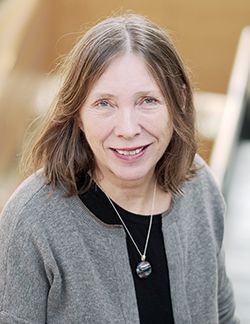
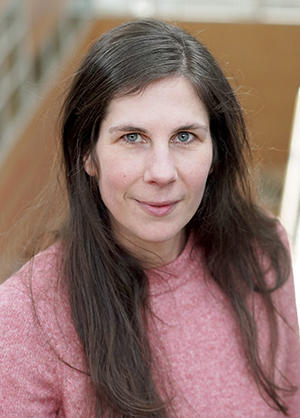
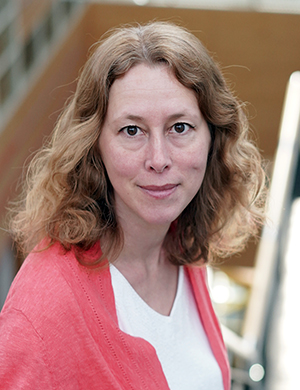
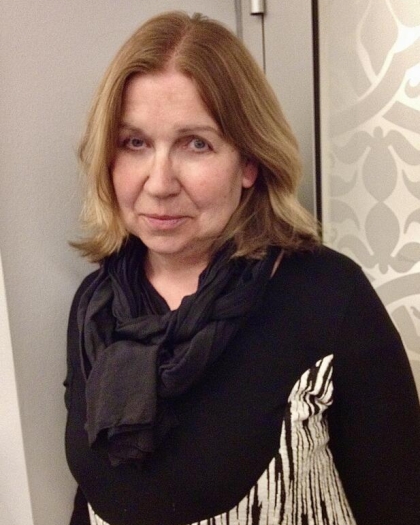
Unn Røyneland is a Professor of Scandinavian Linguistics and Multilingualism at the University of Oslo 's Faculty of Humanities . She is affiliated with the Center for Multilingualism in Society Across the Lifespan (MultiLing) and has been a key figure in Norwegian language policy and standardization efforts, including the Nynorsk 2011 orthographic revision . Current Research Focus: Multilingual and multilectal practices on social media Dialect acquisition among migrants Dialect levelling and language attitudes Language and embodiment Multiethnolectal speech styles Language policy and planning Ongoing Projects: Multilectal Literacy in Education (2020-2025) (RCN-funded, Co-PI) Multilectal Practices on Social Media (2020) (with Øystein A. Vangsnes) Urban Talk and Text (MultiLing Core-group project, 2021) AquaAurora (2021, UiT The Arctic University of Norway) Her scholarly work spans 15+ years of research output, with recent publications analyzing: Language activism and social justice (2024) Multilingualism across the lifespan (2022) Migration-induced dialect acquisition (2020) Youth multilingual practices in digital spaces (2018) Nynorsk standardization processes (2016) Multiethnolectal speech patterns (2008-2010) As Co-Chief Editor of the LME Linguistic Minorities in Europe Online series at De Gruyter, she continues shaping academic discourse in multilingualism studies.
Lenka Garshol is an Associate Professor at the Department of Foreign Languages and Translation at the University of Agder. She serves as the subject coordinator for English in teacher education and is a member of the International Society for the Linguistics of English (ISLE) and the Learner Corpus Association (LCA) . Her research interests include: Language Acquisition Language Learning Multilingualism Code-switching and Code-mixing Game-based Learning She leads the Games and Active Learning Methods in Education (GAME) project, focusing on digital tools and games in language education. Garshol's publications emphasize English language teaching , error analysis in learner English, and the use of digital tools for pedagogy. Her collaborative work spans topics like artificial intelligence in language subjects , foreign language policy , and subject-verb agreement patterns . She contributes to editorial work for journals such as the Nordic Journal of Language Teaching and Learning (NJLTL) and has co-authored book chapters on teacher education reforms and digital competence development.
Vibeke Grøver is a Professor at the Department of Pedagogical Research, University of Oslo. Her work focuses on language and reading comprehension development for language minority children, with a emphasis on bilingual education, shared book reading interventions, and sociolinguistic factors influencing literacy. Education: Dr.polit., University of Oslo (1992) Master in Educational Psychology, University of Oslo (1982) Elementary School Teacher, University of Oslo (1977) Research Interests include second-language acquisition, early literacy for dual-language learners, home literacy environments, and teacher talk features in preschool settings. She leads projects like Teaching for text comprehension and has contributed to the DEAL (Development, Equality, and Literacy in Learning Contexts) research group. Article Trends show longitudinal studies on bilingual profiles, shared reading interventions, code-switching dynamics, and neighborhood demographic impacts on vocabulary. Key themes include scaffolding language minority students, cross-cultural comparisons (e.g., Chinese-Norwegian families), and teacher-student interaction patterns in multilingual preschools. Leadership Roles include Dean of the Faculty of Educational Sciences (2009–2012) and advisory positions for the Peder Sather Center at UC Berkeley (2012–2014). Research visits span Harvard, UC Berkeley, NYU, and East China Normal University.
Ulrikke Rindal is an Associate Professor at the Institute for Teacher Education and School Research, Faculty of Educational Sciences, University of Oslo. Her work focuses on English didactics, particularly oral communication, language identity, and perceptions of language learning in the Norwegian context. She conducts qualitative research using interviews and video observation to understand how English is used and perceived among students in and outside schools. PhD in English Didactics, University of Oslo (2013) Master in Applied Linguistics, University of York (2006) Bachelor in English Literature, University of Oslo (2004) Her research interests include sociolinguistics, language attitudes, English teaching practices, and sociolinguistic variation in Norway. She explores how media, identity, and classroom dynamics influence language use and learning. Her instructional roles include courses on English phonetics, language attitudes, and didactic research methods. The 15 most recent publications reflect a consistent focus on English in Norway, classroom language use, pronunciation, and teacher education. These works appear in journals such as The Modern Language Journal , TESOL Quarterly , and Journal of Sociolinguistics , as well as in edited volumes on English didactics and teacher education. They emphasize qualitative analysis, identity construction, and pedagogical implications. Ulrikke Rindal has supervised multiple PhD and Master’s students, contributing significantly to the next generation of educational researchers. She is involved in key research projects such as Linking Instruction and Student Experiences (LISE) and STAGE (STArtAlder and extramural ENGLISH), which examine language learning in and beyond school settings. Research Group: Studies of Instruction across Subjects and Competences (SISCO) Projects: LISE, STAGE
Susanne Mohr is a Professor of English Sociolinguistics at NTNU's Department of Language and Literature since 2020. She holds a German Habilitation (postdoctoral degree) from the University of Bonn and a PhD from the University of Cologne. Her research focuses on sociolinguistic aspects of tourism, multilingualism, and multimodal communication in Africa and the Nordic region, with funding from institutions like the Humboldt Foundation and NTNU Oceans. Her research interests include sociolinguistics of tourism discourse, semiotic landscapes, sign languages (e.g., Irish Sign Language), and African English varieties. She leads the 'Open Landscapes' forum and participates in interdisciplinary projects on topics like sustainability in cruise tourism and space-making in East Africa. She is affiliated with networks such as the 'Africa in the Indian Ocean' research group and the Irish Deaf Research Network. Key awards include a 2024 senior fellowship from the Erich Auerbach Institute and multiple Humboldt Foundation grants. She teaches sociolinguistics at BA/MA levels and supervises PhD/MA students in topics like code-switching and accent attitudes. Recent publications include monographs on African English pluralization and edited volumes on informal language learning and communicative action in Africa.
Pia Marit Johanne Lane is Professor of Multilingualism at the Department of Linguistics and Nordic Studies, Faculty of Humanities, University of Oslo, and serves as Academic Chair for the Circle U. Multilingualism, Interculturality and Language Lab. She gained national prominence as a member of the Norwegian Truth and Reconciliation Commission, which investigated historical Norwegianization policies against Sami, Kven/Norwegian Finns, and Forest Finns, submitting its report to the Storting in June 2023. Professor Lane's research focuses on language revitalization, language policy, and the standardization of minority languages, with particular expertise in Kven and Sami communities in Northern Norway. Her scholarly approach integrates nexus analysis with indigenous, decolonial, and southern theoretical perspectives, examining language as part of a larger semiotic system. She has extensively documented how material objects function as identity markers during language shift, as evidenced in her influential works including 'Identities in action: A nexus analysis of identity construction and language shift' (2009) and 'We did what we thought was best for our children' (2010). Analysis of Lane's recent publications reveals a strong trajectory toward decolonial frameworks and the application of southern theory to northern contexts. Her work increasingly examines the psychological dimensions of linguistic colonization and the pathways to mental decolonization. The recurring themes across her scholarship include the tension between language standardization and community participation, the role of new speakers in language revitalization movements, and the complex relationship between historical trauma and contemporary language identity. Project leader for 'Standardising Minority Languages,' funded by Norges Forskningsråd Co-editor of 'Standardizing Minority Languages. Competing Ideologies of Authority and Authenticity in the Global Periphery' (Routledge, 2017) Member of the EU-funded COST Action IS1306 'New Speakers in a Multilingual Europe' Co-leader of the work group 'Indigenous minority languages' and current leader of 'New speakers: Subjectivities, trajectories, spaces' Member of AILA-network 'Home Language Maintenance and Development' Lane's fieldwork extends beyond traditional academic boundaries, including collaboration with Lightsource Productions on the documentary film 'Det hemmelige språket' (The Secret Language), which explores contemporary Kven language users. Her personal connection to the subject matter is profound—growing up in Bugøynes, Finnmark, she was the first generation in her family to be spoken to exclusively in Norwegian, only reclaiming her heritage Kven language as an adult researcher returning to her community.
Prof. Heike Wiese holds the chair of German in Multilingual Contexts at Humboldt University of Berlin within the Faculty of Language, Literature and Humanities, Department of German Studies and Linguistics. Previously, she was a professor at University of Potsdam and held visiting positions at Yale University and Brandeis University. She is a distinguished member of the Academia Europaea and of the German Council for Migration, as well as the speaker of the Centre 'Language in Urban Diversity'. Her research focuses on the dynamics of multilingual settings, with particular attention to grammatical developments, monolingual ideologies, linguistic discrimination, and empowerment. Her primary research interests include: Urban contact dialects (including 'Kiezdeutsch' in Germany) Linguistic practices of heritage speakers Turkish-German language contact phenomena Grammatical-pragmatic interfaces and linguistic architecture (V2 and V3 word order in Germanic) Mass and count nouns, numeral constructions, and focus particles Discourse markers and emoji as linguistic elements Linguistic discrimination and empowerment in society and education Prof. Wiese's recent scholarly work demonstrates a sophisticated integration of theoretical linguistics with sociolinguistic and educational perspectives. Her publications from 2021-2025 reveal a consistent focus on language variation in multilingual contexts, particularly examining how linguistic systems interact across language boundaries. She has made significant contributions to understanding urban contact dialects, especially Kiezdeutsch in Berlin, and German-speaking communities in postcolonial settings like Namibia and Australia. Her research challenges monolingual ideologies and advocates for linguistic diversity through both theoretical analysis and practical applications. Her scientific recognition includes: Membership in the prestigious Academia Europaea Leadership role as speaker of the Centre 'Language in Urban Diversity' Through extensive outreach activities, Prof. Wiese collaborates with multilingual communities, kindergartens, schools, educational policymakers, and museums. She has developed practical materials for teachers to address linguistic diversity in classrooms and challenge linguistic discrimination. Her research methodology emphasizes 'language situations' - a technique to elicit comparable, naturalistic data across registers, languages, and speakers, recognizing the complexity of multilingual repertoires. Prof. Wiese leads research in the Multilingualism, Interculturality and Language Lab (CU.mil), where her team investigates language variation in urban contexts and develops methodologies for studying linguistic diversity. Her work bridges theoretical syntax with sociolinguistics, psycholinguistics, and educational linguistics, with important implications for language policy, teacher education, and public understanding of linguistic diversity in increasingly multicultural societies.
Aleksandra Tomic is a Postdoctoral Fellow at the Department of Language and Culture, UiT The Arctic University of Norway. Her research focuses on heritage language acquisition, bilingualism, and psycholinguistics, with particular emphasis on Bosnian and Serbian heritage speakers in Norway. Her research interests span several key areas in linguistics and language processing: Heritage language acquisition and maintenance Morphosyntactic variation in bilingual speakers Code-switching and its cognitive processing Cross-linguistic influence in bilingual language processing Individual differences in heritage language proficiency Methodologies for documenting language experience Dr. Tomic's recent publications demonstrate a strong focus on heritage speakers of Bosnian and Serbian in Norway, examining morphosyntactic processing, clitic placement, and the impact of individual language experience factors. Her work frequently employs experimental methods including ERP studies to investigate the neural correlates of language processing in bilingual contexts. She has made significant contributions to understanding how social and linguistic factors interact in heritage language maintenance and variation. She is a member of the AcqVA Aurora research group and the C-LaBL research network. Her collaborative projects include "Bosnisk språk i Norge" (Bosnian language in Norway), which investigates the status and use of Bosnian language among heritage speakers in Norway.
Eva Thue Vold is Professor in Foreign Language Didactics at the Department of Teacher Education and School Research, University of Oslo. Her work focuses on language acquisition, multilingualism, and classroom observation using video data. She leads research on interlanguage analysis, learner corpus studies, and models for language teacher education. PhD in French Linguistics, University of Bergen (2008) Cand.philol in French, English, and Psychology, University of Bergen (2001) Her research explores: Writing development in foreign languages Intercultural competence in English and French classrooms Grammar didactics and metacognition in language learning Games and play in language pedagogy French-Norwegian contrastive linguistic analysis Recent publications analyze classroom discourse patterns, lexical richness in beginner French learners, and the role of machine translation in metalinguistic talk. She contributes to projects like Language use and instruction across contexts (LANGUAGES) and Studies of Instruction across Subjects and Competences (SISCO) . Her work addresses pedagogical innovation through: Contextualized grammar instruction Intercultural communication strategies Teacher training program evaluation Longitudinal learner corpus construction Feedback practice optimization Code-switching in multilingual classrooms
Annjo Klungervik Greenall is a Professor at the Department of Language and Literature at NTNU, specializing in translation studies, with a focus on song translation, English as a global language, and sociolinguistic aspects of translation. Her research spans cultural adaptation, risk assessment in localization, and the translation of expressive elements like humor and swearing. She has led projects such as the 'Lillemini' mobile app localization study and contributed to international collaborations like the 'Voices of Translation' initiative. Her educational background includes a PhD in pragmatics (2002), evolving into sociolinguistics and translation studies. She has supervised numerous master's and PhD theses, emphasizing translational ethics, technology impact, and cultural transfer. Greenall is an active editor for Nordic Journal of Translation and Interpreting Research and a member of IATIS and the Norwegian Association for Translation and Interpreting Research. Her outreach includes CD releases of Norwegian song translations and academic content for Salaby educational platforms. She frequently discusses language trends in media like NRK's Språksnakk and publishes blogs on English in Norwegian contexts.
Phalangchok Wanphet is a Lecturer at Nord University, specializing in applied linguistics and discourse analysis. He holds a PhD from the University of Wisconsin-Milwaukee (2011), and master’s degrees from Georgia State University (2004) and King Mongkut's University of Technology (2001). His research focuses on classroom discourse, bilingual communication, gesture studies, and digital pedagogy. He has published extensively on language teaching methods, interactional sociolinguistics, and the application of conversation analysis in education. Education: PhD in Linguistics, University of Wisconsin-Milwaukee, 2011 MA in Linguistics, Georgia State University, 2004 MA in Education, King Mongkut's University of Technology, 2001 BEd in Education, Phetchabun Rajabhat University, 1997 Research interests include language didactics, discourse analysis, pragmatics, and qualitative research methods. He explores topics such as bilingual children’s communication, gesture in interaction, and the role of technology in teacher training. Recent work examines classroom discourse dynamics and the sociocultural implications of language learning in immigrant communities. Publications span academic journals in applied linguistics and communication studies, with a focus on empirical studies of language use in educational and digital contexts. His 2023 paper critiques English didactics in Norwegian higher education, while earlier work analyzed conversational dominance through interruption patterns and nonverbal communication strategies in EFL classrooms. No scientific awards explicitly listed, but holds several professional certificates from Harvard University, Columbia University, and other institutions in leadership, diversity, and AI in education. Teaching responsibilities include courses on English linguistics, language classroom discourse, and TESOL assessment methods.
Ingvild Nistov is a Professor at the Department of Linguistic, Literary and Aesthetic Studies, University of Bergen. Her research focuses on second language acquisition, sociolinguistics, and multilingualism, particularly examining Norwegian as a second language and multiethnolectal speech styles among adolescents in Oslo and Bergen. She has published extensively on topics like grammar pedagogy, language contact, and identity construction in multilingual settings. Academic Affiliation: University of Bergen Research Themes: Second Language Acquisition, Norwegian Dialects, Sociolinguistics, Discourse Analysis Methodology: Usage-based approaches, fieldwork in multilingual urban environments Her recent work explores the role of formulaic expressions in migrant integration, structural aspects of L2 Norwegian, and intergenerational language practices. She supervises researchers in linguistic studies and collaborates on projects related to language variation, pedagogical innovation, and urban vernaculars. Key Collaborators: Finn Aarsæther, Toril Opsahl, Marte Nordanger
Ragnhild Eik is an Associate Professor of Nordic Linguistics at the Norwegian University of Science and Technology (NTNU), based in the Department of Language and Literature within the Faculty of Humanities. She is affiliated with the AcqVA research group and the GenVAC project, focusing on grammatical gender variation in Norwegian dialects. Her research explores syntax, morphology, dialectal variation, and language change, particularly in Norwegian and Sami languages. Eik teaches grammar, Norwegian as a second language, and scientific theory. Eik holds a PhD in Nordic Linguistics from NTNU (2019), supervised by Professors Tor Åfarli and Terje Lohndal, and an MA in Linguistics from NTNU (2014). Her doctoral work centered on Norwegian compound syntax. Her research interests include grammatical gender decline, dialectal variation, argument structure, and multilingualism. Recent work examines feminine gender loss in Norwegian dialects, documented in articles like "The decline of feminine gender: a cross-dialectal study" (2024) and "Ho trakka han på foten – ein eksoskeletal analyse av possessivt objekt" (2024). She also studies compound-internal language mixing in American Norwegian (2022) and verb semantics comparisons (2021). Eik actively disseminates research through media appearances (e.g., NRK radio) and public lectures. She collaborates with the GenVAC team on large-scale dialect data collection and participates in international conferences like Microvariation and Microchange in Scandinavian Languages (2024). Her work bridges theoretical linguistics with sociolinguistic and experimental methods, contributing to understanding language change dynamics.
Lindsay Nicole Ferrara is a Professor at the Department of Language and Literature, Norwegian University of Science and Technology (NTNU). Her work focuses on sign language linguistics, with a particular emphasis on Norwegian Sign Language (NTS) and its ecological context within the Deaf community. Research Focus: Sign language documentation, multimodal communication, and language ecology Projects: Lead developer of the Norwegian Sign Language Corpus Her recent research explores backchannel phenomena in signed interactions, cross-linguistic comparisons with LSFB (French Belgian Sign Language), and sign-writing contact dynamics. She contributes to both academic conferences and community-oriented linguistic products. Key collaborations include work with Alysson Maurane Lepeut (NTNU), Benjamin Donald Anible (NTNU), and Lena Mei Anda (NTNU). While no formal awards are listed in the current data, her contributions to signed language ecology research demonstrate significant academic impact.
Maben Rabi is a Professor at the Department of Information Technology and Communication, University of Southeast Norway. His work focuses on cyber-physical systems, networked control, and hybrid systems with applications in intelligent transportation and robotics. Current projects: CriSp (Research Council) and SafeSmart (KK Foundation). Research keywords: Cyber-Physical Systems, Networked Control, Hybrid Systems, Digital Society, DigiTech. Research Trends : His recent publications emphasize road friction estimation for autonomous vehicles, nonlinear control in relay feedback systems, probabilistic sampling for networked estimation, and packet loss modeling in vehicular networks. These works bridge control theory, cyber-physical systems, and transportation safety. Teaching : Courses include Technology Project (ITD25018) and Digital Control and Cyber-Physical Systems (ITD30019) .