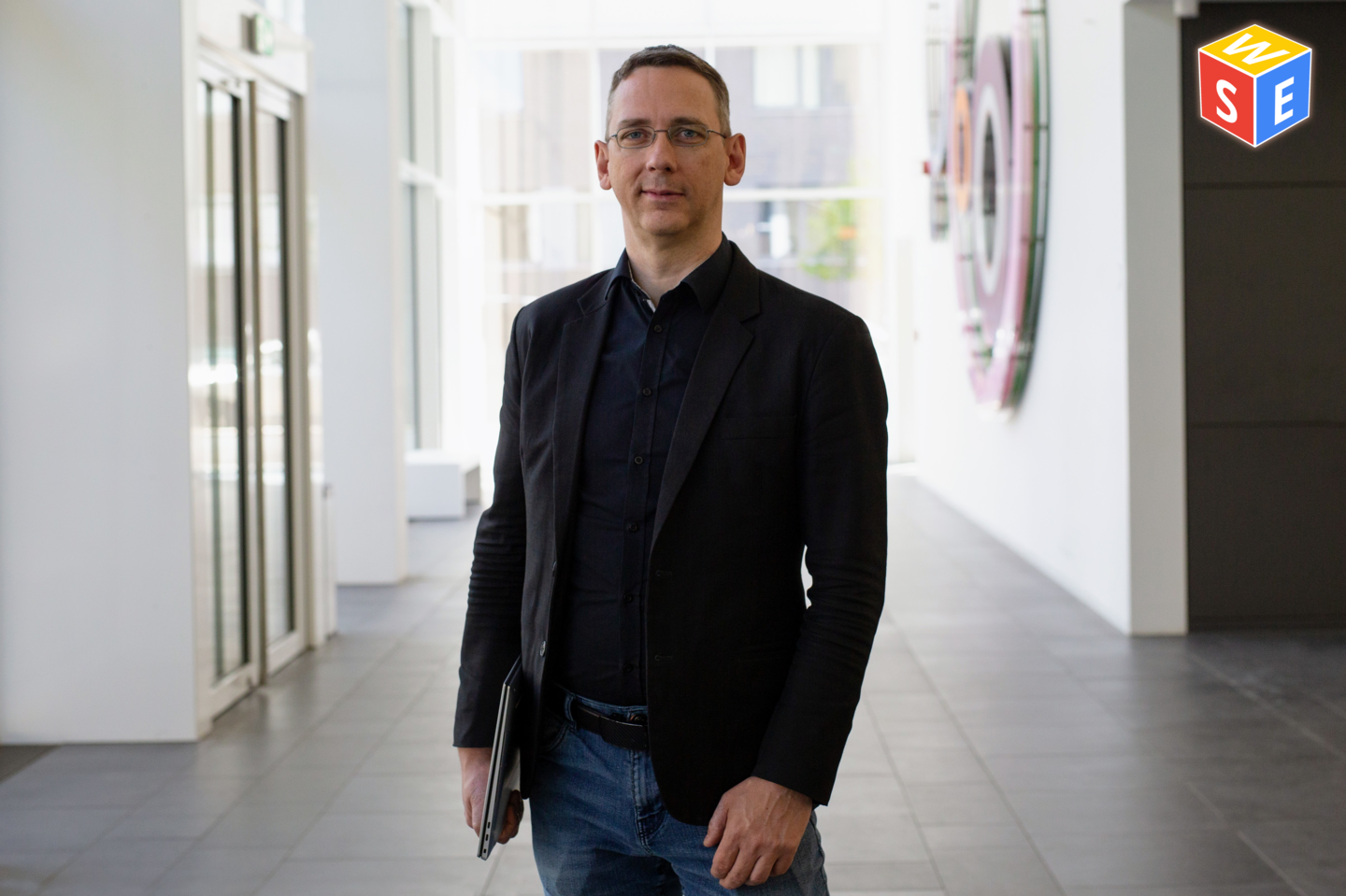
Marcello Balduccini is the Department Chair and Associate Professor of Decision and System Sciences at Saint Joseph's University's Erivan K. Haub School of Business. His research focuses on knowledge representation & reasoning, ontologies, agent architectures, and cybersecurity applications in cyber-physical systems (IoT) and cognitive robotics. He previously held roles as an Assistant Research Professor at Drexel University and Principal Research Scientist at Kodak Research Labs. Research Interests: Knowledge Representation & Reasoning Cyber-Security and Cyber-Analytics Ontology-Based Systems Natural Language Understanding Constraint Satisfaction Problems Trustworthiness in AI/Robotics Recent work emphasizes explainable AI (XAI) systems for Answer Set Programming (ASP), cybersecurity frameworks, and formal methods for cyber-physical systems. His over 100 publications span conferences like LPNMR and ICLP, addressing topics from actual causation to autonomous UAV mission planning. Dr. Balduccini has organized international conferences and received grants supporting AI research, including travel grants for knowledge representation conferences. His work bridges theoretical advancements with practical applications in smart grids, supply chain management, and SDG-aligned AI systems.
Dr. Dominik Sobania is a researcher at the Department of Business Informatics at Johannes Gutenberg University Mainz. His work focuses on the intersection of artificial intelligence and software development, particularly in the areas of Large Language Models (LLM), Genetic Programming (GP), and Genetic Improvement (GI). He explores how evolutionary computation can enhance program synthesis and improve software systems. His research interests include applying genetic algorithms to solve complex programming challenges, integrating LLMs with traditional GP techniques, and optimizing selection methods for better performance in symbolic regression and program analysis. Notable projects include ImageBreeder (combining diffusion models with evolutionary methods) and ComfyGI (automated image workflow improvement). Dr. Sobania's publications emphasize efficient algorithm design, such as down-sampled lexicase selection for GP, and critical assessments of LLM-generated software patches. He actively contributes to advancing AI-driven software development through empirical studies and comparative analyses of machine learning techniques. No scientific awards or formal advising records are mentioned in the provided texts.
Zhan Zhang is an Associate Professor at the Seidenberg School of Computer Science and Information Systems at Pace University , where he directs the Smart Health Lab . His research focuses on Human-Computer Interaction , Wearable Technology , and Healthcare Informatics , with an emphasis on Emergency Medical Services and Patient Engagement . Education: PhD in Information Science (Drexel University, 2016), MS in Information Management (Syracuse University, 2011), BS in Management Information System (Beijing University of Posts and Telecommunications, 2009) Research Areas: Human-Computer Interaction, Computer-Supported Cooperative Work, Wearable Technology, Healthcare Informatics, Clinical Decision Support Systems, Human-AI Interaction His research explores designing novel technologies to support information collection, decision-making , and collaboration in healthcare settings . Key projects include smart glasses for emergency care , patient-facing health data applications , and AI-powered clinical decision support systems . Publications span 15 recent articles in venues like JMIR , CHI , and JAMIA Open , covering topics from touchless interaction to AI explanations in healthcare . Scientific Awards: NIH R15 Grant (2024) AHRQ R21/R33 Grant (2024) Kenan Award for Teaching Excellence (2023) NSF CAREER Award (2023) Pace University Scholarly Research Grants (multiple) Wilson Faculty Fellowship (2019) He has advised numerous PhD and Master’s students like Enze Bai and Le Zhou , and his work has been supported by over $1.6 million in federal grants from NSF, NIH, and AHRQ.
Mattias Guns is an Associate Professor in the Department of Computer Science at the Faculty of Engineering Science, KU Leuven. He is a core member of the Declarative Languages and Artificial Intelligence (DTAI) research unit and holds affiliations with Leuven.AI and the KU Leuven Institute for Mobility (LIM). He serves on the Council of the Faculty of Engineering Science and the Programme Committees for Artificial Intelligence and Mobility and Supply Chain. His research centers on bridging Artificial Intelligence with constraint-based optimization, focusing on Explainable AI, Predict-and-Optimize frameworks, and machine learning integration for constraint solving. Key interests include human-centric explainability in decision systems, perceptual reasoning, and energy-efficient optimization models. His work addresses fundamental challenges in program synthesis, scheduling, and trustworthiness of AI planning systems. Recent publications reveal strong trends in fusing machine learning with declarative problem-solving paradigms. Notable themes include LLM-driven constraint modeling, mutational testing for solvers, step-wise explanation generation, and preference learning for unsatisfiable constraints. His research consistently targets real-world applications in supply chain optimization, inventory management, and perceptual reasoning systems. As principal investigator, he leads multiple major projects: TED-AI: Trustworthy Explanations for Decision Making in AI (2025) Towards Human-Centric Explainable Constraint Solving (2025-2028) SAELING: Energy Optimization via Learning (2024-2027) From Natural Language to Constrained Optimization (2023-2027) He has supervised PhD student Mulamba Ke Tchomba on machine learning-enhanced constraint solvers for perceptual reasoning. Within the DTAI research group, he contributes to KU Leuven's leadership in declarative AI through collaborative work on constraint programming foundations and applications. His team actively develops open-source tools like CMPpy for prediction-optimization integration and participates in European AI initiatives through Leuven.AI.
Dr Jake Renzella is a Senior Lecturer at the University of New South Wales' School of Computer Science and Engineering (CSE), where he serves as Co-Head of the Computing and Education research group and Director of Studies for Computer Science. His work focuses on Pedagogical Generative AI and education technology, with a particular emphasis on compiler tools like the Debugging C Compiler (DCC) and its AI debugger, as well as the Formatif teaching platform. Research: Premier computer science education conferences (SIGCSE TS, ICSE), AI-driven educational tools, learning analytics Collaboration: Key role in Day of AI Australia initiative Scientific Awards: 2024 Australian Financial Review Higher Education Innovation Award 2023 UNSW Engineering Faculty Education Award 2022 UNSW Teaching Excellence Award Associate Fellow of the Higher Education Academy Grants: $2,165,000 total including Google.org Generative AI Accelerator ($1.5M), NVIDIA Academic Grant (cloud GPU hours), and multiple Google/UNSW grants for inclusion research and teaching innovation.
Alexey Ignatiev is an Associate Professor in the Optimisation research group at Monash University's Faculty of Information Technology. Previously, he was a postdoctoral researcher and researcher at the University of Lisbon's Faculty of Sciences, focusing on SAT/SMT-based decision procedures. He holds a Ph.D. from the Matrosov Institute for System Dynamics and Control Theory (Russian Academy of Sciences), where his thesis explored parallel CDCL-BDD integration. His research emphasizes formal methods in AI, including explainable AI (XAI), SAT-based reasoning, and optimization for applications like software upgradability, model-based diagnosis, and fault localization. His work spans over 100 publications, with notable contributions to MaxSAT solving (RC2 solver), neuro-symbolic frameworks (NEUSIS), and rigorous explanations for machine learning models. He has collaborated extensively with institutions like the University of Lisbon and Monash University, contributing to advancements in formal verification and interpretable machine learning.
Xuan Wang is an Assistant Professor in the Department of Computer Science at Virginia Tech, affiliated with the Sanghani Center for Artificial Intelligence and Data Analytics. She holds a Ph.D. in Computer Science from the University of Illinois at Urbana-Champaign (UIUC), with additional M.S. degrees in Statistics and Biochemistry from UIUC, and a B.S. in Biological Science from Tsinghua University. Her research focuses on Natural Language Processing (NLP), Data Mining, AI for Sciences, and AI for Healthcare, emphasizing applications in complex reasoning with LLMs, multi-modal science foundation models, and healthcare informatics. Her work has been recognized through awards including the Nvidia Academic Grant (2025), Cisco Research Award (2025), and NSF NAIRR Pilot Award (2024-2025). She has organized workshops at ACL, VL/HCC, and ICDM, and serves on program committees for top conferences like NeurIPS, EMNLP, and KDD. Xuan's research spans scientific text mining (e.g., knowledge extraction from biomedical literature), multi-agent LLM systems for clinical triage, and foundational models for multi-omics data analysis. Her lab actively collaborates with institutions like Children’s National Hospital and the Fralin Biomedical Research Institute, with funding from NSF, CCI, and industry partners. Education: Ph.D. in Computer Science, UIUC (2022) M.S. in Statistics, UIUC (2017) M.S. in Biochemistry, UIUC (2015) B.S. in Biological Science, Tsinghua University (2013) Grants & Awards: NVIDIA Academic Grant (2025) – Small LLM Agent Systems Cisco Research Award (2025) – Complex Reasoning with LLMs NSF NAIRR Pilot (2024-2025) – Multi-omics Analysis Lab & Teams: Wang Lab focuses on AI-driven biomedical research, including single-cell omics analysis, brain signal interpretation, and LLM-based scientific discovery. Collaborations include the Virginia Tech Presidential Postdoctoral Fellowship program and industry initiatives like the Amazon + VT Center for Efficient ML.
Björn Hartmann is an Associate Professor in the Department of Electrical Engineering and Computer Science (EECS) at the University of California, Berkeley . His research focuses on Human-Computer Interaction (HCI) , Artificial Intelligence (AI) , and Programming Systems , with a particular emphasis on tools for design, end-user programming, and crowdsourcing systems. He is affiliated with the Berkeley Institute of Design , Jacobs Institute for Design Innovation , and CITRIS , where he explores embodied cognition in AR/VR environments through systems research. Education: Ph.D., Computer Science, Stanford University (2009) MSE, Computer and Information Science, University of Pennsylvania (2002) BSE/B.A., Digital Media Design/Communication, University of Pennsylvania (2001) His research spans creating interactive systems like 3D scene editors , crowdsourced feedback platforms , and AI-driven design tools , often combining controlled experiments with systems research . Recent publications highlight LLM applications in code design, VR-based creative workflows, and ethical frameworks for AI in art-making. His work has earned NSF CAREER and Sloan Research fellowships, as well as Best Paper awards at UIST and CHI. Key scientific contributions include developing methodologies for interactive vector graphics , asymmetric communication in VR , and AI-assisted UI feedback . He has also led educational initiatives such as the Berkeley Certificate in Design Innovation and courses like CS 160 and CS 260A .
Wei Yang is an Associate Professor in the Department of Computer Science at the University of Texas at Dallas, working within the Erik Jonsson School of Engineering and Computer Science. He holds a regular faculty position with an office in ECSS 4.225 and is actively engaged in teaching, research, and mentoring graduate students. His academic journey spans multiple prestigious institutions, and he currently serves on editorial boards for major software engineering journals. Dr. Yang received his Ph.D. in Computer Science from the University of Illinois at Urbana-Champaign in 2018, advised by Prof. Carl A. Gunter and Prof. Tao Xie. He earned his M.S. in Computer Science from North Carolina State University in 2013 under Prof. Tao Xie, and his B.E. in Software Engineering from Shanghai Jiao Tong University in 2011 under Prof. Jianjun Zhao. He was also a visiting researcher at the University of California, Berkeley, invited by Prof. Dawn Song. Dr. Yang's research spans multiple cutting-edge areas at the intersection of software engineering and security. His primary focus centers on software engineering for AI systems , particularly addressing challenges in deploying AI on edge devices like mobile phones, IoT devices, and autonomous vehicles. His pioneering work on efficiency robustness (initiated in 2019) explores how different inputs can trigger varying computational costs in neural networks, leading to novel attacks and defenses. He also develops infrastructure support for AI deployment , including compiler toolchains for dynamic-shaped neural networks and security analysis for IoT deployments. His research extends to mobile testing (since 2012), malware detection using expectation context analysis, and intelligent tools for software engineers and security researchers. Dr. Yang's publication record demonstrates a clear trajectory toward addressing critical challenges in AI security and efficiency. His recent work shows increasing focus on foundation models, large language models, and their security implications, while maintaining strong connections to practical software engineering challenges. The publications reveal a consistent pattern of high-impact research in top-tier venues across software engineering, AI, and security domains. NSF CAREER Award (2022) ACM SIGSOFT Distinguished Paper Award (2021) Amazon Research Award Dr. Yang actively mentors a large group of graduate and undergraduate students, with several PhD students currently working under his supervision. He serves as a faculty advisor for the ASTRO (AI Security and Trustworthiness Operations) team, which was selected as a red teaming participant in the Amazon Nova AI Challenge. His research is supported by significant grants, including the NSF CAREER award providing approximately $500,000 over five years. He emphasizes practical student development, helping them navigate the job market and transition from academic training to professional careers. Dr. Yang leads a vibrant research group focused on software engineering and security challenges in AI systems. His team, including the ASTRO group participating in the Amazon Nova AI Challenge, develops innovative techniques for testing, securing, and improving AI-based systems. The research environment fosters collaboration across multiple domains, with students working on projects ranging from mobile security to foundation model engineering.
Jens-Michalis Papaioannou is a prominent Researcher in clinical natural language processing (NLP) and medical informatics, with extensive publications in top-tier venues like ACL, LREC, and EMNLP. His work focuses on improving clinical decision support systems through advanced machine learning techniques. 2024 : Revisiting clinical outcome prediction for MIMIC-IV with biomedical transformers 2023 : Developing MEDBERT.de for German medical NLP and MedAlpaca conversational AI 2022 : Introducing ProtoPatient for interpretable diagnosis prediction 2021 : Creating self-supervised knowledge integration frameworks for admission note analysis His research spans seven major themes : Clinical outcome prediction from admission notes Cross-lingual knowledge transfer in medical NLP Prototypical network applications Data drift analysis in longitudinal datasets Knowledge integration techniques Model optimization for healthcare LLM interpretability frameworks He has collaborated with Wolfgang Nejdl, Alexander Löser, and Betty van Aken on 13+ publications , with over 445 citations. Notable contributions include: Novel patient similarity modeling approaches ICD code hierarchy integration methods Multilingual clinical model strategies Adversarial robustness analysis Medical conversational AI frameworks
Eugenia Chiappe is a Principal Investigator at the Champalimaud Center for the Unknown , leading the Chiappe Lab . Her research focuses on the neural circuits involved in self-movement estimation and sensorimotor integration in Drosophila melanogaster , combining behavioral paradigms , neural activity recording , and genetic tools to uncover mechanistic explanations for brain function in adaptive behaviors. Research highlights : Investigation of HS and VS cells in flies as self-motion estimators . Development of head-fixed walking paradigms for reversible neural perturbation. Identification of nonvisual signals modulating visual responses during locomotion. Exploration of neural dynamics encoding combined visual and motor inputs. Scientific contributions : Marie Curie Career Integration Grant PCIG13-GA-2013-618854 Bial Foundation grant 191/12 Collaborative projects on state-dependent sensory processing (Journal of Neuroscience, 2017) Advising and Collaborations : Mentored Daniel Tendero (External PhD Student) and Miguel Paço (INDP PhD Student). Collaborations with teams at Yale University , MIT , and University College London .
Ziyang Li is an Assistant Professor of Computer Science at Johns Hopkins University and a member of the Data Science and AI Institute. He holds a Ph.D. in Computer Science from the University of Pennsylvania (2025) and dual bachelor's degrees in Computer Science and Mathematics from UCSD (2019). Research Areas: Neurosymbolic Programming, AI4Code His research bridges programming languages and machine learning, focusing on neurosymbolic methods that combine symbolic reasoning with learning-based techniques. Applications span software security, computer vision, natural language processing, bioinformatics, and clinical decision-making. He developed Scallop , a neurosymbolic programming language, and Lobster , a GPU-accelerated framework for neurosymbolic applications, with impacts in cybersecurity and biomedical domains. Recent publications highlight neurosymbolic approaches for RNA structure prediction, Long COVID modeling, and safety-critical systems. His work emphasizes data-efficient learning, weak supervision, and hybrid AI for scalable reasoning. Scientific Awards : AWS Fellowship (2023) KPCB Fellows, Engineering (2018) NIH L3C Honorable Mention Award Li has mentored students including Jason Liu, Felix Zhu, and Eric Zhao, and served as Teaching Assistant for courses at UPenn and UCSD. He co-organized the TACPS Workshop and reviewed for NeurIPS, ICLR, and ICML.
Andreas Both is a Professor at the Faculty of Computer Science and Media at Leipzig University of Applied Sciences (HTWK Leipzig), where he leads the Web & Software Engineering (WSE) research group. His work spans multiple domains of computer science with a strong focus on bridging theoretical foundations with practical applications in software engineering, web technologies, and artificial intelligence. His research interests primarily revolve around Software Engineering (particularly test automation with AI and source code analysis), Web Engineering , Applied Artificial Intelligence (including Machine Learning, Deep Learning, and Large Language Models), Question Answering & Chatbots , and Data-driven Applications . He has developed innovative approaches in knowledge graph question answering systems, multilingual NLP applications, and privacy-preserving data sharing technologies using the Solid protocol framework. The analysis of his recent publications reveals a strong trajectory toward leveraging Large Language Models for knowledge graph applications, with particular emphasis on multilingual capabilities, explainability, and quality improvement in question answering systems. His work increasingly integrates privacy considerations with advanced AI techniques, particularly through Solid protocol implementations for data sovereignty. Best Paper Award at ICWE 2024 for AuthApp - a GDPR-compliant access granting system Outstanding Paper Award at ICWI 2024 for LLM-generated explanations in question answering systems Multiple first-place awards at the TEXT2SPARQL Challenge 2025 Best Paper Awards at ICWE 2025 and IEEE ISI 2025 CHI 2015 Honorable Mentions for search interface research Professor Both actively mentors students through the Google Summer of Code program and serves on the leadership board of the Architecture (ARC) working group of the German Computer Science Society (Gesellschaft für Informatik). His teaching portfolio includes Software Engineering, Question Answering & Chatbots, Software Projects, Project Management Practicum, Web Engineering, and Software Engineering & AI courses. His office hours are Thursdays from 11:15-12:15, requiring advance email appointment with topic specification.
Erdem Yörük is a Professor in Sociology at Koç University , with additional affiliations as Associate Member at the University of Oxford's Department of Social Policy and Intervention, and Affiliated Faculty at the Ford Institute of Human Security (University of Pittsburgh, Central European University). As Director of the Center for Computational Social Sciences at Koç University, he leads major research initiatives including the ERC-funded projects Emerging Welfare and Politus , along with the H2020 Social Comquant project. Ph.D. in Sociology from Johns Hopkins University (2012) M.A. in Sociology from Johns Hopkins University (2009) M.A. in Sociology from Boğaziçi University (2006) B.Sc. in Electrical and Electronics Engineering from Boğaziçi University (2002) His research integrates Computational Social Sciences with Political Sociology to analyze the interplay between Social Movements and Welfare Policy . Current work focuses on creating cross-national datasets ( Global Welfare Dataset (GLOW) and Global Contentious Politics Database (GLOCON) ) to explore how governments utilize social assistance as both Mobilization and Containment mechanisms in response to grassroots political activity. Major findings from his publications in journals like World Development , Governance , and Politics & Society demonstrate that Emerging Market Economies have developed distinct Populist Welfare State Regimes through interactions between Structural Pressures , Institutional Frameworks , and Political Agency . Notable among these is his 2022 book The Politics of the Welfare State in Turkey (University of Michigan Press), which presents a political explanation for Turkey's shift from employment-based social security to poverty-targeted assistance. He has organized EU-funded Training Workshops on topics including Social Media Data Research , Network Analysis with R , and Digital Trace Data applications. His methodological contributions span Random Sampling techniques for protest event coding, Multilingual Annotation protocols, and Machine Learning Integration with expert rule systems.
Professor Ute Schmid is a Full Professor of Cognitive Systems at the University of Bamberg, where she has been a faculty member since September 2004. She leads the Cognitive Systems Group within the Bamberg Center of AI (BaCAI), focusing on creating AI systems that generate human-like explanations and reasoning processes. Her research bridges cognitive science and artificial intelligence to develop methods for explanation generation, inductive programming, and interactive machine learning. Professor Schmid's work emphasizes practical applications of explainable AI across diverse domains including image classification, medical diagnosis, and educational technologies. Her research on contrastive explanations, near misses, and human-AI alignment has significantly advanced the field of XAI. She has also pioneered research on AI literacy, recognizing the growing importance of basic AI understanding for responsible tool usage by non-experts. Her publication record demonstrates exceptional productivity and impact, with numerous articles in top-tier venues including Nature Machine Intelligence, IEEE Transactions on Visualization and Computer Graphics, and the Journal of Web Semantics. Her 2025 paper 'Aligning generalization between humans and machines' represents a significant theoretical contribution to understanding human-machine cognitive alignment. Professor Schmid actively contributes to gender diversity research in computer science through studies examining why women pursue PhDs in the field. She has also made important contributions to computing education, investigating how students acquire programming skills and how AI tools like code generators are integrated into learning processes. As an educator and researcher, Professor Schmid maintains strong international collaborations, with co-authors spanning multiple countries and institutions. Her interdisciplinary approach is evident in her diverse publication venues and collaborative work that bridges computer science, cognitive science, education, and application domains.