Marija M. Stanojevic Veselinovic is an Associate Professor at the Department of Philological Sciences, Faculty of Pedagogical Sciences, University of Kragujevac in Jagodina. She specializes in German language teaching methodology, semantics, pragmatics, and translation studies. Her work integrates interdisciplinary approaches such as STEAM education and multilingual competence development. Full-time academic staff since 2007 PhD in German Language with Methodology (2024) Teaches courses like 'Integrated Language Skills in German' and 'Methodology of German Education' Research focuses on phraseology comparisons between Serbian and German, foreign language acquisition challenges, and pedagogical innovations in multilingual education. She actively participates in international projects like DAAD's LiMa program and Erasmus+ initiatives.
Tsukasa Kamigaki is an Assistant Professor at the Lee Kong Chian School of Medicine, Nanyang Technological University (NTU), Singapore. He leads a research laboratory focused on systems neuroscience, particularly the neural circuit mechanisms underlying executive function, working memory, and cognitive aging. His work integrates advanced techniques such as calcium imaging, optogenetics, and electrophysiology in mouse models. Ph.D. in Medicine, University of Tokyo School of Medicine (2010) B.S. in Neuroscience, University of Tokyo Graduate School of Arts and Sciences (2004) Dr. Kamigaki’s research centers on the prefrontal cortex and its role in executive control. He investigates how specific interneuron subtypes contribute to memory-guided behavior, how neural circuits reorganize during learning, and how aging and psychiatric disorders disrupt these circuits. His work bridges molecular, cellular, and systems-level neuroscience to understand cognitive function and dysfunction. His recent publications span high-impact journals including Nature Communications , Neuron , Nature Neuroscience , and Science . The articles reflect a strong trend in dissecting neuron-type-specific circuit functions, top-down modulation, and the neural basis of cognitive aging. His research increasingly focuses on translational models of cognitive decline. Human Frontier Science Program (HFSP) Long-Term Fellowship Uehara Memorial Foundation Postdoctoral Fellowship Japan Neuroscience Society Young Investigator Award MCB Outstanding Postdoc Award in Neurobiology at UC Berkeley Research Fellowships for Young Scientists (DC1), JSPS Dr. Kamigaki has mentored students and postdocs, and his lab actively pursues grants and collaborative research. He has delivered numerous invited talks at institutions such as RIKEN, UC Berkeley, and the University of Tsukuba. His lab, launched in 2019 at NTU, is equipped to study multiscale brain circuits and is contributing significantly to Singapore’s neuroscience research landscape. His research team, the Kamigaki Lab, investigates brain-wide and local circuit mechanisms for executive function. They utilize transgenic mouse models, in vivo imaging, and behavioral paradigms to explore how neural networks support cognition and how they deteriorate in aging and disease.
Dr. Omer Sella is a Research Associate in the Department of Computing at Imperial College London's Faculty of Engineering, specializing in DNA-based archival data storage. He explores molecular biology processes to optimize cost, throughput, and error rates in DNA storage systems. Education : PhD (University of Cambridge), MSc & BSc (Hebrew University of Jerusalem) His research bridges computing and biological systems, focusing on: DNA data encoding/decoding mechanisms Error correction in biological storage Cost-effective archival storage solutions Applications of bioinformatics to computing Key article trends include DNA storage reliability, motif-based encoding tools, and comparative studies of glass vs. DNA as archival media. He also investigates high-speed networking and coding theory applications.
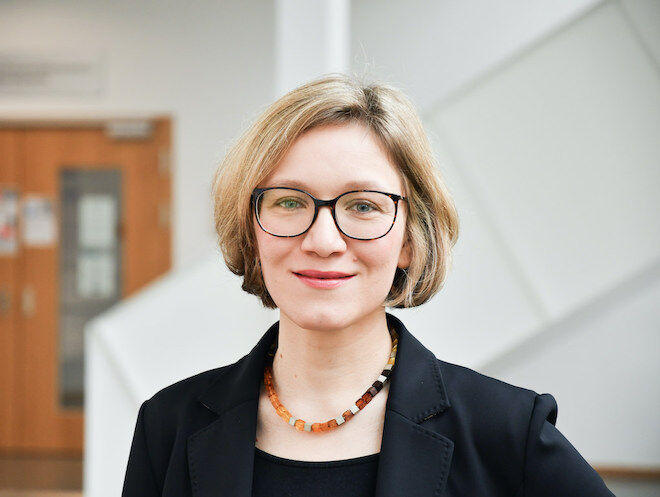
Dr. Becki Elkins is a Professor in Student Affairs Administration at the University of Wisconsin-La Crosse , where she has taught for 10 years. She holds a Ph.D. in Student Affairs Administration and Research from the University of Iowa, an M.S. in Professional Studies in Education from Iowa State University, and a B.S. in Journalism (Public Relations) from the University of Kansas.
Chao Yin is a researcher at Shanghai University , Department of Computer Engineering and Science. His work spans multiple domains including Machine Learning, Cloud Computing, Fault Diagnosis, and Supply Chain Optimization. Key research areas: Machine Learning , Cloud Computing , Quantum Computing , Supply Chain Systems , Network Security Scientific Contributions (2024-2025): Developed heterogeneous graph neural networks for automotive supply chain analysis Created MSDF-VAE cloud-edge fault diagnosis framework using transfer learning Proposed quantum metrology methods with Heisenberg-limited precision Designed LARP pseudonym protocol for V2X communication Optimized fog computing resource scheduling with hybrid metaheuristics Prior Work (2012-2023): Contributed to fluid animation feature preservation from single images Developed label distribution learning for facial age estimation Designed erasure coding storage systems for big data Created multi-agent manufacturing networks in cloud environments
Friederike Käte Evelyn Marie-Luise Lüpke is a Professor of African Studies at the University of Helsinki , affiliated with the Faculty of Arts and Department of Languages . She leads the Afristadi research forum and contributes to the Helsinki Institute of Sustainability Science (HELSUS) and Helsinki Inequality Initiative (INEQ) . Research focuses on West African languages (Mandé, Atlantic families) and small-scale multilingualism Develops LILIEMA (Language-independent literacies for inclusive education) Key areas: verbal argument structure, nominal classification, sociohistorical linguistics Selected Publications: Grammar of Jalonke argument structure, Oxford Guide to Atlantic languages, and work on Baïnounk Gujaher. Recent articles explore situational languaging models, multilingual education, and decolonial approaches. Projects include the LILIEMA literacy program (2019-2023), Crossroads on Senegambian multilingualism (2014-2018), and DoBeS documentation initiatives. Current 2023-2024 work at the Helsinki Collegium for Advanced Studies examines multilingualism's role in decolonization research.
Marcus Andreas Kracht is a professor at Bielefeld University (Department of Linguistics and Literary Studies) and holds a position at Károli Gáspár Reformed Church University in Hungary. His academic career spans mathematics, cognitive science, and linguistics, with habilitations in both mathematics and general linguistics. Freie Universität Berlin: PhD in Mathematics (1991), Habilitation in Mathematics (1997) University of Edinburgh: MA in Cognitive Science (1988) University of Potsdam: Habilitation in General Linguistics (1999) His research bridges modal logic, computational linguistics, and formal semantics. Key areas include logic for computer scientists, spatial semantics, syntactic theories, and compositionality. He has supervised PhD students like Jens Michaelis and served as opponent in doctoral defenses at UCLA and Bielefeld University. Recent publications focus on compositionality, logic of action, and markup language foundations in computational linguistics. His work has been recognized with prestigious awards including the Heisenberg Research Fellowship and Studienstiftung des Deutschen Volkes scholarship. Organized ESSLLI Summer School and Mathematics of Language conferences Guest professorships at Brandenburgische Technische Universität Cottbus and University of California, Los Angeles
Christiana Themistocleous is an Associate Professor in Sociolinguistics at the University of Reading's School of Psychology and Clinical Language Sciences. Her research focuses on multilingualism in conflict-affected borderline communities, particularly Cyprus, using linguistic landscape and ethnographic approaches to analyze identity, ideology, and social cohesion. PhD in Linguistics (University of Manchester) MA in Linguistics (University of Manchester) BA (Hons) in English Language and French (Anglia Ruskin University) Her work explores multilingual public signs, media representation of multilingualism, code-switching in digital communication, and the ideological implications of language practices. She has published extensively on Cypriot multilingualism, linguistic landscapes of conflict, and digital language innovation. Christiana was awarded Fellowship of the Higher Education Academy (FHEA) and has received grants from the British Academy/Leverhulme and the Council for British Research in the Levant for her projects on multilingualism in Cyprus. She supervises five PhD students and teaches modules on English Language in Society, Language and Gender, and Sociolinguistics at both undergraduate and postgraduate levels.
Daria Morgounova Schwalbe is an Associate Professor at the University of Southern Denmark (SDU), affiliated with the Clinical Institute (KI), Odense University Hospital (OUH), and the Center for Research in Patient Communication (Odense). Her interdisciplinary research bridges medical communication, sociolinguistics, and Arctic anthropology. Her research interests include medical communication , patient-provider interaction , cognitive ethnography , language ideologies , language shift , and indigenous cultures in the Arctic. She explores how language, culture, and cognition shape healthcare access and outcomes, particularly among marginalized populations such as Greenlanders in Denmark and Arctic indigenous communities. The recent publications (2020–2025) emphasize health communication, patient non-attendance, clinical training models, and public health challenges, reflecting a strong focus on practical healthcare applications. Earlier works (2004–2018) delve into linguistic dynamics among Yupik populations, using ethnographic fieldwork across Bering Strait. Collectively, her articles span themes of language contact , cultural identity , medical education , and health inequalities . She actively contributes to public discourse through commentaries in media outlets such as Altinget and academic journals, addressing issues like doctor-patient understanding and systemic healthcare barriers. She has been involved in multiple research projects and Danish Chukotka expeditions, integrating interdisciplinary methods. Her work is published in journals such as Clinical Epidemiology , Journal of Medical Education and Curricular Development , Etudes Inuit Studies , and Alaska Journal of Anthropology . She holds a PhD from the University of Copenhagen (2010) on discourse in Arctic villages.
Professor Xiang Zhang serves as President and Vice-Chancellor of The University of Hong Kong , combining academic leadership with active research in speech processing and machine learning. His work bridges theoretical and applied advancements in speech enhancement, depression detection, and multilingual speech recognition. Speech Enhancement : Comparative studies on long-context networks and selective state space models Acoustic Representation : Feature codecs, landmark extraction, and frame-rate analysis Mental Health Applications : Depression detection using large language models and speech timing Code-Switching Recognition : Interactive language biasing and alignment techniques Interdisciplinary Research : Unidirectional brain-computer interfaces and quantum language models Recent publications highlight trends in transformer alternatives like Mamba architectures, self-supervised learning for speech tasks, and efficient diffusion-based audio processing. His work spans technical reporting, open-source dataset development, and pedagogical innovations in computational linguistics.
Uwe Gellert serves as University Professor at the Faculty of Education and Psychology, Free University of Berlin, leading the Mathematics Education and Society research group since 2010. His academic career spans prestigious institutions including Universität Hamburg and international guest professorships in Bolivia, Chile, and Frankfurt, establishing him as a leading sociological voice in mathematics education. His educational trajectory features a Physics studies period at INSA Lyon (1987, DAAD-funded), Mathematics and Physics First State Examination at TU Berlin (1985-1991), Ph.D. (1997), and Habilitation (2002), all from Freie Universität Berlin. This interdisciplinary foundation informs his critical approach to mathematics pedagogy. Gellert's research centers on seven interconnected domains: social inequalities in mathematics education; mathematics-language relationships; teacher education; sociology of mathematics; crosscultural studies; classroom interaction microanalysis; and affective dimensions of mathematical engagement. He applies Bernstein's sociological frameworks to dissect how power structures manifest in mathematical discourse, particularly examining how classroom interactions perpetuate or challenge social hierarchies through linguistic practices and assessment rituals. His recent publications reveal a pronounced critical-sociological orientation, analyzing how 'mathematics for all' initiatives intersect with neoliberal policies, how academic performance gets socially constructed through teacher-student interactions, and how digital technologies reshape mathematical epistemologies. Key thematic threads include the yellowing of critical pedagogies under institutional pressures, cross-national pathway disparities, and the linguistic construction of mathematical competence in multilingual contexts. Through extensive editorial work including major C.I.E.A.E.M. sourcebooks and encyclopedia contributions, Gellert has shaped international discourse on mathematics education's sociopolitical dimensions. His theoretical integrations bridge anthropology, sociology, and linguistics to develop nuanced frameworks for understanding mathematics classroom dynamics. As an educator, Gellert has pioneered approaches connecting teacher education theory with practical classroom application, emphasizing how professional development must address the structural constraints shaping teaching practices. His work consistently examines the tension between teacher agency and institutional determinants in educational reform implementation. The Mathematics Education and Society group maintains active Latin American collaborations, conducting micro-ethnographic studies that reveal how global educational policies manifest in local classroom interactions, particularly examining how socioeconomic status and linguistic diversity intersect with mathematical reasoning development.
Agustina Asenjo Barahona is a Senior Scientist at the Spanish National Research Council (CSIC), affiliated with the Institute of Materials Science of Madrid (ICMM) where she leads the Nanomagnetism and Magnetization Processes Group. She serves as Deputy Director of ICMM-CSIC (2013-2018) and is an elected Member of the European Magnetism Association's General Council (2020-present). As Co-founder of the ICMM Equality Commission and Member of CSIC's Commission for Women and Science (since 2024), she actively promotes gender equity in science. Her research focuses on Advanced Magnetic Force Microscopy development, particularly Variable Field-MFM for studying magnetization reversal in cylindrical magnetic nanowires. She has expanded into biomagnetic materials (nanoparticles and bactericidal surfaces) and energy materials (Nernst Effect in multilayers). Her work integrates nanoscale magnetic imaging with applications in biomedicine and energy harvesting, demonstrated through patented MFM probe technology and high-impact publications. Analysis of her 15 most recent publications reveals three dominant research trajectories: (1) Fundamental studies of topological magnetic structures (skyrmions, vortices) in cylindrical nanostructures; (2) Development of quantum-enabled magnetic imaging techniques using NV centers; (3) Energy applications through magneto-thermoelectric effects. Her work consistently bridges fundamental nanomagnetism with practical applications in data storage, biomedicine, and sustainable energy. 2023 RSEF-BBVA Award for Best Dissemination Contribution Premio RSEF-Fundación BBVA for '40 años viendo átomos' Elected Member of European Magnetism Association Council (2020) Patent P201731292: Customized MFM probes based on magnetic nanorods As an active mentor, she has supervised 4 completed PhD theses with 3 ongoing, plus 17 postdocs and students. She leads significant research projects including 'Thermomagnetic Materials with Perpendicular Magnetic Anisotropy' (PID2022-138169OB-I00) and coordinates the Spanish Network on Spintronics (RED2022-134649-T). Her leadership extends to co-organizing UIMP Summer Courses and Madrid's Teaching Training Program, alongside extensive outreach activities including European Researchers' Night and Science & Art initiatives. She directs ICMM's Near-Field Microscopy Service within Madrid's Laboratory Network and maintains strong international collaborations through projects like the Severo Ochoa program. Her laboratory combines advanced magnetic imaging capabilities with nanofabrication expertise to address challenges in magnetic data storage, biomagnetic applications, and energy conversion.
Herr Henriette Hoppe ist Senior Lecturer im Fachbereich Germanistik an der Pedagogical University of Schwäbisch Gmünd. Sie ist seit 2022 in dieser Position tätig und war zuvor von 2009–2022 als abgeordnete Lehrerin an der gleichen Institution beschäftigt. Ihr akademischer Werdegang umfasst ein Germanistik- und Romanistik-Studium an der Freien Universität Berlin (1991–1997), ein Referendariat in Saarbrücken (1997–1999), sowie wissenschaftliche Tätigkeiten an der Goethe-Universität Frankfurt am Main (2000–2006) und Schuleinsätze als Gymnasiallehrerin (2004–2009). Schwerpunkte: Theorie und Praxis des Literaturunterrichts Literarisches Schreiben Einsatz digitaler Medien im Literaturunterricht Medienadaptionen in der Kinder- und Jugendliteratur Kritische Auseinandersetzung mit Identitätskonstruktionen Entwicklung multimodaler Literacy-Kompetenzen Aktuelle Projekte: Kinderkinofestival Kikife (Konzeption und Leitung der Kinderjury) Campusredaktion CrossMedia (digitale Medienpraxis) Profun.Dig (Videoproduktion im Deutschunterricht) Publikationen: Fokussieren auf narrative Strukturen in Kinder- und Jugendliteratur, medienübergreifende Lehrmaterialanalyse, digitale Diagnosemethoden und gender-spezifische Figurenkonstruktionen. Die Arbeiten decken von Schulbuchgestaltung bis audiovisuelle Lehrstrategien ein breites Spektrum der literaturdidaktischen Forschung ab.
Prof. Dr. Hanna Fischer is a Professor of German Linguistics at the Institute of German Studies, University of Rostock, within the Faculty of Philosophy. Her work focuses on the intersection of historical linguistics, dialectology, and language variation, with particular expertise in German temporal forms and regional language phenomena. She leads research on Low German in Mecklenburg-Western Pomerania and directs several digital humanities projects that bridge traditional linguistic research with modern computational approaches. Dr. Fischer's research interests span multiple dimensions of German linguistics. She has made significant contributions to understanding the Präteritumschwund (decline of the preterite tense) in German dialects, examining how this grammatical shift has occurred across different regions and historical periods. Her work on temporal forms and aspectuality has provided new insights into the relationship between standard language and regional varieties. She is particularly known for her innovative approach to digital dialectology , creating citizen science projects that engage the public in language documentation. Her research on Low German has resulted in the development of the Digital Low German Atlas for Mecklenburg-Western Pomerania (DiNA), a groundbreaking resource for regional language preservation. Analysis of Dr. Fischer's recent publications reveals a clear trajectory toward increasingly interdisciplinary research that combines traditional linguistic methods with digital humanities approaches. Her work demonstrates growing emphasis on computational linguistics techniques applied to historical language data, particularly through projects like "Abrogans:alienatus," a digital edition of the oldest German dictionary. There's also a pronounced trend toward applied linguistics , with significant attention to how linguistic research can inform teacher education and classroom practice, as evidenced by her "Sprachvariation@Schule" platform. Her research increasingly incorporates cross-disciplinary perspectives from sociology, history, and computer science to address complex questions about language variation and change. Dr. Fischer actively mentors doctoral students and has established a robust research environment that includes multiple research assistants and student collaborators. She leads the Office "Low German in Mecklenburg-Western Pomerania" and organizes the Rostock Linguistic Colloquium (RoLiKo), which brings together linguists from various disciplines to discuss current research. Her team includes research assistants, doctoral students working on projects like "Dynamics and Stability of Linguistic Representations," and numerous student assistants who contribute to her various research initiatives. Among her notable projects are the Digital Low German Atlas for Mecklenburg-Western Pomerania (DiNA), the "Abrogans:alienatus" digital edition of the oldest German dictionary, and "Sprachvariation@Schule," a platform designed to incorporate language variation into German language teaching. She also developed the "Welcome to Bavaria" phrasebook app and "GrammatikPro" online language skills tests. Her research frequently involves collaboration with institutions across Germany and internationally, as evidenced by her partnership with the Institute for Cultural Research Graubünden in Switzerland.
Professor Jeanette Sakel is a Professor of Language and Linguistics at the University of the West of England (UWE Bristol), where she has been employed since 2007. She currently serves within the Faculty of Arts, Creative Industries, and Education (ACE), bringing extensive expertise in linguistic fieldwork, language contact phenomena, and Amazonian languages. Between 2017-2023, she held the leadership position of Director of Student Experience, overseeing key learning, teaching, and quality processes across the faculty. Her educational background includes a PhD in Linguistics (2003) from the University of Nijmegen & Max Planck Institute for Evolutionary Anthropology, an MA in Linguistics (1999) from Aarhus University, and a BA in Linguistics and Finnish (1998) from the same institution. Professor Sakel's research focuses on the intersection of language contact, typology, and linguistic fieldwork, with particular emphasis on Amazonian languages like Mosetén and Pirahã. She has conducted extensive fieldwork in Bolivia on Mosetén, in Brazil on Pirahã, and in Greenland on Kalaallisut. Her work explores grammatical contact phenomena, syntactic complexity, and the mechanisms of language transfer between bilingual communities. She is particularly interested in how indigenous languages interact with dominant languages like Spanish and Portuguese, documenting structural changes and borrowing patterns. Her publication record demonstrates consistent focus on language contact phenomena across Amazonian languages, with recent work examining historical sources of grammatical borrowing in Mosetén (2024) and comparative studies of Chimane-Mosetén (2023). Earlier works established foundational research on Pirahã-Portuguese contact and Mosetén-Spanish integration. Her publications span descriptive grammar, theoretical linguistics, language acquisition, and practical fieldwork methodologies. Her recognition as a National Teaching Fellow highlights her significant contributions to education. She has authored two influential textbooks: 'Study Skills for Linguistics' (2015) and 'Linguistic Fieldwork' (2012), co-authored with Dan Everett. She also maintains an educational YouTube channel explaining basic grammatical terminology. Professor Sakel has supervised eight PhD students and actively welcomes new doctoral candidates working on minority languages, typology, language contact, second language acquisition, language teaching, Chinese and Sinitic languages, and Amazonian languages. Her leadership experience includes chairing validation panels, developing policies, and establishing academic partnerships. She is an accomplished polyglot who has worked on more than 50 languages worldwide and is currently learning Mandarin Chinese.

26e1cd69-5b80-403a-916b-cba43e9849f6.jpg?sfvrsn=75d78441_12)