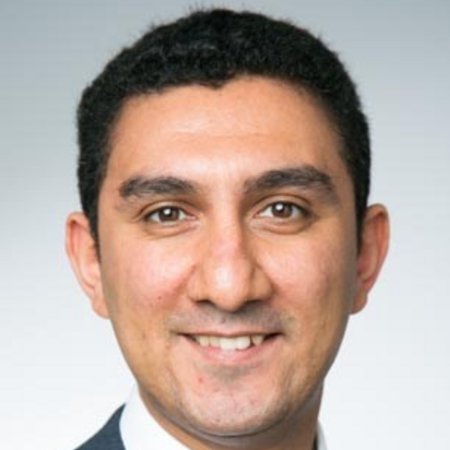
Navid Bayati is an Associate Professor at the University of Southern Denmark, affiliated with the Institute of Mechanical and Electrical Engineering and the Centre for Industrial Electronics. He leads the Control and Protection of Smart Grids (CAP-SG) group and focuses on renewable/hybrid power systems, microgrid protection, and grid code compliance. Education: Ph.D. in Power Systems & Microgrid Protection (2020, Aalborg University); M.Sc. in Power Systems (2017, Amirkabir University of Technology) His research spans renewable energy integration , transient analysis , grid interconnection , and digital twin applications . Recent work includes machine learning for carbon emission prediction, fault localization in DC microgrids, and supercapacitor resilience in hybrid systems. Collaborations include projects like IEA Wind Task 50 and RePoSys , addressing grid renovation, life cycle assessment, and digital twin resilience. His teaching portfolio covers power electronics , energy management , and microgrid control .
Karunanayake Esselle (Karu P. Esselle) is a Distinguished Professor in Electromagnetic & Antenna Engineering at the University of Technology Sydney (UTS), School of Electrical and Data Engineering. He is a world-renowned expert in telecommunications, defence, and space technologies, leading the MetaSteerers research team. His affiliations include roles as Senior Editor for IEEE Access, Visiting Professor at Macquarie University, and Fellow of the Royal Society of New South Wales, IEEE, and Engineers Australia. Education includes a BSc (First Class Hons) in Electronic Engineering from the University of Moratuwa (Sri Lanka), and MASc/PhD in Electrical Engineering from the University of Ottawa (Canada). Research focuses on electromagnetic engineering, antenna design (including resonant cavity, metasurface, and millimeter-wave antennas), wireless communication systems, and applications in defence/space. His work emphasizes high-gain beam-steering antennas, wearable/implantable devices, satellite communications, and electromagnetic shielding. Recent trends include meta-steering techniques, CubeSat-compatible arrays, solar-cell-integrated antennas, and 3D-printed metasurfaces. Awards include the Premier’s Prize for Innovation Leadership (2024), Australian Eureka Prize (2023), Professional Engineer of the Year (2022), and 21 major prizes in 5 years. Key recognitions span innovation, mentorship, and research excellence across defence, space, and engineering sectors. Advises undergraduate/postgraduate students in engineering capstones and internships. Secured research grants exceeding $35 million, including ARC grants and the $245M SmartSat CRC. Leads labs like the MetaSteerers team and collaborates with defence/space industries.
Lisa Yan serves as a Teaching Professor in the Department of Electrical Engineering and Computer Sciences at the University of California, Berkeley, appointed in Spring 2022. She teaches core computer science education courses including CS 195 (Social Implications of Computer Technology), CS H195 (Honors variant), CS 294-189 (Teaching Process Design), and CS 375 (Teaching Techniques), holding regular office hours in Soda Hall for student engagement. Her academic credentials include: PhD in Electrical Engineering from Stanford University (2019) MS in Electrical Engineering from Stanford University (2015) BS in Electrical Engineering and Computer Science from UC Berkeley (2013) Dr. Yan's research centers on data-driven analysis of student learning in large-scale computer science courses, with significant contributions to computing ethics pedagogy and teaching assistant development programs. Her work develops innovative methodologies for assessing student earnestness in interactive lectures, creating flexible learning extensions, and designing integrity-focused assessments. Earlier research focused on software-defined networking and network switch performance optimization, demonstrating technical depth before her pivot to educational innovation. Current projects emphasize scalable teaching techniques and mastery learning frameworks that address challenges in modern CS education. Analysis of her 14 publications (2013-2024) reveals a strategic shift from computer networking (pre-2018) to computer science education research (2018-present). Recent work (2020-2024) dominates in venues like SIGCSE, featuring tools such as Otter-Grader for Jupyter notebook grading and the Earnest Insight Toolkit for lecture participation analysis. This evolution highlights her commitment to solving practical educational challenges through data analysis and tool development, particularly for large undergraduate courses. She received recognition through: The Faculty Award for Outstanding Mentorship of GSIs (2024) Lisa actively mentors Graduate Student Instructors and collaborates with educational technology initiatives. Her research team includes dedicated support staff like Taylor Kaserman (taylor.kase@berkeley.edu), reflecting structured collaboration in developing teaching innovations. She contributes to curriculum design committees within EECS, focusing on assessment integrity and scalable pedagogical methods for growing student populations. Her work operates through the EECS department's educational infrastructure, utilizing Soda Hall resources for both teaching coordination and research development, with strong connections to Berkeley's broader computing education ecosystem.
Professor Amr Rizk is the Director of the Networks and Communication Systems (NCS) Lab at the University of Duisburg-Essen, where he has been serving as Professor since April 2021. Previously, he was Assistant Professor at Ulm University (2019-2021) and completed his habilitation at TU Darmstadt in 2019. His academic journey includes research positions at prestigious institutions including University of Massachusetts Amherst, University of Warwick, and TU Darmstadt where he was an Athene Young Investigator. Professor Rizk's research spans multiple aspects of networking and communication systems with a particular focus on network performance analysis, stochastic modeling, and practical implementations. His work bridges theoretical foundations with real-world applications, especially in content delivery, video streaming, and network protocols. He has made significant contributions to network calculus, quality of experience optimization, and novel approaches to congestion control and caching mechanisms. His publication record demonstrates consistent high-impact contributions across top networking conferences and journals. Recent work shows a growing emphasis on programmable data planes, AI/ML applications in networking, and advanced techniques for network measurement and performance prediction. His research group at Duisburg-Essen maintains strong connections with both academic and industrial partners in the networking ecosystem. Best Paper Award at ACM MMSys Conference (2023) Distinguished TPC Member for IEEE INFOCOM (2020, 2022) Best Paper Award at ACM/USENIX Middleware Conference (2017) Athene Young Investigator Award, TU Darmstadt (2017) Professor Rizk serves as Associate Editor for Elsevier Computer Communications and has extensive experience with research funding bodies as a reviewer. His leadership extends to conference organization, including roles as PC Co-Chair for IEEE MIPR (2023) and Steering Committee member for Workshop on Network Calculus (2022). He maintains active participation in numerous top networking conferences as Technical Program Committee member, reflecting his standing within the international networking research community.
Yu Huang is an Assistant Professor of Computer Science at Vanderbilt University with a secondary appointment in the Department of Teaching and Learning at the Peabody School of Education. She is affiliated with the Institute for Software Integrated Systems, the Frist Center for Autism and Innovation, the Vanderbilt Lab for Immersive AI Translation (VALIANT), and the Vanderbilt LIVE Learning Innovation Incubator. Her research focuses on human-centered AI for software engineering, combining human cognition with machine intelligence to enhance software development processes. Educated at the University of Michigan (PhD, 2021), University of Virginia (MS, 2015), and Harbin Institute of Technology (BS, 2011), her work spans software engineering, human factors, AI, and medical imaging. Key projects include the MIND Lab, studying programmer expertise and cognitive processes, and the HumanAISE workshop on Human-Centered AI for Software Engineering. Huang has received significant recognition, including the 2025 ICPC Vaclav Rajlich Early Career Achievement Award and three ACM SIGSOFT Distinguished Paper Awards. Her research is supported by NSF, GitHub, and Vanderbilt initiatives. She advises numerous graduate and undergraduate students, emphasizing diversity and innovation in programming education.
Julie Boland is a Professor at the University of Michigan's College of Literature, Science, and the Arts, affiliated with the Psychology and Linguistics departments. She holds a PhD from the University of Rochester and leads the Psycholinguistics Lab, focusing on interdisciplinary language processing research. Her work explores interfaces between word recognition, syntax, semantics, and sociolinguistic variables, with special attention to bilingual processing and executive function roles. Education: PhD, University of Rochester. She teaches research methods and language psychology, advising numerous PhD candidates. Key research themes include sociolinguistic priming, bilingual ambiguity resolution, and language processing in digital contexts. Her findings highlight how dialect variation, cultural background, and technology impact comprehension and production. Research Interests: Psycholinguistics, sentence processing, lexical access, sociolinguistic influences, bilingualism, and cognitive mechanisms. Labs: Director of the Psycholinguistics Lab, promoting interdisciplinary collaboration across Psychology and Linguistics. Teaching: Courses on language psychology and research methods for Psychology undergraduates/graduates. Recent work addresses conversational dynamics in Zoom interactions, cultural differences in visual attention, and L2 structural priming effects. She emphasizes practical applications of psycholinguistic insights for education and technology design.
Chen Binbin is an Associate Professor and Associate Head of Pillar (Innovation and Enterprise) in the Information Systems Technology and Design (ISTD) pillar at Singapore University of Technology and Design (SUTD). He serves as Deputy Director for the Future Communications Research and Development Programme (FCP), Singapore. Previously, he was a Principal Research Scientist at the Advanced Digital Sciences Center (now Illinois ARCS), affiliated with the University of Illinois. Education: PhD in Computer Science from National University of Singapore, and Bachelor's from Peking University. Research focuses on wireless networking, distributed systems, and cyber security for critical infrastructures like smart grids and industrial control systems. His work addresses secure communications, intrusion detection, and resilience against cyber-physical threats. Notable contributions include error-estimating coding, provenance verification in ICS, and AI-driven network security solutions. Key awards include the 2010 ACM SIGCOMM Best Paper Award for error-estimating coding research. His grants span agencies like Singapore's National Research Foundation (NRF), Cyber Security Agency (CSA), and Energy Market Authority (EMA). He leads projects on secure smart grid communication, industrial control system defense, and AI-enhanced cybersecurity tools. Technical leadership involves developing frameworks like CyberSAGE for security assessment and CMD for IoT malware detection. Active in collaborations with industry and government, his work bridges theory and practice in securing critical infrastructure systems.
Rob van der Goot is an Associate Professor at the IT University of Copenhagen , specializing in robustness in natural language processing (NLP). His work focuses on non-standard language varieties, low-resource languages, and scenarios with limited training data, particularly in syntactic tasks. He is involved in projects like MaChAmp and MoNoise , which address multi-task learning and lexical normalization. Supervises PhD student Arzu Burcu Güven and mentors postdoc Elisa Bassignana Member of the HPC committee at ITU and the AI Pioneer Center Active in research collaborations including the COST Action Multi3Generation His research has earned accolades, including a Best Paper Award at WNUT 2022, an Outstanding Paper Award at EACL2021, and the Most Reviews Award at NAACL 2019. He frequently presents at international venues, such as LMU, DeiC Konference, and the University of Helsinki. His recent publications explore cross-domain dialogue act classification, code-switched lexical normalization, and multi-task learning frameworks. His work has been featured in media outlets like Omrop Fryslan and Linear Digressions. 2022 : Best Paper Award for Increasing Robustness for Cross-domain Dialogue Act Classification on Social Media Data (WNUT) 2021 : Outstanding Paper Award for MaChAmp (EACL) 2019 : Most Reviews Award (NAACL) As part of the HPC committee and DeIC Science Forum, he contributes to computational infrastructure and data management initiatives. His supervision history includes advising Anders Giovanni Møller (shared first place in WNUT 2021 shared task) and collaborations with researchers like Barbara Plank and Malvina Nissim.
Teresa Fort is an Associate Professor at the Tuck School of Business at Dartmouth College , focusing on international trade, industrial organization, and political economy. She teaches core microeconomics and seminars on firm globalization, while maintaining affiliations as a Faculty Research Fellow at the National Bureau of Economic Research (NBER) and a Research Affiliate at the Centre for Economic Policy Research (CEPR). Her work bridges economic theory with empirical analysis using U.S. Census Bureau data. PhD , University of Maryland (2012) MA , University of Maryland (2008) BA , University of Virginia (2000) Her research explores global production fragmentation , technology's impact on offshoring , and globalization's heterogeneous effects . Key findings include: technology's disproportionate role in domestic production reorganization, the rise of factoryless goods producers redefining manufacturing statistics, and evidence on how trade policies create interdependent sourcing dynamics . Recent publications in Review of Economic Studies and Journal of Political Economy Macroeconomics examine tariff escalation welfare effects and multinational firm trade patterns . Her work has been featured in major media outlets including Financial Times , The Wall Street Journal , and Marketplace . NBER Faculty Research Fellow CEPR Research Affiliate Coauthor of influential studies on global value chains She actively participates in academic conferences, recently discussing topics like multinational firm strategies and labor mobility during recessions . Her empirical methods often involve novel data infrastructure projects, including redesigning the U.S. Census Bureau's Longitudinal Business Database and County Business Patterns imputation techniques.
Shantanu Jadhav is a Professor of Psychology at Brandeis University, with affiliations to the Neuroscience Program, the Volen National Center for Complex Systems, and the Sloan-Swartz Center for Theoretical Neurobiology. He earned his B.Tech. from IIT Bombay, Ph.D. from UC San Diego, and completed postdoctoral training at UCSF and UC Berkeley. Research Focus: Neural mechanisms of learning, memory, and decision-making in rodent models Investigation of hippocampal-prefrontal interactions via multielectrode recordings, optogenetics, and computational analysis Role of neural oscillations (theta, gamma, sharp-wave ripples) in memory consolidation and cognitive flexibility Implications for neurological disorders like Alzheimer’s, autism, and schizophrenia Recent work highlights the coordination of dopamine activity with rule representations in the prefrontal cortex and hippocampus, the role of prefrontal ripples in suppressing hippocampal reactivation during sleep, and geometric transformations in cognitive maps enabling cross-environment generalization. His lab has shown that awake sharp-wave ripples are critical for spatial memory and that cross-region neural synchronization underpins memory-guided decisions. Scientific Recognition: Peter and Patricia Gruber International Research Award (2013) Sloan Research Fellow (2015-2017) NARSAD Young Investigator Award (2015-2018) Whitehall Foundation Award (2016-2020) SFARI Core Member (2022-2025) The Jadhav Lab at Brandeis trains postdoctoral fellows, graduate students (via the Neuroscience and Psychology Graduate Programs), and research assistants. Current studies explore hippocampal-prefrontal network dynamics, dopamine signaling in cognitive flexibility, and geometric representations in memory abstraction.
András Bárány is a Lecturer in Linguistics and English Language at the University of Edinburgh's School of Philosophy, Psychology and Language Sciences. His research focuses on cross-linguistic variation in morphosyntactic phenomena, particularly case and agreement systems. He explores theoretical syntax and linguistic typology to understand universal linguistic principles and the limits of variation. Bárány collaborates with institutions like Bielefeld University’s CRC 1646 ‘Linguistic Creativity in Communication’ and the DFG Scientific Network ‘Applicative Alternations Across Languages.’ His academic journey includes postdoctoral roles at Leiden University (Marie Skłodowska-Curie COFUND fellowship), SOAS (AHRC-funded prominent possessors project), and the Research Institute for Linguistics of the Hungarian Academy of Sciences. He earned his PhD from the University of Cambridge, focusing on differential object marking in Hungarian. Research interests span case alignment, ditransitive constructions, morphosyntactic alignment, and the interplay between syntax and information structure. Recent work emphasizes typological gaps in argument structure and the role of analogy in syntactic creativity. His monograph Person, Case, and Agreement (Oxford, 2017) analyzes Hungarian syntax and global case splits. Bárány actively supervises PhD students and maintains an open-door policy via scheduled meetings.
Chr. Kavousianos is an Assistant Professor in the Department of Informatics at the University of Ioannina, Greece. He is actively engaged in research and teaching in the fields of VLSI design, testability, and low-power testing. He has been involved in major national and international research programs such as Heracleitus II, Pythagoras, and NSF-SRC (USA). Research Interests: His research focuses on advanced techniques in built-in self-test (BIST), test data compression, scan-based testing, fault tolerance, and embedded control architectures. He explores methods to reduce test data volume, power consumption during testing, and improve defect coverage in integrated circuits. Publication Trends: His recent publications (2004–2011) show a strong trend toward defect-aware testing, power-efficient test compression, and multicore SoC testing. He frequently collaborates with leading researchers, including Prof. Krishnendu Chakrabarty (Duke University). His work on multilevel Huffman coding and reseeding techniques has been highly influential, with one paper among the most accessed in 2004. Special Distinction for Excellent Academic Performance from TEE, 1996 Doctoral Scholarship 'In Memory of Professor Maritsa', 1999 Postdoctoral Scholarship from IKY, 2002 Advising and Grants: He has supervised multiple postdoctoral researchers, PhD candidates (e.g., Vasilis Tenentes, Emmanouil Kalligeros), and master’s students. He has led research projects such as 'Embedded Control Architectures' (Heracleitus II) and 'Design Techniques for Embedded Self-Control Circuits' (Pythagoras II). His international collaboration with Duke University included a postdoctoral research role in 2009. Labs and Teams: He leads a research group at the University of Ioannina with postdocs, PhD students, and visiting professors, including Prof. Krishnendu Chakrabarty. His team works on cutting-edge VLSI testing and design methodologies.
Agneszka Kiełkiewicz-Janowiak is a University Professor at Adam Mickiewicz University's Faculty of English in Poznań, Poland, with over 40 years of academic leadership. Holding a D.Litt. in English linguistics (2002), she directs research at the intersection of sociolinguistics, healthcare communication, and language policy reform. Educational Background: MA in English, Adam Mickiewicz University (1984) Ph.D. in English, Adam Mickiewicz University (1990) D.Litt. in English linguistics, Adam Mickiewicz University (2002) Research Focus: Her work critically examines language variation across social strata , specializing in gender dynamics in Polish , age-related communication patterns , and cross-cultural healthcare discourse . Recent projects analyze euphemisms in aging narratives, linguistic adaptation of Polish migrants in the UK, and feminist language reforms. She employs discourse analysis to expose power structures in medical consultations and public debates. Scholarly Evolution: Publications from 2015-2024 reveal a strategic pivot toward medical sociolinguistics (doctor-patient communication in migration contexts) and language policy activism (gender-neutral language advocacy). This trajectory demonstrates applied linguistics addressing healthcare disparities and sociopolitical change, particularly through analysis of online medical forums and institutional communication. Honors: National Ministerial Research Award (1997) Dual Rector's Prizes for Administrative Leadership (2010, 2012) National Board of Education Medal (2013) University Gold Service Medal (2017) Project Leadership: She secured €500k+ in international funding (Norwegian Financial Instrument) for the ADOPOLNOR Media project studying adolescent health communication. As principal organizer of the Erasmus Summer School (2014) and COMET 2025 conference, she builds global networks bridging linguistics and medical humanities. Academic Citizenship: Serving on editorial boards of Poznań Studies in Contemporary Linguistics and Advances in Historical Sociolinguistics since 2005/2013, she has shaped discourse through guest-edited special issues (2012) and co-organization of 12+ Poznań Linguistic Meetings. Her conference leadership creates platforms for emerging scholars in medical communication research.
Summary Pawel Andrzej Herman is an Associate Professor at the Division of Computational Science and Technology within the School of Computer Science and Communication (CSC) at KTH Royal Institute of Technology. His research focuses on computational neuroscience, brain-inspired AI, and machine learning applications in healthcare and cognitive science. He teaches multiple courses including Artificial Neural Networks and Deep Architectures , supervises degree projects across computer engineering and electrical engineering disciplines, and actively contributes to interdisciplinary research initiatives. His work bridges theoretical neuroscience with practical AI solutions, emphasizing synaptic plasticity models, neuromorphic computing, and medical diagnostic systems. Key areas include olfactory perception modeling, working memory mechanisms, and FPGA-accelerated neural networks. He collaborates internationally on projects such as AI-driven medical imaging and cognitive neuroscience studies. Dr. Herman’s research has been published in high-impact journals and conferences, with recent contributions to understanding neural mechanisms of odor naming deficits, beta/alpha oscillations in working memory, and spiking neural network architectures. His technical leadership spans HPC frameworks like StreamBrain and interdisciplinary tools for scientific data storage (NoaSci).
Simone Ferlin is an Adjunct Senior Lecturer at Karlstad University working with 5G and Internet evolution. She completed her PhD in computer science in 2017 at the Simula Research Lab and Universitetet i Oslo under the supervision of Dr. Ozgu Alay and Prof. Michael Welzl. Her PhD dissertation focused on increasing robustness in multipath transport with MPTCP. Dr. Ferlin's educational background includes a PhD in Computer Science from the Simula Research Lab and Universitetet i Oslo (2017). Her doctoral research centered on enhancing robustness in multipath transport protocols, specifically focusing on MPTCP (Multipath TCP). She also completed undergraduate work that contributed to a book project with Prof. Friedrich Oehme on electronics and circuit technology. Dr. Ferlin's research spans multiple domains at the intersection of networking, systems, and performance engineering. Her primary interests include network and system measurements, performance analysis, security, and congestion control. She investigates how networks like the Internet evolve, examining technology development, adoption patterns, and their impacts on various entities. Additionally, she explores ways to harmonize security and privacy while making them more usable and assessable. Her work particularly focuses on transport layer and multipath transport protocols, examining their performance and security aspects. She also investigates application and transport layer performance, automation, and monitoring. Her research extends to network programming in both Linux kernel and user space, mobile broadband networks from 2G to 5G, and their intersection with the Internet. She is deeply engaged in observability, distributed and system performance monitoring, and automation. Analysis of Dr. Ferlin's recent publications reveals a strong focus on next-generation networking technologies. Her work spans multiple domains including 5G/6G networks, transport protocols (particularly QUIC and MPTCP), network virtualization, container orchestration, and the application of machine learning to networking problems. She has increasingly incorporated large language models into network configuration and automation research. Her publications demonstrate a consistent emphasis on performance measurement, optimization, and security across diverse networking environments from the edge to the cloud. Dr. Ferlin has received notable recognition for her research contributions: Best paper award at IEEE ICIN'21 for 'Learning-based Incast Performance Inference in Software-Defined Data Centers' Applied Networking Research Prize (ANRP)'25 winner for 'NetConfEval: Can LLMs Facilitate Network Configuration?' Dr. Ferlin is actively involved in mentoring the next generation of networking researchers. She has co-supervised numerous Master's and PhD students across multiple institutions including Karlstad University, KTH, TU Berlin, University of Oslo, and universities in Brazil. Her students have worked on diverse topics including NAT64 performance comparison, system tracing visualization, network observability, ML applications to multipath transport, FEC integration with QUIC, high-performance networking for 5G, congestion control, shared bottleneck detection, multipath IoT applications, and container runtime performance. She is also involved in several significant research projects including Vinnova's SEMLA (Securing Enterprises via Machine-Learning-based Automation), Horizon Europe's CODECO (Cognitive Decentralised Edge Cloud Orchestration), and the Knowledge Foundation of Sweden's DRIVE (Data-driven Latency-Sensitive Mobile Services for a Digitized Society). Dr. Ferlin serves as Workshop Chair for ACM SIGCOMM '25, is a member of the ACM/IRTF Applied Networking Research Workshop (ANRW) steering committee, and co-chairs the Internet Congestion Control Research Group (ICCRG) at the IRTF. She previously served as Associate Technical Editor for IEEE Communications Magazine and has been active on numerous program committees for major networking conferences including SIGCOMM, CoNEXT, IMC, and PAM.