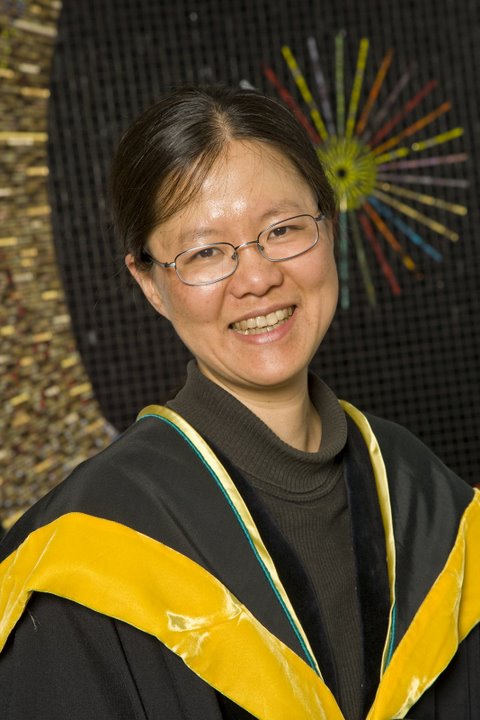
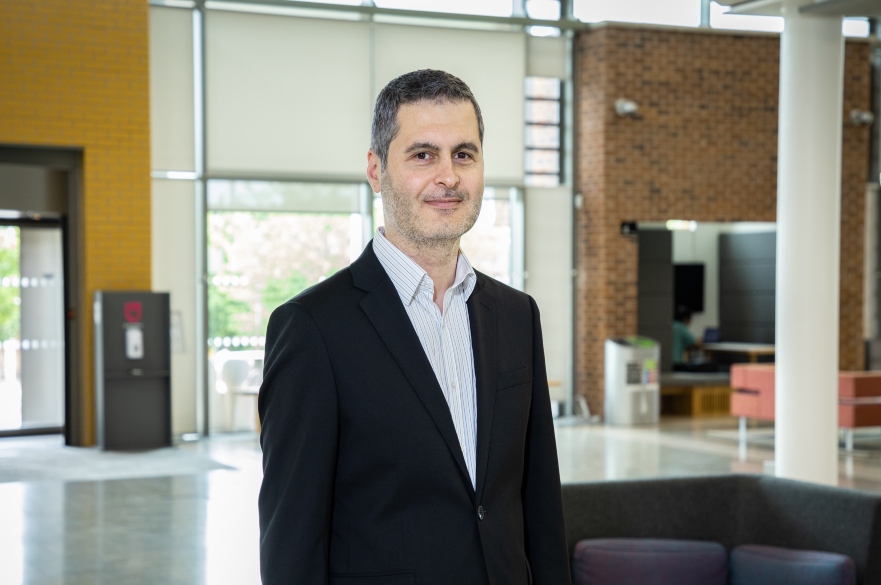
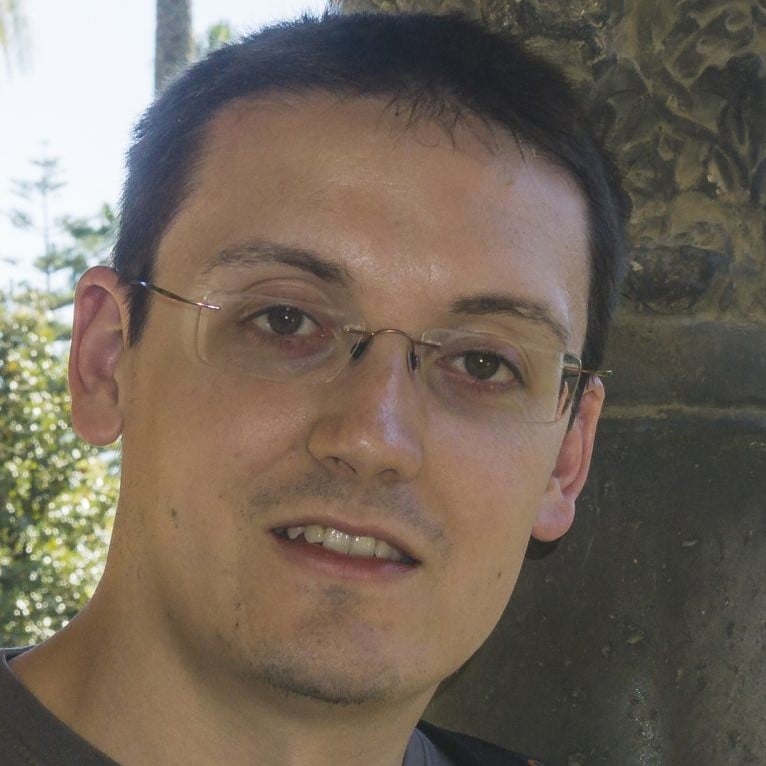
Wendy Osborn is an Associate Professor in the Department of Mathematics and Computer Science at the University of Lethbridge . She holds a Ph.D. (2005) from the University of Calgary, an M.Sc. (1998) from the University of Windsor, and a B.C.S.(Hons) (1996) from the University of Windsor. Research Interests: Dr. Osborn specializes in Databases , with a focus on Spatial , Distributed , and Multimedia systems. Her work also explores Mobile Information Systems , Recommender Systems , and Digital Libraries , emphasizing efficient querying and classification in dynamic environments. Publications: Her research addresses challenges in spatial data streams, mobile device processing, and distributed query optimization, reflecting collaborations with database indexing techniques like the mqr-tree and area code tree. Key trends include iterative classification, approximate querying, and energy-efficient system design.
Vasyl Tereshchenko is a Professor and Head of the Mathematical Informatics Department at Taras Shevchenko National University of Kyiv, Ukraine. His work spans computational geometry, computer vision, and algorithmic design, with a focus on applications in rehabilitation systems and real-time visualization. PhD (1993) and Doctor of Sciences (2000) in Physics and Mathematics from Taras Shevchenko National University of Kyiv Research interests include: Computational geometry for 3D surface modeling and mesh deformation Real-time eye-gaze tracking and handwriting recognition systems Augmented reality applications for robotics and navigation Algorithmic frameworks for common algorithmic space in visualization Recent publications emphasize geometric algorithms, machine learning coreset discovery, and 3D reconstruction techniques. His research group at the Samsung Advanced Information Technologies Research Joint Lab develops tools for: Medical rehabilitation systems Traffic accident warning technologies Mobile device computer vision Labs and teams under his leadership focus on cross-disciplinary challenges in: Medical technology integration Human-computer interaction Geometric modeling for engineering applications
Dr. U. Güçlü is a Principal Investigator at the Donders Institute for Brain, Cognition and Behaviour at Radboud University, Netherlands. He leads the Neural Coding Lab and Donders AI for Neurotech Lab , focusing on bridging neuroscience and AI to simulate in vivo neural computation using in silico connectionism for "brain reading" and "brain writing." He ranks among the top 10 most-cited researchers in Neural Decoding, Neural Encoding, and NeuroAI on Google Scholar (H-index: 29). University: Radboud University Institution: Donders Institute Rank: Researcher His research interests include NeuroAI , Neural Coding , and Neurotechnology , particularly for restoring sensory and cognitive functions (e.g., vision in the blind, audition in the deaf). His articles highlight advancements in neural decoding, encoding models, and AI-driven prosthetic vision. He is an ELLIS Scholar and Computable Laureate . Scientific Awards : Computable Laureate Grants : 2023: ≈€250k internal research grant (co-applicant) 2022: ≈€20M NWO Gravitation grant (consortium member) 2020: ≈€500k internal grant (€250k co-applicant) 2019: ≈€250k internal grant 2016: ≈€1.5M NWO Perspective grant (consortium member)
Zhaoping Li is a Professor at the University of Tuebingen and Head of the Department of Sensory and Sensorimotor Systems at the Max Planck Institute for Biological Cybernetics. Her research spans computational neuroscience, focusing on vision, olfaction, and neural dynamics. Research Interests: Computational vision (including efficient coding, saliency maps, V1 modeling), olfactory computation (bulb/cortex networks), neural networks, sensory coding, and nonlinear dynamics. Publications: Author of the textbook Understanding Vision (OUP, 2014), a foundational paper on V1 saliency (TICS, 2002), and works on locomotion circuits (PRL, 2004). Teaching: Offers courses like "Understanding Vision" and "Systems Computational Neuroscience", emphasizing theory-data integration and mathematical modeling. Labs: Leads the Natural Intelligence Lab , advertising PhD/Postdoc positions in psychophysics, fMRI, and computational neuroscience.
Attila Keresztes is Associate Research Scientist at the Max Planck Institute for Human Development in Berlin, Germany, affiliated with the Hippocampal Circuit and Code for Cognition Lab within the Max Planck Dahlem Campus of Cognition. He holds a PhD in Psychology (2014) from Budapest University of Technology and Economics and an MA in Economics (2004) from Corvinus University, Hungary. Education PhD in Psychology (2014), Budapest University of Technology and Economics MA in Economics (2004), Corvinus University, Hungary His research focuses on neurocognitive mechanisms of human memory across the lifespan, examining: Memory subprocesses and pattern separation Hippocampal subregional contributions to memory Relationships between neuronal networks and memory performance Developmental changes in memory specificity Stress effects on memory retention Recent publications analyze hippocampal maturation, memory distinctiveness, and stress-memory interactions using multimodal neuroimaging techniques. Key awards include Max Planck Partner Group and Research Fellow distinctions, with ongoing contributions to understanding lifespan memory dynamics. Scientific Distinctions Max Planck Partner Group Max Planck Research Fellow Max Planck Sabbatical Award Max Planck UCL Centre Emeritus
Carlos Andújar Gran is an Associate Professor in the Computer Science Department at the Polytechnic University of Catalonia . He is a key member of the ViRVIG Research Center for Visualization, Virtual Reality, and Graphics Interaction, as well as the Eurographics Association . His work bridges technical innovation with cultural and educational applications. Primary affiliation: Universitat Politècnica de Catalunya Research center: ViRVIG - Research Center for Visualization, Virtual Reality and Graphics Interaction Professional network: Eurographics Association His research interests focus on advanced topics in computer graphics and virtual reality : 3D Modeling - Digital reconstruction of complex geometries Animation Systems - Real-time motion capture and pose estimation Cultural Heritage - Digital restoration techniques for medieval monuments Human-Computer Interaction - 3D user interface design Sports Analytics - Player position tracking through computer vision Medical Education - VR nursing training platforms His technical publications demonstrate a consistent focus on solving practical problems through innovative algorithms: Developed DragPoser for motion reconstruction with sparse sensors Created PADELVIC dataset for sports analytics Advanced automated color restitution methods for mural paintings Improved normal estimation in point cloud processing Optimized terrain super-resolution techniques using convolutional networks Designed interactive cultural heritage systems for museum exhibitions
Anthony Strittmatter is a Professor of Applied Econometrics at UniDistance Suisse in Brig/Valais, Switzerland. He maintains significant research affiliations with the Center for Research in Economics and Statistics (CREST), the University of Johannesburg, the CESifo Network, the Institut des Politiques Publiques (IPP), and the Swiss Institute for Empirical Economic Research (SEW-HSG). His academic career spans multiple prestigious institutions across Europe and focuses on the intersection of econometrics, machine learning, and economic policy analysis. Strittmatter received his Diploma in Economics from Albert-Ludwigs University Freiburg in 2009, following studies at Albert-Ludwigs University Freiburg, University Karlsruhe (TH), and Corvinus University Budapest. He continued his academic journey at the University of St. Gallen (HSG), where he earned his Ph.D. in Economics and Finance in 2013 under the supervision of Prof. Bernd Fitzenberger and Prof. Dr. Michael Lechner. His research focuses on the innovative integration of causal machine learning with traditional econometric methods to address complex policy evaluation questions. Strittmatter specializes in analyzing heterogeneous treatment effects, with particular applications in labor economics, business economics, and health economics. His methodological expertise in data analytics allows him to tackle challenging questions regarding optimal policy design and implementation using both experimental and non-experimental data. Analysis of Strittmatter's publication record reveals a consistent trajectory of methodological innovation applied to substantive economic questions. His work demonstrates a growing emphasis on causal machine learning techniques, particularly for estimating heterogeneous treatment effects. There's a clear pattern of applying these advanced methods to pressing policy issues, especially in labor market interventions, gender economics, and public policy evaluation. His recent work increasingly leverages big data approaches to address longstanding questions in economics with greater precision. While specific awards are not prominently listed in the available information, Strittmatter's extensive collaboration with leading researchers and his affiliation with prestigious research networks indicate significant recognition within the economics community. His work has been published in top-tier economics journals including the American Economic Review. Strittmatter actively contributes to the academic community through research collaborations and knowledge dissemination. His GitHub presence shows commitment to making research methods accessible through well-documented code repositories. His teaching focuses on causal machine learning, as evidenced by his CML-Course materials which provide practical coding sessions for economic applications. He leads and participates in research teams focused on causal inference methodology and its applications. His work with Michael Lechner, Uwe Sunde, and other collaborators demonstrates a strong commitment to advancing the methodological frontier in econometrics while maintaining relevance to real-world policy questions.
Dr. Faraz Hach is an Associate Professor in the Faculty of Medicine at the University of British Columbia, with a primary appointment in the Department of Urologic Sciences. He is also a Senior Research Scientist at the Vancouver Prostate Centre located at Vancouver General Hospital. His research bridges computational algorithm design with biological problems in precision medicine, with a special focus on cancer genomics. Dr. Hach received his B.Sc. in Computer Engineering from Sharif University of Technology in Iran, followed by M.Sc. and Ph.D. degrees in Computing Science from Simon Fraser University, Canada. His doctoral work was recognized with the Governor General's Gold Medal for the best doctoral thesis at Simon Fraser University in 2014. Dr. Hach's research focuses on computational genomics and biomolecular sequence analysis, particularly in the context of cancer. His lab develops novel high-performance algorithms for analyzing large, high-dimensional omics data produced by next-generation sequencing technologies. Current research directions include: Designing combinatorial algorithms for analyzing genomic structural variations and segmental duplications Developing computational methods for detecting aberrations in tissue and liquid biopsies to understand clonal evolution in cancer genomes Creating data structures and algorithms for compressing large quantities of sequencing data Working on standardization of genomic data formats through involvement with the MPEG-ISO sub-committee Dr. Hach's publications demonstrate a strong trend toward developing computational tools that address specific challenges in cancer genomics and precision medicine. His work spans from fundamental algorithm development to clinical applications, with a particular emphasis on creating tools that improve sensitivity and accuracy while maintaining computational efficiency. Many of his recent publications focus on single-cell analysis, transcriptomic long-read sequencing, and structural variant detection in cancer genomes. Dr. Hach has received several prestigious awards for his work, including: The Ian Lawson Van Toch Memorial Award for an outstanding paper at the 20th Annual International Conference on Intelligent Systems for Molecular Biology The Governor General's Gold Medal for the best doctoral thesis award from Simon Fraser University in 2014 Dr. Hach is actively involved in several major research consortia including the International Cancer Genome Consortium (ICGC) and the ICGC-TCGA Pan Cancer Analysis of Whole Genomes (PCAWG). His earlier work on NGS mappings has been extensively used in the detection of copy number and structural variations in the 1000 Genome Project. He maintains an active research lab that develops numerous open-source software tools for genomic analysis, including Freddie, TKSM, scTagger, Genion, CircMiner, and HASLR. Dr. Hach is available for graduate student supervision, with opportunities for M.Sc., PhD, PostDoc, and intern positions in his lab. His research has significant interdisciplinary components, bridging computer science, genomics, and clinical medicine.
Yang Xie is a Professor at UT Southwestern Medical Center , where she serves as the Associate Dean for Data Sciences . She is the founding director of the Quantitative Biomedical Research Center (QBRC) , Pediatric Cancer Data Commons (PCDC) , and Cancer Center Data Science Shared Resources (DSSR) within the Harold C. Simmons Comprehensive Cancer Center . Her research integrates biostatistics , bioinformatics , and machine learning to develop predictive biomarkers and precision medicine approaches for cancer patients. Her PhD in Biostatistics (2006) and MS in Biostatistics (2002) and Epidemiology (2000) from University of Minnesota-Twin Cities and Peking University Health Science Center (1997) form the foundation of her interdisciplinary expertise. Research focuses include RNA regulation , high-dimensional data analysis , and computational oncology . Recent projects leverage deep learning for pathology image analysis and tumor microenvironment modeling , with applications in lung cancer survival prediction , Germ Cell Tumor data commons , and immune-related adverse event forecasting . She has developed open-source tools like MetaPrism and PIPE-CLIP for microbiome and CLIP-seq analysis. Scientific recognitions include NIH MIRA grant leadership and multiple DREAM Challenge awards for computational modeling. Her work bridges biostatistics , machine learning , and translational oncology through collaborations with institutions like MD Anderson and Northwestern University .
Dr. Anton Nikolaev serves as a Lecturer in Neuroscience at the University of Sheffield's School of Biosciences since 2013, investigating neuronal circuits for visual information processing using zebrafish models and in vivo calcium imaging techniques to decode object recognition mechanisms and memory encoding processes. Education: PhD, Institute of Cytology, Russian Academy of Science, St.Petersburg (2001-2005) BSc and MSc, University of St.Petersburg (1994-2000) Postgraduate Certificate in Learning and Teaching, University of Sheffield (2015) His research program focuses on how visual systems extract features for object recognition and how synaptic plasticity encodes memory. Using zebrafish larvae expressing calcium indicators, his lab studies neural population dynamics during visual processing, examining feature extraction convergence into object-recognizing neurons and adaptation's role in efficient information processing. Current projects include developing GFP-based reporters for synaptic strength changes during memory formation. Publication trends reveal a consistent neuroscience focus spanning molecular calcium channel studies to systems-level visual processing in zebrafish and Drosophila. His work demonstrates interdisciplinary integration of behavioral paradigms, live imaging, and computational analysis to investigate neural circuit dynamics, synaptic adaptation mechanisms, and sensory information encoding across multiple model organisms. Dr. Nikolaev contributes to the University of Sheffield's Neuroscience Institute and Hearing Research Group, teaching undergraduate neuroscience modules including BMS109-153 Neuroscience and coordinating BMS242 Advanced Concepts in Molecular Physiology as a Fellow of the Higher Education Academy (FHEA).
Prof. Matteo Carandini is the GlaxoSmithKline/Fight for Sight Professor of Visual Neuroscience at University College London's Institute of Ophthalmology. He leads the Cortexlab, a collaborative research group jointly with Prof. Kenneth Harris, focusing on understanding how populations of neurons combine sensory and internal signals to guide action. His laboratory employs advanced techniques including neuromics, Neuropixels high-count electrodes, optogenetics, multiphoton imaging, behavioral conditioning, and virtual reality simulation, primarily working with the mouse brain. Carandini received his Laurea in Mathematics from Universita di Roma (1990) and a PhD in Neural Science from New York University (1996). He completed postdoctoral fellowships at Northwestern University and New York University before establishing his laboratory at the Swiss Federal Institute of Technology in Zurich (1998), then moving to the Smith-Kettlewell Eye Research Institute in San Francisco (2002), and finally to UCL (2007). His academic positions include Assistant Professor at University of Zurich and ETH Zurich (2000-2002), Senior Scientist at Smith-Kettlewell Eye Research Institute (2005-2008), and Professor at UCL Institute of Ophthalmology (2007-present). His research spans multiple areas of neuroscience with a particular focus on visual processing, neural population coding, and the computational principles underlying sensory-motor transformations. Carandini's work integrates experimental approaches with computational analysis to decode how large populations of neurons represent information. Recent publications demonstrate his lab's leadership in developing and applying cutting-edge neurotechnologies like Neuropixels probes for high-density neural recordings across the brain. His laboratory is funded by prestigious organizations including the Wellcome Trust, Simons Foundation, European Research Council, and UK's Biotechnology and Biological Sciences Research Council. The Cortexlab maintains a collaborative, multidisciplinary environment with expertise spanning biology, psychology, mathematics, and physics. The team includes research fellows, PhD students, technicians, and software developers working together on diverse projects in systems, computational, cognitive, behavioral, and circuits neuroscience.
Shirui Luo is a Research Scientist at the National Center for Supercomputing Applications (NCSA), University of Illinois . Their work bridges Artificial Intelligence and Geoscience , focusing on deep learning applications for feature extraction from geological data, critical minerals mapping , and parkinson's disease analysis . Their research spans: Development of deep learning methods for historical geologic maps exascale computing in turbomachinery flows multimodal AI benchmarks for neurodegenerative disorders weakly supervised segmentation in geospatial datasets Recent publications highlight expertise in computational fluid dynamics , neural networks , and remote sensing , with applications in energy transition, critical minerals, and healthcare. Contact: shirui@illinois.edu
Archontis Giannakidis is a Senior Lecturer in Data Science at the School of Science and Technology , Nottingham Trent University (NTU). He leads modules in Discrete Mathematics & Computational Complexity (Year 2) and Convex Optimisation (Year 3), while supervising undergraduate and Masters dissertations. Education: PhD in Electronic Engineering (Inverse Problems), University of Surrey (2010) Research Interests focus on applying Deep Learning and Machine Learning to biomedical data processing, particularly in Biomedical Image Analysis , Convolutional Networks , and Diffusion MRI . His work emphasizes automating intellectual tasks, efficient data representation, hidden pattern discovery, and decision optimization in healthcare and environmental contexts. Recent Article Trends highlight his expertise in 2D echocardiography-based cardiac quantification , MRI-driven ACL tear diagnosis , and landslide-tsunami prediction via geometry-invariant machine learning. These studies often integrate uncertainty modeling, attention mechanisms, and lightweight architectures for clinical and environmental applications. Scientific Awards : Fellow of the Higher Education Academy (FHEA) Advisory Roles include mentoring PhD students Tuan Aqeel Bohoran (Marie Skłodowska-Curie-funded) and David Gwillym Jenkins (internal funding), alongside visiting/external PhD candidates Michael Lystbaek (Aarhus University) and Athanasios Siouras (University of Thessaly). He has received grants from HORIZON 2020 , EPSRC , and Innovate UK , and collaborates with institutions like the Archimedes Research Unit (Greece) and National Heart and Lung Institute , Imperial College London. Professional Activity includes editorial board membership for Frontiers in Physiology , peer reviewing for journals like IEEE Transactions on Medical Imaging , and external examining for University of Strathclyde’s MSc programs. He also contributes to conference organization and Portuguese grant evaluation panels.
Jesús Villalba is an Assistant Research Professor at the Department of Electrical and Computer Engineering, Johns Hopkins University, specializing in speech processing and speaker recognition. He is affiliated with the Center for Language and Speech Processing (CLSP). Education: M.Sc. in Telecommunication Engineering (University of Zaragoza, 2004), Ph.D. in Biomedical Engineering (University of Zaragoza, 2014) His research focuses on extracting paralinguistic information (e.g., speaker identity, emotion, age), robust speech recognition, and unsupervised learning. He also investigates adversarial attacks on speech systems and multimodal diagnostics for neurodegenerative diseases. Recent publications highlight advancements in speaker diarization, speech separation, and neurodegenerative disease detection using speech and eye movement data. His work leverages deep generative models and self-supervised learning for robust speech processing. He collaborates with institutions like Brno University of Technology and companies such as Agnitio and Cirrus Logic International. His career spans academia and industry roles, including postdoctoral work at CLSP.
Lecturer Merve ÖZKAN is affiliated with Kastamonu University, Taskopru Vocational School as a full-time academic in the Department of Computer Technologies . She holds a BSc in Computer Engineering from Yalova University (2012-2017) and an MSc in Computer Engineering from Karabük University (2021-2023), where she is currently pursuing her PhD. Education: BSc: Yalova University, Faculty of Engineering, Computer Engineering (2012-2017) MSc: Karabük University, Graduate School of Education, Computer Engineering (2021-2023) PhD: Karabük University, Computer Engineering (2023-present) Her research focuses on Artificial Intelligence, Image Processing, and Machine Learning , with applications in healthcare (colorectal cancer detection via histopathological images), manufacturing (wood defect detection), and education (AI-based student support systems). Publications highlight Vision Transformer architectures, object detection, and cybersecurity in software development. Recent work includes Scopus-indexed articles like "Image Processing Based Wood Defect Detection" (2024) and conference presentations at ITTA 2024 and ICONDATA’22. She collaborates with researchers such as Caner Özcan and İsmail Rakıp Karaş on interdisciplinary projects. Her academic roles include teaching courses in Mathematics, Cyber Security, Systems Analysis, and Database Management at the associate degree level. She has contributed to 1 funded project and maintains a h-index of 1 according to Google Scholar metrics.