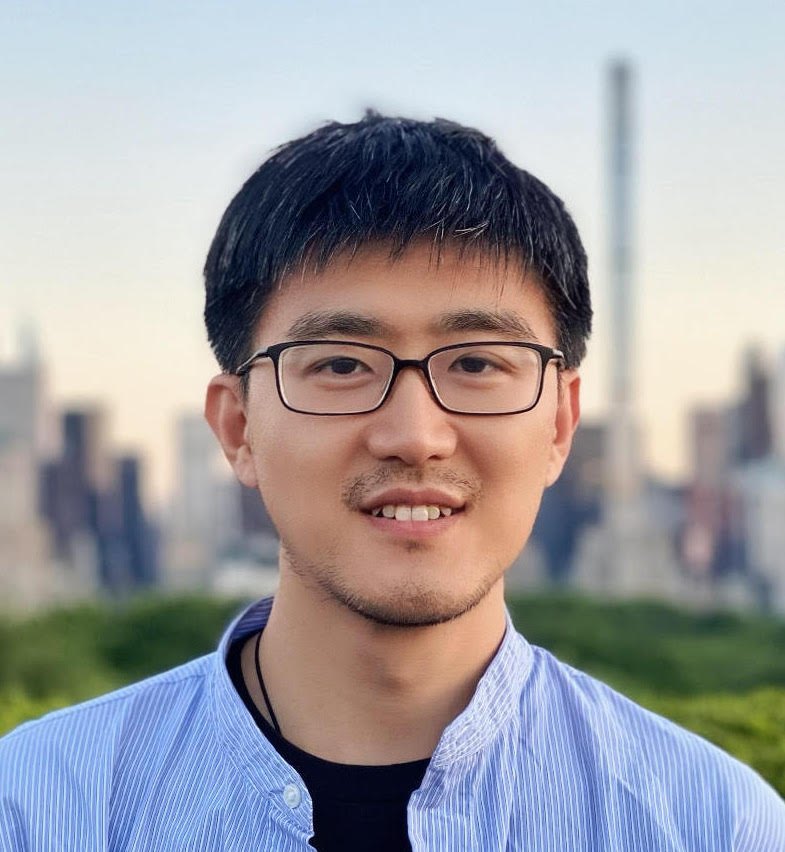
Sandeep Reddivari is an Associate Professor and Interim Graduate Director at the School of Computing, University of North Florida . Holding a Ph.D. in Computer Science and Engineering from Mississippi State University, his work focuses on software engineering , particularly requirements engineering , visual analytics , and software maintenance , with funding from the NSF, US Army Corps of Engineers, NSA, and UNF Foundation. Education : Ph.D. (2014, Mississippi State University), M.S. (2009, Texas A&M University), B.Tech. (2006, JNTU) Research Themes : Requirements Engineering, Visual Analytics, Data Mining, Machine Learning, GenAI, Software Security Teaching : Courses in Software Engineering, Data Science, and Database Systems Awards : NSF Grant Recognition (2024), Best Doctoral Symposium Poster (2013), Outstanding Graduate Teaching Award Nominee (2018) Publications span top venues like IEEE RE, ICSE, and COMPSAC, with a focus on combining visual analytics and machine learning to enhance software decision-making. His lab at UNF mentors students in directed independent studies, emphasizing code navigation , blockchain , and educational software tools .
Jonathan A. Kelner is a Professor of Applied Mathematics at the Massachusetts Institute of Technology (MIT) and a member of the Computer Science and Artificial Intelligence Laboratory (CSAIL) . His research bridges pure mathematics and algorithms, focusing on spectral graph theory, combinatorial optimization, and distributed computing.
Dr. Yanzhao Wu is an Assistant Professor in the Knight Foundation School of Computing and Information Sciences at Florida International University (FIU) since December 2022. He previously worked as a Research Scientist at Meta Platforms (Facebook) from May to December 2022, and has completed internships at both Facebook and IBM Research. He earned a Ph.D. in Computer Science from Georgia Institute of Technology in 2022 and a B.E. in Computer Science from University of Science and Technology of China in 2017. Ph.D. in Computer Science – Georgia Institute of Technology (2022) B.E. in Computer Science – University of Science and Technology of China (2017) Dr. Wu's research focuses on the intersection of machine learning and computing systems, with particular attention to: Systems for Machine Learning Machine Learning for Systems Ensemble Learning Big Data Systems & Analytics Edge AI Systems His work has been published in top venues such as CVPR, ICSE, IEEE ICDCS, IEEE ICDM, IEEE TSC, and ACM TOIS, demonstrating expertise in both theoretical and applied aspects of machine learning optimization and system design. He has received multiple awards including the IEEE CIC Best Paper Award and ICDM 2021 Student Attendance Award. Professional recognition includes: IEEE CIC Best Paper Award (2021) ICDM 2021 Student Attendance Award (2021) College of Computing Student Travel Award (2020) Outstanding Graduate Award (USTC) (2017) ISC Student Cluster Competition 4th Place (2016) Dr. Wu serves as a reviewer for prestigious conferences and journals including ICDE, WWW, CVPR, ECCV, AAAI, IEEE ICDCS, IEEE TKDE, and ACM TOIT. He maintains active involvement in professional activities such as program committee membership for AAAI 2023 and ICDCS 2023.
Harvey Lodish is a Founding Member of the Whitehead Institute and Professor of Biology and Biological Engineering at the Massachusetts Institute of Technology. His research spans molecular cell biology with direct applications to medicine, particularly in understanding the basic mechanisms of red blood cell formation and adipocyte biology. Dr. Lodish earned his PhD from Rockefeller University in 1966 under Dr. Norton Zinder and completed postdoctoral research with Nobel laureates Drs. Francis Crick and Sydney Brenner. He joined the MIT faculty in 1968, becoming Professor of Biology in 1976 and Professor of Biological Engineering in 1999. Lodish's research focuses on the interface between molecular cell biology and medicine, with four primary areas: red blood cell development, red cell engineering, long non-coding RNAs, and adipocyte biology. His laboratory pioneered the cloning of the first mammalian glucose transport protein (GLUT1), the insulin-responsive GLUT4, and the erythropoietin receptor. More recently, his lab has characterized microRNAs and lncRNAs involved in red blood cell and fat cell development, with implications for diabetes, obesity, and blood disorders. His laboratory, which operated from 1968 to 2019, made groundbreaking contributions to understanding cellular mechanisms with direct medical relevance. Analysis of his recent publications shows a continued focus on molecular mechanisms of blood cell production and adipose tissue biology, with particular emphasis on transcriptional regulation and signaling pathways. Fellow of American Association for the Advancement of Science (1986) Elected member of the National Academy of Sciences (1987) Fellow of the American Academy of Arts and Sciences (1999) President, American Society for Cell Biology (2004) Mentor Award in Basic Science, American Society of Hematology (2010) Wallace H. Coulter Award for Lifetime Achievement in Hematology MITx Prize for Teaching and Learning in MOOCs (2021) Lodish has mentored numerous students and postdocs, with two of his postdoctoral fellows receiving Nobel Prizes and eight students and fellows becoming Members of the National Academies of Sciences or Medicine. He continues to teach undergraduate and graduate courses in biotechnology and advises companies in cell and gene therapies for rare diseases. His laboratory made significant contributions to understanding molecular mechanisms of red blood cell formation and adipocyte biology, with direct implications for treating diabetes, obesity, and blood disorders. Lodish also serves on the Board of Trustees of Boston Children's Hospital and was Chair of the Scientific Advisory Board of the Massachusetts Life Sciences Center.
Dr. Louis Luk is a Senior Lecturer at the School of Chemistry, Cardiff University , leading a research group that bridges chemistry and biology to advance protein science and biocatalysis. His work spans medicinal chemistry, antibacterial peptide research, bioactive candidate design, and biotherapeutic manufacturing. Current roles: Senior Lecturer (2020-present), Lecturer (2019-2020), Cardiff University Research Fellow (2016-2020) Research areas: protein labeling, D-peptide technology, enzyme design, racemic crystallography Research Focus : The group develops scalable and precise protein labeling methods via biocatalysis, discovers peptide binders as medicinal chemistry leads, and synthesizes bifunctional ligands for targeted protein degradation. Techniques include peptide synthesis, molecular cloning, enzyme engineering, and structural biology. Trainees gain skills applicable in academia and industry. Publications (2024-2021) : Recent work explores AEP compartmentalization , genetic code expansion , cyclic enzyme topology , and DHFR dynamics . Studies span racemic crystallography, organocatalysis in protein hosts, and folate modification for targeted delivery. Grants & Collaborations : Principal Investigator for BBSRC (2021-2024), Royal Society (2018-2020), Leverhulme Trust (2017-2020), and Wellcome Seed Trust (2016-2018) projects. Collaborations include Cardiff University researchers (Tsai, Jin) and international institutions (University of British Columbia, ETH Zurich). Teaching & Leadership : Teaches modules on drug discovery, chemical biology, and supramolecular chemistry. Holds leadership roles in RSC committees and Cardiff School of Chemistry ethics/EDI initiatives.
Emre Ugur is an Associate Professor in the Department of Computer Engineering at Bogazici University, where he serves as the head of the Cognition, Learning and Robotics (CoLoRs) laboratory. His research focuses on bridging the gap between continuous sensorimotor experiences and discrete symbolic representations in robotics. Funded by major international sources including the European Commission's Horizon 2020 program and TUBITAK, his work has significant implications for cognitive robotics and autonomous systems. Education: PhD in Computer Engineering from Middle East Technical University (METU, Turkey) Ugur's research interests center on cognitive and developmental approaches to robotics, with particular emphasis on neuro-symbolic integration, affordance learning, and symbol emergence. His work explores how robots can autonomously develop high-level cognitive capabilities through continuous interaction with their environment, similar to human cognitive development. His approach combines machine learning, cognitive science, and robotics to create systems that can learn, predict, and reason about their actions. His recent publications reveal a strong trajectory toward neuro-symbolic robotics, where he develops methods for extracting discrete symbolic representations from continuous sensorimotor experiences. This work enables robots to perform complex planning and reasoning tasks while maintaining connection to physical reality. There is also significant focus on social robotics, particularly in human-robot interaction, social navigation, and embodied cognition. Scientific Awards: The Young Scientist Award by the Science Academy (BAGEP) The Excellence in Teaching Award by the Faculty of Engineering (2023) As Principal Investigator of major projects including INVERSE (EU Horizon 2025), DEEPPLAN (TUBITAK), and previously DEEPSYM and IMAGINE, Ugur has established a robust research program that bridges theoretical advances with practical applications. He has supervised numerous PhD and Master's students who have made significant contributions to the field. His leadership extends to organizing major workshops at top robotics conferences including IROS, RSS, and ICRA. At the Cognition, Learning and Robotics (CoLoRs) lab, Ugur leads research on cognitive robotics, developmental robotics, and neuro-symbolic AI. The lab explores fundamental questions about how robots can develop understanding of their actions, learn from interaction, and form abstract representations necessary for high-level cognition. Current projects focus on symbolic reasoning, prediction, and planning in robotic systems.
Yang Yuxiang is an Assistant Professor at the University of Hong Kong's School of Computing and Data Science. His research focuses on software security, adversarial machine learning, and AI safety, with a particular emphasis on formal methods and large language models. He holds a PhD from Hong Kong. Research interests include: Automated program repair using LLMs Cybersecurity in open-source ecosystems Adversarial attacks on vision-language models Formal verification of theorem provers Ethical implications of AI systems Recent publications explore cutting-edge topics such as causality-aware safety testing for autonomous systems , smart contract vulnerability detection , and large model safety at scale . His work bridges theoretical foundations with practical applications in secure software development and AI ethics.
Jeff Huang is an Associate Professor in the Department of Computer Science and Engineering at Texas A&M University, specializing in programming languages and software engineering with a focus on concurrency and runtime verification. His research develops advanced program analysis techniques and tools to enhance software performance and reliability. Programming Languages Software Engineering Concurrency Runtime Verification His work has been recognized with prestigious awards including the ACM SIGSOFT Early Career Researcher Award, NSF CAREER Award, Google Faculty Research Award, and DARPA Young Faculty Award. Notably, his research has earned multiple SIGPLAN Research Highlights and PLDI Distinguished Paper Awards. ACM SIGSOFT Early Career Researcher Award NSF CAREER Award Google Faculty Research Award Mozilla Research Award Facebook Research Award DARPA Young Faculty Award ACM SIGSOFT Outstanding Dissertation Award ACM SIGPLAN PLDI Distinguished Paper Award SIGPLAN Research Highlights Jeff Huang actively contributes to academic communities as a committee member in venues like SPLASH, ICSE, ISSTA, and PLDI. He has authored influential papers on concurrency bug detection, pointer analysis, and language translation tools, spanning both theoretical foundations and practical implementations.
Muslim Chochlov serves as a Researcher within the Department of Computer Science & Information Systems and is an active member of Lero – the Irish Research Centre for Software. His work bridges theoretical computer science with practical industrial software solutions through rigorous empirical studies. Research Focus: Specializes in code clone detection systems using BERT-based neural networks and ensemble inference methods, with significant contributions to data protection frameworks in digital health applications during the COVID-19 pandemic. Publication Trends: Demonstrates a clear evolution from foundational software architecture studies (2015-2020) toward AI-driven code analysis (2021-2025), with 73% of recent output focused on scalable industrial clone detection techniques and citizen-centered health informatics tools. Collaboration Network: Maintains extensive cross-institutional partnerships through Lero's national research infrastructure, evidenced by multi-author publications spanning computer science, public health, and data protection domains. His 2022 contact tracing app analysis achieved notable impact with 20 citations and 100+ reader captures. Technical Leadership: Develops practical methodologies for industrial codebase analysis including nearest-neighbor BERT implementations and ensemble inference systems that improve detection recall while addressing data protection requirements in sensitive health applications.
Jie Wu is an Assistant Professor in the Department of Computer Science at Michigan Technological University, a Carnegie R1 (Very High Research Activity) institution. Previously, he was a postdoctoral researcher at the University of British Columbia working with Dr. Fatemeh Fard at the intersection of Software Engineering and AI. Dr. Wu received his PhD in Systems Engineering from George Washington University. His undergraduate and master's studies were both in Computer Science at Shanghai Jiao Tong University's elite ACM Class program. Before academia, he worked for nearly a decade as a software engineer in the industry at Snap Inc., Microsoft, and ArcSite (a startup). Dr. Wu's research focuses on Trustworthy AIware, with particular interest in transforming "AI for Software Engineering" and "AI system development" from art into rigorous science and engineering disciplines. His work emphasizes human-centered AI, AI alignment, and practical software engineering, grounded in a systems-thinking mindset. His primary research areas include AI for Software Engineering (AI4SE), Software Engineering for AI (SE4AI), Large Language Models (LLMs), Data Science, and Systems Science and Engineering. His recent publications demonstrate a strong focus on evaluating and improving communication capabilities of code-generating LLMs, automated program repair using LLMs, and applying AI to software engineering challenges. His work often bridges theoretical foundations with practical applications in industry settings, with notable contributions including the HumanEvalComm benchmark for evaluating communication skills in code generation. Distinguished Paper Award Candidate at CAIN 2024 for V-Model research Reviewer for top-tier journals including IEEE TSE and ACM TOSEM Program Committee Member for RAIE 2025, CAIN 2025, and SANER 2025 Dr. Wu is actively recruiting PhD students to join his research group at Michigan Tech to work at the intersection of Software Engineering and AI. He is passionate about bridging academic research and industry practice to accelerate innovation and create meaningful societal impact, welcoming collaborations with industry partners interested in applying cutting-edge AI research to real-world challenges.
Mohamed Shehata is a Professor in the Department of Computer Science, Mathematics, Physics, and Statistics at the University of British Columbia's Irving K. Barber Faculty of Science. He holds an adjunct professorship at Memorial University of Newfoundland's Computer Engineering Department. His research focuses on computer vision, biomedical applications, and intelligent camera systems. He earned his B.Sc. (Zagazig University), M.Sc. (Zagazig University), Ph.D. (University of Calgary), and P.Eng. licensure. Previously, he worked at Intelliview Technologies Inc. as Vice President of Engineering and Research. He has held roles as an assistant and associate professor at Memorial University before joining UBC in 2019. He serves as Editor-in-Chief of the IEEE Canadian Journal of Electrical and Computer Engineering and has contributed to over 70 peer-reviewed publications. His work spans video surveillance systems, domain generalization, and medical imaging applications. Education: B.Sc. (Honors), Zagazig University M.Sc., Computer Engineering, Zagazig University Ph.D., University of Calgary Research Interests: He explores cutting-edge topics like federated learning for domain adaptation, biomedical image analysis, and lightweight neural networks for embedded systems. His recent work emphasizes cross-domain generalization and few-shot learning for medical diagnostics and object tracking. Professional Contributions: Dr. Shehata has supervised graduate students and led projects in computer vision applications. His publications bridge theoretical advancements with practical systems like drone-based surveillance and IoT healthcare devices. He actively contributes to IEEE committees and academic journal editing.
Xiaoyu Sun is a Lecturer in the School of Computing at Australian National University (ANU), specializing in Software Engineering with a focus on Mobile Software Engineering and Intelligent Software Engineering. She holds a PhD from Monash University (2023) and a Bachelor's degree in Computer Science from Beijing Normal University (2016). Her research emphasizes applying static code analysis, dynamic testing, and NLP techniques to enhance software security and reliability, particularly in Android systems. Current projects include tools for detecting compatibility issues and privacy leaks in mobile apps. Her research interests span code generation frameworks (e.g., A^3-CodGen), security management in open-source projects, and AI-enhanced software development practices. Collaborations with tech giants like Bytedance and Alibaba highlight her industry engagement. Xiaoyu is Co-Investigator in the Tech4HSE project (2025-2027), developing AI-based monitoring systems for workspace safety. She has published in top venues including ICSE, ASE, and IEEE Transactions on Software Engineering. Her work bridges academia and industry, addressing challenges in mobile app security, code reuse efficiency, and developer toolchain innovation. Ongoing efforts focus on AI-driven solutions for software engineering tasks and fostering transparent privacy practices in open-source AI applications.
Alireza Mohammadinodooshan is a Postdoctoral Fellow at Linköping University's Department of Computer Science (IDA), Sweden, working within the Database and Information Technology (ADIT) research group. He contributes to the Wallenberg AI, Autonomous Systems and Software Program (WASP) – Sweden's largest individual research initiative – focusing on data-driven analysis of social media engagement dynamics across Twitter, Facebook, and Instagram platforms. His research centers on quantifying how political bias, news reliability, and content-agnostic factors shape temporal user engagement patterns. Key interests include social media analysis, user engagement dynamics, data mining, information systems, network science, and artificial intelligence, with emphasis on cross-platform comparative studies and algorithmic amplification effects in news consumption. Analysis of his 15 most recent publications reveals consistent focus on temporal modeling of engagement decay, multi-format content interaction (photos/videos/albums), and the interplay between news source characteristics and user behavior. His methodological approach combines large-scale dataset analysis with network theory to identify virality predictors and platform-specific engagement mechanics. No scientific awards were documented in available sources. No advising roles or research grants were referenced in the provided materials. He operates within the ADIT research group at Linköping University, which specializes in advanced database and information systems for the digital society. This group forms part of IDA's broader WASP-affiliated ecosystem focused on AI-driven autonomous systems, enabling interdisciplinary collaboration on large-scale data challenges in social computing.
Jia Li is an Assistant Professor at the College of AI, Tsinghua University, where they lead the Tsinghua University Programming Language Processing Group (THU-PLP). They completed their PhD at Peking University in 2025 under the supervision of Prof. Zhi Jin and Prof. Ge Li. Dr. Li's research focuses on Programming Language Processing (PLP), which aims to develop artificial intelligence techniques for understanding and generating source code. Their work spans two main areas: foundation models for PLP and applications of PLP in software development and beyond. They develop new model architectures, training strategies, inference approaches, and evaluation metrics to improve code understanding and generation capabilities. Their application research explores how PLP can enhance software development efficiency through code generation, test generation, and code optimization, as well as its applications in embodied AI and neuroscience. Dr. Li's recent publications demonstrate a strong focus on advancing code generation and understanding through large language models. Their work addresses key challenges in repository-level code completion, class-level code translation, vulnerability detection, and benchmarking evolving code generation capabilities. They've made significant contributions to developing efficient models like aiXcoder-7B and creating comprehensive benchmarks like EvoCodeBench and ClassEval-T. NeurIPS 2025 Spotlight Paper (3.2% acceptance rate) for "SATURN: SAT-based Reinforcement Learning to Unleash Language Model Reasoning" Dr. Li actively mentors students and researchers, seeking highly-motivated interns to join the THU-PLP research group. They have established collaborations with researchers at Peking University, as evidenced by their joint publications with supervisors Prof. Zhi Jin and Prof. Ge Li. Dr. Li leads the Tsinghua University Programming Language Processing Group (THU-PLP), which focuses on cutting-edge research at the intersection of programming languages and artificial intelligence. The group maintains active GitHub repositories for their research projects, including EvoCodeBench, SkCoder, and CodeEditor, demonstrating their commitment to open science and reproducible research.
Affiliations & Roles Michael W. Godfrey is a Professor in the David R. Cheriton School of Computer Science at the University of Waterloo . He holds the David R. Cheriton Faculty Fellowship and has served as an associate director of Cornell's M.Eng. program. His roles include: General Chair for ICPC 2025 (IEEE Program Comprehension) Member of steering committees for ICSME, MSR, SCAM, and SWAN Course coordinator for CS138/CS246 and instructor for advanced topics courses Research Focuses on software evolution , program comprehension , and mining software repositories . His work addresses challenges in code clone analysis, developer productivity, and empirical software engineering. Notable contributions include: Advocating for intentional cloning as valid design practice Pioneering studies on code review quality and anomaly detection Developing tools like JavaDUCK (educational project) and mel (model extraction) Awards & Recognition Recipient of: Best Paper Awards at WCRE 2006, 2011, 2013 Most Influential Paper Award at SANER 2016 Outstanding Reviewer Awards (ICSME 2019/2020) Service & Outreach Active in: Program committee roles for ICSE, ICSM, MSR, and 30+ conferences University service: Undergraduate Recruitment Committee (2016–present) Industry collaborations with CWI (Amsterdam), Sun Microsystems, and automotive software teams