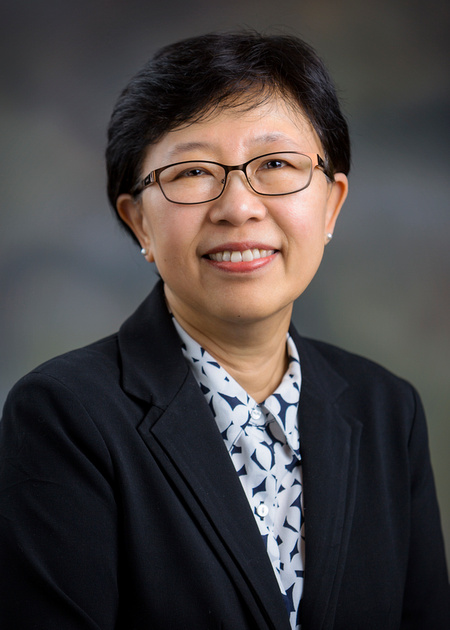
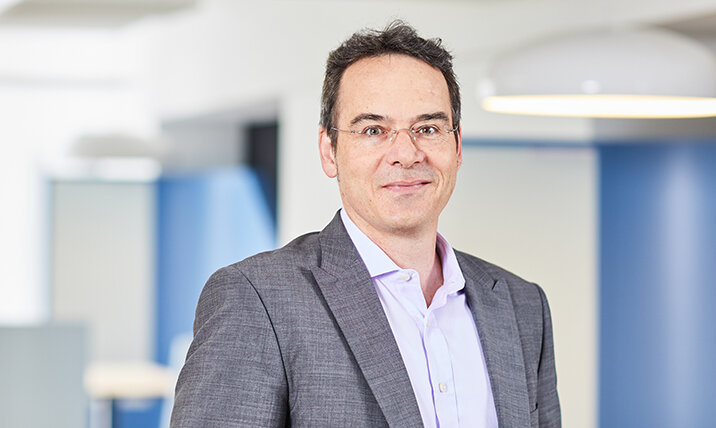
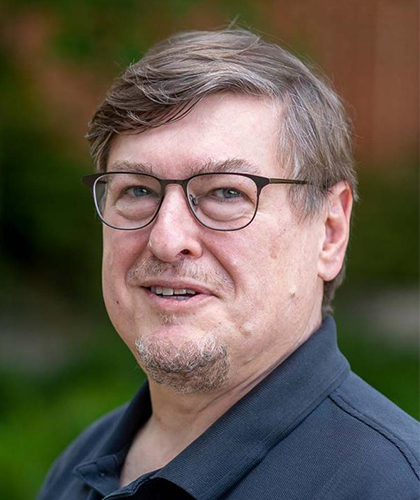
Fang-Ling Lu is an Associate Professor and Chair of the Department of Communication Sciences and Disorders at UT Health San Antonio. With nearly 30 years of experience, she leads the Speech-Language Pathology Graduate Program and CSD Certificate Program, focusing on clinical expertise and research in motor speech disorders, dysphagia, voice disorders, and tracheostomy care for adult patients with neurological diseases, structural abnormalities, and head and neck cancer. Her research interests center on speech-language pathology, particularly in the context of cochlear implantation and its impact on speech production, voice parameters, and auditory feedback. This aligns with broader studies in phonetics, speech perception, and rehabilitation for hearing-impaired individuals. Dr. Lu can be contacted via email at luf@uthscsa.edu .
Thorsten Burger is a Professor of "Concepts and Methods of Special Education" at Konrad-Adenauer-Hochschule Freiburg since 2014. Previously, he was appointed as a W3-Professor for "Psychology of the Deaf and Hard of Hearing" at Pädagogische Hochschule Heidelberg (rejected). He holds a PhD in Psychology (Rehabilitation Psychology) from Albert-Ludwigs-Universität Freiburg (2005). His professional background includes roles at the Cochlear-Implant Center of Freiburg University Hospital (2003–2014) and the Educational and Counseling Center for Hearing-Impaired Individuals in Stegen (2005–2014). Research focuses on: Family Adaptation to Disability Psychotherapy and Counseling for Hearing-Impaired Populations Developmental Psychology and Inclusive Educational Strategies Psychosocial Consequences of Hearing Impairment Methodological Approaches in Qualitative/Quantitative Research He also worked in psychosomatic medicine and psycho-oncology at Freiburg University Hospital (1998–2000) and completed systemic therapy training. His expertise spans evaluation methodologies and the psychological-pedagogical support of disabled individuals.
Grzegorz Juras is a **Professor** and **Head of the Department of Human Motor Skills** at the Jerzy Kukuczka Academy of Physical Education in Katowice, Poland. His academic career spans over two decades, with a strong focus on motor control, postural stability, and biomechanics in clinical and athletic populations. Research Interests: His work explores - Postural control mechanisms in elderly populations and patients with Parkinson’s disease - Biomechanics of athletic movements (e.g., fencing, biathlon) - Rehabilitation strategies for musculoskeletal injuries (e.g., Achilles tendinopathy) - Neurodevelopmental disorders and motor adaptation in children with autism spectrum disorder - Applications of shock wave therapy and mindfulness training in sports performance. Recent Article Trends: Recent publications emphasize: - Objective measurements of postural sway and stability across diverse populations - Clinical trial methodologies evaluating therapeutic interventions - Biomechanical analysis of transitional locomotor tasks (e.g., stepping, lunging) - Interdisciplinary approaches combining neurology, sports science, and rehabilitation. Labs/Teams: Leads research in motor control within the Department of Human Motor Skills, collaborating with clinical and sports science teams at the academy.
Dr. Nejra Van Zalk is an Associate Professor in Psychology and Human Factors at Imperial College London's Dyson School of Design Engineering. She directs the Design Psychology Lab, focusing on psychological mechanisms in product/service design for mental health. Her affiliations include the Human Behaviour and Experience Network and Robotics Forum. She holds a PhD from Örebro University, Sweden, with prior roles as Senior Lecturer and Visiting Scholar at institutions like Cambridge University. Her research spans design psychology, cognitive science, and human-robot interaction. Key articles explore VR therapy for OCD, age-related needle phobia, and social anxiety in adolescents. Her work emphasizes translating psychological insights into practical solutions for health and technology domains. Research interests include mental health interventions through virtual reality, social anxiety disorders, and human-AI interaction. Notable projects investigate robotic clinical tools and teleoperation interfaces. She has contributed to scoping reviews on cochlear implants and pediatric hearing outcomes. Her work bridges psychology with engineering to enhance human-centered design. Collaborations span robotics, healthcare, and education sectors. Her articles highlight trends in VR-based therapies and developmental psychology, with a focus on translating research into clinical and technological applications. No scientific awards are explicitly listed, but her extensive publication record reflects academic impact. She advises through the Design Psychology Lab, fostering interdisciplinary innovation in human factors and mental health.
Franco Lepore is a Full Professor in the Department of Psychology at the University of Montreal and Director of the Centre de recherche en neuropsychologie et cognition (CERNEC). His research focuses on sensory systems, brain plasticity, and cognitive neuroscience, particularly studying visual and auditory processing in individuals with sensory deprivation. He has held the Canada Research Chair in Cognitive Neuroscience since 2008 and leads a team of 40 researchers. Education: PhD in Psychology (1971, University of Montreal), postdoctoral training at the University of Pisa. He established CERNEC in 1988, equipped with state-of-the-art facilities like a magnetoencephalography system. Research Interests: Investigates how sensory deprivation (blindness/deafness) induces brain reorganization, cross-modal plasticity, and emotional processing in the insula. Key studies include superior sound localization in the blind and neural mechanisms underlying blindsight. Awards: Ordre national du Québec (2009), Fellow of the Royal Society of Canada (1988), Richard Tees Leadership Award (2005), and numerous grants from Canadian Institutes of Health Research and Fonds de recherche du Québec. Advising & Grants: Supervised over 70 graduate students and secured millions in funding for projects on sensory systems, cochlear implants, and video game impacts on hippocampal integrity. Leads major networks like Réseau de recherche en santé de la vision (RRSV). Labs/Teams: Directs CERNEC labs with advanced neuroimaging tools (fMRI, MEG) and collaborates with institutions like the Montreal Neurological Institute. Research spans clinical applications, developmental neurobiology, and cognitive rehabilitation.
Jonathan Simon is a Professor in the Department of Electrical and Computer Engineering at the University of Maryland (UMD), with affiliations in Biology, the Institute for Systems Research (ISR), and the Brain and Behavior Institute. He holds joint appointments in multiple departments, reflecting his interdisciplinary research in neuroscience and engineering. Simon earned his B.S. in Physics from Princeton University and his Ph.D. in Physics from UC Santa Barbara, followed by postdoctoral work in theoretical relativity before transitioning to auditory neuroscience. His research focuses on auditory neuroscience, particularly how the brain processes speech and complex sounds using non-invasive techniques like magnetoencephalography (MEG). Key interests include the 'cocktail party problem'—selective attention in noisy environments—and the neural mechanisms underlying speech comprehension. He co-directs the KIT-Maryland Magnetoencephalography Center and the Computational Sensorimotor Systems Laboratory (CSSL). Simon’s work bridges computational neuroscience and engineering applications, such as improving hearing aids and cochlear implants. His recent studies investigate aging-related changes in auditory processing, neural plasticity from auditory-cognitive training, and post-stroke cognitive recovery. He has published extensively on cortical responses to speech, neural decoding of attention, and functional connectivity in aging and clinical populations. His research has been featured in journals like *Neuron*, *Nature Communications*, and *Proceedings of the National Academy of Sciences (PNAS)*, and he collaborates internationally on projects funded by grants from NIH, NSF, and industry partners.
Halil Andac Yigit is a Doctoral Assistant at the Telecommunications Circuits Laboratory (TCL) within the School of Engineering (STI) at EPFL. He is affiliated with the Institute of Microengineering (IEM) and pursues a Doctoral Program in Electrical Engineering through the École Doctorale d'Électronique et d'Electrotechnique (EDoc). His research focuses on biomedical circuits, energy harvesting, and low-power electronics for medical implant systems. Yigit's work emphasizes implantable cochlear devices, wireless power solutions, and precision neural stimulation interfaces. Education : Current doctoral student in Electrical Engineering at EPFL. Research Interests : Development of energy-efficient biomedical devices, including cochlear implants and neural stimulation systems. Specializes in low-power circuits for medical applications, wireless power transfer, and advanced memory technologies like eDRAM optimization. His research bridges microelectronics design with clinical needs, aiming for miniaturization and energy autonomy in implantable systems. Lab Affiliation : Telecommunications Circuits Laboratory (TCL), EPFL, where he collaborates on projects involving MEMS-based systems and autonomous medical devices.
Ali Muhtaroglu is an Associate Professor at Oslo Metropolitan University, Faculty of Technology, Art and Design, Department of Mechanical, Electronics and Chemistry. His work focuses on energy-efficient electronics and bio-inspired technologies through the ADEPT research group. Research Interests: Dr. Muhtaroglu specializes in bio-inspired spiking neural networks energy harvesting systems low-power circuit design autonomous IoT devices wearable health monitors quantum dot cellular automata His publications emphasize hardware-software co-design for sustainable microelectronics. Selected Articles (2022-2024): Recent work includes bio-inspired reinforcement learning architectures (2024), AI accelerator design (2022), and self-powered health monitoring systems (2023). Earlier publications (2019-2021) cover cochlear implant interfaces and piezoelectric energy harvesting.
Dr. Shruti Deshpande serves as an Associate Professor and Vincentian Research Fellow in the Department of Communication Sciences and Disorders at St. John's College of Liberal Arts and Sciences, St. John's University. She also holds the leadership position of Director of the Doctor of Audiology Program and was named an ASHA Innovator in 2024. Dr. Deshpande is actively involved in the American Speech-Language-Hearing Association as a board member of the Multicultural Issues Board (2023-2025) and serves as a subject matter expert for the ASHA Practice Portal in Audiology. Her research focuses at the intersection of audiology and social justice, particularly on accessible and affordable hearing health services for diverse and vulnerable populations. Dr. Deshpande has pioneered community-based research approaches, developing innovative service-learning models that address hearing health disparities. Her work emphasizes cultural competence and aims to increase awareness of audiology as a profession among ethnically diverse adolescents through educational interventions. Analysis of Dr. Deshpande's publication record reveals consistent focus on health equity in audiology, with significant attention to representation in clinical research, social media's role in health information dissemination, and innovative approaches to hearing healthcare delivery. Her work spans multiple subfields including tinnitus research, central auditory processing disorders, electrophysiology, pediatric audiology, and cross-cultural assessment tools. ASHA Innovator (2024) Vincentian Research Fellow Faculty Excellence Award in Community-Based Outcomes and Poverty Research (2022) Multiple Faculty Recognition Awards for Excellence in Research & Scholarship (2017, 2019, 2020, 2021) Values and Inclusion Program Honoree (2020-21) Excellence in Teaching Award from National Society of Leadership and Success (2018) Dr. Deshpande has successfully mentored numerous undergraduate and graduate students, with many serving as co-authors on peer-reviewed publications and presenting at conferences. Her grant portfolio demonstrates significant external funding support, including awards from the Faculty Research Consortium, ASHA's Advancing Academic-Research Careers Award, HearX Group, and multiple internal university grants totaling over $25,000. Her current projects focus on hearing health access for diverse communities, community-based hearing assessment approaches, and innovative teaching methods that integrate technology with service learning. As Director of the Doctor of Audiology Program, Dr. Deshpande oversees a robust curriculum that includes specialized courses in Central Auditory Processing Disorder, Electrophysiology, Pediatric Audiology, and Hearing Science. Her community engagement extends beyond the classroom through partnerships with Liberty Partnership Program and other initiatives aimed at increasing awareness of hearing health and audiology careers among underserved populations.
Professor Werner Hemmert leads the Bio-Inspired Information Processing group at the Munich Institute of Biomedical Engineering (TUM School of Computation, Information and Technology). His research spans theoretical, biomedical, and systems neuroscience, focusing on auditory processing, cochlear implants, and computational modeling of neural coding mechanisms. Primary research focus: Theoretical Neuroscience & Technical Applications Secondary research focus: Biomedical Neuroscience Tertiary research focus: Cellular & Systems Neuroscience His work employs computational modeling , psychophysical and objective nerve potential measurements , vibration analysis , and otoacoustic emission measurements to investigate: Coding of sound into nerve-action potentials Neuronal processing in the auditory brainstem Electrical stimulation of neurons Patient measurements in cochlear implant users Biophysics of sensory organs and neurons Recent publications highlight his contributions to auditory neuroscience, including studies on neural coding dynamics, computational modeling of auditory systems, and biophysical mechanisms of hearing. These works intersect with fields like neural networks , computational modeling , and auditory signal processing . Current or graduated GSN students under his supervision include Miguel Obando, Anna Dietze, Dr. Michael Drews, and Dr. Miguel Eduardo Obando Leitón. Contact: werner.hemmert@tum.de | Website
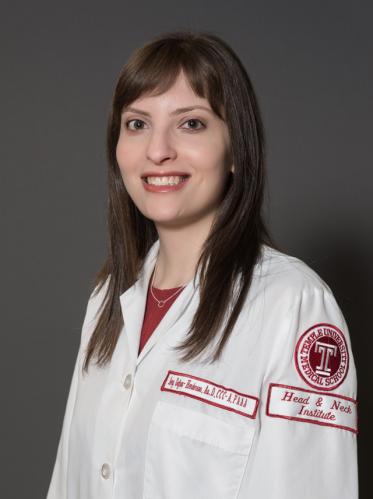
Amy Safran-Henderson, AuD, CCC-A, FAAA, is an Assistant Professor in Clinical Otolaryngology – Head & Neck Surgery at the Lewis Katz School of Medicine, Temple University. She specializes in audiology with a focus on comprehensive hearing care and balance disorders. Education: AuD from University of Washington, Seattle Training: Externship at Weill Cornell Medical College Clinical Expertise: Vestibular and balance disorder assessment Cochlear implant evaluation and management Hearing instrument selection and fitting Auditory training for hearing impaired Electrophysiological measures and ototoxicity monitoring Honors & Memberships: Certification of Clinical Competency in Audiology (ASHA) Fellow of American Academy of Audiology (2015) Resume Review Committee Member (2017) Leadership Development Committee Member (2016) American Speech-Language-Hearing Association member Academy of Rehabilitative Audiology member Currently practicing at Temple Head & Neck Institute in Philadelphia, PA.
Prof. Martine Coene is a Full Professor at the Vrije Universiteit Amsterdam, affiliated with the Faculty of Social Sciences and Humanities (Department of Language, Literature and Communication) and the Network Institute. Her research bridges theoretical linguistics, child language acquisition, second language learning, and hearing impairments. She collaborates widely, including with the University of Bucharest on Romanian language studies. Her work investigates language development in hearing-impaired children and those with language disorders, informed by national/European grants. Key contributions include developing linguistic testing tools for audiological practice. She teaches advanced statistics and applied linguistics courses at the graduate level. Recent research highlights include studying cochlear implant challenges in schools, pandemic impacts on hearing-impaired adults, and multilingual causal expression patterns in Mandarin Chinese. Her work emphasizes practical applications in education and healthcare accessibility. Supervised 6 PhD theses Recipient of national/EU research grants Active in interdisciplinary collaborations
David B. Grayden is a Professor at The University of Melbourne, affiliated with the Melbourne School of Engineering and the Department of Electrical and Electronic Engineering . His work spans Biomedical Signal Processing , Computational Neuroscience , and Brain-Computer Interfaces (BCI) , focusing on applications in Epilepsy Research and Cochlear Implants . Melbourne Neural Engineering Laboratory member Collaborator in multidisciplinary biomedical research Key research interests include: Developing Seizure Prediction Algorithms using long-term EEG/iEEG data Neural mass modeling for Epilepsy and Inhibitory Network Behavior Optimizing Cochlear Implants via computational models Advancing Endovascular BCI Systems and Neural Stimulation Recent publications highlight trends in Machine Learning , Path Signatures , and Multi-Frequency Stimulation for SSVEP-based BCIs . His work integrates Computational Modeling with Biomedical Engineering to address clinical challenges in neuroprosthetics and sensory processing. Grayden leads projects on Neural Network Dynamics , Biomedical Signal Analysis , and Neurostimulation , often collaborating with institutions like Monash University and Royal Melbourne Hospital .
Jacqueline Leybaert is a Professor at the Université libre de Bruxelles (ULB) in the Faculty of Psychological and Educational Sciences. She is a leading researcher in the LCLD (Language, Cognition, Learning, and Development) laboratory, focusing on multimodal language perception, particularly in the context of deafness and hearing disabilities. Her work bridges psychology, linguistics, and audiology with significant implications for deaf education and communication strategies. Her research interests encompass multimodal language perception, audiovisual speech integration, deafness, hearing disabilities, orthographic learning, and numerical cognition. Dr. Leybaert has made substantial contributions to understanding how Cued Speech—a system that uses handshapes near the mouth to disambiguate speech sounds—can enhance language acquisition and speech perception for deaf and hard-of-hearing individuals. Her work explores the cognitive and perceptual mechanisms underlying language development in deaf children, particularly those using cochlear implants or Cued Speech. Analyzing her recent publications reveals a consistent focus on how multimodal information (auditory, visual, and manual cues) integrates in speech perception, especially in challenging listening conditions. Her research demonstrates how Cued Speech can improve speech recognition in noise, enhance orthographic learning, and support language development in deaf children. The interdisciplinary nature of her work connects cognitive psychology, linguistics, audiology, and educational practices for deaf individuals. Dr. Leybaert has supervised doctoral students, including Sabatier, E., whose dissertation focused on orthographic representations in deaf children. Her collaborative work extends to researchers such as Cécile Colin, Caron Jirschik, and Vilain, indicating strong research networks in deaf education and speech science. Though specific grant information isn't detailed in the provided text, her extensive publication record suggests significant research funding and project leadership. Her laboratory work centers on the LCLD lab at ULB, which appears to focus on language development, cognitive processes, and learning mechanisms, particularly in special populations including deaf and hard-of-hearing individuals. The lab's research employs various methodologies including behavioral experiments, eye-tracking, and potentially neuroimaging techniques to investigate language processing and development.
Elina Mäki-Torkko is a Professor of Medical Audiology at Örebro University's Department of Medical Sciences, affiliated with the Faculty of Medicine and Health since November 2016. She also leads the Audiology Research Centre at Örebro University Hospital and serves as a Senior Consultant in Audiology there. Additionally, she holds positions as an Associate Professor at the University of Oulu, Finland (since 2007), Visiting Professor at Linköping University (since 2017), and Scientific Advisor in Audiology at Sweden's National Board of Health and Welfare. Her research focuses on auditory epidemiology, particularly age-related hearing loss, and the benefits of cochlear implants in adults. She has led collaborative projects such as the ARHI study investigating genetic and environmental factors in hearing impairment. Her work includes longitudinal studies on cochlear implant outcomes, sensory functioning in aging populations, and the development of clinical tools like the Hearing and Functioning in Everyday Life Questionnaire (HFEQ). She has also contributed to understanding the impact of cardiovascular health on hearing deterioration and noise-induced hearing loss in adolescents. Key collaborations include work with the University of Oulu on epidemiological studies and international projects analyzing tinnitus and hearing aid rehabilitation. Her research emphasizes translational outcomes, aiming to improve clinical practices and patient quality of life through evidence-based interventions.