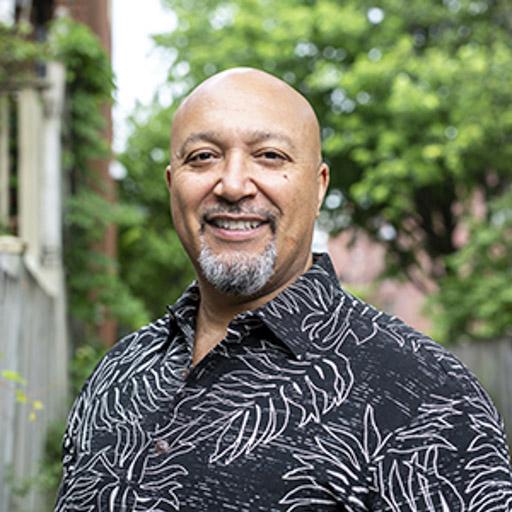
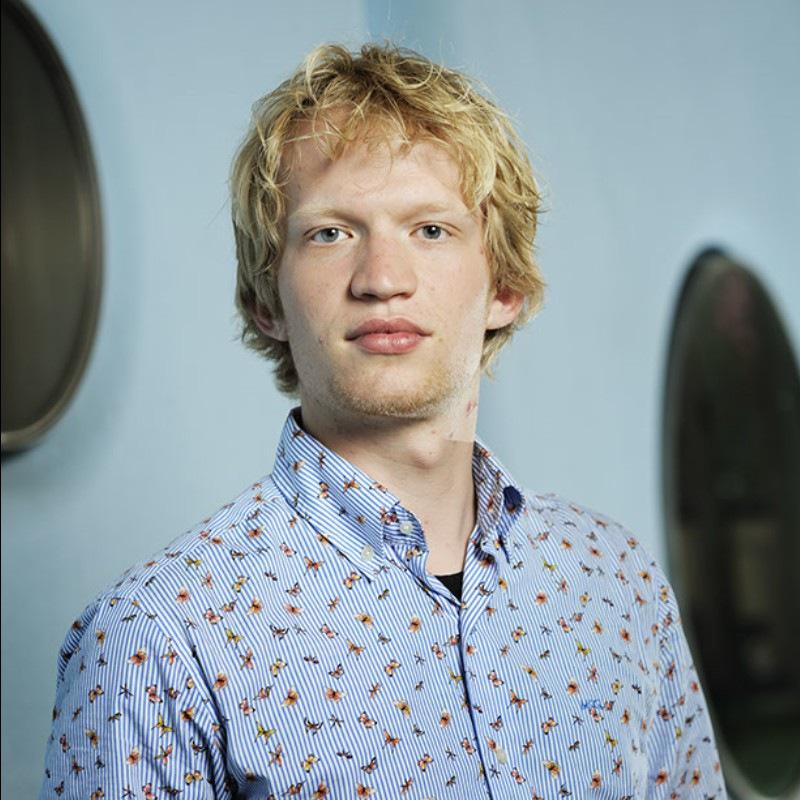
Charlie Järpvall is an Associate Professor at the Department of Cultural Sciences, Linnaeus University, specializing in Library and Information Science. His research bridges media history with material culture studies, focusing on information technologies and bureaucratic systems from the late 19th century onward. Faculty: Faculty of Arts and Humanities Research Groups: Centre for Digital Humanities, Linnaeus Media Observatory (LiMO) Ongoing Projects: InKuiS – Innovative Cultural Entrepreneurship in Collaborative Co-creative Research His research explores the material dimensions of information systems, from ring binders to digital interfaces. Recent work examines innovation hesitancy in cultural sectors and historical media technologies. He contributes to editorial boards and participates in the European research network Entangled Media Histories, advancing interdisciplinary approaches to media archaeology and digital humanities.
Mor Naaman is the Don and Mibs Follett Professor of Information Science at Cornell Tech, where he leads the Social Technologies research group and serves as Associate Dean for Faculty Affairs at the Jacobs Technion-Cornell Institute. His career spans academia, industry research (Yahoo! Research Berkeley), and entrepreneurship (startup co-founder). Cornell Tech, 2012-present Rutgers School of Communication and Information, 2008-2012 Yahoo! Research Berkeley, 2005-2008 Stanford University, Ph.D. in Computer Science His research focuses on Technology, Media and Democracy , particularly AI-mediated communication's societal impact and information ecosystem trustworthiness. The lab employs multidisciplinary methods (machine learning, experiments, qualitative analysis) to address misinformation, algorithmic bias, and digital governance challenges. Recent work examines AI-generated content moderation Visual misinformation tracking Language model cultural bias Workplace AI communication dynamics Political misinformation campaigns Notable scientific awards include NSF Early Faculty CAREER Award Microsoft Research Award LinkedIn-Bowers CIS Strategic Partnership award Vannevar Bush Best Paper Awards (JCDL 2007, JCDL 2004) Best Paper Honorable Mentions (CHI 2023, CHI 2016) As an advisor , he has mentored numerous PhD students in areas like computational social science and digital democracy. His research is supported by grants from National Science Foundation Microsoft Meta (Facebook) Google The Social Technologies Lab (founded 2012) examines AI-Mediated Communication implications Healthy information ecosystems Trust, credibility and misinformation Collaborative fact-checking systems
Jason Edward Lewis is a Professor of Computation Arts at Concordia University and holds the University Research Chair in Computational Media and the Indigenous Future Imaginary. He serves as Special Advisor to the Provost on Indigenous Spaces and co-directs multiple research initiatives including the Abundant Intelligences Partnership, the Indigenous Futures Research Centre, Aboriginal Territories in Cyberspace, and the Skins Workshops on Aboriginal Storytelling and Video Game Design. His educational background: M.Phil. in Design from the Royal College of Art B.S. in Symbolic Systems (Cognitive Science) from Stanford University B.A. in German Studies (Philosophy) from Stanford University Lewis's research focuses on Indigenous new media and futures, artificial intelligence and society, digital poetry, and computational typography. He explores the intersection of Indigenous knowledge systems with emerging technologies, advocating for Indigenous self-determination in digital spaces. His work spans creative practice, critical theory, and technical innovation, resulting in award-winning electronic literature and influential position papers on Indigenous protocols for AI. Lewis has received numerous accolades including: Robert Coover Award for Best Work of Electronic Literature Prix Ars Electronica Honorable Mention (2 times) imagineNATIVE Best New Media Award (multiple) Fellow of the Royal Society of Canada Trudeau Fellow Carnegie Fellow ISO-MIT Co-Creation Lab Fellow As founder of Obx Laboratory for Experimental Media and co-director of several research networks, Lewis leads collaborative projects that create platforms for Indigenous storytelling and digital expression. His work includes the Initiative for Indigenous Futures and the Indigenous Protocol and AI Workshops, fostering dialogue between Indigenous communities and AI developers.
Michelle LIM is an Associate Professor of Law at Yong Pung How School of Law, Singapore Management University (SMU), where she has served as full-time faculty since July 2022. Previously, she held academic positions at Macquarie University (Senior Lecturer, 2020-2022), University of Adelaide (Lecturer, 2017-2020), Griffith University (Lecturer, 2015-2016), and research roles at the UNESCO Centre for Water Law, Policy & Science at University of Dundee (Post-doctoral Researcher and Research Associate, 2012-2015). She holds a PhD and dual Bachelor of Science (Ecosystem Management)/Bachelor of Laws (First Class Honours) from the University of New England, Australia. Her research frontiers include: Biodiversity governance through IPBES frameworks and transboundary conservation law Anthropocene legal studies exploring futures methodologies, fiction-based approaches, and transdisciplinary integration Climate-biodiversity nexus in policy design and transformative governance systems Ecocentric jurisprudence challenging anthropocentric legal paradigms through rights of nature and multispecies justice Her scholarship (2021-2024) demonstrates consistent focus on reimagining environmental law through futures studies, with recurring themes: 78% of recent publications address biodiversity governance under climate change; 62% employ transdisciplinary methodologies; and 45% explore Asia-Pacific contexts. Theoretical innovations include legal personhood for ecosystems, narrative jurisprudence, and shifting baseline applications in policy. Scientific Recognition: 2021 Law and Society Association Publication Prize for breakthrough article on extinction narratives in environmental law Lead authorship in the landmark IPBES-IPCC Co-Sponsored Workshop Report (2021) Contributing Fellow to the IPBES Global Assessment (2019)
Pattie Maes is the Germeshausen Professor of Media Arts and Sciences at the MIT Media Lab and holder of the 2025 ACM Lifetime Achievement Award in Human-Computer Interaction. Her research bridges Human-Computer Interaction , Artificial Intelligence , and Neuro-Biological Engineering to explore how digital systems can augment human capabilities in memory, decision-making, and wellbeing. Professor at MIT Media Lab since 1999 Director of Fluid Interfaces research group Affiliated faculty at MIT Center for Neuro-Biological Engineering Research Interests focus on AI-human symbiosis through: Wearable and implantable interfaces Dream engineering for cognitive enhancement Context-aware proactive systems Ethical AI frameworks Scientific Awards include: ACM Lifetime Achievement Award (2025) TIME Cyber Elite (2000) AAAI Classic Paper Prize (2012) Ars Electronica Prize (1995) Entrepreneurial Impact through co-founding: Firefly Networks (acquired by Microsoft) Open Ratings (acquired by Dun & Bradstreet) Tulip Co (privately held) Education : BA in Computer Science (Vrije Universiteit Brussel) PhD in Artificial Intelligence (Vrije Universiteit Brussel)
Ginestra Ferraro serves as a Visiting Research Fellow at King's Digital Lab within King's College London's Faculty of Arts & Humanities, leveraging over ten years of professional experience in Web Design and Front-end Development. Her career evolved from Art Director roles at Italian advertising firms including TBWA Italia and Factory Group to specialized digital design work at King's Digital Lab, where she previously held a Senior Research Software UI/UX Designer position. Her academic background includes: Graphic Design studies at IED Milan Research interests center on data visualization techniques, HTML-based video interaction systems, and responsive web design frameworks. She investigates the critical integration challenges between creative design processes and technical implementation, particularly examining how UI/UX principles can be harmonized with software development workflows in digital humanities contexts. This focus bridges artistic vision with computational execution to create effective digital scholarship tools. Her 2021 publication analyzing the 'troubled love story' between UI/UX design and software development exemplifies emerging interdisciplinary trends in Digital Humanities. This work highlights methodological innovations for creating cohesive digital experiences through structured design-development collaboration, reflecting broader field movements toward integrated technical-creative approaches. No scientific awards were documented in the source materials. Details regarding student supervision or research grant acquisition were not specified in the available documentation. Beyond research, Ferraro actively co-organizes London Web Standards—a non-profit providing monthly events for web professionals and the annual State of the Browser conference—while contributing to King's Digital Lab's interdisciplinary projects spanning digital humanities, data visualization, and web technology innovation.
Thomas Langerak is a PhD student and Lecturer at ETH Zurich's Advanced Interactive Technologies lab under Prof. Otmar Hilliges. His academic journey includes a double-degree in Human-Computer Interaction and Design from Aalto University (Finland) and University of Twente (Netherlands), and a B.Sc. in Industrial Design from Eindhoven University of Technology. His research spans Human-Computer Interaction , Reinforcement Learning , and Haptic Systems , with recent work focusing on multi-agent RL for adaptive interfaces and novel electromagnetic actuation for VR/AR. Earlier contributions centered on custom haptic hardware like the Hedgehog pin array and Omni volumetric system. Publication trends reveal an evolution from hardware prototyping (2018-2020) toward intelligent interface optimization (2021-2024), with increasing emphasis on user modeling and adaptive automation. Key venues include ACM UIST, CHI, and IEEE Transactions. Honorable Mention - Best Paper Award at World Haptics Conference 2021 As an academic mentor, he supervised Mengfan Wu's thesis on electromagnetic tracking and Aline Abler's Hedgehog interface development. His service includes UIST organizing roles (Data Co-Chair 2021-2022) and session chairing. Teaching spans HCI, Computational Haptics, and ML fairness courses since 2019. Laboratory work occurs within ETH's Advanced Interactive Technologies group, specializing in computational interaction and electromagnetic systems for immersive environments.
Odile DE SURREL DE SAINT JULIEN is an Associate Professor at KEDGE Business School , specializing in Strategy, Sustainable Development, and Entrepreneurship . With a doctoral degree in Management Sciences and graduate degrees from SKEMA Business School and Esa-Grenoble, she brings extensive academic credentials to her role. Her career spans founding a biotechnology research lab in South Africa, creating incubators like Silicon Africa, and supporting startups in India and Mozambique. She co-leads the KEDGE Health & Innovation Center of Expertise and serves as the PEPITE National Status educational referent for student-entrepreneurs in Toulon. Education : Doctorate in Management Sciences, Research Master (Esa-Grenoble), PGE SKEMA Business School. Professional Experience : CEO of South African biotech lab, founder of Silicon Africa incubators, and creator of innovation support programs globally. Research Interests focus on innovation ecosystems in life sciences , high-tech transfer , and entrepreneurial support systems . Her work bridges academic theory with practical applications in digital entrepreneurship, biotechnology, and sustainable development. Recent Publications highlight trends in digital business models for BoP entrepreneurs , corporate knowledge systems , and design-driven innovation . These span case studies, academic chapters, and books published with institutions like CCMP, Edward Elgar Publishing, and World Scientific. Leadership Roles : Active in entrepreneurial project evaluation committees (COPIL PEPITE Paca-Est), and instrumental in creating incubation centers in Singapore and India.
Howard J. Hamilton is a Professor at the Department of Computer Science, Faculty of Science, University of Regina. His research spans Data Mining, Machine Learning, and Human-Computer Interaction. University of Regina Department of Computer Science Faculty of Science Research Interests: Hamilton focuses on Data Science , Machine Learning , Speech Recognition , and Augmented Reality applications in healthcare. His recent work includes the My Daily Routine (MDR) system using HoloLens for dementia care and blockchain-based IoT security mechanisms. Scientific Contributions: He has co-authored 15 recent papers on topics spanning Time Series Forecasting , GANs for Game Design , and Smart Grid Security . His work has been presented at top venues like IEEE ICC, ICAART, and IEEE VR. Awards: Recipient of the Best Paper Award at INTENSIVE'12 and Second Place Best Paper at FLAIRS'99. Student Training: As a supervisor, he has mentored over 30 graduate students and project assistants in Computer Science and related fields, including Ph.D. candidates in Multi-Agent Systems and AI for Cooperative Games .
John Wood is a Reader in Fine Art at the Bath School of Art, Film and Media (Bath Spa University). Collaborating with Paul Harrison since the 1990s, their practice spans video art, sculpture, and installations that explore existential themes through absurdist humor and minimalist aesthetics. Academic Qualifications : BA(Hons) from Bath College of Higher Education Their work examines the intersection of physicality and environment , often using their own bodies or mundane objects to create scenarios that blend tragicomedy with artistic process . The duo's installations, like Semi-automatic Painting Machine , highlight the unpredictability of creation while critiquing functional design. Exhibitions at institutions such as MOMA , Tate , and Centre Pompidou demonstrate their international impact. Their practice consistently engages with minimalist philosophy , experimental film , and conceptual humor . Recent Trends (2023-2025): Expanded focus on public installations (e.g., 21 Signs for a City ) Continued exploration of mechanical art ( Semi-automatic Painting Machine ) Deeper investigation of spatial absurdity ( Square Buildings ) Emphasis on ephemeral materials ( Paint Trays & Wall ) Collaborative video publications ( A Film About a City ) Conceptual text-based works ( Words Made of Atoms ) Notable Collaborations : Co-edited a monograph with Ellen Mara De Wachter (2017) Contributions to Phaidon 's Co-art: Artists on Creative Collaboration (2017) Global Presence : Works in permanent collections of MoMA , Tate Modern , Centre Pompidou , and Kadist Foundation . Exhibitions span Europe , Asia , Americas , and Australia .
Jenny Dunseath is a Senior Lecturer in Fine Art Sculpture at the Bath School of Art, Film and Media , Bath Spa University. Her practice spans sculpture, digital media, film, and live artworks , exploring how artistic behaviors and digital mediation reshape creativity, pedagogy, and cultural discourse . She co-leads the international research network Material:Pedagogy:Futures (MPF) , collaborating with institutions across the UK, Europe, and beyond. Reader in Fine Art Sculpture Senior Lecturer at Bath Spa University Co-lead of MPF research network Academic Lead for Erasmus+ ACCELERATE project Research Highlights: Dunseath's practice-based research focuses on non-linear, embodied, and iterative processes across art and education. She investigates artistic agency , inclusive pedagogies , and creative labor frameworks through collaborative artworks and immersive technology prototypes. Her work interrogates authorship, material engagement , and XR accessibility in educational contexts. Scientific Contributions: Developed open-source VR/AR platforms for art pedagogy Co-authored Artist Boss book and digital resources International exhibitions at Tate Modern, Royal Academy of Art, and Galleria Valo Advocacy for transdisciplinary artist-educator networks Wider Impact: Dunseath's ACCELERATE project (2021-23) addressed XR accessibility challenges in post-pandemic education. She contributes to curriculum development as an External Academic Advisor at multiple institutions and serves as Senior Academic for External Periodic Review at the University of Essex.
Kristina Andersen is an Associate Professor at the Future Everyday cluster of the Department of Industrial Design at Eindhoven University of Technology (TU/e). Her work explores how we can imagine technological futures through digital craftsmanship and collaborations with semi-intelligent machines within material practices of soft fiber-based things. She investigates innovation processes, questioning who drives them and how to integrate cultural, political, and personal dimensions into technological design. Andersen holds a PhD from KTH Royal Institute of Technology in Stockholm, an MSc in Virtual Environments from University College London, and a Candidature (MA) from the Royal Danish Academy of Fine Art. She was based at STEIM for 14 years, led the Instruments and Interfaces master's program at the Royal Conservatoire in The Hague, and participated in the Making Things Public art research program at the Gerrit Rietveld Academie. Her research centers on digital craftsmanship and human-machine collaboration, focusing on how semi-autonomous systems influence work practices and how we might design with, against, or alongside these systems. She combines material practices, particularly with soft fiber-based materials, with digital fabrication techniques to explore new technological futures. Her work challenges conventional boundaries between human creativity and machine capabilities. Andersen's publications reveal consistent focus on the intersection of digital fabrication, craftsmanship, and human-machine collaboration. Her work explores turn-taking between designers and machines, the concept of 'loose ends' in design research, and narrative approaches to understanding machine interactions. These publications demonstrate an evolving methodology that integrates traditional craft practices with digital technologies to create innovative forms of interaction and expression. Her scholarly recognition includes: Best Paper Honorable Mention Award at DIS 2022 for 'Portfolio of Loose Ends' Andersen serves as a longstanding advisor of the Stimuleringsfonds Creatieve Industrie and as an expert reviewer for H2020, ICT and FET. She initiated and led the GiantSteps project, a European Union-funded collaboration between music research institutions, manufacturers, and practitioners. She has taught extensively, including running the combined MA between STEIM and Sonology from 2011-17. She is affiliated with the EAISI High Tech Systems and Industrial Design Research groups at TU/e. Her conference leadership includes co-chairing CHI art 2018, CHI Design paper track 2019 and 2020, and DIS pictorials 2019, demonstrating her significant contributions to the human-computer interaction and design research communities.
N. Ziya Perdahçı is an Associate Professor at Bogazici University, specializing in Management Information Systems . His research focuses on network science applied to social, educational, and business contexts, including stochastic block models, customer segmentation, and digital platform analysis. He teaches courses in programming, databases, and business application development. Education: Undergraduate: Bogazici University, Physics M.A.: Bogazici University, Physics Ph.D.: Bogazici University, Physics Research Interests: Stochastic Block Models Statistical Social Network Analysis Customer/Product Segmentation Technology Adoption Users’ Interconnectedness Analytics Social Network Correlations Patents: Electricity generation device (TR 2007 07104B, 2007) Ceramic sliced helical heater (24466, 1990) His recent work explores digitalization in art (NFTs, Metaverse), technology acceptance models for website analysis, and co-purchase behavior in e-commerce. He has published extensively on network-based theories in education, healthcare, and cloud computing environments. He collaborates frequently with Mehmet Nafiz Aydin and Kenan Kafkas on interdisciplinary projects combining physics principles with information systems research. His book chapters cover metadata action networks and big data analytics frameworks.
Mads Høbye serves as an Associate Professor in the Department of People and Technology at Roskilde University, Denmark, where he investigates the intersection of digital technology and human experience through computational logic, sensors, and artistic expression. He co-founded illutron collaborative, an interactive art collective operating from a Copenhagen Harbor barge that provides non-commercial space for artists working with technology and biology. His educational background includes: PhD in Interaction Design from Malmö University (2014), focusing on "Designing for Homo Explorens: open social play in performative frames" Høbye's research centers on digital materiality as a hybrid of physical and digital technologies, with three core strands: (1) exploring the experiential and aesthetic potential of dynamic material technologies, (2) developing frameworks for creative computational technology use, and (3) enabling democratic technology ownership through open knowledge-sharing and digital fabrication labs. His work manifests in interactive installations that examine interpersonal dynamics within technological contexts. Key research areas include: Human-Computer Interaction Interactive Art and Performance Digital Fabrication and Maker Culture Open Source Hardware Development Embodied Interaction Design Recent publications (2020-2025) reveal consistent focus on integrating maker culture into educational settings, analyzing bodily play in interactive systems, and deploying interactive artifacts in performance environments. His work demonstrates how digital fabrication democratizes technology access while emphasizing reflexive assessment in student-driven projects and the social dimensions of human-technology interaction in public spaces. Høbye leads and participates in interdisciplinary research initiatives exploring technology's role in education and artistic expression: Active Project : Low-Code Programming of Spatial Contexts for Logistic Tasks in Mobile Robotics (2022–present) Completed Projects : MemoryMechanics (2020–2023), Robots on stage (2018–2020), Connecting through pulse with Royal Danish Theatre (2017–2018), Dynamic transparencies (2017–2018) Through illutron collaborative and fablab initiatives, Høbye maintains laboratory spaces focused on community-driven technological experimentation. The collective operates as a non-profit governed by active members, providing facilities for artists to work with technology, biology, and scrap materials while hosting exhibitions in museums and public settings since 2004. His current work emphasizes creating frameworks for democratic technology ownership through open knowledge-sharing practices.
Stéphanie Buisine is a Research Professor at CESI's Graduate School of Engineering, where she co-leads the Learning and Innovation team. With a Habilitation in Ergonomics & Innovation (2013) and a PhD in Cognitive Psychology & Ergonomics (2005) from Paris Descartes University, she specializes in Prospective Ergonomics , Need-Seeker Strategy , and Techno-Supported Creativity . Her work bridges Human-Computer Interaction , Innovative Organizations , and Universal Design , focusing on how multimodal interfaces and embodied agents shape creativity, motivation, and organizational innovation. Current research includes MobE (2023-2026) on sustainable mobility and EDF (2021-2024) on skill self-management. Her 15 most recent articles (2022-2025) emphasize teal organizational cultures , Proteus effect in VR, and additive manufacturing gamification , spanning Psychology , Human-Computer Interaction , and Industrial Innovation . She has supervised over 60 M2 research projects and 15+ PhD students, including Lola Joly (eco-responsible behavior) and Mégane Sartore (ikigai robotics). Her expertise in innovation culture and soft skills development is recognized by ANR, ANRT, and international foundations. She holds 6 patents in collaborative design and adaptive interfaces .