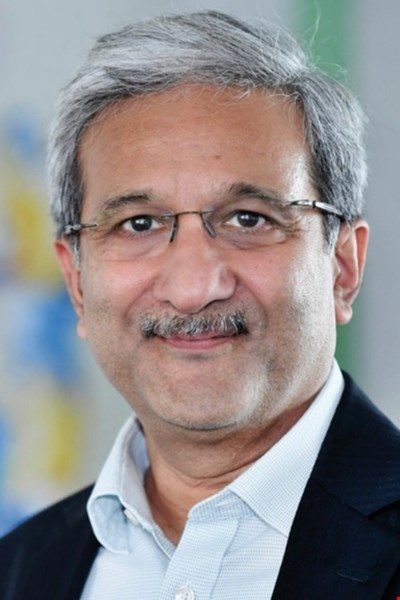
Stefanos Zenios is Professor at Stanford Graduate School of Business with dual appointments in Entrepreneurship and Operations, Information & Technology . He directs Stanford GSB’s Center for Entrepreneurial Studies and co-directs the Doerr School of Sustainability ’s Program in Ecopreneurship. His Startup Garage course has launched companies like DoorDash while alumni have raised over $3B in venture capital. He co-authored the foundational Biodesign textbook and previously served as Editor-in-Chief of Operations Research . PhD, MIT Operations Research (1996) MA, University of Cambridge (1996) BA, University of Cambridge (1992) Research Focus Dr. Zenios’ work bridges operations research and innovation management , with significant contributions to: Healthcare operations : Administrative cost reduction, organ allocation optimization, and clinical workflow improvements Entrepreneurship : Venture creation frameworks and experiential education Ecopreneurship : Sustainable business model innovation His Precedents Thinking framework (HBR 2025) has gained global recognition for solving systemic inefficiencies. Current research includes the biennial Search Fund Study with Peter Kelly. Scientific Recognition INFORMS Fellow Multiple Best Paper Awards, INFORMS CAREER Award, National Science Foundation (2000) Dhirubhai Ambani Faculty Fellow (2017–2020) George E. Nicholson Award (1997) He has received extensive media coverage in Fast Company , Time Magazine , and Stanford Business . His research has been featured in over 150 press mentions including JAMA , Harvard Business Review , and Health Affairs .
Judy Hoffman is an Associate Professor in the College of Computing at Georgia Institute of Technology, with a joint appointment in the School of Interactive Computing and affiliation to the Machine Learning Center . She received tenure in April 2025 after joining Georgia Tech as an Assistant Professor. Her research focuses on enabling AI systems that are reliable, fair, and resource-efficient. PhD in Electrical Engineering and Computer Science (2016, UC Berkeley) Postdoctoral Fellowships at Stanford (2017) and UC Berkeley (2018) Former Research Scientist at Facebook AI Research Her work intersects computer vision and machine learning , with specialization in domain adaptation , adversarial robustness , and algorithmic fairness . She has published over 40 peer-reviewed articles, including the award-winning DeCAF (ICML 2024 Test of Time Award) and co-founded Women in Computer Vision (2015), which has sponsored ~40 women annually to premier conferences. ICML Test of Time Award (2024) NSF CAREER Award (2022) PAMI Distinguished Young Researcher (2023) Samsung AI Researcher of the Year (2021) Dr. Hoffman has served as Program Chair for CVPR 2023, Associate Editor for T-PAMI (2021-2023), and co-organizer of workshops at major AI conferences. She has delivered over 70 invited talks and contributes to open-source projects like cycada_release (567 stars) and lsda (47 stars).
Christopher Turbill is an Associate Professor in Animal Science at Western Sydney University's School of Science, where he maintains an active research program focused on animal physiological ecology. He is affiliated with the Hawkesbury Institute for the Environment and serves as a Principal Investigator on multiple research projects while accepting HDR candidates for supervision. PhD from University of New England (2006) Thesis: Thermoregulatory Ecology of Tree-roosting Bats Supervised by Prof. Fritz Geiser Postdoctoral fellowships from Austrian Science Fund and Australian Research Council (DECRA) Former ecologist with NSW Government Professor Turbill's research integrates thermal and metabolic physiology with behavioral ecology to understand animal-environment interactions. His work has revealed significant ecological consequences of controlled body temperature variation in mammals and birds, linking these processes with metabolic energy expenditure, activity patterns, and life-history strategies. He specializes in bat biology and investigates conflicts between human environmental change and animal conservation requirements. His research keywords include ecophysiology, thermoregulation, energy expenditure, life-history ecology, body temperature, torpor, hibernation, and wildlife conservation. Analysis of Turbill's recent publications reveals a strong focus on thermal biology and conservation physiology, particularly regarding bats and birds. His work examines how animals manage energy through torpor, respond to climate change through thermal regulation, and adapt to anthropogenic disturbances. The research spans field studies of flying-foxes, microbats, and passerine birds across Australian ecosystems, with increasing emphasis on conservation applications related to white-nose syndrome, fire impacts, and wind energy development. Turbill leads significant research projects including the Ecology of the eastern horseshoe bat and its sensitivity to fire impacts (2024-2027), Vulnerability of Australian bats to white-nose syndrome (2021-2026), and Torpor use and burrowing behaviour in an arid zone passerine (2024). His work attracts funding from diverse sources including the Australian Research Council, Department of Planning and Environment, and various conservation organizations. Professor Turbill directs the BatsLab research group, which maintains a virtual hub for bat research at Western Sydney University. His team employs advanced methodologies including thermal imaging, GPS tracking, and physiological monitoring to study animal responses to environmental challenges. Current work focuses on developing conservation interventions for heat-stressed flying-foxes and assessing vulnerabilities of Australian bat species to emerging diseases.
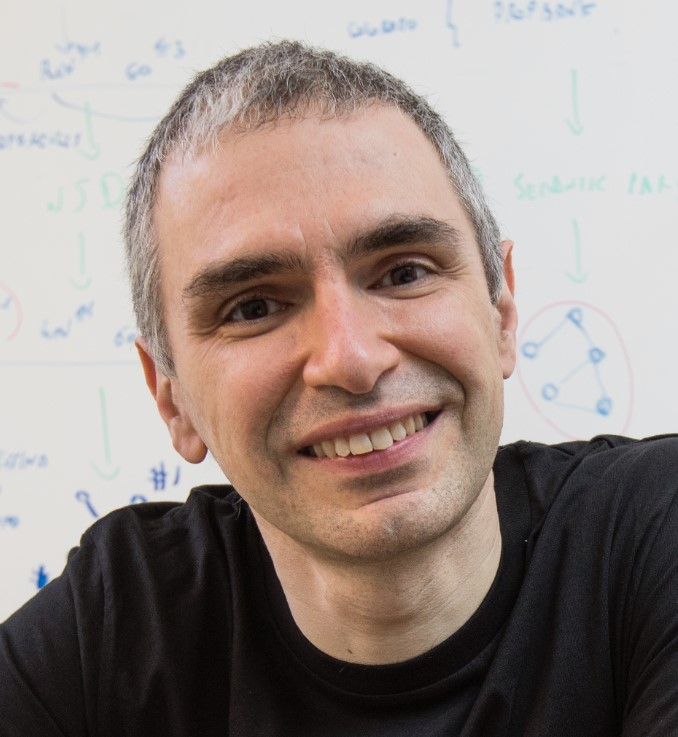
Roberto Navigli is a Full Professor in the Department of Computer, Control and Management Engineering at Sapienza University of Rome, where he leads the Sapienza NLP Group. He has held academic positions at Sapienza since 2007, progressing from Researcher to Associate Professor, and now Full Professor. Navigli is internationally recognized for his groundbreaking work in multilingual natural language processing and computational semantics. His research spans multiple areas within Natural Language Processing, with a particular focus on multilinguality , lexical semantics (Word Sense Disambiguation and induction), sentence-level semantics (Semantic Role Labeling and Semantic Parsing), and Large Language Models . As the leader of the Minerva LLM project, he pioneered the development of the first pretrained LLM in Italian. His creation of BabelNet, the largest multilingual encyclopedic computational dictionary covering 271 languages and about 14 million concepts, represents a landmark achievement in computational linguistics. Professor Navigli's recent publications demonstrate a strong focus on advancing multilingual capabilities of language models, addressing challenges in semantic understanding across languages, and developing robust evaluation frameworks. His work on Italian LLM optimization, lexical ambiguity in machine translation, and cross-lingual safety gaps reflects his commitment to building more accurate and reliable language technologies that work effectively across diverse linguistic contexts. AAAI Fellow (2025) EurAI Fellow (2024) ELLIS Fellow (2024) ACL Fellow (2023) Outstanding Paper Awards at ACL 2024, ACL 2023, and NAACL 2021 Best Resource Paper Award at ACL 2022 Prominent Paper Awards from the Artificial Intelligence Journal (2023, 2017) META Prize 2015 for BabelNet Professor Navigli has successfully secured substantial research funding, including two prestigious ERC Grants (MultiJEDI ERC Starting Grant 2010-2016 and MOUSSE ERC Consolidator Grant 2017-2023, totaling around 3 million euros), PI of PRIN 2017 and PRIN 2020 projects (overall 1.4 million euros), and a Google Focused Research Award (around 300k$). He has mentored over 30 PhD students, many of whom have gone on to successful careers in academia and industry. His leadership extends to major international conferences, serving as General Chair of ACL 2025 and Program Co-Chair of ACL-IJCNLP 2021. As the director of the Sapienza NLP Group and co-leader of the Transversal Project on Large Language/Multimodal Models in the FAIR (Future Artificial Intelligence Research) project, Professor Navigli oversees a vibrant research ecosystem focused on advancing the state-of-the-art in natural language understanding across languages. His spinoff company, Babelscape, translates academic research into practical applications for industry.
Rafał Jończyk is an Assistant Professor at the Department of Pragmatics, Faculty of English, Adam Mickiewicz University in Poznań, Poland, where he conducts research at the intersection of psycholinguistics, affective neuroscience, and bilingualism. His work primarily investigates how emotional processing differs between native and second languages using neurophysiological methods, particularly EEG. With a Ph.D. in English Linguistics from Poznań (2015) and postdoctoral experience at Pennsylvania State University, he has established himself as a leading researcher in bilingual emotional processing. His research interests span Affective Neuroscience , Experimental Pragmatics , Psycholinguistics , Bilingualism and Emotion , and the Neurophysiology of Creativity . His methodology heavily relies on EEG to examine language processing, with particular focus on emotional language comprehension and production in bilingual contexts. His work has demonstrated how bilinguals process emotional content differently in their native versus second languages, revealing reduced sensitivity to negative content in the second language. Jończyk's research program has evolved from early work on hemispheric specialization for emotional words to sophisticated EEG studies of emotional anticipation and metaphor processing in bilinguals. His most recent work explores hyperscanning methodologies to study real-time bilingual communication and the neural correlates of creative thinking in bilingual contexts. His publications show a clear progression from foundational studies of emotional word processing to increasingly complex investigations of emotional communication in naturalistic contexts. Cognitive Neuroscience Society Post-doctoral Fellows Award (2018) START scholarship for most talented young Polish scientists (2018) Scholarship from the Minister of Science and Higher Education (2020) Travel Grant Award for International Symposium on Bilingualism (2013) As Principal Investigator, Jończyk leads two major National Science Center projects examining psychophysiological correlates of affective language processing in bilinguals (2016-2018) and neurophysiological correlates of emotional speech production in bilingualism (2021-2025). He also participates in multiple international collaborations including NSF-funded research on divergent thinking in engineering education. His editorial roles include Topic Editor for Brain Sciences and Associate Editor for Applied Psycholinguistics, reflecting his standing in the field. He teaches courses in Psycholinguistics, Emotions in Social Communication, and Creativity and Language at the university level.
Remko Van Hoek serves as Professor of Practice in the Department of Supply Chain Management at the Sam M. Walton College of Business, University of Arkansas. He teaches Sourcing and Procurement courses across undergraduate, master's, and doctoral programs. Prior to joining the University of Arkansas, Dr. Van Hoek held academic positions in Europe and served as a visiting professor at Cranfield School of Management, complemented by extensive industry experience as a supply chain and procurement executive at global corporations including Nike, PwC, and The Walt Disney Company. He currently serves on the Council of Supply Chain Management Professionals (CSCMP) Board of Directors and acts as executive director of the CSCMP Supply Chain Hall of Fame hosted by the Walton College. Dr. Van Hoek's research centers on digital transformation in procurement and supply chain management, with particular focus on blockchain implementation, artificial intelligence applications, and sustainable sourcing practices. His work investigates how emerging technologies reshape procurement processes, supplier relationship management, and risk mitigation strategies. He explores innovative approaches to supplier diversity programs, ethical sourcing frameworks, and the strategic evolution of procurement from cost reduction to value creation. His research consistently bridges academic theory with industry practice through case studies from major corporations, developing actionable frameworks for practitioners facing digital disruption and sustainability challenges. Analysis of his 15 most recent publications (2023-2025) reveals dominant themes in AI-driven supply chain risk prevention, blockchain implementation for transparency, and sustainable supplier engagement. His work demonstrates consistent industry collaboration, drawing from case studies at Walmart, Moet Hennessy, and Bayer to address post-pandemic resilience challenges. A significant portion examines procurement's strategic evolution beyond transactional functions, with recurring emphasis on ethical considerations in digital transformation and the practical implementation barriers for emerging technologies in global supply networks. As a Professor of Practice, Dr. Van Hoek integrates executive-level industry experience into curriculum development and student mentorship. His industry-engaged teaching model includes guest lecturer programs connecting students with supply chain practitioners, as evidenced by his co-authored work on integrating industry insights into supply chain education. While specific grant funding details are not publicly documented, his leadership in the CSCMP Supply Chain Hall of Fame demonstrates commitment to professional development and industry-academia knowledge transfer. Dr. Van Hoek directs the CSCMP Supply Chain Hall of Fame initiative, which documents transformative contributions to supply chain management through interviews with industry pioneers and historical case studies. This platform serves as both an educational resource for Walton College students and a professional development tool for supply chain practitioners globally. The Hall of Fame preserves critical industry knowledge while highlighting contemporary innovations in supply chain strategy and technology implementation.
Andrew Mondschein is Associate Professor of Urban and Environmental Planning at University of Virginia School of Architecture, serving as Associate Dean of Research. His work focuses on equitable transportation systems, sustainable accessibility, and impacts of emerging technologies on urban mobility. Education includes: PhD, University of California, Los Angeles MA Urban Planning, University of California, Los Angeles BA Architecture, Yale University Research examines how transportation technologies affect social equity and urban form, with emphasis on pedestrian wellbeing, autonomous vehicle adoption, parking policy, and community-centered planning. Recent publications demonstrate strong focus on psychophysiological impacts of urban walking, cross-cultural mobility studies, and spatial analysis of transportation preferences. Articles show consistent themes: urban walkability (especially health impacts), autonomous vehicle integration, parking policy analysis using novel data sources, and community-centered planning approaches. Methodologically, employs mixed methods including biometric sensing, sentiment analysis of social media, geospatial modeling, and participatory design. No specific awards mentioned. Teaching covers transportation policy, land use, environmental impacts, and research methods with emphasis on ethical planning practices.
Professor Ashley Braganza serves as Dean of Brunel Business School at Brunel University London and holds the Chair in Business Transformation. He founded and co-directs Brunel's interdisciplinary Research Centre for Artificial Intelligence (established 2018), which includes a dedicated AI Lab and forms part of Brunel's broader AI Ecosystem. His leadership secured £3.5 million in grants during the 2022/23 academic year and a recent €5.8 million ELOQUENCE EU project (2024-2027). His academic qualifications include a PhD in Organisational Change and Information Systems from Cranfield University and an MBA in Strategic Management Responsibility from the University of Strathclyde. Professor Braganza's research centers on artificial intelligence, big data, change management, strategy implementation, process and knowledge management, and transformation-enabled information systems . His practice-based approach stems from over 40 major consultancy projects with global organizations including BT, Microsoft, McDonald's, Astra Zeneca, and UN agencies. He champions interdisciplinary experiential learning and rigorous academic research with real-world applications. Analysis of his 15 most recent publications reveals dominant trends in applying AI and digital technologies to healthcare supply chains, blockchain governance, and socioeconomic challenges like digital poverty. His work consistently bridges operations management, information systems, and social sciences while examining human-organizational impacts of technological transformation. His distinguished recognition includes: Election to the British Academy of Management College of Fellows for 25+ years of scholarly contribution and community service Professor Braganza has directed significant research initiatives including the British Academy-funded digital poverty study in Margate, UK-India collaborative projects on AI in healthcare productivity, and curriculum development for special needs trainers. His consultancy assignments with major corporations have co-created practical frameworks for implementing complex organizational change programs. He founded and chairs the British Academy of Management Special Interest Group in Transformation, Change and Development, and directs Brunel's AI: Social and Digital Innovation Research Centre, fostering cross-disciplinary collaboration through the Operations and Information Systems Management Research Group (OISM).
Elena Simperl is a Professor of Computer Science and Deputy Head of Department for Enterprise and Engagement at King's College London's Department of Informatics. She co-directs the King's Institute for Artificial Intelligence and serves as Director of Research for the Open Data Institute. As a Hans Fischer Senior Fellow at the Technical University of Munich's Institute for Advanced Study, she leads the Trustworthy Knowledge Graphs focus group and contributes to advancing human-centric AI research across European institutions. Professor Simperl obtained her doctoral degree in Computer Science from the Free University of Berlin and her diploma from the Technical University of Munich. Prior to joining King's, she held academic positions in Germany, Austria, and at the University of Southampton, and was a Turing Fellow. Her career trajectory demonstrates consistent leadership in bridging academic research with practical applications in data ecosystems. Her research sits at the critical intersection of AI and social computing, focusing on human-centric approaches to building sociotechnical systems that integrate data, algorithms, and human capabilities. She investigates how to make knowledge engineering more accessible, how to leverage collective intelligence for data quality improvement, and how to design participatory AI systems that address societal challenges like misinformation. Her work spans knowledge graphs, semantic technologies, crowdsourcing, and open data, with particular emphasis on the social dimensions of data-intensive systems and the governance frameworks needed for trustworthy AI deployment. Analysis of her recent publications reveals a strong evolution toward integrating large language models with traditional knowledge engineering practices while maintaining human oversight. There's a clear trajectory from foundational work on knowledge representation toward increasingly applied research addressing real-world challenges in media ecosystems, citizen science, and data governance, with growing attention to policy implications of AI technologies. Fellow of the British Computer Society Fellow of the Royal Society of Arts Hans Fischer Senior Fellow at TUM-IAS (2023) Ranked among top 100 most influential scholars in knowledge engineering of the last decade Included in Women in AI 2000 ranking Professor Simperl has led 14 major European and national research projects totaling millions in funding, including MediaFutures (a Horizon 2020 program tackling online misinformation), QROWD, ODINE, Data Pitch, and ACTION. She currently co-chairs the Croissant working group in ML Commons developing data standards for AI, and serves as president of the Semantic Web Science Association. Her research has directly influenced the development of data ecosystems supporting startups and citizen science initiatives across Europe, demonstrating exceptional ability to translate theoretical advances into practical impact. As Director of Research at the Open Data Institute, she oversees initiatives connecting data entrepreneurs with artists and civic organizations. Her leadership in the MediaFutures project established a data-driven innovation hub that supported 51 startups/SMEs and 43 artists through three open calls, creating a sustainable model for arts-technology collaborations addressing media challenges. Her work with the ODINE project helped create a European ecosystem for data-driven startups, demonstrating her commitment to building practical applications of open data principles.
Dominique Chen is a Professor at Waseda University's School of Culture, Media and Society since 2022, previously serving as Associate Professor from 2017-2022. A French national born in 1981, he holds a Ph.D. in Interdisciplinary Informatics from the University of Tokyo (2013). His work bridges technology, art, and human experience with a focus on digital well-being and more-than-human relationships. Chen's research interests include human-microbe interaction, neo-cybernetics, and the design of systems that foster mutual care between humans and non-human entities. His work with the Nukabot project exemplifies this interdisciplinary approach, exploring how fermentation processes can serve as metaphors for communication and relationship building. He leads the Ferment Media Research group, investigating how fermentation principles apply to digital cultures and communication systems. His recent publications reveal a consistent focus on designing for well-being in digital societies, with particular attention to translation processes, human-microbe relationships, and the creation of systems that support co-adaptive interaction. The Nukabot research series demonstrates how traditional fermentation practices can inform novel interaction paradigms that acknowledge and incorporate more-than-human perspectives. Best Paper Honorable Mention (2024) - ACM Synlogue with Aizuchi-bot ACM SIGGRAPH Special Prize (2023) - Nukabot Best of AppStore 2015/2016 - Picsee/Syncle applications Good Design Award (2008) - Creative Commons Japan Super Creator certification (2009) - IPA Exploratory IT Program Chen has advised numerous projects through his leadership of Ferment Media Research and has served on various committees including the Good Design Award jury (2016-), Yomiuri Shimbun Reading Committee, and advisory boards for art and design institutions. His work extends beyond academia through his founding of Divideal Inc. (acquired by Smart News in 2018) and Creative Commons Japan (now Commonsphere). His laboratory, Ferment Media Research, explores interdisciplinary connections between fermentation processes, digital systems, and human relationships, creating installations like Nukabot that facilitate human-microbe interaction and Last Words/TypeTrace that examines writing processes and communication.
Tim Van de Cruys is a Senior Lecturer at the Faculty of Arts, KU Leuven, serving as Head of the Centre for Computational Linguistics (CCL). He maintains significant affiliations with LECTIO (KU Leuven Institute for the Study of the Transmission of Texts, Ideas and Images), Leuven.AI (KU Leuven Institute for Artificial Intelligence), and LILI (KU Leuven Interdisciplinary Language Institute). His work bridges computational linguistics, artificial intelligence, and humanities research with practical applications across multiple disciplines. Dr. Van de Cruys specializes in computational semantics and creative language generation, with particular expertise in applying NLP techniques to historical and classical texts. His research spans multiple domains including: Natural Language Processing for ancient languages (Latin, Ancient Greek) Computational approaches to lexical and compositional semantics Large language models and their applications in humanities research Creative language generation and human-AI collaboration Named entity recognition and disambiguation in historical contexts Non-autoregressive modeling for sequential generation tasks His recent publications demonstrate a strong focus on applying cutting-edge NLP techniques to humanities challenges, particularly in processing ancient languages. He frequently employs transformer models to address named entity recognition, word sense discrimination, and semantic analysis in low-resource language contexts. His work consistently bridges formal linguistic theory with practical computational applications, creating valuable tools for digital humanities scholars. As promotor and co-promotor on numerous research projects extending through 2029, Dr. Van de Cruys supervises PhD students working at the AI-humanities intersection. His current major projects include "Living Corpora" (exploring human-AI collaboration in digital humanities), "Stochastic processes and non-autoregressive models for sequential generation," and "NIKAW" (exploring knowledge networks from classical antiquity). These projects demonstrate his commitment to advancing both theoretical understanding and practical applications of computational linguistics. He teaches various courses including Computational Linguistics, Scripting Languages, Programming for Humanities, Computational Creativity, and AI for Humanities, training students to work at this critical interdisciplinary crossroads. His leadership of the Centre for Computational Linguistics positions him at the forefront of computational linguistics research in Belgium, where he continues to expand the boundaries of what's possible at the intersection of language, computation, and humanistic inquiry.
Professor Janet McColl-Kennedy is a leading figure in marketing and service science at The University of Queensland's Business School. She serves as Program Lead for Innovation Pathways (FaBA) and co-founded the Service Innovation Alliance (SIA) research hub, focusing on customer experience, AI, digital transformation, and sustainability. With Fellow status in the Academy of the Social Sciences in Australia and the Australian and New Zealand Marketing Academy, she holds international recognition including Research.com's World's Best Business Scientists ranking and the Christopher Lovelock Career Contributions to the Services Discipline Award (2025). University of Queensland Business School Honorary Visiting Professor, Cambridge Service Alliance Research Collaborator, University of Cambridge Her research spans customer experience management, service ecosystems, digital transformation, and healthcare services. She has pioneered frameworks for customer value co-creation and service recovery strategies, integrating AI and behavioral science. Her 2019 paper on customer experience insights was implemented by a major B2B organization, while her work on value co-creation improved outcomes at Lutheran Community Care. Recent publications focus on AI impacts in food and beverage services, sustainable service ecosystems, and digital health interventions. She has secured over $89 million in competitive grants, including multiple ARC Linkage and Discovery Projects, and leads cross-disciplinary teams with institutions like Cambridge University and Arizona State University. 2024 - ARC College of Experts appointment 2023 - Bo Edvardsson Industry Impact in Services Award 2022 - Elected Fellow of Academy of the Social Sciences in Australia 2021 - Clarivate Highly Cited Researcher 2018 - Ranked most influential marketing academic in Australia With over 220 publications and a Google Scholar H-index of 62, she has mentored 15 PhD students and examined theses at multiple universities. Her teaching spans 30+ years across undergraduate, postgraduate, and executive programs in Australia, USA, Italy, China, and Korea, with awards for blended learning and corporate education.
Allen N. Berger is the Carolina Distinguished Professor and H. Montague Osteen, Jr. Professor of Banking and Finance at the University of South Carolina's Darla Moore School of Business. He co-founded and co-directs the Center for Financial Institutions, chairs the Fixed Income-Financial Institutions Conference organizing committee, and is a Senior Fellow at the Wharton Financial Institutions Center. Education includes: Ph.D. in Economics, University of California, Berkeley (1983) M.A. in Economics, University of California, Berkeley (1979) B.A. in Economics, Northwestern University (1976) Research expertise spans financial institutions, with 138 refereed publications in leading finance and economics journals. Major contributions include developing liquidity creation measures used globally, analyzing bank efficiency, and examining crisis interventions. His work has received over 104,000 Google Scholar citations with an H-index of 113. Honors include the Southern Finance Association's Lifetime Service Award (2023), Best Paper Award from Review of Corporate Finance (2023), and University of South Carolina's top research award. He has addressed central banks worldwide and serves on eight editorial boards. Before academia, he spent 26 years at the Federal Reserve Board. Research areas: Bank liquidity creation and financial crises Government interventions (TARP, PPP) Bank competition and FinTech International banking comparisons Small business lending dynamics
Sebastian Pfotenhauer is a Carl von Linde Professor for Innovation Research at Technical University of Munich (TUM) and Deputy Head of the STS Department. He specializes in the societal dimensions of innovation, including governance of emerging technologies, regional innovation cultures, and responsible innovation practices. His work bridges academic research and policy, with leadership roles in major initiatives like the €50M Munich Cluster for the Future of Mobility (MCube) and the EU-funded SCALINGS project on co-creation in innovation. He holds a PhD in Physics from the University of Jena and postdoctoral training at MIT and Harvard. Research interests include innovation policy, science governance, and the interplay between technology and societal change. Notable projects include comparative studies of innovation cultures, governance frameworks for AI and neurotechnology, and global partnerships in science and innovation. He advises governments and international bodies like the OECD and the German Engineers’ Association (VDI). Publications span journals like Research Policy , Social Studies of Science , and Nature Biotechnology , addressing topics from regulatory sandboxes to neurotechnology ethics. Awards include the Leading Technology Policy Fellowship (MIT) and NSF grants for studying complex international partnerships.
Janani Thillainadesan is an NHMRC Senior Research Fellow at the Sydney Medical School/Concord Clinical School and the Centre for Education and Research on Ageing, affiliated with the Faculty of Medicine and Health at the University of Sydney. She is also a member of the Charles Perkins Centre. Her research focuses on optimizing healthcare delivery for older adults, particularly in geriatric surgery, perioperative care, and dementia interventions. Key research areas include frailty assessment, deprescribing strategies, collaborative care models, and leveraging technology (e.g., mobile health) in geriatric medicine. She has contributed to multidisciplinary studies involving clinical datasets, quality indicators, and mixed-methods analyses of patient experiences and care expectations. Awards: 2023 RACP Vincent Fairfax Research Fellowship 2021 ANZSGM Career Investigator Prize 2021 UK Age Anaesthesia Association Best Oral Presentation Prize 2019 Evidence Based Perioperative Medicine Asia Congress Runner Up Prize Her work bridges clinical practice, education, and policy through grants like the 2024 electronic frailty index project. Media engagement includes a 2019 Studio 10 segment highlighting her contributions to aging-related healthcare innovations.