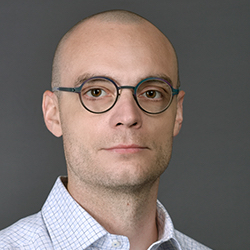
Allison McFall is an Assistant Research Professor in the Department of Epidemiology at Johns Hopkins University Bloomberg School of Public Health. Her work focuses on HIV epidemiology among key populations in India, particularly people who inject drugs (PWID) and men who have sex with men (MSM). Primary Division: Infectious Disease Epidemiology Active Since: 2013 Her research emphasizes optimization of HIV prevention, care, and treatment systems. Key methodologies include: Respondent-driven sampling Monitoring and evaluation of service delivery Electronic database design for epidemiological research Recent publications analyze: Antiretroviral therapy outcomes in PWID and MSM HCV treatment adherence support HIV self-testing technologies Geospatial targeting for health services McFall's work spans 59 research outputs with active collaborations across India on viral hepatitis-HIV coinfections and integrated care models.
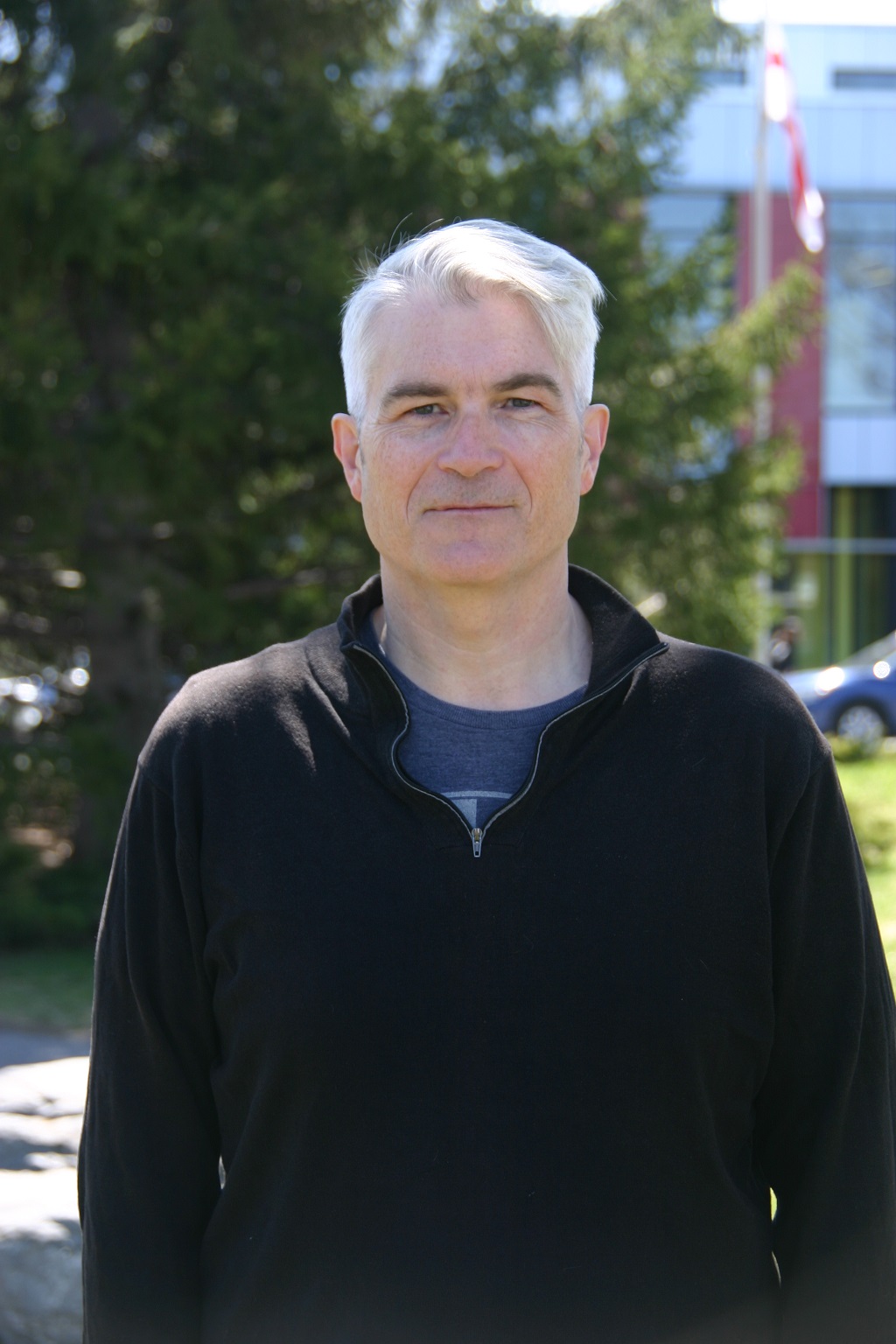
David A. Stephens is a Professor in the Department of Mathematics and Statistics at McGill University, Montreal. He served as Chair of the Department from 2015 to 2019 and as Vice-Dean in the Faculty of Science from 2019 to 2025. His research focuses on Bayesian inference, biostatistics, causal inference, bioinformatics, and statistical genetics. He holds prestigious fellowships: International Statistical Institute (2015), American Statistical Association (2019), and Royal Society of Canada (2024). His work addresses challenges in epidemiology, HIV transmission dynamics, and clinical trial design. Key research themes include: Bayesian hierarchical modeling for infectious diseases (e.g., SARS-CoV-2, HIV) Causal inference in dynamic treatment regimes Survival analysis and censored data methods Statistical genomics and epigenetics His publications analyze public health trends, such as HIV transmission clusters in Quebec and SARS-CoV-2 seroprevalence in Canada. Methodologically, he develops novel techniques for time-series analysis, recruitment forecasting in clinical trials, and computational statistics. Notable contributions include: Advancing phylogenetic cluster inference in HIV studies Optimizing warfarin dosing strategies via SMART trials Modeling gut microbiota impacts on growth faltering in infants His academic leadership includes roles at McGill and prior experience at Imperial College London. His work bridges statistical theory and practical healthcare applications, emphasizing interdisciplinary collaboration.
Dr. Laura B. Balzer is an Associate Professor of Biostatistics at the University of California, Berkeley. Her work focuses on causal inference, machine learning, and addressing methodological challenges in both randomized trials and observational studies, particularly in global health contexts. She leads collaborations in East Africa, focusing on HIV elimination and community health in rural regions. Her research emphasizes translating academic findings into real-world impact. Education: PhD in Biostatistics, UC Berkeley (2015) MPhil in Computational Biology, University of Cambridge (2009) BS in Applied Mathematics, University of Vermont (2008) Research Interests: Dr. Balzer’s work addresses causal inference in complex settings, including semi-parametric methods, measurement challenges, and dependence structures. Her global health projects target HIV prevention, tuberculosis transmission, and hypertension management in sub-Saharan Africa. She designs interventions like the SEARCH Dynamic Choice model, which offers flexible HIV prevention options, and evaluates community health worker programs. Publications highlight her contributions to HIV/AIDS research, including studies on PrEP uptake, viral suppression in adolescents, and tuberculosis-HIV co-infection. Methodologically, she advances causal inference frameworks to handle missing data and clustered designs. Awards: While no specific awards are listed, her work has been funded by initiatives like the SEARCH trials, reflecting its scientific and public health significance. Advising & Grants: Balzer collaborates with multidisciplinary teams in Uganda and Kenya, focusing on translational research. Her grants support interventions linking statistical innovation to healthcare delivery improvements in resource-limited settings. Labs/Teams: Her research is embedded within global health partnerships, particularly within the SEARCH trials network, which integrates biostatistics with clinical and community-based implementation.
Assoc Prof Xiang Liming is an Associate Professor in the Division of Mathematical Sciences at Nanyang Technological University (NTU), Singapore, serving as Assistant Chair (Students). She holds editorial roles at *Computational Statistics & Data Analysis* and *Statistics in Medicine*. With a PhD in Statistics (City University of Hong Kong, 2002), her research focuses on survival analysis, longitudinal data analysis, and biostatistical methods. Notable contributions include methodologies for semi-competing risks, interval-censored data, and mixture models. Her work bridges statistical theory with biomedical applications, addressing challenges in clinical trials and public health. Awards include the 2009 IIE Transactions Best Paper Award and the Outstanding Research Thesis Award (2002–2003, CityU). Education: PhD in Statistics, City University of Hong Kong (2002) Postdoctoral Research: Hong Kong University of Science and Technology (2002–2003) and CityU (2003–2006) Research Interests: Survival analysis methodologies, including frailty models, cure models, and quantile regression for censored data. She develops robust statistical approaches for clustered/longitudinal data, addressing missingness and overdispersion. Applications span biomedical research, epidemiology, and quality management. Grants & Collaborations: Her grants include work on robotic-assisted stroke rehabilitation (2021) and LNG cold energy utilization systems (2017–2019). She collaborates with clinical teams on trials involving upper limb neurorehabilitation technologies. Labs & Teams: Leads statistical method development for multi-center clinical trials, particularly in biostatistics and survival analysis frameworks. Active in NTU’s School of Physical & Mathematical Sciences research initiatives.
Dr. Daniel A. Sass is an Associate Dean for Graduate Studies and Associate Professor in the Department of Management Science and Statistics at the University of Texas at San Antonio’s Carlos Alvarez College of Business. He directs the Statistical Consulting Center and focuses on methodological research, including psychometrics, structural equation modeling, and factor analysis. His applied work spans education, public health, and organizational behavior. Education: Ph.D. in Management Science and Statistics, University of Wisconsin-Milwaukee B.A., University of Wisconsin-Milwaukee Research Interests : Dr. Sass specializes in advanced statistical methodologies with applications in education and social sciences. His work emphasizes psychometric validation, measurement invariance, and applied collaborative projects. Key areas include teacher retention, classroom management, and cross-cultural scale adaptation. His research bridges theoretical statistical frameworks with real-world challenges in education and public policy. Publications Trends : Recent work explores pandemic impacts on productivity, educator stress in charter schools, and diabetes management programs. Earlier studies focus on statistical methods like factor analysis and structural equation modeling validation. His articles consistently address practical implications for policy and practice. Advising/Grants : While no advisees are listed, his collaborative projects involve interdisciplinary teams across education, public health, and organizational studies. His Statistical Consulting Center supports UTSA researchers in applying rigorous statistical methods to their work. Labs/Teams : Director of the Statistical Consulting Center, providing methodological support for academic and applied research projects.
Luke Miratrix serves as Assistant Professor at Harvard Graduate School of Education and affiliate faculty in Harvard Department of Statistics. His methodological expertise centers on causal inference applications in educational research, particularly treatment effect heterogeneity and cluster-randomized trial evaluation. His academic background includes a Doctorate in Statistics from University of California, Berkeley (2012), Master of Science in Computer Science from M.I.T., Bachelor of Science in Computer Science from California Institute of Technology, and Bachelor of Arts in Mathematics from Reed College. Prior to academia, he spent seven years as a high school teacher and tutor. Miratrix's research prioritizes minimal-assumption statistical approaches to validate data-driven arguments. Key interests include developing methods for characterizing variation in treatment impacts, analyzing post-treatment subgroups, and applying high-dimensional techniques to text summarization in legal, journalistic, and educational contexts. His work consistently bridges theoretical statistics with practical implementation challenges in real-world settings. Analysis of his recent publications (2023-2025) reveals three dominant trends: advancement of matching methodologies (e.g., synthetic controls, caliper matching), refinement of heterogeneous treatment effect estimation across multisite trials, and integration of machine learning with human coding for efficient text-based inference in educational assessments. These efforts demonstrate increasing focus on scalable, accessible tools for applied researchers. He contributes to methodological infrastructure through the CARES Lab and software packages like 'matchMulti' and 'textreg', providing practical implementation guides for complex statistical techniques. His work emphasizes translating advanced causal inference methods into usable frameworks for education researchers and policymakers.
Denise Esserman is a Professor of Biostatistics at the Yale School of Public Health, where she joined the faculty in 2014. She is a member of the Yale Center for Analytical Sciences and collaborates with multiple departments at the Yale School of Medicine, including the Clinical and Translational Science Award Program, Patient-Centered Outcomes Research Institute, and the Cancer Center. Her research focuses on methodological aspects of clustered randomized trials and sample size calculations. Education: PhD in Biostatistics from Columbia University (2006) MS in Statistics from University of Georgia (2001) Dr. Esserman's research interests span several critical areas in biostatistics and public health methodology. She specializes in clustered randomized trials, with particular expertise in understanding how intraclass correlation coefficients (ICC) and other factors impact sample size calculations. Her work extends to longitudinal studies methodology, randomized controlled trial design, and sampling techniques. She has contributed significantly to statistical methods for clinical trials, healthcare data analysis, and public health research. Her interdisciplinary approach bridges theoretical statistics with practical applications in healthcare settings. Analysis of Dr. Esserman's recent publications reveals a strong focus on methodological innovations in clinical trial design and analysis, particularly for cluster-randomized trials. Her work spans healthcare applications including fall injury prevention in elderly populations, opioid use disorder treatment in international settings, pain management for hemodialysis patients, and validation of medical coding algorithms. She frequently employs advanced statistical techniques including Bayesian methods, mediation analysis, and methods for handling clustered data. Her research demonstrates a consistent commitment to improving the rigor and applicability of statistical methods in public health and clinical research. Dr. Esserman serves as a reviewer for several prestigious journals including the American Journal of Epidemiology, Arteriosclerosis, Thrombosis and Vascular Biology; Statistics in Biopharmaceutical Research; Clinical Trials; and Obesity. As a member of the Yale Center for Analytical Sciences, Dr. Esserman collaborates with numerous researchers across Yale University. Her current projects include the EQuIP trial (HIC ID 2000033355), where she serves as Sub Investigator with primary completion date of 08/31/2027, focusing on mental health and behavioral research for sexual minority women.
Jörg Spenkuch is an Associate Professor of Managerial Economics & Decision Sciences at Kellogg School of Management, Northwestern University, where he has been since 2013. He holds a Ph.D. in Economics (2013) and M.A. (2009) from the University of Chicago, and dual B.A. degrees in Economics and Business Administration (2007) from the University of St. Gallen, Switzerland. Education: Ph.D., 2013, Economics, University of Chicago M.A., 2009, Economics, University of Chicago B.A., 2007, Economics, University of St. Gallen B.A., 2007, Business Administration, University of St. Gallen Professor Spenkuch's research bridges political economy and applied microeconomics , with a focus on ideological behavior, strategic decision-making, and social dynamics. His work examines topics like: Political Economy: Campaign finance, electoral accountability, and ideological sorting. Behavioral Economics: Satisficing behavior, memory-driven choices, and strategic voting. Public Policy: School desegregation effects, bureaucratic performance, and immigration-crime linkages. His recent publications analyze: Long-term ideological shifts from 1975 school desegregation (2025 working paper). Memory premiums in decision-making (2025 working paper). Complexity's role in chess strategy (2024 Review of Economic Studies ). Political accountability during natural disasters (2025 American Economic Journal ). Scientific Recognition: MinE Best Paper Award (European Economic Association) Chair's Core Teaching Award Deutschlands "Top 40 unter 40" (Capital magazine) FEEM Award (European Economic Association) Best Paper Award, RGS Doctoral Conference At Kellogg, he teaches Leadership and Crisis Management (PACT-440-5) and Business Analytics (DECS-435-0). His work has been published in top journals like Econometrica , American Economic Review , Quarterly Journal of Economics , and Review of Economic Studies , covering topics from partisan spatial sorting to expressive vs. strategic voting behavior.
Scarlett Smout is a Postdoctoral Research Associate at the Matilda Centre, part of the Faculty of Medicine and Health at the University of Sydney. Her email is scarlett.smout@sydney.edu.au . Her research focuses on adolescent mental health, lifestyle behaviors, and the development of school-based interventions to address risk factors such as diet, physical activity, and substance use. She has contributed to studies on pandemic mental health impacts, the Health4Life eHealth intervention, and the role of parental monitoring in dietary habits. Her work also explores social determinants of loneliness during crises and the mental health trajectories of young adults during the pandemic. Key research areas include adolescent mental health outcomes, behavioral interventions, and the intersection of lifestyle factors with psychopathology. She has collaborated on large-scale trials and systematic reviews, including an umbrella review of global mental health during the pandemic and analyses of longitudinal data in gender-diverse populations. Her findings have informed policy recommendations for youth mental health recovery plans and public health strategies. Smout has secured grants including the 'Mentally Healthy Future Project' (2023) and a BHP Foundation grant for pandemic mental health response research (2020). Her contributions address both academic and policy domains, emphasizing evidence-based approaches to safeguard mental health in diverse populations. Labs/Teams: The Matilda Centre, where her work aligns with broader initiatives in mental health research and public health interventions.
Dylan Small is the Universal Furniture Professor and Chair of the Department of Statistics and Data Science at the Wharton School, University of Pennsylvania. His expertise spans causal inference, observational study design, and statistical applications in public health and policy. PhD in Statistics (Stanford University, 2002) BA in Mathematics (Harvard University, 1997) His research focuses on causal inference methodology, measurement error in longitudinal studies, and health policy applications. He has advanced techniques for sensitivity analysis in observational studies and instrumental variable modeling. Recent publications analyze covariate imbalance in hormone therapy studies, zero-inflated treatment effects, and causal frameworks for global health interventions. His work bridges statistical theory with practical healthcare and policy solutions. Awards include: American Statistical Association Fellow (2013) IMS Medallion Lecturer (2022) He has served as Associate Editor for journals such as the Journal of Causal Inference and founded the journal Observational Studies. Current courses include advanced seminars on causal inference and observational study design.
James O'Malley is a Professor at The Dartmouth Institute for Health Policy and Clinical Practice and Professor of Biomedical Data Science at the Geisel School of Medicine, Dartmouth College. He holds the prestigious Peggy Y. Thomson Professorship in the Evaluative Clinical Sciences and serves as an Adjunct Professor of Computer Science, demonstrating his interdisciplinary expertise spanning statistics, healthcare policy, and computer science. Dr. O'Malley earned his B.Sc. (Hons) in Statistics from the University of Canterbury, New Zealand (1994), M.S. in Applied Statistics from Purdue University (1999), and Ph.D. in Statistics from the University of Canterbury (1999), followed by a Postdoctoral Fellowship in Biostatistics at Harvard Medical School (2001). His research spans statistical methodology and healthcare applications, with methodological contributions in statistical inference for social networks , multivariate hierarchical models , comparative effectiveness research , and Bayesian analysis . These methods address critical healthcare problems including health-social network relationships , healthcare quality measurement , medical technology diffusion , and comparative effectiveness in vascular surgery, cardiology, and mental health . His work bridges theoretical statistics with practical healthcare challenges through collaborations with physicians, epidemiologists, and health services researchers. Dr. O'Malley's recent publications reveal a strong emphasis on healthcare network analysis, comparative effectiveness research, and methodological innovations. His work examines physician networks and patient outcomes, evaluates surgical interventions, identifies healthcare disparities, and develops novel statistical approaches for complex healthcare data, with significant contributions appearing in high-impact journals across multiple disciplines. Mid-career Excellence award from the Health Policy Section of the ASA Elected fellow of the ASA (2012) ISPOR Award for Excellence in Methodology (2019) Peggy Y. Thomson Professorship (2021) 2025 Research Excellence Award for Senior Faculty in the Foundational Sciences As a dedicated mentor, Dr. O'Malley has supervised numerous post-doctoral fellows and PhD students across multiple programs. He currently leads major research initiatives including NIH/NLM R01LM014233 on Geographic Variations in Health Care, serves as PI for cores in NIH/NIA projects on healthcare inequity in Alzheimer's Disease and Rural Health Care Delivery Science, and contributes to multiple substantial grants totaling millions of dollars. He previously chaired the Health Policy Statistics Section of the ASA and co-chaired the 2011 International Conference on Health Policy Statistics. Dr. O'Malley co-organized the Dartmouth Interdisciplinary Network Research (DINR) seminar series (2014-2020) and serves as an Associate Editor for Statistics in Medicine and Observational Studies, demonstrating his commitment to advancing methodological research and fostering interdisciplinary collaboration in health services research.
Dr. Jan Keller serves as a Visiting Professor and Head of the AMBER Junior Research Group 'Active Mobility to Promote Health and Environmental Protection' at the Department of Health Psychology, Freie Universität Berlin. With extensive experience in health psychology research and teaching, Dr. Keller leads innovative projects at the intersection of behavioral science, environmental sustainability, and digital health interventions. Dr. Keller earned both Bachelor of Science (2007-2010) and Master of Science (2010-2013) degrees in Psychology from Freie Universität Berlin, followed by doctoral studies in the same institution from 2013-2018. Research interests center on social exchange processes in health promotion, particularly dyadic planning approaches, self-regulatory strategies for health behavior change, habit formation processes, and the critical intersection between environmental sustainability and health. Recent work explores digital interventions for smartphone usage, active commuting behaviors, and climate change education. Dr. Keller's research demonstrates how environmental health psychology can address both individual well-being and planetary health challenges through innovative behavioral approaches. Analysis of recent publications reveals strong thematic trends in digital health interventions, climate-health connections, and dyadic approaches to behavior change. The work spans methodological approaches from randomized controlled trials to longitudinal studies and systematic reviews, with increasing emphasis on environmental health psychology as a critical domain for intervention development. Herman Schaalma Award (2019) from European Health Psychology Society for dissertation Graduate Student Achievement Award (2018) from International Association of Applied Psychology FUB Climate Challenge funding (2022) through FUturist Program Joint doctoral program funding (2021) between University of Melbourne and Berlin University Alliance Quinn Exchange Fellowship (2017) from University of British Columbia CREATE Tandem Stipendium (2016) from European Health Psychology Society Dr. Keller leads the AMBER Junior Research Group (2023-2028) focused on active mobility, and has secured multiple research grants including the FUB Climate Challenge project. As Consulting Editorial Board member for Applied Psychology: Health and Well-being since 2020, Dr. Keller contributes to advancing the field through scholarly review and mentorship. The research program integrates theoretical frameworks with practical interventions addressing contemporary health challenges. The AMBER Junior Research Group serves as the primary research laboratory, focusing on 'Active Mobility to Promote Health and Environmental Protection.' This initiative operates within the broader context of the Department of Health Psychology's research ecosystem, collaborating with international partners including University of British Columbia and Columbia University. Dr. Keller also participates in the Open Digital Health Initiative and the Special Interest Group 'Equity, Global Health and Sustainability' of the European Health Psychology Society.
Martina Wade is a Researcher in the Department of Epidemiology of Microbial Diseases at Yale School of Public Health. Her work focuses on infectious diseases, particularly malaria and antibiotic resistance, with a global health perspective emphasizing sub-Saharan Africa. She collaborates on projects in Cameroon, Uganda, and Burkina Faso, addressing drug resistance mechanisms, diagnostic innovations, and public health interventions. Her research spans clinical trials (e.g., ivermectin mass drug administration protocols), microbiota analysis in livestock and human populations, and environmental transmission dynamics of pathogens. She has published extensively on malaria treatment efficacy, microbiome disruptions from antibiotic use, and novel diagnostic technologies like photoacoustic detection. Her work bridges laboratory science with field epidemiology, aiming to improve clinical outcomes and public health strategies. Key collaborations include Sunil Parikh, Justin Goodwin, and Fangyong Li, focusing on antimalarial resistance tracking and pediatric infection dynamics. Her laboratory is located at 60 College Street, Ste Room 711, New Haven, CT. Contact: martina.wade@yale.edu.
Roger Tam is an Associate Professor in the School of Biomedical Engineering (SBME) at the University of British Columbia (UBC), with a joint appointment in the Department of Radiology. He is also the Associate Director of Graduate Studies. His research focuses on machine learning and computer vision applied to medical imaging, particularly in personalized medicine and quantitative image analysis. Tam earned his PhD in computer science from UBC in 2004, specializing in computational geometry and visualization. Education: PhD in Computer Science, UBC (2004) MSc in Computer Science BSc (Honors) Research Interests: Medical imaging biomarkers Machine learning applications in healthcare Quantitative image analysis Personalized medicine His work bridges computer science and clinical medicine, emphasizing translational approaches to improve diagnostic accuracy and patient outcomes. Recent Research Trends: Focus on myelin content analysis in neurological disorders (e.g., multiple sclerosis) Development of efficient machine learning models for medical image classification Impact of physical activity on white matter health Labs & Programs: Directs the Engineers in Scrubs program, which integrates engineering principles into biomedical education. Active in collaborative research initiatives like the Centre for Brain Health and the Canadian Prospective Cohort Study (CanProCo).
Bjørn Olav Åsvold, MD, PhD, is a Professor of Medicine (Epidemiology) and Center leader at the HUNT Centre for Molecular and Clinical Epidemiology (HUNT MCE), Department of Public Health and Nursing, Norwegian University of Science and Technology (NTNU). He also serves as a Consultant at the Department of Endocrinology, St. Olavs Hospital, Trondheim University Hospital. His research spans epidemiology, genetics, and clinical medicine. MD, Norwegian University of Science and Technology, 2001 PhD, Norwegian University of Science and Technology, 2008 Specialist in internal medicine, 2014 Specialist in endocrinology, 2015 Åsvold's research focuses on thyroid dysfunction and diabetes , investigating their interplay with cardiometabolic diseases and pregnancy complications . He utilizes Mendelian randomization studies to explore causal relationships between genetic factors and health outcomes, including sleep traits , autoimmune thyroid disease , and kidney function . His work also addresses global health issues like obesity in Nepal and diabetic complications in Norway. Recent publications highlight his contributions to understanding hip fracture risk prediction , cardiovascular implications of sleep patterns , and genetic determinants of trace elements . Åsvold's collaborations span multiple international institutions, including the HUNT Study and HUNT MCE in Norway.