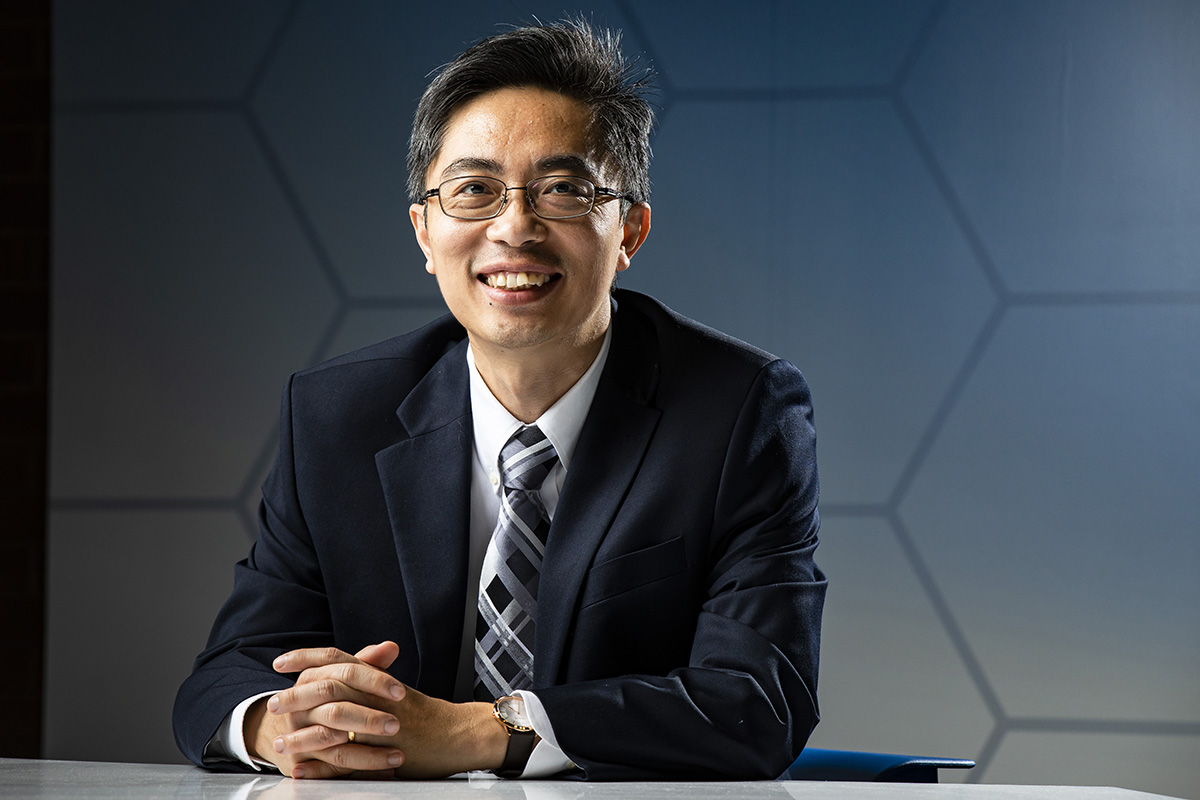
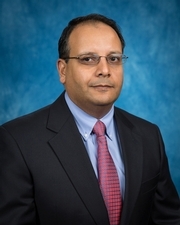
Prof. Ahmed Al-Dubai is a Professor at the School of Computing, Engineering and the Built Environment, Edinburgh Napier University, where he leads the IoT and Networked Systems Research Group and serves as Cybersecurity and Cyber Physical Systems Research Lead. His interdisciplinary research spans Multi-access Edge Computing, High-Performance Networks, Cognitive IoT Systems, VANETs, AI, E-Health, Smart Cities, and Security . He earned his PhD in Computing Science from the University of Glasgow in 2004. His recent publications focus on edge computing architectures, digital twin security, Arabic NLP, wireless energy harvesting, and vehicular communication . His work has been recognized with IEEE Outstanding Service Award, Best Paper Awards at IEEE IUCC 2015 and ACM MoMM 2013 , and fellowships like Senior IEEE Member and British Higher Education Academy Fellow . He supervises 20+ PhD students and has served on 60+ IEEE/ACM conference committees. Current projects include AI-driven fish identification (Innovate UK £265K) , secure IoT protocols (Royal Society £12K) , and COG-MHEAR (EPSRC £3.26M) . He has held visiting professorships at Universite de Valenciennes, University of Sydney, and University of Shenyang.
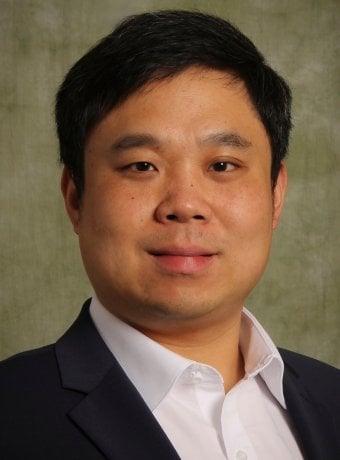
Ronghua Xu is an Assistant Professor at the Department of Applied Computing, Michigan Technological University, specializing in blockchain, IoT, and edge computing. He is a member of the ICC Center for Cybersecurity. Ph.D. (2023), M.S. (2018) in Electrical and Computer Engineering, Binghamton University M.S. (2010) in Mechanical and Electrical Engineering, Nanjing University of Aeronautics & Astronautics B.S. (2007) in Mechanical Engineering, Nanjing University of Science & Technology His research focuses on decentralized security networks, NextG network intelligence, and blockchain applications in IoT systems. Key themes include scalability, interoperability, and resilience in smart vehicular and urban air mobility networks. Recent publications highlight blockchain-enabled architectures for secure data access, federated learning, and edge resource management. Awards include the Graduate Student Excellence Award (2023) and ICC Rapid Seeding Awards (2024). Ronghua Xu actively seeks self-motivated Ph.D. students for his research group. He previously worked at Siemens (2010–2016) on software development and system integration.
Ulrich Pöschl is Director of the Multiphase Chemistry Department at the Max Planck Institute for Chemistry and Professor in the Department of Chemistry, Pharmacy and Geosciences at Johannes Gutenberg University (JGU) in Mainz, Germany. He has held leadership roles at MIT, the Max Planck Society, and the Technical University of Munich, and is a globally recognized expert in atmospheric and multiphase chemistry. Education: PhD (Doctor technicae) in Chemistry, Technical University of Graz (1995) Habilitation in Geochemistry, JGU Mainz (2007) Habilitation in Chemistry, Technical University of Munich (2006) Research Interests: His research centers on multiphase processes at the interface of atmosphere, biosphere, and hydrosphere. Key areas include aerosol chemistry, climate interactions, oxidative stress, protein modification, and the health impacts of air pollution. His work integrates field observations, laboratory experiments, and modeling. Publication Trends: His recent research spans atmospheric new particle formation in the Amazon, health effects of air pollution, open access science, and the role of bioaerosols in disease transmission. The work is highly interdisciplinary, bridging environmental science, chemistry, public health, and climate science. Scientific Awards: Highly Cited Researcher (Web of Science, 2014–2024) AGU Union Fellow (2023) Copernicus Medal (2015) Pius XI Gold Medal (2012) EGU Union Service Award (2005) Advising and Grants: Pöschl has mentored numerous PhD and postdoctoral researchers, many of whom now hold senior academic positions worldwide. He leads major international collaborations and has secured significant research funding. He is a strong advocate for open science, having founded the journal Atmospheric Chemistry and Physics and co-leading the OA2020 initiative. Labs and Teams: He leads the Multiphase Chemistry Department at MPIC, overseeing a large interdisciplinary team conducting cutting-edge research on aerosols, climate, and health. His group collaborates globally and uses advanced analytical, experimental, and computational methods.
Adrien Depeursinge is a Professor at HES-SO Valais-Wallis - Haute Ecole de Gestion, affiliated with the School of Economics and Services and the Management Information Systems department. His research focuses on radiomics, personalized medicine via image-based analysis, and clinical workflow optimization. He leads the development of the QuantImage platform, a physician-centered web-based tool for radiomics research, and contributes to radiomics standardization efforts through initiatives like the Image Biomarker Standardization Initiative (IBSI). His work emphasizes machine learning applications in healthcare, including tumor segmentation, biomarker extraction, and improving diagnostic accuracy through computational models. Key research themes include: 1) Radiomics – developing quantitative imaging features for cancer diagnosis/prognosis; 2) Medical Imaging Analysis – advancing texture-based models, multi-modal fusion, and automated lesion detection; 3) Physician-AI Collaboration – designing user-centric tools for clinical integration. His contributions span neuro-oncology (brain metastases), head-and-neck cancer, and multiple sclerosis imaging. Publications emphasize methodological advancements (e.g., kernel optimization in CNNs, steerable detectors) and clinical validation (e.g., reproducibility of radiomics features across imaging protocols). He collaborates with institutions like the University Hospital of Lausanne (CHUV) and international teams on projects like the HECKTOR challenge for PET/CT tumor segmentation. His work bridges technical innovation with clinical impact, aiming to translate radiomics into actionable clinical tools. QuantImage v2, his flagship tool, enables no-code development of machine learning models using clinical imaging data. Research also includes phantom-based validation of radiomics features and addressing challenges in feature stability across imaging modalities. Current projects explore improving contour quality for radiomics studies and optimizing AI explainability in medical decision-making.
David Opderbeck is a Professor of Law and Co-Director of the Gibbons Institute of Law, Science & Technology and Institute for Privacy Protection at Seton Hall University School of Law. His expertise spans artificial intelligence compliance, cybersecurity, data privacy, intellectual property law, and the intersection of law with theology and neuroscience. He teaches courses such as Cybersecurity Law and Policy, AI and the Law, and leads the Data Privacy and Security Compliance Program. Additionally, he holds affiliations with Seton Hall's Department of Religion and is a Faculty Associate at Harvard's Berkman-Klein Center for Internet & Society. Education: JD from Seton Hall University School of Law; LLM from NYU Law School; PhD and MA in Systematic and Philosophical Theology from the University of Nottingham and Fuller Theological Seminary. Research focuses on AI ethics, cybersecurity policy, and theological dimensions of law. Notable works include Law and Theology: Classic Questions and Contemporary Perspectives (2019), The End of the Law? Law, Theology, and Neuroscience (2021), and the upcoming Faithful Exchange: The Economy as It's Meant to Be (2025). His recent articles address AI training data rights, regulatory frameworks for biotech innovation, and encryption policy dilemmas. Service roles include Co-Director of the Gibbons Institute since 2003 and arbitrator for the American Arbitration Association in tech-related disputes. His work bridges legal scholarship with practical policy solutions for emerging technologies.
Rémi Badonnel is a Professor in the Department of Computer Science at the University of Lorraine's Faculty of Science and Technology, affiliated with the LORIA research laboratory in France. With over 20 years of research experience, his work focuses on network security, cloud security, and network management systems. His research interests span multiple critical areas of cybersecurity including Network and cloud security architecture Internet of Things security frameworks Software-defined networking security Automated security configuration systems Cybersecurity education and workforce development His work often combines theoretical foundations with practical implementations, particularly in the areas of formal verification for security policies and machine learning applications for threat detection. Analysis of his recent publications (2021-2025) reveals a strong focus on cloud security challenges, particularly around service composition, migration security, and formal verification methods. His work increasingly incorporates AI/ML techniques for security automation while maintaining strong theoretical foundations in network management principles. His research shows consistent collaboration with European institutions, particularly in cybersecurity education initiatives. As an academic leader, he has supervised numerous researchers including Martín Barrère, Anthéa Mayzaud, Adrien Hemmer, and Nicolas Schnepf, who have co-authored multiple publications with him. His editorial roles for IEEE Transactions on Network and Service Management demonstrate his standing in the network security research community.
Yan Solihin is a Professor and Director of the Cybersecurity and Privacy Faculty Cluster at the University of Central Florida. He holds the Charles N. Millican Professorship in Computer Science and serves as a leader in the College of Engineering. Ph.D. in Computer Science – University of Illinois at Urbana-Champaign Bachelor’s in Computer Science – Bandung Institute of Technology Bachelor’s in Mathematics – Indonesia Open University Master’s in Computer Engineering – Nanyang Technological University His research focuses on computer architecture , cybersecurity , and memory systems , particularly in areas like: Secure Execution Environment Trustworthy cloud and enclaves Side-channel analysis (microarchitecture, timing, caches) Memory encryption and integrity verification Persistent memory systems He has significantly influenced technologies such as Intel’s Cache Allocation Technology and Secure Guard eXtension’s Memory Encryption Engine. Scientific Awards : 2023 HPCA Test of Time Award 2004 NSF CAREER Award 2005 & 2010 IBM Faculty Partnership Awards IEEE Fellow (2017) ACM Distinguished Speaker (2019-2022) Multiple Hall of Fame and Best Paper recognitions At UCF, Solihin expanded the Cyber Security and Privacy Cluster, developed a master’s program in cybersecurity, and established an NSF-funded scholarship program for cybersecurity students.
Dr. Ahmed F. Abdelghany is the Associate Dean for Research and Professor of Operations Management at the David O'Maley College of Business, Embry-Riddle Aeronautical University, since January 2006. He specializes in commercial airlines, airports, big data cloud computing, business analytics, and operations research models. Prior to his academic career, Dr. Abdelghany worked in enterprise optimization at United Airlines, Chicago. Education: Ph.D. in Civil Engineering (Transportation Systems) from the University of Texas at Austin (2001) Dr. Abdelghany’s research focuses on airline network planning, flight scheduling, simulation of complex transportation systems, and NextGen air traffic management. He has authored two influential books: Modeling Applications in the Airline Industry (Routledge 2010) and Airline Network Planning and Scheduling (Wiley 2018). His publications analyze airline operations, competitive dynamics, and crowd management in transportation facilities. He teaches courses like Airline Management (BA 315) and Airline Operations & Mgmnt (BA 609), and participates in industry short courses. Dr. Abdelghany contributes to research projects such as NextGen air traffic implementation, integrated airport initiatives, and benefit-cost analysis of arrival management systems. His work bridges academic theory with real-world airline and transportation challenges.
Dr. Scott L. Nykl is a Professor in the Department of Computer Science at the Air Force Institute of Technology (AFIT), part of the Graduate School of Engineering & Management. He is a leading researcher in computer vision, real-time 3D graphics, and autonomous aerial systems, with a focus on automated aerial refueling and navigation in GPS-denied environments. Education: Ph.D. in Computer Science, Ohio University (2008–2013), Summa Cum Laude, GPA: 4.0/4.0 M.S. in Computer Science, Ohio University (2011–2012), Summa Cum Laude, GPA: 4.0/4.0 B.S. in Software Engineering, University of Wisconsin–Platteville (2002–2006), Summa Cum Laude, GPA: 3.94/4.0 Dr. Nykl's research interests include computer vision, sensor fusion, interactive virtual worlds, and real-time 3D graphics, with applications in aerospace and defense. His work bridges simulation and real-world deployment, particularly in autonomous aerial refueling using stereo and monocular vision. He has pioneered techniques in pose estimation, occlusion mitigation, and sim-to-real transfer learning. His recent publications and projects show a strong trend toward robust, vision-based navigation systems for unmanned and manned aircraft, with emphasis on reliability, accuracy, and real-time performance. His work frequently appears in IEEE, AIAA, and ION venues, reflecting its high technical and operational relevance. Scientific Awards and Recognitions: 2024 Harold Brown Award – Highest U.S. Air Force scientific honor 2024 General Bernard A. Schreiver Award 2025 AETC Airmen of the Year Multiple Air Force Outstanding Scientist/Engineer Awards (2017–2023) Best Paper Award, ACM SIGGRAPH i3D 2013 Forbes' The Greatest Young Inventors in America (2012) NSF GK-12 Fellow (2006) Dr. Nykl has advised numerous graduate students and collaborated extensively on projects involving automated aerial refueling, 3D reconstruction, and cyber education. He has secured significant research funding, including a $100,000 Ohio Third Frontier grant. His work has led to multiple patents and technology transfers. He leads research integrating virtual worlds, digital twins, and augmented reality for both research and pedagogy. Laboratories and Research Teams: His work is conducted within AFIT’s research ecosystem, involving collaborations with the Air Force Research Laboratory (AFRL), Boeing, and academic partners. He leads projects under the Aerial Refueling Systems Advisory Group (ARSAG) and presents regularly at ION, AIAA, and IEEE conferences.
Xiaoning Ding is an Associate Professor in the Department of Computer Science at New Jersey Institute of Technology (NJIT). His research focuses on virtualization, multicore computing, cloud infrastructure optimization, and mobile systems. He leads projects addressing challenges in nested virtualization, memory management, and cache conflicts in distributed and cloud environments. Key research interests include optimizing task scheduling in cloud VMs, reducing TLB misses through huge page strategies, and mitigating interference in multi-tenant GPU clouds. His work on page placement mechanisms and dynamic page coalescing aims to enhance virtualized cloud performance. Ding has received federal funding, including an NSF grant for virtualization research in heterogeneous memory hierarchies (2016–2019). His research outputs span over 74 publications, with notable contributions in EuroSys, IEEE Transactions, and conferences like PACT. Media coverage highlights his studies on cloud computing and collaborative mobile systems, such as parking assignment algorithms. Beyond technical contributions, Ding advises students in interdisciplinary projects, exemplified by collaborations with Applied Math majors on cloud computing challenges.
Emily J. King is a tenured Associate Professor in the Department of Mathematics at Colorado State University (CSU), College of Natural Sciences. She previously held a faculty position at the University of Bremen and has been actively contributing to the mathematical community through research, mentorship, and academic leadership. Her primary research interests include Frame Theory , Harmonic Analysis , Algebraic and Geometric Combinatorics , and Data Science , with applications in signal and image processing, Earth science, and artificial intelligence. She integrates deep mathematical theory with practical data analysis challenges. Her recent scholarly output reflects a strong focus on equiangular tight frames, combinatorial structures in frames, mathematical models for attention mechanisms, and applications to satellite imagery and cloud processes. Her work often bridges pure and applied mathematics, with a growing emphasis on interpretable AI and data science foundations. Dr. King has supervised several doctoral and master’s students, including Lander ver Hoef, Sören Schulze, Harley Meade, and Kristina Moen. She is a co-PI on an NSF grant focused on cloud processes and has been recognized for mentoring excellence, as evidenced by her student Emma Slack receiving the inaugural Outstanding Undergraduate in Mathematics award. NSF Grant Co-PI (2024) Outstanding Undergraduate in Mathematics award (mentored student, 2023) She is a founding co-organizer of the international Codes and Expansions (CodEx) Seminar and has organized sessions at major conferences such as SIAM AG and the Joint Mathematics Meetings. She frequently delivers invited talks at universities and research institutes worldwide, including upcoming presentations at the Air Force Institute of Technology, SIAM AG25, and TU Clausthal. Dr. King’s academic lineage includes John Benedetto as her mathematical advisor and Chandler Davis as her mathematical grandfather. She is actively involved in interdisciplinary research, particularly in marine data science, having co-spoken for the Helmholtz School for Marine Data Science (MarDATA).
Dr. Theophilus A. Benson is a Professor of Electrical and Computer Engineering at Carnegie Mellon University (CMU) and CMU-Africa. His research focuses on improving network performance and availability in data centers, clouds, and edge networks. He leads projects addressing the digital divide in Africa through initiatives like the African Internet Observatory (AIO), which analyzes connectivity challenges and infrastructure resilience. His work spans programmable networks (eBPF/P4), CDN optimizations, and network management frameworks. Education: B.S. from Tufts University, Ph.D. from University of Wisconsin-Madison, Postdoc at Princeton University. Research Interests: Network state management, programmable substrates, digital equity, measurement systems, and network security. His group develops tools like NetEdit (eBPF management), JSBench (mobile web performance), and the African Internet Observatory's probe network. Recent Trends: Publications emphasize eBPF management frameworks, African network analysis, and data-driven CDN improvements. Key projects include subsea cable impact studies, QUIC protocol analysis, and deploying measurement probes across Africa. Awards: NSF CAREER Award, Google/FA Faculty Awards, SIGCOMM Test of Time Award, and DARPA ISAT membership. Advising & Grants: Active in mentoring MS/PhD students and postdocs. Current grants include NSF funding for data-driven web performance and IoT security. Collaborations with Meta and industry partners enhance real-world system deployments. Labs & Teams: Leads the AIO initiative with local African stakeholders. Research group includes collaborators from National Taiwan University and partnerships with institutions like TU Delft (keynote on eBPF).
Anne-Cécile Orgerie is a permanent CNRS Research Scientist (Directrice de recherche) at the Magellan Team within IRISA in Rennes, France. She holds a PhD from École Normale Supérieure de Lyon (2011) and previously worked as a postdoctoral researcher at the University of Melbourne. Current roles: Director of GDRS EcoInfo (CNRS service group on ICT environmental impact), member of multiple editorial boards (e.g., IEEE TPDS, IJDSN), and TPC member for conferences like SC, IPDPS, and CCGrid. Research Focus: Her work centers on energy efficiency and environmental impacts of distributed systems, including cloud infrastructures, telecommunications networks, and smart grids. She explores renewable energy integration, resource optimization, and co-simulation frameworks for smart grid management. Key Projects: Leads initiatives like CARECloud (PEPR Cloud project reducing cloud environmental impacts, 2023–2030) and DECORUS (CNRS 80Prime project on renewable-powered edge computing). Co-leads the RennesGrid ADEME project (2017–2021) for smart grid demonstrators. Supervision: Advises/co-advises over 20 PhD students and postdocs, focusing on topics like energy-efficient fog infrastructures, co-optimization of electrical/communication networks, and edge computing models.
Iain Spears holds dual academic appointments as Senior Lecturer in Sport & Exercise Science at Newcastle University's Faculty of Medical Sciences (Department of Biomedical Sciences) since May 2020, and as Lecturer in Biomedical/Sports Engineering at Nottingham Trent University's Department of Engineering since August 2019. His interdisciplinary position bridges sports science, biomechanics, and engineering applications in athletic performance. Dr. Spears' research focuses on several interconnected areas: Sports biomechanics and movement analysis Training load monitoring and performance assessment methodologies Injury prevention and rehabilitation strategies Technological applications in sports performance Physiological responses to exercise His publication record demonstrates methodological innovation, with recent work employing point-cloud processing for motion analysis, low-cost depth-sensing camera systems, and exergaming solutions for high-intensity training. Key research themes include differential ratings of perceived exertion, environmental effects on athletic performance, and cooling methodologies for endurance exercise. Dr. Spears' collaborative research network includes frequent co-authors Matthew Weston, Thomas Macpherson, and Sean McLaren, with publications appearing in high-impact journals such as Journal of Biomechanics, Sports Medicine, and Medicine and Science in Sports and Exercise. His work has practical applications across team sports, military training contexts, and rehabilitation programming.
Tasos Dagiuklas is a Professor in the Department of Computer Science and Technology within the School of Engineering and Technology at the University of Bedfordshire. With over 168 publications spanning from 1995 to 2025, he has established himself as a leading researcher in telecommunications and network systems. His extensive publication record demonstrates continuous scholarly contribution across multiple decades in the field. Professor Dagiuklas' research focuses on wireless communications, edge computing, 5G/6G networks, quality of experience (QoE), and federated learning . His work bridges theoretical networking concepts with practical applications, particularly in multimedia delivery and security. He has developed significant expertise in video streaming optimization, network security mechanisms, and resource management in emerging network architectures. His research consistently addresses the evolving challenges of modern communication systems, with recent work increasingly focusing on AI integration in networking. Analysis of his recent publications (2023-2025) reveals a strong trend toward edge computing, federated learning, and security applications in next-generation networks. His work demonstrates a strategic shift from traditional networking concerns to more complex systems involving AI integration, energy efficiency, and heterogeneous environments. The publications show consistent collaboration with researchers across multiple institutions, with particularly strong partnerships with Muddesar Iqbal, Ilias Politis, and Stavros Kotsopoulos. Professor Dagiuklas has made substantial contributions to the academic community through his extensive publication record in high-impact venues including IEEE journals and conferences. His work has evolved from foundational networking research to cutting-edge investigations of AI-enhanced communication systems, reflecting the broader trajectory of the field itself. His research demonstrates both technical depth in specific networking challenges and breadth across multiple application domains.