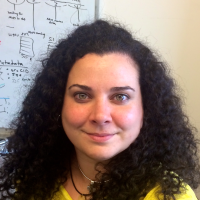
Liang Xue is an Assistant Professor in the School of Information Technology at York University. She holds a PhD in Electrical and Computer Engineering from the University of Waterloo (2022) and completed a postdoctoral fellowship at the University of Guelph’s School of Computer Science (2022–2024). Her research focuses on applied cryptography, blockchain security, privacy-preserving AI, and cybersecurity in cloud and IoT systems. She has published in top-tier journals like IEEE Transactions on Dependable and Secure Computing, and conferences such as IEEE International Conference on Communications. Her work addresses challenges in data privacy, secure authentication, and regulatory compliance in decentralized systems. Recent projects include privacy-enhancing technologies for access control, blockchain-based data trading frameworks, and federated learning with privacy guarantees. She actively contributes to standards for cybersecurity in smart cities and next-generation wireless networks.
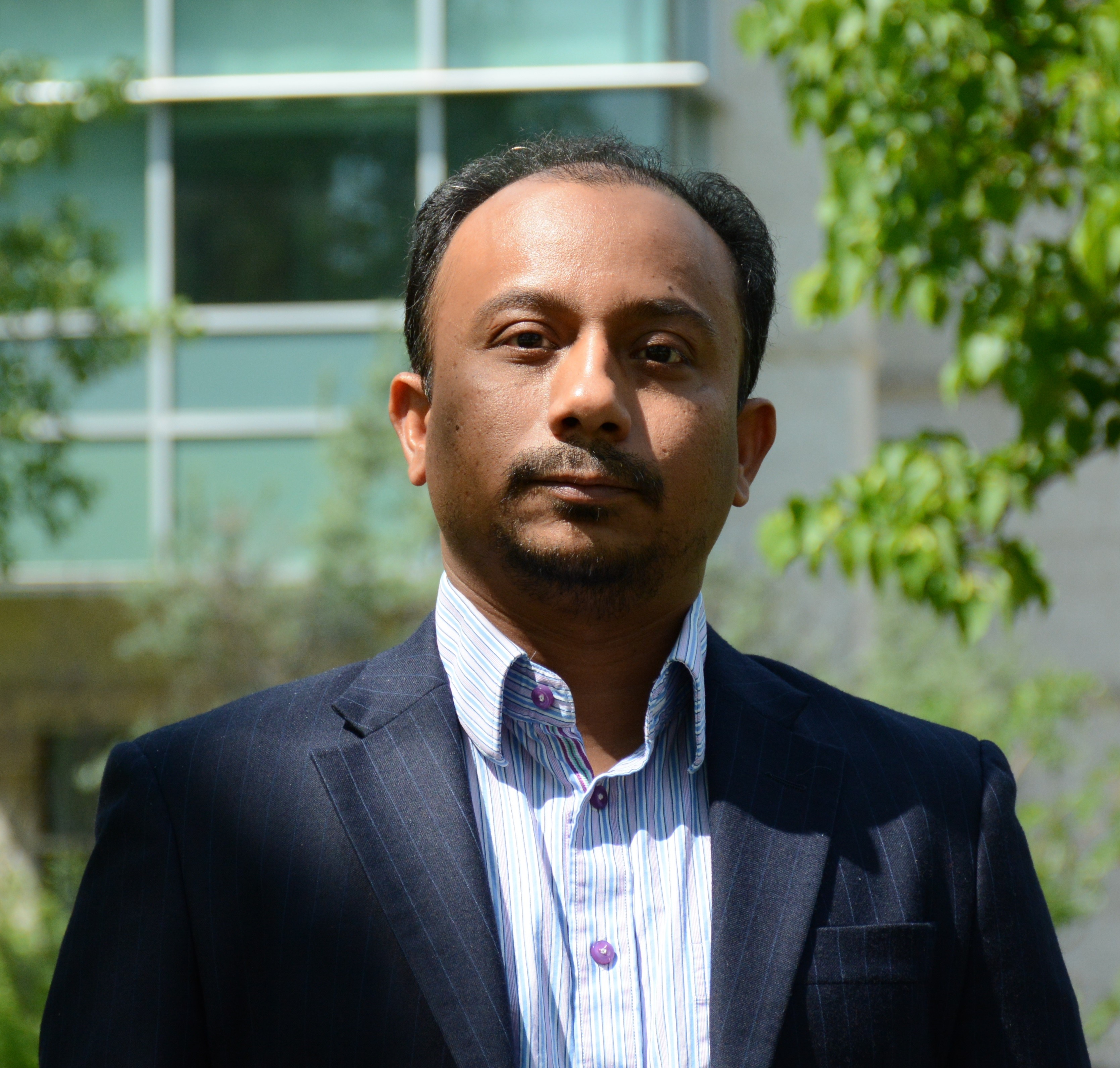
Michael J. Franklin is a Professor in the Department of Electrical Engineering and Computer Sciences at the University of California, Berkeley's College of Engineering. He has a prolific publication record spanning over three decades with more than 300 publications in top-tier database and systems conferences and journals, demonstrating his continued active research and leadership in the field. Franklin's research spans multiple areas within data management, with a recent focus on time-series analysis, AI-integrated database systems, cloud-native databases, and data quality. His work has evolved from traditional database systems to address modern challenges in big data, machine learning integration, and distributed systems. He has made significant contributions to data cleaning, crowdsourced data management, and stream processing systems. Analysis of his recent publications (2022-2025) reveals a strong trend toward integrating AI/ML capabilities with database systems, particularly in time-series anomaly detection, LLM applications for data management, and resource-adaptive query processing for cloud environments. His work increasingly focuses on practical systems that address real-world data challenges, often involving collaborations with industry partners and other leading academic researchers. Throughout his career, Franklin has mentored numerous PhD students who have become prominent researchers in their own right, including Sanjay Krishnan, Aaron Elmore, and Jiannan Wang. His collaborative research has frequently involved significant funding from NSF and industry partnerships, enabling large-scale systems research with real-world impact. Franklin leads research efforts that bridge theoretical database principles with practical system implementations. His work on projects like Data Station demonstrates his commitment to building trustworthy infrastructure for data sharing and analysis, addressing critical challenges in data privacy, security, and usability in collaborative environments.
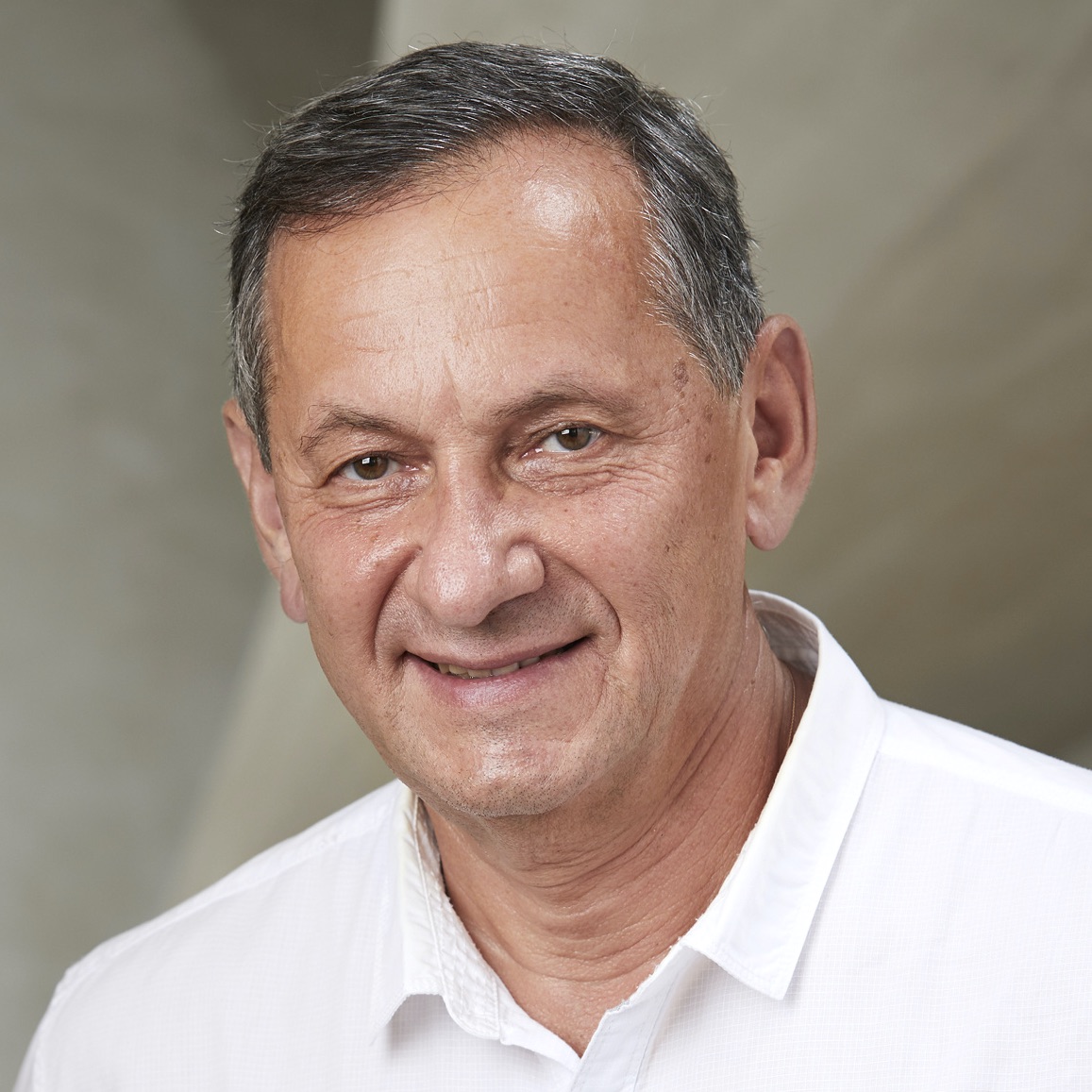
Christina Delimitrou is an Assistant Professor in the Electrical and Computer Engineering Department at Cornell University, where she leads the SAIL research group and is a member of the Computer Systems Laboratory (CSL). She holds the John and Norma Balen Sesquicentennial Faculty Fellowship and will join MIT EECS and CSAIL as a professor starting September 2022. Dr. Delimitrou earned her Ph.D. and M.S. in Electrical Engineering from Stanford University, working with Christos Kozyrakis, and completed her undergraduate studies at the National Technical University of Athens. Her research focuses on computer architecture and systems, particularly on improving resource efficiency in large-scale datacenters through QoS-aware scheduling, resource management techniques, efficient server architectures, distributed performance debugging, and cloud security. Her publication record demonstrates consistent high-impact research in datacenter systems, with recurring themes in microservices architecture, machine learning for systems, and QoS-aware resource management. Her work bridges theoretical computer architecture with practical cloud computing challenges, resulting in multiple IEEE Micro TopPicks awards and best paper recognitions at major architecture conferences. Dr. Delimitrou has received numerous prestigious awards including: Sloan Research Fellowship in Computer Science NSF CAREER Award Microsoft Research Faculty Fellowship Intel Rising Star Award 2020 IEEE TCCA Young Computer Architect Award Multiple Google Faculty Research Awards Facebook Faculty Research Award Cornell Excellence in Research and Teaching Awards She actively mentors PhD, MS, and undergraduate students in the SAIL research group, focusing on cloud computing and computer architecture. Her research has been supported by significant grants from NSF, Google, Microsoft, Facebook, and Intel. She teaches ECE5710: Datacenter Computing at Cornell, exploring hardware, systems software, and distributed systems technology in modern datacenters. The SAIL research group develops innovative solutions for cloud infrastructure challenges, spanning from hardware acceleration to machine learning-driven resource management, with strong emphasis on practical implementation and real-world impact.
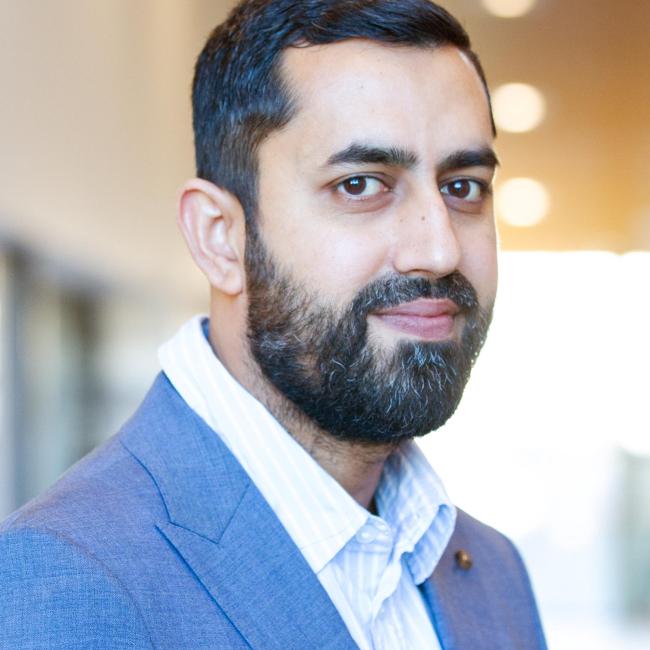
Steffen Becker is a Professor at the University of Stuttgart's Faculty of Computer Science, Electrical Engineering and Information Technology, affiliated with the Institute for Software Engineering's Software Quality and Architecture group. His work focuses on software engineering, cloud systems, model-driven engineering, and cybersecurity. He leads research in architectural modeling tools like Slingshot, GUI testing frameworks (ViMoTest), and hardware security analysis. Recent studies explore AI integration in testing, education, and automotive systems (CARISMA). Research interests include elasticity modeling, self-adaptive systems, and educational technology. His 2025 publications address issues like end-user hardware comprehension, FPGA security, and LLM-driven test generation. Notable tools developed include the Slingshot Simulator for cloud-native systems and Gropius for cross-component issue management. Becker contributes to both theoretical advancements and practical implementations in software quality, security, and cloud infrastructure. Key Areas: Software Architecture, Cyber-Physical Systems, Testing, Reverse Engineering Tool Developments: ViMoTest, Slingshot, Gropius Education Focus: Online programming pedagogy and curriculum innovation His work bridges foundational research with industry applications, addressing challenges in automotive computing, cloud elasticity, and human-centric security awareness. Recent efforts emphasize explainable hardware (XHW) and AI's role in qualitative analysis automation.
Tom Goethals is an FWO Junior Postdoctoral Fellow affiliated with the Department of Information Technology at Ghent University , where he conducts research in edge computing, container networking, and decentralized systems. Current role: IMEC Postdoctoral Researcher Research focus: Secure and intelligent edge service management for decentralized IoT applications His work explores edge intelligence , orchestration frameworks , and AI-driven network optimization , with trends in lightweight virtualization (e.g., Feather), Kubernetes adaptation for edge environments, and intent-based decentralized orchestration. Publications emphasize scalability, security, and energy efficiency in fog-native workflows. Scientific Awards : FWO Junior Postdoctoral Fellowship He collaborates with researchers like Bruno Volckaert and Filip De Turck on projects funded by the Research Foundation - Flanders (FWO) , including grants for edge container networking and decentralized learning frameworks. His projects align with Ghent University’s focus on smart city infrastructure and edge-to-cloud systems.
Bettina Kemme is a Professor in the School of Computer Science at McGill University, Montreal, Canada. She leads the Distributed Information Systems Lab (DISL) and specializes in large-scale data management, distributed systems, and cloud computing. Her academic roles include teaching COMP 512 (Distributed Systems) and COMP 421 (Database Systems). Education: Diplom (M.Sc. equivalent) in Computer Science, Friedrich-Alexander University, Erlangen, Germany (1996) PhD in Computer Science, Swiss Federal Institute of Technology (ETH), Zurich, Switzerland (2000) Research Interests: Distributed systems, cloud-native data management, in-database analytics (AIDA project), monitoring-as-a-service frameworks, and scalable pub/sub systems for online games. Current projects focus on integrating machine learning with databases, cloud performance monitoring using SDN, and sustainable data systems for data science. Lab & Collaborations: Leads the Distributed Information Systems Lab (DISL) with active projects in distributed databases, cloud computing, and game systems. Collaborates on EU-Canada initiatives like the SustainSys program for sustainable data infrastructure. Advising: Supervises PhD and M.Sc. students in topics like monitoring frameworks (Mona ElSaadawy), in-database ML (Winnie He), and distributed systems (Maximilian Schiedermeier). Alumni include over 50 researchers from PhD candidates to undergraduate researchers.
Christina Delimitrou is an Associate Professor at MIT's Department of Electrical Engineering and Computer Science (EECS) and a Principal Investigator at the Computer Science and Artificial Intelligence Laboratory (CSAIL). Her research focuses on optimizing cloud computing systems, with a strong emphasis on resource management, sustainability, and machine learning-driven solutions. Delimitrou leads projects on carbon-aware scheduling, efficient datacenter operations, and serverless computing frameworks like Ursa and Ditto. Her work bridges theoretical system design with practical deployment challenges, addressing topics such as microservices orchestration, approximation techniques for resource efficiency, and security implications of multi-tenancy in shared cloud environments. Notably, she received the Presidential Early Career Award for her contributions to improving datacenter efficiency through innovative scheduling and resource allocation strategies. Delimitrou's research group develops tools like Sage (ML-driven performance debugging) and Seer (big data analytics for cloud systems), emphasizing reproducibility and scalability. Her lab also explores edge computing, swarm robotics coordination (e.g., Hivemind), and hardware-software co-design for next-generation systems. Her academic affiliations include MIT CSAIL's Systems Community of Research, where she collaborates on large-scale software systems. Key themes in her work include QoS-aware resource management, sustainable computing practices, and leveraging approximation to enhance cloud resource utilization.
Nashid Shahriar is an Assistant Professor in the Department of Computer Science at the University of Regina, Faculty of Science. His research addresses resource allocation challenges in next-generation networks including 5G, elastic optical networks, cloud infrastructures, and IoT systems. He holds a Ph.D. in Computer Science from the University of Waterloo, an M.Sc. from Bangladesh University of Engineering and Technology (BUET), and a B.Sc. from BUET. His work leverages optimization, machine learning, and AI for network management. Recent publications focus on 5G network slicing, intrusion detection, and NFV security. Research emphasizes practical AI-driven solutions for telecommunications and cloud systems.
Anastasios Zafeiropoulos serves as Assistant Professor at Harokopio University of Athens, specializing in Spatial Data Management and Analysis within the Postgraduate Studies Program for “Applied Geography and Spatial Management” (Direction C: Geoinformatics). His academic role encompasses teaching “Spatial Databases” and advancing research at the intersection of geospatial technologies and distributed computing systems. His research program focuses on Spatial Databases, Internet of Things (IoT), Cloud/Edge Computing, and 6G Network Orchestration, with significant extensions into Knowledge Graph applications for Sustainable Development Goals (SDGs) and socio-emotional learning in education. Key innovations include the EduCardia methodology for student competency assessment and frameworks for climate vulnerability analysis using knowledge graphs. Analysis of his 2024-2025 publications reveals three dominant thrusts: (1) AI-driven orchestration of 6G services across the computing continuum using reinforcement learning; (2) Knowledge Graph applications for SDG interlinkage analysis and materials science; (3) EU-funded IoT/Edge Computing project ecosystems. His work consistently bridges theoretical networking concepts with practical sustainability and educational applications. Dr. Zafeiropoulos actively contributes to EU-funded initiatives in IoT and Edge Computing standardization, particularly through AIOTI WG Standardisation. His project portfolio includes NEPHELE multi-cloud ecosystem development and O-RAN slice admission control research, demonstrating strong industry-academia collaboration in next-generation networking. He leads the development of innovative tools including Palindrome.js for distributed system visualization and the EmoSocio open-access emotional intelligence model, reflecting his commitment to translating research into practical educational and environmental solutions.
Dr. Vladimir Vlassov is a full Professor in Computer Systems at the Division of Software and Computer Systems (SCS) , Department of Computer Science (CS) , School of Electrical Engineering and Computer Science (EECS) , KTH Royal Institute of Technology , Stockholm, Sweden. He leads the AVA project in ALEC2, an AI-powered system for mental health care. He is a member of the Distributed Computing research group (DC@KTH) . Education & Roles: Holds a PhD and is a member of ACM and IEEE. Previously visited MIT (1998) and UMass Amherst (2004). Teaches courses on Data Mining , Distributed Systems , and Concurrent Programming . Research Interests: Focus on scalable AI, Cloud computing, distributed systems, and NLP for mental health. Projects include ExtremeEarth (Copernicus data analytics) and EMJD-DC (distributed computing PhD program). Grants & Projects: Principal Investigator in ALEC2 (adaptive mental health care) and ExtremeEarth (EU H2020). Led EU projects like ENCORE (manycore systems) and PaPP (embedded systems). Labs & Teams: Directs the Distributed Computing group, contributing to Hopsworks (machine learning feature store) and Maggy (hyperparameter optimization).
Role & Affiliation: Jean-Christophe BACH is an Associate Professor at IMT Atlantique's Computer Science department since 2015. He leads the PASS research group (IRISA) and focuses on software security, model-driven engineering, and cybersecurity applications. Previously, he held roles as a teaching assistant (ATER) at University of Lille (2014–2015) and completed his PhD on model transformations at Inria/LORIA under Pierre-Étienne Moreau and Marc Pantel (defended 2014). Research Interests: His work centers on improving software trustworthiness through 'security by design' principles. Key areas include model federation, formal methods for software verification, transformation traceability, and cybersecurity in industrial systems. He actively contributes to frameworks like Openflexo and PAMELA, emphasizing practical tooling for secure systems engineering. Teaching & Education: Teaches advanced topics such as object-oriented design, functional programming (OCaml), concurrency modeling, and cybersecurity. Supervises student projects on Openflexo, game development, and network security (IPv6/Tor). Courses include INF301, INF447, and others. Labs & Collaborations: Engaged with IRISA and Lab-STICC research centers. Collaborates on projects like the European Space Agency's SSE4Space framework for secure space missions and the Quarteft project (aerospace software). Active in open-source initiatives and scientific mediation for K-12 programming education.
Dr. Muhammad Usman is a Senior Lecturer at the Department of Mathematics and Computer Science, Karlstad University, Sweden. His research focuses on cloud and edge computing, distributed systems, performance observability, DevOps automation, and networked systems. He holds a B.S. from NUST (Pakistan), and integrated M.S./Ph.D. from GIST (South Korea). He teaches master's-level courses in Distributed Systems and Cloud Computing. His research interests include optimizing container orchestration for edge-IoT workloads, developing AI-driven frameworks for industrial IoT (e.g., AIDA), and enhancing observability of distributed systems through frameworks like DESK and SmartX. His work often addresses challenges in resource efficiency, scalability, and fault detection in edge and cloud environments. Notable contributions include benchmarking lightweight container orchestration platforms, designing cost-effective testbeds for DevSecOps, and creating visualization frameworks for SDN-enabled clouds. His publications span topics from IIoT lifecycle management to intent-based network control. Usman actively collaborates internationally, with projects involving institutions like GIST, Aalto University, and the IEEE community. His work bridges theoretical research and practical applications in edge computing and cloud-native systems.
Professor Javid Taheri is a leading academic at Karlstad University (2019–present), previously serving as Associate Professor (2015–2019) and Senior Lecturer (2015). His research focuses on cloud computing, edge computing, distributed systems, and AI-driven networking. He holds a Ph.D. in Information Technologies from The University of Sydney (2007) and an M.Sc./B.Sc. in Electrical Engineering from Sharif University of Technology (2000/1998). Research interests include cloud-edge continuum systems , resource optimization , 5G/6G networking , and AI for IoT . Notable contributions include frameworks like PerfSim (microservice performance simulation) and MultiScaler (auto-scaling for cloud applications). Publications highlight innovations in edge computing optimization, security for distributed systems, and machine learning for resource management. He has co-authored over 150 papers across top venues like IEEE Transactions and ACM conferences. Academic leadership includes roles as conference chair (IC2E 2023) and editorial work for journals on cloud and edge computing.
Adlen KSENTINI is a Professor at EURECOM's Communication Systems department, specializing in advanced networking technologies. His research focuses on Mobile and Wireless Networks, Software Defined Networking (SDN), Mobile Edge Computing (MEC), Network Function Virtualization (NFV), and Content Delivery Networks (CDN), with an emphasis on performance evaluation and network virtualization. He has contributed to projects like AC3 and 6G-BRICKS, exploring cloud-edge continuum integration and 6G infrastructure. Key research interests include virtualized mobile core networks, carrier cloud systems, and AI-driven network management. He has received Best Paper Awards at IEEE WCNC 2018 and IWCMC 2016 for works on network slicing and LTE modeling accuracy. His work often integrates machine learning for optimization, sustainability, and security in 5G/6G networks. Distinctions: Two Best Paper Awards Labs/Teams: Involved in EU-funded projects like AC3 and 6G-BRICKS Grants: Not explicitly listed, but active in collaborative research initiatives
Damir Regvart is a lecturer at Algebra University of Applied Sciences , specializing in Cybersecurity , Network Protocols , and Cloud Computing . With a background in Electrical Engineering and a Master's in Electrical Engineering from the Faculty of Electrical Engineering and Computing in Zagreb (2002), he focuses on advanced network security protocols, Zero-touch technologies, and cloud infrastructure. Research Highlights : Zero Trust Architecture, Honeypot Deception Strategies, Machine Learning in Threat Detection, Microsoft Azure Security, and Infrastructure as Code hardening. Key Projects : Pan-European and national initiatives in network automation, cloud forensics, and IoT security. Recent Publications (2024-2025) explore cutting-edge topics like AI-driven security testing, forensic capabilities in cloud environments, and the intersection of SDN and cybersecurity. His work addresses vulnerabilities in cryptographic systems and the legal implications of digital signatures. Technology Focus : Zero-touch provisioning, Microsoft Sentinel automation, and RedFish/vSphere API integration.