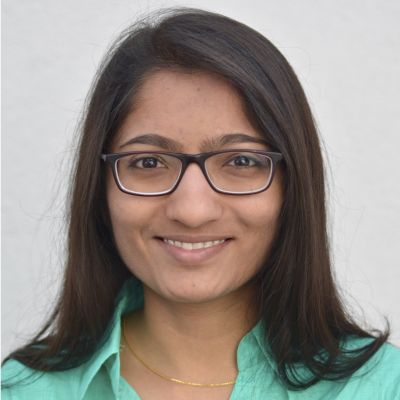
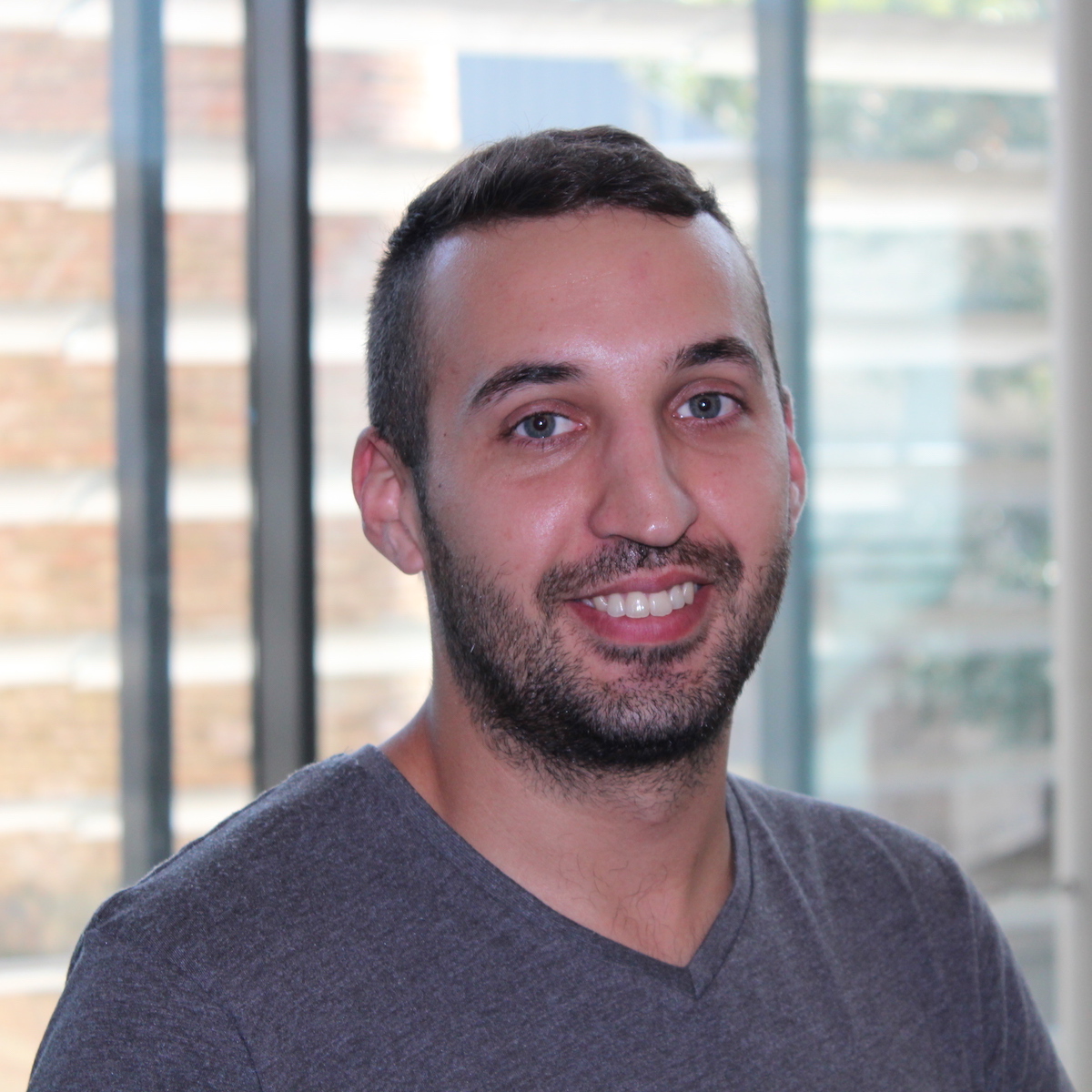
Brunilde Sanso is a Full Professor in the Department of Electrical Engineering at Polytechnique Montréal. She holds an Eng. (USB) from Caracas, M.Sc.A., and a Ph.D. from Polytechnique Montréal. Her research focuses on telecommunication and computer networks optimization, emphasizing performance, reliability, energy efficiency, and sustainability. Key technologies include IP, IoT, 4G/5G, and SDN, with applications in smart cities and cloud computing. She leads LORLAB and is a member of GERAD and IVADO. Teaching includes courses on telecommunication networks, data networks, and smart-grid telecommunications. Over 37 students (Ph.D. and Master's) have been supervised, contributing to infrastructure sharing, energy-efficient networks, and IoT simulations. Media engagements highlight her expertise on network resilience during emergencies and 5G technology challenges.
Aastha Mehta is a Tenure-Track Assistant Professor in the Computer Science Department at the University of British Columbia (UBC), affiliated with the Systopia Lab and the Security and Privacy Group. Her research focuses on systems security, data privacy, and distributed systems, particularly in cloud and edge platforms. She teaches courses such as CPSC 538M (Systems Security) and CPSC 317 (Introduction to Computer Networking). Research Interests: Her work spans systems security, network privacy, ICS security, and privacy-preserving technologies. Key projects include compliance tools for serverless applications (Growlithe), network side-channel mitigation (NetShaper), and epidemic risk mitigation systems leveraging Bluetooth beacons. Received NCC Funding for ICS security research (2024) Faculty Teaching Awards (UBC) Advising: Currently supervises PhD and MSc students like Yayu Wang, Angela DeMarco, and Satvik Vemuganti. Collaborates with researchers from MPI-SWS, UofT, and UBC ECE on security and privacy projects. Service: Serves on program committees for CCS 2025, ASPLOS 2025, and Oakland S&P. Organized mentoring programs at SOSP and OSI.
Prof. Edouard Bugnion is a Full Professor at the Data Center Systems Laboratory within the School of Computer Science and Communications at École Polytechnique Fédérale de Lausanne (EPFL). Since joining EPFL in 2012, he has led research in datacenter systems and virtualization, with prior experience as VMware's first CTO and Cisco's VP/CTO. Research Interests: Data Center Systems Network and Data Plane Efficiency Operating System Design Virtualization Technologies Trusted Execution Environments Low-Latency Computing His recent publications focus on datacenter efficiency for OLDI applications, system security through hardware-based trust, and network-compute co-design . These works span topics from microsecond-scale latency optimization to privacy-preserving proximity tracing systems. Scientific Recognition: Elected ACM Fellow (2017) ACM Software Systems Award (2009) Teaching: Currently teaching CS-212: Systems Programming Project , with past courses including CS-522: Principles of Computer Systems and CS-410: Technology Ventures .
Professor Klaus Moessner holds dual roles as a Professor in Cognitive Networks at the University of Surrey’s Institute for Communication Systems (5GIC) and Head of the Professorship of Communications Engineering at Technische Universität Chemnitz since 2019. His research focuses on cognitive networks, IoT deployments, resource management in wireless systems, and dynamic spectrum access. He leads major EU-funded projects such as Speed5G and Clear5G, exploring advanced 5G architectures and capacity enhancement methods. Research Interests: Cognitive Networks and Reconfigurable Systems IoT Deployments and Sensor Data Analytics Dynamic Spectrum Sharing & DSA 5G/6G Network Architecture Machine Learning for Resource Optimization Publications highlight innovative work in 5G NR-V2X, URLLC HARQ protocols, and industrial IoT security. Awards include Senior Member status with IEEE. Active in mentoring PhD students across IoT, network resource management, and machine learning applications. Key projects include EU-Japan iKaaS and EU-Taiwan Clear5G collaborations. Labs & Affiliations: 5G Innovation Centre (5GIC) at Surrey, leading the IEEE DySPAN working group on spectrum interfaces. Extensive industry engagement through 20+ EU projects and advisory roles.
Dr. Haitham Cruickshank is a Professor at the University of Surrey, affiliated with the Institute for Communication Systems within the School of Computer Science and Electronic Engineering. His expertise spans cybersecurity, IoT, vehicular networks, blockchain, and delay-tolerant networking. He holds a PhD, MSc, and BSc in relevant disciplines. His research focuses on enhancing security and privacy in emerging technologies such as smart grids, 5G-IIoT, and vehicular communication systems. He has extensively explored federated learning, intrusion detection systems, and blockchain-based solutions for privacy preservation and authentication. Recent work includes secure battery swapping protocols and mesh connectivity for smart meters. His publications reflect a strong emphasis on practical applications of theoretical concepts, addressing challenges in distributed networks, edge computing, and hybrid satellite-terrestrial systems. Collaborations with industry and academia highlight his commitment to bridging research and real-world implementation. Key contributions include frameworks for secure key management, trust models in disaster communication networks, and QoS optimization in heterogeneous networks. His work often integrates interdisciplinary approaches to tackle complex security and efficiency challenges in modern communication systems.
Matthias Pezzutto is an Assistant Professor at the Department of Information Engineering, University of Padova. His research focuses on advanced control systems, networked control systems, and wireless communication for control applications. He explores topics such as distributed estimation, epidemic control, and optimization in cyber-physical systems. His work bridges theoretical advancements with practical implementations, including experiments over Wi-Fi and multirotor robotics. Key areas of interest include: Control systems with communication constraints Epidemic modeling and intervention strategies Real-time wireless control architectures His publications emphasize robust control methodologies, such as self-triggered MPC and adaptive transmission protocols, addressing challenges like packet loss and latency. Recent works explore the integration of edge-cloud continuum for control systems and heterogeneous vehicle mission planning. While no specific awards or grants are listed, his research activities are supported by experimental validations and collaborations in industry and academia.
Dr. Nancy Samaan is an Associate Professor at the School of Electrical Engineering and Computer Science, University of Ottawa. She holds a Ph.D. in Computer Science from the University of Ottawa (2007), along with B.Sc. and M.Sc. degrees in Computer Science from Alexandria University, Egypt (1998 and 2001). Her research focuses on wireless communication, QoS in networks, autonomic networks, and policy-based management, with over 20 publications in refereed journals and conferences. Key achievements include the 2008 NSERC University Faculty Award and recognition for her 2006 paper highlighted in IEEE Wireless Communication magazine. She is an active IEEE member and contributes to advancing network management through innovative solutions like programmable data-plane architectures and machine learning integration. Her recent work emphasizes machine learning applications in networking, programmable data planes, and QoS optimization, reflecting a trend toward intelligent and adaptive network systems. Despite no explicitly listed grants or labs, her publications indicate significant contributions to network autonomy and resource management in dynamic environments.
Arumugam Nallanathan is a Professor of Wireless Communications at Queen Mary University of London, affiliated with the School of Electronic Engineering and Computer Science. He leads the Communication Systems Research (CSR) Group and is a core member of the Centre for Networks, Communications and Systems. His research focuses on 6G technologies, AI-driven wireless systems, reconfigurable intelligent surfaces (RIS), UAV-enabled communications, ultra-reliable low-latency communications (URLLC), and IoT applications. He teaches the advanced 5G Mobile and Beyond module, integrating theoretical frameworks with practical implementations. Nallanathan's work bridges cutting-edge research with real-world challenges, emphasizing secure and energy-efficient communication systems. His recent publications explore topics such as IRS-based DOA estimation, covert communication techniques, and federated learning in edge networks. He actively contributes to the design of integrated sensing and communication systems, with applications in smart cities and beyond. His research group collaborates on grants addressing future network architectures and AI-enabled solutions. Research interests span: 6G systems, AI for communications, RIS optimization, UAV networks, URLLC protocols, and IoT security. His teaching emphasizes 5G fundamentals and emerging technologies. Notable contributions include advancements in STAR-RIS aided communication, multi-modal learning for satellite-ground networks, and secure resource allocation in NOMA systems. He leads projects on edge intelligence, digital twins for URLLC, and generative AI for channel estimation. The CSR Group actively engages in industry partnerships to translate research into practical solutions.
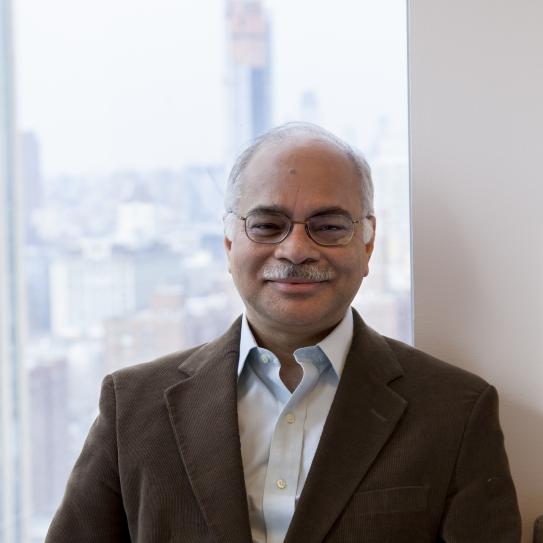
Shivendra Panwar is a Professor in the Electrical and Computer Engineering Department at the NYU Tandon School of Engineering and Director of the New York State Center for Advanced Technology in Telecommunications (CATT). He holds IEEE Fellow and NAI Fellow distinctions. His research focuses on wireless networks (5G/6G, mmWave, terahertz), video distribution over wireless, AR/VR/XR applications, and R&D policy. Education: B.Tech from IIT Kanpur (1981), M.S. and Ph.D. from University of Massachusetts Amherst (1983, 1986). He co-founded the NY City Media Lab and is a member of NYU Wireless. Notable awards include the IEEE Leonard G. Abraham Prize (2004), 2011 Multimedia Best Paper Award, and Sony Research Awards (2016-2017). Recent work addresses challenges in millimeter wave systems, full-duplex cellular networks, and latency-sensitive applications. His contributions span protocol design, network architecture innovation, and economic analysis of telecom systems. He has authored/co-authored influential books on TCP/IP and network management.
Antonio de la Oliva is a Professor at the University Carlos III de Madrid, affiliated with the School of Engineering. His primary research focuses on advanced networking technologies, including 5G/6G, Software-Defined Networking (SDN), Network Functions Virtualization (NFV), and mobile edge computing. He leads and contributes to major EU-funded projects such as 5G-CORAL, 5G-Transformer, and 5G-Crosshaul, which aim to integrate and optimize transport networks for industry verticals. He has supervised PhD students like Maria Isabel Sanchez Bueno (awarded UC3M's Special PhD Award) and Sergio Gonzalez Diaz. His work spans experimental evaluations of SDN-based service provisioning, network slicing, and deterministic communications for Industry 4.0. He actively engages in standardization efforts (e.g., IEEE 802.21, IETF) and collaborates with industry partners like Ericsson, Nokia, and Telecom Italia. His research also explores edge robotics, digital twins, and AI integration in networked systems. Key projects include developing the 5G-Crosshaul architecture for integrated fronthaul/backhaul networks and the SLICES-Madrid multi-domain TSN framework. He emphasizes practical applications in healthcare, emergency response, and industrial automation, leveraging edge-fog-cloud architectures.
Poul Einar Heegaard is a Professor at the Department of Information Security and Communication Technology (IIK), Norwegian University of Science and Technology (NTNU). He has held leadership roles including Head of the Networking Research Group (2019-2021) and Head of the Department of Telematics (2009-2013). He has also served as Head of the QUAM-lab at NTNU (2015-2019) and as Coordinator of the Network Research area (2006-2009). He has been a visiting professor at institutions such as Duke University, University of Illinois at Urbana-Champaign, and TU München. He holds a Master's Degree (Siv.ing.) in Computer Systems and Telematics (1989) and a PhD (Dr.ing.) in Telematics (1998), both from NTNU. His research focuses on Quality of Service (QoS) evaluation, rare event simulation techniques, survivability quantification, network monitoring, and distributed autonomous management in communication systems. His recent academic articles explore topics like network slicing, NFV resilience, Markov models for server performability, and scalability indices in 5G systems. He has contributed to conferences and journals on QoE fairness, IoT traffic modeling, and software reliability in SDN controllers.
Francesc Wilhelmi is a Tenure-Track Professor at Universitat Pompeu Fabra (UPF) and a Research Engineer at Nokia Bell Labs . He holds a Ph.D. in Information and Communication Technologies (2020) and an M.Sc. in Intelligent and Interactive Systems (2016), both from UPF. His research focuses on Wi-Fi technologies , machine learning , decentralized learning , and blockchain applications in telecommunications . He previously served as a researcher at CTTC and taught at UPF (2015–2020) and Universitat Oberta de Catalunya (2020–2022), specializing in networking courses. Key contributions include the Komondor wireless network simulator and standardization work at ITU-T , notably editing recommendation Y.3181 on Machine Learning Sandboxes. Active in FG-ML5G , organizing problem statements for the ITU AI/ML in 5G Challenge. Explores blockchain for O-RAN sharing and AI-driven spatial reuse in 5G/6G networks. His work bridges network simulation with machine learning to address challenges in dense wireless environments, emphasizing practical implementations and open-source tools.
Besmir Tola is an Associate Professor at the Department of Information Security and Communication Technology, NTNU. His affiliations include the Faculty of Information Technology and Electrical Engineering, where he holds a permanent academic position. Previously, he served as an Assistant Professor (2020-2022), Researcher (2019-2020), and held a Marie S. Curie Fellowship (2015-2019) within the same institution. He earned his Master's from the University of Siena (Italy) and PhD from NTNU. His research focuses on dependability modeling of software-defined networks, performance analysis of virtualized networks, wireless security, and NFV orchestration. He has published extensively on topics like NFV service resilience, redundancy allocation, and network availability modeling. His work emphasizes practical solutions for carrier-grade service provisioning and network reliability in cloud-native architectures. Dr. Tola has collaborated with industry partners such as Nokia Bell Labs and SIKT (Norway), contributing to both academic and applied research. He is also an accredited Cisco Networking Academy instructor, teaching courses like Cisco Certified Network Associate and Cloud Security. His voluntary roles include leadership in IEEE NTNU Student Branch and PhD/postdoc advocacy organizations.
Antonio Brogi is a Full Professor at the Department of Computer Science, University of Pisa. He leads the Service-Oriented, Cloud and Fog Computing (SOCC) research group and is actively involved in multiple editorial roles, including for Electronics , Heliyon Computer Science , and Journal of Computer Languages . His research focuses on cloud-edge computing, quantum software engineering, and formal methods for distributed systems. He chairs program committees for major conferences like ESOCC, ADAPTIVE, and IEEE ICWS. Research Interests: Service computing, fog computing, quantum software engineering, system coordination, resilience, and sustainability. He has pioneered declarative approaches for managing distributed systems and has contributed to frameworks like ECLYPSE and FREEDA. Teaching: Teaches Cloud Computing (BSc) and Advanced Software Engineering (MSc) at the University of Pisa. Supervises master's and bachelor's theses in related areas. Grants & Projects: Participated in EU-funded initiatives like SeaClouds and national projects DECLware and Through the Fog. Active in industry collaborations for cloud-edge infrastructure optimization.
Rebecca Schreib serves as an Assistant Teaching Professor and Director of Undergraduate Studies in Rice University's Department of Computer Science. She holds a Ph.D., M.S., and B.S. in Computer Science from Rice University (2019, 2015, 2014 respectively). Her research focuses on computer science education, virtualization, and embedded runtime systems. Her educational background includes a doctoral emphasis on designing personalized interactive learning tools for large introductory courses. Key research contributions include MemStep (2024), collaborative computational thinking courses (2020), and automated assessment systems (2016–2017). Her work spans both educational technology and embedded systems, with a focus on bridging theory-practice gaps in programming education while advancing runtime system reliability for constrained environments. She has developed tools that enhance student engagement and automated systems for testing and memory management. While no scientific awards are listed, her publications reflect sustained innovation in educational technology and embedded computing since 2012. Her advising and grant activities are not explicitly documented here. She contributes to Rice's undergraduate program infrastructure through her directorship role.