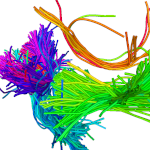
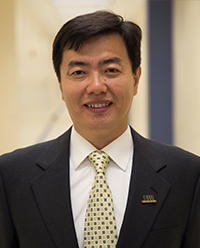
Daniel Haehn is an Assistant Professor of Computer Science specializing in biomedical imaging and visualization research. His work focuses on developing computational methods to accelerate biological and medical research through web-based tools, machine learning, and interactive visualization systems. Research Interests: Dr. Haehn's research spans biomedical imaging, data visualization, machine learning applications in healthcare, web-based medical tools, human-computer interaction, reinforcement learning, and computer graphics. His work particularly emphasizes creating accessible web-based solutions for medical image processing and scientific visualization. Awards and Recognition: Best Paper Award at IEEE VIS 2021 Best Paper Award at IEEE VIS 2018 Best Paper Award at IUI 2023
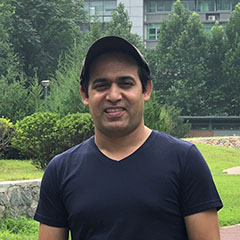
Dr. Md Zakirul Alam Bhuiyan is an Associate Professor in the Department of Computer and Information Sciences at Fordham University, New York. He leads the DependSys Lab (Dependable and Secure Systems Lab) and is affiliated with the Fordham Center for Cybersecurity. His research focuses on cybersecurity, data-driven dependability, trustworthy AI/ML, and IoT/CPS applications. He has authored over 250 publications, including top-tier journals and conferences like IEEE Transactions on Industrial Informatics and IEEE INFOCOM. Dr. Bhuiyan has held adjunct roles at Harvard University and Temple University. His work emphasizes securing healthcare monitoring systems, event detection in CPS, and privacy-preserving data collection. Education details are not explicitly stated, but his career trajectory includes prior positions at Temple University and Harvard. He has secured grants and awards, including the IEEE TCSC Award for Excellence, ScholarGPS recognition, and being named one of the world's top 2% scientists. His professional activities include editor roles for IEEE Transactions and ACM journals, and organizing major conferences like IEEE DASC and TrustCom. Research interests span cybersecurity, IoT, and AI/ML, with a focus on real-world applications like structural health monitoring and smart city infrastructure. His lab, DependSys, addresses challenges in dependable and secure systems. He has advised numerous students and collaborates globally, delivering keynote speeches at events like IEEE ISPA and ICECI. Key achievements include 25+ ESI Highly Cited Papers, 7 Best Paper Awards, and leadership in over 50 conferences. Current projects involve federated learning, edge computing, and blockchain for healthcare privacy. His lab explores innovative uses of Wi-Fi signals for sensing and security, including contactless health monitoring and intrusion detection.
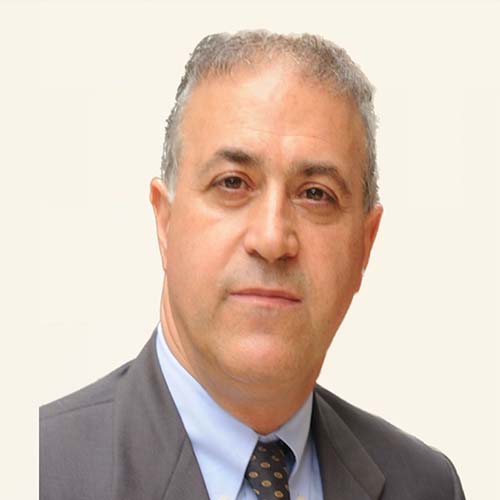
Bijan Jabbari is a Professor in the Department of Electrical and Computer Engineering at George Mason University, affiliated with the Volgenau School of Engineering. He holds a PhD from Stanford University and has dual MS degrees in Electrical Engineering and Engineering Economics from Stanford, along with a BS from Arya-Mehr University. His research focuses on wireless networks, IoT, machine learning applications in networking, and cognitive networks. Notable contributions include work on LTE/5G systems, edge computing, and spectrum management. He has led projects funded by the National Science Foundation, Naval Research Laboratory, and KDDI Corporation. Jabbari is a Fellow of IEEE and IET, recipient of the IEEE Third Millennium Medal, and has pioneered initiatives like the Heart’s Delight charity event. Jabbari teaches graduate courses including ECE 528 (Random Processes), ECE 642 (Computer Network Design), and ECE 629 (Wireless Networks). He directs the Communications and Networks Laboratory and collaborates with Telecom ParisTech. His work emphasizes resilient network design, cross-layer protocols, and machine learning-driven optimization in telecommunications. Research Grants: Secure MAC Layer Protocols (NRL, 2016–2018) Cross-Layer Resilient Networking (NRL, 2012–2015) Network Virtualization (KDDI, 2010) Awards: Washington DC Engineer of the Year Award GMU Outstanding Faculty Research Award Labs/Teams: Communications and Networks Lab (CNL) at GMU Collaborations: Telecom ParisTech (France)
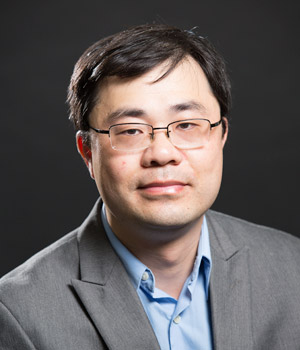
Dr. Lingfeng Wang is Professor of Electrical Engineering and Computer Science at UW-Milwaukee's College of Engineering & Applied Science, holding the Richard and Joanne Grigg Faculty Fellowship. He directs the Cyber-Physical Energy Systems Laboratory. Research focuses on power system reliability, smart grid cybersecurity, renewable integration, microgrid control, and electric vehicle grid integration. Prior roles include positions at University of Toledo and California ISO. Editorial roles include IEEE Transactions on Smart Grid and IEEE Transactions on Cloud Computing steering committee. Awards: Richard and Joanne Grigg Faculty Fellowship
Dr. Kerry W. Ward is an Associate Professor in the Department of Information Systems and Quantitative Analysis at the University of Nebraska at Omaha (UNO) College of Business Administration. He holds a Ph.D. in Management Information Systems from Indiana University, an MBA from the University of Notre Dame, and undergraduate degrees in Accounting and Psychology. His professional background includes seven years in public accounting with firms like Deloitte and seven years as an officer with the Indianapolis Metropolitan Police Department. Dr. Ward’s research focuses on enterprise resource planning (ERP), information technology in law enforcement, information warfare, and research methodologies. His work has been published in top journals such as the Journal of the AIS and IEEE IT Professional. He has served in key academic service roles, including co-chairing research methods tracks at AMCIS and HICSS, and has contributed to college committees like the Doctoral Program Committee. His teaching spans courses in ERP systems (using Epicor's Kinetic), IT risk management, information warfare, and research methods. Notably, he received the UNO Alumni Outstanding Teaching Award in 2010. Dr. Ward’s research and service reflect a commitment to bridging academic theory with practical applications in technology management and organizational strategy.
Jason Rife is a Professor and Chair of Mechanical Engineering at Tufts University's School of Engineering, also holding a joint appointment in Electrical and Computer Engineering. He leads the Automated Systems and Robotics Lab, focusing on safe human-machine interactions, autonomous vehicle navigation, and control systems. His research emphasizes validating navigation performance for critical automated systems, such as automated ground vehicles and aircraft landing. Education: Ph.D. (Stanford University, 2004), M.S. (Stanford, 1999), B.S. (Cornell University, 1996). Prior to joining Tufts in 2007, he was a Research Associate at Stanford's GPS Laboratory, studying aircraft navigation systems. Research Interests : Navigation, autonomous systems, state estimation, human-robot interaction, safety-critical transportation, and control systems. His work bridges robotics, aerospace, and automotive engineering, with applications in autonomous vehicle safety and precision navigation. Grants & Awards : Recipient of the Lillian and Joseph Leibner Award (2020), Best Paper awards, and grants from NSF, FAA, and the U.S. Department of Transportation. He has led projects on software-state observability, adaptive system identification, and trusted human-robot teamwork. Teaching : Courses include Advanced Dynamics, Optimal Control, and Collaborative Robotics. He has coordinated graduate and undergraduate engineering programs, including the Human-Robot Interaction joint PhD. Professional Activities : Served on the Institute of Navigation's Satellite Division Board, organized conferences, and reviewed for journals like IEEE Transactions on Aerospace and the Journal of Aircraft.
Fahad Dogar is an Associate Professor in the Department of Computer Science at Tufts University's School of Engineering, with a secondary appointment at the Jonathan Tisch College of Civic Life. He leads the NAT (Networking At Tufts) research group and serves as Director of the Master Software Systems Program since 2022. His academic journey includes a Ph.D. from Carnegie Mellon University (2012), undergraduate studies at Lahore University of Management Sciences (LUMS) in Pakistan (2005), and postdoctoral research at Microsoft Research UK. Dogar's research focuses on designing technologies for social impact across multiple computer science domains. His primary interests include networking and distributed systems, with recent emphasis on data center networking, future Internet architectures, and the application of large language models for accessibility. Notably, his work spans cloud-based systems, mobile and wireless technologies, and developing practical solutions for resource-constrained environments in developing regions. Networking and distributed systems architecture Cloud computing infrastructure and optimization Human-Computer Interaction for accessibility Generative AI applications for social impact Technologies for developing regions Augmented reality networking requirements His publication record shows consistent output with 36 publications including two significant papers in 2024 focusing on LLM-powered applications for autistic users and machine learning job scheduling. His research has appeared in top-tier venues including ACM SIGCOMM, Usenix NSDI, and ACM MobiCom. Gold medal from the president of Pakistan for top computer science student LUMS Vice Chancellor Alumni Achievement Award (2021) VMWare Early Career Faculty Fellowship (2019) Facebook/Oculus Faculty Fellowship (2017) Tisch Faculty Fellowship (2017-2018) Dogar has secured substantial research funding including an NSF Core Medium award ($850K) as sole PI for 'Slack-Aware Networking' (2021-2025), Meta/Facebook funding ($150K) for networking support for telepresence applications (2020-2022), and multiple NSF awards totaling over $1 million. His teaching portfolio includes courses on Networks, Computing for Developing Regions, and special topics in Generative AI for Social Impact. During his 2023 sabbatical, he served as Senior Fellow with the Burnes Center for Social Change at Northeastern University, demonstrating his commitment to civic technology applications.
Haffay ABREHA is a Doctoral researcher at the University of Luxembourg's Interdisciplinary Centre for Security, Reliability and Trust (SnT), within the SigCom department. His research focuses on advanced networking technologies, including edge computing, satellite communications, and federated learning. He holds a strong interest in network virtualization, resource management, and optimizing mission-critical applications in distributed systems. Contact: haftay.abreha@uni.lu Research Interests: ABREHA’s work spans satellite edge networks, federated learning frameworks, fog computing monitoring, and resource-aware caching strategies. He explores how machine learning can enhance adaptive systems and improve network reliability in dynamic environments. Recent studies emphasize fairness-aware VNF scheduling, SDN/NFV integration, and optimizing content delivery in multi-layer satellite architectures. Labs/Teams: Active member of the SigCom research group at SnT, contributing to interdisciplinary projects on secure and reliable communication systems.
S.S. Iyengar is a Distinguished University Professor and Ryder Professor at Florida International University's Knight Foundation School of Computing and Information Sciences, where he founded the Discovery Lab. He holds a Ph.D. in Engineering from Mississippi State University (1974), an M.S. from the Indian Institute of Science (1970), and a B.S. from Bangalore University (1968). Research spans high-performance computing, sensor networks, biomedical computing, and AI, with applications in cancer genomics and digital forensics. His innovations include the Brooks-Iyengar algorithm for distributed sensor fusion and cognitive information processing systems. Honors include fellowship in ACM, IEEE, AAAS, and NAI, plus the IEEE Test of Time Research Award for fundamental contributions to distributed computing. He has supervised over 55 PhD students and authored 500+ publications. Current work focuses on DNA mutation prediction, glaucoma monitoring devices, and cybersecurity. Funded by NSF, DARPA, NASA, and others, totaling $65M+ in research funding.
Dr. Phillip Metzger is a Research Professor at the Florida Space Institute (University of Central Florida) and Director of the Stephen W. Hawking Center for Microgravity Research and Education . With a B.S.E. in Electrical Engineering from Auburn University and a Ph.D. in Physics from UCF, he specializes in planetary surface interactions with spacecraft systems. PhD in Physics from University of Central Florida BSE in Electrical Engineering from Auburn University Research Focus: Metzger's work addresses critical challenges in planetary exploration, particularly regolith physics and rocket plume effects during lunar/Mars landings. His team develops technologies for space resource utilization (ISRU), extraterrestrial construction , and space economics . Key projects include: Modeling regolith erosion from rocket exhaust Designing dust-tolerant lunar systems Optimizing lunar ice mining techniques Developing regolith simulants for Mars/Phobos Economic analysis of lunar propellant production Advancing planetary landing pad technologies Recent Publication Trends show concentrated work in regolith mechanics , plume-particle dynamics , and ISRU systems across 2022-2024, with frequent collaborations in Icarus and Acta Astronautica . Scientific Recognition: NASA Scientist/Engineer of the Year (2011) Silver Snoopy Award (2011) NASA Silver Achievement Medal (2014) ASCE Outstanding Technical Contribution Award (2016) NIAC Fellow (2019) His interdisciplinary approach bridges planetary science and space infrastructure development , supporting both academic research and practical applications for human space exploration.
Gang Quan is a Professor in the Department of Electrical & Computer Engineering at Florida International University (FIU). He holds a Ph.D. from the University of Notre Dame (2002), an M.S. from the Chinese Academy of Sciences (1994), and a B.S. from Tsinghua University (1991). His research focuses on real-time computing systems, power/thermal-aware design, electronic design automation, advanced computing architectures, and reconfigurable computing. He has contributed extensively to neuromorphic computing, homomorphic encryption for secure computation, and energy-efficient scheduling in multi-core and embedded systems. Key areas of expertise include thermal-aware system design for automotive and embedded applications, fault-tolerant neural networks, and resource management in data centers and cloud environments. His work integrates hardware-software co-design principles to address challenges in reliability, energy efficiency, and real-time performance. He has authored numerous peer-reviewed articles in top-tier conferences and journals. Dr. Quan's research has practical applications in improving the resilience and efficiency of computing systems across domains like automotive electronics, cloud infrastructure, and neuromorphic hardware. He maintains an active role in academic leadership at FIU, contributing to both educational initiatives and cutting-edge research projects in electrical and computer engineering.
Xenofontas Dimitropoulos is an Associate Professor at the University of Crete's Computer Science Department and Affiliated Researcher at Foundation for Research and Technology Hellas (FORTH), where he leads the INSPIRE research group focusing on Internet security, privacy, and intelligence. His research examines software defined networks, Internet measurements, and cybersecurity frameworks. Education: PhD in Electrical and Computer Engineering, Georgia Institute of Technology (2006) MSc in Electrical and Computer Engineering, Georgia Institute of Technology (2002) BS in Physics, Aristotle University of Thessaloniki (2001) His research focuses on developing novel approaches to Internet routing security, privacy-preserving network monitoring, and SDN-based infrastructure optimization. Recent work explores BGP hijacking mitigation, IXP architectures, and mobile edge caching systems. Publications demonstrate consistent focus on network security and Internet measurements, with recent studies concentrating on practical solutions for routing vulnerabilities, colocation facility disruptions, and mobile edge computing optimizations. Earlier foundational work established privacy-preserving computation frameworks for multi-domain networks. Scientific Awards: ERC Proof of Concept Grants (2018, 2019) IEEE Security Symposium Best Paper Award (2013) ACM CoNEXT General Chair (2018) Marie Curie Reintegration Grant (2007) Fulbright Fellowship (2001) Research Leadership: Directs the INSPIRE research group with over 15 members including postdocs, PhD students, and research engineers. Secured €1.41M ERC Starting Grant for innovative Internet routing research. Current projects include RAVEN (BGP vulnerability assessment) and PHILOS (hijacking detection system).
Jeong-Hyon Hwang is an Associate Professor at the University at Albany, State University of New York , affiliated with the College of Nanotechnology, Science, and Engineering and the Department of Computer Science . As Director of the Data Management Systems (DMS) Lab, he focuses on scalable graph databases, trajectory data compression, and real-time stream processing. His work on the G* graph database system, funded by the NSF CAREER award IIS-1149372 , enables efficient storage and analysis of distributed dynamic graphs. PhD in Computer Science, Brown University (2008) MS in Computer Science, Brown University (2003) MS in Computer Science and Engineering, Korea University (2000) BS in Computer Science and Engineering and Mathematics Education, Korea University (1998, 1994) Dr. Hwang’s research spans Databases and Distributed Systems , with specific emphasis on graph database systems , trajectory data management , and fault-tolerant stream processing . His publications highlight advancements in Internet-scale data management , real-time analytics , and load balancing for dynamic environments. The 15 most recent publications reflect trends in graph algorithms , stream processing reliability , and trajectory compression . Key subfields include distributed graph storage , centrality estimation , non-relational stream models , and high-availability solutions for wide-area networks. Scientific Awards : NSF CAREER award (2012) Best Poster Award, IEEE ICDE (2014) Best Poster Runners-Up, ACM SIGSPATIAL GIS (2010) IBM Open Collaborative Faculty Award (2010) National Scholarship, South Korea (2001-2005) New Software Award, South Korea (2001) Dr. Hwang leads the DMS Lab , developing open-source systems like G* for graph storage and querying. He has authored patents, co-authored Korean translations of technical books, and contributed to foundational research in high-availability algorithms and stream processing engines .
Effat Farhana is an Assistant Professor in the Department of Computer Science and Software Engineering at Auburn University's College of Engineering. She holds a Ph.D. in Computer Science from North Carolina State University and a B.S. in Computer Science and Engineering from Bangladesh University of Engineering and Technology. Her research focuses on Machine Learning, Data-Centric AI, and their applications in education and healthcare, alongside empirical software engineering and natural language processing. She explores topics like student learning analytics, AI-driven educational tools, and defect analysis in software projects. Her work bridges cognitive science and AI through projects like theory of mind modeling for humans and AI systems, and developing frameworks for K-12 physics instruction. She also investigates software engineering challenges in infrastructure as code and pandemic-related software systems. Her contributions span both foundational AI research and applied educational technology solutions. Farhana's publications emphasize empirical studies of software defects, cognitive aspects of learning, and AI's role in improving education and healthcare systems. She collaborates on projects involving online learning platforms, science literacy tools, and cognitive-inspired neural architectures.
Akond Rahman is an Assistant Professor in the Department of Computer Science and Software Engineering at Auburn University. His research focuses on Cybersecurity, DevOps, and Software Engineering, with particular emphasis on securing infrastructure as code, container orchestration, and leveraging AI in software development. He has received multiple National Science Foundation (NSF) grants, including a three-year $553,295 grant to study software resilience in container orchestration. He actively contributes to cybersecurity education through hands-on labware modules and has been recognized for his work in quantum computing applications for malware detection. Education: Ph.D. Computer Science, North Carolina State University M.S. Computer Science and Engineering, University of Connecticut B.S. Computer Science and Engineering, Bangladesh University of Engineering and Technology Research Interests: Cybersecurity in DevOps pipelines Secure configuration management Quantum computing for malware classification Generative AI in software development Infrastructure as Code vulnerabilities His work has been featured in prominent venues like the International Conference on Software Engineering, and he collaborates with industry to bridge academic research and practical security solutions. Awards/Grants: NSF Grant: Resilient Operations for Deployment Units Used in Container Orchestration Principal Investigator on multi-institution cyber workforce development program Advising & Labs: Leads research in the Center for Artificial Intelligence and Cybersecurity Engineering at Auburn, focusing on practical implementations of secure DevOps practices and quantum-enhanced security tools.