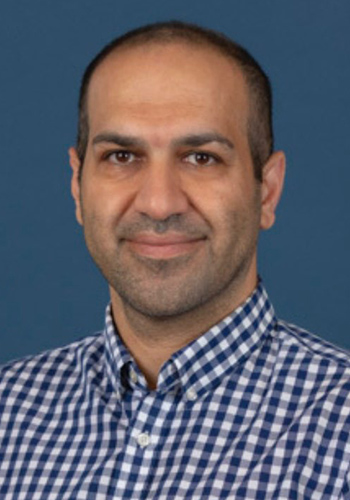
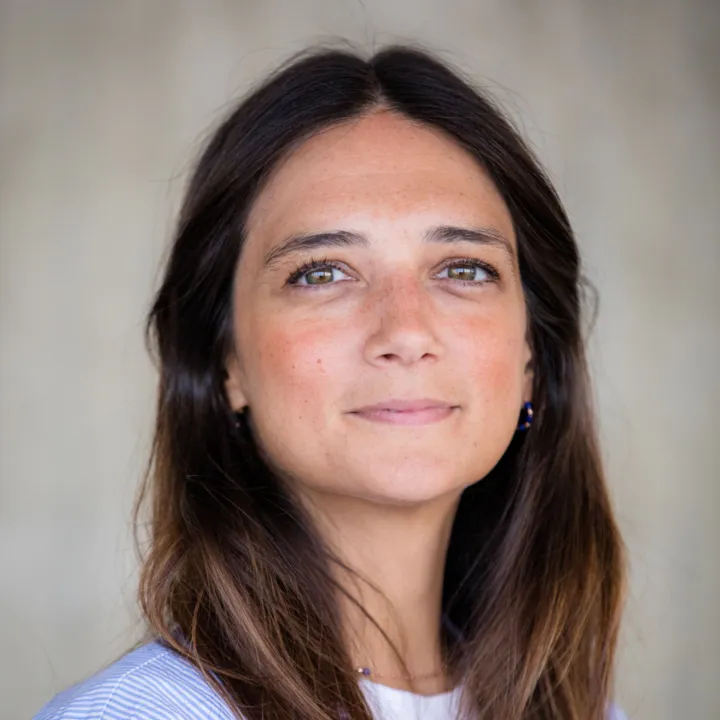
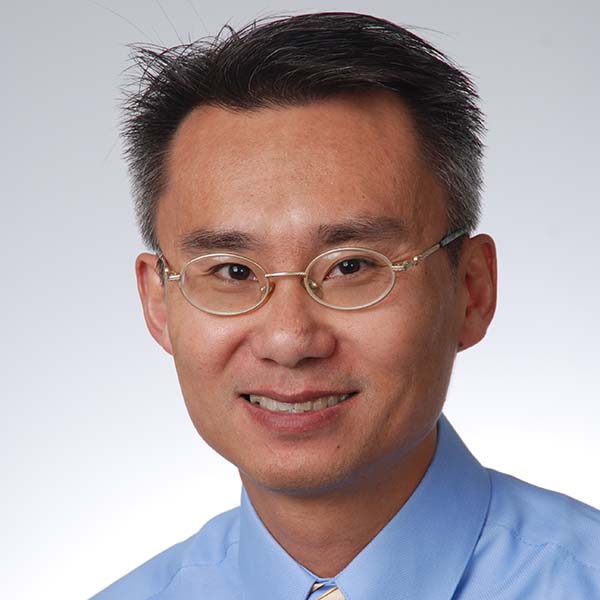
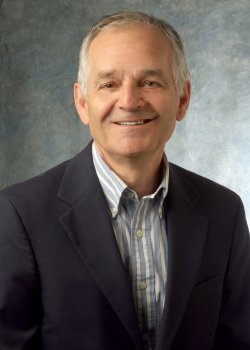
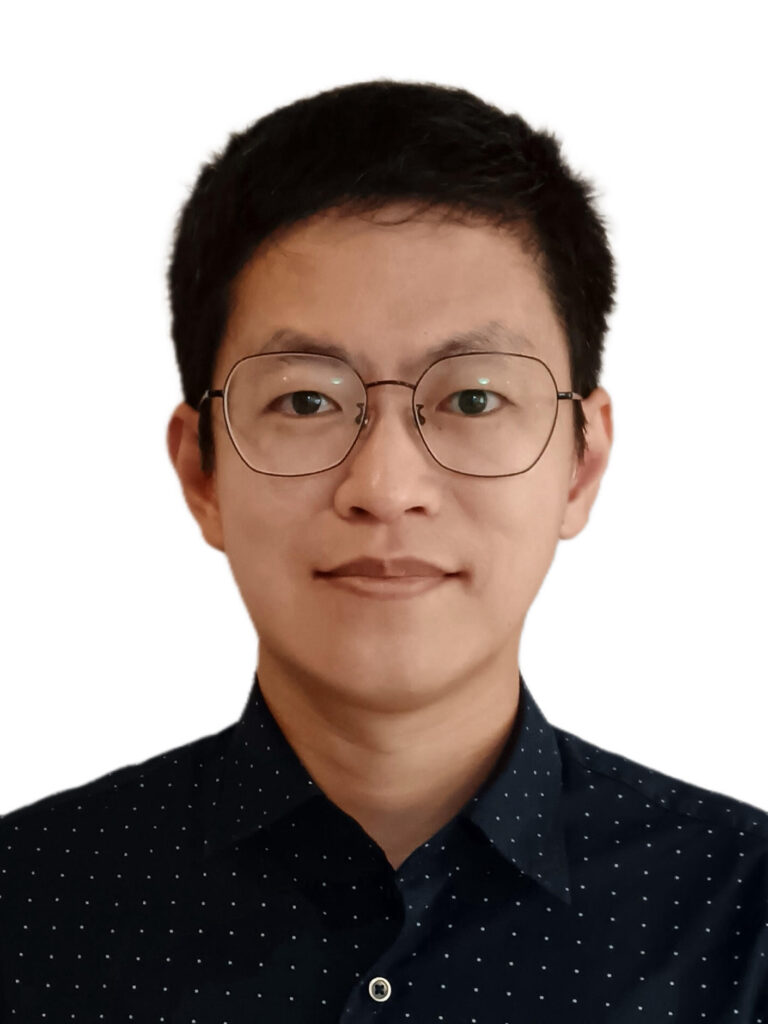
Dr. Enrico Opri is an Assistant Professor in the Department of Biomedical Engineering at the University of Michigan , where he directs the Opri Lab. His research focuses on engineering novel methodologies to automate and enhance clinical procedures in neuromodulation for neurological disorders such as Parkinson’s, Tourette syndrome, essential tremor, and epilepsy. Research Focus Neurophysiological activity in basal ganglia-thalamocortical circuits Therapeutic effects of neuromodulation (e.g., Deep Brain Stimulation, cortical stimulation mapping) Identification of neurological biomarkers for improved clinical procedures Advancements in closed-loop neurostimulation systems Article Trends Dr. Opri's recent publications emphasize closed-loop deep brain stimulation (DBS) systems, computational modeling of neural activity, and the identification of biomarkers for neurological disorders. Key subfields include Parkinson’s disease motor dynamics, Tourette syndrome tic detection, essential tremor treatment, and cortico-thalamic coupling mechanisms. His work bridges biomedical engineering and clinical neuroscience, focusing on translating technological innovations into therapeutic applications.
Surjo R. Soekadar is the Einstein Professor of Clinical Neurotechnology at Charité – University Medicine Berlin. He leads the Clinical Neurotechnology Laboratory , which focuses on developing noninvasive neurotechnologies for treating neurological and psychiatric disorders through closed-loop brain stimulation and advanced brain-machine interfaces (BCI/BMI). His work integrates real-time EEG/MEG monitoring with electromagnetic stimulation to modulate pathological brain oscillations and enhance neuroplasticity in conditions like stroke, spinal cord injury, and psychiatric disorders. Education : Studied medicine in Mainz, Heidelberg, and Baltimore Clinical Training : Residency in Psychiatry and Psychotherapy at University of Tübingen Academic Journey : 2008-2011 Research Fellow at NINDS (USA); 2017 Venia Legendi at University of Tübingen; 2018 First Professor of Clinical Neurotechnology in Germany His research interests span: • Closed-loop neurostimulation combining real-time brain state monitoring with targeted intervention • Next-generation BCI using optically pumped magnetometers (OPM) for mobile MEG recordings • Neurorehabilitation through exoskeleton control and sensory feedback • Neurophysiological modeling of entropy measures and phase flows Recent publications highlight: • Adaptive deep brain stimulation protocols • Real-time phase-sensitive tACS applications • OPM-based BCI innovations • Stroke recovery mechanisms through corticospinal tract analysis Scientific recognition includes: International BCI Research Award BIOMAG Award NARSAD Young Investigator Award Funded by the European Research Council (ERC) , his lab trains doctoral students like David Haslacher (EEG/MEG integration), Khaled Nasr (multicoil TMS optimization), and Annalisa Colucci (entropy-driven BCI development). The team also explores quantum AI applications in clinical decision-making and bidirectional BCI systems using OPM and tES.
Paul Nuyujukian serves as an Assistant Professor of Bioengineering and Neurosurgery, with courtesy appointment in Electrical Engineering at Stanford University. He is a Faculty Scholar of the Wu Tsai Neurosciences Institute, directing the Brain Interfacing Laboratory where his team develops neural interface technologies for clinical applications in stroke and epilepsy. Education: MD, Stanford University (2014) PhD in Bioengineering, Stanford University (2012) BS, UCLA (2006) Dr. Nuyujukian's research integrates motor systems neuroscience with neuroengineering to decode brain activity during movement and recovery from injury. His laboratory pioneers brain-machine interface (BMI) platforms that translate neural signals into communication and control systems, with particular emphasis on intracranial EEG recording and real-time neural decoding. Current work focuses on developing clinically viable BMI solutions for neurological conditions through both preclinical models and human trials, advancing our understanding of neural population dynamics in health and disease. Recent publications reveal strong trends in intracranial EEG acquisition systems, seizure detection algorithms using information theory, and closed-loop BMI applications for ambulatory neuroscience. His work bridges fundamental neuroscience with clinical translation, particularly in epilepsy monitoring, chronic pain management, and neural prosthetics for paralysis. A notable emphasis exists on creating scalable, minimally invasive recording platforms that reduce clinical burden while maintaining high-fidelity neural data. Scientific Awards: No specific awards listed in provided materials As director of the Brain Interfacing Laboratory, Dr. Nuyujukian mentors students and collaborators in neural engineering research while securing grant funding for BMI development. His group maintains active collaborations with Stanford's Department of Neurosurgery and Neurology for clinical translation, with current projects including real-time decision-state decoding and personalized network mapping for pain management. The laboratory operates advanced facilities for both animal and human neural recording, emphasizing seamless integration of engineering innovation with clinical neuroscience. The Brain Interfacing Laboratory comprises multidisciplinary scientists and engineers developing next-generation neural interfaces. Current initiatives include the LiCoRICE platform for ambulatory neuroscience, seizure detection systems using compression-enabled entropy estimation, and ketamine's effects on hippocampal connectivity. The team actively participates in clinical trials for BMI applications in stroke rehabilitation and epilepsy, with strong partnerships across Stanford's medical and engineering schools to accelerate technology translation.
Hayriye Cagnan is a Senior Lecturer (Associate Professor) in the Department of Bioengineering at Imperial College London’s Faculty of Engineering. She specializes in neural engineering and movement disorders, focusing on deep brain stimulation (DBS) and tremor pathophysiology. Her research integrates computational modeling, signal processing, and clinical neuroscience to develop adaptive neurotherapies. Cagnan holds a Ph.D. in Neuroscience from the University of Amsterdam and Philips Research, and has held postdoctoral positions at the University of Oxford and University College London. Education: B.Sc. in Electrical and Electronics Engineering (Cornell University, 2000–2004) – Fulbright Scholar M.Sc. in Engineering and Physical Science in Medicine (Imperial College London, 2004–2005) – Chevening Scholar Ph.D. in Neuroscience (University of Amsterdam/Philips Research, 2010) Research Interests: Her work addresses neural mechanisms underlying Parkinson’s disease, essential tremor, and other movement disorders. Key areas include: Development of adaptive DBS systems for tremor management Neural circuit dynamics and oscillations in basal ganglia networks Non-invasive neurostimulation techniques (e.g., TMS, tRNS) Machine learning for optimizing neurotherapeutic interventions Publications: Recent work emphasizes closed-loop systems, phase-specific stimulation, and translational neuroscience. Her studies explore how DBS modulates movement speed, reward processing, and neural oscillatory patterns in Parkinsonian patients. Awards: MRC Career Development Award (2018) MRC Skills Development Fellowship (2015) British Chevening Scholarship (2004) Lab & Collaboration: Leads the Neuroengineering and Dynamic Systems Lab at Imperial, collaborating with clinicians and engineers to advance neuromodulation therapies. Active in initiatives like NEUROMOD+ for next-generation neurotherapies.
Dr. Ali Yousefi is an Associate Professor in the Department of Biomedical Engineering at the University of Houston's Cullen College of Engineering. His research focuses on developing statistical and computational methods for analyzing neuroscience data, particularly in linking neural activity to biological/behavioral signals. Key areas include model identification, Bayesian analysis, and real-time neural decoding for applications like brain-computer interfaces and closed-loop stimulation systems. Education: B.S. (Electrical Engineering, Iran University of Science & Technology, 1998), M.S. (Electrical Engineering, Sharif University of Technology, 2000), Ph.D. (Electrical Engineering, University of Southern California, 2014). Postdoctoral training at Harvard Medical School (2019) and Boston University (2019). Research Interests: Neural data analysis frameworks Dynamic neural ensemble modeling Closed-loop brain stimulation systems Bayesian statistical inference High-dimensional data decoding Labs/Teams: Principal Investigator of Yousefilab, focused on neurotechnology and BCI development. Active in interdisciplinary collaborations combining engineering, neuroscience, and machine learning. Key Contributions: Developed methodologies for neural signal decoding, including Bayesian Gaussian process models and latent variable techniques. Pioneered real-time cognitive state prediction and closed-loop systems for enhancing cognitive control in humans.
Claudia Cea is an Assistant Professor in the Department of Electrical & Computer Engineering at Yale University's School of Engineering and Applied Science. Her research focuses on developing soft, multifunctional bioelectronic devices designed to interface with the nervous system for long-term neural interrogation and modulation. She leads The Cea Group, which integrates principles from bioelectronics, materials science, and neuroscience to engineer conformable, high-resolution neural interfaces. Ph.D., Columbia University M.Sc., San Diego State University B.Sc., University of Pisa Her research interests lie at the intersection of bioelectronics , neural engineering , and soft materials design , with a focus on creating minimally invasive tools for understanding brain–body communication. By combining electrical, optical, and chemical modalities, her lab develops technologies capable of both recording and modulating neural activity in central and peripheral circuits. These innovations aim to uncover fundamental neural mechanisms and translate them into therapies for neurological, psychiatric, and systemic disorders. The recent publications demonstrate a strong trajectory in implantable bioelectronics , particularly in organic electrochemical transistors , ionic communication systems , and multimodal neural interfaces . Her work consistently appears in top-tier journals such as Nature Materials , Science Advances , and PNAS , reflecting significant impact in neuroengineering and bioelectronic medicine. The research emphasizes device autonomy, biocompatibility, and real-time neural signal processing. Her scientific achievements have been recognized with prestigious honors: MIT Technology Review 35 Innovators under 35 SEAS Ph.D. Research Symposium Winner, Columbia University CSNE Hackathon Winner, University of Washington Shiley Scholarship in Bioengineering Claudia Cea has secured competitive funding and recognition that support her lab’s innovative work. While specific grant details are not listed, awards such as the Shiley Scholarship and hackathon wins indicate strong support from institutions like the Center for Sensorimotor Neural Engineering (CSNE). Her role as principal investigator of The Cea Group suggests active mentorship of graduate students and postdoctoral researchers in interdisciplinary research. The lab fosters collaboration across engineering, neuroscience, and clinical domains to accelerate translation. The Cea Group is dedicated to advancing soft, multifunctional electronics for biomedical applications. The team focuses on designing conformable, implantable devices that seamlessly integrate with biological tissues. Their work spans materials synthesis, device fabrication, in vivo testing, and clinical translation, aiming to bridge gaps between engineering innovation and medical need. The lab environment promotes creativity, rigor, and translational thinking in next-generation neural technologies.
Joline Fan, MD, MS is an Assistant Professor at the University of California, San Francisco (UCSF) in the Departments of Neurology (Division of Epilepsy) and Psychiatry & Behavioral Sciences. She is affiliated with the UCSF Weill Institute for Neurosciences, where she conducts cutting-edge research at the intersection of neurology, psychiatry, and neurotechnology. Dr. Fan completed her education at prestigious institutions: B.S.E. in Chemical and Biological Engineering from Princeton University, M.S. in Bioengineering from Stanford University, and M.D. from UCSF. She furthered her training with a Neurology Residency and Epilepsy Fellowship at UCSF, establishing her expertise in clinical neurology and epilepsy management. Her research program focuses on developing innovative neurostimulation technologies for neuropsychiatric disorders and exploring the complex relationship between sleep and epilepsy through multimodal neuroimaging. As an epileptologist, Dr. Fan specializes in invasive recording methods including intracranial responsive neurostimulation and stimulation mapping. She is pioneering personalized, non-invasive, low-intensity focused ultrasound methods for treating conditions like depression and epilepsy, bridging engineering approaches with clinical neuroscience. Analysis of Dr. Fan's recent publications reveals a strong focus on intracranial neurophysiology, brain network mapping, and closed-loop neuromodulation systems. Her work integrates multiple disciplines including neurology, psychiatry, neuroengineering, and data science to develop personalized treatments for treatment-resistant depression, obsessive-compulsive disorder, and epilepsy. The research demonstrates increasing translational impact with growing clinical applications of neuromodulation technologies. Dr. Fan has received significant recognition for her work: American Epilepsy Society (AES) 2022 Young Investigator Award University of California San Francisco 2024 Chen Scholar Award Dr. Fan actively mentors residents, fellows, and UCSF students on research projects. Her research is supported by multiple significant grants including a Brain & Behavior Research Foundation NARSAD Young Investigator Grant for 'Mapping Corticolimbic Circuitry of Arousal Using Intracranial Electrophysiology' (2023-2025), an NIH/NINDS K23 award for 'Network dynamics of sleep-wake states in epilepsy' (2023-2027), and previously a Doris Duke Charitable Foundation Physician Scientist Fellowship (2021-2023). Working within the UCSF Weill Institute for Neurosciences, Dr. Fan collaborates with multidisciplinary teams across neurology, psychiatry, neurosurgery, and engineering to advance understanding of brain circuitry and develop novel neuromodulation approaches for complex neuropsychiatric conditions.
Lee Miller is a Professor of Physiology, Physical Medicine & Rehabilitation, and Biomedical Engineering at the University of Chicago. His research focuses on understanding how the brain encodes movement commands through neural signals, with applications in developing brain-machine interfaces (BMIs) to restore motor function in paralyzed patients. His work integrates neuroscience, engineering, and computational methods to study neural networks in motor systems. Key research areas include decoding cortical signals to predict muscle activity, developing closed-loop BMIs, and investigating functional connectivity in neural circuits. Miller collaborates extensively with the Biomedical Engineering Department and the Interdepartmental Neuroscience Program (NUIN). His lab combines experimental approaches (e.g., chronic neural recordings) with computational tools to study neural dynamics and develop therapeutic technologies. Recent work emphasizes restoring hand function via cortically controlled functional electrical stimulation (FES), translating neural signals into muscle activation. His publications span neural decoding algorithms, sensory feedback systems, and the neurobiology of motor control. Miller’s contributions bridge fundamental neuroscience and clinical neuroengineering, with potential impacts on spinal cord injury rehabilitation and prosthetic control systems.
Hongyu An is an Assistant Professor in the Department of Electrical and Computer Engineering at Michigan Technological University. He holds affiliations with the Computer Science and Biomedical Engineering departments. Dr. An leads the BrainX Lab (Neuromorphic Robotics Lab and Neuromorphic Brain-Machine Interface Lab) and collaborates with the Institute of Computing and Cybersystems (ICC). He earned his PhD, MS, and BS in Electrical Engineering from Virginia Tech, Missouri University of Science and Technology, and Shenyang University of Technology respectively. Research Interests: Dr. An focuses on neuromorphic computing and its applications in AI hardware , robotics , and medical devices . His work spans memristor-based circuits , spiking neural networks , and energy-efficient AI systems . Key projects include associative learning in neuromorphic robots , neural prosthetics for memory restoration , and power-efficient adaptive deep brain stimulation systems . Publications & Research: With over 15 significant publications since 2016, Dr. An's work demonstrates expertise in 3D neuromorphic IC design , memristor reliability , and self-learning robotic systems . His research has appeared in journals like IEEE Transactions on Computing Aided Design and Frontiers in Computational Neuroscience. Awards & Funding: Bill and LaRue Blackwell Dissertation Award NSF CRII and ERI Awards USAF VFRP Fellowship Best Paper Nomination (2017 ISQED) Students & Collaborations: Dr. An mentors PhD students Tianze Liu and Md Abu Bakr Siddique, undergraduate Lucas Haddad, and volunteers like Vinay Kumar Pillalamarri. His team collaborates with Dr. Yan Zhang on neuromorphic brain-machine interfaces . The lab operates advanced infrastructure including LabLynx wireless neural recording systems and Intel Loihi-2 neuromorphic servers .
Tim C. Lei is an Associate Professor of Electrical Engineering at the College of Engineering, Design and Computing, University of Colorado Denver. He serves as the Principal Investigator of the Laboratory for Electronic and Neuromorphic Systems (LENS), focusing on developing novel electronic and optical systems for neuroscience research and neural disorder treatments. Research Interests: Closed-loop neural control system development and miniaturization Real-time spike sorting algorithm development Brain stereotaxic system for small animals Neural circuit modeling using spiking neural networks Optogenetic and electrical neural stimulation Brain-machine interface His lab is equipped for neural surgeries, behavioral studies, and development of biomedical instrumentation. Past work includes nonlinear microscopy techniques for kidney cell studies and non-invasive optical imaging for eye disease detection.
Professor Omid Kavehei is a Professor of Intelligent Microsystems in the Faculty of Engineering at the University of Sydney, serving as Deputy Head of the School of Biomedical Engineering. Previously, he held roles as a Research Fellow at the University of Melbourne and Lecturer at RMIT University. His research focuses on biomedical microsystems, nanotechnology, and brain-inspired hardware for healthcare applications, particularly epilepsy monitoring and seizure prediction. Education: PhD (specific institution not explicitly stated) His work bridges nanoelectronics and healthcare, aiming to develop low-power, brain-inspired devices for sensory perception and medical diagnostics. Key interests include neuromorphic engineering, wearable sensors, and AI-driven medical systems. Awards include the Ramaciotti Biomedical Research Award (2021), Microsoft AI for Accessibility Grant (2019), and multiple teaching/research excellence awards from the University of Sydney. His recent work explores neuromorphic cytometry for cell analysis, edge AI for ECG/EEG diagnostics, and closed-loop neurostimulation systems. Collaborations include the Sydney Nano Institute, Brain and Mind Centre, and industry partners like Microsoft. Current research students are advancing topics like bio-inspired algorithms for seizure detection, hardware-friendly machine learning models, and flexible sensor systems for aquatic environments. Grants include funding for neurophysiology platforms, quantum sensors, and semiconductor design. Labs/teams: Involved in the Centre for Drug Discovery Innovation and collaborations across engineering, neuroscience, and clinical domains.
Dominique Durand is a Professor of Biomedical Engineering at Case Western Reserve University and Director of the Neural Engineering Center. His research focuses on neural engineering, computational neuroscience, and neuromodulation, particularly for epilepsy treatment and neural interface development. Professor, Biomedical Engineering Director, Neural Engineering Center Research interests include: Neural interfacing and prostheses Non-linear dynamics of neural systems Control of epilepsy via electrical stimulation Carbon nanotube (CNT) yarn electrodes for chronic neural recording Computational modeling of neural activity Ephaptic coupling mechanisms in seizure propagation Recent work examines: Transcranial direct current stimulation (tDCS) effects on seizures Low-frequency stimulation for seizure suppression Neural activity in tumors for cancer-state determination Advanced electrode designs for peripheral nerve interfaces Autonomic nervous system modulation in disease Laboratory affiliations include the Neural Engineering Center, which develops technologies for neural system analysis and therapeutic interventions.
Dr. Shuting Han leads a Junior Research Group at the University of Zurich under the Helmchen Lab, funded by the SNSF Ambizione Fellowship since 2024. She holds a Research Fellow position focusing on cortical dynamics underlying sensory processing and memory. Her research examines how distributed cortical areas interact during sensory processing and memory formation, utilizing multi-area two-photon calcium imaging, virtual reality behavior paradigms, electrophysiology, and advanced data analysis techniques. Key projects include investigating sensory representation in cortical areas, predictive processing in neural circuits, cortico-cortical interactions, memory consolidation across the neocortex, and developing high-throughput imaging methodologies. Her recent publications demonstrate expertise in cross-modal predictions, cortical microstates during consciousness alterations, and neural ensemble dynamics. She directs research on top-down predictive signals in neocortex and develops tools for volumetric neural imaging. SNSF Ambizione Fellowship Dr. Han mentors PhD students Maï Ly Leclair and Saidong Ma in the Helmchen Lab. Her group develops custom multi-area two-photon microscopes and applies machine learning for neural data analysis, bridging experimental neuroscience with computational approaches to decode cortical information processing.
Dr. Yang Yi, a researcher at the National University of Singapore (NUS), has a multidisciplinary background in civil engineering, sustainability, and biomedical device development. He earned his BEng (1st Class Honours) and PhD in 2013 and 2017 respectively from NUS, focusing on lightweight sustainable construction materials and dynamic responses under blast loading. PhD, National University of Singapore, 2017 BEng (1st Class Honours), National University of Singapore, 2013 His research spans two distinct domains: sustainable construction and flexible bioelectronic devices . At NUS, he contributes to advancing implantable and wearable technologies for neuroscience applications, while previously driving sustainability initiatives at JTC Corporation and structural design at Meinhardt. The 15 most recent publications highlight his work on implantable optogenetic devices , flexible bioelectronics , and neural interfaces . These studies integrate materials science, neuroscience, and wireless engineering for applications in neuromodulation and biomedical systems. Scientific Awards: IES Sustainability Awards (Engineering Projects, 2023) Public Sector Engineering Innovation Challenge Award (2022) Silver Prize, ACI Singapore Chapter (2022) President Graduate Fellowship (2013-2017) Class of 1977 Silver Medal (2013) Multiple book prizes and medals (2010-2012) Contact: yangyi@nus.edu.sg
Jiahua Xu serves as a Visitor (Faculty) in the Department of Neuroscience and Biomedical Engineering, actively contributing to academic research in 2024. Research focuses on neural interface technologies and adaptive neuromodulation , with core expertise in closed-loop brain-computer systems . Key methodologies integrate electroencephalography (EEG) for neural monitoring and transcranial magnetic stimulation (TMS) for targeted intervention, enabling real-time brain state modulation. This work bridges clinical neurophysiology and engineering to develop responsive neurotherapeutic platforms. Current research demonstrates a clear trajectory toward personalized neuromodulation , as evidenced by the 2024 Clinical Neurophysiology publication on EEG-TMS integration. This approach represents a paradigm shift from open-loop to adaptive stimulation protocols, addressing critical challenges in precision timing and state-dependent intervention efficacy.