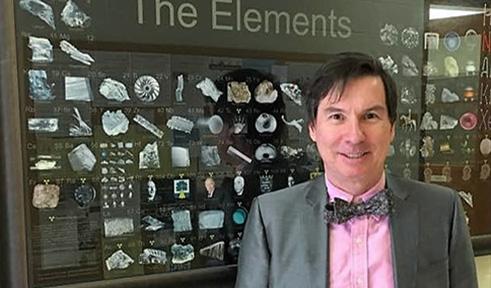
Adam Gibson is Professor of Medical Physics and Heritage Science at University College London (UCL), holding a full-time position in the Department of Medical Physics & Biomedical Engineering. He has been with UCL since 1999, progressing through various academic ranks from Research Associate to his current professorship. Gibson maintains a dual focus in his academic career, bridging medical physics and heritage science disciplines. His educational background includes a PhD from the University of London (1999), an MSc from the University of Exeter (1996), and a BSc (Hons) from Cardiff University (1994). He is also recognized as a Senior Fellow of the Higher Education Academy. Gibson's research spans two primary domains. In medical physics, he specializes in diffuse optical tomography for functional brain imaging of adults and children, having pioneered the first 3D electrical impedance images of adult brain function and the first 3D optical tomography images of the neonatal head. His heritage science work focuses on developing applications of heritage imaging, particularly multispectral, hyperspectral, and x-ray fluorescence imaging for cultural artifacts and documents. His research has attracted significant funding, with over £3.4 million as Principal Investigator and £6.5 million as Co-Investigator across numerous grants. His recent publications reveal an interdisciplinary research trajectory spanning medical physics applications, heritage conservation techniques, forensic science, and paleontology. The articles demonstrate consistent innovation in imaging technologies applied across diverse scientific domains, with particular emphasis on non-destructive analysis methods for both medical diagnostics and cultural heritage preservation. EPSRC Challenging Engineering Award EPSRC Advanced Research Fellowship Gibson has held significant leadership roles including Research Director in UCL Medical Physics & Biomedical Engineering for 8 years, guiding the department through REF2014 (where they achieved the UK's highest ranking in biomedical engineering) and REF2021. He has secured substantial grant funding and led the UK's contribution to IPERION HS, a major EU research infrastructure project in heritage science. As an educator, he created new BEng/MEng Biomedical Engineering degrees, serves as Faculty Graduate Tutor for UCL Faculty of Engineering Sciences, and has led innovative modules on Heritage Imaging and Physics of the Human Body. Gibson leads research groups in both medical physics and heritage science, with particular focus on developing imaging technologies applicable across both domains. His heritage science group specializes in non-destructive analysis of cultural artifacts, while his medical physics research continues to advance brain imaging techniques for clinical applications.