معرفی
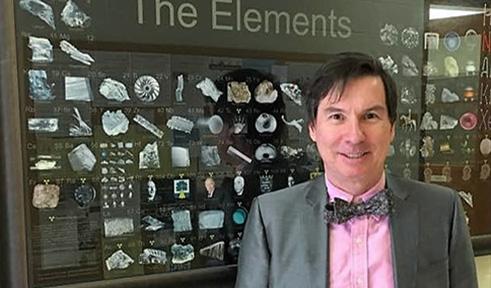
Peter de B. Harrington is a Professor in the Department of Chemistry and Biochemistry at Ohio University's College of Arts and Sciences. His research focuses on the development of intelligent chemical instruments through the integration of chemometric methods with ion mobility spectrometry (IMS) and mass spectrometry (MS). He is based in Chemistry 305 on the Athens Campus and is an active researcher with a strong publication record.
Research Interests: His work aims to make analytical instruments more user-intelligent by enabling real-time data processing and interpretation. Key areas include chemometrics, forensic chemistry (e.g., drug and explosive detection), bacterial identification via MALDI-MS, food authenticity (e.g., flaxseed oil, cranberries), and metabolomic profiling of cannabis and hemp. He develops algorithms for signal enhancement, classification, and multivariate analysis to extract meaningful information from complex datasets.
Recent Research Trends: His recent publications (2018–2020) show a consistent focus on applying machine learning (e.g., Restricted Boltzmann Machines), preprocessing techniques (e.g., non-integer root transforms), and multivariate classifiers to spectroscopic and spectrometric data. The research spans diverse applications—from food safety to pharmaceutical development—unified by a strong foundation in chemometrics and data science.
Scientific Awards:
- No specific awards listed in the provided text.
Advising and Grants: While specific students and grants are not named, Dr. Harrington has mentored numerous researchers, as evidenced by his frequent inclusion as corresponding author on collaborative publications. His work likely involves extramural funding given the technical nature of the instrumentation and interdisciplinary collaborations. He has contributed to method development in botanical drug regulation and sustainable energy systems.
Labs and Teams: Dr. Harrington leads a research group focused on chemometrics and intelligent instrumentation. His team collaborates across disciplines, including food science, electrochemistry, and forensic analysis, leveraging advanced analytical platforms like MS, IMS, and UV/IR spectroscopy.