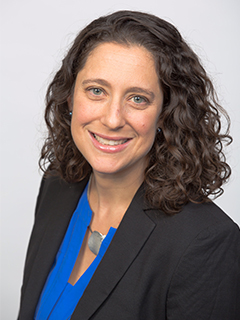
Dr. Adriana Milazzo is a Senior Lecturer in the School of Public Health at the University of Adelaide, within the Faculty of Health and Medical Sciences. Her research focuses on infectious disease epidemiology, climate change impacts on public health, and One Health approaches to zoonotic diseases. She completed her PhD on the relationship between heatwaves and foodborne disease incidence, contributing novel insights into heat-related public health interventions. Prior to academia, she worked at SA Health’s Communicable Disease Control Branch and coordinated a national influenza surveillance system. Research Interests: Climate change and infectious diseases, foodborne illness prevention, meningococcal disease transmission, pandemic preparedness, and One Health frameworks. Collaborations: Works closely with the Communicable Disease Control Branch (SA Health) and leads research projects in the Climate Change & Infectious Disease group. Teaching: Supervises students at all levels (PhD/MPhil/Honours) in climate-sensitive disease research and One Health topics. Her work bridges environmental and health sciences, addressing global challenges like heatwaves’ impact on food safety and non-pharmaceutical interventions during pandemics. Current projects include analyzing climate variability’s role in diarrheal diseases in Bangladesh and evaluating Australia’s response to outbreaks like meningococcal disease and COVID-19.
Caroline Bettinger-Lopez is a Professor of Law at the University of Miami School of Law, where she directs the Human Rights Clinic and chairs the Human Rights Program. Previously, she served as the White House Advisor on Violence Against Women under Vice President Biden, co-chairing the Task Force to Protect Students from Sexual Assault. Her work focuses on gender-based violence, immigrants’ rights, and systemic discrimination. She holds degrees from Columbia Law School and the University of Michigan. Education: J.D., Columbia Law School B.A., University of Michigan Research Interests: Combating domestic violence, sexual assault, and gender/racial discrimination through litigation, policy advocacy, and interdisciplinary collaboration. Her work emphasizes survivor-centered approaches, institutional accountability, and global human rights frameworks. Key Contributions: Co-chairing the White House Task Force on Campus Sexual Assault Advocating for implementation of the Violence Against Women Act Leading the Human Rights Clinic on immigrants’ rights and anti-discrimination cases Awards/Recognition: None explicitly listed in provided texts. Advising & Grants: No specific advisees or grant details provided. Focus on policy advocacy and clinic-based initiatives. Labs/Teams: Directs University of Miami's Human Rights Clinic, collaborating with federal agencies and advocacy networks.
Prof. Peter van der Heijden is a Professor of Statistics for the Social and Behavioural Sciences at Utrecht University's Department of Methodology and Statistics. He also holds a professorship in Social Statistics at the University of Southampton. His roles include chairing the Ethical Review Board and the Committee for Policy on Integrity at Utrecht's Faculty of Social and Behavioural Sciences. He chairs the Advisory Council on Methodology and Quality of Statistics Netherlands and serves on the Executive Board of the European Statistical Advisory Committee (ESAC). Since 2017, he has led Utrecht's Applied Data Science focus area, focusing on human-centered AI and data-driven solutions. His research emphasizes population size estimation, fraud detection, and categorical data analysis, with applications for Dutch ministries and international bodies like the UN. He has pioneered methods for estimating human trafficking victims and optimizing healthcare treatments using multilevel models and neural networks. Key projects include the AI for Health initiative with Utrecht Medical Center and Wageningen University. His work bridges statistical rigor with societal impact, addressing challenges in criminal justice, public health, and policy-making through innovative methodologies. Universities: Utrecht University (Primary), University of Southampton Key Committees: European Statistical Advisory Committee, UN Human Trafficking Monitoring Research Themes: Multiple Systems Estimation, Data Science for Social Issues Research interests span statistical methods for complex societal problems, including: Register linkage and fraud detection Machine learning applications in healthcare Human trafficking prevalence estimation His publications (2019-2023) highlight advancements in multilevel modeling, randomized response techniques, and AI-driven clinical data classification. He has advised on policy frameworks for official statistics and contributed to global initiatives like the UN Sustainable Development Goals (Target 16.2). Grants and collaborations include projects with Dutch ministries, the EU, and international organizations. Current initiatives involve optimizing Hepatitis C treatment networks and improving criminal recidivism prediction models. His leadership in interdisciplinary teams ensures methodological innovation addresses real-world challenges.
Katherine E. Watkins is a Senior Physician Policy Researcher at RAND and a Professor of Policy Analysis at the RAND School of Public Policy. She is a board-certified psychiatrist with expertise in substance use disorders, mental health treatment, and healthcare quality improvement. Her work focuses on integrating behavioral health services into primary care and improving access to treatment for vulnerable populations with co-occurring disorders. Education: M.D. from the University of Pennsylvania; Master's in Health Services as a Robert Wood Johnson Clinical Scholar at UCLA Her research interests include substance use disorders, mental health treatment, opioid use disorder, co-occurring disorders, primary care integration, behavioral health services, addiction treatment, health policy, and implementation science. She has developed and evaluated integrated care models such as SUMMIT and CLARO to improve treatment for individuals with opioid use disorder and co-occurring depression or PTSD. Her recent publications focus on reducing opioid overprescribing through behavioral nudges, improving organizational readiness for addiction treatment, and enhancing collaborative care models in primary and mental health settings. These works demonstrate a strong emphasis on evidence-based interventions, implementation strategies, and health system reform. Scientific Awards: No awards mentioned in the provided text. Watkins has led significant research on training substance abuse providers and primary care clinicians to deliver mental health services, improving quality measures for substance use care, and expanding access to medications for opioid use disorder in mental health settings. She has also contributed to national evaluations of Veterans Health Administration mental health services. She leads the development of interventions such as the SUMMIT model for integrated substance use treatment in primary care and the CLARO model for co-occurring disorders, which involve care coordination, patient-centered approaches, and implementation support for healthcare organizations.
Dr. Kaja Abbas is an Associate Professor in Infectious Disease Epidemiology and Dynamics at the London School of Hygiene & Tropical Medicine (LSHTM), with a joint position at Nagasaki University. He leads research at the intersection of vaccine impact modeling, health economics, and epidemiology, focusing on evidence-based vaccination strategies for global health equity. His work spans low-, middle-, and high-income countries, supported by affiliations with LSHTM’s Centre for Mathematical Modelling of Infectious Diseases, Vaccine Centre, and Centre for Epidemic Preparedness and Response. His research examines the health, economic, and equity impacts of vaccination programs through mathematical modeling. Key interests include: Estimating vaccine value for diseases like typhoid, HPV, and COVID-19 Analyzing immunization disruptions during pandemics Assessing cost-effectiveness of novel vaccine delivery strategies Identifying barriers to vaccine access in marginalized populations Publications demonstrate consistent focus on translating modeling insights into policy, with recurring themes of outbreak preparedness, antimicrobial resistance, and equity-focused vaccine deployment. Recent work emphasizes economic burden analyses and stakeholder-driven approaches for vaccine introduction in endemic regions. Grant funding includes 16 active and completed projects from major health organizations: Bill & Melinda Gates Foundation (nutrition-vaccination integration in Chad/Niger) WHO (vaccine value against antimicrobial resistance) GAVI (measles-rubella impact assessment) International Vaccine Institute (typhoid/chikungunya vaccine feasibility) He currently serves on the UK Joint Committee on Vaccination and Immunisation (JCVI), influencing national immunization policy.
Paulo Alves is an Associate Professor at Católica Porto Business School, Universidade Católica Portuguesa, where he serves as Vice-Dean for Management Control, Accreditations, and Master's Programmes. He holds a Ph.D. and Post-Doctorate in Accounting and Finance from Lancaster University (UK) and maintains an active collaboration as a Visiting Research Associate and guest lecturer there. His research focuses on the impact of information on capital markets, particularly financial narratives in public-private partnerships, with publications in reputable journals. He is affiliated with the Research Center in Management and Economics (CEGE) and contributes to the Corporate Financial Information Environment project at Lancaster University. Education: Ph.D. in Accounting and Finance, Lancaster University (UK) Post-Doctorate in Accounting and Finance, Lancaster University (UK) Paulo Alves' research spans two distinct domains. In Finance and Accounting, he examines financial narratives, capital market impacts, and public-private partnership accountability. In Healthcare, his work includes pressure ulcer prevention, wound care, and health-related quality of life metrics. His publications reflect interdisciplinary engagement, combining rigorous financial analysis with clinical healthcare innovation. Recent publications highlight trends in Financial Reporting (public-private partnerships, earnings disclosures) and Healthcare Technology (prophylactic dressings, medical device safety). He has developed tools like the Ghent Global IAD Categorization Tool and contributed to consensus frameworks like SECURE prevention for pressure ulcers. Scientific Awards: International ranking distinction for researcher at Católica Porto Business School As a certified auditor and accountant, Paulo consults on governance and financial systems while leading projects analyzing financial information retrieval and healthcare quality metrics. His affiliations include CEGE and the Corporate Financial Information Environment initiative.
Angeliki Gazi is an Associate Professor at Panteion University of Social and Political Sciences (Athens) and Visiting Professor at the University of Athens. She specializes in Media Psychology and Technology, focusing on identity, emotions, and mediated communication through digital platforms. Her academic journey includes roles at Cyprus University of Technology (2009–2018) and teaching at the National and Kapodistrian University of Athens. She holds a PhD from the latter in Media Psychology (identity and radio studies), an MA in Communication, and a Psychology degree from the University of Ioannina. Her clinical training in group analysis was completed at CIRFIP and the National and Kapodistrian University of Athens. Research interests span hybrid media environments, social media, mobile technology impacts, and mediated identities. She is a founding member of the Media Psychology and Technology Division at the Hellenic Psychological Association and contributed to the Scientific Board of the Social Computing Research Center (Cyprus). Her work involves EU/National research projects, publications in international journals, and three authored books. Key research trends in her articles include digital mediation of cultural trauma, participatory web radio, audiovisual resistance in Greece, and sensory urban studies. She explores how technology reshapes human interaction, identity, and emotional expression across media platforms. Her contributions address both theoretical frameworks and practical applications in hybrid environments, emphasizing interdisciplinary approaches. Professional service includes editorial roles at Journal of Radio and Audio Media and Radio Journal , and leadership roles in international academic associations like ECREA. Her teaching focuses on research methods and mediated communication practices.
Justin J. West is an Assistant Professor of Music and Human Learning at The University of Texas at Austin's Sarah and Ernest Butler School of Music. He previously held positions at LSU, where he received the 2021 Rising Faculty Research Award. His research focuses on music teacher professional development (PD), organizational resilience in music programs, and arts education policy. West teaches courses on children’s musical development, qualitative research, and arts education law. Educations: Ph.D. in Music Education, University of North Texas M.A. in Music Education, Columbia University B.M. in Music Education, Lamar University Research Interests: Music teacher learning trajectories, pandemic-era PD adaptations, policy frameworks for arts education, and organizational strategies for rebuilding music programs. He employs qualitative, quantitative, and mixed-methods approaches to study how PD impacts teacher motivation and institutional sustainability. Articles Trends: His recent work analyzes post-pandemic PD innovations, comparative studies between music and non-music teacher practices, and longitudinal evaluations of certification pathways. Themes emphasize system-level coordination, crisis-driven educational changes, and evidence-based policy design. Awards: 2021 Rising Faculty Research Award (LSU) Sandra E. New Endowed Professorship Fellowship Butler School of Music Endowment Fellowship Advising & Grants: Recipient of UT Austin’s Office of the Vice President for Research grants. Leads PD design initiatives for Louisiana and Texas music teachers. Active in the Society for Music Teacher Education’s professional development working group. Labs/Teams: Collaborates with editorial boards of Journal of Research in Music Education and International Journal of Research in Choral Singing . Coordinates reciprocal peer coaching programs for music educators.
Sandra Carroll serves as Vice-Dean of the Faculty of Health Sciences and Executive Director of Nursing at McMaster University. With 81 publications from 2003-2024 (160 total), she is a prominent figure in cardiovascular nursing research and education. Her leadership roles indicate her significant standing within the academic community at McMaster. Dr. Carroll's research interests center on cardiovascular nursing, stroke care in resource-limited settings, patient decision-making, and implantable cardioverter defibrillators (ICDs). Her work strongly emphasizes patient-centered care, shared decision-making models, and healthcare delivery in low-resource environments. The OSCAIL (Organized Stroke Care Across Income Levels) study represents a major component of her research portfolio, focusing on implementing stroke care protocols in countries like Uganda, Rwanda, and South Africa. Analysis of her recent publications reveals a consistent focus on improving patient outcomes through better decision support tools, particularly for cardiac conditions. Her work spans from developing patient decision aids for ICD candidates to studying quality of life impacts of different cardiac device therapies. She has increasingly incorporated digital health approaches, examining remote monitoring technologies and their impact on chronic disease management. Dr. Carroll maintains an extensive collaborative network with 53 co-authors, primarily from McMaster University but also including international partners. Her research shows strong translational impact, with numerous publications referenced in clinical guidelines and policy documents. While specific advising roles aren't detailed in the provided information, her leadership position suggests involvement in mentoring junior faculty and graduate students. Her research program demonstrates particular attention to vulnerable populations, including patients in low-resource settings, women with heart conditions, and immigrant communities navigating healthcare systems. This focus on equity and accessibility represents a consistent thread throughout her scholarly work.
Marios Georgakis is a clinician-scientist and Junior Group Leader at the Institute for Stroke and Dementia Research (ISD) at LMU Munich. He also holds a Visiting Scientist position at the Broad Institute of MIT and Harvard. His research focuses on leveraging multi-omics data and causal inference methods (e.g., Mendelian randomization) to discover drug targets for atherosclerosis, develop personalized risk stratification tools for cerebrovascular disease, and identify in vivo biomarkers of disease activity. His work bridges human genetics, molecular biology, and clinical translation. Education : MD and PhD (Epidemiology) from the National and Kapodistrian University of Athens; doctoral studies in Systemic Neurosciences at LMU Munich. Honors : Emmy Noether Award (DFG), CHARGE Consortium Early Career Achievement Award, Hertie Network Fellowship, and multiple scholarships/fellowships. Research Themes : Drug target discovery for cardiovascular disease via multiomics integration Molecular phenotyping of atherosclerosis using single-cell RNA-seq and spatial transcriptomics Development of AI-driven tools for vascular imaging and aging Genetic studies of inflammation, cytokines, and stroke subtypes Causal inference in vascular risk prediction and post-stroke outcomes Recent Article Trends : His team's publications (2024-2020) emphasize: Proteogenomic and genetic studies of atherosclerosis Cytokine signaling pathways (e.g., IL-6, CCL2/CCR2) Polygenic and genomic risk scores for stroke Multi-omics biomarkers in cerebrovascular disease Clinical translation of Mendelian randomization findings Meta-analyses of population-based data Scientific Awards : Emmy Noether Group Leader Award (DFG, 2023) CHARGE Consortium Early Career Achievement (2023) Hertie Network Fellowship (2023) Walter-Benjamin Postdoctoral Fellowship (2021-2022) Team Leadership : Georgakis mentors multiple PhD students and postdocs in his lab. His group collaborates with vascular surgeons, neurologists, and computational biologists. Current projects include the AtherOMICS biobank and AI-driven vascular phenotyping tools.
Holly Reid is an Associate Lecturer in the Division of Psychology & Mental Health within the Faculty of Biology, Medicine and Health at The University of Manchester. She also serves as a Research Associate at Greater Manchester Mental Health NHS Foundation Trust working for the Perinatal Mental Health and Parenting Research Unit (PRIME-RU). Her educational background includes: PhD in Psychology from The University of Manchester (awarded January 12, 2024) MRes in Psychology from The University of Manchester (awarded December 1, 2015) BSc (Hons) in Psychology from The University of Manchester (awarded July 1, 2014) Dr. Reid's research focuses on perinatal psychology, particularly examining suicidal thoughts and behavior during the perinatal period. Her work spans maternity care systems, perinatal mental illness, and trauma-informed approaches to maternal mental healthcare. She employs diverse methodological approaches including systematic reviews, online questionnaires, interviews, Q-methodology, and randomized controlled trials. Analysis of her recent publications reveals a consistent focus on improving maternal mental health outcomes through evidence-based interventions. Her research trajectory shows increasing emphasis on implementation science, examining how care bundles and trauma-informed approaches can be effectively integrated into maternity services. Her work bridges clinical psychology with practical healthcare delivery improvements. Dr. Reid holds professional memberships as a Chartered Member and Associate Fellow of the British Psychological Society. Her research contributes to UN Sustainable Development Goals related to health and wellbeing. She currently leads the BSc Psychology 3rd year Communication in Healthcare unit at The University of Manchester. Her external research roles include active participation in the Manchester Centre for Health Psychology and previous work with the Perinatal Mental Health and Parenting Research Unit (PRIME-RU).
Dr. Marios Georgakis is a Clinician-Scientist and Junior Group Leader at the Institute for Stroke and Dementia Research (ISD) at Ludwig-Maximilians-Universität München (LMU Munich). He also serves as a Visiting Scientist at the Broad Institute of MIT and Harvard and is completing his clinical residency in Neurology at LMU University Hospital. As Principal Investigator of the Georgakis Lab, he leads a research team focused on developing precision medicine approaches for cerebrovascular diseases. Education: Medical studies (M.D.): Medical School, National and Kapodistrian University of Athens, Greece (2009-2015) Master studies (M.Sc.): Molecular Physiology (Neurosciences), National and Kapodistrian University of Athens, Greece (2015-2017) Doctoral studies (D.Sc.) in Epidemiology, National and Kapodistrian University of Athens, Greece (2015-2019) Doctoral studies (Ph.D.) in Graduate School of Systemic Neurosciences (GSN), LMU Munich, Germany (2017-2020) Dr. Georgakis' research focuses on leveraging big data from epidemiological studies and human biobanks to develop precise and personalized preventive and therapeutic strategies for cerebrovascular diseases. His work spans biomedical neuroscience with particular emphasis on cerebrovascular disease, stroke, atherosclerosis, cerebral small vessel disease, multi-omics, data science, epidemiology, and population genetics. He employs innovative bioinformatic tools including genome-wide association studies, Mendelian randomization, multi-omics integration, single-cell transcriptomics, spatial transcriptomics, and machine learning to discover causal mechanisms, identify therapeutic targets, develop risk stratification tools, and create accurate biomarkers for cerebrovascular diseases. His laboratory has established the AtherOMICS biobank for human atherosclerotic plaque samples and developed computational pipelines for big data analyses. Recent publication trends show a strong focus on genetic architecture of stroke, inflammatory pathways in cerebrovascular disease, and development of polygenic risk scores for clinical application. Scientific Awards: Emmy Noether Independent Group Leader Award, German Research Foundation (DFG), 2023 Early Career Achievement Award, CHARGE Consortium, 2023 Fellow of the Hertie Network of Excellence in Clinical Neuroscience, 2023 Clinician-Scientist Fellow of the Excellence Munich Cluster for Systems Neurology (SyNergy), 2023 Walter-Benjamin Fellowship for postdoctoral research by German Research Foundation (DFG), 2021-2022 Dr. Georgakis actively mentors a diverse team of 12 current students and postdocs including PhD students, MD students, and clinician scientists, with several alumni who have completed their training in his lab. His research is supported by multiple grants including the Emmy Noether program from the German Research Foundation, focusing on multi-omics characterization of immune mechanisms driving human atheroprogression, dissecting cerebrovascular atherosclerosis with population genetics, and developing personalized biomarkers using deep learning. The Georgakis Lab operates two main research platforms: the AtherOMICS Biobank for human atherosclerotic plaque samples and the Big Data Lab for computational analyses. These platforms enable his team to conduct deep phenotyping of human atherosclerosis, develop in vivo diagnostics, discover therapeutic targets, and create personalized diagnostic and risk prediction tools for cardiovascular diseases.
Arlen C. Moller is an Associate Professor and Director of Undergraduate Programs in the Department of Psychology at Illinois Institute of Technology since 2013. He leads the Motivation Science and Digital Health Lab , supervising students across multiple degree programs including Clinical Psychology (Ph.D.) and Game Design. Education: Ph.D. in Social Psychology (2007) - University of Rochester B.A. in Psychology (2000) - Cornell University His research focuses on digital health interventions that promote physical and mental wellness through motivation science and self-determination theory , particularly examining how digital technologies like wearable monitors, video games, and extended reality can be designed to support intrinsic motivation and behavioral change . This work spans multiple domains including occupational health , human-computer interaction , and game design . Current research trends include: Developing digital tools that balance competition mechanics with psychological needs Understanding social identity influences on health behaviors Examining long-term effects of extrinsic rewards on motivation Implementing self-determination theory in healthcare settings Creating peer-to-peer mental health support systems Optimizing digital behavior change through autonomy support Dr. Moller collaborates with institutions such as the Center for Self-Determination Theory , Society of Behavioral Medicine , and University of Lisbon's PANOS*SR Research Group . His lab team includes three Ph.D. candidates investigating specific applications of their research.
Marissa Abram is an Assistant Professor in the School of Nursing at Duke University, holding this position since 2023. She earned her Ph.D. from Adelphi University in 2017 and maintains active external relationships with the International Nurses Society on Addictions (IntNSA) and Wake County HIV Clinic. Education: Ph.D., Adelphi University, 2017 Dr. Abram's research centers on psychiatric-mental health nursing with critical contributions to substance use disorder treatment, harm reduction frameworks, and innovative simulation-based education. Her work addresses urgent gaps in preparing mental health nurse practitioners for traumatic scenarios like patient suicide, developing nurse-led care models for substance use disorders, and combating stigma in addiction nursing. She demonstrates strong commitment to health equity through research examining racial justice in clinical training and intersecting vulnerabilities like climate impacts on rural substance users. Analysis of her 2023-2025 publications reveals three dominant trajectories: (1) Simulation methodology for interprofessional trauma-informed training, (2) Structural analysis of nursing's role in the national addiction crisis, and (3) Implementation science for nurse-led models of care. Her work consistently bridges clinical practice, education innovation, and policy advocacy with emphasis on vulnerable populations. Grants: Faculty Scholars Program 2025 Research (Principal Investigator), Josiah Macy, Jr. Foundation (2025-2027) Dr. Abram actively mentors through DNP projects (NURSING 975) and teaches advanced courses including NURSING 766 (Assessment and Management of Addictive Disorders). Her external partnerships with IntNSA and Wake County HIV Clinic demonstrate applied commitment to addiction nursing practice and HIV care integration. She contributes to professional discourse through editorial work with major nursing journals while advancing workforce development for behavioral health through interprofessional fellowship models.
Amy Mullens is a Professor at the School of Psychology and Wellbeing , University of Southern Queensland. She serves as Research Theme Leader for Health Equity at the Centre for Health Research (CHR) and contributes to the Institute for Resilient Regions (IRR). Her work focuses on vulnerable communities , with emphasis on sexual health/HIV , diabetes , COPD , substance use , and health behavior change . Education : BA (St Catherine), MSc (North Dakota SU), PhD (QUT). She is a Fellow of the Australian Psychological Society with Clinical and Health Psychology Endorsements . Her research spans public health , gender studies , and clinical psychology , particularly transgender health , health equity , and social determinants of health . Recent work includes STI/HIV risk modeling , prison health interventions , and LGBTQIA+ mental health . Key scientific awards include: Fellow, Australian Psychological Society Clinical Psychology Endorsement Health Psychology Endorsement Accredited Supervisor (STAP) She supervises doctoral and masters students in areas like transgender incarceration , STI prevention , and health equity . Industry affiliations include clinical credentialed work with West Moreton Health Service , membership in Australasian Society of Behavioural Medicine , and advocacy through Sexual Health Society Queensland .