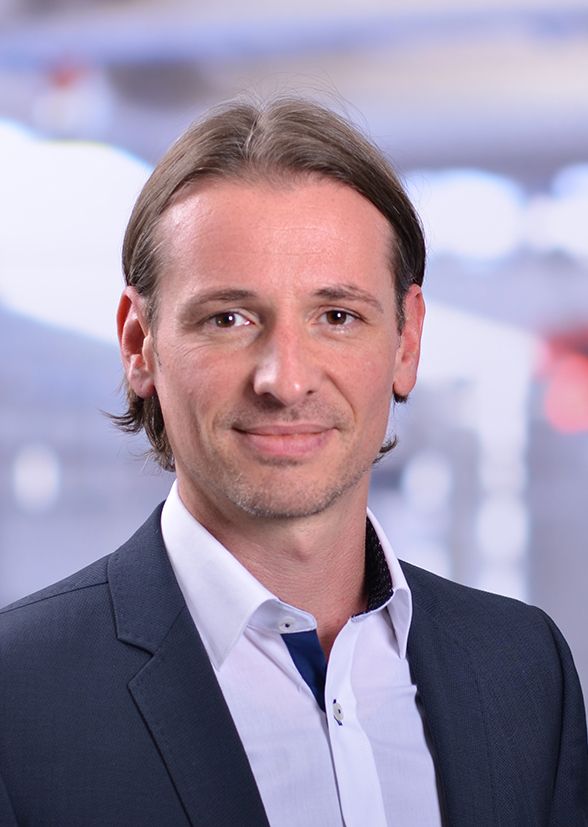
Dr. phil. Stefan Ladwig is a researcher at the Institute for Automotive Engineering (Institut für Kraftfahrzeuge) at RWTH Aachen University, specializing in traffic psychology, user acceptance, and human-machine interaction for automated driving systems. His work addresses psychological and ergonomic aspects of emerging mobility technologies, including seating ergonomics, trust-building mechanisms, and communication strategies for autonomous delivery robots. Research Focus: Automated driving, interior design psychology, driver/passenger behavior, and safety requirements. Projects: Lead roles in UrbANT (autonomous delivery robot) and SteeringBow (dynamic driving experience). Collaborations: Affiliated with Aldenhoven Testing Center, Future Mobility Partnership e.V., and innocam.NRW. Ladwig’s recent publications examine rotated seating positions, visual dominance in speed adaptation, and trust-relevant driving scenarios, reflecting his interdisciplinary approach to optimizing human-vehicle interactions. His work spans ergonomics, energy management, and behavioral interventions to enhance safety and usability in next-generation mobility solutions.
Prof. Dagmar Haase is a Full Professor in Landscape and Urban Ecology at Humboldt Universität zu Berlin, serving as Deputy Director of the Geographical Institute. She holds affiliations with the Helmholtz Centre for Environmental Research (UFZ) and has earned honorary professorships in Sweden and Romania. Her academic journey includes a PhD from the University of Leipzig (1999) and Habilitation from Martin-Luther-University Halle-Wittenberg (2009). Her research focuses on urban ecosystem services, social-ecological systems, and nature-based solutions to urban challenges. Key projects include EU-funded initiatives on green infrastructure (e.g., Horizon Europe’s NaturaConnect) and climate resilience. Awards include the AXA Research Fund Award (2014) and Honorary Wallenberg Professorship (2016). Haase’s work integrates remote sensing, citizen science, and participatory modeling to address urban sustainability. Over 250+ publications and an h-index of 77 reflect her prolific contributions. She advises numerous PhD candidates exploring urban dynamics, biodiversity, and governance. Current grants span climate adaptation, urban densification, and ecological networks.
Stefan Schaltegger is Professor for Sustainability Management at the Centre for Sustainability Management (CSM) at Leuphana University Lüneburg. With over two decades of research experience, he is a globally recognized scholar in sustainability management, corporate sustainability, and environmental accounting. His work bridges academic research with practical business applications, influencing sustainability practices across multiple industries. Professor for Sustainability Management at Leuphana University Lüneburg Director of the Centre for Sustainability Management (CSM) Extensive publication record in top sustainability journals Regular contributor to policy discussions on sustainability Professor Schaltegger's research focuses on sustainability management systems, corporate sustainability strategy, environmental accounting, sustainable business models, and sustainability transitions. His work examines how organizations can effectively integrate sustainability into core operations, emphasizing stakeholder engagement, sustainability performance measurement, and the development of compelling business cases for sustainability. He has pioneered research on sustainability management accounting, rebound effects in sustainability initiatives, and the role of change agents in corporate sustainability transformations. His research spans both theoretical development and practical application, making significant contributions to how businesses understand and implement sustainability. His recent publications reveal an evolving research trajectory with increasing focus on systemic sustainability challenges. Schaltegger has shifted from foundational work on sustainability management accounting toward more complex issues like environmental rebound effects, sustainability transformations, and regenerative business practices. His 2023-2025 publications show growing attention to climate change responses, biodiversity conservation, and the role of service innovation in sustainability transformations. The interdisciplinary nature of his work is evident in publications spanning business strategy, environmental science, accounting, and policy journals. Ranked among the world's top 2% scientists in the Stanford study (2020) Best Young Researcher of the Year at Leuphana University Lüneburg (2010) IFAC PAIB Committee Research award for "article of merit" (2003) Professor Schaltegger actively mentors doctoral students and early-career researchers, though specific student names aren't listed in the provided materials. His research is supported by numerous projects including "TrICo Subproject: Community Sustainable Production," "Account4GreenEco," and "Hochschulen in Gesellschaft – Realexperimente transformativer Lern- und Forschungsprozesse für eine Kultur der Nachhaltigkeit an Hochschulen." His work demonstrates strong industry engagement through collaborations with businesses implementing sustainability practices. The Centre for Sustainability Management (CSM), which Schaltegger leads, serves as a hub for interdisciplinary sustainability research, education, and practice. The CSM coordinates multiple research projects including the Innovation Network aiming at Sustainable Smartphones (INaS) and works closely with industry partners to develop practical sustainability solutions. The center's activities span research, education, and transfer, reflecting Schaltegger's commitment to bridging the gap between academic theory and business practice in sustainability.
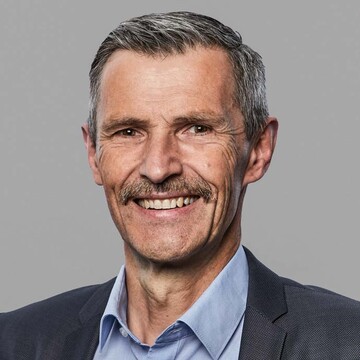
Magnus Liebherr is a Professor at the University of Duisburg-Essen , focusing on Technology Acceptance , Artificial Intelligence , and Sustainable Transportation . His work bridges Business Administration with Human-Computer Interaction , exploring how users adapt to emerging technologies like autonomous vehicles and AI systems. Key research areas include: Acceptance of AI applications in mobility Business model development for climate-neutral transportation Cognitive and psychological factors in technology interaction Digital media effects on adolescent well-being Trust calibration in automated systems His recent publications examine Large Language Model dependency , gamified language learning , and mental workload metrics for autonomous vehicles. While no formal awards are listed, his interdisciplinary work spans psychology , engineering , and business strategy .
Dr. Jonathan Lenoir is a CNRS Researcher at the Ecology and Dynamics of Anthropized Systems (EDYSAN) laboratory, University of Picardie Jules Verne , France. His work bridges Ecology and Biostatistics , focusing on ecological dynamics under spatial and temporal global changes, particularly biotic responses to climate change. His research spans broad-scale biodiversity patterns, species distribution modeling, and microclimate ecology, with special attention to forest systems. Dr. Lenoir leads and contributes to multiple research projects including MaCCMic (Impact of forest Management and Climate Change on understory Microclimate) and IMPRINT (Impacts of Microclimatic Processes on forest Biodiversity redistribution under macroclimaTe warming). These projects utilize advanced technologies like LiDAR and microclimate sensors to model understory temperature dynamics and predict biodiversity responses to climate change. His recent publications analyze microclimate buffering in forests ( 2024 ), species thermophilization ( 2024 ), and the application of deep learning to habitat identification ( 2024 ). His work also explores interdisciplinary connections like eco-oncology , comparing invasion dynamics in ecology and medicine. Dr. Lenoir actively mentors researchers and supervises fieldwork campaigns, emphasizing rigorous data collection ( 180 monitoring plots across French forests ) and advanced statistical analyses in R . He collaborates with European institutions and participates in large-scale initiatives like ReSurveyEurope , a database of resurveyed vegetation plots.
Prof. Dr. Mareike Kühne is a full-time Professor of Business Administration at the Department of Business and Management, Brandenburg University of Technology. With a unique interdisciplinary background spanning economics, business administration, philosophy, and neuroscience, she bridges affective dimensions with economic rationality to develop holistic decision-making frameworks. Doctorate in Economics, Otto von Guericke University Magdeburg (1992-1997) Fulbright Scholar, San Diego State University (1997-1998) Studies in Philosophy, Humboldt University (2007-2011) Doctoral and Master’s in Neuroscience, Berlin School of Mind and Brain (2011-2013) Her research integrates insights from psychology and neuroscience into capital market-oriented corporate reporting, corporate governance, and normative rationality frameworks. She critiques current economic models for neglecting the embodied nature of cognition, advocating for a more nuanced understanding of rationality that incorporates lived experience. Her 15 most recent works span sustainability reporting (2025), neuroeconomics (2021), M&A disputes (2017), and IFRS standard evolution (2005-2012). These publications highlight her focus on reconciling traditional accounting principles with interdisciplinary approaches to decision-making. Fulbright Scholar (1997-1998) Prof. Kühne has taught at Humboldt University, HHL Leipzig, and the Berlin School of Mind and Brain. She actively participates in professional organizations including the German Society for Philosophy, European Accounting Association, and European Financial Reporting Advisory Group. Her work emphasizes the practical impact of neuroscientific findings on economic policy and standard-setting.
Detlef F. Sprinz is a Senior Scientist at the Potsdam Institute for Climate Impact Research (PIK) and a Professor at the Faculty of Economics and Social Sciences of the University of Potsdam, Germany. During 2024-2025, he leads the project "AMaReNa - A Market for the Restoration of Nature" , focusing on carbon removals. His academic background includes a Ph.D. and M.A. in Political Science from the University of Michigan and an M.A. in Economics from the University of the Saarland. Research Interests: Climate policy at multiple levels, long-term policy design, evaluation of international/national institutions, European/international environmental policy, and modeling political decisions for sustainability. Notable Projects: Tandem Fellowship (2020-2022) for interdisciplinary course development, Visiting Researcher at University of Lund (2022-2023), and coordination of research at the Käte Hamburger Kolleg (2017). Publications emphasize climate cooperation under the Paris Agreement, effectiveness of environmental regimes, and predictive modeling for climate negotiations. His work spans empirical analyses of acid rain regulation, Kyoto Protocol implementation challenges, and bioenergy accounting errors. Scientific Awards & Memberships: Tandem Fellowship (German Stifterverband) Member, European Academy Co-founder, Ecologic Institute Teaching includes courses on global climate governance, political decision modeling, and environmental policy at the University of Michigan, Yale, University of Oslo, and University of Potsdam. He has contributed to IPCC’s Sixth Assessment Report as a Lead Author. Advisory Roles: Chairmanship of the European Environment Agency’s Scientific Committee (2009-2012), Senior Research Fellow at CICERO (2011-2013), and consultancy for governments, corporations, and think tanks.
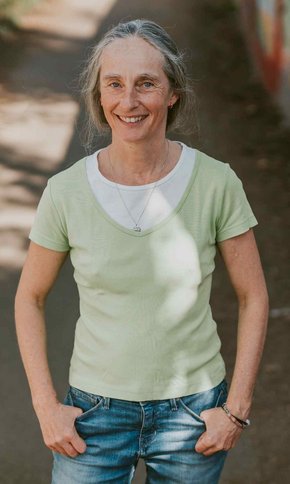
Dr. Heike Wex is a prominent atmospheric scientist at the Leibniz Institute for Tropospheric Research in Leipzig, Germany, where she serves as a Researcher in the Atmospheric Microphysics department. With over two decades of continuous research since completing her PhD in 2002, she has established herself as a leading expert in aerosol-cloud interactions and ice nucleation processes. Her work spans multiple international collaborations and major research initiatives including (AC)³, PICNIC, MarParCloud, and PI-ICE projects. Her research focuses on experimental investigations and theoretical descriptions of aerosol-cloud interactions, with specific expertise in hygroscopic growth at high relative humidities (>99% RH), particle activation to cloud droplets, heterogeneous ice nucleation processes, and the role of atmospheric aerosol particles as nuclei for cloud droplets and ice formation. Her work bridges atmospheric physics, climate science, and environmental chemistry, with significant contributions to understanding how microscopic processes affect cloud formation and climate. Analysis of her recent publications reveals a strong focus on polar and marine environments, with particular attention to biological contributions to ice nucleation, seasonal variations in Arctic aerosols, and the development of advanced measurement techniques. Her work consistently addresses fundamental questions about how aerosols influence cloud properties and climate systems, with increasing emphasis on climate-relevant processes in polar regions. Dr. Wex has held significant leadership positions, including serving as Vice President of the International Commission on Clouds and Precipitation (ICCP) from 2021-2024. She is also actively engaged with Scientists for Future in Leipzig, demonstrating her commitment to addressing climate change through scientific expertise and public engagement. Beyond her research, she has organized numerous scientific workshops and field campaigns, including leadership roles in the LExNo experiment, FROST projects, and the 16th International Conference on Clouds and Precipitation. Her work has established important methodological approaches for studying ice nucleation and has contributed significantly to our understanding of aerosol impacts on cloud formation across diverse environments from the Arctic to the tropics.
Markus Reichstein is a Professor for Global Geoecology at Friedrich Schiller University (FSU) Jena and Director of the Biogeochemical Integration Department at the Max Planck Institute for Biogeochemistry. His research focuses on ecosystem responses to climate variability, climate extremes, and the application of AI in Earth system science. He holds a PhD in Plant Ecology from the University of Bayreuth and has pioneered interdisciplinary approaches combining machine learning with environmental modeling. Key roles include leadership in the Michael-Stifel-Center Jena for Data-driven and Simulation Science and founding director of the ELLIS Unit Jena. He contributed to the IPCC Special Report on Climate Extremes and has received prestigious awards such as the Leibniz Prize. His work bridges ecology, hydrology, and atmospheric science, addressing critical global challenges like carbon cycle feedbacks and ecosystem resilience. Recent research emphasizes AI-driven early warning systems for climate risks, integrating observational data with mechanistic models. His team explores land-atmosphere interactions, soil-vegetation dynamics, and the impacts of climate extremes on societal systems. Notable projects include GartenDiv, a citizen science initiative for garden biodiversity, and advancements in global water cycle modeling using hybrid AI-physics frameworks. Awards include the Piers J. Sellers Award (2018), ERC Synergy Grant (2019), and Leibniz Prize (2020). He collaborates with international networks like ELLIS and Future Earth, advancing data-driven solutions for sustainability science.
Prof. Dr.-Ing. Lars Linsen is a full Professor of Computer Science at the Westfälische Wilhelms-Universität (WWU) Münster, leading the VISualization & graphIX (VISIX) group. His primary affiliation is the Institute of Computer Science within the Faculty of Mathematics and Computer Science. He holds adjunct professorships at Jacobs University, Bremen, and has held previous academic roles including Full Professor at Jacobs University (2012–2017) and Associate/Assistant Professor roles in Germany and the U.S. His research focuses on interactive visual analysis, medical visualization, and scientific visualization, with applications in life sciences and engineering. Education: PhD (Dr.-Ing.) in Computer Science from Universität Karlsruhe (2001), M.Sc. (Diplom) in Computer Science (1997), B.Sc. (Vordiplom) in Computer Science (1994). Awards: IEEE Visualization Design Contest Winner (2008, 2022, 2018), Preis des Fördervereins des Forschungszentrum Informatik (2002). Research Highlights: Develops visualization tools for medical imaging (e.g., mass spectrometry imaging, MRI data analysis) and physical simulations (e.g., wildfire spread analysis, asteroid impact modeling). Active in EU-funded projects like Pig-Pro-QuO (surface coatings) and cells-in-motion initiatives. Supervised over 20 PhD/MS advisees, including notable graduates in medical visualization and simulation ensemble analysis. Publications: Over 100 peer-reviewed articles in top venues like IEEE Transactions on Visualization and Computer Graphics, Computers & Graphics, and EuroVis. Key works include SciVis contest-winning wildfire analysis frameworks and medical visualization tools for stenosis detection. Teaching: Offers courses on visualization, computer graphics, and computational science. Actively involved in thesis supervision and curriculum development at both WWU Münster and Jacobs University. Grants & Collaborations: Principal investigator on DFG-funded projects (e.g., hemodynamics simulations, ensemble visualization) and industry collaborations (e.g., Tascon GmbH for coating quality analysis). Member of the Cells-in-Motion Interfaculty Centre and CDH board at WWU.
Prof. Margret Keuper is a Professor of Machine Learning at the University of Mannheim's School of Business Informatics and Mathematics, leading the Data and Web Science Group. She is also affiliated with the Max-Planck-Institute for Informatics and ELLIS (fellow since 2024). Her research focuses on robust deep learning, neural architecture search, and computer vision tasks like motion segmentation and adversarial defense. She holds a PhD from the University of Freiburg and previously held positions at the University of Siegen and the University of Mannheim. Her work spans projects funded by DFG and BMBF, including Climate Visions for social media analysis and TrackOpt for motion tracking. She teaches courses on computer vision, generative models, and reinforcement learning. She actively serves on program committees for top conferences like CVPR, ECCV, and NeurIPS, and is an associate editor for IEEE TPAMI and JAIR. Education: PhD in Computer Science from University of Freiburg (advisor: Thomas Brox) Research Projects: Learning to Sense (DFG), Climate Visions (BMBF), TrackOpt (BMBF) Key Roles: Head of Mannheim Master in Data Science Examination Board, Member of MSc Business Informatics Board Her research emphasizes robustness in AI systems, with contributions to adversarial attacks, domain generalization, and efficient solvers for large-scale problems. She advises over 15 PhD students across academic and industry partnerships.
Sarah Kang is the Director of the Department of Climate Dynamics at the Max Planck Institute for Meteorology in Hamburg, Germany, a position she has held since August 2023. She leads the Director's Research Group (CDY) focusing on fundamental climate dynamics. Prior to this, she served as Professor in the Department of Urban and Environmental Engineering at Ulsan National Institute of Science and Technology (UNIST) in South Korea from 2011-2023, progressing through assistant, associate, and full professor ranks. Her research examines complex climate system dynamics, with emphasis on: Large-scale atmosphere and ocean circulation patterns Tropical-extratropical climate interactions Hydrological cycle responses to climate change Mechanisms of polar amplification Teleconnections between ocean basins and climate zones Analysis of her recent publications reveals dominant research themes: Ocean-atmosphere coupling mechanisms Radiative forcing and climate sensitivity Hemispheric climate asymmetries Tropical precipitation dynamics Polar warming impacts on global circulation with consistent methodology employing high-resolution climate modeling and observational verification. Major scientific recognitions include: AGU Atmospheric Sciences Ascent Award (2022) AOGS Kamide Lecture Award (2018) Editor's Citation for Excellence in Refereeing (GRL 2018) UNIST Teaching Excellence Award (2012) NCAR Advanced Studies Fellowship (2009) She maintains extensive professional engagement as: Co-chair of CLIVAR Climate Dynamics Panel Science Steering Committee member for CFMIP Associate Editor for Frontiers in Climate Editor for AGU Advances Board member of Korean Meteorological Society
Ottmar Edenhofer serves as Director and Chief Economist of the Potsdam Institute for Climate Impact Research (PIK), Director of the Mercator Research Institute on Global Commons and Climate Change (2012-2024), Professor for The Economics and Politics of Climate Change at Technische Universität Berlin, and Chair of the European Scientific Advisory Board on Climate Change (ESABCC) since 2022. His affiliations span leading European climate research institutions and academic bodies. Edenhofer's research focuses on climate change economics, particularly the impact of technological change on mitigation costs, public finance implications of climate policy, distributional effects of carbon pricing, and governance of global commons. His work bridges theoretical economic modeling with practical policy design, emphasizing equity considerations and institutional frameworks for effective climate action. He pioneered social science research at PIK, establishing rigorous methodologies for translating scientific findings into actionable policy advice. His publication record demonstrates consistent leadership in high-impact climate economics research, with seminal contributions to IPCC assessments (serving as Co-Chair of Working Group III for the Fifth Assessment Report) and influential analyses of carbon pricing mechanisms. Recent work increasingly addresses carbon dioxide removal governance, distributional justice in climate policy, and the integration of climate action with broader sustainable development goals. His research consistently appears in top journals including Nature, Science, and Nature Climate Change. Edenhofer has received numerous scientific honors including the Romano Guardini Prize (2018), Deutsche Umweltpreis (2020), and Arthur Burkhardt-Prize (2021). He belongs to the top 1% of most cited scientists globally (2018-2022) and was ranked among Germany's top 10 economists (2019-2020). His policy influence extends to serving as Vatican consultor for the Dicastery for Promoting Integral Human Development and advising EU institutions through ESABCC. As a science-policy interface leader, Edenhofer has shaped climate negotiations leading to the Paris Agreement and continues to advise European institutions on implementing climate neutrality targets. His work emphasizes the critical role of carbon pricing with equitable revenue recycling and the strategic sequencing of climate policies to maintain political feasibility while achieving deep decarbonization.
Prof. Dr.-Ing. Werner Lang serves as Vice President for Sustainable Transformation and holds the Chair of Energy Efficient and Sustainable Design and Building (ENPB) at the Technical University of Munich (TUM), within the TUM School of Engineering and Design. Previously, he was Professor of Sustainable Building and Director of the Center for Sustainable Development at the University of Texas School of Architecture in Austin (2008-2010). Lang also directs the Oskar von Miller Forum and is a partner at Lang Hugger Rampp GmbH Architekten in Munich. Lang's research focuses on developing strategies for buildings with positive environmental footprints through regenerative energy systems, renewable materials, and closed material cycles. His work emphasizes comprehensive life cycle analysis considering ecological, economic, and social aspects. Current research areas include climate-resilient urban neighborhoods, circular economy in construction, and sustainable building materials. The ENPB institute conducts numerous research projects such as Building Climate-Municipal, CircularFTmehrRAUM, and Urban Green Infrastructure. Lang's publications reveal a strong trend toward life cycle assessment, multi-criteria decision-making, and computational approaches for sustainable building design. His recent work integrates machine learning with building performance analysis and focuses on practical implementation of circular economy principles in urban contexts, with increasing emphasis on quantifying environmental benefits of urban green infrastructure. TUM Sustainability Award 2022 Doce et Delecta (Second Prize for Best Teaching), 2019 Bayerischer Energiepreis 2014 International Building Skin Tech Award (2008) Promotionspreis der TUM (2000) Lang leads the Institute of Energy-Efficient and Sustainable Design and Building with numerous research grants including projects like Building.Lab+, NAWAREUM, and ECO+. His team includes researchers working on topics ranging from urban mining to life cycle assessment tools. The institute maintains several products and startups including MoMeBo, Bilanzlabor, and EnergyML that translate research into practical applications for the building industry.
Prof. Dr. Fabian Gieseke is a Professor and Chair of Machine Learning and Data Engineering at the University of Münster. He holds a PhD in Computer Science from Carl von Ossietzky University of Oldenburg and a dual degree in Mathematics and Computer Science from the University of Münster. His research focuses on Machine Learning, High-Performance Computing, and their applications in Geosciences, Smart Cities, and Astrophysics. Education: PhD in Computer Science (2012), Carl von Ossietzky University of Oldenburg University studies in Mathematics and Computer Science (2006–2011), University of Münster Research Interests: Data Mining and Machine Learning High-Performance Computing & Distributed Systems Deep Learning Applications in Environmental Science and Astrophysics Geospatial Data Analysis using Satellite Imagery Publications Trends: His recent work emphasizes large-scale environmental monitoring via deep learning, including canopy height estimation, forest biomass prediction, and national-scale tree counting. He also explores interactive systems for geospatial data retrieval and optimization of machine learning models for resource-constrained environments. Advising & Grants: Supervised over 30 theses on topics like satellite image analysis, deep learning on microcontrollers, and data marketplaces for smart grids. Active in securing grants for interdisciplinary projects combining AI with Earth observation. Labs/Teams: Leads the Machine Learning and Data Engineering group at the University of Münster, focusing on scalable AI solutions for real-world challenges in science and industry.