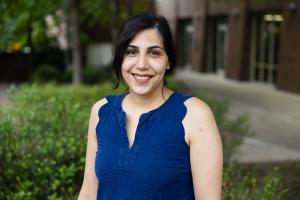
Jessica Fish is an Associate Professor in Family Science and Behavioral and Community Health at the University of Maryland School of Public Health. She co-directs the UMD Prevention Research Center and serves as Faculty Affiliate at the Maryland Population Research Center. Her research examines LGBTQ+ health equity with focus on substance use, mental health, and family systems. Dr. Fish's work identifies modifiable factors contributing to health disparities to inform prevention strategies and policies. She holds a Ph.D. in Family and Child Sciences from Florida State University and will accept PhD advisees starting 2025-2026.
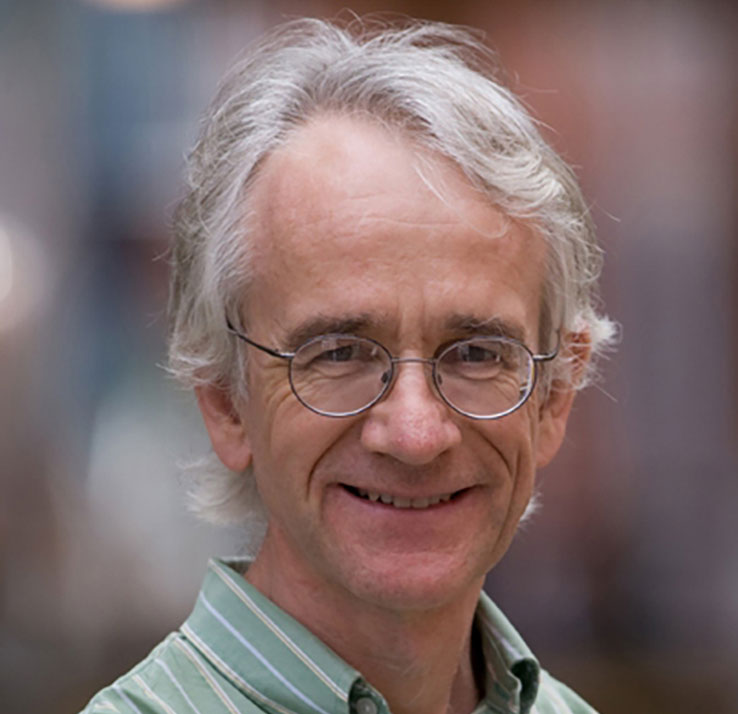
Matthew Jones is a NERC Independent Research Fellow at the University of East Anglia's School of Environmental Sciences, specializing in wildfire-climate interactions and carbon cycle dynamics. His research focuses on quantifying wildfire impacts under climate change, mitigating fire risks, and advancing global carbon budget monitoring. Co-leading the State of Wildfires Report, he evaluates extreme fire events' causes and future risks. As part of the Global Carbon Project, he tracks human-driven climate impacts through emissions and land-use data. Jones holds a PhD in Physical Geography from the University of Exeter (2018) and has conducted postdoctoral research at Swansea University and UEA. He has secured NERC funding to study wildfire geography and leads projects on lightning fires, prescribed burns, and fire management strategies. Key research areas include fire emissions modeling, climate mitigation strategies, and interdisciplinary fire science. His work has been recognized with awards like the NERC Fellowship and CarbonBrief's Top Climate Paper. Jones actively collaborates internationally, contributing to UN Sustainable Development Goals focused on climate action and ecosystem protection.
Prof. Zoltán Károly Lakner is a Professor at the Hungarian University of Agriculture and Life Sciences, affiliated with the Department of Agricultural and Food Economics. His research focuses on applying dynamic systems theory, econometrics, and artificial intelligence to analyze food supply networks, agricultural policy, and socio-economic systems in Africa and Central Asia. Key areas include big-data modeling of complex systems, game-theory applications, and open-source intelligence tools in innovation policy. He leads the SafeConsume H2020 project, developing strategies to mitigate foodborne illness risks through consumer education and prototype tools. His work spans food policy analysis, climate change impacts on agriculture, and ethical food consumption behaviors. Education details not explicitly provided in text. Research interests emphasize quantitative methods in agricultural economics, econometrics-driven policy analysis, and interdisciplinary approaches to global food challenges. Recent publications explore bioenergy expansion effects, water tax policy implications, and post-Paris Agreement green finance trends. No scientific awards explicitly stated in the text. Grants include the Horizon 2020 SafeConsume project. Active in advising and mentoring, though specific student names are not listed. Affiliated with the Szént István Campus in Gödöllő, contributing to institutional research and policy initiatives.
Dr. Israel Orimoloye is a Lecturer in the School of Environment, Geography, and Sustainability at Western Michigan University. He holds dual Ph.D. degrees in Disaster Management (University of the Free State, 2022) and Geography (University of Fort Hare, 2018). His research focuses on remote sensing, GIS applications, climate science, and disaster risk management. He has authored over 65 publications and contributed to global policy frameworks through collaborations with institutions in South Africa, Canada, India, and beyond. Education: Ph.D., Disaster Management, University of the Free State (2022) Ph.D., Geography, University of Fort Hare (2018) MTech., Meteorology, Federal University of Technology (2015) BTech., Meteorology, Federal University of Technology (2010) Research Interests: His work integrates Earth Observation (EO) data and climate models to address drought, land degradation, and environmental hazards. Key areas include: Remote sensing for disaster monitoring GIS-driven climate impact assessment Sustainable resource management Community resilience strategies Publications: His 15 most recent articles (2020–2025) emphasize drought assessment, climate adaptation, and participatory risk management. Topics span geospatial modeling, flood dynamics, and policy integration. Grants & Advising: He leads projects funded by the Central Research Fund and collaborates internationally. No listed advisees are currently available. Labs & Teams: Affiliated with WMU's environmental research initiatives, focusing on spatial data science and disaster mitigation.
Dr. Usman T Khan serves as Associate Professor and Department Chair in Civil Engineering at the Lassonde School of Engineering, York University. A licensed Professional Engineer (P.Eng), he specializes in Water Resources Engineering with a focus on urban water systems and sustainable infrastructure solutions. His academic credentials include: PhD in Environmental Engineering from University of Victoria (2011-2015) with thesis on 'Environmental prediction and risk analysis using fuzzy numbers and data-driven models' MSc in Civil Engineering from University of Calgary (2008-2010) researching 'Bioretention cell efficacy in cold climates' BSc in Civil Engineering from University of Calgary (2003-2008) focusing on 'Water to wastewater: Closing the loop' Dr. Khan's research program addresses critical challenges in urban hydrology , particularly flood risk assessment and uncertainty analysis under changing climate conditions. His work integrates big-data methodologies with traditional hydrological modeling to improve water quality and quantity predictions in urban environments. He has developed innovative approaches for sustainable stormwater management and has tested technologies like bioretention cells in challenging climatic conditions. His research specialties encompass: Urban flood risk modeling and mitigation Climate change adaptation for water infrastructure Advanced hydroinformatics applications Sustainable stormwater management systems Data-driven water quality assessment Dr. Khan's research excellence has been recognized with multiple awards: NSERC Master's Award for graduate studies NSERC Doctoral Award for PhD research NSERC Postdoctoral Fellowship Andy Farquharson Teaching Excellence Award He has collaborated extensively with municipal governments on stormwater management projects and watershed planning initiatives. Dr. Khan's teaching philosophy is reflected in his completion of multiple pedagogical certifications including Instructional Skills Certificate (2016), Design Engineering & Instruction Certificate (2014), and Teaching Fundamentals Certificate (2012). His professional engagement includes membership in key organizations: Professional Engineers Ontario, International Association of Hydrological Sciences, International Water Association, Canadian Society of Civil Engineering, Canadian Water Resources Association, Canadian Association on Water Quality, and Canadian Geophysical Union.
Michael Burke is a Professor and Earl P. and Ethel B. Koerner Chair in Strategy and Entrepreneurship at Tulane University’s A. B. Freeman School of Business. He holds affiliations with the Stone Center for Latin American Studies and serves as Chair of Tulane’s Social-Behavioral Institutional Review Board. His academic journey includes roles at New York University (1985–1991) and visiting professorships at the University of Sheffield (2004). Education: Ph.D. in Psychology (Illinois Institute of Technology, 1982), M.S. in Industrial Psychology (Purdue University, 1980), and B.A. in Psychology (University of Notre Dame, 1977). Burke’s research focuses on Organizational Behavior and Occupational Safety , with emphasis on teamwork effectiveness, safety training, and interrater agreement methodologies. His work spans cross-cultural studies (e.g., Peru, Colombia, Mexico) and integrates psychological principles with practical workplace applications. Key contributions include over 60 publications, including seminal articles on safety training efficacy, meta-analytic methods, and climate assessment. His awards include the 2023 Tulane Convergence Award for interdisciplinary collaboration and multiple Dean’s Excellence Awards (2014–2017). He has supervised 2 dissertations/theses in recent years and actively contributes to academic governance, serving as Editor of Personnel Psychology (2007–2010) and on editorial boards for major journals. Burke’s international experience includes collaborations in Latin America, Australia, and Europe, leveraging his fluency in French.
Joshua French is an Associate Professor and Director of Data Science Programs at the University of Colorado Denver, housed within the Department of Mathematical and Statistical Sciences in the College of Liberal Arts and Sciences. His research focuses on spatial statistics, epidemiology, environmental health, and statistical methodology with applications to public health and climate science. He leads initiatives in data science education and collaborates on projects addressing disease surveillance, environmental risk assessment, and geospatial modeling. Key research areas include developing statistical methods for cluster detection, analyzing NTM infection risks linked to environmental factors like water quality and trace metals, and evaluating climate model projections. His work integrates spatial analysis with real-world applications in public health and environmental science. French’s contributions span algorithmic innovations (e.g., PreCoG scan method) and interdisciplinary projects such as the MORACS clinical trial and aerosol impact studies on Arctic climate change. He advises the Data Science Programs at UC Denver and maintains active collaborations with institutions like National Jewish Health Hospital. His research has been published in top-tier journals and methodological packages, including 'smerc' and 'smacpod', reflecting his commitment to advancing statistical tools for spatial and environmental data analysis.
Jason Sowell is an Associate Professor and Director of Graduate Studies in the Department of Architecture at the University at Buffalo’s School of Architecture and Planning. He holds a Bachelor of Architecture from the University of Tennessee and a Master of Landscape Architecture from Harvard University. His research focuses on climate change adaptation, particularly how landscape-oriented infrastructures guide urban resilience through housing and management practices. Sowell has been recognized for his work with awards from institutions like the CELA (2010), Cleveland’s Urban Design Collaborative (2007), and the Texas Society of Architects (2020). He previously directed the Master of Landscape Architecture Program at The University of Texas at Austin and co-founded SSAU, a design studio exploring socially-oriented interactions between landscape and architecture. Education: Bachelor of Architecture, University of Tennessee Master of Landscape Architecture, Harvard University Research Highlights: Urban adaptation to climate change via flood mitigation and resilient infrastructures Landscape technologies for housing and energy systems Exhibitions at Venice Biennale and Pan American Biennale Awards & Honors: 2010 CELA Teaching Award 2007 Irishtown Bend Proposal Award 2016 Sobradinho Housing Competition Award 2020 Brownie Neighborhood Park Award Professional Contributions: Directed MLA program at UT Austin Principal of SSAU studio (projects include Farm Lot Health-Centered Development)
Charles J. Vörösmarty is a Professor of Civil Engineering at The City College of New York and Founding Director of the Environmental Sciences Initiative at the CUNY Advanced Science Research Center. He leads the Environmental Crossroads Group, focusing on global water systems, climate interactions, and FEWS (Food-Energy-Water Systems) resilience. His research integrates hydrology, geospatial data, and engineering to address water security, climate change, and infrastructure strategies. Educational background: Ph.D. in Environmental Sciences, though specific institution details are not provided in the text. Professional experience includes over 25 years at the University of New Hampshire, where he founded the Water Systems Analysis Group (1992–2008). Research interests include modeling water cycle dynamics, anthropogenic impacts on water resources, reservoir engineering effects, and sustainable development goals. He emphasizes nature-based solutions and engineered infrastructure for FEWS resilience, with recent work on private-sector water security investments and U.S.-Hungarian regional redevelopment projects. Publications (2023–2024) highlight FEWS frameworks, climate extremes, and interdisciplinary strategies for resource management. He advises governments and academic partners on infrastructure integration. Grants include leadership roles in NASA, NSF, and UN initiatives, including co-chairing the Global Water System Project (2004–2015). Labs/Teams: Environmental Crossroads Group, CUNY ASRC; previously led Water Systems Analysis Group at UNH. Collaborates with UN agencies, private funds (e.g., UBS, PGGM), and national panels (e.g., Arctic Research Commission, NRC).
Richard K. Norton is a Professor at the University of Michigan’s Taubman College of Architecture and Urban Planning, with a joint appointment in the Program in the Environment (PitE) under the College of Literature, Science, and the Arts. He holds a Ph.D. in City and Regional Planning and a J.D. from the University of North Carolina at Chapel Hill, along with master’s degrees in Public Policy and Environmental Management from Duke University. His research focuses on sustainable development, land use planning, planning law, and coastal management, particularly along the Laurentian Great Lakes. He actively contributes to the Michigan Association of Planning (MAP), leading legislative reforms for planning and zoning laws, including successful amendments in 2006 and 2008. He has authored amicus curiae briefs for the Michigan Supreme Court and U.S. Court of Appeals on planning disputes. Teaching areas include Climate Adaptation Planning , Planning Law , and Environmental Planning . Recent publications emphasize coastal resilience, legal frameworks for shoreline management, and citizen perceptions of environmental policies. He leads projects like the Resilient Great Lakes Coast initiative and has secured grants, including a $5M NSF award for transboundary water research. Notable awards include the 2024 ACSP Top Reviewer Award. His work bridges academia, policy, and community engagement, addressing challenges in climate adaptation, coastal governance, and sustainable urban development.
Negin Alemazkoor is an Assistant Professor at the University of Virginia's School of Engineering and Applied Science, specializing in interdisciplinary research on infrastructure resilience. Her work focuses on developing AI-driven methodologies for analyzing interconnected systems like power grids, urban flood models, and transportation networks under uncertainty. Key areas include enhancing grid reliability through multi-fidelity modeling, hurricane evacuation equity analysis, and precision-compression techniques for large-scale data. She co-leads a NSF-funded initiative to democratize AI education in high schools. Her research integrates graph neural networks, physics-informed models, and machine learning to address challenges in energy systems, environmental monitoring, and disaster response. Notable projects include hurricane-induced power outage risk analysis under climate change and precision guarantees for smart-meter data analytics. She emphasizes computational efficiency and multi-fidelity approaches to balance accuracy with resource constraints. Recent contributions span AI applications in flood forecasting, renewable energy integration, and infrastructure cybersecurity. Her NSF grant aims to create inclusive AI curricula, reflecting her commitment to education and societal impact. She is affiliated with UVA Engineering’s research initiatives on resilient systems and data-driven decision-making.
Richard L. Smith is the Mark L. Reed III Distinguished Professor of Statistics and holds a joint appointment in Biostatistics at the University of North Carolina's Gillings School of Global Public Health. He also serves as Director of the Statistical and Applied Mathematical Sciences Institute. With a PhD from Cornell University (1979) and prior roles at Imperial College, University of Surrey, and Cambridge University, his academic career spans over four decades. His research focuses on extreme value theory, spatial statistics, time series analysis, and applications to climate science, environmental pollutants, and air pollution epidemiology. He has authored influential works such as the Handbook of Environmental and Ecological Statistics and contributed to studies linking air quality to health outcomes in California. Dr. Smith has received prestigious awards including the Guy Medal in Silver from the Royal Statistical Society and is a Fellow of both the American Statistical Association and the Institute of Mathematical Statistics. He actively serves on boards like the EPA Science Advisory Board and the Board of Reviewing Editors of Science . He teaches advanced courses such as Time Series and Multivariate Analysis (STOR 754) and Bayesian statistical methods. His work bridges theoretical statistics with real-world challenges in environmental and public health domains.
Gordon Kingsley is a Professor and Director of Graduate Studies in the School of Public Policy at Georgia Institute of Technology (Georgia Tech). He specializes in public management, policy implementation, STEM education policy, and transportation policy. His research focuses on inter-sector partnerships and their impact on organizational structure and human capital development, with a focus on STEM education and transportation privatization. He has consulted for numerous U.S. government agencies and authored over 100 peer-reviewed articles and reports. Education includes a Ph.D. in Public Administration from Syracuse University, an M.S. in International Affairs from Columbia University, and a B.A. in International Affairs and Economics from American University. Research interests span policy processes, public management innovation, and the evaluation of partnerships in STEM education and infrastructure. Notable works include studies on renewable energy policy in Europe, adaptive management in environmental regulation, and contracting practices in transportation agencies. Teaching responsibilities include courses such as PUBP-3230 (STEM Education Policy), PUBP-6012 (Fundamentals of Policy Processes), and PUBP-8520 (Scope & Theory of Public Policy). He has advised multiple state and federal agencies on policy implementation and contracting strategies. Key projects include evaluations of the Georgia Department of Transportation’s consultant management systems and the development of frameworks for public-private partnerships. His work emphasizes practical solutions for improving governance efficiency and stakeholder collaboration.
Isabela Mares is the Arnold Wolfers Professor of Political Science and Director of the European Union Center at Yale University. Her research focuses on comparative politics of Europe, political economy, electoral systems, and social policy reforms. She has authored five books, including Conditionality and Coercion: Electoral Clientelism in Eastern Europe (2018) and Protecting the Ballot: How First Wave Democracies Ended Electoral Corruption (2022). Her work has received prestigious awards such as the William Riker Award and Gregory Luebbert Award. Mares has taught at Stanford, Columbia, and held visiting roles at SciencesPo and Central European University. Her research examines electoral corruption, taxation, and democratization processes. Education & Academic Background PhD in Political Science (not explicitly stated, inferred from roles) Prior faculty positions at Stanford University and Columbia University Visiting Professorships at SciencesPo (Paris) and Central European University (Budapest) Research Interests Mares specializes in comparative politics with a focus on electoral integrity, clientelism, taxation, and welfare state development. Her work bridges historical and contemporary cases, analyzing how institutions shape political and economic outcomes. Recent projects include studies on antiparliamentarism and historical democratization processes. Recent Article Trends Her recent publications address modern challenges such as energy transition policies, populism’s impact on social protection, and historical electoral reforms. These articles emphasize institutional resilience, voter behavior, and the political economy of reform. Awards & Recognition Member of the American Academy of Arts and Sciences Simon Guggenheim Foundation Fellow Multiple APSA awards for books and papers Teaching & Mentorship Mares teaches courses on political economy, comparative politics, and historical analysis. At Yale, she co-organizes the Seminar in American and Comparative Political Behavior. While specific advisees are not listed, her mentorship is evident through collaborative research projects and co-authored works (e.g., with Lauren Young). Labs & Collaborations She leads the European Union Center at Yale, fostering interdisciplinary research on European politics. Her work often involves mixed-methods approaches, combining qualitative interviews and quantitative surveys in field-based studies.
Axel Moehrenschlager is an Adjunct Professor in the Department of Biological Sciences at the University of Calgary's Faculty of Science. He concurrently serves as Director of Conservation & Science at the Calgary Zoological Society and holds adjunct roles at Clemson University (Adjunct Associate Professor) and New Zealand's University of Canterbury (Erskine Fellow). His expertise spans conservation translocations, species reintroduction, and community-based conservation, with a focus on leveraging science for global biodiversity preservation. Moehrenschlager earned a B.Sc. from the University of Alberta (1993) and a D.Phil. in Zoology from Oxford University (2001). He chairs the IUCN's Conservation Translocation Specialist Group, driving policy integration of the IUCN Reintroduction Guidelines. He advises the UN Equator Prize and the St. Andrews Prize for the Environment, emphasizing sustainable conservation practices. His research integrates ecological, social, and policy dimensions, addressing challenges like sylvatic plague in prairie dogs, amphibian reintroductions, and swift fox genetics. Publications highlight innovative methodologies in conservation translocations, climate change impacts, and community-led conservation. His work bridges academic research with practical applications, aiming to harmonize biodiversity conservation with human well-being. Moehrenschlager has received the Erskine Fellowship (University of Canterbury) and contributed to over 30 peer-reviewed articles and book chapters. His leadership at the Calgary Zoo's Centre for Conservation Research fosters international collaborations, focusing on Africa and Madagascar. Current projects explore translocation success metrics and the ethical dimensions of conservation actions.