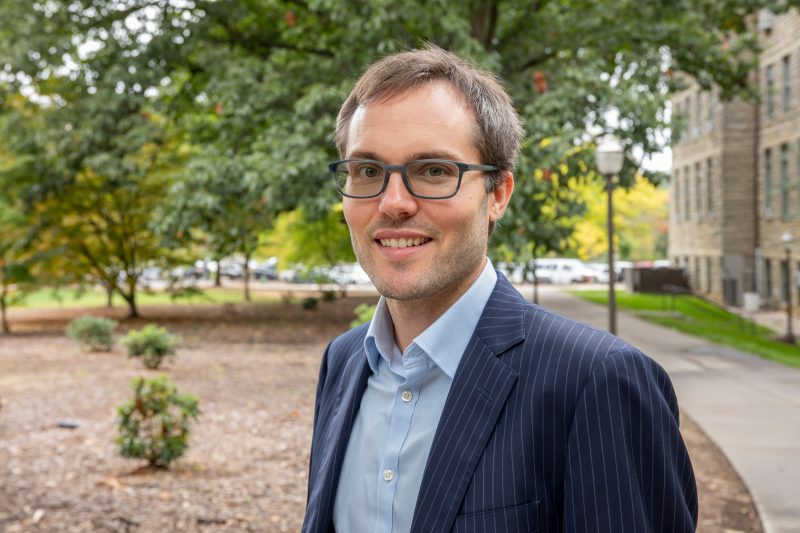
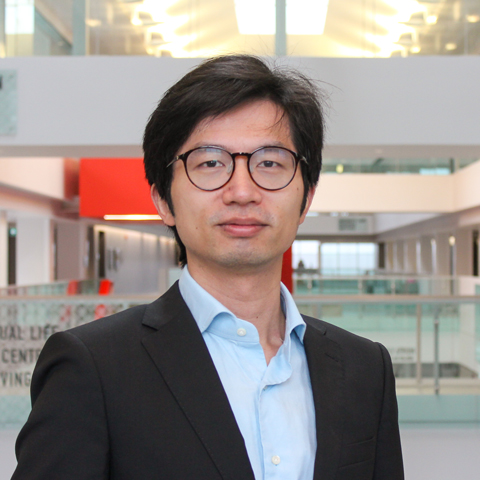
Jessica Fish is an Associate Professor in Family Science and Behavioral and Community Health at the University of Maryland School of Public Health. She co-directs the UMD Prevention Research Center and serves as Faculty Affiliate at the Maryland Population Research Center. Her research examines LGBTQ+ health equity with focus on substance use, mental health, and family systems. Dr. Fish's work identifies modifiable factors contributing to health disparities to inform prevention strategies and policies. She holds a Ph.D. in Family and Child Sciences from Florida State University and will accept PhD advisees starting 2025-2026.
Chris Adrian is a Senior Lecturer in the Department of Accounting at Monash University, specializing in corporate governance, financial accounting, and auditing. His research explores intersections between environmental factors (e.g., climate change, natural disasters) and corporate financial practices, alongside political influences on capital markets. Prior to Monash (since 2017), he held a Lecturer position at Macquarie University. Chris earned his PhD in 2015, focusing on corporate governance stakeholder perceptions. His work has been published in journals like Journal of Business Ethics and International Journal of Auditing , with recent studies examining audit fee dynamics during natural disasters, political connections in audit committees, and pandemic resilience through sustainability disclosures. Education: PhD (2015) Professional Affiliations: American Accounting Association (AAA), European Accounting Association (EAA), Accounting and Finance Association of Australia and New Zealand (AFAANZ) His research projects include applying large language models to sustainability reporting standards and analyzing charity performance during climate disasters. He is currently accepting PhD students and serves as an ad-hoc reviewer for multiple accounting journals. Key themes in his articles include audit risk mitigation during political shifts, disaster-driven corporate tax behaviors, and pandemic impacts on firm valuation. His work consistently bridges financial reporting practices with broader socio-environmental challenges.
John Bovay is an Associate Professor and Kohl Junior Faculty Fellow in the Department of Agricultural and Applied Economics at Virginia Tech. He leads the department's Extension program and focuses on food and agricultural policy, particularly environmental and health impacts. His roles include membership in the Chesapeake Bay Executive Council's Scientific and Technical Advisory Committee (2024–2026) and Chair of the AAEA Specialty Crop Economics Section (2024–2025). Education: Ph.D. in Agricultural and Resource Economics from UC Davis (2014), B.A. in Mathematics and Politics from Washington and Lee University (2007). His research integrates economic analysis of public policies, including food safety inspections, climate-smart agriculture, SNAP participation, and food waste. Notable projects include a USDA-NIFA grant (2022–25) on vegetable on-farm loss and a study on GMO labeling laws. Teaching includes a Ph.D. course on empirical market and policy analysis with Anubhab Gupta. Selected Awards: Southern Agricultural Economics Association Emerging Scholar (2021), Distinguished Young Alumnus (2017). Outreach efforts emphasize Extension programs like the 'Virginia Sustainable Farms and Agribusiness Education Initiative' and leadership in Virginia Cooperative Extension's Agribusiness Management & Economics team. Grants include the USDA's Climate-Smart Agriculture Alliance and I2GROW initiatives.
Pedro Schilling De Carvalho is a Lecturer in Law at University College London's Faculty of Laws, specializing in Financial and Environmental Law. He holds a PhD in Law and Finance from the University of Cambridge, where he received a Cambridge International Scholarship, as well as an LLM in Commercial Law from Cambridge (supported by a Chevening Scholarship) and a LLB from the University of São Paulo, Brazil. His academic journey includes positions at: University of Cambridge (Research Affiliate, Judge Business School and Lauterpacht Centre for International Law) London School of Economics (Guest Lecturer) University of Edinburgh (Early Career Fellow in Financial Law and Regulation) Max Planck Institute for Comparative and International Private Law (Visiting Fellow) Harvard Law School (Visiting Fellow) Pedro's research focuses on financial regulation, corporate finance, environmental law, international economic law, and sustainable finance. His work explores regulatory diffusion in sustainable finance, international financial governance in multipolar contexts, and the intersection of corporate governance with environmental and social concerns. He has published in peer-reviewed journals such as the Journal of Financial Regulation and has been cited by institutions including the International Monetary Fund. His recent publications demonstrate a strong focus on sustainable finance frameworks, regulatory coordination across jurisdictions, and the evolving landscape of financial technology regulation globally. His work spans theoretical analysis of corporate governance models alongside practical regulatory frameworks for emerging financial technologies and sustainable investment. Pedro has received several prestigious awards and recognitions: Cambridge International Scholarship Chevening Scholarship Max Planck Institute & Cambridge Scholarship Certified peer-reviewer by the Equitable Growth, Finance and Institutions Global Practice He has actively contributed to policy development through written evidence to the UK Parliament Committee on the Future Relationship with the European Union, consultancy work for the World Bank Group's Legal Vice Presidency, the Green Climate Fund, and the Bill & Melinda Gates Foundation. His professional activities include being Co-Director of the UCL Centre of Law and the Environment, academic member of the European Corporate Governance Network, and member of the Leadership of the Commission on Arbitration and ADR at the International Chamber of Commerce. Pedro has extensive experience as both a transactional and dispute resolution lawyer, having worked with prominent law firms and served as Chief of Staff at the Commercial Law Chamber of the São Paulo Supreme Court.
Ye Cai is an Associate Professor of Finance at the Leavey School of Business, Santa Clara University, where she has taught since 2010. She specializes in empirical corporate finance, focusing on mergers and acquisitions, board networks, entrepreneurship, venture capital, and corporate social responsibility. Her research appears in top-tier journals such as the Journal of Financial Economics and Review of Financial Studies. Education: B.A. in Economics, Peking University M.A. in Economics, Vanderbilt University Ph.D. in Finance, University of North Carolina at Chapel Hill Her research explores themes like the environmental impact of corporate decisions, governance structures, and the interplay between religion and financial reporting. Recent work addresses ESG greenwashing, SEC regulations, and carbon emission strategies in competitive markets. Awards: Leavey Extraordinary Teaching Award ACE Outstanding Faculty Award Teaching focuses on Financial Management, Corporate Financial Policy, and Time Series Forecasting. Advising and grant activities are not explicitly detailed in available texts. Active in academic networks and contributes to discussions on sustainability, board governance, and venture capital ecosystems.
Gary F. Peters is the Senior Associate Dean and S. Robson Walton Endowed Professor of Accounting at the Sam M. Walton College of Business, University of Arkansas. He has been a key academic and administrative leader since joining the university in 2003, previously serving as Department Chair (2016–2023) and Director of the Master of Accounting Program (2006–2016). His leadership includes overseeing faculty resources, strategic planning, AACSB accreditation, and major fundraising initiatives, including a $10 million gift to name the William Dillard Department of Accounting. PhD, University of Oregon MS, University of Missouri - Columbia BS in Accounting, Arkansas Tech University His research centers on audit risk, corporate governance, accounting disclosure, and professionalism, with a focus on the roles of audit committees, internal and external auditors. His work bridges accounting with information systems and ethics, appearing in top journals like The Accounting Review , Journal of Accounting Research , MIS Quarterly , and Journal of Business Ethics . His recent publications explore sustainability reporting, SOX compliance, executive compensation, and the impact of IT on auditing. Analysis of his recent articles reveals a strong trend toward interdisciplinary research, particularly at the intersection of accounting, governance, and sustainability. His work increasingly examines non-financial disclosures, ESG assurance, and the role of technology in audit quality and compliance. Many studies involve large-scale empirical analyses using public firm data, often co-authored with leading scholars in governance and internal audit. Joseph A. Silvoso Faculty Merit Award University of Arkansas Honors College Distinguished Faculty Award S. Robson Walton Endowed Chair Southeastern Conference Academic Leadership Development Fellow Walton College Outstanding All-Around Faculty Member Glezen and D. Cook Endowed Chairs KPMG Research Grant Bank of America Research Fund Nolan E. Williams Lectureship Gary Peters has led major curriculum and program development initiatives, including the creation of the Integrated Master’s path, the online undergraduate accounting degree, and the Master of Professional Accounting. He has been instrumental in securing endowed chairs, scholarships, and strategic funds. He advises on faculty policy, accreditation, and budgeting, and has expanded student experiences through programs like the Rome Accounting Program and enhanced analytics curriculum. His leadership extends to national service, including presidency of the Federation of Schools of Accounting and roles in AACSB accreditation committees. He has played a central role in building the Department of Accounting’s research culture and strategic direction, leading multiple AACSB reviews and developing the department’s Strategic Focus Area document. His philanthropic efforts have established numerous scholarships and strategic use funds, and he has expanded advisory boards at both departmental and college levels.
Associate Professor Wing Wah Tham holds a position at the School of Banking and Finance within the University of New South Wales (UNSW) Business School . He also maintains affiliations as a Marie Skłodowska-Curie Fellow and a Tinbergen Institute Fellow . Previously, he served as an Associate Professor of Financial Econometrics at the Econometric Institute, Erasmus School of Economics (2014–2016) and as an Assistant Professor there (2009–2014). Education : PhD, University of Warwick MSc, Imperial College, UK BEng, Nanyang Technological University of Singapore Research Interests : Professor Tham specializes in econometrics , market microstructure , asset pricing , and financial innovation . His work bridges quantitative finance with applications in artificial intelligence and sustainable development goals (SDG) , focusing on reproducibility, liquidity dynamics, and policy impacts. Recent Publications span high-impact journals like Journal of Finance , Management Science , and Review of Financial Studies , addressing topics such as nonstandard errors , AI for SDG mapping , and toxic arbitrage . These works are frequently presented at American Finance Association and Econometric Society meetings. Scientific Honors : PanAngora Crowell Second Prize Midwest Finance Association Best Paper Award Literati Network Awards for Excellence ARC Discovery Projects Grant Additional Activities : He has served as a visiting scholar at the Haas Business School, UC Berkeley and National University of Singapore , with interests in triathlons and ocean swimming.
Dr. Mohammed Mazumder is a faculty member at Newcastle Business School, Northumbria University, where he has been contributing since January 2020. He leads the MSc Forensic Accounting programme and serves as the Departmental Research Ethics Lead. He teaches Management Accounting and Analytics at the undergraduate level and Financial Planning and Control at the postgraduate level. His educational background includes a PhD from Tohoku University and an MBA in Accounting from the University of Dhaka, where he also taught for over ten years. He is a Fellow of the Cost and Management Accountant (FCMA) and a Fellow of the Higher Education Academy (FHEA), reflecting his dual expertise in professional accounting and academic teaching. Dr. Mazumder’s research focuses on corporate reporting, sustainability accounting, CSR, corporate governance, and forensic accounting , with empirical studies centered on Bangladesh and Japan. His work explores board composition, gender diversity, cybersecurity disclosures, anti-corruption reporting, and SDG disclosures in emerging economies. The research employs discourse analysis, impression management theory, and quantitative methods to assess disclosure quality and governance effectiveness. His recent publications (2021–2025) reveal a strong trend toward ethical, environmental, and governance-related disclosures in banking and insurance sectors of developing economies. Topics include climate change rhetoric, post-cyber heist disclosures, and SDG reporting, indicating a growing emphasis on transparency and accountability in corporate narratives. His scholarly contributions have appeared in reputable journals such as Asian Review of Accounting , International Journal of Disclosure and Governance , Journal of Accounting in Emerging Economies , and Business Ethics: A European Review . While no specific awards are mentioned, his publication record in CABS/ABDC-ranked journals reflects significant academic recognition. Dr. Mazumder actively contributes to academic governance as Research Ethics Lead and programme director. Though no current students are listed, his leadership roles suggest involvement in postgraduate supervision and curriculum development. He has not indicated part-time status and appears to be a full-time, active academic with no signs of retirement or former staff status. He is associated with no named research labs or teams, but his work is highly interdisciplinary, bridging accounting, ethics, sustainability, and governance. Future research directions likely include expanding comparative studies between Japan and South Asia, deepening analysis of SDG disclosures, and exploring digital risk reporting in financial institutions.
Thomas Riise Johansen is a Professor in the Department of Accounting at Copenhagen Business School (CBS), where he has been affiliated since completing his PhD in Accounting from CBS in 2005. Prior to joining CBS, he worked at Ernst & Young (1996-2005), bringing practical industry experience to his academic role. His primary academic home is within the Department of Accounting, focusing on critical intersections between auditing practices and corporate governance structures. His research centers on auditing, sustainability accounting, corporate governance, and annual report disclosure. Key investigations include: The relationship between board networks and auditor selection Value and barriers in annual report innovation Performance evaluation systems within audit firms Public oversight mechanisms in auditing Information systems for sustainability reporting Accountability dynamics between employees and organizations His work bridges academic rigor and practitioner relevance, addressing evolving regulatory landscapes and market demands. Analysis of his 15 most recent publications reveals consistent focus on audit quality determinants, sustainability reporting evolution, and governance-audit interdependencies. Recent work increasingly examines EU regulatory frameworks (Taxonomy Regulation, climate risk disclosure) and Big 4 governance structures, reflecting growing emphasis on public interest accountability in auditing. He actively supervises master's theses in accounting, auditing, and corporate governance. His current research portfolio includes projects on: Revisors' declaration (FSR) Enforcement impact on financial reporting Annual report disclosure value enhancement TIME MIRROR: Accounting for Green Transition Diversity in accounting careers Behavioral aspects of auditor professionalism
Dr Hao Li is a Lecturer in Finance at Cardiff Business School, Cardiff University since 2021. Previously, he held positions as Senior Lecturer in Finance at Swansea University (2020-2021) and Assistant Professor in Finance at Heriot-Watt University (2014-2019). His academic career follows industry experience as an equity analyst and senior research fellow in investment trusts. Education : PhD in Finance (University of Stirling), MSc in Investment Analysis (University of Stirling), BA in Business Administration (Sun Yat-sen University) Teaching : Leads MSc Finance and MSc Finance with Financial Technology programs; teaches modules on investment management and corporate reporting. Dr Li's research focuses on Corporate Governance and Corporate Finance , with publications examining financial analyst networks, cross-border M&A risks, cash management strategies, and executive compensation impacts. His work spans high-impact journals like International Review of Economics & Finance and Journal of Environmental Management . Research Trends : Recent articles analyze social network effects in financial forecasting, climate risk in international investments, and cash flow dynamics under geopolitical uncertainty. Methodologically, his work combines empirical analysis of UK, African, and global markets with theoretical governance frameworks. Scientific Awards : Fellow of Higher Education Academy (FHEA) Supervision : Currently supervising PhD student Mengjia Li. His professional trajectory reflects expertise in academic finance, industry experience in equity analysis, and interdisciplinary applications in environmental and geopolitical risk contexts.
Dr. Felix Mezzanotte is an Assistant Professor of Law at Trinity College Dublin and Director of the MSc in Law and Finance Programme, a collaboration between Trinity Law School and Trinity Business School. He holds a PhD and advanced degrees from the University of East Anglia, SOAS (University of London), and the University of Warwick. His research focuses on the legal dimensions of sustainable finance, corporate sustainability reporting, investor protection, and compliance frameworks within financial markets. Academic Role: Assistant Professor of Law Affiliations: Trinity Law School, Trinity Business School (MSc Programme Director) Professional Experience: Former teaching at Hong Kong Polytechnic University, policy advisor for the World Bank, and visiting scholar at Columbia Law School and others. Dr. Mezzanotte's research interests span sustainable finance regulatory design, ESG compliance, blockchain applications in reporting, and cross-border enforcement challenges. His recent work emphasizes the legal accountability mechanisms linking corporate sustainability disclosures to investor rights under EU directives. Publications reflect a focus on EU sustainable finance policy, with analysis of regulatory complexity, blockchain innovations, and investor protection gaps. Recent articles address double materiality frameworks, impact reporting standards, and the role of robo-advisors in ESG integration. Key Award: Faculty of Business Award for Outstanding Teaching (Hong Kong Polytechnic University) Research Collaborations: European-China Law Studies Association, Columbia Center for Sustainable Investment He supervises doctoral candidates exploring topics like greenwashing prevention, non-financial disclosure obligations, and regulatory enforcement in sustainable finance contexts.
Dr. Qian Zhang serves as Assistant Professor in the Robert M. Buchan Department of Mining at Queen's University's Smith Engineering, leading the Green Mining Value Chain (GreeMVC) Lab. His research develops strategic frameworks for sustainability and resilience throughout mining value chains, with emphasis on climate change mitigation and resource efficiency in global mineral systems. His academic foundation includes a Ph.D. in Urban Engineering from the University of Tokyo (awarded Japanese Government MEXT Scholarship), complemented by MSc and BSc degrees in Environmental Science plus a Minor in Economics from Peking University. Prior to his current role, he conducted postdoctoral research at the University of Victoria and University of Tokyo while consulting for the World Resources Institute on climate-energy initiatives. Dr. Zhang's expertise spans carbon footprint analysis , life-cycle assessment , and industrial ecology applied to mining systems. He employs advanced methodologies including input-output analysis and material flow accounting to model environmental pressures across urban infrastructure and mineral supply chains. His work specifically addresses greenhouse gas accounting, water-energy nexus challenges, and circular economy implementation in resource-intensive sectors. Recent publications reveal strong methodological convergence between artificial intelligence and environmental assessment, particularly in optimizing mining operations through reinforcement learning and geospatial analysis. Key thematic clusters include carbon accounting standardization, critical mineral sustainability, and policy-oriented modeling of environmental pressures throughout mineral value chains. His research program is supported by major competitive grants: NSERC Discovery Grant (2022-2027) SSHRC Institutional Grant (2023, 2025) NSERC Alliance Missions Grant (2023, 2024) Mitacs Accelerate Grant (2023, 2025) NFRF Exploration Grant (2025-2027) NRCan Energy Innovation Program (2025) Dr. Zhang actively mentors a dynamic research group comprising 10+ graduate students and postdocs, securing collaborative funding through institutional and federal channels. His GreeMVC Lab maintains active partnerships with industry leaders and government agencies to translate research into practical sustainability solutions for the mining sector, with current projects focusing on AI-driven fleet management and life-cycle assessment of mineral supply chains. The GreeMVC Lab operates as a multidisciplinary hub with structured mentorship programs, regular industry engagement events, and international collaborations including the COM symposium on sustainable circularity. The lab's physical space in Goodwin Hall supports advanced computational analysis of mining value chains while fostering innovation in green mining technologies through student-led research initiatives.
Svenja Keele is a Lecturer in Human Geography at Monash University, specializing in climate change adaptation, urban resilience, and the political economies of environmental governance. She holds a PhD from the University of Melbourne and has extensive professional experience in environmental policy, sustainability strategies, and climate risk management across multiple sectors. Education: PhD, University of Melbourne Masters of Environment, University of Melbourne Bachelor of Arts/Bachelor of Science (Honours), University of Melbourne Research Interests: Keele’s work examines the intersections of government, business, and expertise in shaping climate adaptation policies. Key themes include climate services markets, urban resilience, disaster governance, and the geographies of marketization. Her methodologies blend qualitative and quantitative approaches, with a focus on spatial inequalities. Projects & Collaborations: Leading projects on commercial climate services mapping and urban resilience market analysis. Collaborations with organizations like the Lloyds Register Foundation and Arup on critical infrastructure resilience. Past roles at the Australian-German Energy Transition Hub and Melbourne Sustainable Society Institute. Awards: Annual Award for Post-Doctoral Scholars (2017) Sustainability Leaders Fellowship (2013) Teaching Excellence Awards in Geography (2016, 2017) Teaching: Courses include APG5122 Corporate Sustainability and ENS5020 Perspectives on Sustainability. Future Work: Ongoing projects focus on consultants’ roles in climate politics and emerging markets in urban resilience. Her research bridges academic inquiry with practical policy advice for governments and private sectors.
Professor Craig Deegan is a leading academic in the field of accounting at the University of Tasmania, where he serves as Professor of Accounting and Acting Head of the Tasmanian School of Business and Economics. He has previously held professorial roles at RMIT University and the University of Southern Queensland, and his work is internationally recognized for its impact and influence. His research focuses on social and environmental accountability , financial accounting , and accounting theory . He is one of the most highly cited accounting researchers globally, with over 38,000 citations on Google Scholar, and has been recognized as Australia’s Research Field Leader in Accounting and Taxation by The Australian . His work has appeared in top-tier journals such as Accounting, Organizations and Society , Critical Perspectives on Accounting , and Journal of Business Ethics . His recent publications reflect a strong trend toward accountability in sustainability , climate change reporting , supply chain ethics , and critical analysis of corporate disclosures . His work often applies legitimacy theory and institutional perspectives to examine how organizations respond to societal expectations. Educational Publishing Awards Australia – Most Outstanding Tertiary Resource Award (2020) Peter Brownell Manuscript Award University of Southern Queensland Award for Excellence in Research Best Paper Awards at nine international conferences Australia’s Research Field Leader in Accounting and Taxation (2018) Craig Deegan has supervised over 25 PhD students and numerous master’s and honours students. He has secured multiple research grants from bodies including the Accounting and Finance Association of Australia and New Zealand and the Blue Economy CRC. His current projects include accountability frameworks for seasonal work, carbon offset methodologies, and stakeholder accountability in biodiversity reporting. He is also involved in consultancy work, including a major report on Tasmania’s hydrogen economy. He leads research teams focused on sustainability accounting, stakeholder engagement, and social auditing, and is deeply involved in advancing both academic knowledge and practical applications in corporate accountability and ethical financial reporting.
Laura T. Starks is a Professor of Finance holding the George Kozmetsky Centennial University Distinguished Chair at the McCombs School of Business, University of Texas at Austin. She has served the school in various leadership roles including interim dean, associate dean for research, chair of the Department of Finance, and graduate adviser. Starks is also a Research Associate of the National Bureau of Economic Research, a Senior Fellow of the Asian Bureau of Finance and Economic Research, and a Fellow of several prestigious organizations including the American Finance Association, the Financial Management Association, the European Corporate Governance Institute, and the Centre for Economic Policy Research. Her research expertise spans multiple areas in finance: Asset Pricing Corporate Finance Corporate Governance Environmental, Social, and Governance (ESG) Issues Corporate Sustainability Institutional Investment Management Climate Finance Starks' recent research demonstrates a strong trend toward ESG and sustainable finance, particularly in the last 5-7 years, with numerous publications examining climate risk disclosure, ESG engagement, corporate ESG profiles, and the relationship between sustainability factors and financial performance. Her work bridges traditional finance with emerging sustainable investment practices, making significant contributions to understanding how environmental and social factors impact institutional investment decisions and corporate behavior. Her significant awards and honors include: 2024 Texas Exes Distinguished Alumnus Award 2022 Swedish Skandia Research Award on Long-Term Savings 2021 Moskowitz Prize for Outstanding Research in Sustainable Finance Fellow of the European Corporate Governance Institute (2024) Fellow of the American Finance Association (2023) Editor's Choice for publication 'Climate Risk Disclosure and Institutional Investors' (July 2023) Starks has served as president of four major academic finance associations: the American Finance Association, the Society for Financial Studies, the Western Finance Association, and the Financial Management Association. She has also been editor of The Review of Financial Studies and associate editor of numerous academic journals. Currently, she serves on advisory committees for AIF Global, FTSE Russell, the Investment Company Institute, Kroner Center for Financial Research, Netspar, Principles for Responsible Investing, and Texas Wall Street Women, demonstrating her influence across both academic and industry spheres of finance.