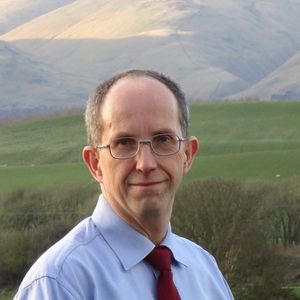
Monika Gabriela Bartoszewicz is an Associate Professor at the Department of Technology and Security , UiT The Arctic University of Norway. Her research spans terrorism, political violence, international security, and migration policy with a focus on societal security and resilience. Email: monika.bartoszewicz@uit.no Office Location: Teknologibygget Tromsø 4.008 Her research interests include: Religion and politics Political and religious radicalisation Culture and identity in political processes Hybrid threats in Arctic regions Epistemic security and knowledge monopolies Recent publications explore dystopian migration discourses, firearm policy impacts, and NATO’s evolving security strategies. She contributes to interdisciplinary projects like Global Security: North–South Partnership and Cultural Heritage in Crisis .
Kathleen Hall is an Associate Professor of Education and Anthropology at the University of Pennsylvania , with secondary appointments in the Department of Anthropology and affiliations in Sociology, Folklore, Social Policy, South Asia Studies, Urban Studies, and Asian American Studies. She received the Michael Katz Excellence in Teaching Award (2001) and the Provost’s Award for Distinguished Ph.D. Teaching and Mentoring (2009). Fulbright Fellow Spencer Dissertation Fellow National Academy of Education Postdoctoral Fellow Her research spans immigration , citizenship , racial and class inequality , public sector policy , anti-terrorism law , and global citizenship education . She authored Lives in Translation: Sikh Youth as British Citizens (Oxford University Press, 2002). Recent publications focus on misinformation dynamics , vaccine hesitancy , media polarization , and public trust in science . She investigates how conspiracy theories and partisan media consumption influence health behaviors, political perceptions, and scientific acceptance. Scientific awards include: Michael Katz Award (2001) Provost’s Award (2009) Fulbright Fellowship Spencer Fellowships Dr. Hall mentors graduate students and advises on projects related to social stratification and science communication . She has contributed to initiatives like the Spencer Advanced Studies Institute Fellowship and the Urban Studies Program .
Anna H. Grummon is an Assistant Professor of Pediatrics (General Pediatrics) and Health Policy at Stanford University School of Medicine. She serves as Director of the Stanford Food Policy Lab , conducting interdisciplinary research at the intersection of nutrition science, public health, and environmental sustainability. PhD & MSPH in Health Behavior, UNC Gillings School (2019) BA with Honors in Human Biology, Stanford (2011) Postdoctoral Fellowship, Harvard T.H. Chan School of Public Health (2019) Her research focuses on evaluating policy interventions to improve dietary quality through: Experimental studies of food labeling (e.g., nutrient warnings, ecolabels) Beverage taxation and food assistance programs Environmentally sustainable diets using simulation modeling Health communication effectiveness across diverse populations Recent publications in Nature Food and JAMA Network Open demonstrate: 35% reduction in dietary carbon footprint through simple substitutions Graphic labels increase attention to nutrition warnings (Appetite 2024) Weight-neutral labels reduce stigma while maintaining effectiveness Major recognitions include: 2024 Clinical Science Research Award (Stanford Pediatrics) 2023 Jules Hirsch Research Innovation Award (The Obesity Society) 2020 UNC Dean’s Distinguished Dissertation Award Dr. Grummon's work has been funded by: National Institutes of Health Robert Wood Johnson Foundation New York City Department of Health and featured in New York Times , Washington Post , and NPR coverage.
Jia-Chi Huang is a Distinguished Professor and Dean of the College of Commerce at National ChengChi University (NCCU) in Taiwan. He has been serving as a Professor in the Department of Business Administration since 2013 and has held various administrative positions including Dean of the College of Commerce since 2023, and previously as Department Chair and Associate Dean. His academic career spans over three decades with continuous research contributions in organizational behavior and human resource management. National Taiwan University - PhD in Human Resource Management and Organizational Behavior (1992-1997) Chung Yuan Christian University - Master's in Business Administration (1988-1990) National Cheng Kung University - Bachelor's in Industrial Management (1984-1988) Huang's research primarily focuses on team composition and management, strategic human resource management, and goal orientation theory. His work explores how team dynamics, leadership styles, and organizational structures influence team performance, creativity, and innovation. He has made significant contributions to understanding transactive memory systems, group affect tone, and their impact on team outcomes. His research bridges theoretical frameworks with practical applications in organizational settings, particularly in the Asian business context. Analysis of Huang's recent publications reveals a consistent research trajectory examining team dynamics and leadership. His work increasingly integrates multiple theoretical perspectives including social learning theory, resource conservation theory, and goal orientation frameworks. There's a clear focus on how emotional and cognitive team processes interact to influence creativity and performance. His research has evolved from individual-level analyses to more complex multilevel models examining team-organization interactions, with particular attention to cross-cultural contexts in East Asia. Academic Research Excellence Award from National ChengChi University Distinguished Professor designation at NCCU Yushan Academic Award from Yushan Financial Holding Emerald 2013 Citation of Excellence Award 2013 Carolyn Dexter Award Nominee from Academy of Management Senior Excellent Teacher Award (20 years) from NCCU IACMR-RRBM Award for Responsible Research in Management (2018-2019) Professor Huang has secured substantial research funding as Principal Investigator, particularly from Taiwan's Ministry of Science and Technology (MOST), with continuous funding spanning multiple three-year projects. His research portfolio demonstrates a remarkable consistency in exploring team dynamics, leadership, and human resource management systems. He has served as editor for several prominent academic journals including the Journal of Management and Business Research (management學報) as Chief Editor since 2019, and previously as Editor-in-Chief for Organizational and Management journal (2009-2012) and Dongwu Journal of Economics and Business (2007-2018). His service to the academic community extends to editorial board positions and leadership roles in professional associations including the Taiwan Organization and Management Association. While specific laboratory information isn't detailed in the provided materials, Professor Huang's research appears to be conducted through collaborative networks involving multiple institutions across Taiwan and internationally. His work frequently involves cross-cultural comparisons and multilevel analyses, suggesting involvement with research teams that span organizational boundaries. His ongoing projects related to leadership humility, team memory systems, and ethical climate indicate active research groups focused on organizational behavior phenomena.
Soobin Choi is a Research Fellow at the University of Wisconsin-Madison and a Civic Science Fellow affiliated with the Morgridge Institute's Science Communication area. Her work bridges environmental communication, science communication, and media psychology to develop evidence-based strategies for public engagement with science across ideological divides. Ph.D. in Communication, University of Michigan Double B.A. in Journalism & Mass Communication and Business Administration, Korea University Research focuses on: Climate change communication frameworks Partisan media effects on scientific understanding Visual and narrative communication strategies Psychological determinants of public engagement Bridge-building across ideological fault lines Media psychology applications in science outreach Recent publications demonstrate trends in: Climate mitigation communication Partisan cue mediation Carbon capture technology perception Flood imagery impact on policy support Efficacy constructs in energy conservation Social media engagement strategies Scientific recognition: Civic Science Fellow
Dr Moe Mojtahedi is a Senior Lecturer at the School of Built Environment, University of New South Wales (UNSW). He earned his PhD in 2014 from the School of Civil Engineering at the University of Sydney. As a certified Project Management Professional (PMP) and Professional Engineer (PEng) accredited by Engineers Australia, Dr Mojtahedi bridges academic research with practical application in construction management and disaster risk reduction. PhD (University of Sydney, 2014) MEngSc (University of New South Wales) B.E. (Industrial), Professional Engineer (Australia) His research focuses on the intersection of construction management , urban resilience , and disaster risk reduction , particularly examining: Climate change adaptation in infrastructure Post-disaster recovery frameworks Lean construction methodologies Decision support systems for risk management Evacuation planning optimization Resilient hospital infrastructure Recent publications analyze trends in disaster science using computational modeling, prefabricated construction for industrial buildings, and AI/ML applications in aged care facility evacuation. His 2025 ChemistryOpen article explores sustainable reaction media for chemoselective processes, demonstrating interdisciplinary reach. Scientific recognition includes: Research Excellence Awards (Engineers Australia, 2012 & 2013) Best Conference Paper (ICES, Salford, 2017) Elsevier Outstanding Contribution Award (International Journal of Project Management, 2017) Learning and Teaching Excellence (UNSW, 2017) As a supervisor, he guides 7 PhD candidates and has mentored 4 graduates, including Mahmoud Ershadi (project management office effectiveness) and Kamyar Kabirifar (construction waste management). He contributes to policy discussions on aligning National Construction Code with UN Sendai Framework and advocates for disaster science integration in built environment practices. His media contributions examine hospital flood risks and climate change adaptation in Australia.
Lee E. Frelich serves as an Adjunct Professor and Director of the Center for Forest Ecology at the University of Minnesota, where his work bridges academic research and applied forest management. His leadership in the Center drives interdisciplinary studies on ecosystem resilience and disturbance dynamics. His academic foundation includes a Ph.D. in Forest Ecology from the University of Wisconsin-Madison (1986), establishing decades of expertise in forest systems. Frelich's research examines boreal and temperate forests through the lens of climate change, invasive species, and disturbance interactions. He pioneered investigations into earthworm invasions as ecosystem engineers, demonstrating cascading effects on soil biota and plant communities. His work on fire-wind-deer disturbance synergies reveals complex legacies in forest regeneration, while recent studies quantify climate-driven shifts in species composition and carbon cycles. This integrative approach combines field experiments with large-scale modeling to address anthropogenic impacts on forest sustainability. Analysis of his 15 most recent publications (2024-2025) shows persistent focus on disturbance interactions (fire, wind, drought) and invasion ecology, with growing emphasis on socio-ecological linkages like outdoor recreation impacts. Methodologically, he increasingly employs structural equation modeling to unravel multi-driver systems, while maintaining strong empirical field components across North American and African ecosystems. His scientific recognition includes: Listing among the top 1% of all scientists globally in Ecology and Environment by Web of Science Frelich's applied work manifests through consulting contracts with the U.S. Army, Air Force, National Forest Service, and National Park Service, where he translates research into management strategies for fire-prone landscapes and invasive species control. Though specific grant histories aren't detailed, his 210+ publications with 332 international coauthors indicate sustained funding across collaborative projects. His media presence (570+ features including The New York Times and Washington Post ) amplifies policy relevance. As Director of the Center for Forest Ecology, he oversees research initiatives examining disturbance legacies and climate adaptation, fostering partnerships between university scientists and land management agencies to develop evidence-based conservation frameworks for North American forests.
Prof. Dr. Rabia Karakaya Polat is a faculty member at Işık University's Faculty of Economics, Administrative and Social Sciences, Department of International Relations. She specializes in Political Science with research interests in Comparative Political Institutions, Political Communication, Turkish Political Life, Migration Governance, and Digital Politics. Education: PhD in Public Policy from De Montfort University (2001-2004), BA in Political Science and International Relations from Boğaziçi University (1995-1999) Awards: Marie Skłodowska–Curie Individual Fellowship, TUBITAK grant Her research focuses on migration policy narratives, refugee governance in Turkey, digital exclusion, and the political implications of technology. She has led projects like DATAMIG (migration control) and COREnet (migration and religious diversity). Recent articles examine Turkey-Ukraine geopolitical cooperation, Syrian refugee responses, and biometric migration policies. Scientific Awards Marie Skłodowska–Curie Programme Individual Fellowships Above Threshold Award TUBITAK, Türkiye She has supervised theses on topics including NATO's role in the Russia-Ukraine crisis and social media's impact on anti-immigration discourse. Her teaching includes courses on Political Theory, Turkey-EU Relations, and Internet Politics.
Dr. Kimberly Schonert-Reichl is a Professor in the Department of Educational and Counselling Psychology, and Special Education within the Faculty of Education at the University of British Columbia. A world-renowned expert in social and emotional learning (SEL), her research focuses on fostering empathy, compassion, and resiliency in children through classroom-based interventions and interdisciplinary biological investigations. Her academic journey includes an MA in Educational Psychology from the University of Chicago, a Ph.D. from the University of Iowa, and postdoctoral training as an NIMH Fellow at the University of Chicago and Northwestern University Medical School. Prior to academia, she worked as a middle school teacher and at an alternative high school for at-risk adolescents. Dr. Schonert-Reichl's research spans SEL program evaluation (Roots of Empathy, MindUp), neurobiological mechanisms of learning, and population-level well-being assessment through the Middle Years Development Instrument (MDI). Recent work reveals growing emphasis on teacher adaptation in SEL implementation, trauma-informed approaches, and compassion training's neural correlates, with increasing international collaboration across 6+ countries. Her scientific contributions are recognized through: 2015 Joseph E. Zins Distinguished Scholar Award 2009 Paz Buttedahl Career Achievement Award 2007 UBC Killam Teaching Prize Fellowships with Mind and Life Institute and Botin Foundation 2004 Vancouver School Board Recognition Award She actively shapes policy as advisor to BC Ministry of Education, OECD Education 2030, CASEL Board Member, and Chair of Hawn Foundation's Scientific Research Advisory Board. Her public engagement includes 300+ presentations to educators and media appearances in The New York Times , CBC , and NPR . Leading the MDI project team, she coordinates cross-sector collaboration with researchers, policymakers, and educators across British Columbia, Australia, Germany, UK, and Croatia to transform child well-being measurement into actionable policy insights at population scale.
Dr. Caroline Buckee is a Professor of Epidemiology at the Harvard T.H. Chan School of Public Health, where she joined as an Assistant Professor in summer 2010 and was promoted to Professor in 2021. She served as Associate Director of the Center for Communicable Disease Dynamics from 2013-2023. Dr. Buckee co-founded and co-directs Crisis Ready (crisisready.io), a joint platform between Harvard's Data Science Initiative and Direct Relief that supports data-driven responses to public health emergencies. She also co-leads the South Asia Climate and Health Research Cluster supported by Harvard's Salata Institute for Climate and Sustainability. Dr. Buckee's research spans infectious disease epidemiology and ecology with a focus on vector-borne diseases including malaria and dengue. Her work examines human mobility and the impact of labor migration on epidemic spread, as well as the intersection of climate risks and human health. Her research group actively supports National Malaria Control Programs in the global south to improve surveillance and analytical approaches. Specific projects include studying the impact of gold-mining on malaria transmission in the Amazon region and investigating how extreme heat affects poor working women in India, with the goal of developing community-led interventions. Dr. Buckee's recent publications demonstrate a strong focus on integrating genomic data with epidemiological modeling, particularly for malaria parasites. Her work addresses critical gaps in understanding spatial disease dynamics, the impact of human mobility on outbreaks, and the development of privacy-preserving methods for using mobile phone data in public health. She has made significant contributions to understanding how environmental factors, including climate change and resource extraction, influence disease transmission patterns. Dr. Buckee has received NIH funding including the R35GM124715 grant for "New approaches to measuring and containing the spatial spread of human pathogens" and R21GM100207 for "An alignment free network approach to analyzing highly recombinant malaria parasites." Her research has been widely cited and has influenced public health responses to infectious disease outbreaks globally. Through Crisis Ready, Dr. Buckee's team works at the intersection of data science and public health emergency response, developing tools and approaches to improve real-time decision-making during crises. Her group maintains strong international collaborations, particularly with researchers and public health officials in malaria-endemic regions of South America and South Asia.
Adam Kleczkowski is a Professor in the Department of Mathematics and Statistics at the University of Strathclyde, where he holds the Global Talent Chair. He is actively involved in research, supervising PhD students, and contributing to public health policy, particularly in epidemiological modeling. University: University of Strathclyde School: Faculty of Science Department: Department of Mathematics and Statistics Position: Professor Email: a.kleczkowski@strath.ac.uk ORCID: 0000-0003-1384-4352 Twitter: @aklecz Education: Doctor of Science in Theoretical Physics, Jagiellonian University (1989) Master of Physics, Jagiellonian University (1984) Adam Kleczkowski's research focuses on mathematical biology, particularly in modeling infectious diseases in human, animal, and plant populations. His work integrates ecological modeling, bioeconomic analysis, and public health, with applications in food security, sustainability in aquaculture, and pollination services. He specializes in parameter estimation for epidemiological systems and develops models to inform disease control strategies. His recent contributions include modeling the spread of COVID-19 in Scottish care homes and analyzing the risks of measles outbreaks due to declining vaccination rates. His recent publications and blog posts reflect a strong trend in combining rigorous mathematical modeling with accessible science communication. He frequently writes for The Conversation and maintains two blogs—'Statistically (in)significant' in English and 'Pandemia 2021' in Polish—covering topics such as tuberculosis, immigration, aging populations, and election data. His scientific work is supported by major funders including NERC, MRC, BBSRC, Scottish Government, and Defra. Scientific Contributions and Outreach: Member, Science Advice and Response Team, Plant Health Centre (Scotland) Expert contributor to Scottish Government on Plant Health business case Contributor to Scottish Government and Public Health Scotland COVID-19 modeling Author of 14 articles in The Conversation (over 1.5 million reads) Regular science blogger and tweeter (@aklecz) He has led or participated in 24 research projects, including international collaborations such as a Memorandum of Understanding with ICRISAT. He has supervised multiple research students and projects, and his work contributes to UN Sustainable Development Goals related to health, food security, and sustainable agriculture. He is also an Honorary Professor at the University of Stirling (2018–2020), reflecting his ongoing academic influence.
Dr. David Connell is an Associate Professor in the Ecosystem Science and Management program within the Faculty of Environment at the University of Northern British Columbia (UNBC). He is affiliated with the Natural Resources and Environmental Studies (NRES) Graduate Program and is actively involved in research, teaching, and graduate supervision. His office is located in the Teaching and Learning Building on the Prince George campus, and he is available for collaboration and media inquiries. His educational background, while not explicitly detailed in the text, is inferred to include advanced degrees in environmental planning or a related field, given his academic position and research output. His research expertise centers on agricultural land use planning and farmland protection, with additional interests in local food systems, community development, Luhmann social theory, and the conservation of British Columbia’s inland temperate rainforest, particularly the Ancient Cedars of the Fraser River Valley. Dr. Connell’s research program is highly applied and policy-relevant, focusing on evaluating legislative frameworks for farmland protection across Canadian jurisdictions, assessing the socio-economic benefits of farmers markets, and exploring non-timber uses of forest ecosystems. His work integrates social science perspectives with environmental planning to address complex sustainability challenges. His recent publications reveal a consistent trend toward policy analysis, interdisciplinary research, and community-based solutions in environmental management. UNBC Award of Excellence in Research (2017) UNBC Award of Excellence in Teaching (2014) Dr. Connell is a dedicated mentor, supervising numerous MA and PhD students in the NRES program on topics ranging from farmland protection to food sovereignty and ecotourism. His research is supported by competitive grants from SSHRC, Agriculture and Agri-Food Canada, and other funding agencies. He leads a research program on agricultural land use planning and has developed practical resources such as strategic planning guides for farmers markets and assessment toolkits for farmland protection. His work contributes significantly to both academic discourse and practical policy development in sustainable land use and community resilience.
Professor Mark Levine is a leading figure in social psychology at Lancaster University , affiliated with the Department of Psychology and multiple interdisciplinary research centers including Security Lancaster (Behavioural Science) , Cyber Security Research Centre (Psychology) , Data Science Institute , and Social Processes . His research lies at the intersection of psychology and technology, focusing on social identity, group dynamics, and prosocial behavior in public and digital environments. His research interests include bystander intervention, violence prevention, urban resilience, cybersecurity, emergency response, public safety, and the role of technology in shaping human behavior. He employs diverse methodologies such as virtual reality, CCTV analysis, smartphone data collection, and computational text analysis. His work is highly applied, informing policy and practice in policing, emergency services, and community safety. The trends in his recent publications reflect a strong interdisciplinary focus, combining social psychology with computer science, criminology, and urban studies. His articles frequently analyze real-world behavioral data from public spaces and digital environments, emphasizing the protective role of group identity in emergencies and the feasibility of technological interventions for societal challenges. Scientific grants and projects he has led include: REASON: Resilient Autonomous Socio-cyber-physical agents (£3.3M, EPSRC) RBOC Network+: Urban resilience in 2050 (£2.25M, EPSRC) Challenging the Bystander Effect via Documentary Film (A$356K, ARC) STRETCH: Technology-enhanced support for older adults (£1.3M, EPSRC) “Being There”: Humans and Robots in Public Space (£2.4M, EPSRC) Advising and grants : He supervises 7 postgraduate research students and has secured over £15 million in research funding from EPSRC, ESRC, DSTL, NCSC, Home Office, and international bodies. He advises government departments, police forces, and city councils on public safety and prosocial behavior. His collaborative work extends to creative industries and third-sector organizations like AGE-UK Exeter. Research groups and collaborations : He is deeply embedded in interdisciplinary networks, contributing to projects involving computer scientists, roboticists, software engineers, and HCI researchers. His affiliations with Security Lancaster and the Data Science Institute reflect his central role in socio-technical research at Lancaster.
Peter Breunig is a Professor at the University of Applied Sciences Weihenstephan-Triesdorf (HSWT), working within the Department of Agriculture, Food, and Nutrition. His academic focus centers on agricultural marketing, market theory, and sustainable food systems. As Coordinator specializing in "Marketing and Management in Agribusiness" and Public Relations lead for the Agriculture department, he plays a significant role in shaping the institution's engagement with industry and the public. His educational expertise is reflected in his comprehensive teaching portfolio covering: Agricultural markets Fundamentals of Agricultural Marketing Marketing and Management of Regional Value Chains (Master) Market theory and market policy Regional marketing Strategies of International Agricultural Marketing (Master) Processes and economics of crop/animal production Professor Breunig's research bridges theoretical market concepts with practical applications in agriculture, with particular emphasis on sustainability transitions. His work demonstrates strong interdisciplinary collaboration across agricultural economics, food science, environmental studies, and technology fields. Recent publications reveal a clear trend toward addressing sustainability challenges in food systems, particularly regarding consumer acceptance of alternative proteins, climate impacts of agricultural practices, and digital transformation in agriculture. Among his notable scientific contributions are studies on: Media portrayal of new genetic technologies in agriculture Consumer acceptance of animal-free dairy products Climate change mitigation potentials in agricultural systems Digital transformation frameworks for agricultural ecosystems Professor Breunig has supervised numerous master's theses across diverse topics in agricultural marketing and management, and currently mentors doctoral candidates including Tanja Strobel-Unbehaun and Hanno Koßmann. His research projects include "Mastering opportunities yourself - scouting, career guidance and key qualifications in Agriculture" where he serves as project lead, demonstrating his commitment to developing future agricultural professionals.
Prof. Dr. Pamela Wicker is a Full Professor of Sport Management and Sport Sociology at the Faculty of Psychology and Sports Science, University of Bielefeld . Her research spans sport economics, nonprofit organizational capacity, gender dynamics, environmental sustainability, and health outcomes in sport. She has authored over 200 peer-reviewed publications and held editorial roles at journals like European Sport Management Quarterly and Journal of Sports Economics . Education: Dr. phil. (PhD) and Privatdozentin (Habilitation) in Sport Science, German Sport University Cologne. Key Research Areas: Sport governance, gender equity, climate impact of sport, volunteerism, organizational resilience, and health economics. Scientific Recognition: 2024 NASSM Distinguished Research Award 2024 Outstanding Reviewer Award, Sport, Business and Management 2018 NASSM Research Fellow 2017 SMAANZ Best Paper Award Her recent work analyzes environmental behavior in sport clubs, gender diversity in governance, and the socioeconomic impacts of sport participation. She leads empirical studies on volunteer dynamics and sustainability practices, with methodological expertise in multi-level modeling and contingent valuation approaches.