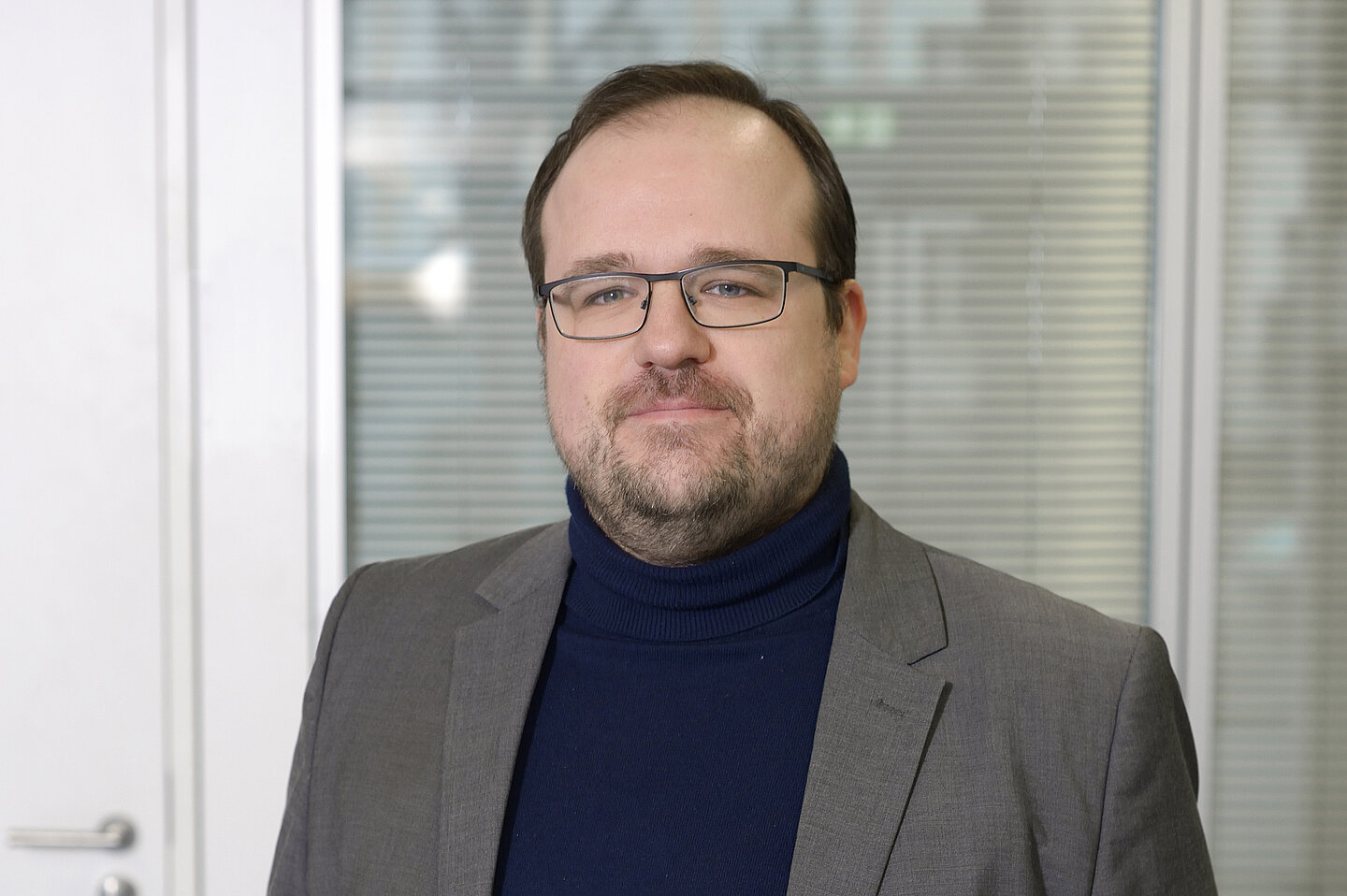
Prof. Dr. Jörg E. Drewes is a Full Professor and Chair at the Research Institute for Urban Water Management, Technical University of Munich (TUM), Germany. He also serves as Academic Program Director for Environmental Engineering at TUM and is a co-founder of Waterloop Solutions GmbH. His work spans advanced water treatment technologies, wastewater reuse, and environmental health surveillance. Affiliations : TUM, Colorado School of Mines, King Abdullah University of Science and Technology, UNSW Water Research Centre Research focuses on advanced oxidation processes , membrane fouling mitigation , micropollutant removal , and wastewater epidemiology for public health. His team develops integrated systems for water-energy-food nexus applications and graphene oxide-based treatment solutions. Recent publications address PFAS remediation , UVC-LED pre-treatment for biofouling control, and GIS-based wastewater surveillance models . Awards include the Bayerische Staatsmedaille (2023) and William Dunbar Medal (2022). 2023 : Bayerische Staatsmedaille 2022 : William Dunbar Medal 2018 : IWA Fellow He leads the Nexus@TUM initiative and contributes to EU water resilience strategies. Collaborations include projects in Germany, China, India, and Spain, focusing on climate-resilient water systems and resource recovery .
Prof. Senthold Asseng is a Professor of Digital Agriculture at the Technical University of Munich (TUM), leading the Hans Eisenmann Forum for Agricultural Sciences since 2021. His research focuses on climate-plant-soil systems modeling, addressing global food security, sustainable agriculture, and digital technologies like vertical farming and autonomous robotics. He holds a PhD from Humboldt University Berlin and habilitation from TUM, with prior roles at CSIRO Australia and the University of Florida (as Full Professor and Director of the Florida Climate Institute). His honors include AAAS Fellow, Web of Science Highly Cited Researcher, and multiple teaching/mentorship awards. Education: BSc/MSc in Agronomy & Horticulture, Humboldt University Berlin (1989-1990) PhD in Agronomy, Humboldt University Berlin (1994) Habilitation in Agronomy, TUM (2004) Research Interests: Climate change impacts on crops, digital agriculture technologies, systems analysis for autonomous farming, and vertical farming sustainability. His work integrates modeling, robotics, and environmental control to enhance agricultural resilience and productivity. Awards: AAAS Fellow (2019) Highly Cited Researcher (2019) UF Research Foundation Professor (2016-2019) Grants & Leadership: Led interdisciplinary projects like AgMIP-Wheat, SECC, and FAO advisory roles. Active in editorial roles for journals like Global Change Biology and Environmental Research Letters . Labs/Teams: Chair of Digital Agriculture at TUM, collaborating on projects like Smartfield and Proteins4Singapore , focusing on automation, controlled environment agriculture, and climate-smart solutions.
Prof. Antje Stokman is a Professor of Landscape Architecture and Landscape Planning at HafenCity University Hamburg. Her department researches and designs landscape-, nature-, and water-related transformation processes, with teaching and research focused on the design and collaborative creation of urban landscapes in their dynamic interactions between natural and human habitats. Her research interests include: Landscape Architecture and Urban Design Climate-Adapted Urban Landscapes Blue-Green Infrastructure Water-sensitive Urban Design Linear Infrastructure Landscapes Urban Transformation Processes Prof. Stokman has led several significant research projects including the LILAS research network (Linear Infrastructure Landscapes as Open Spaces for the City in Climate Change), the City on the Blue Belt project, and the Blue-Green Infrastructure Dialogue Process. Her recent publications focus on transforming urban linear infrastructure landscapes and developing water development corridors along federal waterways as open space potential for urban green-blue infrastructure. Scientific awards: City of Hamburg's Teaching Prize (Hamburg Teaching Award) Prof. Stokman supervises doctoral projects including Katarina Bajc's work on "Perception and Design of Ecological Processes in Landscape Architecture" and Anne Kittel's research on "The Transformation of Metropolitan Landscapes." She has received research funding from various sources including the Federal Environment Agency, BMUV, BMBF, and EU Horizon 2020. She co-leads the Blue-Green Infrastructure Lab (BGI-Lab) with Prof. Wolfgang Dickhaut, which focuses on interdisciplinary research at the intersection of environmentally sound urban planning and landscape architecture.
Hami Amiraslani serves as Assistant Professor of Accounting at ESMT Berlin, holding a PhD and MSc from the London School of Economics. Previously faculty at INSEAD and a Wharton School visiting scholar, he teaches Management Accounting and Sustainable Business Finance across master's and executive programs. His educational credentials include: PhD in Accounting, London School of Economics and Political Science MRes, City St George’s, University of London MSc in International Accounting and Finance, London School of Economics and Political Science Amiraslani's research investigates capital markets, corporate governance, and sustainability interfaces with financial contracting and regulation. His work critically examines how ESG integration, board oversight structures, and climate disclosure frameworks reshape market efficiency and investor behavior, blending theoretical rigor with empirical analysis of regulatory impacts. Recent publications (2023-2025) reveal three dominant research trajectories: 1) Board-level governance mechanisms for ESG risk management, 2) Regulatory consequences of climate disclosure mandates on capital allocation, and 3) Bond market valuation effects of sustainability performance. These studies consistently demonstrate how governance quality mediates the relationship between sustainability practices and financial outcomes across debt and equity markets. No scientific awards are documented in the provided materials. His teaching portfolio indicates active mentorship in accounting education though specific student advisees aren't listed. Research activities appear institutionally supported through ESMT's academic infrastructure without explicit grant mentions.
Thomas S. Lontzek is Professor of Economics at RWTH Aachen University, holding the Chair of Computational Economics within the School of Business and Economics since October 2016. His research develops numerical methods for economic decision-making with focus on climate change and environmental risks. His educational background includes economics studies at Maastricht University and UC San Diego (1999-2003), followed by PhD from University of Kiel (2009). Prior positions include Assistant/Senior Assistant at University of Zurich (2010-2016) and visiting scholar at Stanford's Hoover Institution (2012). Lontzek's research spans Economic Growth, Quantitative Macroeconomics, Resource and Energy Economics, Computational Economics, Climate Risk Management, and Decision Making under Uncertainty. His work emphasizes unconventional methods for analyzing economic processes through multidimensional, nonlinear stochastic optimization while incorporating ethical principles into economic analysis for sustainability challenges. His publication record reveals a consistent focus on climate economics, particularly the social cost of carbon, climate tipping points, and integrated assessment modeling. These works demonstrate how accounting for economic and climate risks, especially potential tipping points, necessitates more aggressive climate policies than traditional models suggest, often requiring sophisticated computational techniques to handle high-dimensional uncertainty. 2021 Erik Kempe Award for work on calculating an optimal CO2 tax Lontzek actively mentors students through research seminars and teaching, emphasizing methodological diversity and interdisciplinary approaches. He leads the Global Challenges Research Seminar through the Global Challenges Lab, providing students with opportunities to conduct innovative research using quantitative decision-making techniques for sustainable development challenges. His teaching portfolio for Summer Semester 2025 includes Quantitative Macroeconomics, Sustainable Finance, and specialized research seminars. He heads the Chair of Computational Economics, which includes scientific staff members Dr. Marco Thalhammer, Dr. Yifan Zhao, and Philipp Olivier, M.Sc., working collaboratively on climate economics and computational methods. The chair's research bridges theoretical economic modeling with practical policy applications, developing dynamic stochastic integrated assessment models capable of handling complex climate-economy interactions under uncertainty.
Prof. Dr. Johannes Sauer is a Professor at the Technical University of Munich (TUM), holding dual affiliations with the TUM School of Management and the TUM School of Life Sciences . His academic focus is on production and resource economics, with expertise in agricultural sustainability, policy evaluation, and circular economy strategies in Asia-Pacific and Latin America. Education: Bachelor’s/Master’s in Agricultural Economics from Universities of Tübingen, Hamburg, and Imperial College London. Doctorate (summa cum laude) in Agricultural Economics from the University of Bonn (2004). Research Interests: Prof. Sauer’s work spans productivity and resilience in agricultural systems, adoption of sustainable technologies, water resource valuation, and bioeconomic trends. He emphasizes smart technologies and circular economy applications in developing regions. His research employs econometric methods to analyze policy impacts and environmental-economic trade-offs. Key Trends in Publications: Recent articles highlight climate-smart agriculture, ICT adoption in rural China, and agroforestry’s role in reducing ecological-economic trade-offs. He explores behavioral drivers of policy participation and innovative tools like the IoFarm decision support system. Awards: 2021 Honorary Professorship at ANU OECD Fellow Awards (2010, 2016) Best Paper Awards (2008–2015) Consulting & Roles: OECD and Asian Development Bank consultant, ESRC Peer Review College member, and liaison lecturer for the German National Academic Foundation. He advises on agri-environmental policies and international development. Labs/Teams: Active in collaborative projects such as PONDERFUL Framework and IPM Popilia , focusing on nexus research and pest management strategies.
Detlef F. Sprinz is a Senior Scientist at the Potsdam Institute for Climate Impact Research (PIK) and a Professor at the Faculty of Economics and Social Sciences of the University of Potsdam, Germany. During 2024-2025, he leads the project "AMaReNa - A Market for the Restoration of Nature" , focusing on carbon removals. His academic background includes a Ph.D. and M.A. in Political Science from the University of Michigan and an M.A. in Economics from the University of the Saarland. Research Interests: Climate policy at multiple levels, long-term policy design, evaluation of international/national institutions, European/international environmental policy, and modeling political decisions for sustainability. Notable Projects: Tandem Fellowship (2020-2022) for interdisciplinary course development, Visiting Researcher at University of Lund (2022-2023), and coordination of research at the Käte Hamburger Kolleg (2017). Publications emphasize climate cooperation under the Paris Agreement, effectiveness of environmental regimes, and predictive modeling for climate negotiations. His work spans empirical analyses of acid rain regulation, Kyoto Protocol implementation challenges, and bioenergy accounting errors. Scientific Awards & Memberships: Tandem Fellowship (German Stifterverband) Member, European Academy Co-founder, Ecologic Institute Teaching includes courses on global climate governance, political decision modeling, and environmental policy at the University of Michigan, Yale, University of Oslo, and University of Potsdam. He has contributed to IPCC’s Sixth Assessment Report as a Lead Author. Advisory Roles: Chairmanship of the European Environment Agency’s Scientific Committee (2009-2012), Senior Research Fellow at CICERO (2011-2013), and consultancy for governments, corporations, and think tanks.
Markus Reichstein is a Professor for Global Geoecology at Friedrich Schiller University (FSU) Jena and Director of the Biogeochemical Integration Department at the Max Planck Institute for Biogeochemistry. His research focuses on ecosystem responses to climate variability, climate extremes, and the application of AI in Earth system science. He holds a PhD in Plant Ecology from the University of Bayreuth and has pioneered interdisciplinary approaches combining machine learning with environmental modeling. Key roles include leadership in the Michael-Stifel-Center Jena for Data-driven and Simulation Science and founding director of the ELLIS Unit Jena. He contributed to the IPCC Special Report on Climate Extremes and has received prestigious awards such as the Leibniz Prize. His work bridges ecology, hydrology, and atmospheric science, addressing critical global challenges like carbon cycle feedbacks and ecosystem resilience. Recent research emphasizes AI-driven early warning systems for climate risks, integrating observational data with mechanistic models. His team explores land-atmosphere interactions, soil-vegetation dynamics, and the impacts of climate extremes on societal systems. Notable projects include GartenDiv, a citizen science initiative for garden biodiversity, and advancements in global water cycle modeling using hybrid AI-physics frameworks. Awards include the Piers J. Sellers Award (2018), ERC Synergy Grant (2019), and Leibniz Prize (2020). He collaborates with international networks like ELLIS and Future Earth, advancing data-driven solutions for sustainability science.
Ottmar Edenhofer serves as Director and Chief Economist of the Potsdam Institute for Climate Impact Research (PIK), Director of the Mercator Research Institute on Global Commons and Climate Change (2012-2024), Professor for The Economics and Politics of Climate Change at Technische Universität Berlin, and Chair of the European Scientific Advisory Board on Climate Change (ESABCC) since 2022. His affiliations span leading European climate research institutions and academic bodies. Edenhofer's research focuses on climate change economics, particularly the impact of technological change on mitigation costs, public finance implications of climate policy, distributional effects of carbon pricing, and governance of global commons. His work bridges theoretical economic modeling with practical policy design, emphasizing equity considerations and institutional frameworks for effective climate action. He pioneered social science research at PIK, establishing rigorous methodologies for translating scientific findings into actionable policy advice. His publication record demonstrates consistent leadership in high-impact climate economics research, with seminal contributions to IPCC assessments (serving as Co-Chair of Working Group III for the Fifth Assessment Report) and influential analyses of carbon pricing mechanisms. Recent work increasingly addresses carbon dioxide removal governance, distributional justice in climate policy, and the integration of climate action with broader sustainable development goals. His research consistently appears in top journals including Nature, Science, and Nature Climate Change. Edenhofer has received numerous scientific honors including the Romano Guardini Prize (2018), Deutsche Umweltpreis (2020), and Arthur Burkhardt-Prize (2021). He belongs to the top 1% of most cited scientists globally (2018-2022) and was ranked among Germany's top 10 economists (2019-2020). His policy influence extends to serving as Vatican consultor for the Dicastery for Promoting Integral Human Development and advising EU institutions through ESABCC. As a science-policy interface leader, Edenhofer has shaped climate negotiations leading to the Paris Agreement and continues to advise European institutions on implementing climate neutrality targets. His work emphasizes the critical role of carbon pricing with equitable revenue recycling and the strategic sequencing of climate policies to maintain political feasibility while achieving deep decarbonization.
Prof. Dr. Michael Schloter serves as Director of the Research Unit for Comparative Microbiome Analysis at Helmholtz Munich since 2011 and holds a Professorship in Microbiology at the Technical University of Munich since 2010. He concurrently acts as Principal Investigator at both the German Center for Lung Diseases (DZL) and the Central for Food and Nutrition (ZIEL) at TU Munich, driving interdisciplinary research at the intersection of environmental and human health through the "Planetary Health" framework. His educational foundation was built through diploma studies at Ludwig Maximilian University Munich and doctoral research at the University of Bayreuth, followed by formative work in Brazil and the United States where he pioneered bioinocula development for stress-resilient agriculture. At Helmholtz Munich (formerly GSF), he evolved from group leader in soil microbial ecology (2001) to Research Unit Director, expanding his focus from agricultural systems to human microbiome-health connections. Dr. Schloter's research program centers on microbiome-host crosstalk across ecological scales, investigating how environmental microbiota interact with human and plant microbiomes to influence health outcomes. His work integrates ecological theory with microbiome analysis to decode host-microbe co-evolution patterns, with applications spanning sustainable agriculture, allergy prevention, and infection control. Key thematic pillars include holobiont theory, probiotic development, and microbiome-mediated disease prevention through environmental quality improvement. Analysis of his 2025 publications reveals a strategic research portfolio bridging fundamental and applied microbiome science. Agricultural studies dominate (maize, potato, apple systems), examining microbial inoculants and soil management, while human health investigations explore preterm birth complications and Antarctic mammal microbiomes. Computational approaches for antimicrobial resistance assessment and ecosystem-scale projects like JenaTron demonstrate methodological breadth, all converging on translating microbiome functionality into real-world sustainability solutions. Major recognitions include: Election to the Bavarian Academy of Science (2021) Consistent placement among the top 1% of highly cited global researchers (2019-2021) Heinrich Baur Research Award (2011) for agricultural microbiology contributions As Research Unit Director, Schloter leads large-scale collaborative initiatives including the DZL and ZIEL consortia, securing major funding for microbiome standardization projects and international research networks. His leadership extends to developing analytical frameworks for cross-ecosystem microbiome comparisons and establishing protocols for translating microbial ecology principles into clinical and agricultural applications. The Comparative Microbiome Analysis unit operates as a nexus for multi-host microbiome research, employing comparative genomics, field-scale agricultural trials, and clinical cohort studies to investigate microbiome dynamics across environmental, plant, and human systems. Current infrastructure includes advanced sequencing facilities and experimental platforms for plant-microbe and host-microbe interaction studies under controlled and natural conditions.
Joakim Nivre is a Professor at Uppsala University's Department of Linguistics and Philology. He is a leading researcher in computational linguistics, with a focus on dependency parsing, Universal Dependencies (UD) framework development, and multilingual NLP applications. His recent work explores LLMs in climate change discourse analysis, pharmacovigilance explainability, and historical text processing. Key research areas: Dependency parsing theory, Universal Dependencies standardization, LLM evaluation Collaborations: SweSAT-1.0 benchmark development, ClimateEval project, PARSEME integration His 2025-2023 publications demonstrate expertise in explainable AI for healthcare, synthetic data generation for idioms, and multilingual benchmark design. Notably, he co-developed SweSAT-1.0 to evaluate Swedish LLMs and contributed to typology-informed UD revisions. Despite extensive work in NLP, no scientific awards are mentioned in available texts.
Prof. Dr. Oliver Crönertz serves as Dean and Professor of Business Administration and IT-Supported Business Processes at the Faculty of Digital Transformation , HTWK Leipzig. His work bridges digital transformation with business management, focusing on interdisciplinary project management, digital business models, and sustainability. Current roles: Dean, supervising professor for HTWK Robots/nao Team Research areas: Digital Transformation, Business Analytics, Industry 4.0, Stoffstrommanagement Research Trends : Recent publications emphasize digital solutions for environmental management, business process optimization, and smart urban logistics. His work connects Industry 4.0 with financial sustainability and societal impacts of digitalization. Projects : Leads Mittelstand-Digital Zentrum Leipzig-Halle, involved in EXIST-Potentiale, Future Parking, and FAssMII (Feedback-based E-Assessment in STEM).
Thomas Rüde is Universitätsprofessor for Hydrogeology at RWTH Aachen University , Germany, where he leads the Hydrogeology group within the Faculty of Georesources and Materials Engineering. Holding the chair since 2005, he also serves as Managing Director of the Vereinigung Aachener Geowissenschaftler e.V. and has previously been Vice-President (2008-2014) and Executive Council member (2000-2008) of the International Mine Water Association (IMWA). Education 2004 – Privatdozent (Dr. rer. nat. habil.), University of Munich 1995 – Dr. rer. nat., University of Karlsruhe 1991 – Diplom-Geologe, University of Karlsruhe Research focus Professor Rüde’s work centres on understanding and modelling flow and reactive transport in complex aquifer systems . Key themes include: Contaminant hydrogeology – behaviour of geogenic arsenic and uranium in groundwater Groundwater protection and remediation – risk assessment and mitigation strategies Mine-water management – acid mine drainage, dewatering-well clogging, post-mining landscapes Tracer and hydraulic testing – field experiments to quantify subsurface heterogeneity Numerical modelling – high-performance simulation of multi-aquifer systems and karst His research spans Europe (Germany, Austria, Netherlands), Latin America (Mexico, Indonesia) and South-East Asia, frequently in close collaboration with local universities and industry partners. Publication trends Since 2010, Rüde has published extensively on geogenic contamination (As, U, F) in sedimentary and volcanic aquifers, mine-water impacts , and karst hydraulics . Recent work (2022-24) highlights advanced environmental tracers (gadolinium), transboundary groundwater issues, and the sustainable management of post-mining landscapes under climate change. Numerical models range from site-scale dewatering optimisation to catchment-scale coupled flow-transport simulations. Scientific awards & recognition Best Teaching Award 2010 – RWTH Aachen University Best Teaching Award 2012 – RWTH Aachen University Best Teaching Award 2014 – RWTH Aachen University Supervision & academic service Since 1998 he has taught hydrogeology through lectures, seminars, laboratory and field courses, and computer-based modelling labs. To date he has supervised: 13 PhD candidates 34 Diploma students 57 MSc students 63 BSc students He is Chairman of the Study Commission for the BSc programme in Georesources Management at RWTH Aachen, ensuring curriculum development and quality assurance. Laboratory & field infrastructure His group operates modern hydrochemical laboratories for trace-element analyses and maintains field stations for tracer experiments in Germany, Mexico and Indonesia. High-performance computing resources (in collaboration with the Jülich Supercomputing Centre) enable large-scale groundwater modelling and Monte-Carlo uncertainty assessments.
Dr. Maryegli Fuss is a Scientific Associate at the Institute for Technology Assessment and Systems Analysis (ITAS), Karlsruhe Institute of Technology (KIT) in Germany. She heads the 'Energy-X Nexus' working group within the 'Sociotechnical Energy Futures' research group and serves as academic mentor for the doctoral program Climate, Resources and Circular Economy (KLIREC) . She also contributes to ITAS's 'New Work' initiative and provides scientific advice for German-Indian university collaborations (TU9 network). Education: PhD in Philosophy (Sustainability), KIT (2022) MSc in Material Flow Management, Trier University of Applied Sciences (2012) BSc in Agro-industrial Chemistry, Federal Institution of Goiás, Brazil (2010) Research Focus: Her transdisciplinary work integrates sustainability science, systems analysis, and industrial ecology. Primary domains include: (1) Circular economy implementation in waste management systems, (2) Energy-resource nexus (Water-Waste-Energy-Food), (3) Supply chain risks for critical materials in renewable energy, and (4) Life cycle assessment of low-carbon transitions. Methodologies feature material flow analysis, stakeholder interviews, and socio-technical system modeling. Publications: Her research output emphasizes sustainable waste management in Global South contexts (especially Brazil), critical material supply chains for energy transitions, and environmental assessment frameworks. Recurring themes include circular economy implementation challenges, transdisciplinary approaches, and policy design for resource security. Leadership: Coordinates international research partnerships (e.g., Chile/Indonesia water-energy nexus projects) and leads doctoral mentoring initiatives focused on climate-resource systems.
Prof. Dr. Holger Kantz serves as Head of the research unit "Nonlinear Dynamics and Time Series analysis" at the Max Planck Institute for the Physics of Complex Systems in Dresden, Germany. He also holds an Adjunct Professorship (Honorprofessor) in Statistical Physics at the Institute of Theoretical Physics within the Department of Physics at the Technical University Dresden. Dr. Kantz's research spans multiple disciplines within nonlinear dynamics and statistical physics. His work focuses on time series analysis, nonlinear dynamics, stochastic processes, and complex systems. He has made significant contributions to understanding anomalous diffusion, extreme events prediction, and the statistical properties of chaotic systems. His research has applications in atmospheric science, climate modeling, power grid dynamics, and biological systems. Analysis of Dr. Kantz's recent publications reveals a strong interdisciplinary approach connecting statistical physics with climate science, energy systems, and scientometrics. His work demonstrates sophisticated applications of stochastic modeling to real-world complex systems, with particular attention to anomalous diffusion processes, extreme events, and predictability limits in chaotic systems. The publications show increasing methodological sophistication in handling nonstationary time series and developing predictive models for rare events. Dr. Kantz leads a research group focused on nonlinear dynamics and time series analysis at the Max Planck Institute. His work has significant implications for understanding and predicting complex phenomena across multiple scientific domains, from climate dynamics to power grid stability, with practical applications in risk assessment and system reliability.