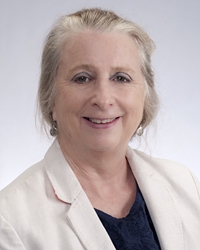
Olof Stephansson is a senior researcher and group leader at the Clinical Epidemiology Unit (KEP) , Karolinska Institutet , focusing on reproductive, perinatal, and pediatric epidemiology. His work utilizes Swedish healthcare registries and quality registers to investigate risk factors, interventions, and medical management during pregnancy and childbirth. Key research areas: maternal obesity, preeclampsia prediction, climate change impacts, neonatal neurodevelopment, IBD in pregnancy, and labor management Funded by: Swedish Research Council, NIH, FORTE, NordForsk, and Karolinska Institute Collaborates with: Stanford, Oregon Health, University of British Columbia, London School of Hygiene, University of Witwatersrand His group (2014-present) manages the Swedish Pregnancy Registry and conducts randomized trials like the Oneplus study on midwifery models. Recent publications (2024-2025) analyze maternal BMI effects on offspring sleep, labor duration risks, and vaccine safety in pregnancy.
Dr. Susan D. Hovorka is a Research Professor at the Bureau of Economic Geology, The University of Texas at Austin, specializing in geological techniques for environmental applications. She focuses on subsurface permeability dynamics in both tight and highly transmissive systems, with a primary emphasis on geological carbon sequestration and CO₂ storage security. Ph.D. in Geology (1990), The University of Texas at Austin M.A. in Geology (1981), The University of Texas at Austin B.A. in Geology (1974), Earlham College Her research addresses critical challenges in carbon geological storage, including: Characterizing salt formations as containment materials Analyzing carbonate fabrics for karst aquifer flow understanding Field CO₂ injection experiments for sequestration assessment Developing composite confining systems for secure CO₂ retention The articles she has contributed to since 2002 demonstrate a consistent focus on: Carbon capture and storage (CCS) technologies Reservoir pressure dynamics and fault permeability Permit-ready site workflows and risk mitigation Geological analogs from petroleum systems Dr. Hovorka actively collaborates with institutions like the Gulf Coast Carbon Center (GCCC) and participates in international CCS initiatives. Her work integrates sedimentology, geophysics, and environmental policy to advance subsurface carbon management solutions.
Prof. Liqiu Meng serves as Chair of Cartography and Visual Analytics at the Technical University of Munich (TUM). He specializes in advanced geospatial research, digital cartography, and human-technology collaboration frameworks. Current Faculty at TUM Chair of Cartography and Visual Analytics Research Focus: His work bridges cartographic theory with cutting-edge technology, covering topics like 3D urban modeling, AI ethics visualization, geovisual analytics, and spatiotemporal data interpretation. Urban Morphology Analysis AI Ethics Cartography Geovisual Analytics 3D City Data Integration Location-Based Service Design Publications: Recent works (2025-2024) demonstrate expertise in explainable AI for urban analysis, multi-agent systems for geospatial interaction, and advanced spatial modeling techniques. Contact: liqiu.meng@tum.de | contact.lfk@ed.tum.de
Dr. Ali Kashani is a Senior Lecturer at the University of New South Wales (UNSW) within the School of Civil and Environmental Engineering. His research focuses on sustainable and low-carbon concrete materials, robot-aided construction (particularly 3D printing), and Circular Economy-aligned applications. Leadership in cementitious materials innovation Expertise in 3D printing for construction Advocate for waste valorisation and carbon capture Dr. Kashani has secured approximately $7 million in research funding and holds a patent in lightweight concrete foam. His work spans 70+ publications with 9,000+ citations, including media coverage in the Sydney Morning Herald and The Fifth Estate. He actively contributes to professional organizations such as MECLA, RILEM, and ASTM. Recent research trends include AI and optimization algorithms for sustainable concrete mix design, chloride diffusion modeling, and 3D printing performance analysis. His publications often address waste material integration, durability assessment, and eco-friendly construction practices. Scientific Awards: National and NSW Awards for 'Excellence in Concrete' (Technology and Innovation) from the Concrete Institute of Australia Churchill Fellowship for Digital Construction and 3D Printing sponsored by AVJennings Dr. Kashani serves as Co-Chair of the cement and concrete working group at MECLA and contributes to RILEM and ASTM committees. His email is ali.kashani@unsw.edu.au , and his office is located in the Civil Engineering Building (H20), Level 2, Room CE204, UNSW.
Prof. Dr. Julia Metag is Professor for Communication Science at the Department of Communication, University of Münster, where she heads the chair on 'Forms and Processes of Public Communication.' Her research focuses on political communication, science communication, media effects, and online communication. She is actively involved in major research initiatives such as the 'Hot SciComm Lab' (funded by the Volkswagen Foundation) and 'Global Warming’s Five Germanys,' and has led significant projects including the 'Science Barometer Switzerland.' Julia Metag's research interests include science communication, political communication, media use, public trust in science, science-related populism, climate change communication, and digital media. She investigates how audiences engage with scientific information, the role of visuals and AI in science communication, and the impact of misinformation and conspiracy theories. Her work often employs survey, experimental, and content analysis methods to understand public perceptions and media effects. Her recent publications reflect a strong focus on trust in science, audience segmentation, science literacy in digital environments, and the multimodal nature of science communication. She frequently collaborates with scholars across Europe, particularly with Mike S. Schäfer and other colleagues in Switzerland and Germany. Scientific Awards and Memberships: Member of the Academia Europaea (The Academy of Europe) Member of the German Society for Journalism and Communication Studies (DGPuK) Member of the International Communication Association (ICA) Member of the European Communication Research and Education Association (ECREA) Member of the Center for Higher Education and Science Studies (CHESS), University of Zurich Editorial Board Member of Studies in Communication Sciences , Media and Communication , and Environmental Communication Advisory Board Member of the German 'Wissenschaftsbarometer' Julia Metag supervises student theses and leads collaborative research projects, often involving interdisciplinary teams. She has previously held academic positions at the University of Zurich and the University of Fribourg, and her work is widely published in top journals such as Public Understanding of Science , Science Communication , and Communication Research . She is also involved in public engagement through projects like 'Frag Sophie!' and 'Nachgefragt bei Sophie & Co,' which use creative formats to bridge science and society. She leads the 'Hot SciComm Lab,' which investigates science communication in highly contested, multimodal environments shaped by social media, AI, and deepfakes. Her leadership in research networks such as 'Cultures of Compromise' further demonstrates her interdisciplinary reach and academic influence.
Diana Mangalagiu is an Associate Professor at NEOMA Business School , with expertise in Sustainability, Environmental Policy, Corporate Social Responsibility (CSR), Low Carbon Transition, Modeling, and Social Experimentation . Her research bridges natural and social sciences, focusing on systemic risks, foresight, and equitable climate policy. Education : PhD in Artificial Intelligence (École Polytechnique), MSc in Physics, MSc in Sociology, MSc in Management Leadership Roles : Co-founder of the Initiative for Science, Society and Policy Dialogue; scientific board member of the Global Climate Forum, Integrated Risk Governance Project, and Global System Dynamics and Policy; Co-Chair of UNEP’s Global Environmental Outlook. Research Interests : Dr. Mangalagiu’s work explores the intersection of environmental and economic policies through modeling , social experimentation , and foresight . Recent studies focus on coal and carbon-intensive regions, stakeholder engagement, and systemic tipping points in sustainability transitions. Recent Publications : Her 15 most recent articles (2025–2020) span journals like Global Environmental Change and Climatic Change , addressing topics such as social-ecological tipping scales , socio-technical transitions , and green gentrification . These works emphasize equity , cross-regional comparisons , and policy innovation . Projects and Collaborations : She has led or participated in advisory and research projects with the World Bank , OECD , UNEP , and UNDP , focusing on climate policy, energy efficiency, and sustainable urban development. Fluent in seven languages, her international perspective enriches her work in global contexts.
Luigi Aldieri is a Full Professor in the Department of Economic and Statistical Sciences (DISES) at the University of Salerno , Italy. His research spans applied econometrics, innovation economics, environmental sustainability, and knowledge spillovers. He holds a PhD from the Solvay Brussels School of Economics and Management at Université Libre de Bruxelles. Research Interests: His work focuses on the economic impact of innovation, particularly green and environmental technologies, knowledge diffusion, R&D spillovers, energy efficiency, and their effects on employment, productivity, and well-being. He investigates how innovation interacts with migration, education, and institutional quality across regions and countries. Recent Research Trends: His recent publications (2023–2025) emphasize the digital economy, regulatory quality, circular economy, migration-innovation nexus, food security under SDGs, and energy resilience. He employs advanced econometric models such as panel data, spatial analysis, and stochastic frontier analysis, often using international datasets from OECD, EU, and global firms. Scientific Editorial Roles: Associate Editor, Journal of Environmental Management (Environmental Policy, Economics, Social Science section) Associate Editor, Environment, Development and Sustainability Associate Editor, Energy Engineering Editorial Board Member, Sustainability , Energies , Clean Technologies , International Journal of Knowledge-Based Development , and others Guest Editor for special issues in MDPI Energies and Sustainability on climate change, green growth, and total environment Advising and Grants: While no direct PhD advisees are listed, Aldieri leads a robust research network, frequently collaborating with scholars from Russia, Finland, Belgium, and Italy. He is affiliated with the International Centre for Innovation, Technology and Education Studies (iCite) at ULB. His work is supported by extensive co-authorship networks and institutional research projects focused on innovation, sustainability, and economic development. Laboratories and Research Groups: He is part of the research ecosystem at the University of Salerno’s DISES department and collaborates with international research groups. His work is associated with empirical research in innovation economics and environmental policy, often leveraging large datasets and cross-country comparisons.
Daniel Powell is a Senior Lecturer in Health Psychology and Programme Director of the MSc Health Psychology at the University of Aberdeen, School of Medicine, Medical Sciences and Nutrition. He is a core member of the Aberdeen Health Psychology Group and the interdisciplinary Centre for Labour Market Research. He holds a PhD from the University of Southampton and became a Fellow of the Higher Education Academy in 2019. His educational background includes: BSc (Hons) Psychology – University of the West of England, 2007 MSc Health Psychology – University of Southampton, 2009 PhD Psychology – University of Southampton, 2014 Daniel's research focuses on health psychology, particularly using intensive longitudinal methods such as ecological momentary assessment (EMA) to study stress, fatigue, self-regulation, and decision-making in real-world contexts. His work spans chronic illness (e.g., multiple sclerosis, diabetes), healthcare professionals (e.g., doctors, nurses), and occupational settings (e.g., fly-in fly-out workers). He leads the Stress and Health Research Theme and convenes regular workshops to support health psychology researchers. His methodological expertise includes real-time data collection, psychophysiology (e.g., heart rate variability, cortisol), and interdisciplinary collaboration with health economics, primary care, and bioengineering. His recent publications (2024–2025) reveal a strong trend in investigating decision fatigue in healthcare, stress and recovery patterns in medical professionals using biometric monitoring, and the psychosocial impact of shift and rotation work. He frequently employs EMA and systematic reviews to explore behavioral patterns in context. His work also extends to sustainable clinical research and digital health tools for pandemic response. His scientific recognition includes: Stan Maes Early Career Award, European Health Psychology Society (2019) Rosemary Anne Price Student Award, MS Society (2013) Daniel actively supervises five PhD students on topics including decision fatigue in healthcare, quality of life after limb loss, stress in medical and dental students, and low-carbon clinical trials. He teaches across postgraduate programs, coordinates the PU5053 course on Stress, Personality & Health, and co-founded an annual Summer School in Intensive Longitudinal Methods. He has no indication of part-time status and is actively engaged in research, teaching, and leadership. He is affiliated with several professional organizations, including the British Psychological Society (Chartered Psychologist), Division of Health Psychology, European Health Psychology Society, and UK Society for Behavioural Medicine. His research lab is embedded within the Aberdeen Health Psychology Group, which fosters interdisciplinary collaboration and methodological innovation in health behavior research.
Dr. Wolfram Barfuss is the Argelander Professor of Integrated Systems Modeling for Sustainability Transitions at the University of Bonn, affiliated with the Center for Development Research (ZEF). He is a member of multiple interdisciplinary research areas including TRA Sustainable Futures, TRA Modeling, and TRA Individual and Societies, as well as the Cluster of Excellence PhenoRob and the Center for Earth System Observation and Computational Analysis (CESOC). He also collaborates with the Potsdam Institute for Climate Impact Research and the Earth Resilience Science Unit. His research focuses on understanding whether humanity is 'smart enough for the good life' by developing formal models of collective learning and decision-making in complex social-ecological systems. He integrates methods from complex systems, multi-agent reinforcement learning, and dynamical systems theory to explore sustainability transitions, cooperation, and Earth system resilience. The recent publications demonstrate a strong focus on modeling collective intelligence, cooperation in stochastic games, decision-making under uncertainty, and integrated World-Earth system modeling. His work spans disciplines including computer science, environmental science, game theory, and cognitive science, with frequent contributions to high-impact journals like PNAS , Nature Communications , and Environmental Research Letters . Argelander Professor for Integrated Systems Modeling for Sustainability Transitions Member, TRA Sustainable Futures Member, TRA Modeling Member, TRA Individual and Societies Cluster of Excellence PhenoRob Center for Earth System Observation and Computational Analysis (CESOC) Earth Resilience Science Unit (Potsdam) Earth Resilience and Sustainability Initiative (Princeton-Stockholm-Potsdam) Dr. Barfuss teaches graduate courses at the University of Bonn and Humboldt University Berlin, including Complex System Modeling of Human-Environment Interactions, Economics on Sustainability, Systems Modeling, and Introduction to Agent-Based Modeling. He leads the BarfussLab, where his team develops computational tools such as pyCRLD for modeling collective reinforcement learning dynamics. While specific student advisees are not listed, his lab and publications suggest active supervision and collaboration with early-career researchers. He has not received any explicitly mentioned scientific awards in the provided text. His research is supported through institutional affiliations and collaborative projects rather than individually listed grants.
Matthew A. Reidenbach is a Professor and Department Chair of Environmental Sciences at the University of Virginia, with a courtesy appointment in Mechanical and Aerospace Engineering. His research focuses on coastal oceanography, particularly the interplay between hydrodynamics and marine ecosystems, including coral reefs, seagrass meadows, and oyster reefs. He investigates topics such as larval transport, wave dynamics, and nature-based coastal resilience strategies. His work emphasizes ecological engineering solutions for climate change adaptation, combining field observations with computational modeling. Reidenbach holds a Ph.D. (2004) and M.S. (1998) in Civil and Environmental Engineering from Stanford University, and a B.S. (1997) from Cornell University. He has received prestigious awards including the NSF Career Award and the University of Virginia’s All-University Teaching Award. His research group utilizes advanced techniques like LiDAR remote sensing, PIV flow visualization, and eddy covariance systems to study coastal processes. Key research themes include: 1) Biophysical interactions in marine ecosystems (e.g., mussel aggregations, sponge filtration); 2) Coastal protection via living breakwaters; 3) Ecosystem metabolism and nutrient cycling in tidal systems. He collaborates with engineers and ecologists to bridge theoretical and applied science, addressing real-world challenges like sea-level rise and habitat restoration. Notable grants: NSF CAREER award, collaborative NSF projects on biophysical feedbacks Labs: Coastal Ecosystem Dynamics Lab, affiliated with UVA’s Batten Institute for Climate Theory and Practice Public engagement: Advises on oyster reef restoration strategies for Chesapeake Bay and Gulf Coast communities
Gil-Soo Han is a Professor in the Department of Communications and Media Studies at Monash University, Faculty of Arts, where he has been a faculty member since 2008. His interdisciplinary research bridges sociology, media studies, and cultural analysis, with a focus on intercultural communication, religious communication, health communication, and contemporary Korean society. Disciplinary Background: Sociology with applications in media, religion, and migration Institution: Monash University, Australia Department: Communications and Media Studies Teaching: Global and intercultural communications, media industries His research interests include: Intercultural and global communications Religious communication, especially Korean Christianity Health communication among migrants Media representation of ethnic minorities Nationalism and grassroots movements in South Korea Funeral rites and death culture in Korea and Australia The Korean diaspora in Australia and New Zealand His recent publications reflect a strong trend toward analyzing nationalism, identity, and socio-cultural change in South Korea, particularly through media discourse and public movements such as the 2016–2017 Candlelight Revolution. He also explores end-of-life practices among migrants, highlighting cultural continuity and change. His scientific awards include: Good Practice in Teaching, Monash University (2007) Winner of Korean Education Minister’s Book Prize (2020) He has received research funding from the Academy of Korean Studies and the Australian Research Council. He is actively involved in supervising PhD students and contributing to public discourse through media engagement. He leads an international project on Local Agency and National Responses to Globalisation and has published extensively on Korean diaspora, media, and religion. He is affiliated with the following research groups and platforms: ORCID: 0000-0003-4135-211X Google Scholar, ResearchGate, Academia.edu
Gary F. Peters is the Senior Associate Dean and S. Robson Walton Endowed Professor of Accounting at the Sam M. Walton College of Business, University of Arkansas. He has been a key academic and administrative leader since joining the university in 2003, previously serving as Department Chair (2016–2023) and Director of the Master of Accounting Program (2006–2016). His leadership includes overseeing faculty resources, strategic planning, AACSB accreditation, and major fundraising initiatives, including a $10 million gift to name the William Dillard Department of Accounting. PhD, University of Oregon MS, University of Missouri - Columbia BS in Accounting, Arkansas Tech University His research centers on audit risk, corporate governance, accounting disclosure, and professionalism, with a focus on the roles of audit committees, internal and external auditors. His work bridges accounting with information systems and ethics, appearing in top journals like The Accounting Review , Journal of Accounting Research , MIS Quarterly , and Journal of Business Ethics . His recent publications explore sustainability reporting, SOX compliance, executive compensation, and the impact of IT on auditing. Analysis of his recent articles reveals a strong trend toward interdisciplinary research, particularly at the intersection of accounting, governance, and sustainability. His work increasingly examines non-financial disclosures, ESG assurance, and the role of technology in audit quality and compliance. Many studies involve large-scale empirical analyses using public firm data, often co-authored with leading scholars in governance and internal audit. Joseph A. Silvoso Faculty Merit Award University of Arkansas Honors College Distinguished Faculty Award S. Robson Walton Endowed Chair Southeastern Conference Academic Leadership Development Fellow Walton College Outstanding All-Around Faculty Member Glezen and D. Cook Endowed Chairs KPMG Research Grant Bank of America Research Fund Nolan E. Williams Lectureship Gary Peters has led major curriculum and program development initiatives, including the creation of the Integrated Master’s path, the online undergraduate accounting degree, and the Master of Professional Accounting. He has been instrumental in securing endowed chairs, scholarships, and strategic funds. He advises on faculty policy, accreditation, and budgeting, and has expanded student experiences through programs like the Rome Accounting Program and enhanced analytics curriculum. His leadership extends to national service, including presidency of the Federation of Schools of Accounting and roles in AACSB accreditation committees. He has played a central role in building the Department of Accounting’s research culture and strategic direction, leading multiple AACSB reviews and developing the department’s Strategic Focus Area document. His philanthropic efforts have established numerous scholarships and strategic use funds, and he has expanded advisory boards at both departmental and college levels.
Ahmed Elbeltagi is an Assistant Professor in the Agricultural Engineering Department at Mansoura University's Faculty of Agriculture. His work focuses on hydrology, agricultural water management, and climate change adaptation. Specializes in data-driven modeling for water resource optimization Integrates machine learning with traditional hydrological models Active in climate change impact assessments on agricultural systems Recent research trends include: Developing open-source tools like Aqua-MC for irrigation simulation Applying hybrid deep learning models for evaporation prediction Advancing water quality assessment through multivariate analysis Exploring economic applications of wetlands in arid regions He collaborates with institutions across Egypt, India, China, and Saudi Arabia, with a focus on sustainable water management solutions.
Robert Patrick is a Professor in the Department of Geography and Planning at the College of Arts and Science, University of Saskatchewan. His work centres on land-use and watershed planning, with a particular emphasis on source-water protection and Indigenous water security, especially among First Nations communities across Alberta and Saskatchewan. Research Focus Source-water protection planning to reduce contamination risks to public drinking-water supplies. Collaborative watershed planning with First Nations communities. Climate-change adaptation strategies integrated into community-based water governance. Urban water issues and nature-based solutions to climate impacts. Regional planning that incorporates Indigenous planning methodologies. Scientific Awards & Honours Distinguished Teacher Award, College of Arts and Science, University of Saskatchewan (2023) Teaching Excellence Award, College of Arts and Science, University of Saskatchewan (2014) U of S Students' Union Teaching Award Nominations (2012, 2009) Graduate Student Supervision Since 2010, Professor Patrick has successfully supervised over 25 graduate students (MA, MSEM, MNGD, and PhD levels). Notable recent graduates include: Warrick Baijius, Ph.D. 2022 Alan Akobundu, MA 2021 Obadiah Awume, MA 2019 Juliane Schultz, MA 2019 Rosalena Smith, MNGD 2018 Carley Coccola, MSEM 2018 Veronica Mauel, MSEM 2018 John Desjarlais, MNGD 2018 Autumn Carlson, MNDG 2017 Michael Dawe, MSEM 2016 Bronwyn Cowan, MNDG 2016 Janet Daigneault, MNGD 2016 Kellie Grant, MA 2016 Azhar Al Ibrahim, MA 2015 Warrick Baijius, MA 2015 Francis Goulet, MNGD 2015 Kelly Richardson, M.SEM 2015 Kyle Young, M. SEM 2014 Kurtis Trefry, M.SEM 2013 Hanyang Wang, MA 2013 Firas Younes, M. SEM 2012 Nadine Lemoine, MA 2012 Jostein Misfeld, M.SEM 2012 Franny Rawlyk, MA 2012 Dee Johns, MNGD 2012 Brittany Morgan, M.SEM 2011 Jesse Skwaruk, MA 2011 Emily Heffring, M.SEM 2010 Teaching & Courses GEOG 240 (2023) PLAN 442 (2023) Regular offerings in Planning, Regional Planning, Sustainable Cities and Regions, and Watershed Planning.
Sophie Nowicki is an Empire Innovation Professor at the University at Buffalo's RENEW Institute, Department of Earth Sciences within the College of Arts and Sciences. She serves as Director of the Center for Geological and Climate Hazards. Her research focuses on ice sheet and sea level dynamics, using a combination of applied mathematics, remote sensing observations, and numerical modeling to understand how ice sheets interact with the global climate system. Empire Innovation Professor, University at Buffalo Director, Center for Geological and Climate Hazards Member of UB RENEW Institute Department of Earth Sciences, College of Arts and Sciences Dr. Nowicki's research interests center on glaciology, ice-sheet modeling, climate modeling, and sea level change. She studies how ice sheets interact with the global climate system and affect sea level change using a spectrum of models from idealized to large-scale continental ice sheet models. Her work is integral to climate models that provide forcing for ice sheet models, particularly through the Ice Sheet Model Intercomparison Project for CMIP6 (ISMIP6). She teaches courses including Introduction to Computational Earth Science, Environmental Remote Sensing, and various graduate research courses. Her recent publications reveal a strong focus on Antarctic and Greenland ice sheet modeling, sea level rise projections, and the development of advanced modeling frameworks. The research spans from fundamental glaciological processes to large-scale climate impacts, with a particular emphasis on quantifying uncertainties in ice sheet contributions to sea level rise. Her work frequently appears in top journals including Nature, The Cryosphere, and Geophysical Research Letters, and she has made significant contributions to the IPCC Sixth Assessment Report. Empire Innovation Professor recognition Lead contributor to IPCC AR6 Working Group I Principal Investigator for ISMIP6 (Ice Sheet Model Intercomparison Project) Dr. Nowicki actively mentors graduate students and postdoctoral researchers, with current advisees working on various aspects of ice sheet dynamics and sea level change. Her research is supported by multiple grants from NASA, NSF, and other agencies focused on improving our understanding and projections of ice sheet behavior in a warming climate. She leads the development of critical tools like the Cryosphere Model Comparison Tool (CmCt) and has been instrumental in establishing community standards for ice sheet modeling. She is involved with several research groups and initiatives including the Ice Sheet & Sea Level Lab at UB, which focuses on understanding how ice sheets will evolve in a warming world and what this means for future sea levels. Her team combines observational data with sophisticated modeling approaches to address key questions about ice-ocean and ice-atmosphere interactions that drive ice sheet changes.