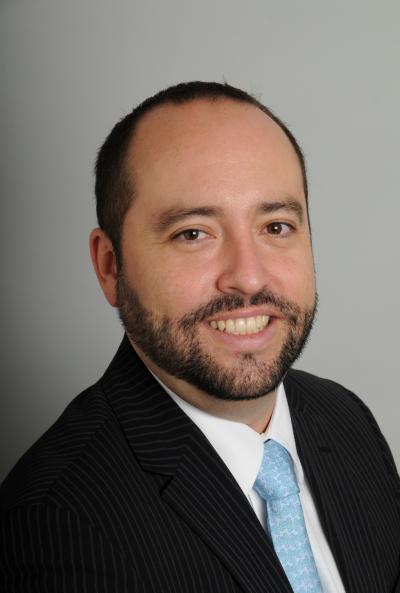
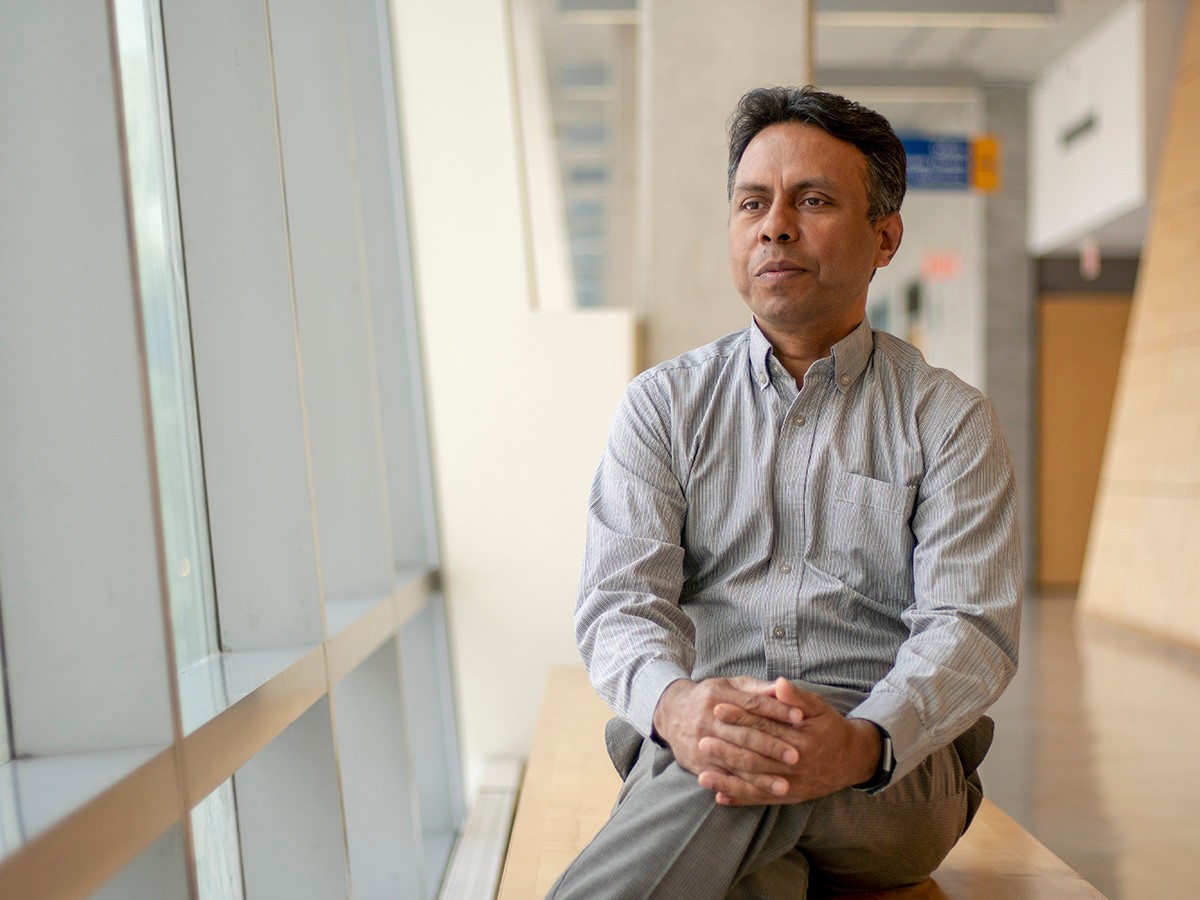
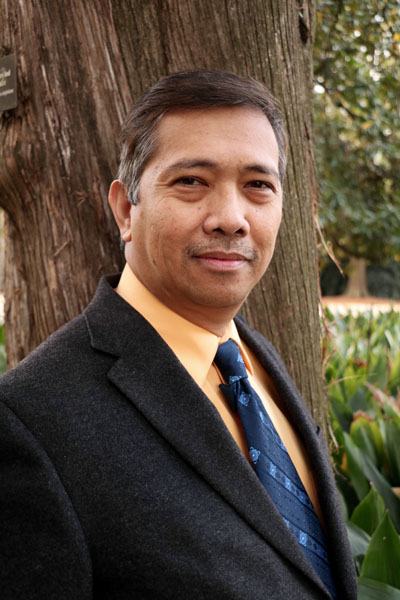
Anne Maren Coll Franck is a Researcher at the Institute for Research in Technology (IIT) within the School of Engineering at Pontifical Comillas University, Madrid, Spain. She joined the IIT in March 2022 and specializes in energy demand modeling and prediction, leveraging mathematical modelling, statistical learning, and machine learning techniques. Bachelor's Degree in Industrial Technologies Engineering (2016-2020) at University Carlos III of Madrid (UC3M), graduating as valedictorian. Master's Degree in Industrial Mathematics (2020-2022) at UC3M funded by Gregorio Millán Barbany Institute. Master's Thesis collaborated with Unity of Nuclear Safety Research of the Spanish Energy Research Center CIEMAT. Her research interests emphasize energy systems analysis, including CFD (Computational Fluid Dynamics) for thermal management, probabilistic modeling of energy demand , and statistical modeling for climate-related financial hedging . She has contributed to projects analyzing gas-electricity price interactions, hydrogen demand representation, and climate risk mitigation. She has received prestigious recognition, including the 2019 Excellence Award from UC3M and the 2025 Second Prize at Quant Awards by CFA Society. Her work involves collaborations with Endesa S.A. and Endesa Medios y Sistemas S.L. on energy market modeling.
Ralf Korn is a Professor in the Department of Stochastic Control and Financial Mathematics at the Rheinland-Pfälzische Technische Universität Kaiserslautern (RPTU). His research focuses on Financial Mathematics, Stochastic Control, and Risk Management, with a particular emphasis on portfolio optimization, computational finance, and actuarial science. He holds leadership roles in academic organizations, including the German Actuarial Association (DAV) and the German Association for Insurance and Financial Mathematics (DGVFM). His work bridges theoretical advancements with practical applications, such as developing models for energy markets, reinsurance strategies, and sustainable investment frameworks. Prof. Korn’s research interests include continuous-time portfolio optimization, risk assessment under uncertainty, and the application of machine learning techniques like GANs in financial and energy contexts. He has contributed to seminal works on worst-case portfolio optimization and the integration of climate scenarios into asset management. His interdisciplinary approach addresses challenges in insurance, energy economics, and regulatory compliance. His recent publications span topics such as optimal trading strategies in electricity markets, robust reinsurance models, and the valuation of complex financial instruments. He is a co-editor of the European Actuarial Journal and has authored books on modern financial mathematics and Monte Carlo methods. His academic service includes roles as Dean of the Faculty of Mathematics (2005–2011) and leadership in research clusters like the Landesexzellenzcluster (2005–2008). Prof. Korn’s collaborative projects often involve industry partnerships, focusing on real-time pricing, computational finance, and the ethical implications of financial modeling. His work on sustainability and taxation in portfolio management reflects current trends in global financial practices.
Larysa Hrytsenko serves as a Research Fellow at the Department of Engineering Technology and Didactics Business Development, Technical University of Denmark (DTU), where she conducts interdisciplinary research at the intersection of socio-economic systems, energy policy, and financial stability. Her work directly contributes to United Nations Sustainable Development Goals related to economic growth, industry innovation, and sustainable communities, with a pronounced focus on Ukraine and European Union contexts. Her research profile spans: Economic analysis of credit risk in Ukrainian banking systems Energy security frameworks amid renewable energy transitions Sustainable foreign investment pathways for post-conflict recovery Academic integrity mechanisms in higher education quality assurance Policy responses to economic instability in geopolitical crises Methodologically, she employs quantitative techniques including histogram analysis for energy security metrics and comprehensive risk modeling for financial systems, often leveraging case studies from Ukraine's ongoing transformation. Analysis of her recent publications reveals three dominant thematic clusters: (1) Ukrainian financial sector resilience during wartime, (2) EU energy security dynamics amid renewable expansion, and (3) educational quality assurance frameworks. Her work consistently bridges theoretical economic models with urgent real-world applications, particularly in conflict-affected regions. Current research activities include the active "Scholars At Risk Ukraine" project (2025-2026), where she collaborates on academic protection initiatives for displaced Ukrainian scholars. This engagement demonstrates her commitment to both research excellence and humanitarian academic solidarity, operating within DTU's engineering technology research ecosystem focused on practical socio-technical solutions.
Dr. Connie X. Mao is a Professor of Finance at the Fox School of Business and Management , Temple University . She holds dual PhDs in Finance from Cornell University’s Johnson School of Management and Biomedical Science from Cornell Medical School, reflecting her interdisciplinary expertise. Academic Focus : Corporate Finance, Debt Contracting, Agency Conflicts, Innovation Management, Workplace Safety Courses Taught : Security Analysis and Portfolio Management (Undergraduate), Proseminar in Finance (Graduate) Research Interests : Dr. Mao’s work bridges corporate finance and broader societal impacts, including: Debt renegotiation and agency theory Patent information’s role in acquisitions Minimum wage policy and nonprofit compensation Political/media influence on innovation Workplace safety and corporate taxes Publication Trends : Her recent research explores technology transfer , labor economics , and societal impacts of finance , appearing in journals like Journal of Accounting Research , The Accounting Review , and Management Science . Scientific Awards : Multiple Fox School Dean’s Research Honor Roll inductee Andrisani-Frank Undergraduate Teaching Award FMA Outstanding Finance Professor Award
Aldo Musacchio is a Professor of International Business and Economics at Brandeis International Business School and a Research Associate at the National Bureau of Economic Research (NBER). His research focuses on state-owned enterprises (SOEs), business-state relations, and economic development, with particular emphasis on Latin America and Brazil. He is Co-editor of the Financial History Review and has authored influential works on state capitalism, including Reinventing State Capitalism: Leviathan in Business, Brazil and Beyond . Key research areas include fiscal risks of infrastructure, climate policy, and the role of SOEs in development. His policy work includes collaborations with the World Bank and Inter-American Development Bank, addressing fiscal stability and SOE governance. He has received awards for his book on Mexican banking and historical analyses of economic institutions. His recent projects examine how state actors respond to climate change, particularly the role of SOEs in green transitions. Musacchio's interdisciplinary approach integrates historical analysis with contemporary policy challenges, emphasizing institutional frameworks and governance structures. Education: PhD in Economics (though specific details not explicitly listed in the text) Grants/Awards: Multiple research grants and prizes for contributions to SOE policy and economic history Labs/Teams: Collaborates with global institutions and interdisciplinary teams on SOE reform and climate policy
Dr. Mohamed Wahab Mohamed Ismail is a Professor in the Department of Mechanical, Industrial, and Mechatronics Engineering at Toronto Metropolitan University. He holds a PhD from the University of Toronto, an MEng from Asian Institute of Technology, and a BSc Eng from the University of Moratuwa. His expertise spans Real Options Analysis, Operations Research, Global Supply Chain Design, and Risk Hedging with applications in energy, healthcare, and manufacturing sectors. Research interests include optimizing decision-making under uncertainty, integrating machine learning with operations research, and addressing climate-related challenges in supply chains. Notable projects include modeling weather impacts on retail sales (e.g., coffee demand forecasting for a major grocery chain), financial modeling for flexible manufacturing systems in automotive industries, and rebate policy analysis for energy efficiency upgrades. Key Contributions: Developed frameworks for supply chain resilience, energy policy evaluation, and game-theoretic product launch strategies. Teaching: Teaches courses like IND 833 (Financial Engineering), IND 710 (Production Systems), and ME8142 (Supply Chain Management). His 2023-2025 articles focus on reinforcement learning applications in logistics, real options valuation for manufacturing flexibility, and multi-dimensional policy analysis. Awards include a prestigious scholarship from the King of Thailand during his master’s studies. Labs/Teams: Active in interdisciplinary teams addressing energy systems optimization, smart manufacturing, and climate resilience.
Aleksandra Hęćka-Sadowska is an Assistant Professor at the Department of Insurance, Institute of Finance, University of Economics in Poznan. She holds a Doctorate (2019) and specializes in risk management, insurance, and sustainable development. Her research focuses on enterprise risk management (ERM), environmental insurance, cyber risk in insurance companies, and sustainable development practices. She has authored 17 publications, supervised 1 thesis, and participated in 1 research project. Her work emphasizes insurance solutions for environmental and cyber risks in Polish and EU contexts. Research interests include: environmental risk financing, operational risk mitigation, cyber insurance strategies, and sustainable insurance products. She explores the intersection of insurance with climate change adaptation and agricultural resilience. Her recent work (2023-2025) highlights innovative insurance products for sustainable economies and cyber risk in evolving business models. Professional achievements include 2 notable recognitions (specific awards unlisted). Active in professional activities (8 listed), she maintains profiles on Scopus and ORCID. Her research contributes to both theoretical frameworks and practical applications in risk management across diverse industries.
Prof. Dr. Recep YILMAZ is a faculty member at the Department of Business Administration, Faculty of Business Administration, Sakarya University. His academic roles include teaching and research in cost accounting, management accounting, ERP systems, and financial information management. He holds a full-time professorship and has been actively involved in academic contributions since at least 2003. Education & Professional Background: While specific educational details are not explicitly listed, his extensive publications and project leadership indicate advanced academic credentials in business administration and related fields. Research Interests: Prof. YILMAZ focuses on cost accounting methodologies, ERP system implementations, supply chain optimization, manufacturing process control, and financial accounting standards compliance. His work integrates computer science applications (e.g., deep learning for inventory management) with traditional business disciplines. Article Trends: Recent publications emphasize predictive modeling in environmental risk management, real-time inventory systems, and ERP adoption in IFRS conversion. Earlier work includes studies on flexible manufacturing environments, fraud detection in ERP systems, and activity-based costing practices. Awards: Received the 'Eğitimde Müşemmelik Ödülü' (Excellence in Education Award) from Sakarya University in 2016. Research Projects: Led or contributed to over 20 projects, including real-time inventory models, dam occupancy predictions, and ERP system development. Grants & Mentorship: Supervised 13 doctoral and master’s theses, focusing on topics like ERP integration challenges, financial fair-play criteria in football clubs, and strategic pricing in furniture industries. He has also served on doctoral juries and academic organizing committees. Labs & Teams: Active in interdisciplinary teams developing digital systems (e.g., real-time document control, robotic sensing) and collaborating with industry partners like Arvasis Bilişim.
Assoc. Prof. Yasin Kerem GÜMÜŞ is affiliated with the Department of International Trade and Logistics at Sakarya University's Faculty of Business Administration. His research focuses on migration policies, EU trade dynamics, labor markets, and political economy. Contact: ykgumus@sakarya.edu.tr. Research interests include analyzing international trade agreements (e.g., Customs Union between Turkey and the EU), migration impacts on labor markets, and the interplay between demographic challenges and EU policies. Notable studies explore post-2008 financial crisis trade resilience, UK-Turkey bilateral trade influenced by labor migration, and EU energy policy vulnerabilities post-Ukraine crisis. Publications (2013–2019) address topics like populist radical right movements in Europe, tobacco policy misconceptions, and diaspora dynamics. Though no awards are listed, his work underscores critical issues in globalization and regional integration. Advising and grants details are unavailable, but his articles reflect active engagement with EU-Turkey relations, global talent competition, and economic policy analysis. No lab affiliations or team collaborations are explicitly mentioned.
Dr. Meng Tong is a Lecturer in Development Economics at the University of Chester, where he teaches undergraduate modules in econometrics, finance, and sustainable development. He holds a PhD from the University of Birmingham and is a Fellow of the Higher Education Academy (FHEA) and member of the Royal Statistical Society. His research focuses on spatial economics, financial markets, and climate econometrics, with publications in leading journals including the Journal of Environmental Economics and Management and Journal of Empirical Finance. Recent work examines the economic impact of climate events on Chinese manufacturing and housing market dynamics. Tong's publications demonstrate consistent focus on emerging market economies, combining advanced econometric techniques with policy-relevant analysis. His research on Chinese economic development has contributed to understanding of regional disparities and environmental impacts on growth. He supervises undergraduate dissertations and coordinates modules including Intermediate Micro/Macroeconomics and Environmental Economics. His pedagogical approach emphasizes practical applications of economic theory to contemporary development challenges.
Professor Grażyna Wąsowicz is a faculty member at Kozminski University, specializing in Economic Psychology. She holds a Ph.D. in psychology from the University of Warsaw and a habilitation in social sciences with a psychology focus. Ph.D. in Psychology, University of Warsaw Habilitation in Social Science (Psychology), University of Warsaw Economic Psychology coursework, Tilburg University Her research integrates psychology with economics and nutrition, focusing on financial competence, color-emotion associations in marketing, sustainable consumption, and health-related consumer behavior. Current projects explore age-related differences in color perception and pandemic-driven behavioral shifts. Recent publications reveal interdisciplinary trends: cross-cultural color-emotion analysis (2023-2024), pandemic health decision-making (2021-2022), and behavioral economics of nutrition labeling (2008-2018). Her work spans psychological theory, consumer research, and public policy. Recipient of 4 University of Warsaw Rector’s Awards Recipient of 3 Kozminski University Rector’s Awards Member, International Panel for Behavior Change Scientific Committee With extensive EU and Polish grant experience (Framework 7, Horizon 2020, Ministry of Health), she leads projects on financial psychology, health behavior, and marketing communication. Her teaching spans economics, finance, and social science methodology.
Professor Khorshed Alam is a Professor of Economics at the University of Southern Queensland (UniSQ), based in the School of Business. He is a founding member of the Centre for Health Research at UniSQ and leads its Health Economics Research group. His expertise spans health economics, digital health, carbon footprint analysis, and sustainability. He holds a PhD from Murdoch University and a Master's from the Institute of Social Studies in the Netherlands. Prof Alam's research focuses on generating evidence for public health decision-making, particularly for disadvantaged populations. He has authored over 200 articles in high-impact journals (70% in top-tier/Q1 SJR journals) and secured ≈$6 million in grants, including NHMRC-MRFF projects targeting Indigenous health and chronic disease management. His H-index is 52 (Google Scholar) and 44 (Scopus). He has supervised 24 HDR students, emphasizing social determinants of health, economic evaluation, and sustainable development. Awards include the Ronel Erwee Memorial Award (2017), multiple UniSQ Publication Excellence Awards, and 2024 School of Business Research and Leadership Award. His leadership roles include Head of Economics Discipline, School Research Coordinator, and roles in the Australian Centre for Sustainable Business and Development. He has also contributed to the Australasian Journal of Regional Studies as a co-editor and serves on the Council of the Australia and New Zealand Regional Science Association. Current projects include digital health services for Indigenous Australians and economic assessments of health technologies. His research bridges policy, innovation, and equity in health and environmental systems.
Lynda Crowley-Cyr is an Associate Professor of Law at the University of Southern Queensland's School of Law and Justice and a member of the Centre for Health Research. She holds a PhD in Law from the University of Sydney (2016) and has been with UniSQ since 2011. Her expertise spans tort law, health law, public authority liability, and tourist behavior, particularly in relation to marine hazards like jellyfish. She actively contributes to policy consultations (e.g., Queensland recreational diving safety standards) and ethics review processes. Education: LLB (QUT, 1991), GCertEd (JCU, 1996), LLM (JCU, 1997), PhD (Sydney, 2008). Research focuses on legal and ethical dimensions of public health risks, including jellyfish hazard communication, tourism policy, and pandemic response. Her work bridges law, environmental science, and behavioral studies. Recent articles analyze ethics review processes in humanities/social sciences and the impact of risk communication on tourist behavior during crises like COVID-19. Awards: None explicitly listed, though her contributions to policy and ethics reflect professional recognition. Supervision: Currently guiding doctoral research on the National Code of Conduct for Health Care Workers. Previously supervised studies on student retention and mental health. Labs/Teams: Active in UniSQ's Centre for Health Research, focusing on interdisciplinary health and legal issues.
Dr David Xuefeng Shao is an Associate Professor in Management at The University of Newcastle, Australia, affiliated with the Newcastle Business School within the College of Human and Social Futures. He serves as Program Director of MBA (Global) and is a member of the Emerging Markets Research Group. Dr. Shao also holds editorial positions as associate editor for Nature: Humanities & Social Science Communication, Economic Analysis and Policy, and Journal of Organizational and End User Computing, and serves on the Editorial Review Board of Journal of International Management and Management and Organization Review. Dr. Shao earned his Doctor of Philosophy and Master of Commerce (Extension), both from the University of New South Wales. Prior to joining The University of Newcastle in 2021, he held positions as an education-based lecturer at the University of Sydney and as a Research Fellow at University of Technology Sydney. Dr. Shao's research focuses on the digital transformation of businesses in emerging economies, supply chain management under Industry 4.0, and renewable energy's role in achieving carbon neutrality. His work bridges international business, innovation management, and sustainability, with particular attention to how digital technologies and AI are reshaping global business practices and environmental outcomes. His research adopts both quantitative and qualitative methodologies, including configurational approaches like fsQCA to understand complex causal relationships in business phenomena. Dr. Shao's extensive publication record in high-impact journals demonstrates his expertise across multiple interconnected domains. His work shows a clear trajectory from traditional international business and supply chain topics toward increasingly integrating digital innovation, AI applications, and sustainability concerns. A significant portion of his recent work examines the intersection of artificial intelligence, carbon markets, and energy systems, reflecting the growing importance of technological solutions to environmental challenges. Dr. Shao has received several prestigious recognitions for his scholarly contributions: Elected as a Fellow of the Royal Society of Arts (FRSA) in 2021 Recipient of the Young Researcher Award from the International Engineering and Technology Institute (IETI) in 2022 Ranked among Stanford/Elsevier Top 2% of Scientists globally for 2024 In addition to his research, Dr. Shao plays significant roles in academic leadership and service. As Program Director of MBA (Global), he shapes international business education, while his editorial positions allow him to influence scholarly discourse in his fields of expertise. His teaching portfolio includes courses on International Business Strategy, International Business Risk, and Globalization, reflecting his expertise in global business dynamics. Dr. Shao is actively involved in the Emerging Markets Research Group at Newcastle, contributing to collaborative research on business practices in developing economies. His work often examines how firms from emerging markets navigate global competition through innovative strategies, with increasing attention to digital and sustainability dimensions.
Cesar Escalante is a Professor in the Department of Agricultural and Applied Economics at the University of Georgia , where he has been affiliated since at least 2002. His work spans agricultural finance, agribusiness management, and policy analysis related to farm labor and health economics. Ph.D., Agricultural Economics, University of Illinois (2001) M.S., Agricultural Economics, University of Guelph (1996) B.A., Economics, Ateneo de Manila University (1983) Research Interests : Agricultural Finance: Risk assessment in lending systems, farm credit risk analysis using migration frameworks Agribusiness Management: Financial structures, business strategies for risk mitigation Immigration & Health Economics: Farm labor dynamics, health service access disparities Recent Publications focus on topics such as immigration policy impacts, agricultural banking resilience, and labor risk dynamics, with a strong emphasis on empirical modeling and policy evaluation. Scientific Awards : Outstanding Mentoring Award (2022, 2020) Distinguished Teaching Award (2021) President’s Martin Luther King Fulfilling the Dream Award (2020) University Aspire Fellow (2018-2019) Gamma Sigma Delta Award for Junior Achievement in Research (2007) Advising & Grants : Mentored award-winning student research (e.g., Tianyuan Luo’s 2018 Energies Journal award), secured grants including the University of Georgia Faculty Research Foundation Award (2002), and contributed to editorial leadership as Editor of the Journal of Agribusiness (2014-2015).