Prof. Walter Leal Filho is a distinguished academic and researcher holding professorial positions at Hamburg University of Applied Sciences (Germany) and Manchester Metropolitan University (UK). He is the founding director of the European School of Sustainability Science and Research (ESSSR) and the Inter-University Sustainable Development Research Programme (IUSDRP). With over 30 years of editorial experience, he has authored over 500 publications, focusing on sustainability, climate change, and environmental management. His research interests span Climate Change, Urban Resilience, Natural Resource Management, and Sustainability Education. He emphasizes interdisciplinary approaches to address global challenges, such as space debris mitigation and bio-based materials for sustainable packaging. His work bridges policy, education, and practical solutions for sustainable development. Prof. Leal Filho’s recent articles highlight trends in sustainable urban planning, space sustainability, and ecosystem conservation in the Amazon. He has been recognized as a Top Cited Scholar 2024, reflecting his impactful contributions. With 1,200+ co-authors and a global network, he collaborates widely, fostering international research and education initiatives. As director of ESSSR and IUSDRP, he leads programs advancing sustainability science and interdisciplinary research. His academic leadership and prolific publications underscore his role as a pivotal figure in global sustainability efforts.
Emily Hannum is a Professor of Sociology and Education at the University of Pennsylvania's College of Arts & Sciences, where she also serves as Associate Dean for Social Sciences. She is affiliated with the Population Studies Center, Center for the Study of Contemporary China, Graduate School of Education, and Penn Development Research Initiative. Education: PhD in Sociology from University of Michigan (1998) Research Focus: Poverty and child welfare, gender and ethnic stratification, sociology of education Projects: Gansu Survey of Children and Families, climate-environment-childhood inequalities in LMICs Workshops: Co-organizer of Penn Education and Inequality Workshop Her research explores childhood poverty in China, demographic impacts on education systems, and climate risks affecting children's welfare. She investigates environmental hazards, educational disparities, and family separation effects across China, India, and low/middle-income countries. Recent publications analyze educational expansion in East Asia, climate crisis impacts on child health, and gender disparities in Latin America. She directs longitudinal studies on rural poverty and collaborates on cross-national projects related to environmental and educational equity. Scientific awards include the Stanley I. Sheerr Term Professorship in Social Sciences.
Professor Amy Maguire is a leading academic in human rights and public international law at the University of Newcastle, Australia. She holds roles as Deputy Head of the School of Law and Justice (2021-2024) and co-founder Director of the Centre for Law and Social Justice. Her research focuses on human rights accountability, Indigenous rights, climate change displacement, and refugee rights. She has secured over $2.7 million in grants, including an ARC Mid-Career Industry Fellowship (2024-2028) for national human rights reform initiatives. Maguire advises the Queensland Parliament on human rights compliance and collaborates with global institutions like the Australian Human Rights Commission. Her work has influenced policy, including Australia’s death penalty abolition strategy and Indigenous rights frameworks. She has been awarded multiple accolades for research and teaching excellence, including the 2020 Leadership Excellence Award and 2016 Early Career Researcher of the Year. Maguire’s education includes a BA, LLB (Hons), and PhD from the University of Newcastle. Her interdisciplinary approach bridges law and social justice, addressing issues like climate migration and legal responses to global crises. She leads projects such as the Hunter Region climate displacement study and the Human Rights Measurement System. Maguire’s public engagement includes over 70 articles for The Conversation, reaching 920,000+ readers, and expert media commentary globally. She advocates for inclusive education through initiatives like early entry programs for Indigenous and refugee students, earning a 2021 Senior Fellowship from Advance HE. Her research outputs span 60+ publications, with key works on MH17 litigation, climate justice, and Indigenous legal frameworks. Grants include a 2021 stimulus grant to establish the Centre for Law and Social Justice, supporting postdoctoral research and international collaborations. Maguire’s leadership extends to global networks, including the UN Human Rights Council evaluation project and the Human Rights for NSW Alliance. She remains committed to translating research into policy, education, and community impact through clinics, youth forums, and law reform advocacy.
Professor Elaine Fahey is a leading scholar in EU law and global governance at the City Law School, City St George's, University of London, where she serves as Professor of EU Law and Deputy Head of Department (academic programmes). She is co-convener of the Institute for the Study of European Law (ISEL) and the UACES James Madison Trust EUFUtures initiative (2022–2025). Her academic career includes visiting professorships at Washington College of Law (American University), Keio University, and NYU, as well as fellowships at the European University Institute and the University of Graz. LLB, Trinity College Dublin LLM, Sidney Sussex College, University of Cambridge PhD, Trinity College Dublin Barrister-at-Law, Honorable Society of King’s Inns, Ireland Attorney-at-Law, State of New York Senior Fellowship, Higher Education Authority UK Her research focuses on the intersection of EU law with global governance, digital regulation, transatlantic relations, and the Area of Freedom, Security and Justice. She explores how the EU navigates legal frameworks beyond the nation-state, particularly in digital trade, cybersecurity, and data protection. Her work critically examines the EU’s role as a global regulatory actor and its interactions with international institutions. Her extensive publication record includes the monograph The EU as a Global Digital Actor (Hart, 2022) and numerous articles on digital sovereignty, data transfers, and transatlantic cooperation. Recent research analyzes the EU–US Trade and Technology Council (TTC), the evolution of the Privacy Shield, and strategic litigation in digital rights. Her work reveals a strong trend toward understanding how soft law, institutional design, and judicial decisions shape EU external relations and digital governance. Erasmus+ Jean Monnet Chair in Law & Transatlantic Relations (2019–2022) Emile Noël Fellow, NYU Law School Max Weber Fellow, European University Institute Senior Land Steiermark Fellow, University of Graz Senior Fellowship, Higher Education Authority UK Professor Fahey has supervised multiple PhD students, including Isabella Mancini, Giulio Kowalski, and Christos Karetsos, on topics such as algorithmic collusion, digital markets, and investment law. She has led significant research projects, including the ESRC-funded TRILATTRADE grant and the Marie Curie ITN on EU and Transatlantic Investment and Trade (EUTIP). She previously held leadership roles as Associate Dean (International) and interim Associate Dean (Research) at the City Law School. She is an elected member of the EU Studies Association (EUSA) Executive (2021–2025). She has also contributed to public policy through briefings for the Welsh Parliament and reports on CJEU litigation in Ireland. She is associated with research initiatives such as the Institute for the Study of European Law (ISEL) and has collaborated on interdisciplinary projects on Facebook regulation, transatlantic relations, and EU technological sovereignty. Her work bridges legal scholarship, policy, and international academic collaboration.
Dr. K. Max Zhang is a Professor in the Sibley School of Mechanical and Aerospace Engineering at Cornell University. He is the director of the Energy and the Environment Research Laboratory (EERL) and a fellow at the Atkinson Center for a Sustainable Future. His research is deeply interdisciplinary, focusing on sustainable energy systems, air quality, and environmental justice, with significant impacts on policy and community development in New York and beyond. Ph.D., Mechanical Engineering, University of California-Davis, 2004 B.S., Thermal Engineering, Tianjin University, 1998 B.A., English Language, Tianjin University, 1998 Dr. Zhang’s research centers on the integration of energy and environmental systems. He investigates air pollution dynamics using advanced numerical models like CTAG, with applications in near-source pollution, indoor air quality, and environmental justice. His work on renewable energy systems includes designing sustainable solar farms and managing distributed energy resources such as heat pumps to enhance grid flexibility. He also leads a pioneering initiative to create the first statewide public IoT network in the U.S., enabling hyperlocal weather forecasting and microclimate monitoring. His recent publications reflect a strong trend toward agrivoltaics, peer-to-peer energy markets, and IoT-based environmental monitoring. These works demonstrate a consistent focus on data-driven modeling, community-scale energy solutions, and the integration of social considerations into technical systems. The keywords across his articles highlight expertise in sustainability, machine learning, air quality, and energy transition. Cornell Town-Gown Achievement Award (2022) Engaged Scholar Prize, Cornell University (2017) People's Choice Sign of Sustainability Award, Sustainable Tompkins (2016) Scientific and Technological Achievement Award, Environmental Protection Agency (2015) Fellow of the American Society of Mechanical Engineers Dr. Zhang is actively involved in mentoring students and securing research grants from agencies such as the National Science Foundation (NSF) and the New York State Energy Research and Development Authority (NYSERDA). His projects often involve interdisciplinary collaboration across eight Cornell colleges and 16 academic departments. He has led initiatives such as the Cornell Atkinson Academic Venture Fund projects and the development of a county-level energy roadmap for Tompkins County. He also teaches courses in engineering thermodynamics, future energy systems, and air quality, emphasizing experiential and community-based learning. Dr. Zhang leads the Energy and the Environment Research Laboratory (EERL) and collaborates with the Atkinson Center for a Sustainable Future. His lab functions as a hub for innovation in sustainable communities, combining advanced modeling with real-world applications. Through partnerships with community organizations, government agencies, and industry, his team develops science-driven solutions to urban and rural sustainability challenges.
Shaun Beattie is a Researcher affiliated with the Scottish Association for Marine Science (SAMS) at the University of the Highlands and Islands . His work focuses on marine conservation , seaweed biodiversity , and aligning research with the United Nations Sustainable Development Goals . Education : Master of Science in Ecological Economics (University of Leeds, 2019), Bachelor of Science in Economics and Management Science (University of Southampton, 2018) Beattie's research explores the intersection of seaweed conservation , policy development , and ecosystem resilience . He contributes to global initiatives addressing biodiversity gaps in international frameworks and investigates the role of seaweeds in human health and marine habitats. His recent 2025 publications analyze seaweed conservation policies in Malaysia, stakeholder perspectives from Indonesia, and systemic gaps in biodiversity strategies. Shaun's work also spans climate-smart agricultural policy , as seen in his 2021 Sustainability review on nutrition integration in Southern Africa. His research outputs are linked to SDG targets like life below water, climate action, and zero hunger.
Michael Baldea is an Associate Professor in the Department of Chemical Engineering at the University of Texas at Austin . He holds a Ph.D. in Chemical Engineering from the University of Minnesota (2006), with prior degrees from 'Babeş-Bolyai' University in Romania (M.Sc. 2001, Diploma 2000). His research group develops theoretical and computational methods for Process and Energy Systems Engineering , focusing on integrated decision-making, performance optimization, and process intensification with industrial validation. Education: Ph.D., Chemical Engineering, University of Minnesota (2006) M.Sc., Interface Process Engineering, 'Babeş-Bolyai' University (2001) Diploma, Chemical Engineering, 'Babeş-Bolyai' University (2000) Research Thrusts: Integrated decision-making in chemical/energy supply chains Process performance monitoring and optimization Process integration and intensification Key applications include grid-responsive chemical plants, intensified distillation/column designs, and renewable energy integration for building systems. Scientific Awards: Frank A. Liddell, Jr. Fellowship NSF CAREER Award (2015-2020) Moncrief Grand Challenges Faculty Award (2014) AIChE Outstanding Young Researcher Award (2017) Implementation : His group has translated research into commercial tools through partnerships with industrial test beds and is working to integrate methods into commercial simulators. They explore predictive approaches for building energy management and strategic capital investment analysis in next-generation energy systems.
Sascha van Schendel is an Assistant Professor in Data Protection & Cybersecurity at the Department of Law & Markets, Erasmus School of Law, Erasmus University Rotterdam. She is affiliated with the Erasmus Centre of Law and Digitalization and contributes to the Sectorplan SSH-Breed research initiative on the influence of digitalization on work, prosperity, and entrepreneurship. Her research lies at the intersection of law, technology, and fundamental rights, with a focus on data protection, privacy, algorithmic governance, and the regulation of emerging technologies in public and environmental domains. She has published widely on topics including GDPR compliance, privacy by design, smart energy systems, AI in criminal justice, and the legal implications of predictive policing. The recent publications reflect a strong trend toward the regulation of data in public infrastructure (e.g., energy grids), algorithmic accountability in law enforcement, and the integration of legal and technical perspectives in privacy-preserving systems. Her work spans environmental law, criminal procedure, and digital constitutionalism, demonstrating interdisciplinary reach. Scientific Awards: No awards explicitly mentioned in the provided text. Advising and Grants: While no formal PhD or Master’s students are listed, Dr. van Schendel has been involved in significant research projects such as the NWO-funded Megamind project on smart energy grids, indicating experience with competitive grant funding. She actively collaborates with legal scholars and contributes to public policy debates, including responses to national legislation like the Dutch Cybersecurity Bill. Labs and Teams: She is a core member of the Erasmus Centre of Law and Digitalization, a research hub focusing on the legal challenges of digital transformation. Her work is embedded in interdisciplinary collaborations involving law, technology, and public policy experts.
Sarah E. Light is the Mitchell J. Blutt and Margo Krody Blutt Presidential Professor and Professor of Legal Studies & Business Ethics at the University of Pennsylvania's Wharton School. She serves as Faculty Co-Director of Wharton’s Climate Center and holds primary appointments in the Legal Studies & Business Ethics department. Her educational background includes a JD from Yale Law School (2000), an M. Phil in Politics from Oxford University as a Rhodes Scholar (1997), and an AB in Social Studies, Magna Cum Laude, from Harvard University (1995). Professor Light's research examines the intersection of environmental law, corporate sustainability, and business innovation. Her work addresses how corporate law structures function as environmental law, private environmental governance through business actions (including carbon fees and financial sector decisions), and First Amendment implications of regulating greenwashing. She employs interdisciplinary approaches connecting legal doctrine with business strategy and environmental science. Her publications reveal strong trends in private environmental governance mechanisms, climate risk management in financial systems, and the evolving regulatory landscape for corporate sustainability claims. Recent work focuses on greenwashing regulation, banking sector climate action, and non-extractive corporate relationships with public lands. Penn Fellows Program (2023-2024) Multiple Wharton Teaching Excellence Awards (2018-2021) ARCS Emerging Sustainability Scholar Award (2018) Haub Environmental Law Distinguished Junior Scholar (2015) Top 20 Article in Environmental Law & Policy Annual Review (2020) Professor Light has advised numerous student groups and projects, particularly through experiential courses like 'Wharton in the Wild' where she leads field-based environmental management education. Her grant activities include leadership roles at the Wharton Climate Center and Penn Program on Regulation, with research supported by interdisciplinary initiatives focused on climate governance and business innovation. She maintains active pro bono mediation work with federal courts and community organizations. As Faculty Co-Director of the Wharton Climate Center, she leads interdisciplinary research initiatives connecting business strategy with climate solutions, fostering collaboration between academia, industry, and policymakers through conferences, publications, and executive education programs.
Chris Darimont is a Professor and Raincoast Research Chair in Applied Conservation Science within the Department of Geography at the University of Victoria's Faculty of Social Sciences. His work bridges natural and social sciences to address urgent conservation challenges, with a geographic focus on British Columbia's Central Coast (Great Bear Rainforest) but designed for global relevance. His research spans three primary domains: landscape ecology at the marine-terrestrial interface, conservation biology of harvest management, and conservation ethics. Darimont maintains deep collaborations with First Nations communities and conservation organizations like the Raincoast Conservation Foundation (where he previously served as Science Director) and Hakai Institute. His work frequently integrates Indigenous Knowledge with scientific methods, exemplified by projects like the Nuxalk Sputc (Eulachon) initiative and Heiltsuk bear monitoring. Darimont's publication record shows consistent focus on human-wildlife interactions, particularly bear-salmon ecosystems, trophy hunting ethics, and Indigenous-led conservation. His highly cited 2009 PNAS paper "Human predators outpace other agents of trait change in the wild" and 2015 Science paper "The unique ecology of human predators" established foundational frameworks in conservation science. Recent work increasingly emphasizes decolonial approaches and Two-Eyed Seeing methodologies. As an educator, he teaches GEOG 391 (Contemporary Topics in Coastal Conservation) and GEOG 353 (Coastal and Marine Resources), prioritizing student mentorship as his "favourite form of outreach." His research is regularly featured in high-profile media including National Geographic and The New York Times, reflecting his commitment to science communication and public engagement.
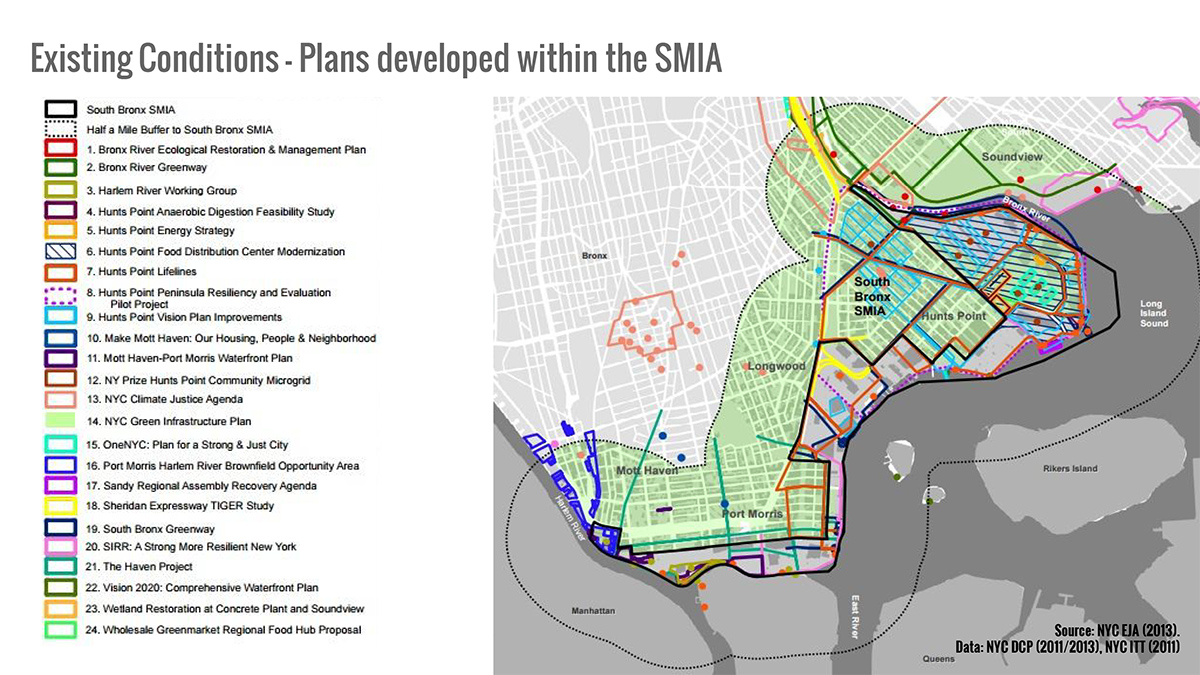
Gita Nandan is an Adjunct Associate Professor at the Graduate Center for Planning and the Environment within Pratt Institute's School of Architecture. As a founder and principal of the award-winning design firm thread collective , she integrates social, cultural, and economic dimensions into resilient urban design. She chairs the Resilient Red Hook Committee and has over 15 years of experience overseeing diverse projects like passive houses and NYCHA community farms. M.Sc., Architecture – University of California B.A., Architecture History – University of Michigan Her research focuses on holistic resilience strategies, including micro-grids , shared solar , and community investment funds to transform low-income waterfront neighborhoods. She has contributed to NYC sustainable design policies and co-led initiatives like Let The Water In: Strategies for a Resilient Edgemere and The Courts of Sheepshead Bay: Community Recovery . Her work emphasizes interdisciplinary collaboration, blending design with socio-economic equity to address climate challenges in urban contexts.
Associate Professor Madeline Taylor is an Australian Research Council (ARC) Early Career Industry Fellow at Macquarie Law School and Co-Lead of the Energy, Communities, and Market Regulation Stream at the Transforming Energy Markets Research Centre. She specializes in socio-legal aspects of energy transition, focusing on regulatory frameworks, energy justice, and land-use conflicts between energy developers and communities. Her work bridges property law, commercial law, and comparative law to address challenges in renewable energy integration and resource governance. Affiliations: Honorary Associate at Sydney Environment Institute, Member of Sydney Institute of Agriculture Industry Partners: NSW Department of Primary Industries and Spark Renewables (FAARM Project) Research Interests: Energy law and policy, agricultural-legal synergies, renewable energy siting, and just transition principles. She co-edits the Oil, Gas and Energy Law Journal and contributes to the LexisNexis Energy and Resources Law in Australia . Recent Articles Highlight Key Themes: Offshore wind governance, agrivoltaics regulatory systems, hydrogen licensing, and energy justice frameworks. These works emphasize interdisciplinary approaches to balancing economic, environmental, and social dimensions of energy transitions. Awards: 2023 Lawyers Weekly Women in Law Academic/Researcher of the Year, 2024 AFR Higher Education Awards Finalist, Clean Energy Council Transformational Leadership Scholarship Teaching and Engagement: Embeds climate justice in commercial law education; advises governments and NGOs on energy policy. Active in RE-Alliance Management Committee and IUCN Climate Change Law initiatives.
Dr. Harry T. Conway is the Alternate Permanent Representative of Liberia and Chair of the Marine Environment Protection Committee (MEPC) at the International Maritime Organization (IMO). He leads global maritime environmental policy initiatives, including the 2023 IMO GHG Strategy. His academic affiliations include guest lecturing at the International Maritime Law Institute's special course on marine environmental protection and opposing a WMU PhD candidate's thesis. Education: PhD in Politics and International Relations (Cardiff University, UK), MA (Distinction) in International Maritime Policy (University of Greenwich, UK), and MBA (Hanze University of Applied Sciences, Netherlands). His research focuses on environmental politics, with emphasis on climate agreements and maritime decarbonization. Professional Experience: Policy Officer and Officer-in-Charge of Liberia's IMO Permanent Mission (2012–present), Chief of Staff at Liberia Maritime Authority (pre-2012), and finance roles in Liberian banking institutions. He contributed to the 2050 Africa Integrated Maritime Strategy for the African Union and serves on the International Quality Assessment Review Body (IQARB). Publications include contributions to 'The African Union and the Law of the Sea' and peer-reviewed articles on maritime innovation and decarbonization. He frequently speaks at international shipping conferences and advises on maritime regulatory frameworks.
Teemu Roos is a Professor at the Department of Computer Science , University of Helsinki , and a Principal Investigator for the Complex Systems Computation Group under the Helsinki Institute for Information Technology. He serves as a Supervisor for the Doctoral Programme in Computer Science and leads multiple research initiatives, including Distributed AI in Supercomputing , AI & Kids , and Generation AI . Dr. Roos also holds a Docent title in Computer Science. His research spans Artificial Intelligence , Machine Learning , and Data Science , with a focus on AI education , graph neural networks , Bayesian modeling , and health informatics . He has pioneered tools like Elements of AI , a free online course now translated into 22 EU languages, and explores the ethical implications of AI-generated content in authorship and inventorship. The 15 most recent publications highlight applications in environmental forecasting (e.g., Mediterranean Sea via graph-based deep learning), healthcare (e.g., skin cancer detection with transfer learning), and social media analysis (e.g., explainable AI platforms for K-12 education). Methodologically, his work advances clustering algorithms , dimensionality reduction , and approximate nearest neighbor search . Scientific Awards: Cor Baayen Award (2009) Nokia Foundation Recognition Award (2019) Best Paper Honorable Mention Award (2013) ICT Influencer of the Year 2019 (Vuoden TiVi-vaikuttaja 2019) World Summit AI's Top-50 Innovators in 2020 Dr. Roos has supervised 2 doctoral students and contributed to 163 academic activities , including invited talks at MIT, University of Cambridge, and the Finnish Institute in Rome. He has secured funding from the Academy of Finland and the Strategic Research Council, focusing on projects like Fast AI-assisted Space Environment Prediction and Urban Exerciser .
Prof. Dagmar Haase is a Full Professor in Landscape and Urban Ecology at Humboldt Universität zu Berlin, serving as Deputy Director of the Geographical Institute. She holds affiliations with the Helmholtz Centre for Environmental Research (UFZ) and has earned honorary professorships in Sweden and Romania. Her academic journey includes a PhD from the University of Leipzig (1999) and Habilitation from Martin-Luther-University Halle-Wittenberg (2009). Her research focuses on urban ecosystem services, social-ecological systems, and nature-based solutions to urban challenges. Key projects include EU-funded initiatives on green infrastructure (e.g., Horizon Europe’s NaturaConnect) and climate resilience. Awards include the AXA Research Fund Award (2014) and Honorary Wallenberg Professorship (2016). Haase’s work integrates remote sensing, citizen science, and participatory modeling to address urban sustainability. Over 250+ publications and an h-index of 77 reflect her prolific contributions. She advises numerous PhD candidates exploring urban dynamics, biodiversity, and governance. Current grants span climate adaptation, urban densification, and ecological networks.