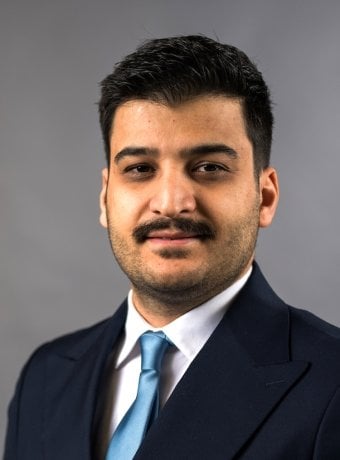
Borja Valverde Pérez is an Associate Professor in the Department of Environmental and Resource Engineering at the Technical University of Denmark (DTU). His research advances sustainable water resource recovery through biotechnology innovations. Research focuses on microalgae cultivation, microbial protein production, and bioelectrochemical systems for water treatment. Key projects explore nutrient recovery from waste streams and greenhouse gas mitigation in biological processes. Recent publications demonstrate innovative approaches to wastewater valorization, including microalgae-bacteria consortia for pollutant degradation and inorganic bioelectric systems for low-temperature denitrification. Work integrates experimental validation with life cycle assessment. He coordinates projects on industrial symbiosis and circular economy applications in water systems. Current initiatives investigate decarbonization pathways for water resource recovery facilities through energy-flexible operation.
Bithin Datta is a Senior Lecturer in the Discipline of Civil Engineering at James Cook University (Australia), part of the College of Science and Engineering and the Division of Tropical Environments and Societies. He is affiliated with TropWATER (Centre for Tropical Waters and Aquatic Ecosystem Research), the Economic Geology Research Unit (EGRU) at JCU, and the CRC-for Contamination Assessment and Remediation of the Environment (CRC-CARE) at the University of Newcastle. Previously, he held Professor and Senior Professor positions at IIT Kanpur, India (1995-2009), and served as Head of the Civil Engineering Department and Head of the Postgraduate Environmental Engineering and Management Program. He has held Visiting Professorships at Dalhousie University (Canada), Denmark Technical University (Copenhagen), and the Asian Institute of Technology (Bangkok). Education: B.Tech (Hons) in Civil Engineering from IIT Kharagpur (India), Master’s degree in Civil Engineering (first rank in specialization), and a PhD in Civil Engineering from Purdue University (USA), specializing in Hydraulics and Systems Engineering. He is a Fellow of Engineers Australia (FIEAust). Research interests include water resources systems management, groundwater and surface water modeling, reservoir operation optimization, saltwater intrusion control, AI-driven environmental predictions, and ecological flow assessment. His work integrates simulation-optimization frameworks, machine learning (e.g., ANFIS, SVM), and hydraulic engineering principles to address contamination, climate change, and infrastructure challenges in tropical and coastal regions. His publications (178+ entries) focus on computational tools for groundwater contamination source identification, sustainable aquifer management, and reservoir environmental impacts. Notable projects include a $629,000 CRC-CARE-funded initiative for contamination monitoring networks and AI-based drought prediction models in tropical Queensland. Advising: Coordinated the Master of Engineering (Water Resources Management) at JCU and supervised over 30+ Master’s and 19 Ph.D. students across IIT Kanpur, JCU, and the University of South Australia. His research has been ranked #1 globally by ScholarGPS in Groundwater Pollution, Surrogate Models (AI/ML), and Saltwater Intrusion management. Labs/Teams: Core member of TropWATER, EGRU, and CRC-CARE, leading interdisciplinary projects on tropical water systems and geochemical contamination modeling in mine sites.
Alexander Kocian is an Assistant Professor at the Department of Computer Science, University of Pisa. He holds a Ph.D. in Electrical and Electronic Engineering from Aalborg University (Denmark) and a Master's in Electrical Engineering from TU Vienna (Austria). His research focuses on Machine Learning, IoT, Agro Informatics, Health Informatics, and Real-time embedded systems. He has led major projects like AGRITECH (€40M funded by PNRR) and FuorisuoloSmart, advancing smart agriculture and healthcare technologies. Dr. Kocian serves as IEEE Senior Member (since 2024) and EAI Fellow (since 2022). He is Associate Editor of IEEE Access (2025–present), and Editorial Board member of Stats (2019–present) and Signals (2020–present). He has organized conferences like the EAI Int. Conf. on Intelligent Transport Systems (INTSYS) as General Chair (2024) and Steering Committee Member (2023). His work includes 50+ peer-reviewed publications, 4 patents, and contributions to telemedicine platforms like TESHEALTH (ESA-funded). Key projects span precision farming, IoT-based greenhouses, and AI-driven healthcare solutions. Current efforts emphasize data spaces for agritech and health informatics interoperability.
Bishnu Acharya serves as an Associate Professor and Saskatchewan Ministry of Agriculture Chair in Bioprocess Engineering within the Department of Chemical and Biological Engineering at the University of Saskatchewan. His research program focuses on sustainable conversion of agricultural biomass into high-value products through advanced bioprocessing techniques, addressing critical environmental and energy challenges. His primary research domains include: Cellulose-based biomaterials and nanocomposites for biomedical and packaging applications Thermochemical conversion (pyrolysis, gasification) and biochemical processing of agricultural residues Engineered biochar systems for wastewater remediation and soil enhancement Integration of remote sensing and machine learning for precision agriculture optimization Development of biodegradable materials from flax, wheat straw, and camelina meal Analysis of his 2024-2025 publications reveals a strong interdisciplinary trajectory bridging chemical engineering, environmental science, and agricultural technology. Key thematic clusters involve circular economy implementation in biomass valorization, nanocellulose-based advanced material development, and sustainable wastewater treatment solutions. His work consistently emphasizes practical applications for Canadian agricultural systems, particularly in Saskatchewan and Prince Edward Island contexts. Professional Recognition: Saskatchewan Ministry of Agriculture Chair in Bioprocess Engineering While specific grant details are not publicly enumerated in available materials, Dr. Acharya's prolific output across high-impact journals indicates substantial research funding and active supervision of graduate students. His collaborations span environmental remediation, advanced materials development, and sustainable agricultural technologies, reflecting a systems-thinking approach to bioresource management. Laboratory infrastructure likely includes biomass processing units, nanomaterial characterization facilities, and bioreactor systems supporting his diverse research portfolio.
Professor Stephen Roberts holds the Royal Academy of Engineering / Man Group Chair in Machine Learning at the University of Oxford. He is affiliated with the Oxford-Man Institute and Somerville College. With a DPhil in machine learning and a physics background, his research spans environmental science, financial systems, and geophysics. He co-leads the Machine Learning Research Group and directs the EPSRC Centre for Doctoral Training in Autonomous, Intelligent Machines and Systems (AIMS). His academic journey includes prior faculty roles at Imperial College London before joining Oxford in 1999. Key research interests include tidal analysis using AI, climate modeling, geospatial data interpretation, and financial algorithm design. He has pioneered tools like RTide for coastal flooding prediction and developed machine learning frameworks for environmental and economic applications. Education: DPhil in Machine Learning, Physics undergraduate degree Affiliations: Oxford-Man Institute, Somerville College, EPSRC AIMS CDT Key Projects: SWOT mission data corrections, Antarctic bedrock mapping, carbon footprint reduction in ML His work bridges disciplines, applying ML to solve complex problems in climate science, finance, and geology. Awards include Fellowship of the Royal Academy of Engineering and IET. Current focus areas include improving climate model accuracy and fostering interdisciplinary training through the AIMS program.
Anna Sender is a Professor at the Lucerne School of Business (Lucerne University of Applied Sciences and Arts), specializing in strategic Human Resource Management (HRM) and organizational dynamics. She holds a PhD in Economics from the University of Zurich and has over nine years of industry experience in international financial sectors. Her research focuses on applied projects in collaboration with organizations, emphasizing talent management, pay transparency, and non-standard work patterns. She uses mixed-methods approaches, incorporating sociology and cultural studies perspectives. Research Interests: Strategic HRM, Talent Identification Paradoxes, Pay Communication, Remote Work Dynamics, and HR Professionals' Role Innovation. Key projects include exploring talent retention strategies, the role of jesters in paradox navigation, and hybrid work models. She is actively involved in networks like CRANET and serves on the board of ZGP (Zurich HR Association). Publications span top journals like Human Resource Management , Journal of Management Inquiry , and Academy of Management Proceedings . Recent work highlights include studies on pay transparency, boomerang contractors, and HR professionals’ paradox management. She has received grants from the Swiss National Science Foundation (SNSF) and Innosuisse for projects on talent identification and hybrid work. Awards: Best Paper Nominee (2022 Academy of Management Conference) Grants: SNSF Grant: "Talent Recipe: Managing Talent Identification Paradoxes" Innosuisse Grant: "Raydesk Hybrid Work Project" Advisory Roles: Board Member, ZGP Editor, Journal of East European Management Studies Labs/Teams: Leads research initiatives on talent management, pay transparency, and New Work paradigms through collaborative projects with industry partners and academic networks.
Professor Julia Hartmann serves as the Chair of Sustainability Management at EBS Business School, part of EBS Universität für Wirtschaft und Recht in Oestrich-Winkel, Germany. Her research focuses on climate change mitigation, energy transition strategies, sustainable supply chain resilience, and ESG compliance. She leads a team supported by industry partners like Procter & Gamble and Tetra Pak, emphasizing practical applications of sustainability theory. Her work bridges data analytics (machine learning, natural language processing) with business strategies, published in top journals such as Journal of International Business Studies and Journal of Business Ethics . Hartmann teaches courses on strategic CSR, environmental management, and empirical data techniques, advising companies on ESG leadership and future readiness. Her recent work examines oil and gas industry transitions, supply chain liability, and pandemic resilience. She actively engages with media (TV, podcasts) to discuss sustainability challenges, contributing to public discourse on energy policy and corporate responsibility. Education & Career: While formal academic qualifications are not explicitly listed, her extensive publication record and professorial role indicate advanced doctoral training in business administration or related fields. She has held leadership roles at EBS since assuming the chair position. Research Interests: Her work spans three core areas: 1) Sustainable supply chain design and resilience, 2) Energy transition pathways for industries, and 3) Quantitative methods for measuring ESG impacts. She explores how media attention, legal frameworks, and consumer behavior shape corporate sustainability outcomes. Awards & Recognition: While no specific awards are cited, her peer-reviewed publications and industry partnerships reflect scholarly and practical impact. She was an invited speaker at major conferences like EurOMA 2024 and Arthur D Little CEO Insights Conference. Grants & Collaboration: Partnerships with Procter & Gamble and Tetra Pak support applied research initiatives. Her lab focuses on bridging academic insights with industry implementation through joint projects and executive education programs. Labs/Teams: The Chair of Sustainability Management serves as her primary research hub, hosting interdisciplinary projects on supply chain governance, climate policy, and digital sustainability tools.
Stephanie Bilderback is a Lecturer in the Department of Management and Marketing at Austin Peay State University. She is pursuing a PhD in Management (ABD, expected Spring 2024) from Walden University. Her research focuses on organizational behavior, employee development, and the intersection of technology with workplace dynamics. She explores topics such as AI dependency in the workplace, mental health strategies for employees, and global leadership competencies in interconnected economies. Her work emphasizes ethical leadership, digital communication impacts on productivity, and sustainable business practices. Recent studies include analyzing Snapchat's role in workplace efficiency, managing Gen Z's digital perfectionism, and integrating AI in healthcare training programs. She also investigates regional economic growth through work-based learning initiatives in Tennessee and climate-sensitive business strategies in Dickson County. Bilderback’s research highlights trends in post-pandemic workforce management, including unconscious bias mitigation and remote work culture evolution. She advocates for employee well-being programs addressing screen time addiction and suicide prevention through organizational development. Her writing spans academic journals and book reviews on responsible management education.
Yeyin Shi is an Associate Professor and Agricultural Intelligence Engineer at the University of Nebraska-Lincoln, Department of Biological Systems Engineering. His research focuses on applying artificial intelligence and remote sensing technologies to enhance agricultural productivity and sustainability. He teaches courses such as AGST 316: Technologies and Techniques for Digital Agriculture and AGEN/AGRO/AGST 431/892: Site-Specific Crop Management. He holds a Ph.D. in Biosystems and Agricultural Engineering from Oklahoma State University (2014), an M.S. (2010), and a B.S. in Mechanical Engineering from Nanjing Forestry University (2007). Research Interests: Agricultural data generation/analysis, remote sensing systems (satellite/UAV-based), crop stress sensing, precision crop management, and high-throughput phenotyping. His work bridges machine learning, robotics, and agronomy to address challenges in sustainable farming practices. Recent projects include maize tassel detection via deep learning, UAV-based weed detection, and nitrogen stress indices for maize using hyperspectral imagery. Awards: ASABE Outstanding Manuscript Reviewer (2015), 1st Place Postdoc Research Poster (2015), 2nd Place Student Robotic Competition (2012) Grants: Active collaborations on USDA-funded projects for precision agriculture and phenotyping Labs/Teams: Leads the Agricultural Intelligence Research Group at UNL, focusing on AI-driven agricultural solutions His research emphasizes scalable solutions through edge computing and cloud-based frameworks for irrigation scheduling and crop monitoring, aiming to optimize resource use in both row crops and livestock systems.
Dr. Abdolmajid Erfani is an Assistant Professor in the Department of Civil, Environmental, and Geospatial Engineering at Michigan Technological University. He holds a PhD in Civil Engineering from the University of Maryland, College Park (2023), an MSc in Construction Engineering and Management from the University of Tehran (2019), and a BSc in Civil Engineering from the same university (2017). His research focuses on construction economics, smart construction technologies, data-driven infrastructure management, workforce development, and AI applications in project delivery. Dr. Erfani leads studies on workforce equity in transportation and construction industries, leveraging big data and natural language processing. He has published over 30 peer-reviewed papers and received prestigious ASCE awards including the 2024 Arthur M. Wellington Prize and Thomas Fitch Rowland Prize. He serves on the editorial board of the ASCE Journal of Management in Engineering. His recent grants include a National Cooperative Highway Research Program project (PI, 2024–2027) on price adjustment clauses for construction risk sharing and a Minnesota DOT-funded initiative (PI, 2025–2027) on leveraging transportation investments for economic equity. He also co-leads a Federal Railway Administration project (Co-PI, 2025–2028) aimed at promoting railroading careers. Research interests span equity analysis, AI modeling, and predictive analytics for infrastructure resilience. He integrates LinkedIn data and machine learning to study gender disparities in career progression, achieving groundbreaking insights in leadership dynamics within construction sectors.
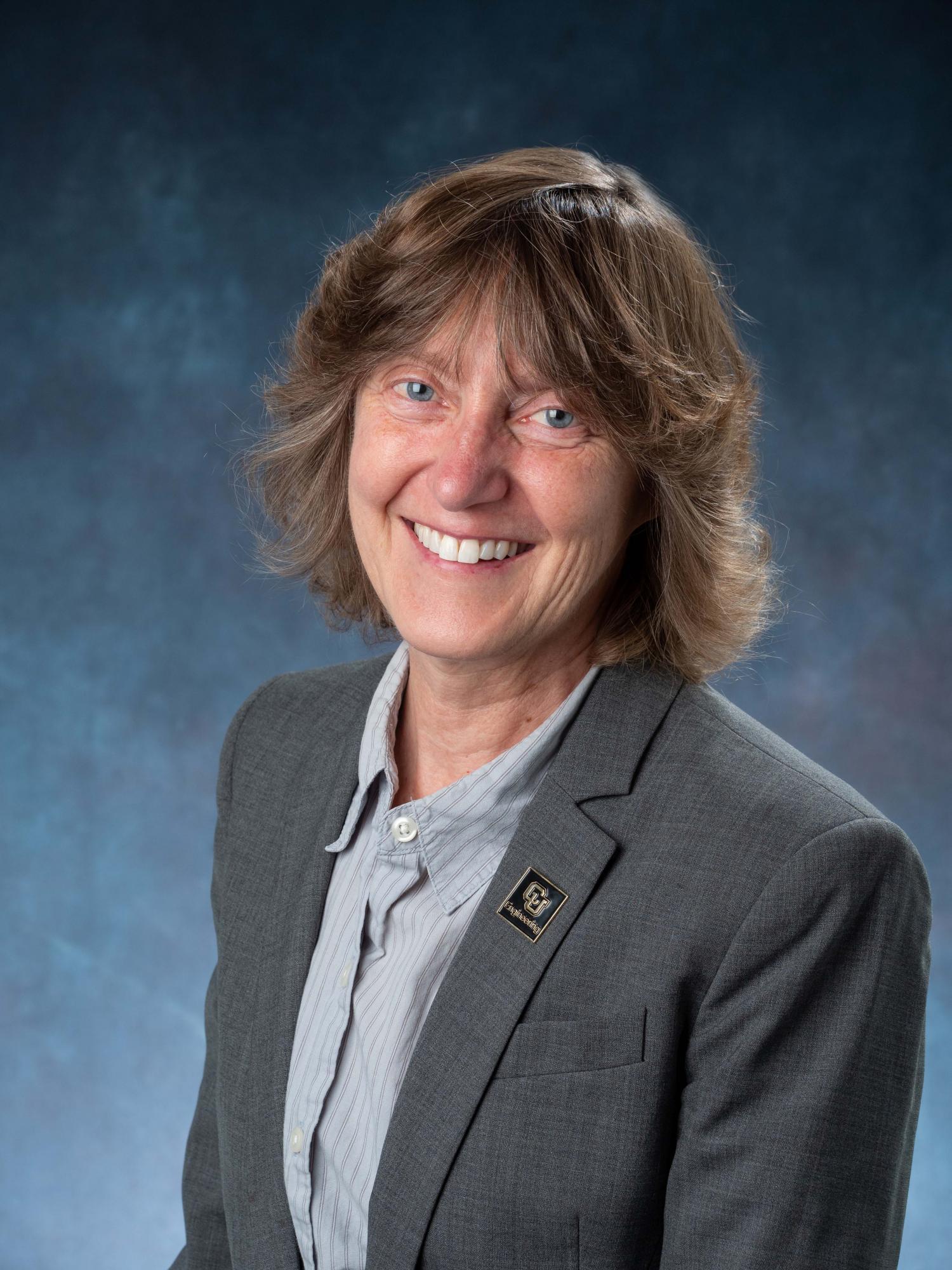
Dr. Hope Michelsen is an Associate Professor in the Department of Mechanical Engineering at the University of Colorado Boulder, specializing in Thermo Fluid Sciences and Air Quality. Her research focuses on carbonaceous particle formation mechanisms, combustion diagnostics, and their environmental impacts. She leads efforts in developing laser/X-ray-based diagnostic tools for studying soot evolution in flames and atmospheric systems. Research Interests include soot inception/growth, black carbon climate effects, and particle synthesis control. She has pioneered studies on resonance-stabilized radicals' role in soot formation and developed novel sampling techniques like jet-entrainment methods. Her work bridges fundamental combustion science with practical applications in air quality and climate mitigation. Awards: Fellow, American Physical Society Fellow, The Optical Society Alameda County Women’s Hall of Fame Inductee Lab facilities include advanced diagnostics at ECME 1B68/ECNW 180. Research collaborations involve multi-scale modeling of emissions and atmospheric transport. Current projects address wildfire soot dynamics and Arctic methane monitoring through inverse modeling techniques.
Roles & Affiliations: Distinguished Research Professor in Statistical Science at Queensland University of Technology (QUT), Director of QUT Centre for Data Science, and Associate Member of University of Oxford's Department of Statistics. Served as Deputy Director of ARC Centre of Excellence in Mathematical and Statistical Frontiers (2015–2021) and ARC Laureate Fellow (2015–2021). Education: BA (Hons) and PhD in Mathematical Statistics from University of New England, Australia. Completed post-doctoral roles at multiple Australian universities. Research Interests: Specializes in Bayesian statistical modelling, computational methods, and their applications in environmental science, genetics, healthcare, and industry. Leads projects on coral reef recovery, cancer epidemiology (Australian Cancer Atlas), and virtual citizen science platforms like Virtual Reef Diver. Her work emphasizes interdisciplinary collaboration, integrating complex data sources with advanced statistical techniques to address real-world challenges. Publications & Grants: Over 350 refereed journal publications and attracted >30 major grants. Recent focus areas include influenza epidemiology, spatial health disparities, and AI-driven early warning systems for climate-sensitive diseases. Active in developing methodologies for spatial statistics, small-area estimation, and federated learning. Awards & Recognition: 2024 Ruby Payne-Scott Medal (Australian Academy of Science), Pitman Medal (2016), first female recipient of this award in 35 years. Elected Fellow of Australian Academy of Science (2018), Academy of Social Sciences (2018), and Queensland Academy of Arts and Sciences (2018). Holds international roles including Vice-President of International Statistical Institute (2021–2025) and Scientific Council Member at Centre International de Rencontres Mathématiques (France). Supervision & Leadership: Supervised over 36 PhD students and leads teams in >50 collaborative projects. Current supervision includes 5 PhD and 4 Masters students at QUT. Founded the QUT Centre for Data Science and previously led the Collaborative Centre for Data Analysis, Modelling and Computation. Labs & Initiatives: Core contributor to the Australian Cancer Atlas 2.0, Virtual Reef Diver project, and Queensland's Learning Potential Fund. Active in global initiatives like the World of Statistics campaign and UN Big Data Task Teams.
Dr. Sen Wang is an Associate Professor in Robotics and Autonomous Systems at Imperial College London's Department of Electrical and Electronic Engineering, affiliated with I-X (Imperial's AI initiative), the Grantham Institute, and the Robotics Forum. He directs the Sense Robotics Lab and founded the MSc in Artificial Intelligence Applications and Innovation. His research focuses on advancing robotic autonomy through probabilistic and machine learning methods, addressing challenges in unstructured environments such as underwater infrastructure inspection and climate change solutions. Key projects include leading the £18M UKRI ORCA Hub, developing underwater robotics for offshore energy infrastructure inspection, and achieving the first autonomous wind farm foundation inspection at EDF's Blyth site. He holds editorial roles at IEEE Transactions on Robotics and other journals. Research interests span robotics, computer vision, SLAM, and AI applications, with recent work emphasizing underwater systems, sensor fusion, and safety-critical autonomy. His publications bridge theoretical advancements with real-world deployments in marine robotics and environmental monitoring. Awards: 2024 AI Most Influential Scholar Award Honourable Mention Grants: £18M ORCA Hub funding (UKRI) Labs: Sense Robotics Lab, I-X AI Initiative
Ales Popovic is a Full Professor of Information Systems at NEOMA Business School, France. He holds a PhD in Management and Information Systems. His research focuses on the value of information systems (IS) in organizations, digitalization, AI, behavioral and organizational issues in IS, and IT in inter-organizational relationships. He has published widely in journals like Journal of the Association for Information Systems and Technological Forecasting and Social Change . Dr. Popovic’s research explores topics such as fake news engagement on social media, blockchain adoption in real estate, and the impact of digital platforms on traditional media. He serves on editorial boards for journals including International Journal of Information Management and Industrial Management & Data Systems . His work bridges theoretical and practical aspects of IS, emphasizing business value creation and ethical considerations in AI. Key contributions include studies on digital transformation, crisis management technologies, and the role of privacy in technology adoption. His research frequently addresses contemporary challenges like misinformation dynamics, gig worker burnout, and healthcare AI applications.
Prof. Andreas Farnleitner is a Professor at TU Wien, affiliated with the Environmental Microbiology and Molecular Diagnostics Research Group. His research focuses on microbial water quality, molecular diagnostics, and environmental microbiology. Key areas include PCR-based methods for fecal pollution tracking, antimicrobial resistance in aquatic environments, and climate change impacts on waterborne pathogens. He has contributed to advancements in DNA aptamer technology for rapid water quality monitoring and employs machine learning for predictive modeling in hydrology. His work spans collaborations across Europe, addressing One Health challenges and wastewater-based epidemiology. Recent projects include studies on Vibrio cholerae in Austrian bathing waters and the biostability of drinking water resources. Prof. Farnleitner leads interdisciplinary initiatives to improve water safety and environmental management. Publications highlight his expertise in microbial source tracking, climate change effects on infection risks, and antibiotic resistance patterns. His team develops innovative diagnostic tools and models for environmental monitoring, with applications in both academic and applied settings. Current projects emphasize the integration of molecular biology and engineering to address global water quality challenges.